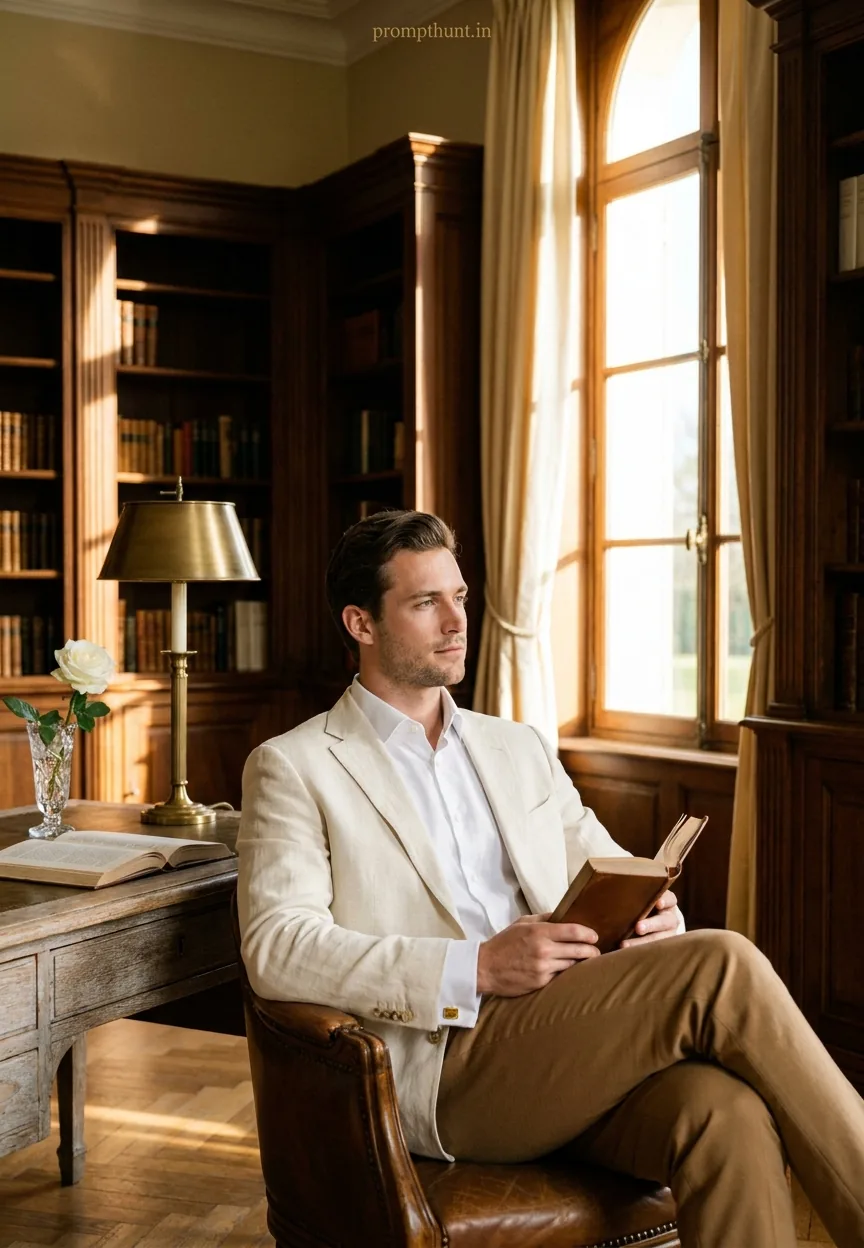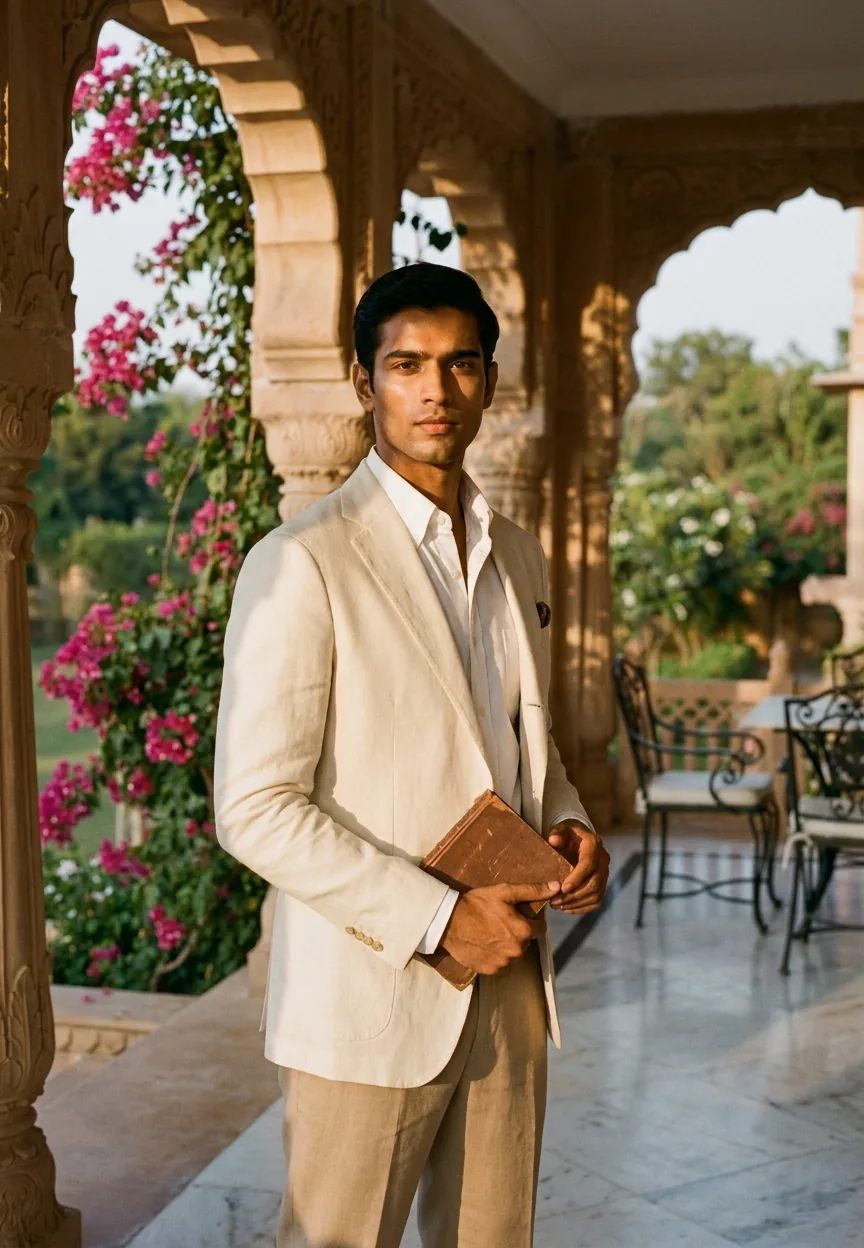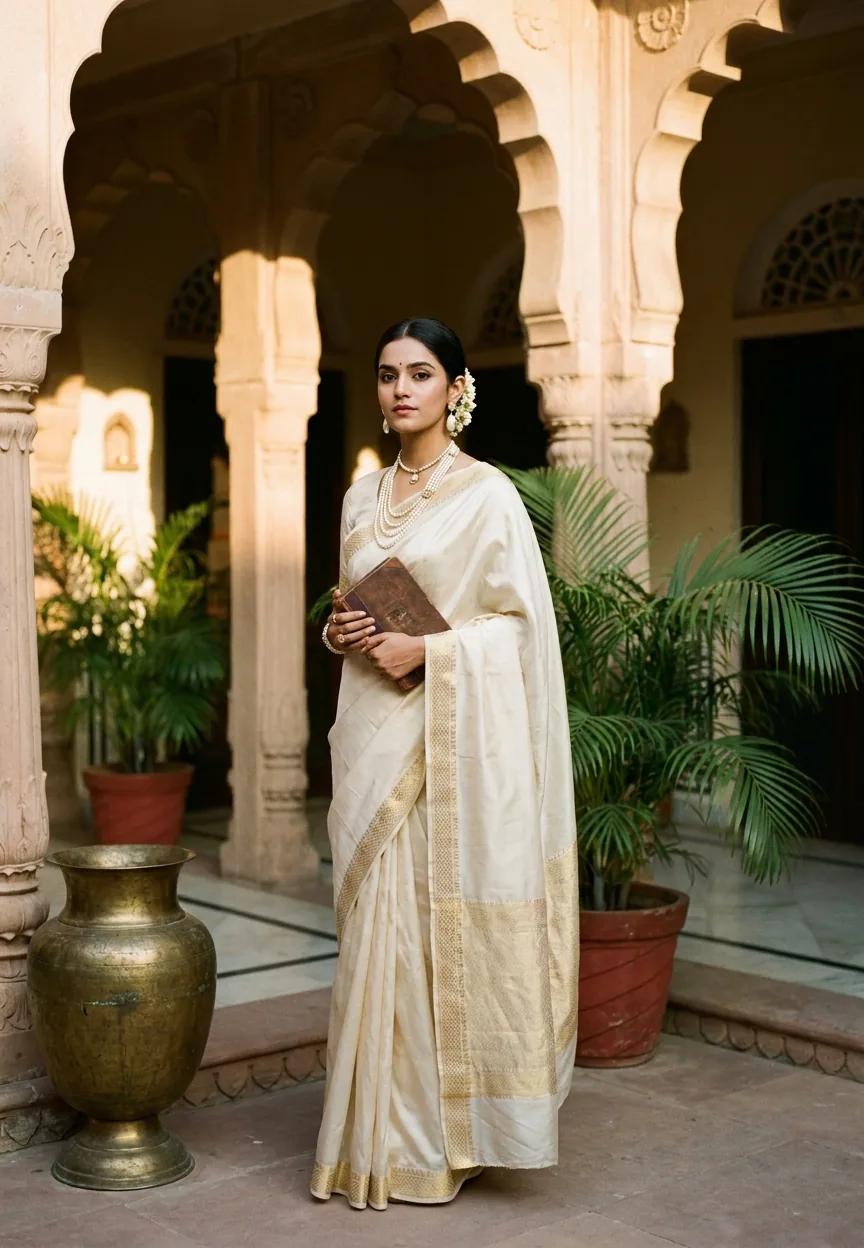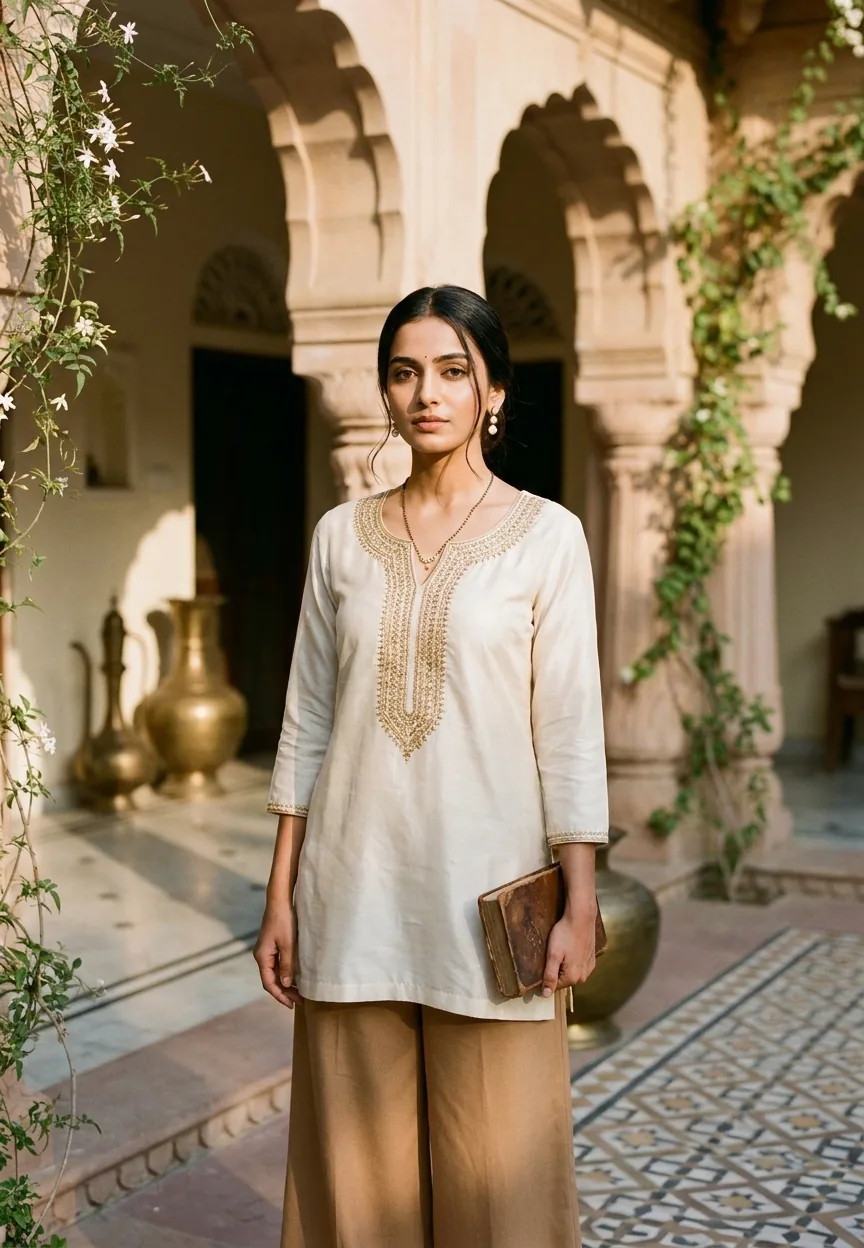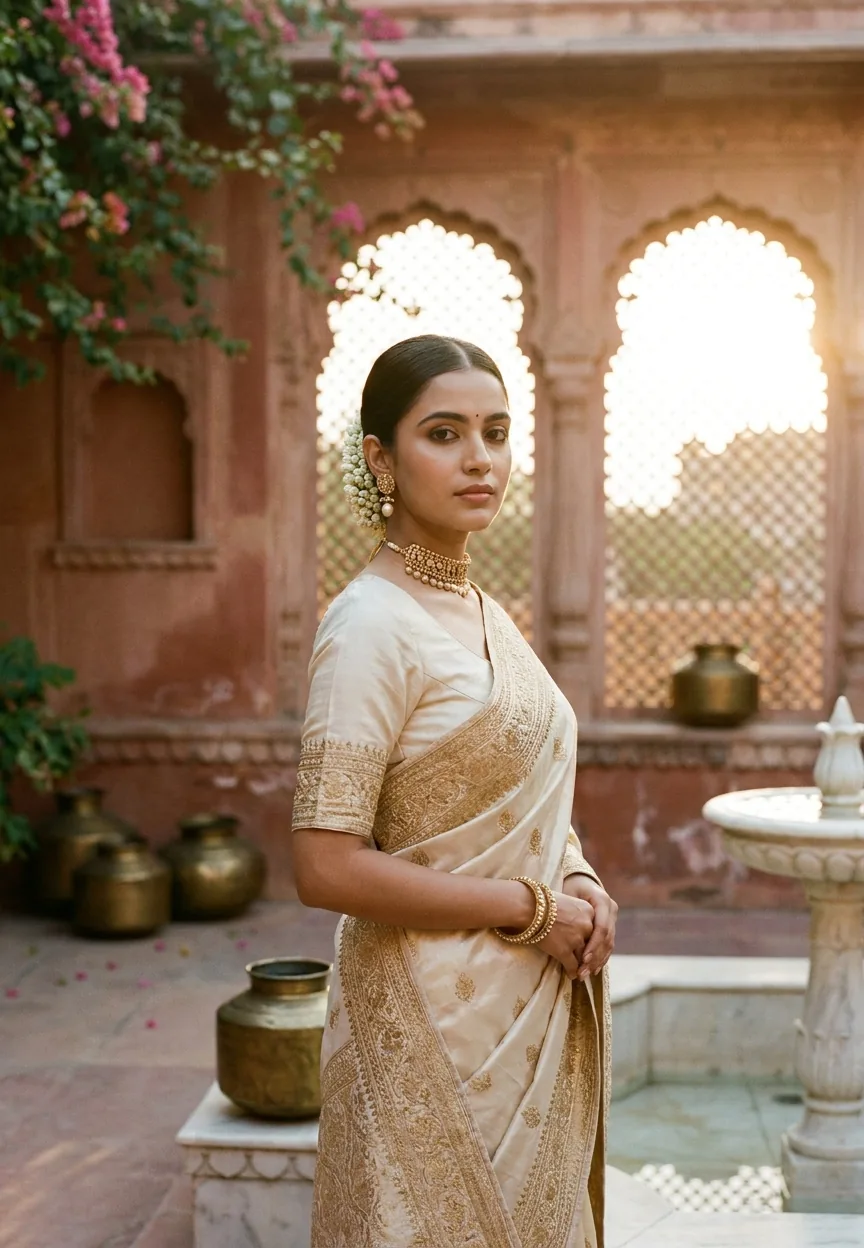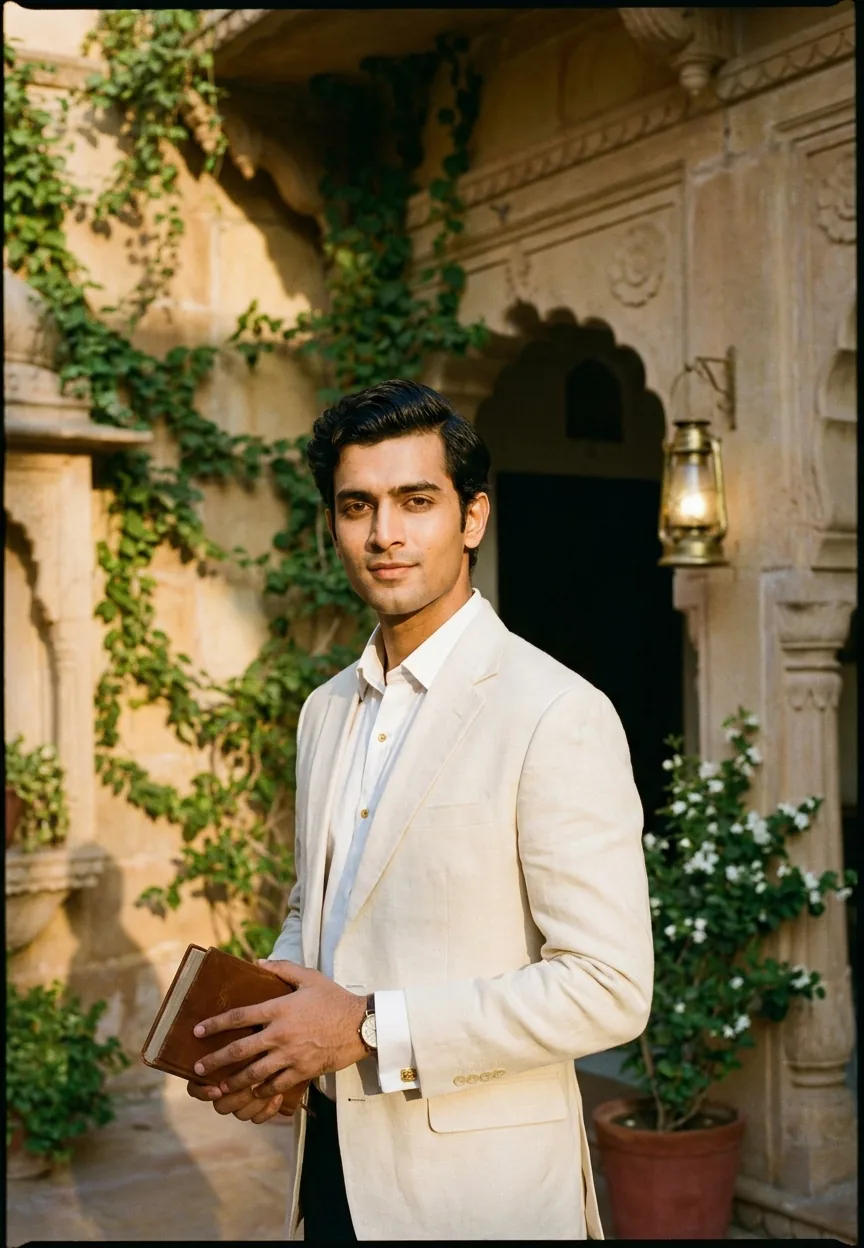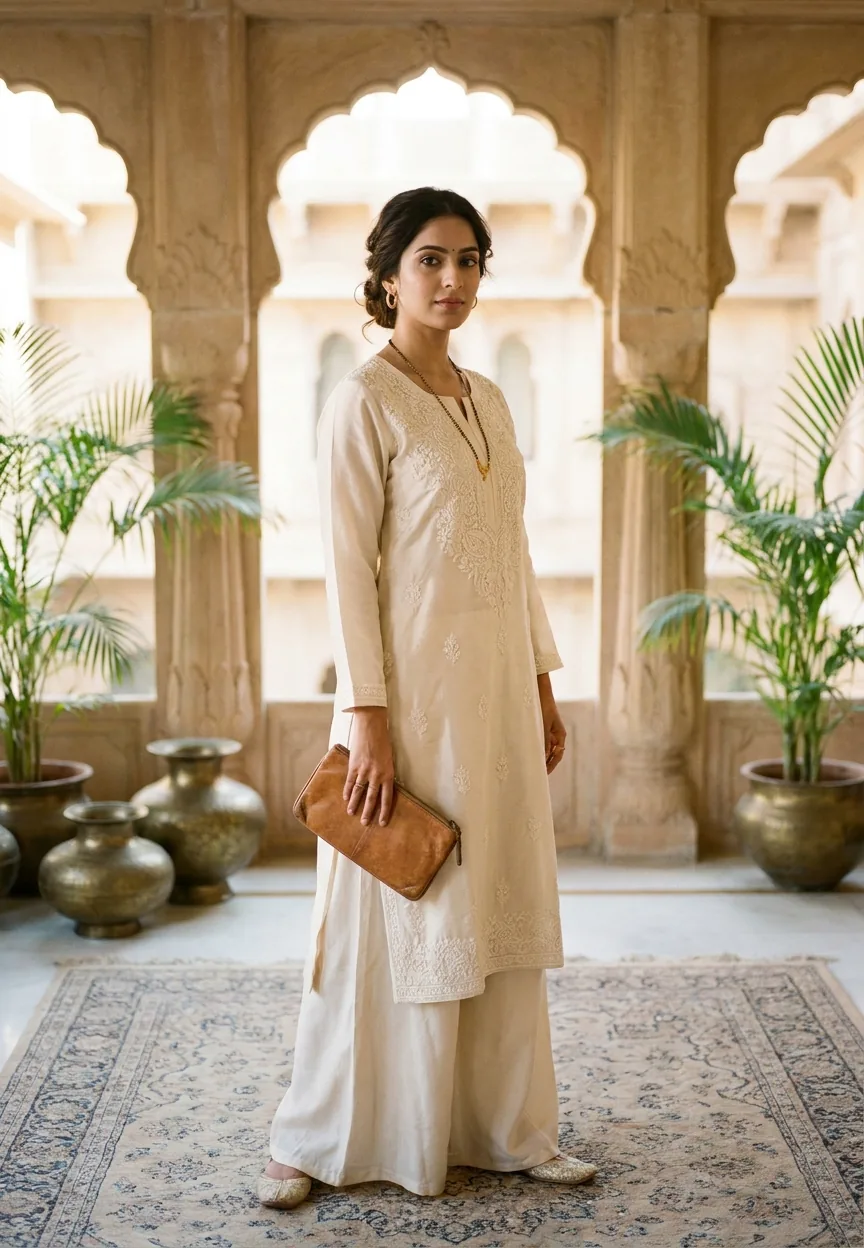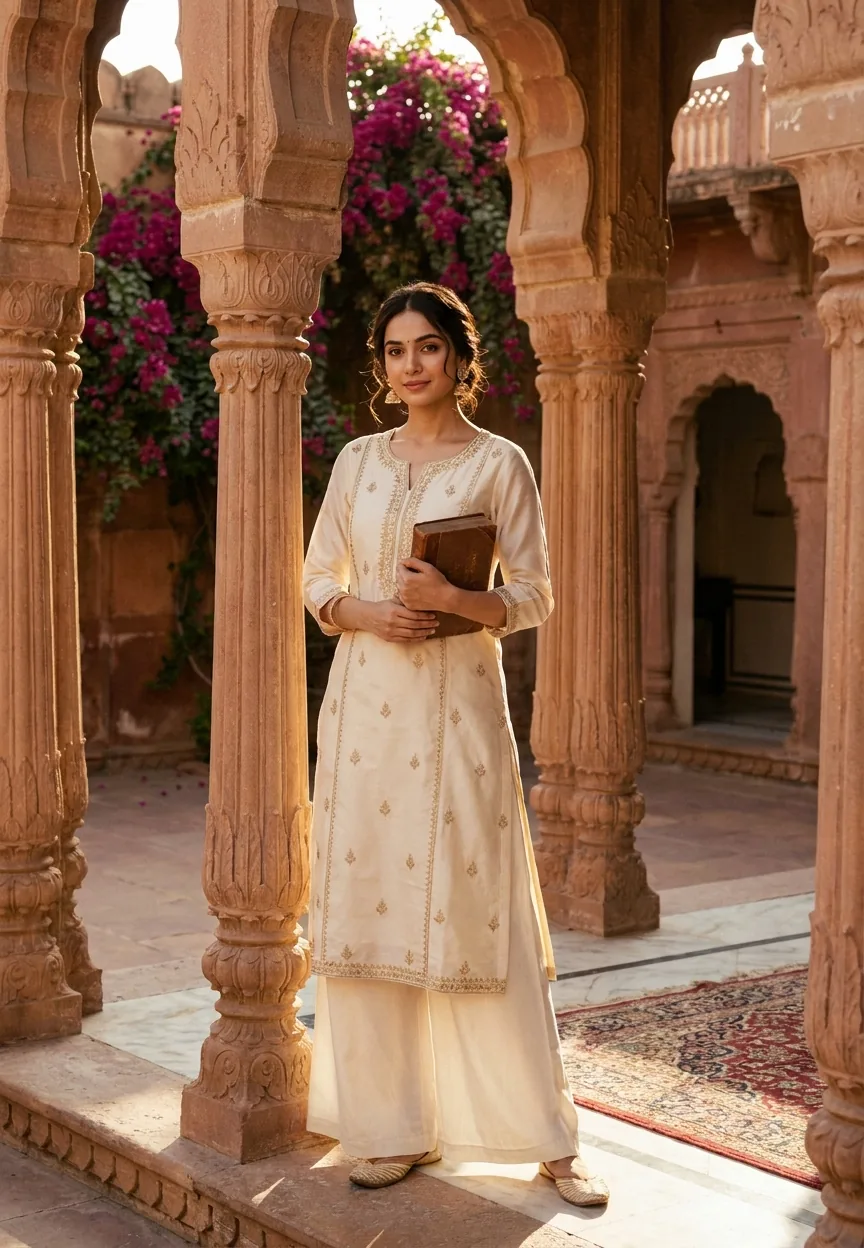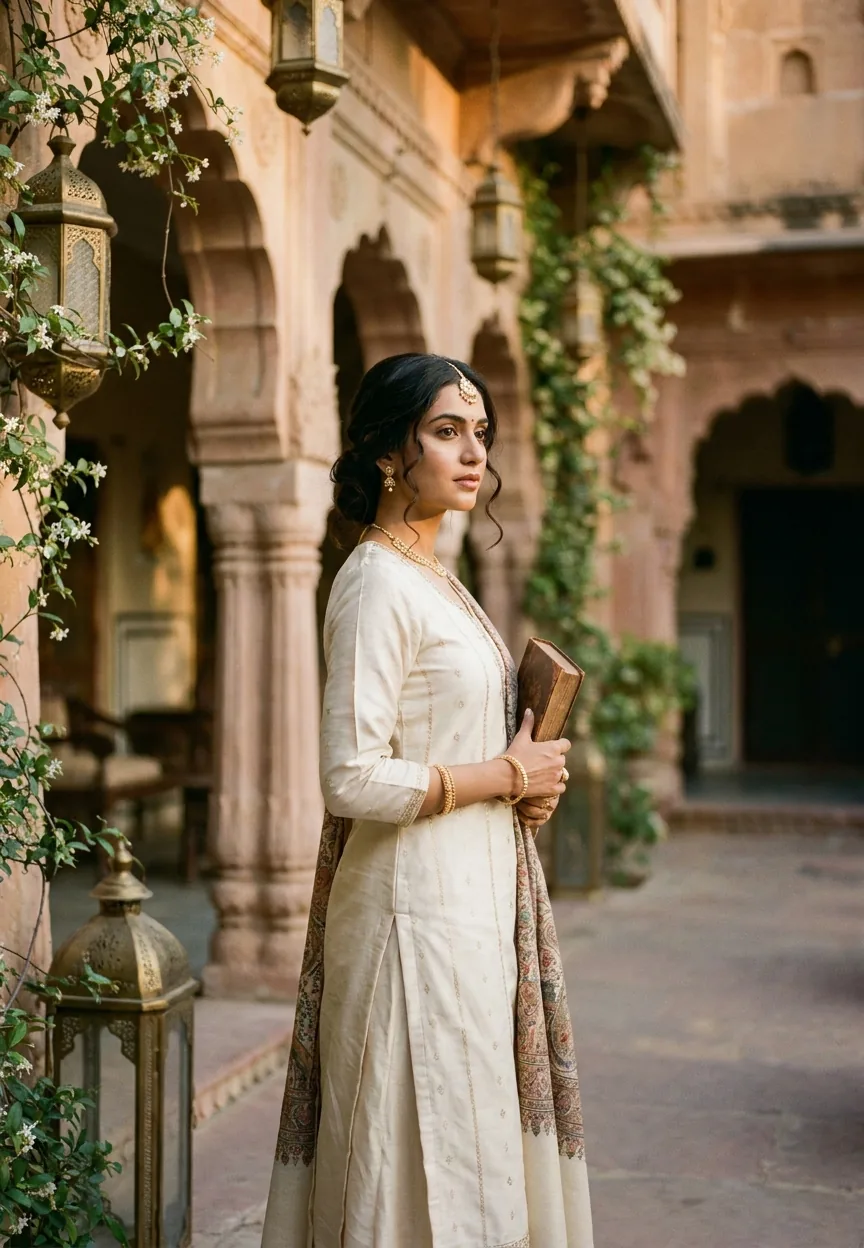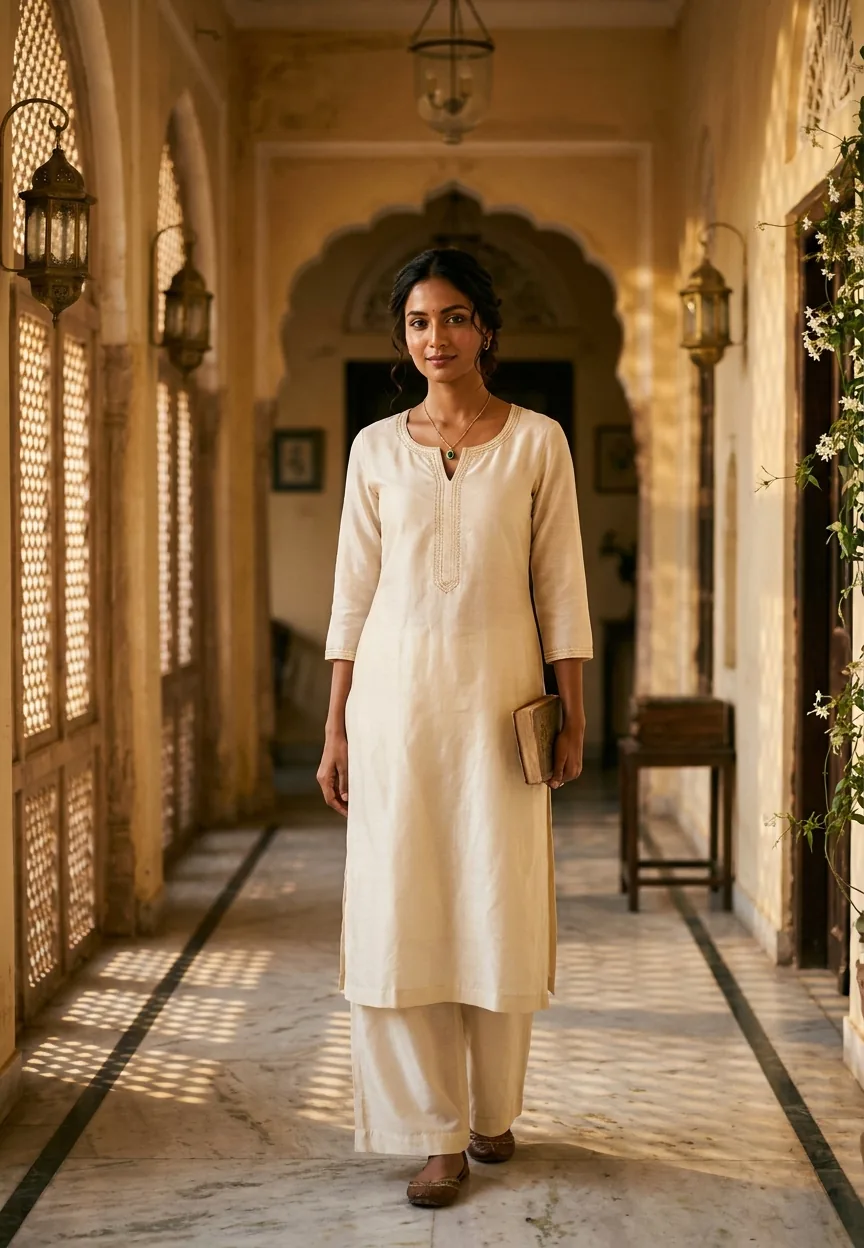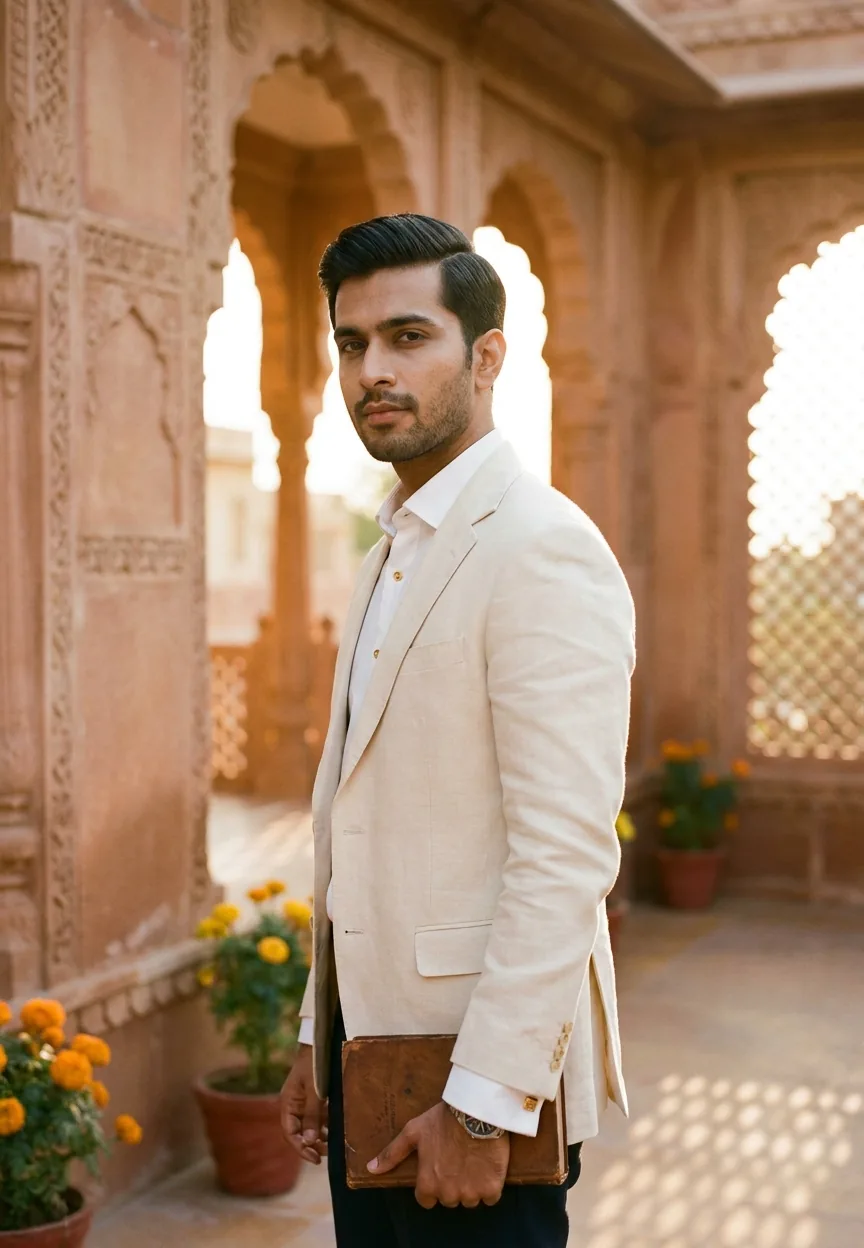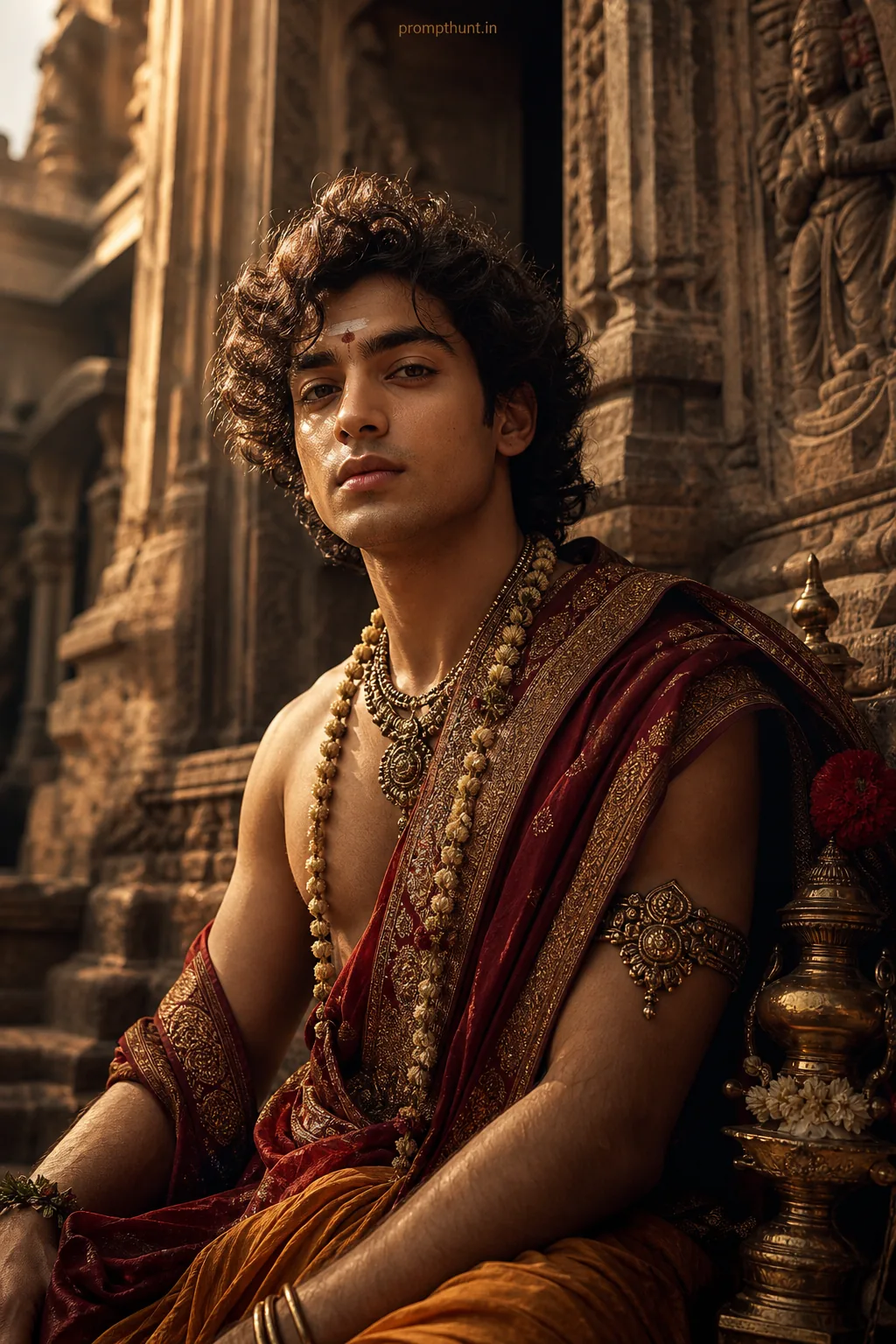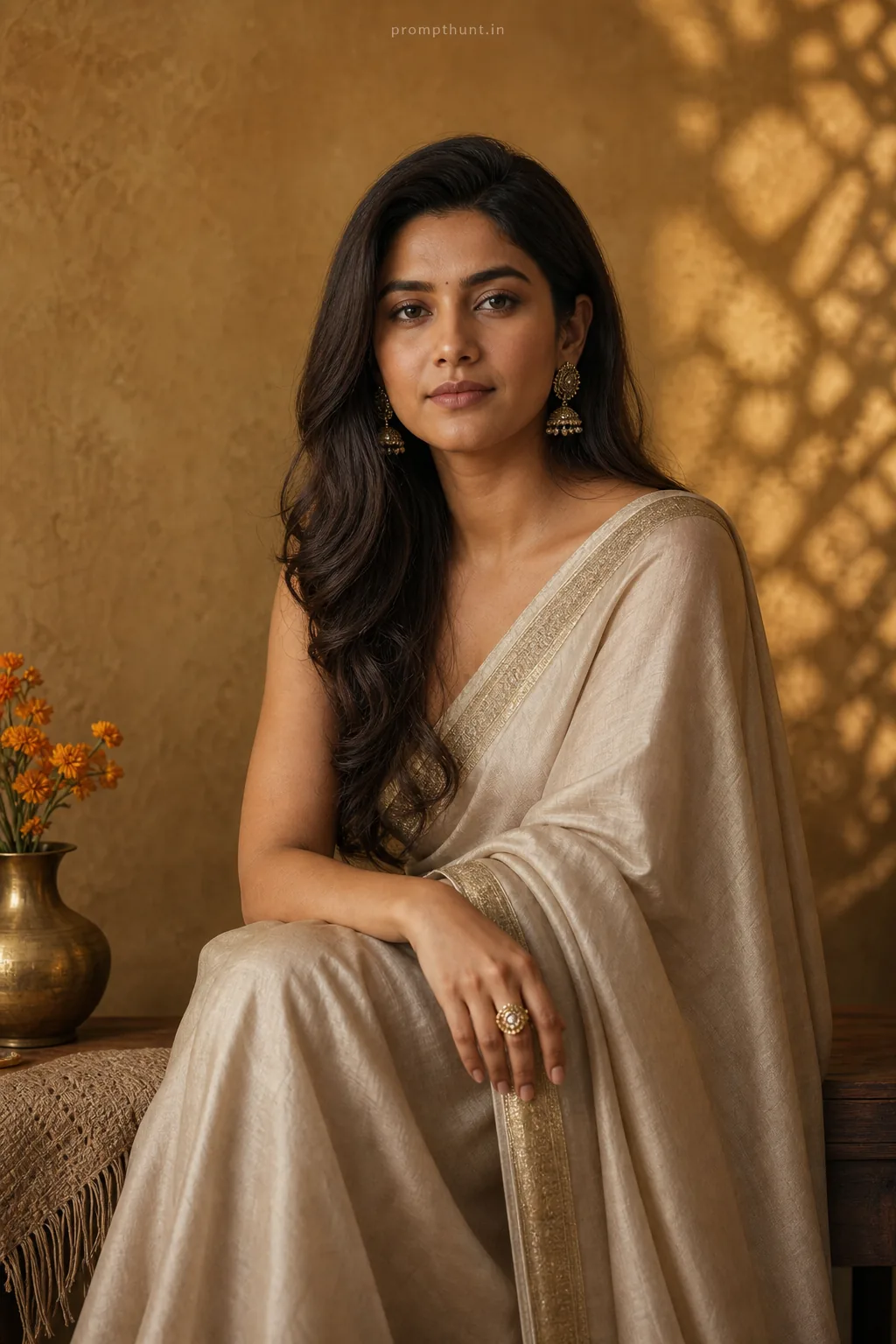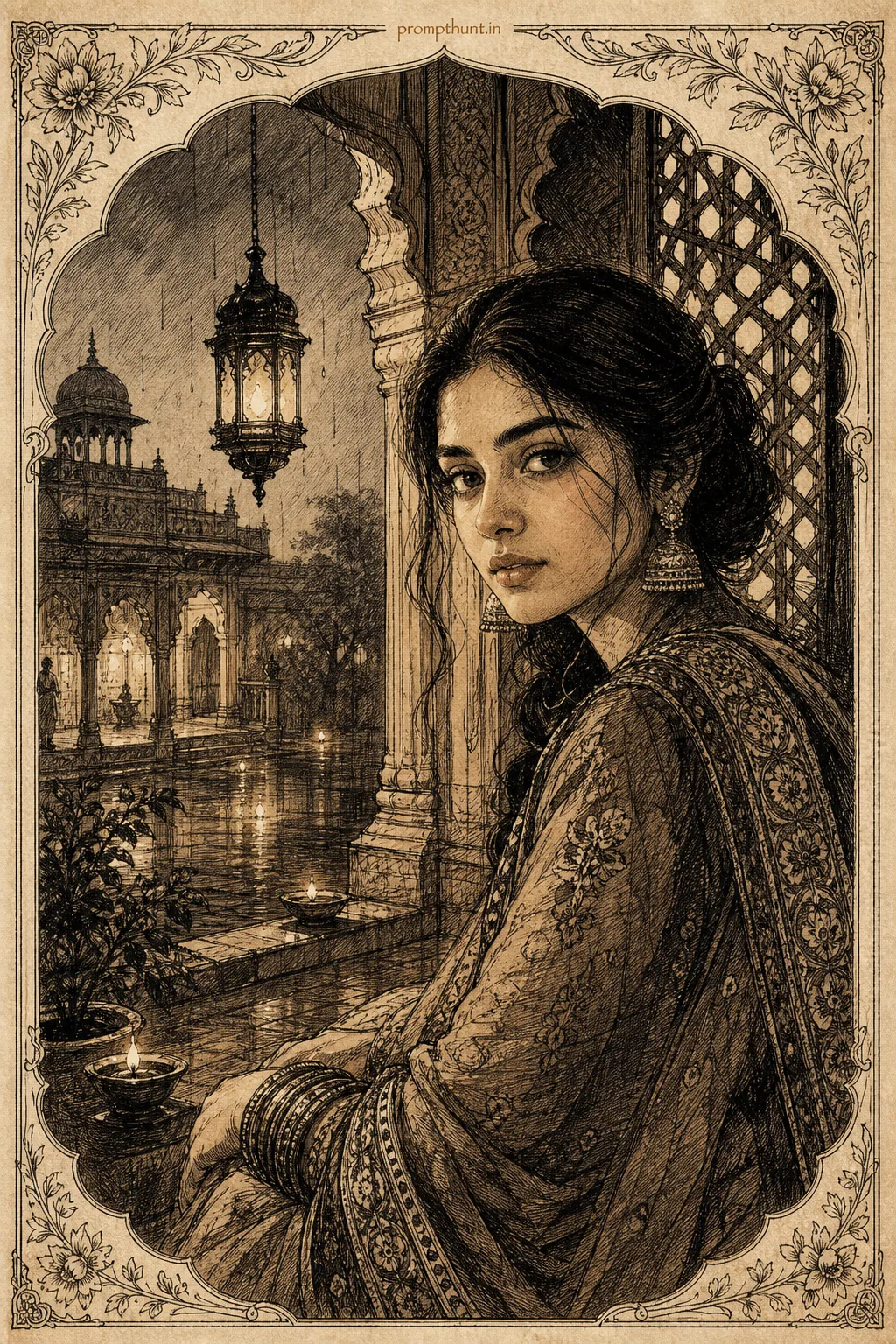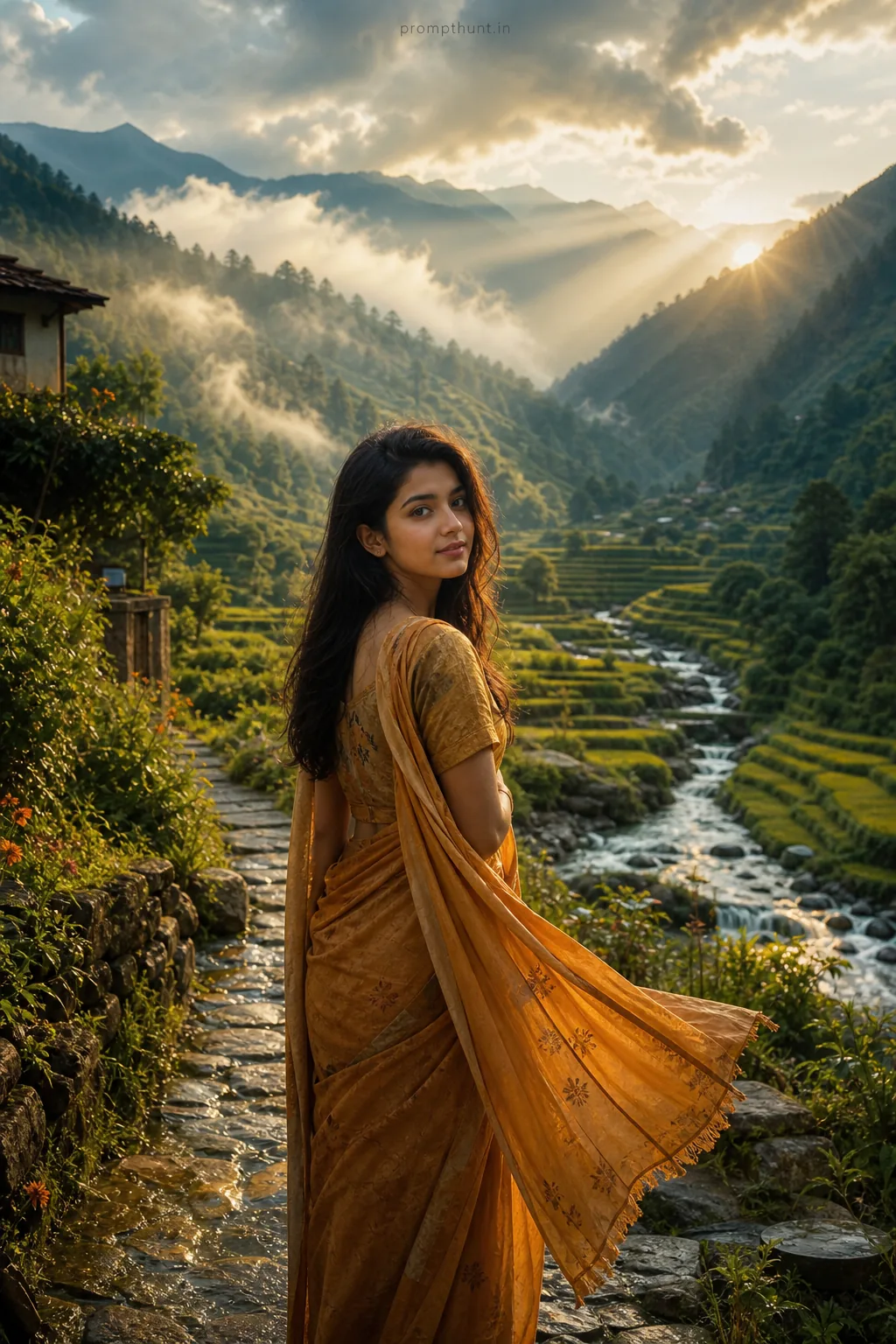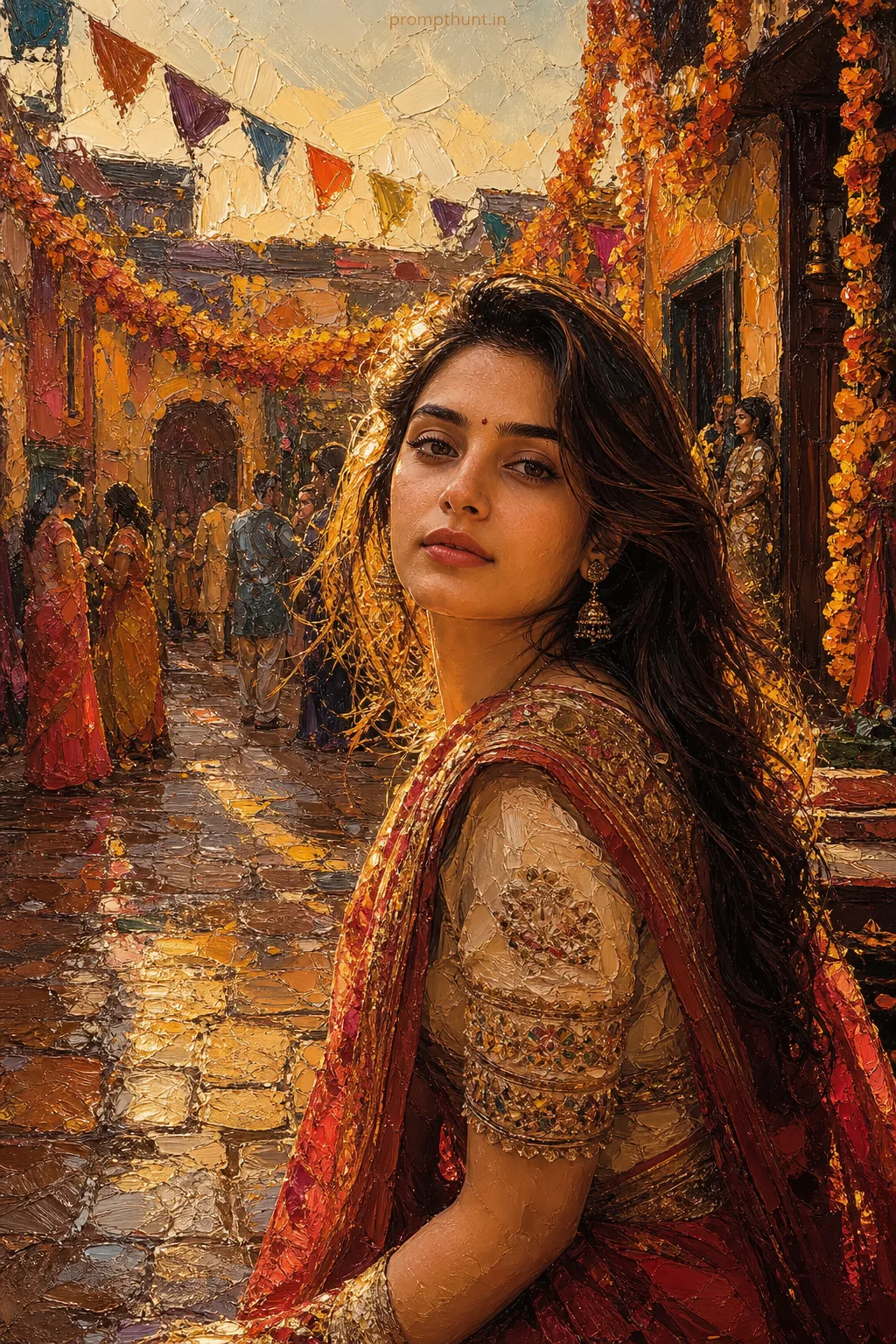

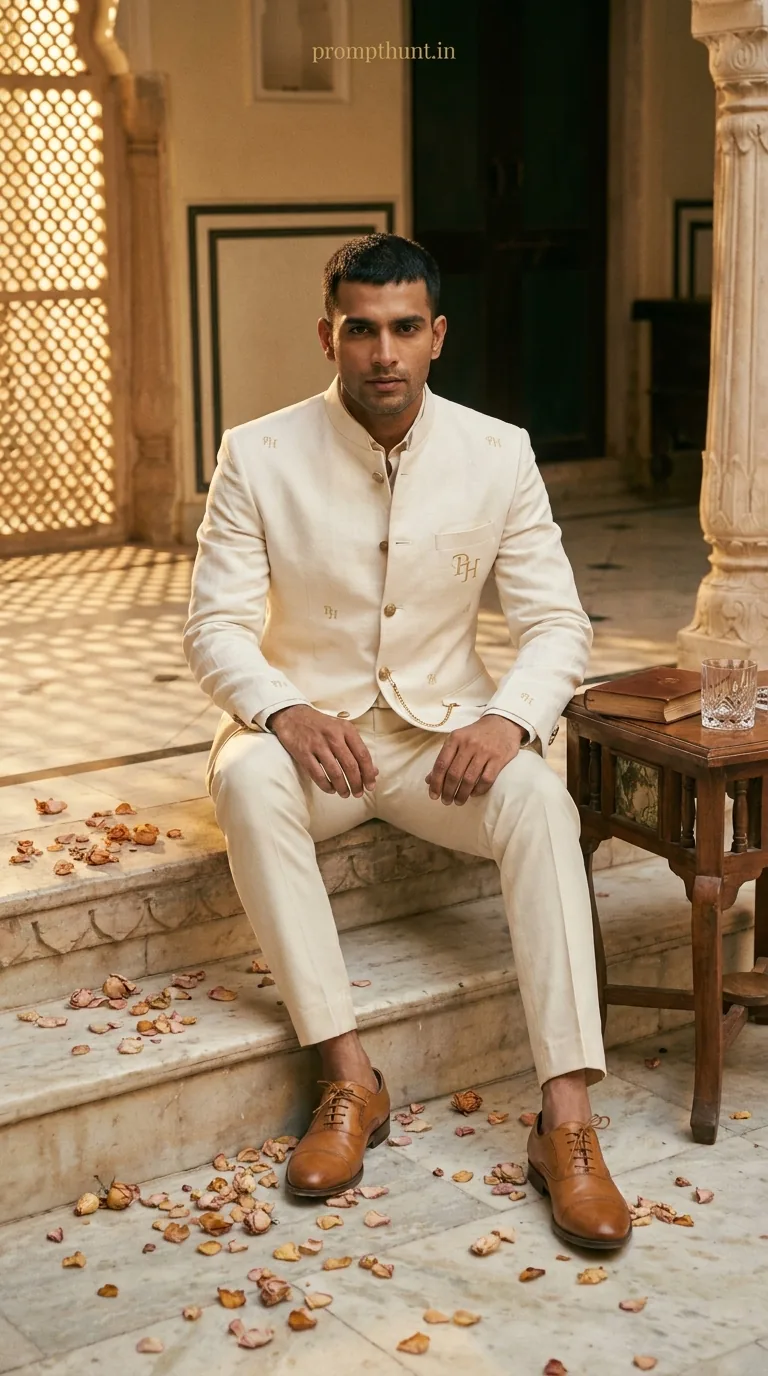

The Old Money Aesthetic prompt for Gemini AI generates ultra-realistic editorial portraits of Indian men styled in heritage-rich, understated luxury settings. Think tailored linen blazers, Rajasthani havelis, and warm cinematic light — all without a single logo in sight. Paste the prompt into Gemini, adjust your name or features, and you get magazine-cover-quality results in under a minute.
Old money doesn't shout. That's the whole point. No Gucci logo, no flashy chain, no neon backdrop — just quietly expensive taste and the kind of posture that says "my family owns the building." The Old Money Aesthetic has taken over Instagram reels, Pinterest boards, and now — inevitably — AI photo editing. And honestly, it was only a matter of time before someone combined it with a heritage Rajasthani haveli and a worn leather book. That someone is the Indian internet, and they were absolutely right to do it.
Paste this Gemini AI prompt, swap in your preferred features, and you get a photorealistic editorial portrait dripping in old-money elegance — ivory linen, antique stone, golden light, zero effort.
What the Old Money Aesthetic Actually Is
The Old Money Aesthetic is a visual style built on restraint. The rule of thumb: if the price tag is visible, it's not old money. Think muted palettes — cream, ivory, navy, camel, tobacco brown. Think tailored fits with no branding. Think settings that have history — libraries, stone courtyards, heritage architecture, leather-bound anything.
It's Gatsby without the parties. It's Shawshank without the prison (just the gravitas). It's the opposite of a Bollywood item number, and that contrast is exactly why it's resonating so hard with Indian audiences right now.
Applied to AI photo editing, this style means cinematic lighting, shallow depth of field, film grain, warm earthy tones, and a setting that looks like it has a 200-year backstory. The Rajasthani haveli is doing a lot of heavy lifting here, and fair enough — it genuinely is one of the most photogenic architectural settings on the planet.
The Prompt — Copy It, Use It, Thank Yourself Later
This is the full prompt. Paste it into Gemini exactly as written, or tweak the physical description to match your own features.
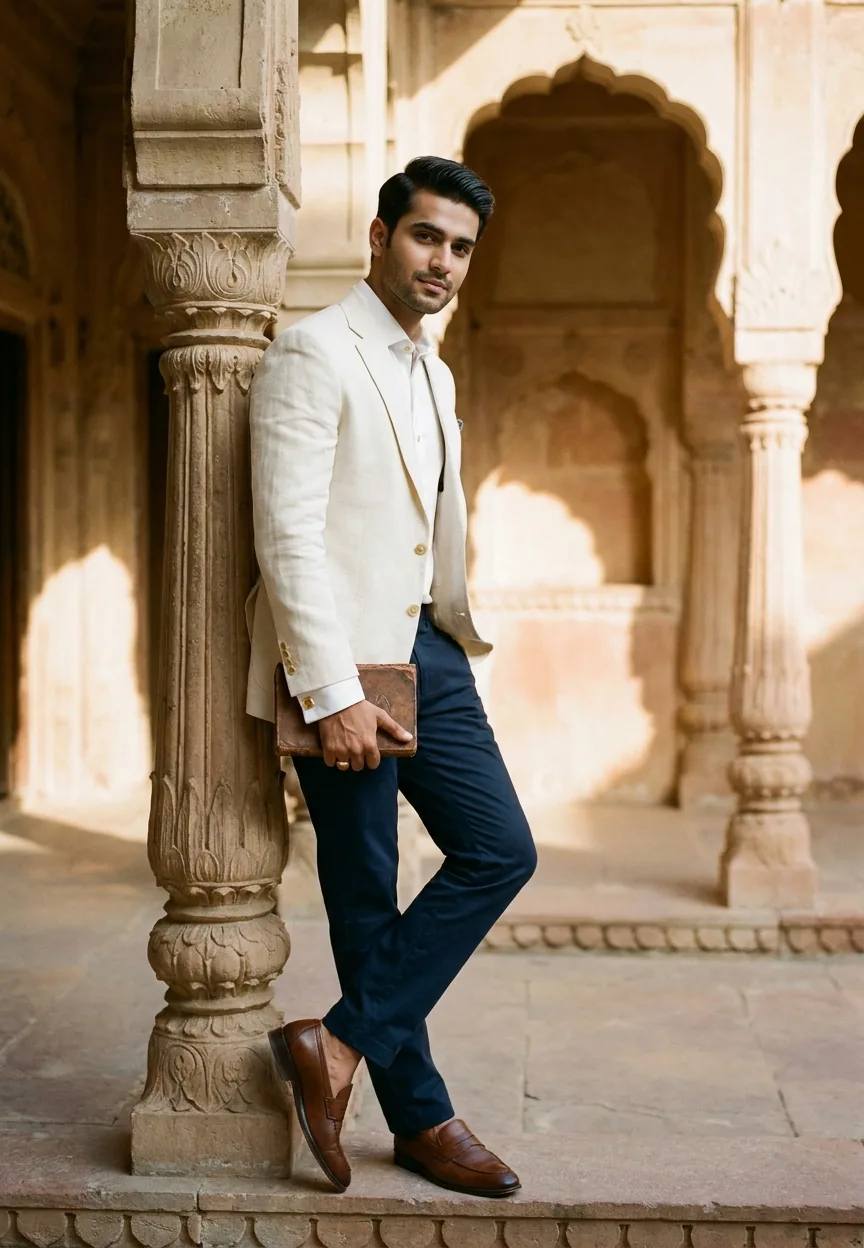
A strikingly elegant young Indian man in his mid-20s, wearing a perfectly tailored ivory linen blazer over a crisp white Oxford shirt with subtle gold cufflinks, dark navy chinos, and brown leather loafers, standing in the grand courtyard of a heritage Rajasthani haveli with ornate arched doorways and weathered sandstone walls draped in soft afternoon golden light, his posture relaxed yet commanding, one hand resting on an antique carved pillar, hair neatly parted and groomed, minimal gold signet ring on his finger, a worn leather-bound book tucked under his arm, warm moody cinematic lighting casting long shadows across the stone floor, vintage film photography aesthetic with rich warm tones, muted earthy palette of ivory, cream, navy, and gold, subtle lens flare, shallow depth of field with a bokeh background of arched corridors, ultra-realistic editorial fashion photography style, shot on medium format camera, 9:13 vertical portrait orientation, high detail, photorealistic, magazine cover quality
How to Use This Prompt — Three Steps, No Drama
Step one: open Gemini. Go to gemini.google.com or use the Gemini app on your phone. Make sure you are signed into your Google account. Free tier works fine for this.
Step two: paste the prompt. You can use it verbatim or swap in specifics — "sharp jawline," "curly hair," "wheatish complexion," whatever matches what you want the portrait to look like. More specific descriptions give you more consistent results. Nine times out of ten, adding one or two personal physical details makes the output feel less generic.
Step three: generate and iterate. If the first result looks off — wrong lighting, weird hands (AI hands are still doing their own thing half the time, like a jazz musician who refuses to follow the sheet music) — regenerate. Run the same prompt two or three times. Pick the strongest output.
That's genuinely it. The prompt itself is doing the heavy lifting.
Tips That Actually Make a Difference
Keep the colour palette locked. The ivory, cream, navy, and gold combination is what makes this feel cohesive. If you start adding bright colours in your modifications, the old money feel disappears immediately. You end up with new money, which is a different prompt entirely.
Specify the lighting direction. "Soft afternoon golden light from the left" gives you far more control than just "golden light." Directional lighting is what creates those long shadows across the stone floor — and that is the detail that makes these portraits look cinematic rather than catalogue.
Lean into the setting details. The haveli architecture — the ornate arches, the weathered sandstone, the carved pillars — is doing enormous aesthetic work here. If Gemini gives you a blurry or generic background, add more specificity: "intricately carved Jaisalmer sandstone columns, ornate jaali screens, warm ochre courtyard walls."
Ask for medium format camera language. Phrases like "shot on Hasselblad medium format" or "Fuji GFX rendering" train the AI to produce that characteristic wide tonal range and slight warmth that separates editorial photography from a standard smartphone snap.
Vertical is non-negotiable for portrait sharing. The 9:13 ratio is built for Instagram and Pinterest. If you want a horizontal version for a desktop wallpaper or LinkedIn banner, swap it to 16:9 and specify "landscape orientation, wide establishing shot."
Why This Is Trending in India Right Now
The Old Money Aesthetic hit global social media around 2022, but it has taken on a distinctly Indian dimension in 2024 and 2025. Here is why.
India has its own version of old money that is genuinely centuries deep — Rajput havelis, Mughal-era architecture, zamindari estates, colonial-era clubs. The visual language already existed. AI photo prompts just gave millions of people access to it without a flight to Jodhpur and a fashion photographer on day rates.
There is also a quiet pushback happening against the maximalist, heavily filtered, ring-light aesthetic that dominated Indian social media for the last decade. Creators are reaching for something that looks considered rather than constructed. The old money style rewards stillness — one good outfit, one beautiful setting, one moment of quiet confidence. That is a harder thing to fake, which is exactly why the AI version feels satisfying to produce.
Searches for "old money aesthetic India" grew substantially across Pinterest and YouTube through 2024. The haveli prompt specifically started circulating in Indian AI communities on Telegram and WhatsApp groups around mid-2024, and the engagement on these images consistently outperforms more overtly glamorous styles.
Honest Opinion — When to Use This and When Not To
This prompt is genuinely excellent for profile photos, editorial-style social content, personal branding images, and portfolio headers. If you are a freelancer, consultant, or creative professional who wants an aspirational portrait without a professional shoot, this delivers results that are hard to distinguish from real photography at a scroll-stop glance.
That said — and this matters — do not use AI-generated portraits where authenticity is professionally expected. Job applications, verified press profiles, client-facing bios on agency websites: these need real photographs. Using an AI portrait in those contexts and getting found out causes far more reputational damage than any good-looking portrait is worth. Fair call.
There is also a creative ceiling here. The prompt is strong, but it produces a type. Spend long enough generating old money haveli portraits and they start to blur together — same light angle, same posture, same signet ring energy. If you want to stand out rather than blend in, use this as a starting point, not a finished product. Modify the setting. Change the time of day. Swap the book for a chai glass and see what happens. The prompt is a template, not a ceiling.
One more honest note: Gemini's photorealism has come a long way, but hands, fine jewellery details, and fabric texture in shadow areas can still go strange. Check those areas before you post anything. The signet ring in particular has a habit of becoming architecturally ambitious in ways no jeweller has yet attempted.
Overall though? This is one of the stronger AI portrait prompts in circulation right now. The combination of the old money visual language with genuinely iconic Indian heritage architecture hits something that feels both globally aspirational and specifically grounded. It does not feel like a Western aesthetic awkwardly copy-pasted onto an Indian face. It feels like it belongs exactly where it is standing — one hand on an antique pillar, leather book under the arm, long shadows across the courtyard floor.
The Bottom Line
The Old Money Aesthetic Gemini prompt is one of those rare AI photography prompts where the output regularly surprises you with how good it looks. The haveli setting, the warm cinematic light, the restrained colour palette — it all adds up to portraits that feel like they belong in a heritage travel magazine or a very well-funded fashion editorial. Paste it, tweak it, generate a few variations, and pick the one that makes you look like you have been quietly wealthy for at least three generations. No logos required. Just good posture and the audacity to carry a leather-bound book somewhere you are clearly not reading it. Old money, new prompt — the family would be proud.