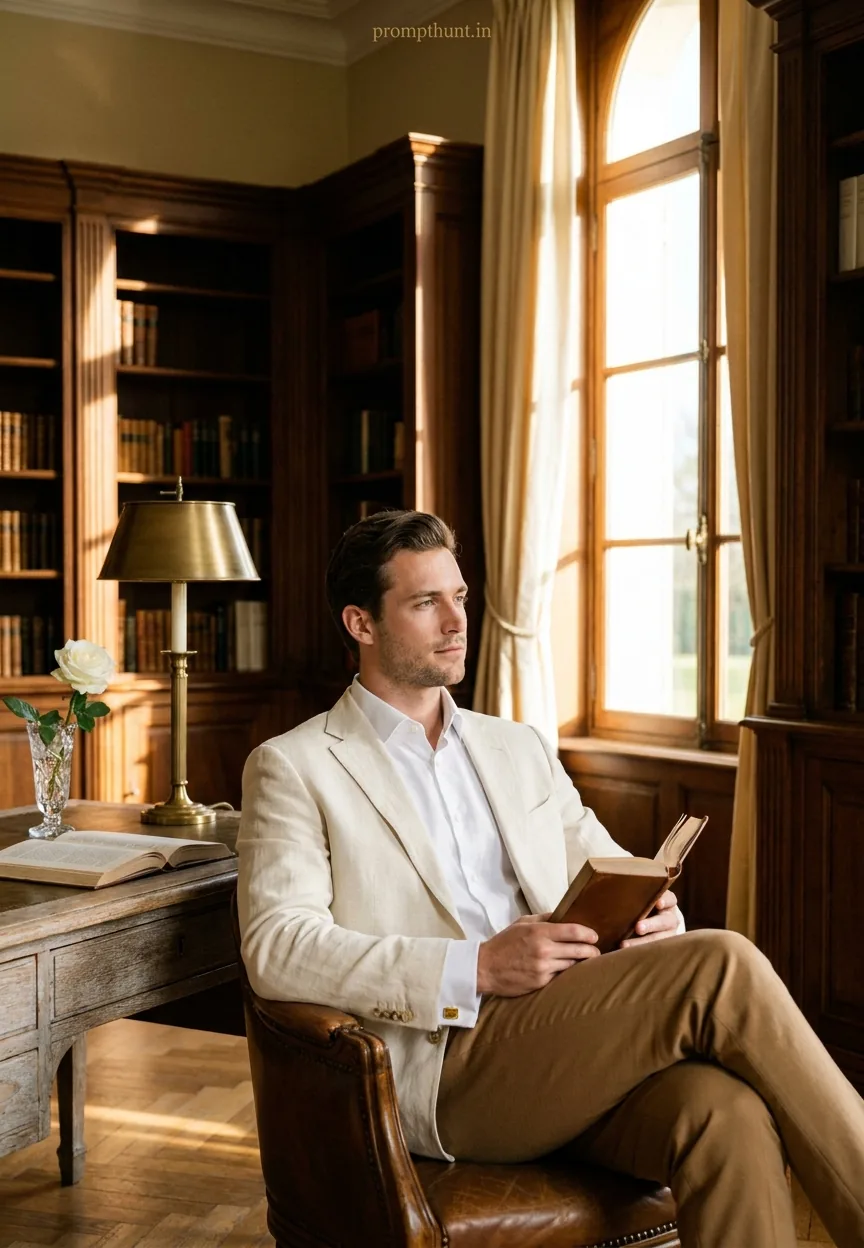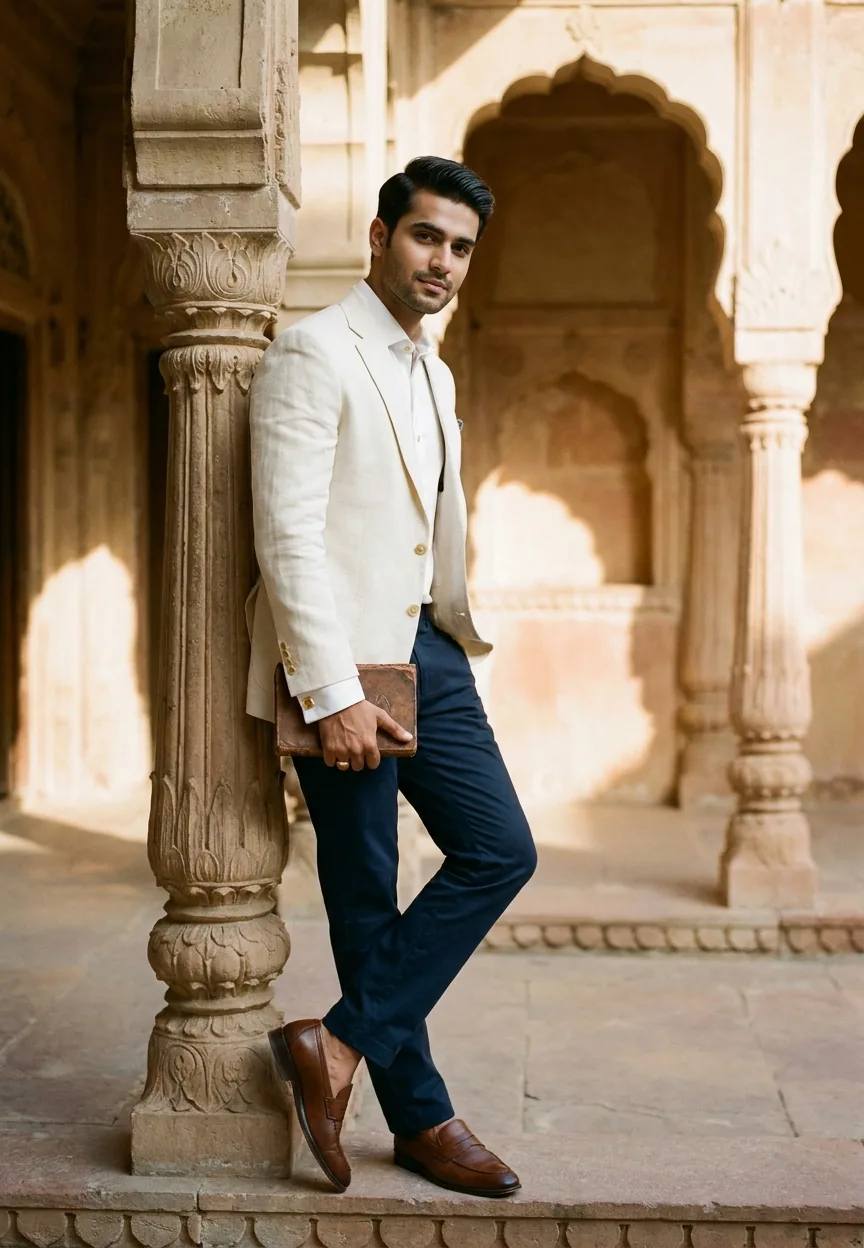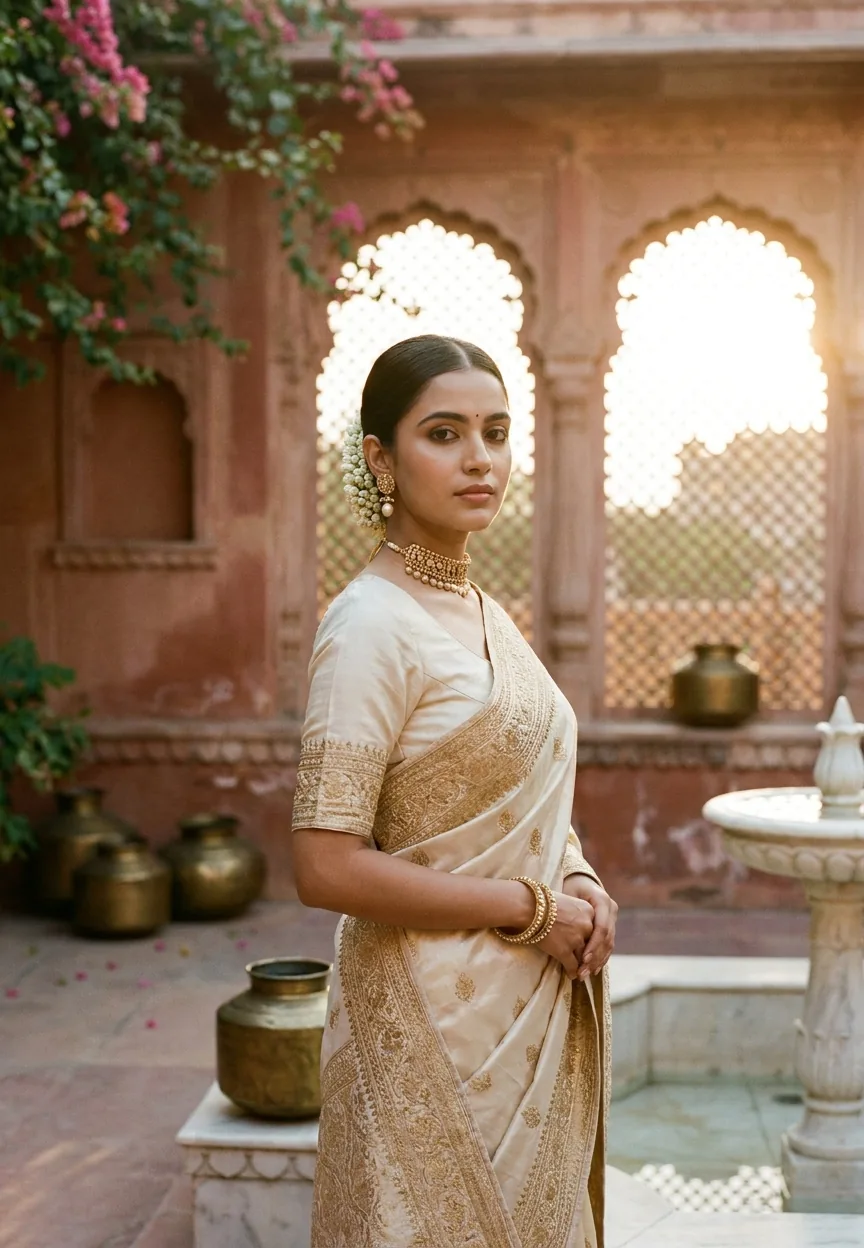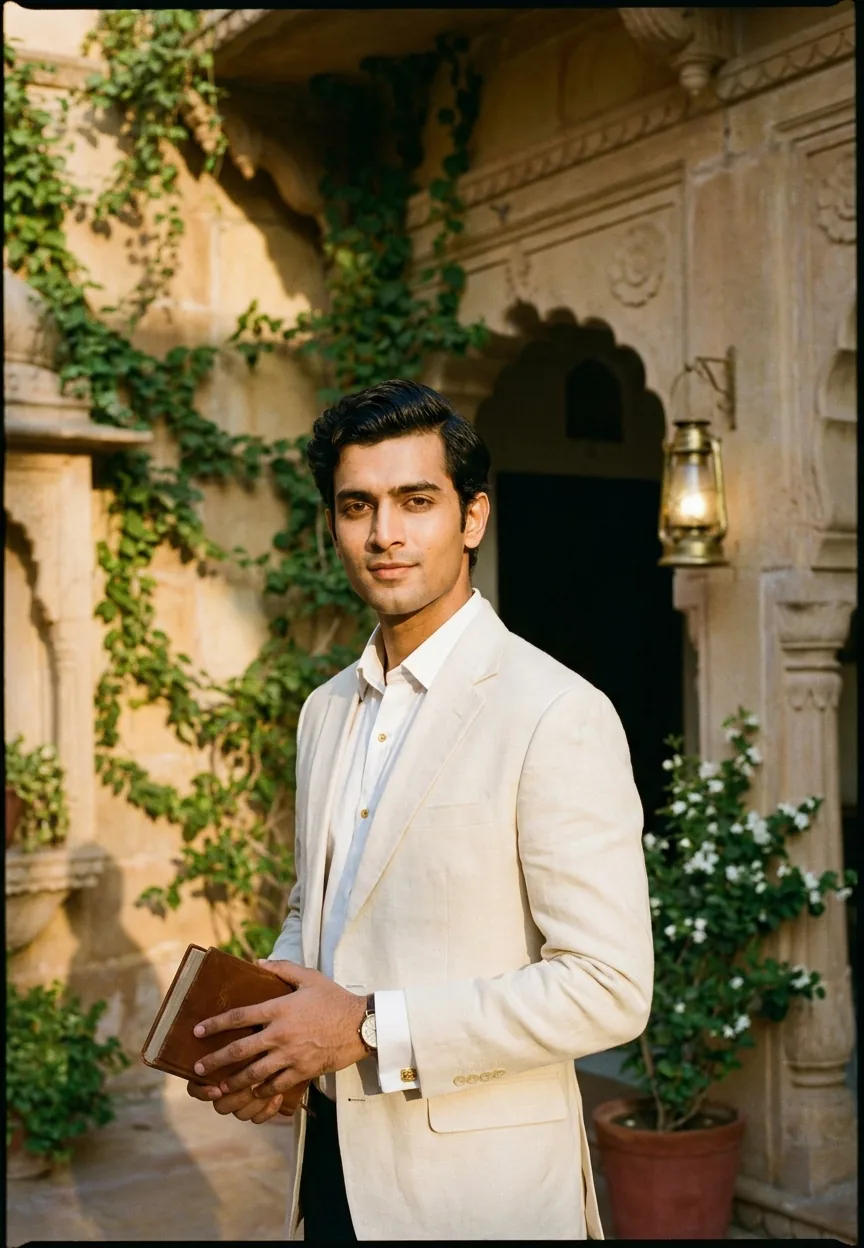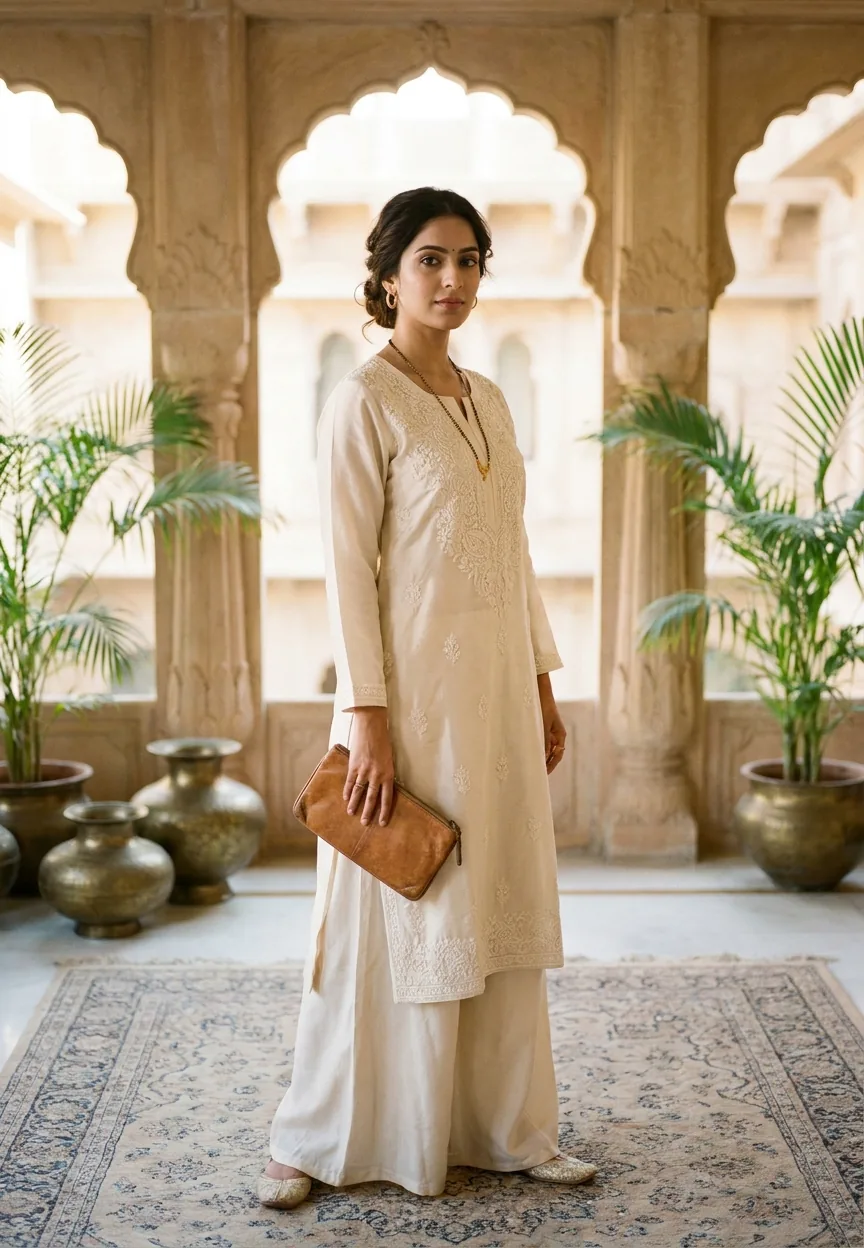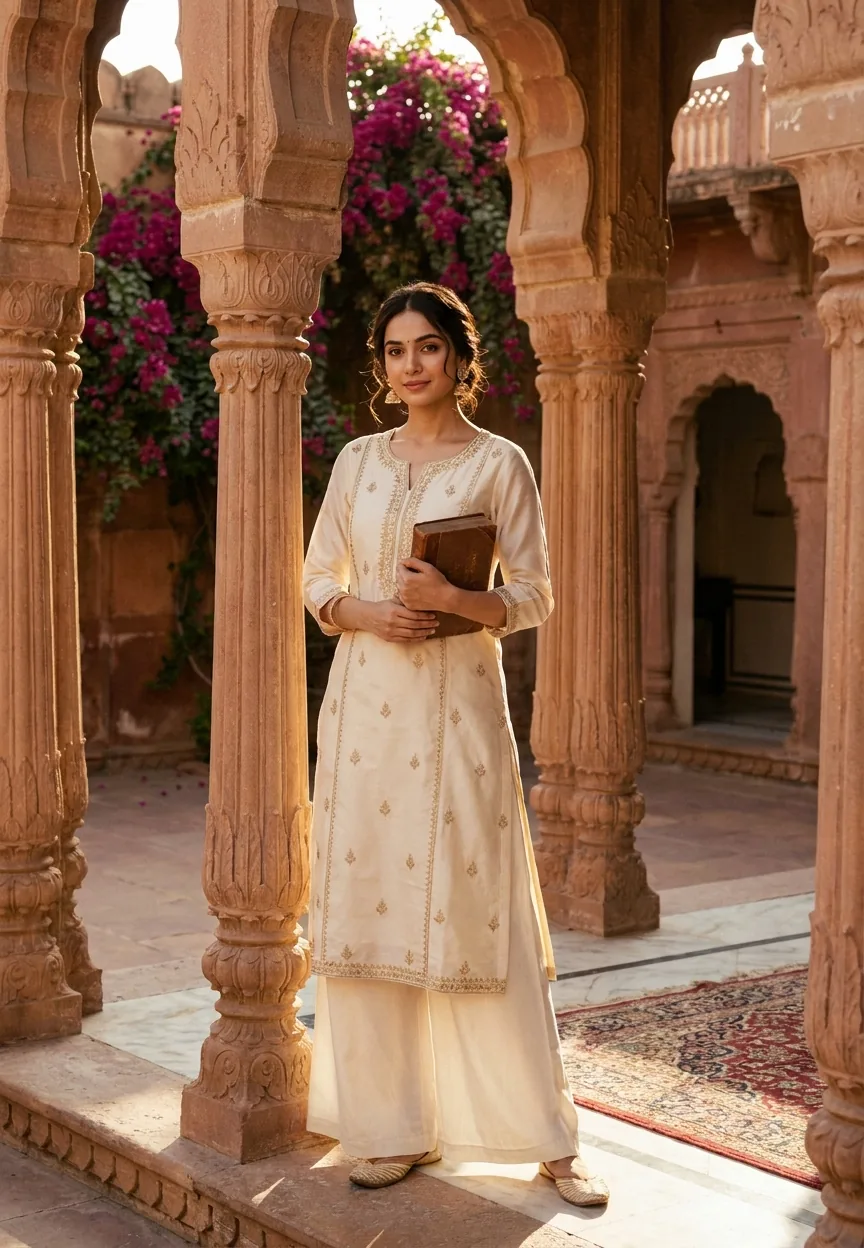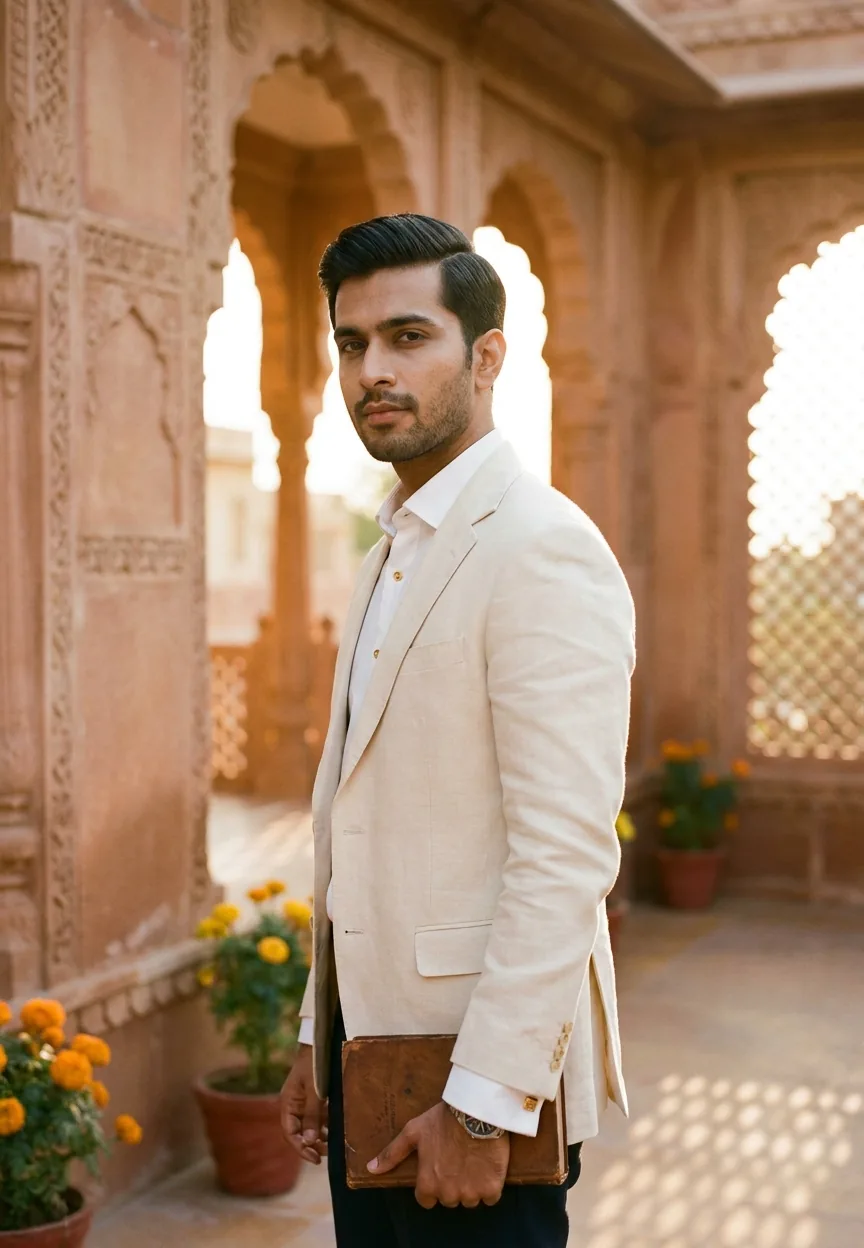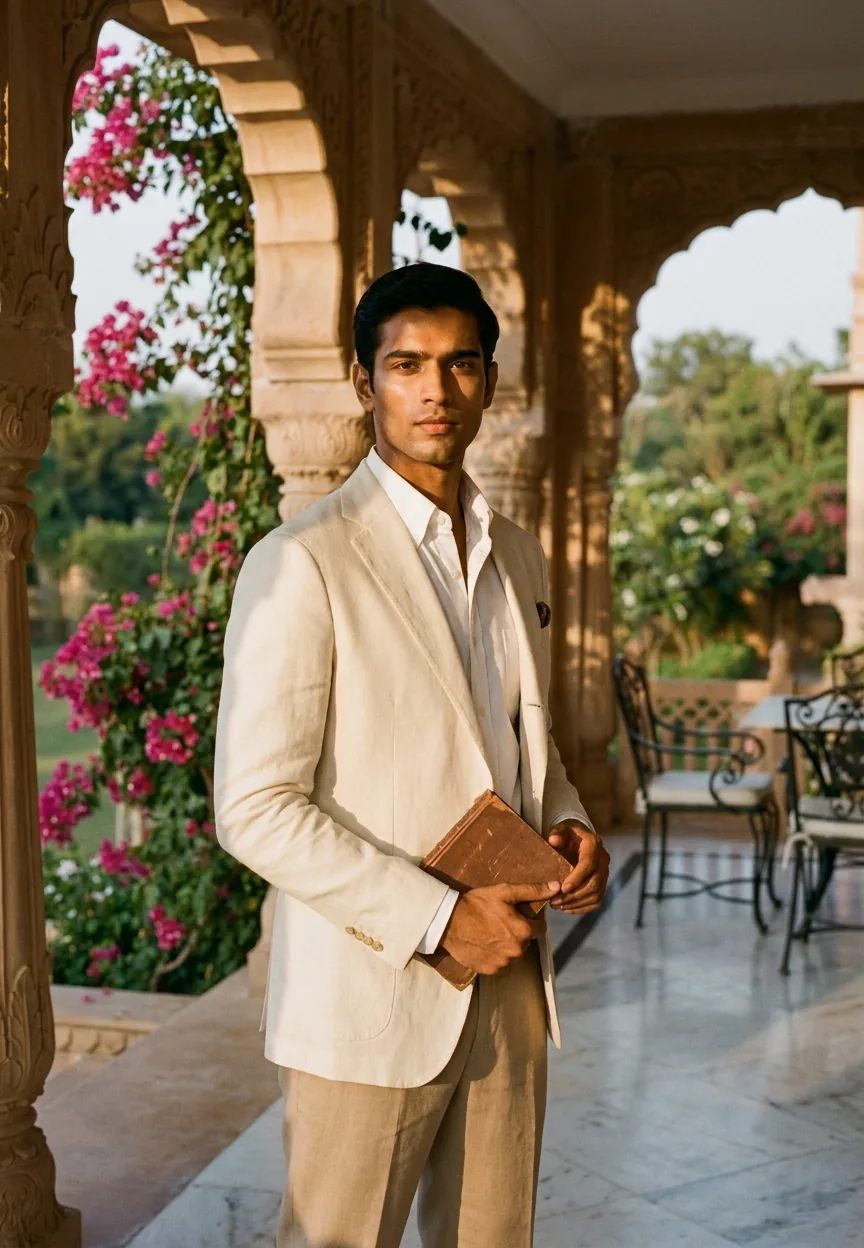
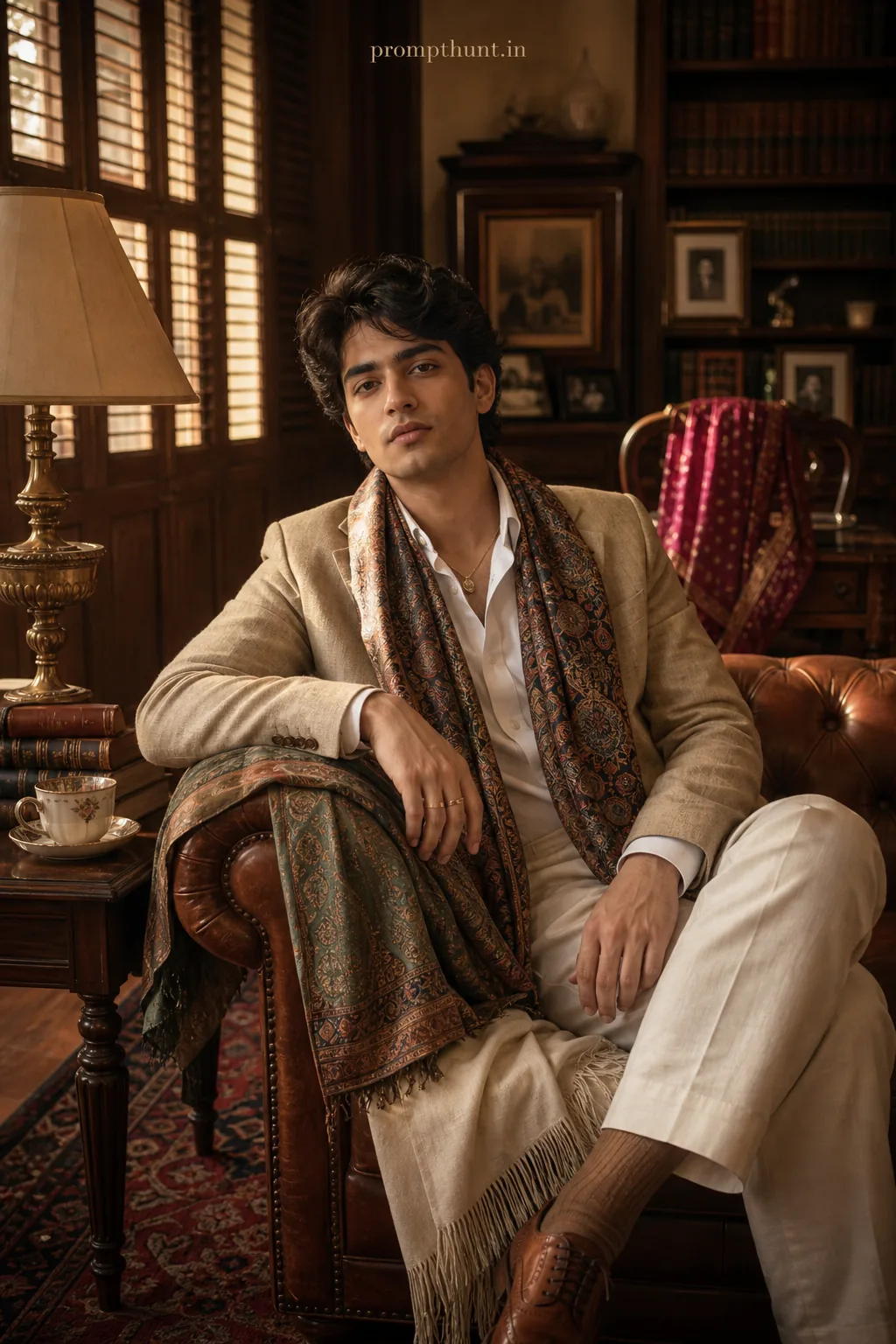
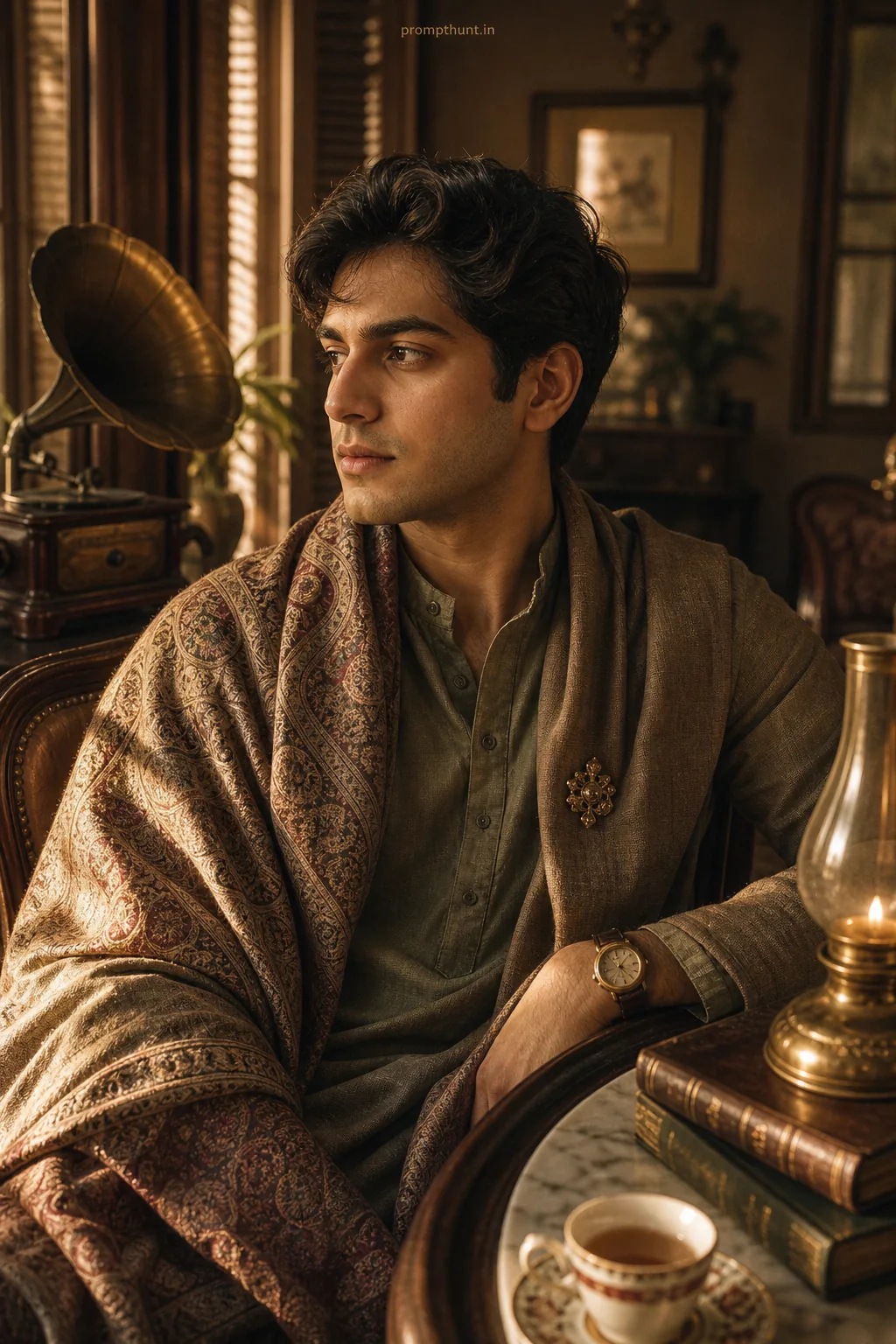
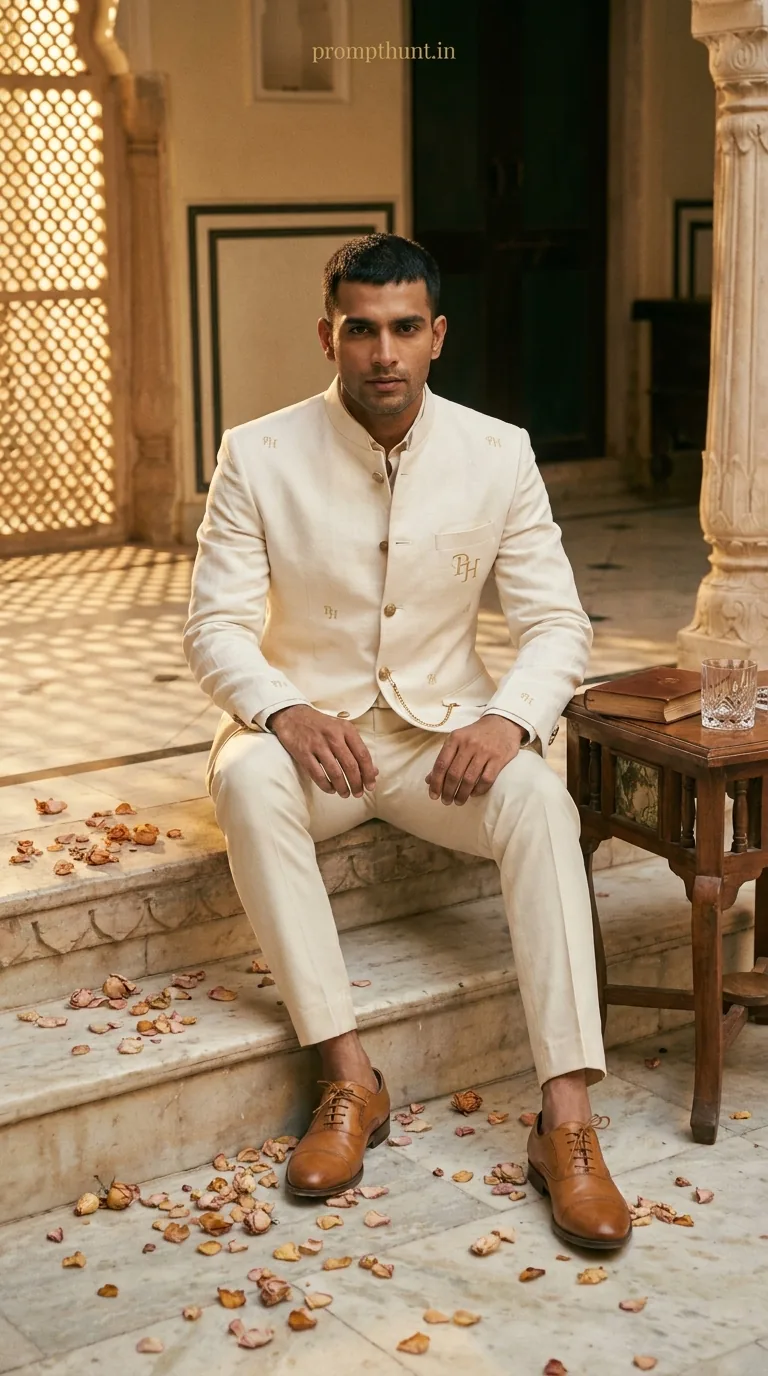
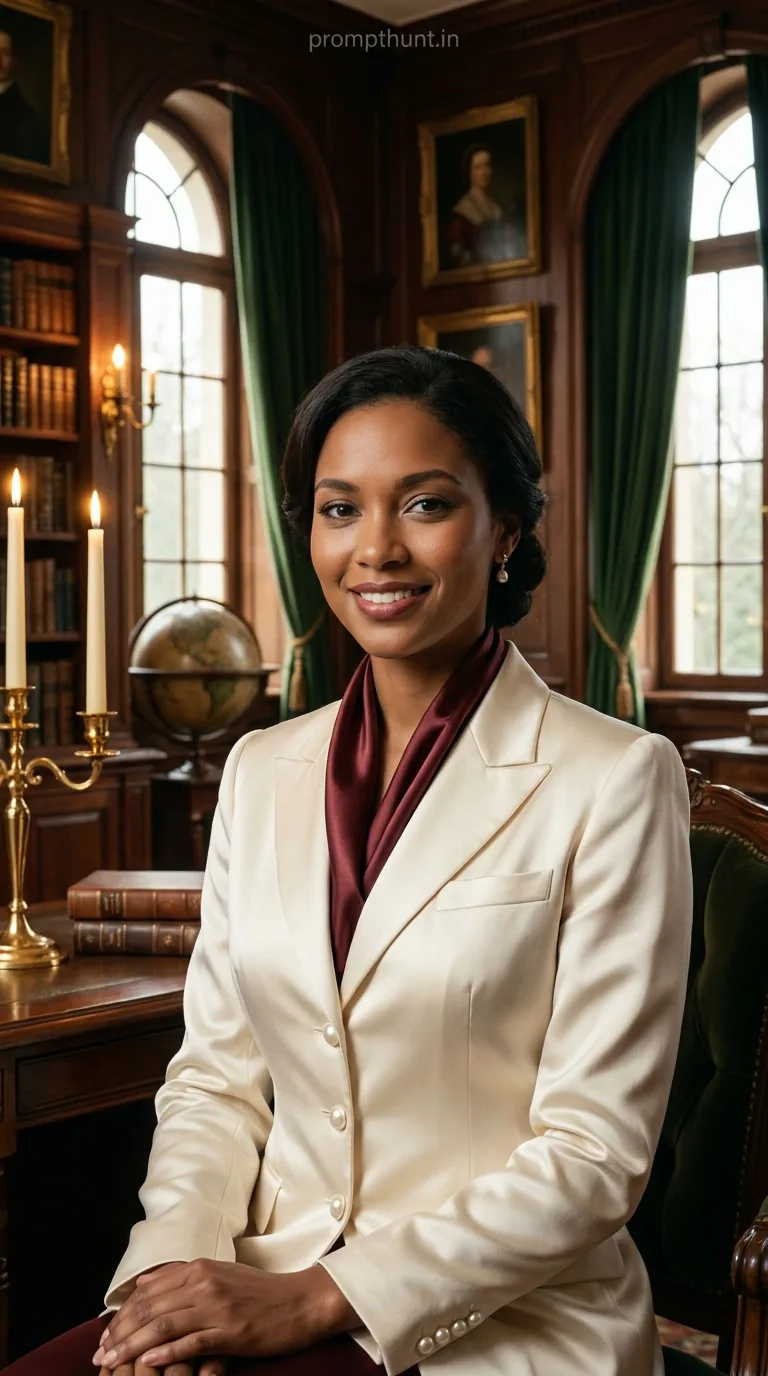
The Old Money Aesthetic prompt for Gemini AI generates a hyperrealistic portrait of a stylish young Indian man on a Rajasthani heritage terrace — think tailored linen blazer, golden hour light, and the kind of quiet confidence that says "I've never once checked a price tag." Paste the prompt into Gemini, set the aspect ratio to 9:13, and you'll have an editorial-quality AI portrait in under a minute.
Old Money Aesthetic Indian Look — Gemini AI Photo Editing Prompt
There's rich, and then there's old money. One buys a loud logo. The other buys a heritage haveli in Rajasthan and reads leather-bound books on the terrace like it's a Tuesday. The Old Money Aesthetic has taken over AI-generated portrait photography in India, and honestly, it was only a matter of time. This particular Gemini prompt nails every detail — the warm sandstone arches, the bougainvillea, the perfectly undone shirt buttons (exactly two, not three — three is chaos). If you want a portrait that looks like it belongs in a coffee-table book nobody can afford, you're in the right place.
Paste this prompt into Gemini AI, keep the 9:13 aspect ratio, and you'll get a cinematic old money aesthetic portrait of a young Indian man that looks like it cost a small fortune to shoot on location in Jaipur.
What the Old Money Aesthetic Actually Is
Old money aesthetic is a visual style built on restraint. No flashy watches. No visible branding. Just impeccable tailoring, neutral palettes, and the kind of effortless confidence that comes from never having to try too hard.
Think cream linen. Think polished leather. Think "my grandfather had this blazer made in 1971 and it still fits perfectly." The colour palette stays in the cream-to-tan-to-soft-gold range. Nothing screams. Everything whispers.
In the Indian context, this aesthetic gets a beautiful regional twist. Colonial-era havelis, Rajasthani sandstone, ornate archways, cascading magenta bougainvillea — these backdrops add a layer of cultural heritage that the European old money look simply doesn't have. It's not just inherited wealth. It's inherited history.
The result is an image that feels timeless rather than trendy. Which, funnily enough, is exactly what old money is supposed to feel like.
The Prompt — Copy This Exactly
Don't paraphrase it. Don't simplify it. AI image prompts reward specificity, and this one is specific for a reason. Every detail — the side-parted hair, the two undone buttons, the wrought-iron furniture blurred in bokeh — is doing deliberate work.
A strikingly handsome young Indian man in his mid-20s, with sharp chiseled features, warm golden-brown skin, and neatly styled dark hair with a side part, dressed in an impeccably tailored cream-colored linen blazer over a soft white Oxford shirt with the top two buttons casually undone, paired with well-fitted beige trousers and brown leather loafers, standing on the sun-drenched marble terrace of a grand colonial-era heritage haveli in Rajasthan, surrounded by ornate sandstone arches and cascading bougainvillea in deep magenta, holding a leather-bound book in one hand with a relaxed confident posture, soft golden hour afternoon light casting warm amber shadows across his face, background featuring lush manicured gardens and vintage wrought-iron furniture slightly blurred in bokeh, overall mood exuding quiet luxury, understated elegance, inherited wealth and timeless sophistication, muted warm color palette of cream, ivory, tan, and soft gold, shot in editorial fashion photography style with a medium close-up to three-quarter body frame, 9:13 vertical portrait aspect ratio, ultra-realistic hyperdetailed cinematic quality, 8K resolution
How to Use This Prompt — Step by Step
This works best in Gemini with image generation enabled. Here's the exact process.
Open Gemini at gemini.google.com. Make sure you're on a plan that includes image generation — the free tier may not support it depending on your region. If Gemini isn't available to you, this prompt also performs well in Adobe Firefly and Microsoft Designer with minor adjustments to the aspect ratio settings.
Paste the full prompt exactly as written above. Do not trim it. The length signals to the model that detail matters. Short prompts get short results.
If the tool gives you an aspect ratio setting, choose 9:13 or the closest vertical portrait option available. This is what makes the output feel like an editorial fashion photograph rather than a holiday snap.
Generate three to four variations in one session. AI image tools have good days and bad days (don't we all), so running a few iterations gives you the best chance of a standout result.
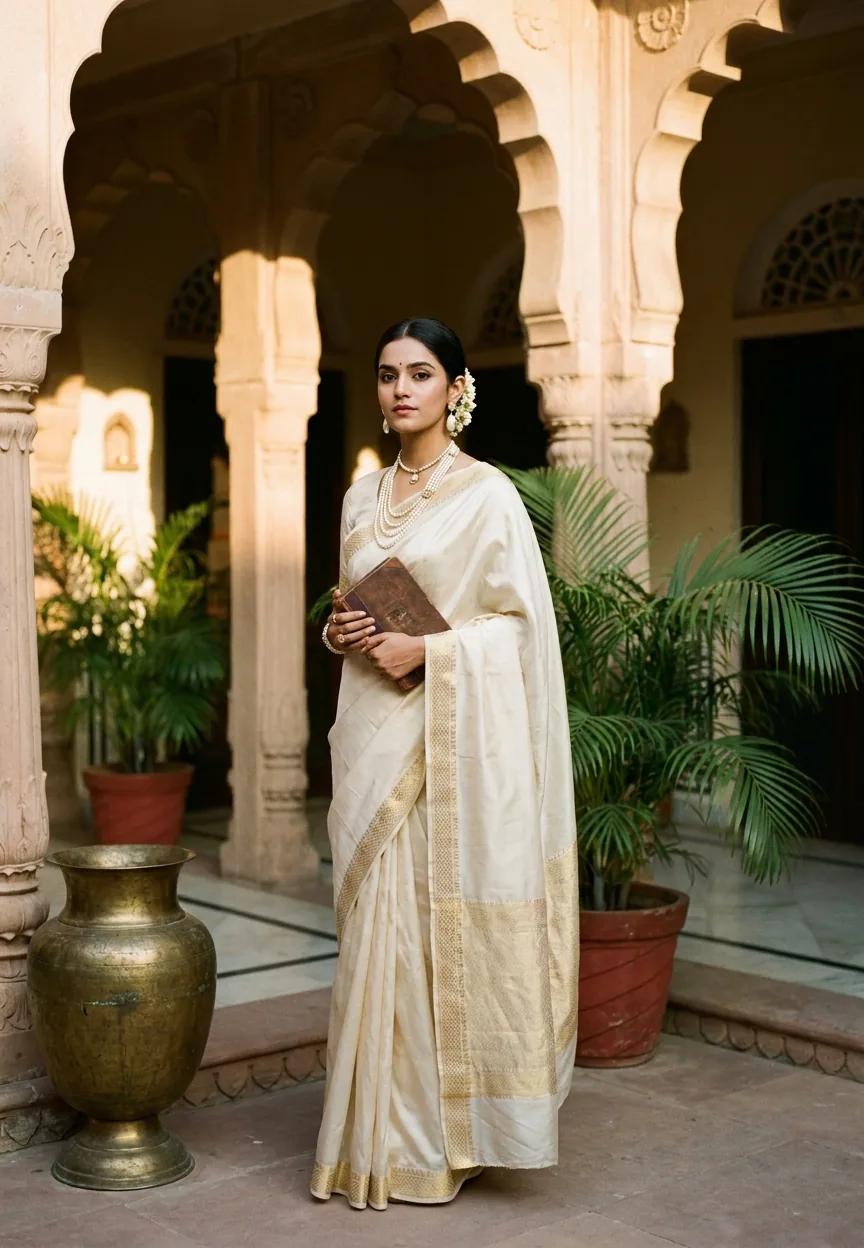
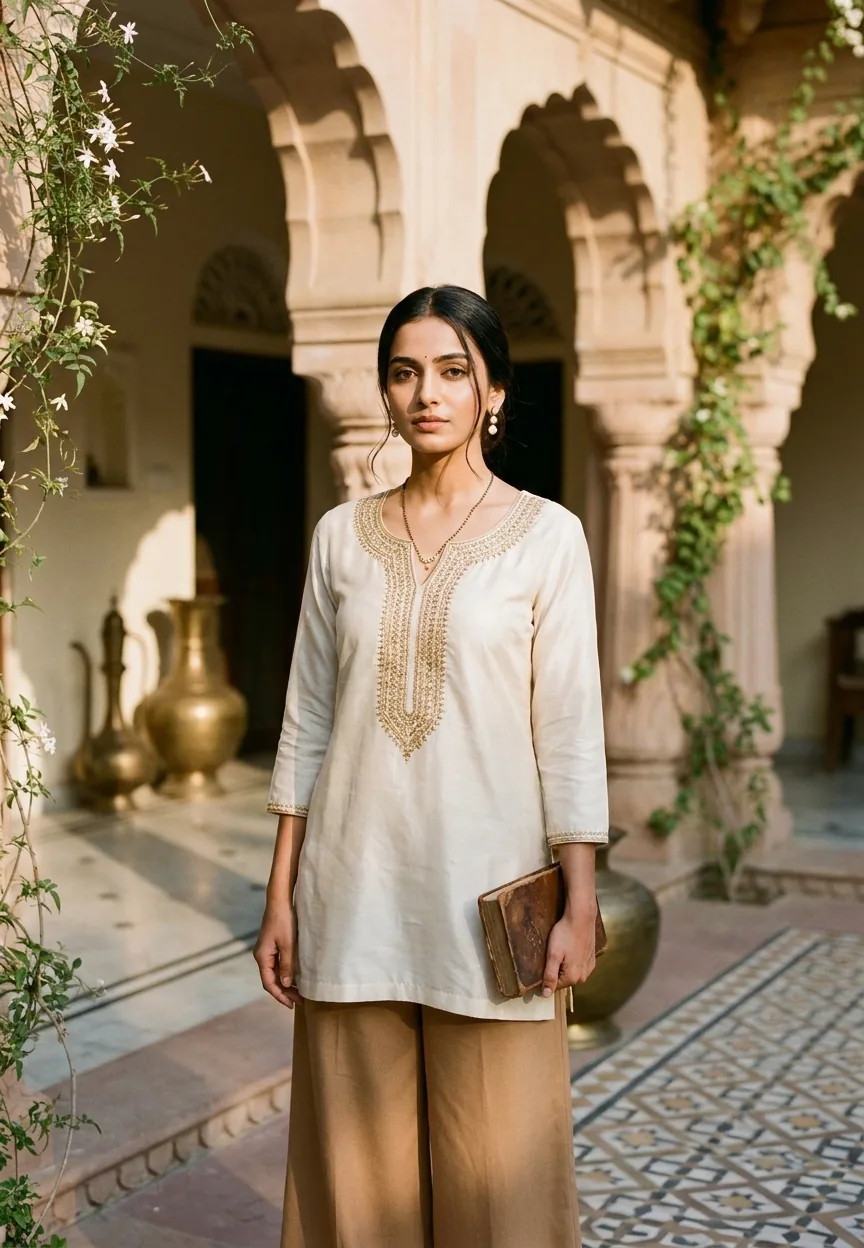
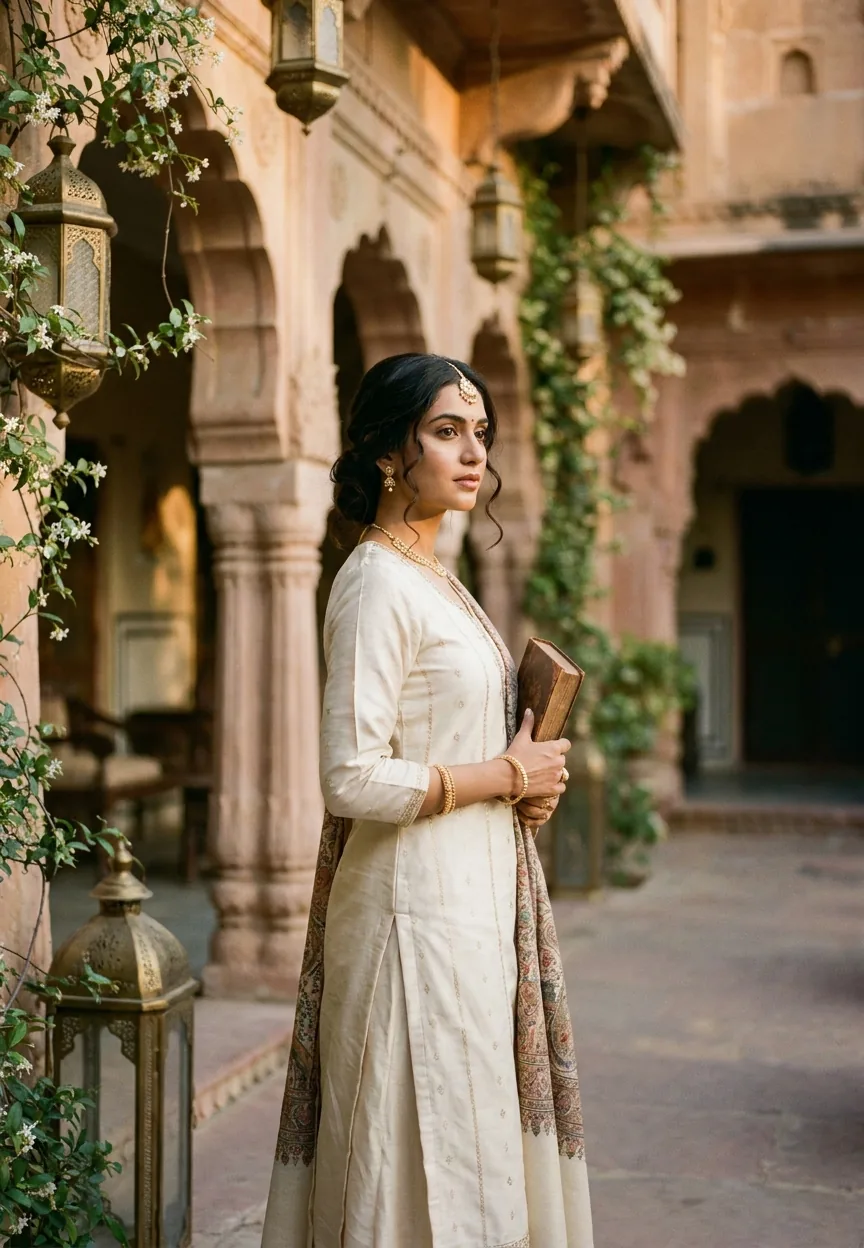
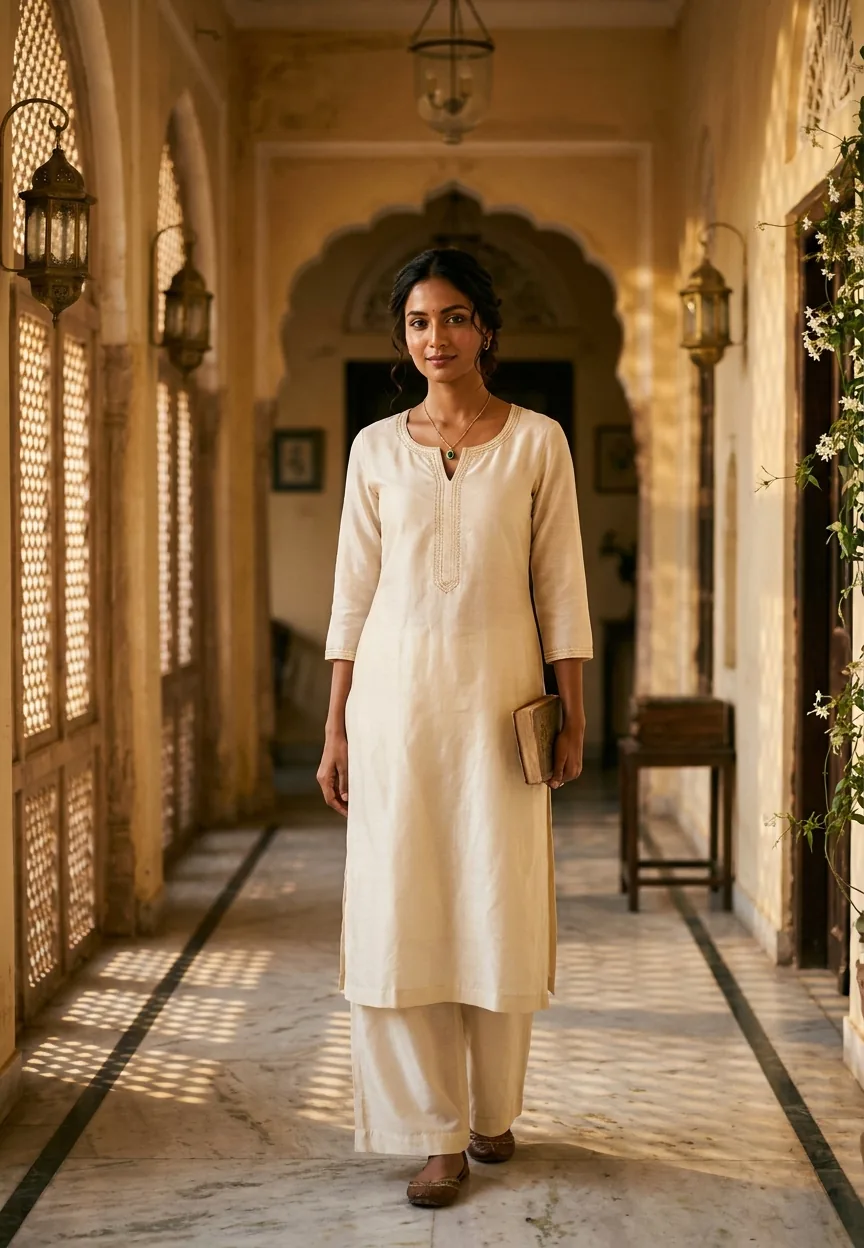
If you want a female version, swap the gender descriptors and adjust the outfit — a cream silk salwar in the same muted palette works beautifully against the same Rajasthani backdrop.
Tips for Getting the Best Results
Nine times out of ten, the prompt works as-is. But here are a few tweaks worth knowing.
If the face looks slightly off — and AI faces occasionally do look like they've had a very long week — add "symmetrical facial features, natural skin texture, no distortion" to the end of the prompt. It helps.
If the background feels too busy and competes with the subject, add "subject as clear focal point, background depth of field increased." You want the haveli to feel present, not dominant.
The golden hour lighting in this prompt is load-bearing. Do not swap it for anything harsh or overhead. The warm amber shadow across the face is what gives the portrait its warmth and editorial quality. Change the lighting and you change the whole mood.
Rule of thumb: if something looks slightly wrong, regenerate before you start editing the prompt. Gemini's outputs vary considerably between runs, and you might get exactly what you want on the next attempt without changing a single word.
For social media use, crop to a 4:5 ratio after generation. It sits better in Instagram feeds than the full 9:13 frame.
Why This Is Trending Across India Right Now
The old money aesthetic has been circling global social media for a couple of years. But its Indian version — specifically the Rajasthani heritage haveli setting — only really took off in the last six months, and for a few clear reasons.
First, India has genuine architectural heritage that the aesthetic can borrow from. A cream linen blazer in front of a Jaipur haveli is not cosplay. It's a real place, a real tradition, and AI is finally good enough to render it convincingly. That authenticity matters to Indian audiences in a way it doesn't always matter elsewhere.
Second, the palette works with Indian skin tones in a way that a lot of Western fashion aesthetics simply don't. Warm ivory, tan, soft gold — these colours sit beautifully against golden-brown skin. The prompt was clearly designed with that in mind, and it shows in the output.
Third — and this is the honest one — people just like looking like they're quietly, effortlessly wealthy. The appeal of old money is that it doesn't try. And after a few years of maximalist fashion trends screaming for attention, understated elegance is a genuine relief.
Honest Opinion — When Not to Use This Prompt
This prompt is excellent. I'll say that plainly. But it's not right for every situation, and I'd rather tell you that now than let you find out the hard way.
If you're building a brand that's meant to feel modern, urban, or accessible, this aesthetic works against you. Havelis and inherited-wealth energy signal exclusivity. That's the point. But if your audience is meant to feel included rather than aspirational, it can create distance rather than connection.
It's also worth knowing that this style is becoming recognisable. AI old money portraits have a visual signature — the bokeh gardens, the golden light, the casually open collar — and as more people use this exact prompt, audiences will start to clock it as AI-generated fairly quickly. That's not necessarily a problem, but it's not nothing either.
The portrait also works best as a standalone image. If you're trying to place this character in a contemporary setting — a city office, a modern apartment, a product shoot — the Rajasthan backdrop creates a jarring mismatch. For those use cases, strip the location details and rebuild the environment from scratch.
And if you're after genuine originality, treat this prompt as a starting point rather than a finished product. Swap the bougainvillea for a Kerala backwater. Change the blazer to a structured kurta in the same cream palette. The old money aesthetic is a visual language, and once you understand the grammar, you can write your own sentences.
Final Word
The Old Money Aesthetic Indian Look prompt is one of the cleaner, more thoughtful AI portrait prompts doing the rounds right now. It works because it's specific, because the setting is genuinely beautiful, and because it understands exactly what the style is trying to communicate — quiet confidence, inherited taste, and the kind of life where the bougainvillea is always in bloom. Paste it, generate a few versions, grab the best one, and remember: old money never rushes. Neither should you. Unless the golden hour light is fading, in which case, run.