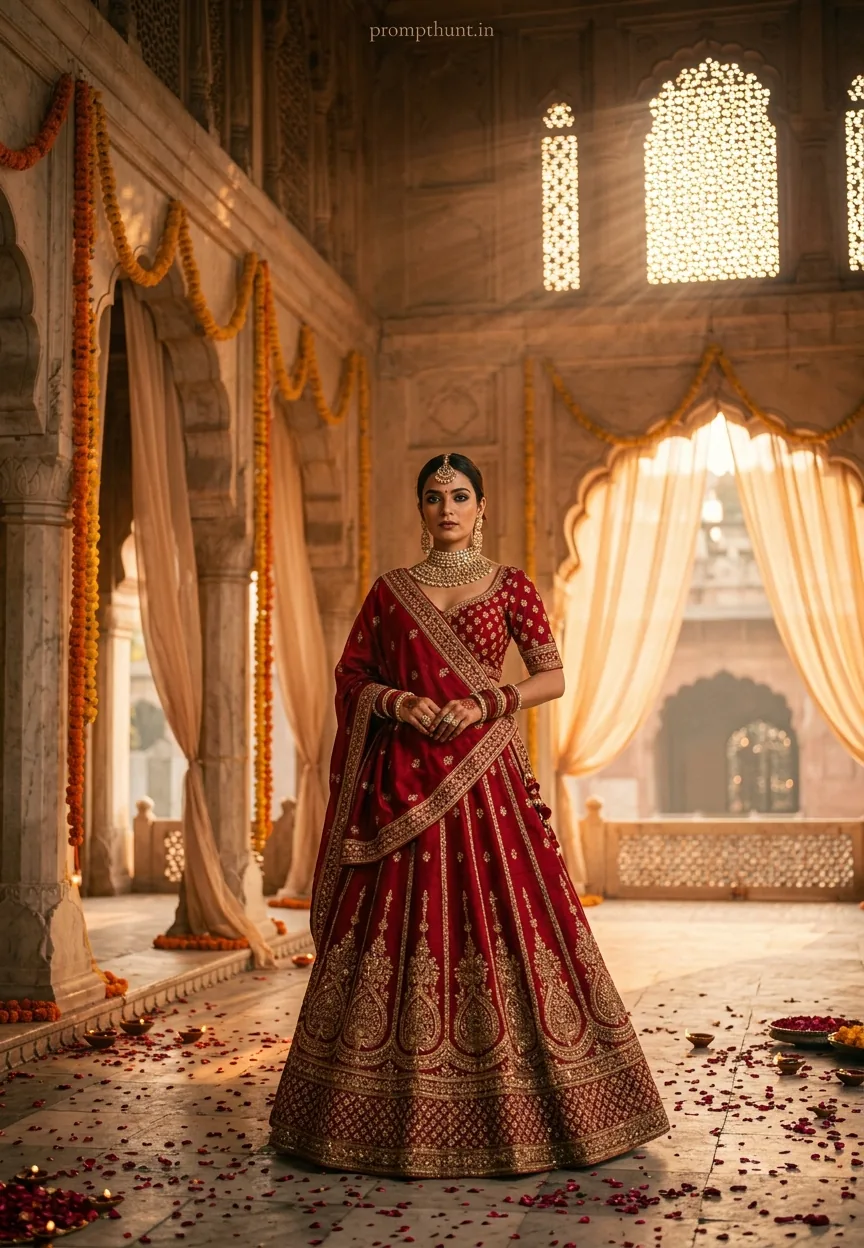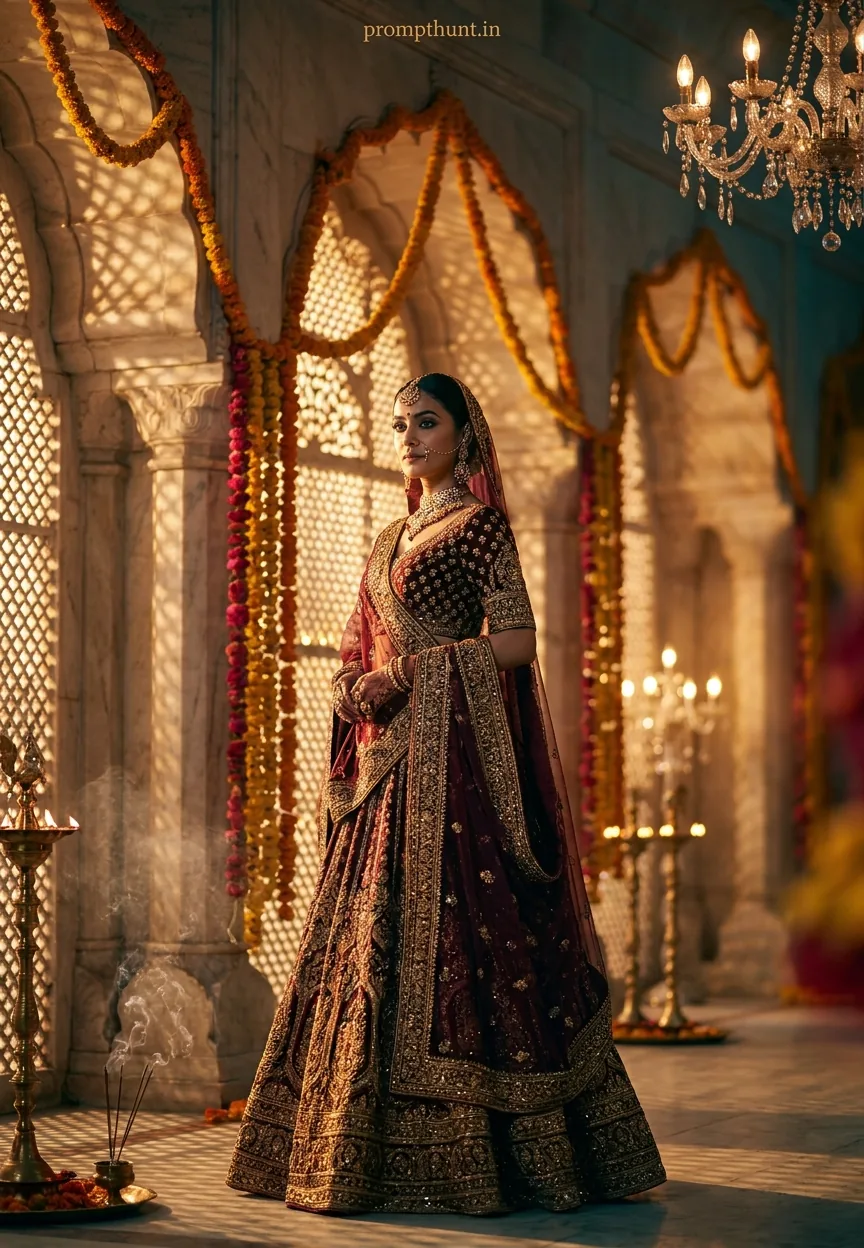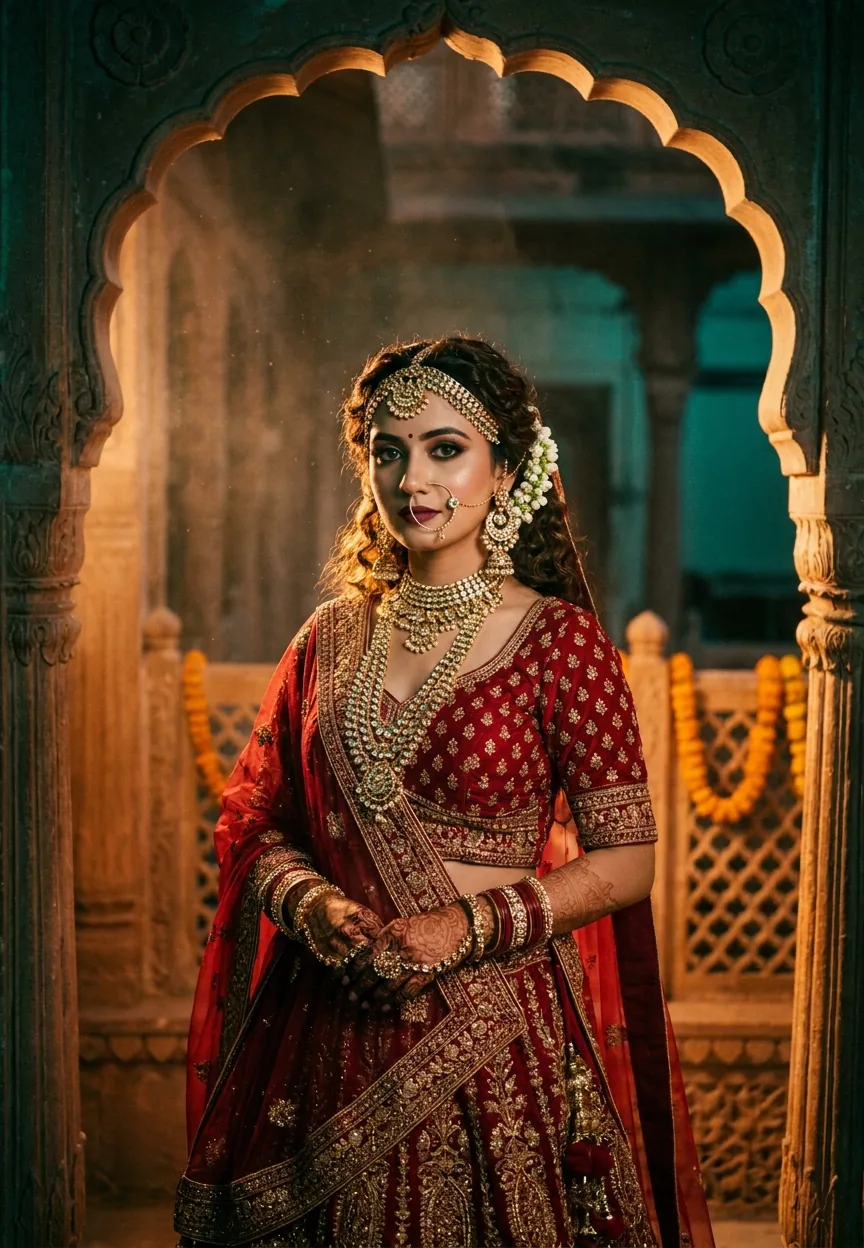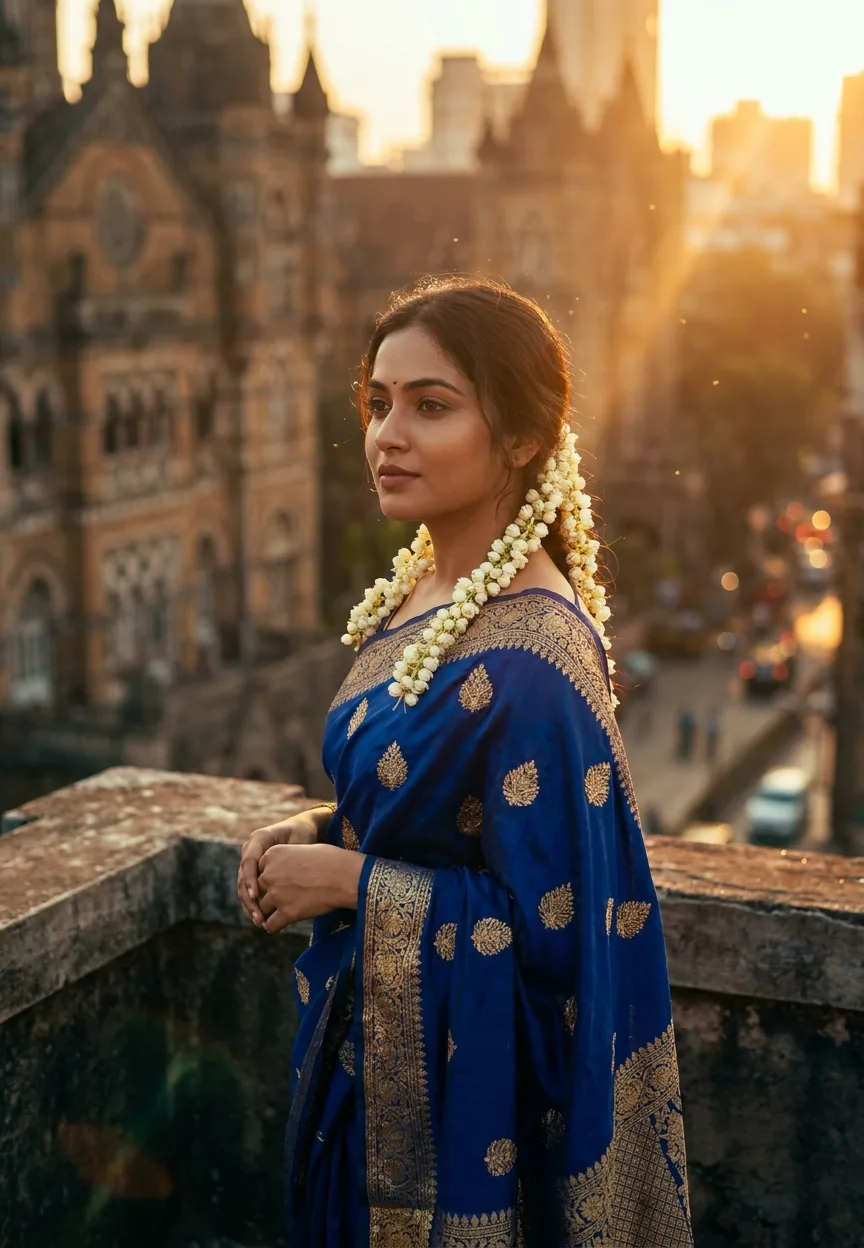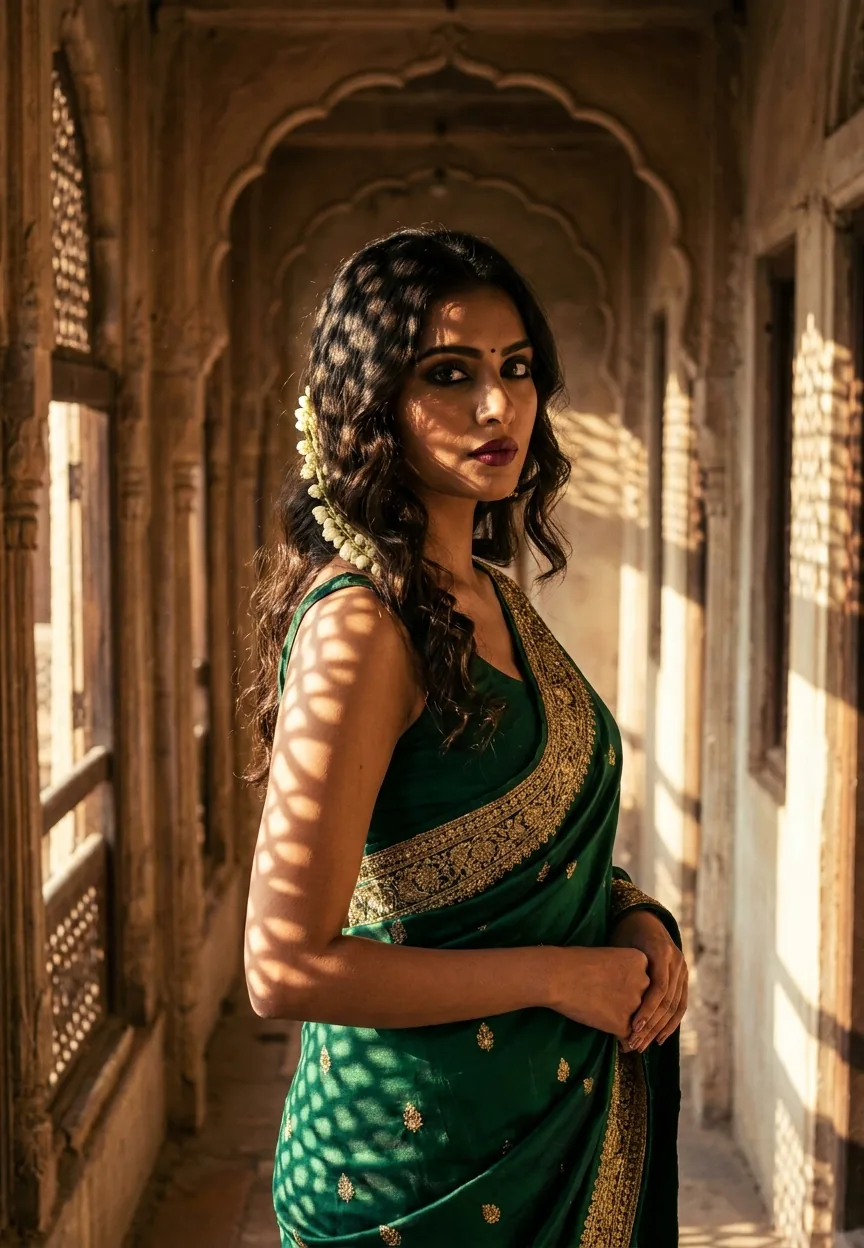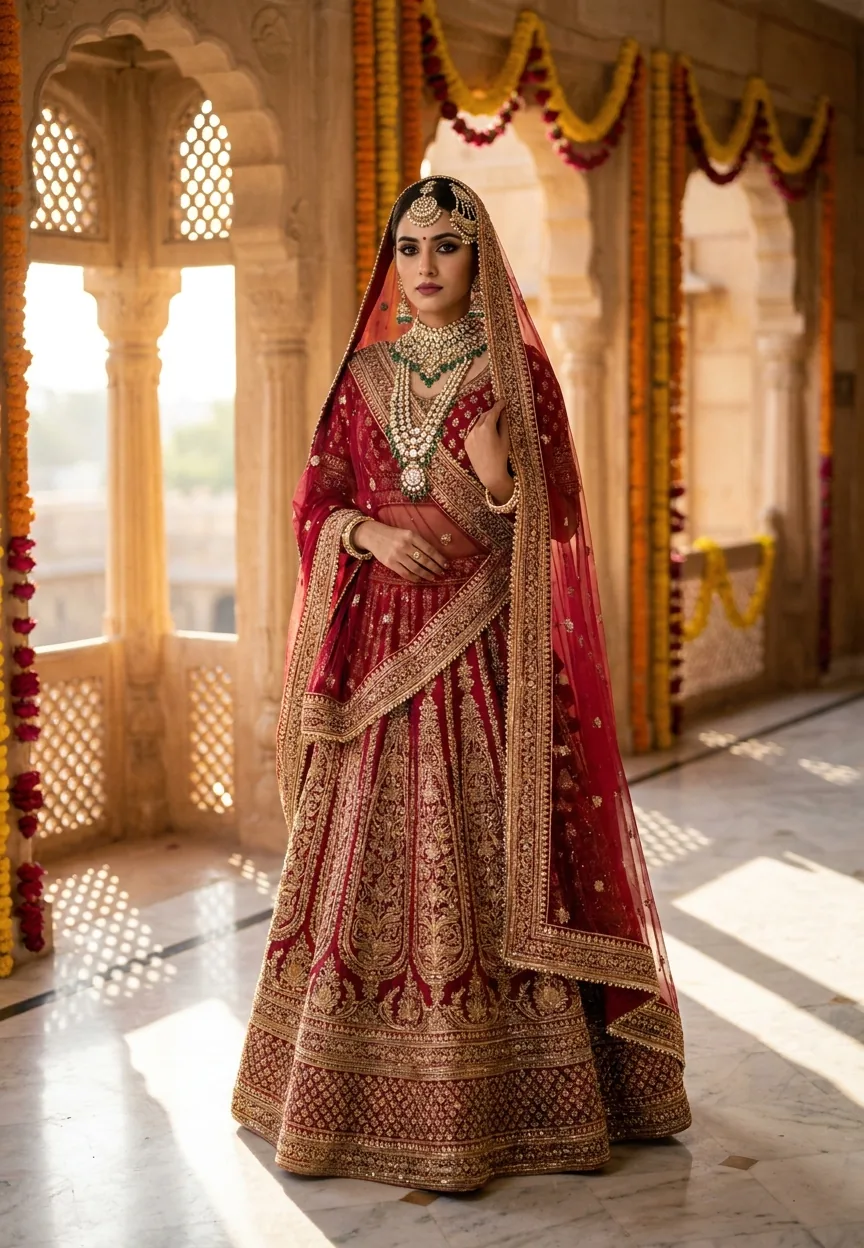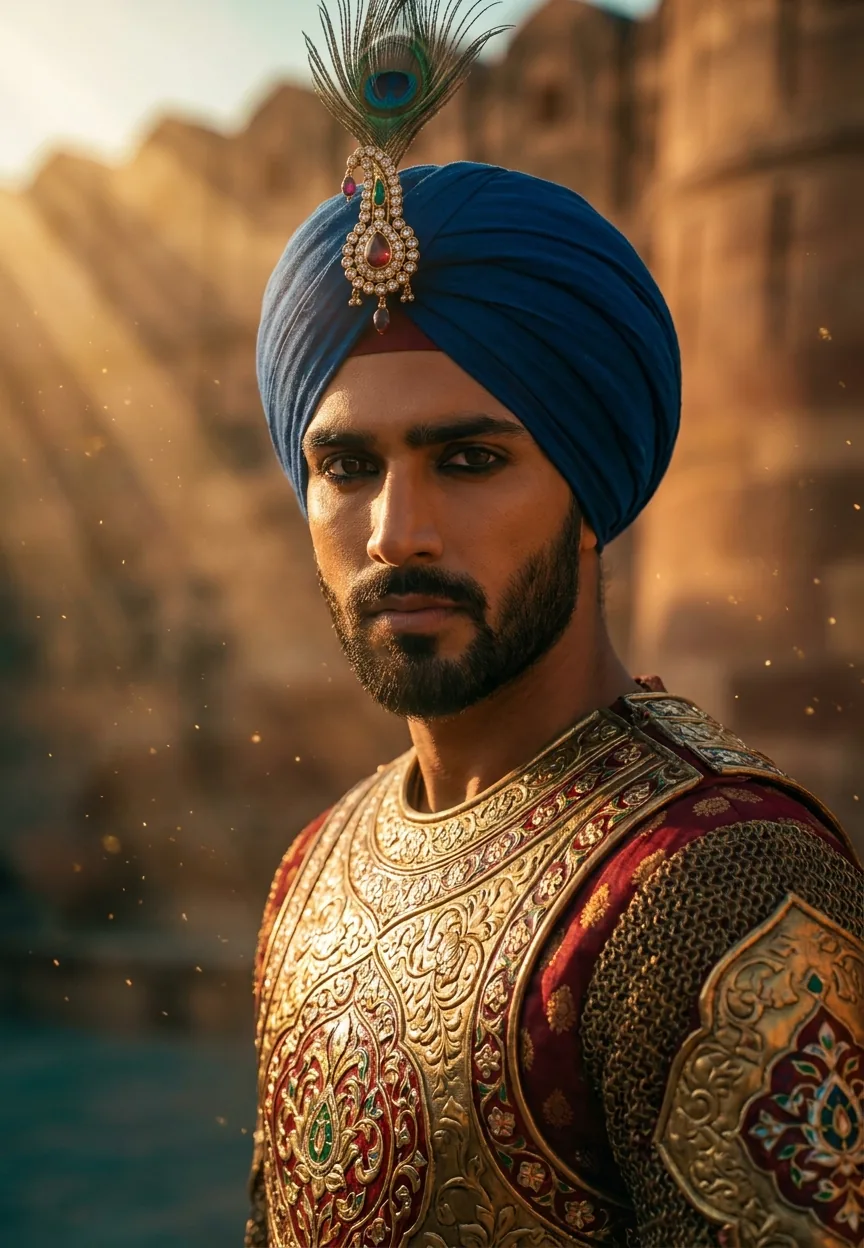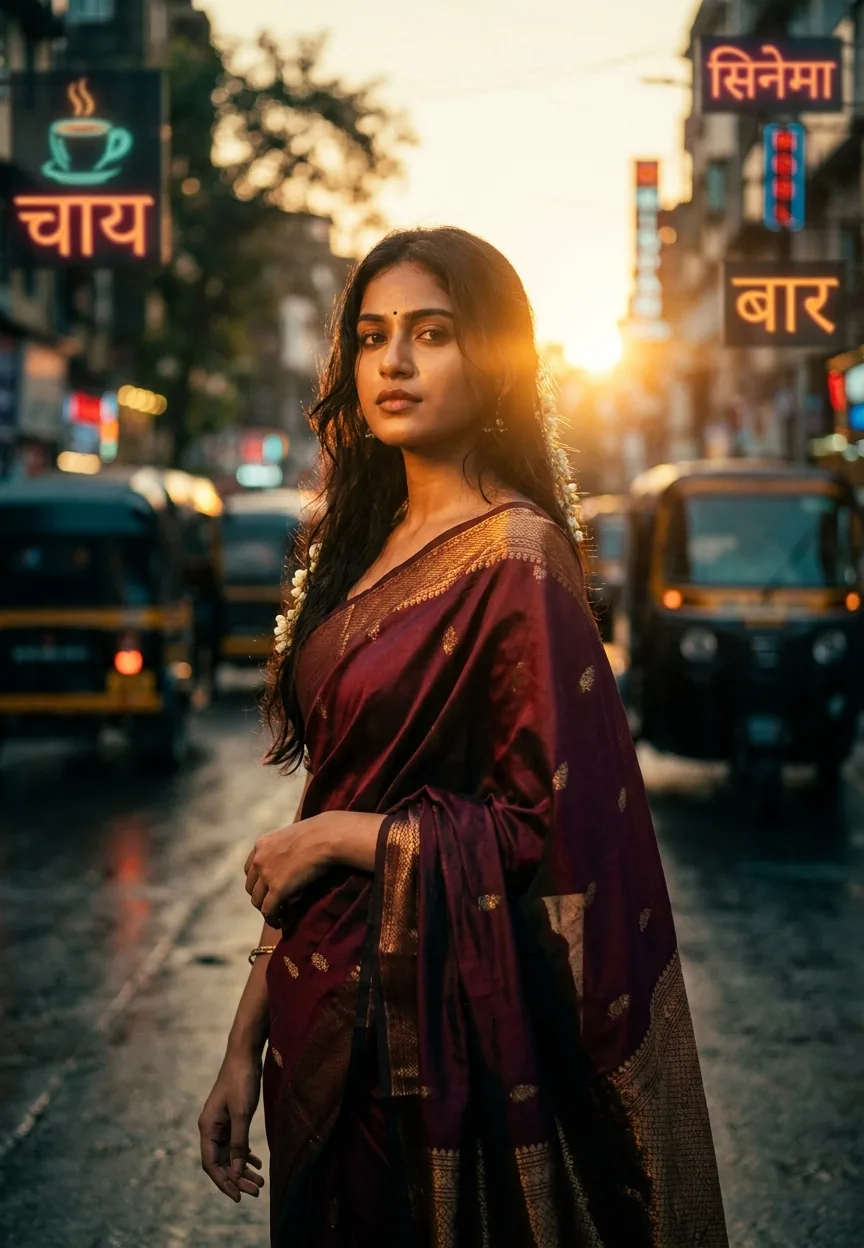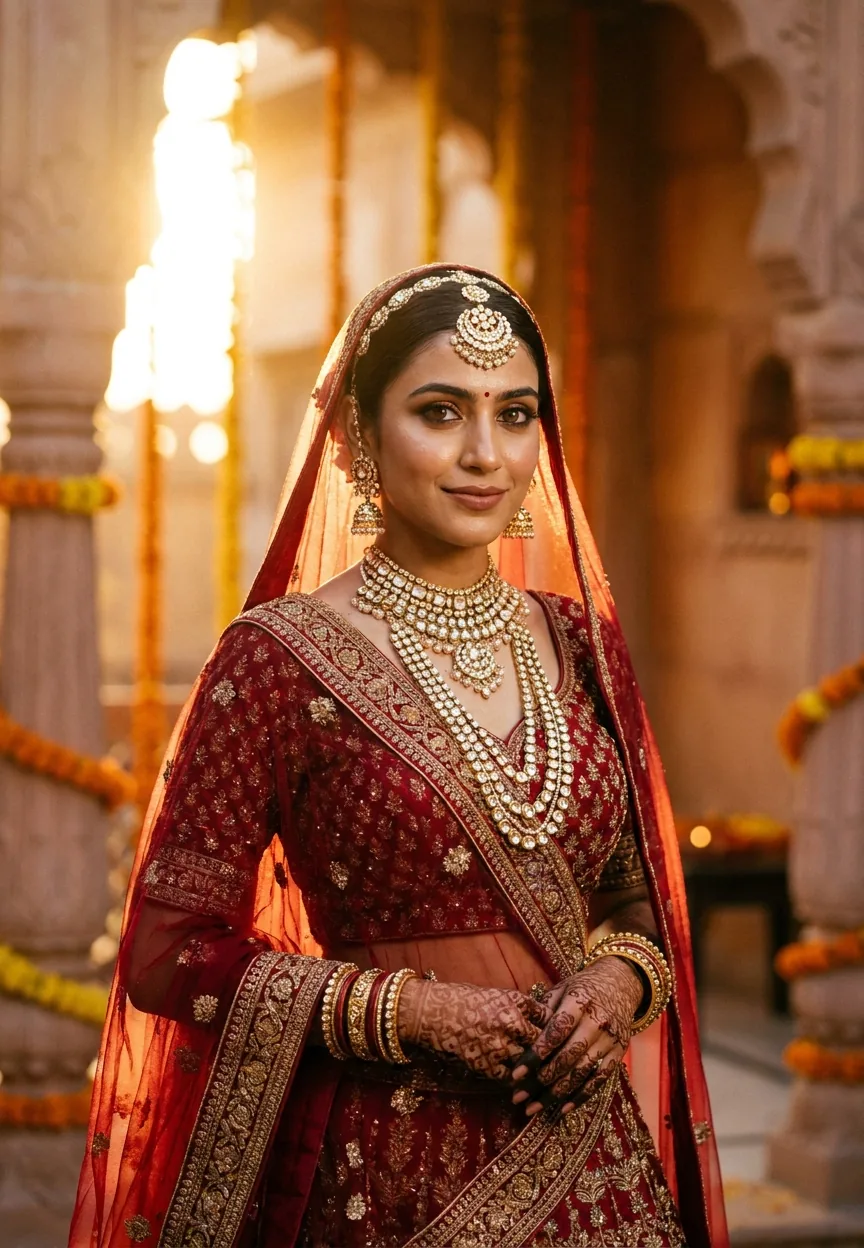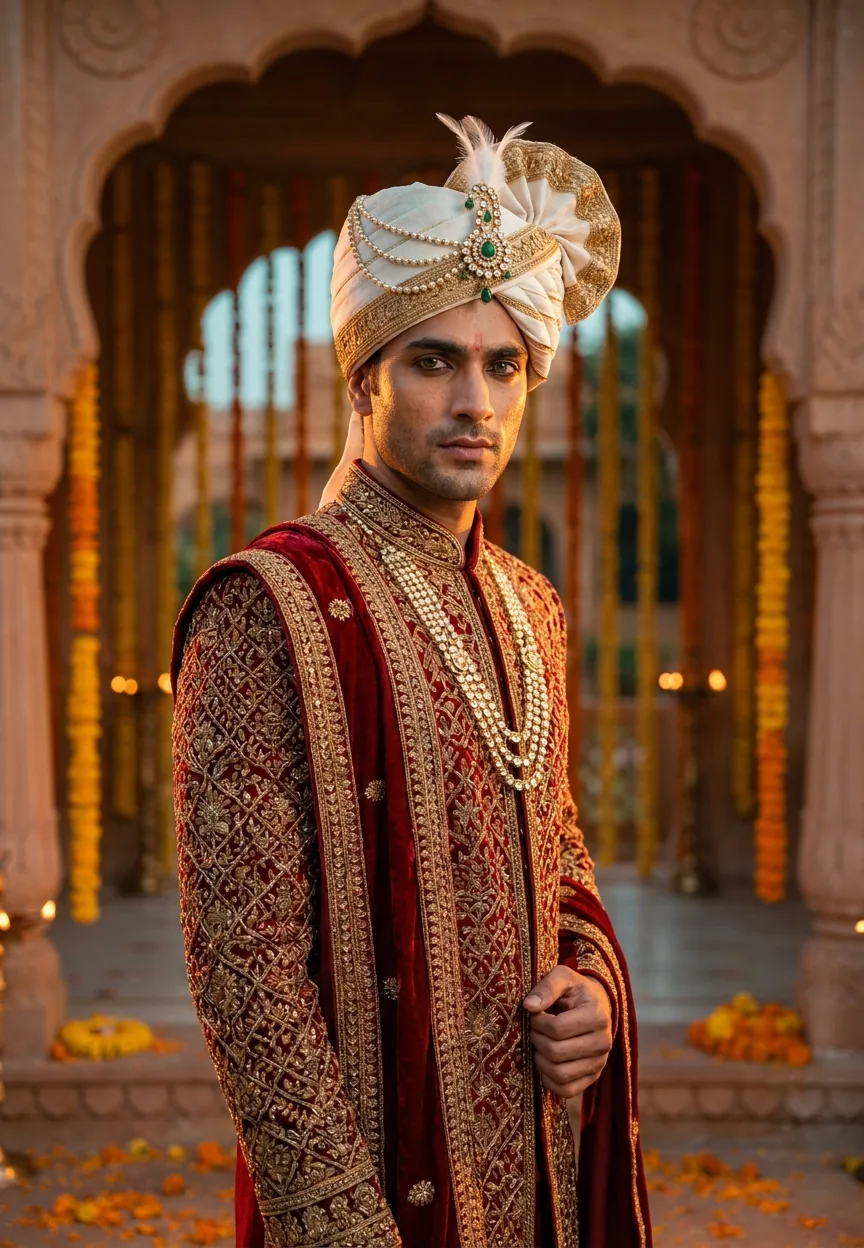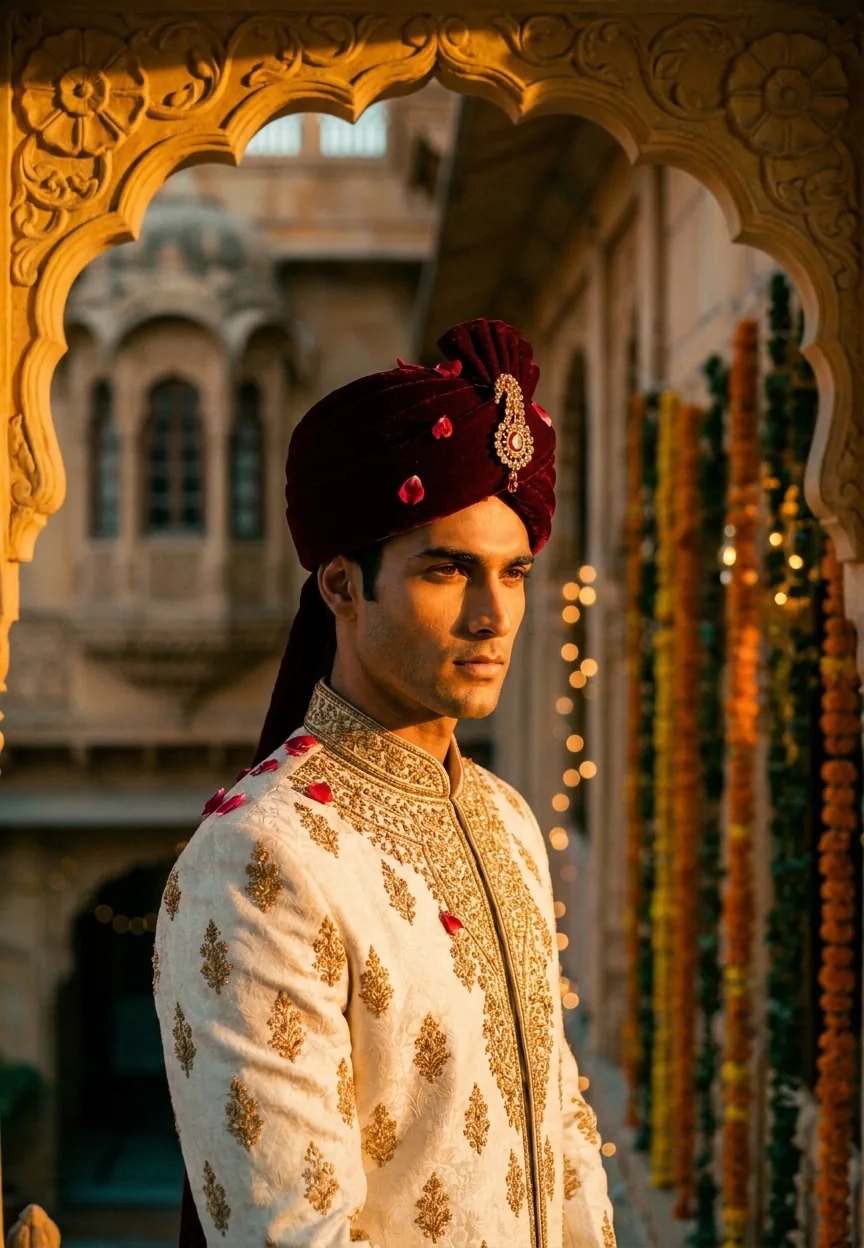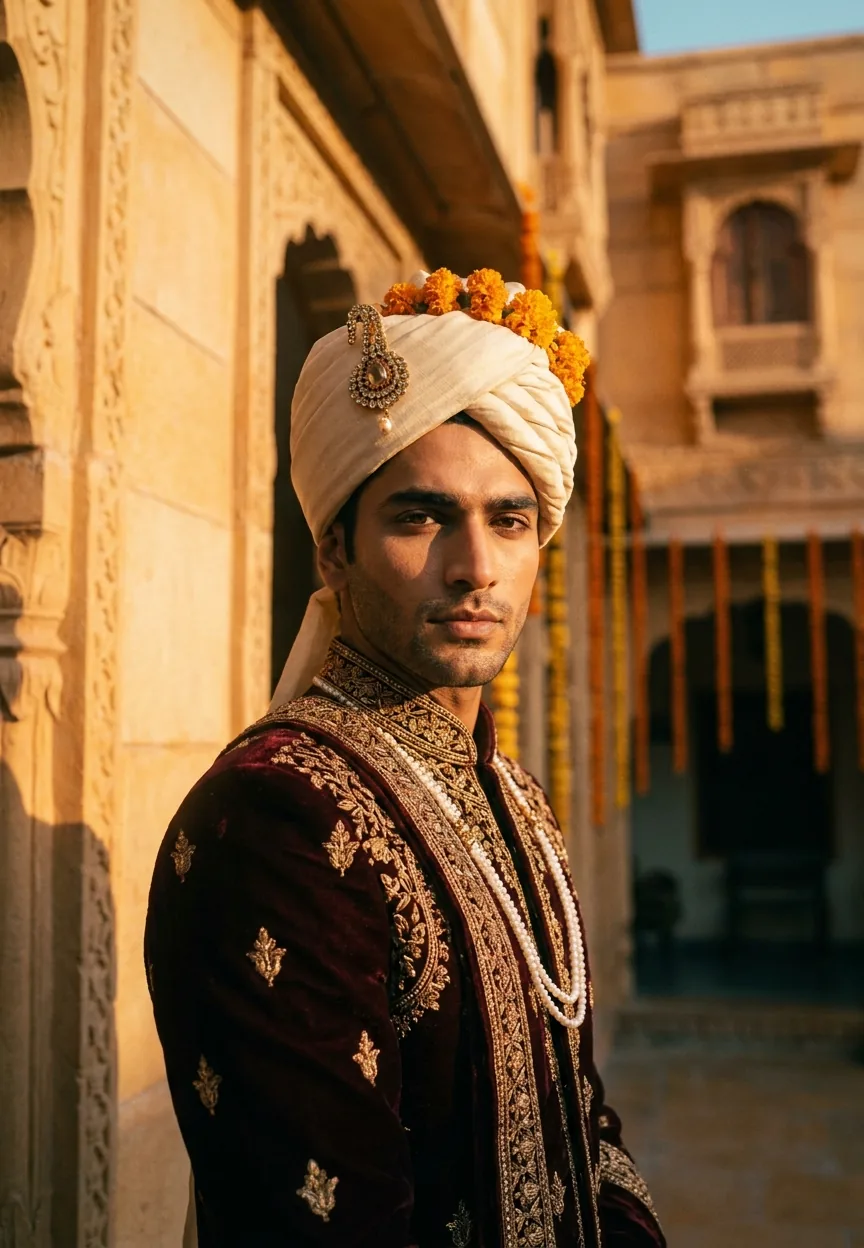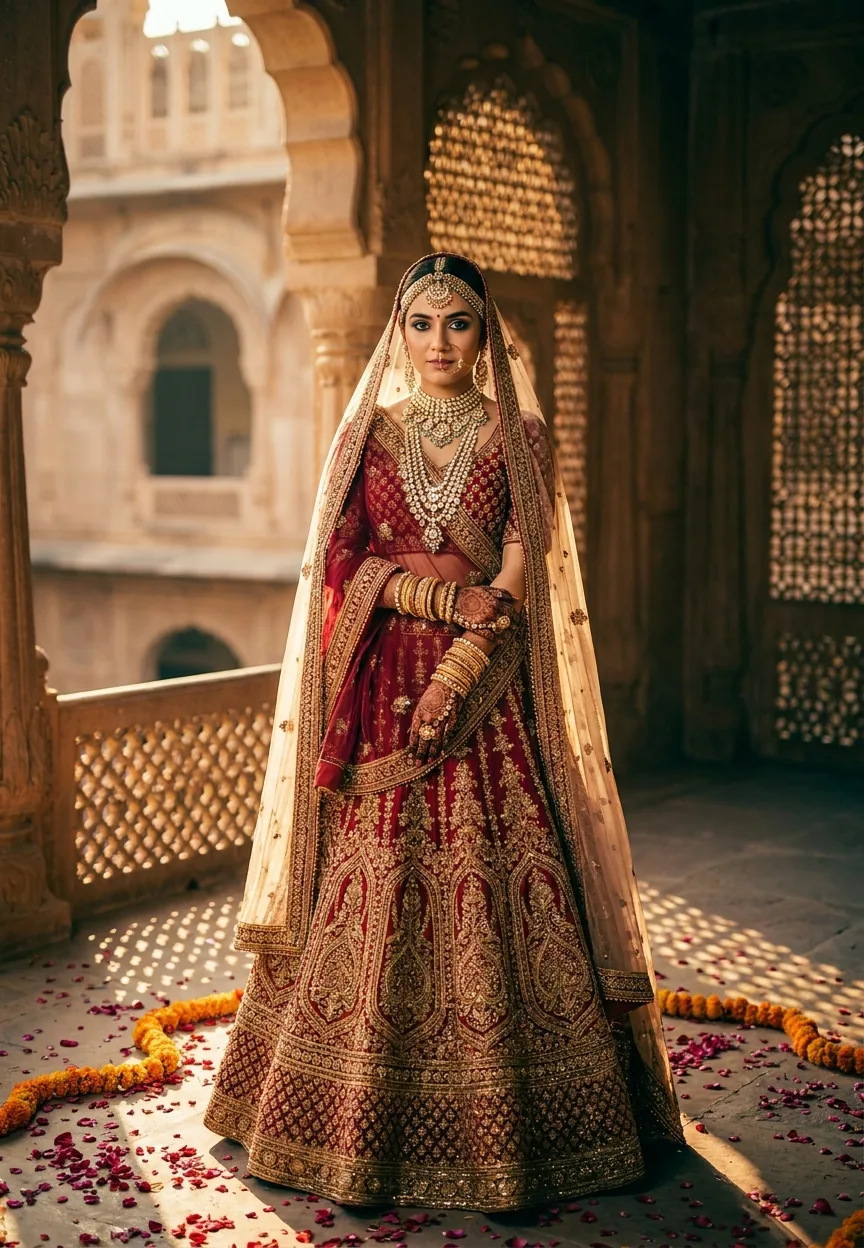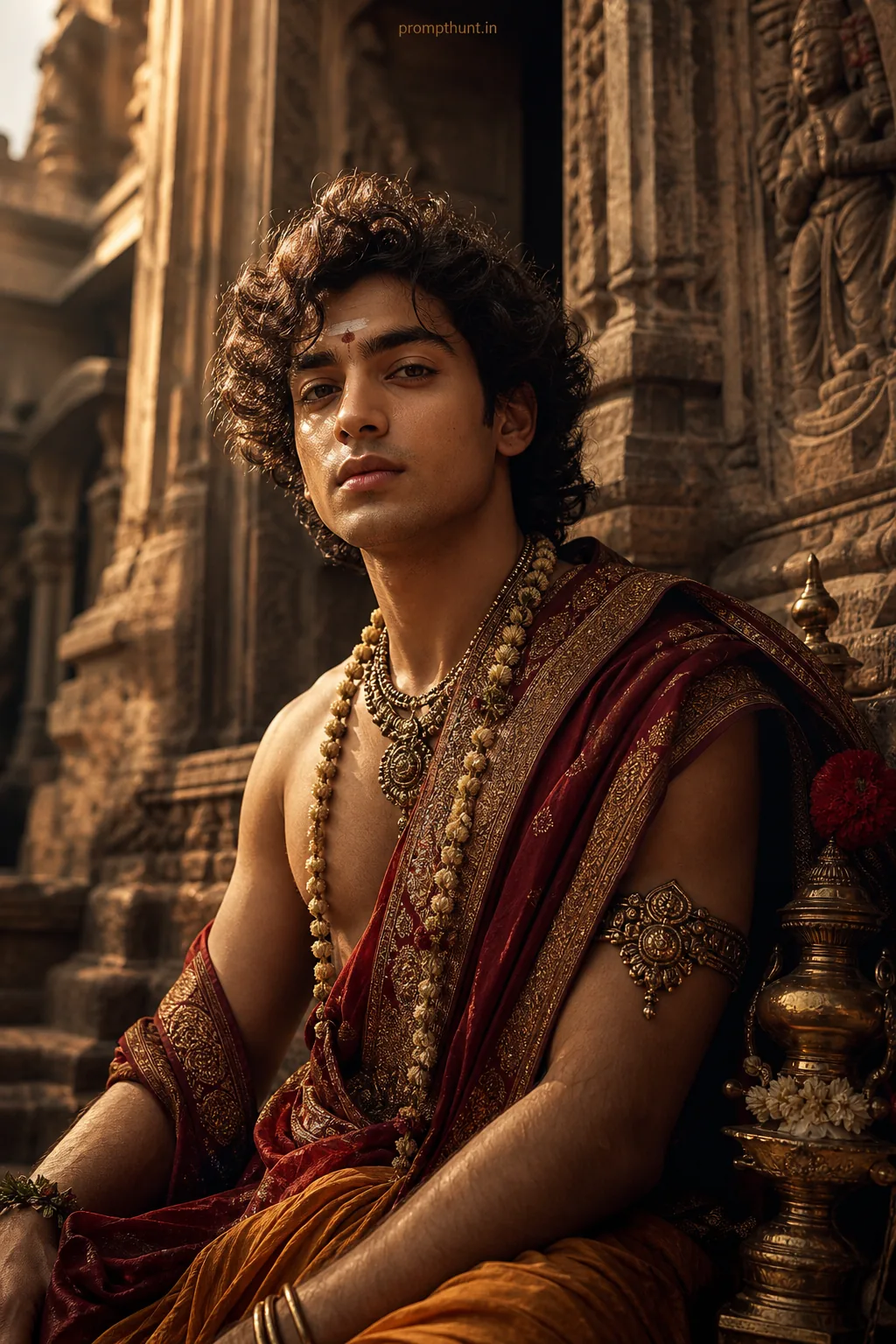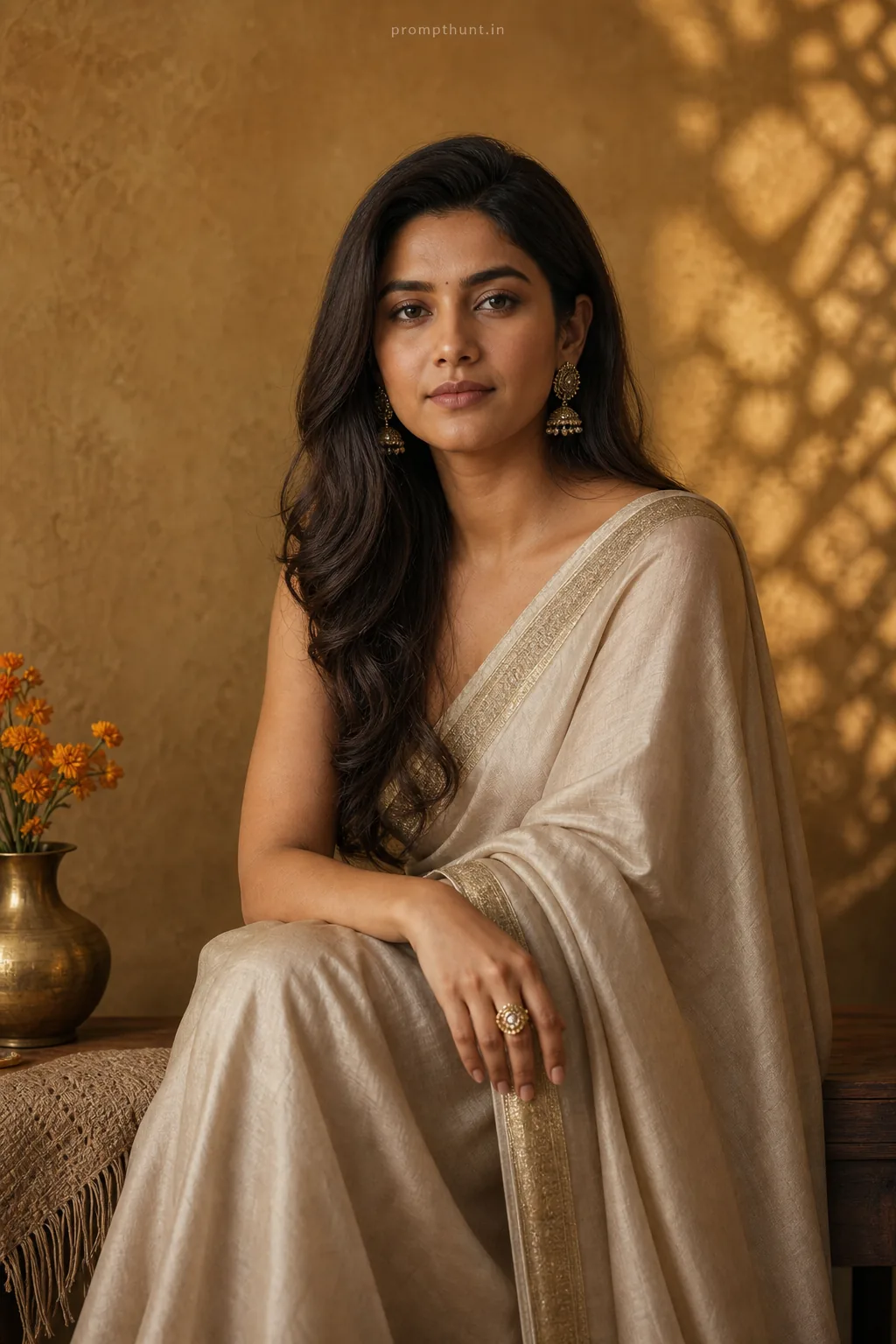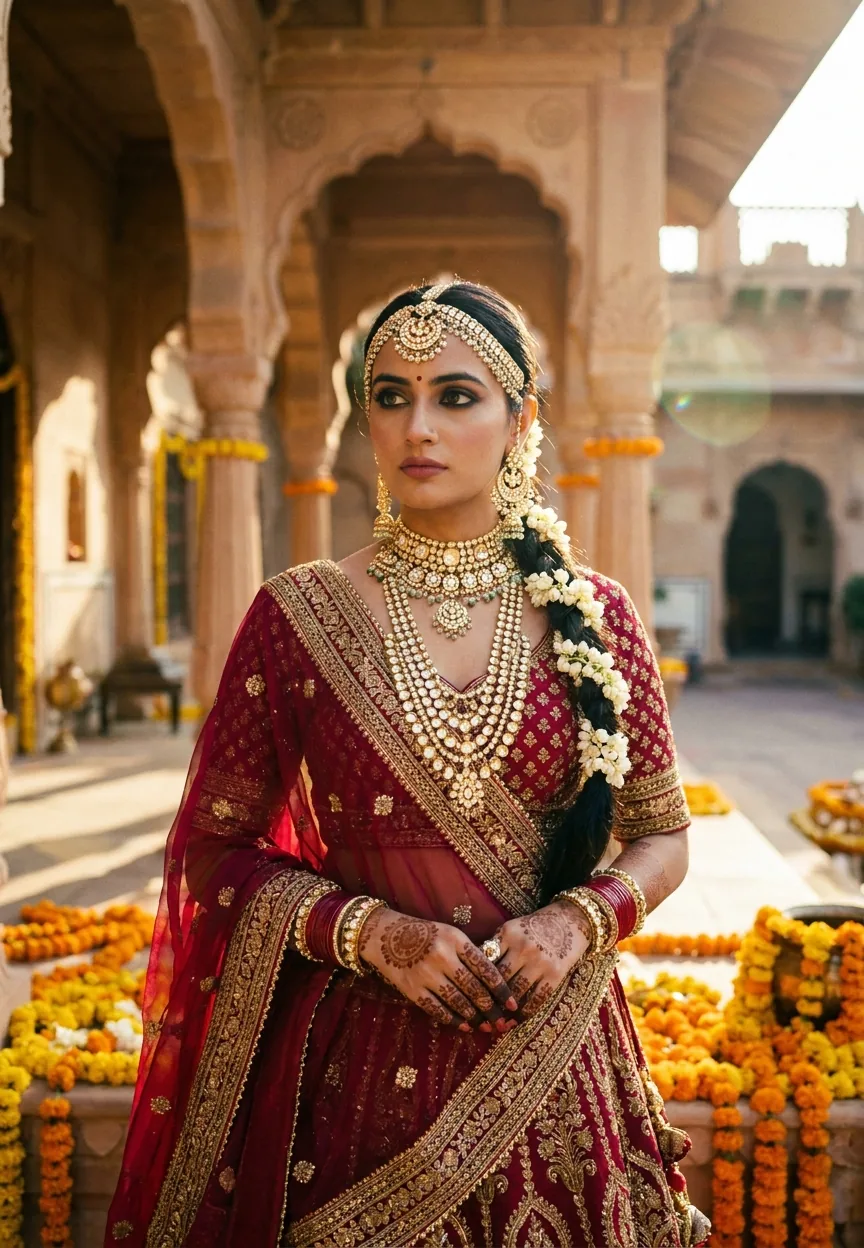
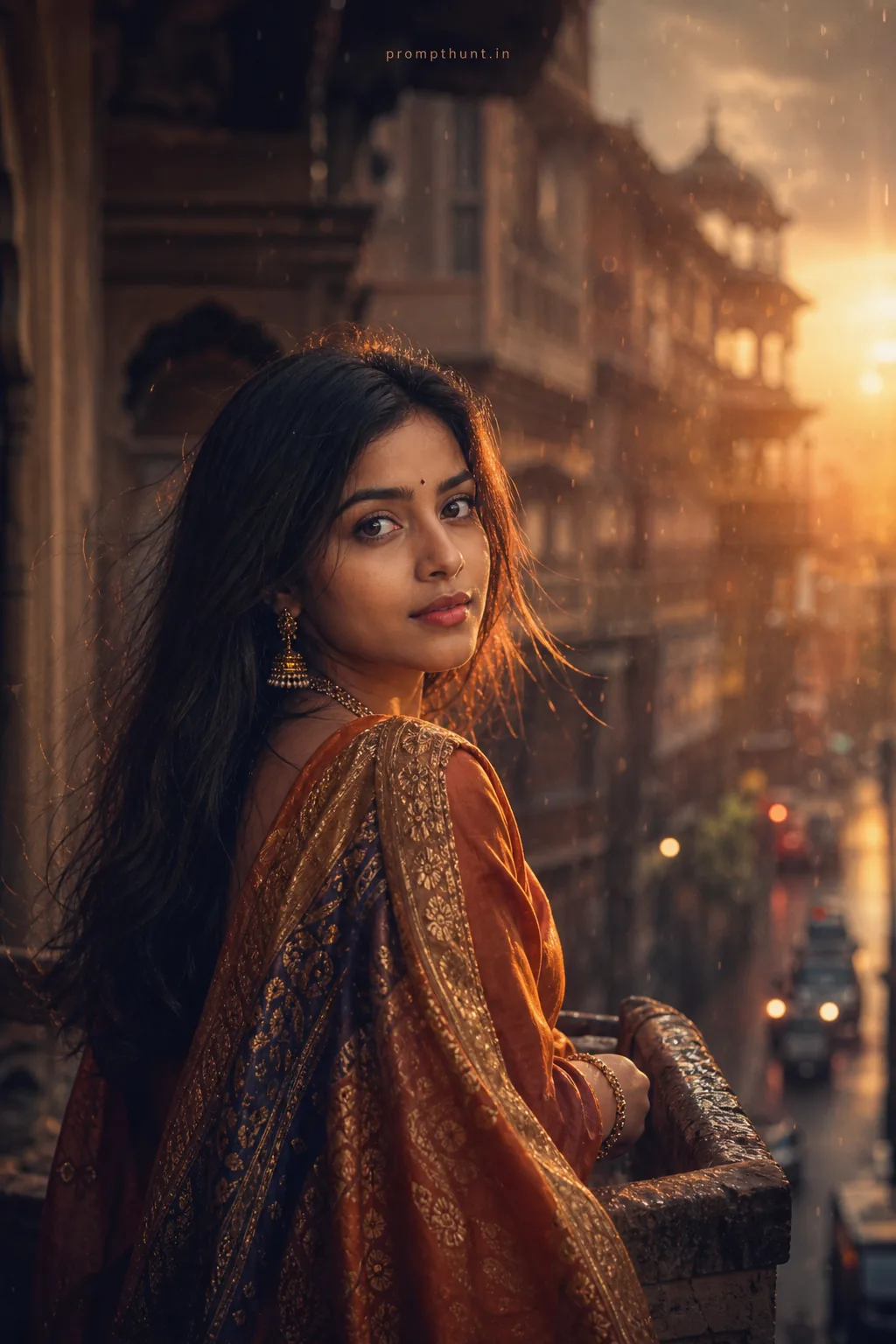
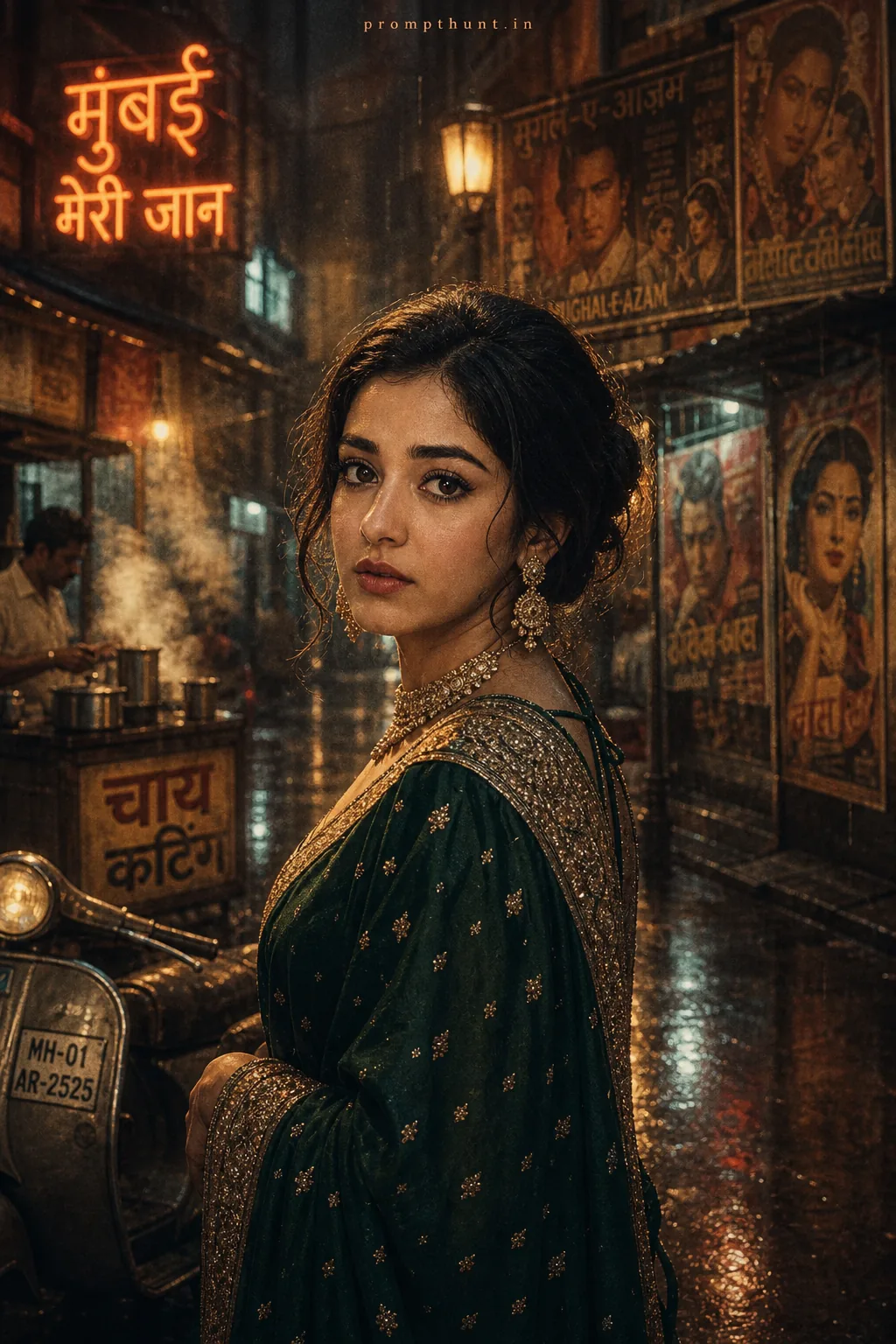
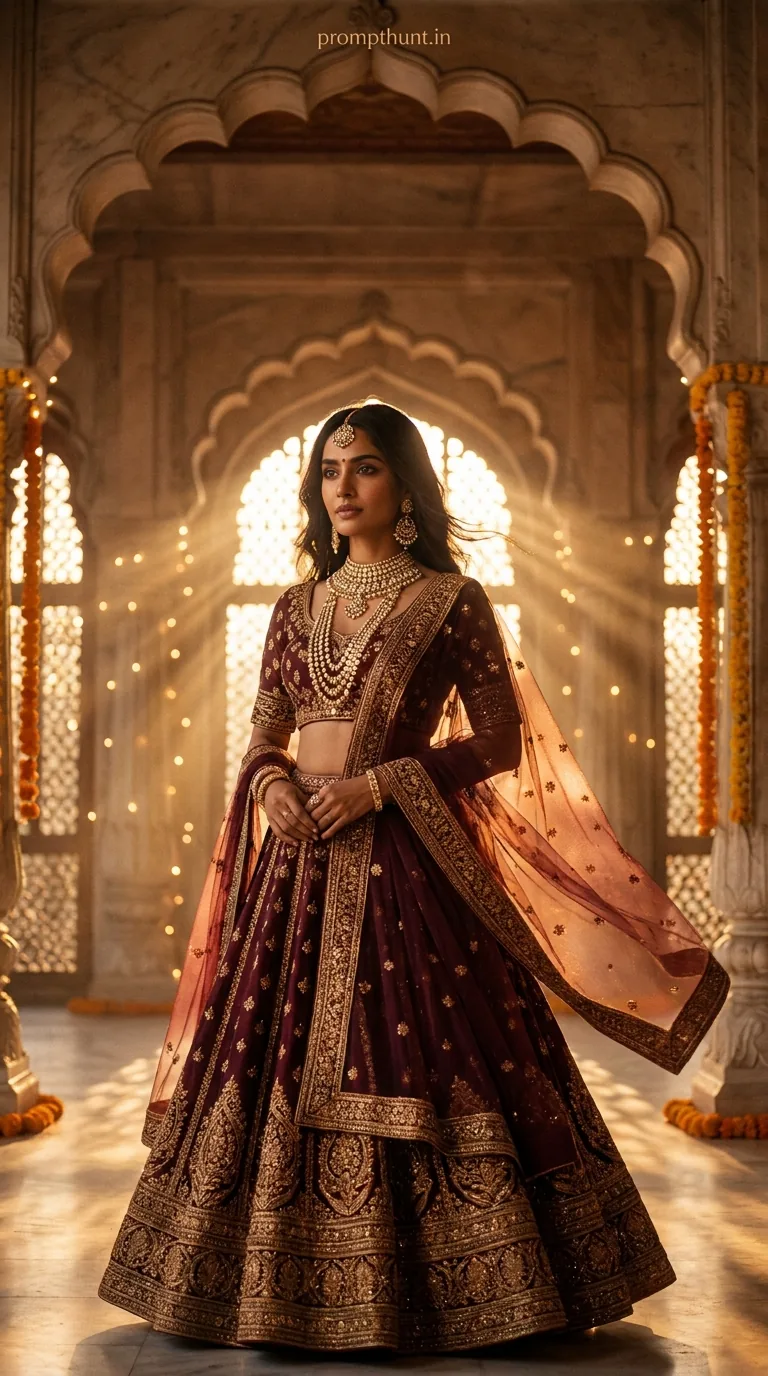
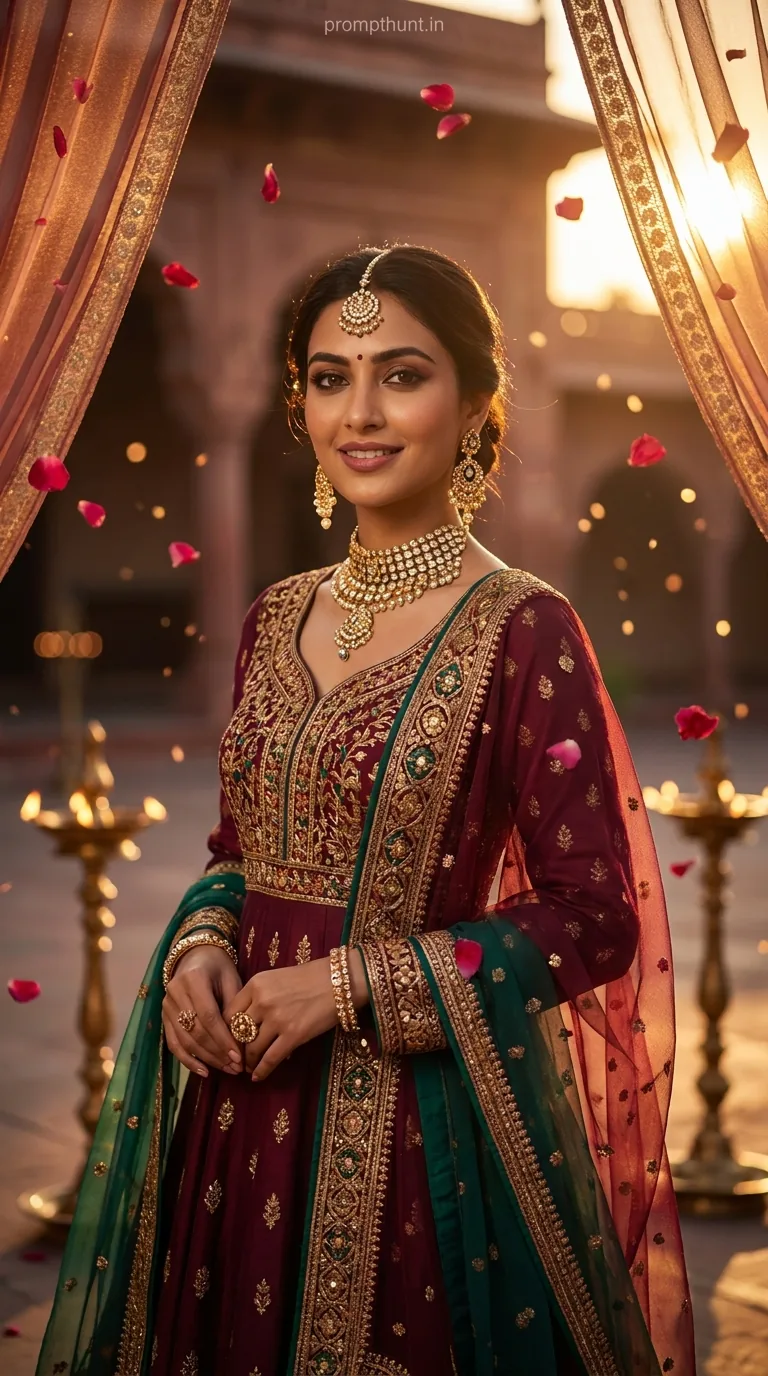
A Cinematic Portrait prompt for a Royal Rajasthani Bride uses detailed costume, jewellery, and lighting descriptions to generate ultra-realistic, magazine-quality AI images. Feed this prompt into Gemini, Midjourney, or Adobe Firefly, specify a 9:13 vertical ratio, and you get a breathtakingly regal bridal portrait with golden-hour glow, rich jewel tones, and creamy bokeh — in about 30 seconds.
Someone in a Delhi photography Facebook group posted one of these images last month. Within 48 hours it had 6,200 shares and roughly 400 comments asking the same thing: "Which photographer shot this?" The answer — nobody. A well-written AI prompt did it. That is the power of a great Cinematic Portrait prompt, and this one for a Royal Rajasthani Bride is one of the most detailed, most beautiful, and most viral examples floating around right now. Let us break down exactly what is in it and how you can use it yourself.
Copy this prompt into Gemini Image, Midjourney, or Adobe Firefly, set your ratio to 9:13, and you will get a stunning royal Rajasthani bridal portrait with cinematic lighting and film-quality colour grading in under a minute.
What a Cinematic Portrait Actually Is
A Cinematic Portrait is not just a pretty photo with moody lighting. It is a specific visual language borrowed from film. Think the first time you saw Aishwarya Rai in Devdas — every frame composed like a painting, every shadow deliberate, every highlight doing emotional work.
The hallmarks are consistent. Shallow depth of field so the subject is sharp and the background melts into bokeh. Anamorphic lens characteristics — that subtle horizontal lens flare, the slightly oval bokeh bubbles. Film grain texture instead of digital sterility. Jewel-toned colour grading with crushed blacks and luminous skin tones. And golden-hour or practical warm light sources that feel earned rather than studio-flat.
When you write a Cinematic Portrait prompt for an AI tool, you are essentially writing a director's brief and a cinematographer's shot list rolled into one paragraph. The more specific you are, the less the AI has to guess. And AI guessing is, nine times out of ten, how you end up with six fingers and a tiara on sideways.
The Prompt Itself
A stunning Indian woman dressed as a royal Rajasthani bride, wearing a rich deep crimson and gold lehenga with intricate zardozi embroidery, heavy polki diamond and kundan bridal jewellery including a maang tikka, layered rani haar necklace, and chandbali earrings, her hands adorned with detailed mehndi patterns, soft jasmine gatha woven into her dark braided hair, standing inside a grand haveli courtyard with ornate sandstone arches and warm marigold flower decorations, golden hour cinematic lighting casting a warm amber glow across her face, subtle lens flare, shallow depth of field with creamy bokeh background, film grain texture, rich jewel-toned color grading with deep shadows and luminous highlights, shot on a vintage anamorphic lens style, ultra-realistic photography, 9:13 vertical portrait, magazine editorial quality, emotionally evocative expression with deep kohl-lined eyes glancing slightly away from camera, timeless and breathtakingly regal atmosphere
How to Use It — Three Steps, No Surprises
Step one: Choose your tool. Gemini Image Generation handles this prompt beautifully because it has strong cultural context around Indian fashion and jewellery terminology. Midjourney v6 also performs very well — add --ar 9:13 --style raw at the end for best results. Adobe Firefly is a solid third option if you want commercial licensing without the headaches.
Step two: Paste and run as-is first. Resist the urge to edit before you see the baseline output. Most people trim prompts thinking they are helping. They are not. Every specific detail in this prompt — the zardozi embroidery, the polki diamonds, the jasmine gatha — is pulling the AI toward accuracy. Remove them and you get a generic "Indian bride" that looks like clip art wearing fancy fabric.
Step three: Iterate on one variable at a time. If the face expression is not landing, add "contemplative and serene expression" before "emotionally evocative." If the background haveli looks too bright, add "dramatically underexposed background, subject lit by single warm practical light." Small tweaks, one at a time. Do not rewrite the whole prompt and wonder why everything changed.
Tips for Getting the Best Results
Rule of thumb: the jewellery descriptions are doing the heaviest lifting here. AI models trained on Indian fashion data know what polki diamonds look like. They know the difference between a rani haar and a simple necklace. Use the correct terminology and you get correct output. Use "big necklace" and you get something that belongs at a fancy dress party, not a royal haveli.
A few specifics worth knowing:
Lighting first, always. "Golden hour cinematic lighting casting a warm amber glow across her face" is doing more work than any other phrase in this prompt. If you take one thing away, it is this — describe the quality, direction, and colour temperature of your light source. AI portraits without lighting instructions look like they were shot under a supermarket fluorescent. (We have all been there. It is not regal.)
The "glancing slightly away" instruction matters. Direct eye contact in AI portraits often reads as unsettling. The model lands somewhere between "intense" and "screaming internally." Having the subject look slightly off-camera creates that editorial, caught-in-a-moment quality that makes people think a real photographer captured something genuine.
Film grain is your cheat code. Adding "film grain texture" to any AI portrait prompt immediately makes it feel less synthetic. It is the AI equivalent of aging a new leather jacket — suddenly it has character it did not earn. (And nobody needs to know.)
Aspect ratio is non-negotiable. A 9:13 vertical crop is magazine editorial standard. It gives the composition room for the full lehenga, the haveli arches above, and a proper face close-up. Do not generate this in square or landscape and wonder why it looks like a tourism brochure.
Why This Style Is Trending in India Right Now
Indian wedding photography has been moving toward cinematic aesthetics for about six years. Photographers like Joseph Radhik and Saurabh Shrivastava have built careers on treating weddings like film sets. The audience already knows what cinematic bridal photography looks like. They have seen it at every relative's wedding since 2018.
What AI has done is democratise that aesthetic. A bride in a Tier-2 city who cannot afford a three-lakh photographer can now generate a vision board that looks like it came out of Vogue India. A wedding planner can show clients a mood board that is actually specific to their lehenga colour and venue style, not just downloaded Pinterest content.
There is also a cultural pride angle. Prompts that specifically name Rajasthani craft traditions — zardozi, kundan, mehndi — resonate because they are accurate. They are not a Western AI's vague approximation of "Indian wedding." They reflect real knowledge of real craft, and Indian users notice the difference immediately.
Honest Opinion — When This Prompt Is Not the Right Call
I will be straight with you. This prompt is extraordinary for inspiration, mood boards, and social content. It is not a substitute for real bridal photography, and anyone selling AI-generated images as real wedding photos is one viral Reddit thread away from a professional crisis.
The hands are still the problem. Mehndi patterns on AI-generated hands are getting better, but they are not there yet. You will get something that looks vaguely intricate from a distance and completely wrong up close. If hand detail matters — and in bridal photography it absolutely does — plan on running multiple generations and selecting the best, or accepting that the mehndi will need some viewer generosity.
There is also a cultural specificity ceiling. This prompt is Rajasthani. If your subject is a Bengali bride, a South Indian bride, or a Punjabi bride, the costume and jewellery vocabulary changes completely. Do not just swap "Rajasthani" for "South Indian" and expect the prompt to hold together. The specific terms — Kanjivaram silk, temple jewellery, gajra in the hair — need to be rebuilt from scratch. The structure of this prompt is the lesson. The specific words are not a universal template.
One more thing worth saying: Gemini and Midjourney will occasionally generate faces that look genuinely extraordinary and then, on the next generation, produce something that looks like a wax figure had a difficult afternoon. That is not the prompt failing. That is probability. Run at least five generations before you decide the prompt is broken. (I once deleted a perfectly good prompt after one bad output. The image it would have produced on run four haunts me to this day.)
The Regal Wrap-Up
This Royal Rajasthani Bride Cinematic Portrait prompt is one of the most complete, culturally specific, and visually sophisticated AI prompts in the bridal space right now. It covers lighting, lens characteristics, colour grading, cultural costume accuracy, jewellery detail, expression, setting, and composition — all in one paragraph. Use it in Gemini or Midjourney, run five generations, and pick the one that makes you