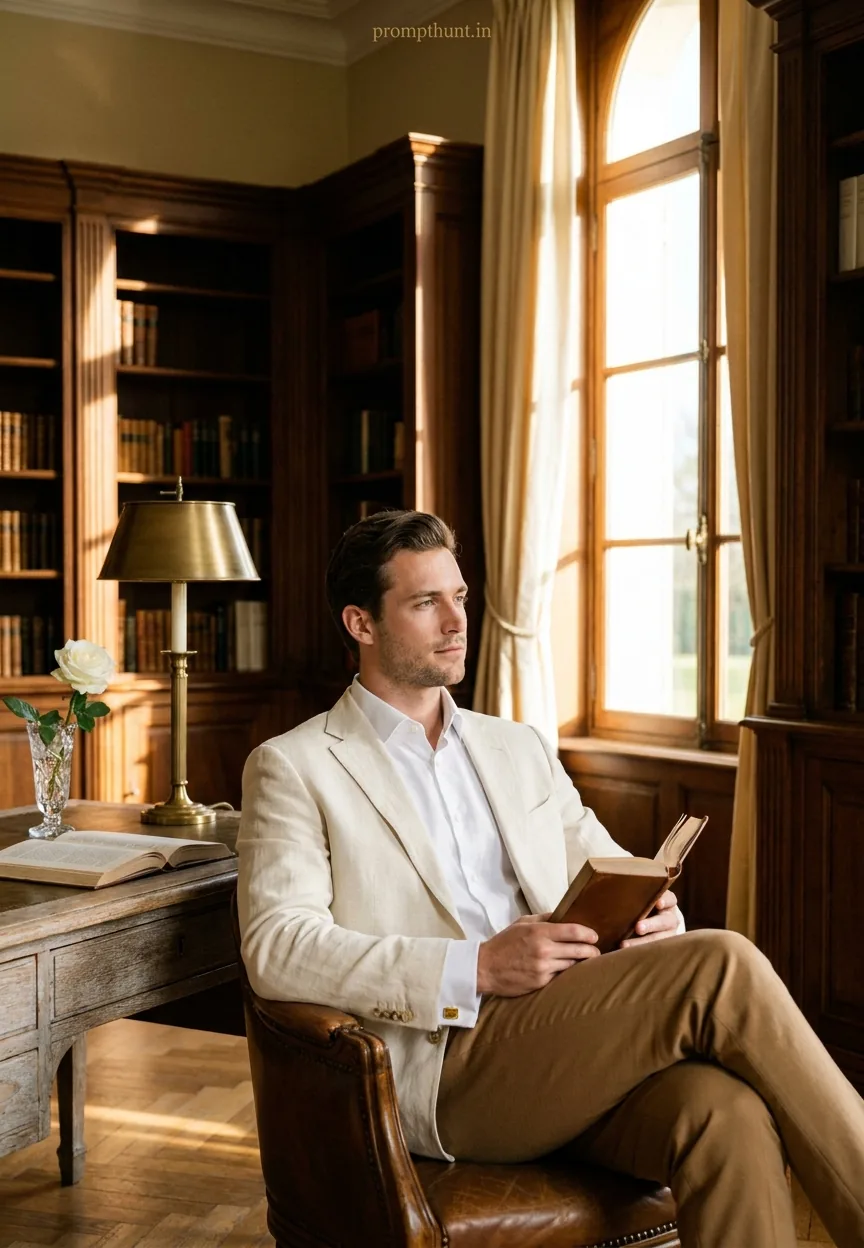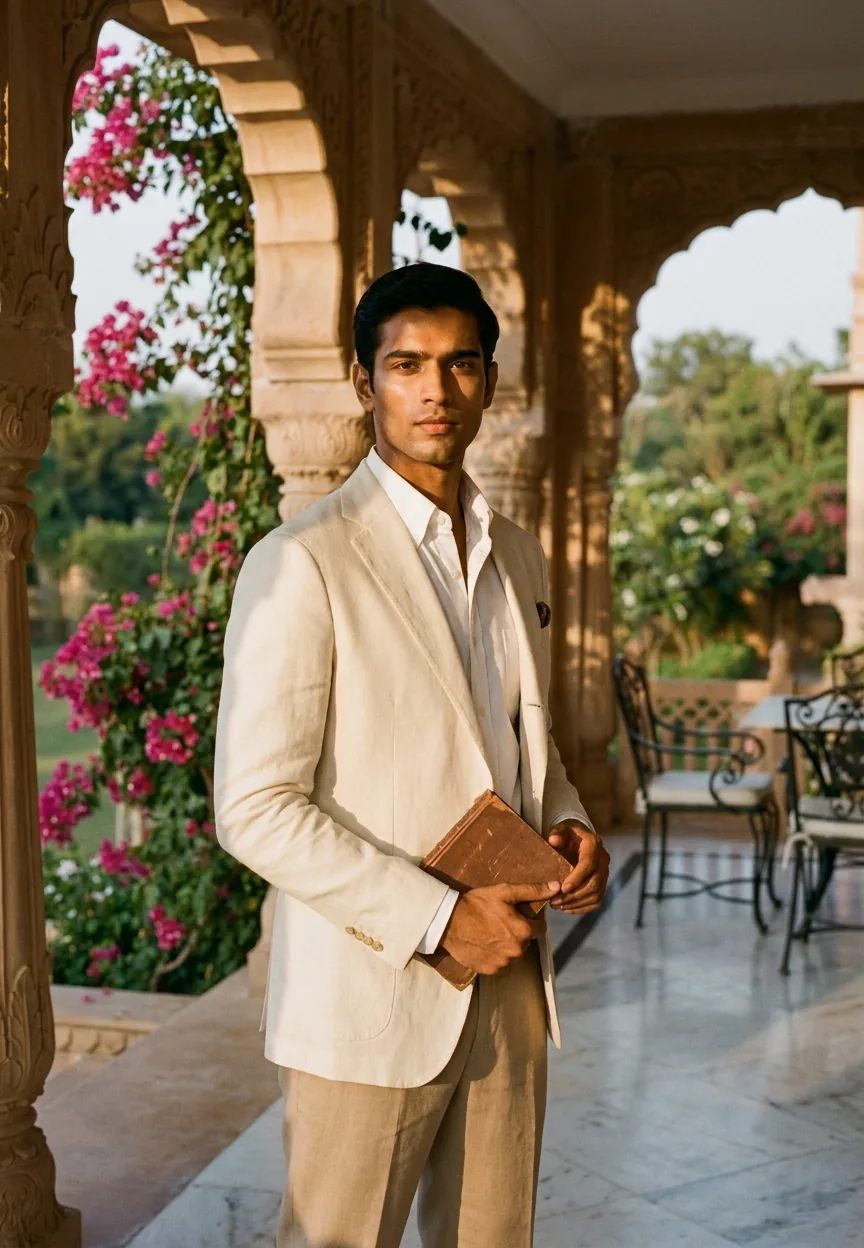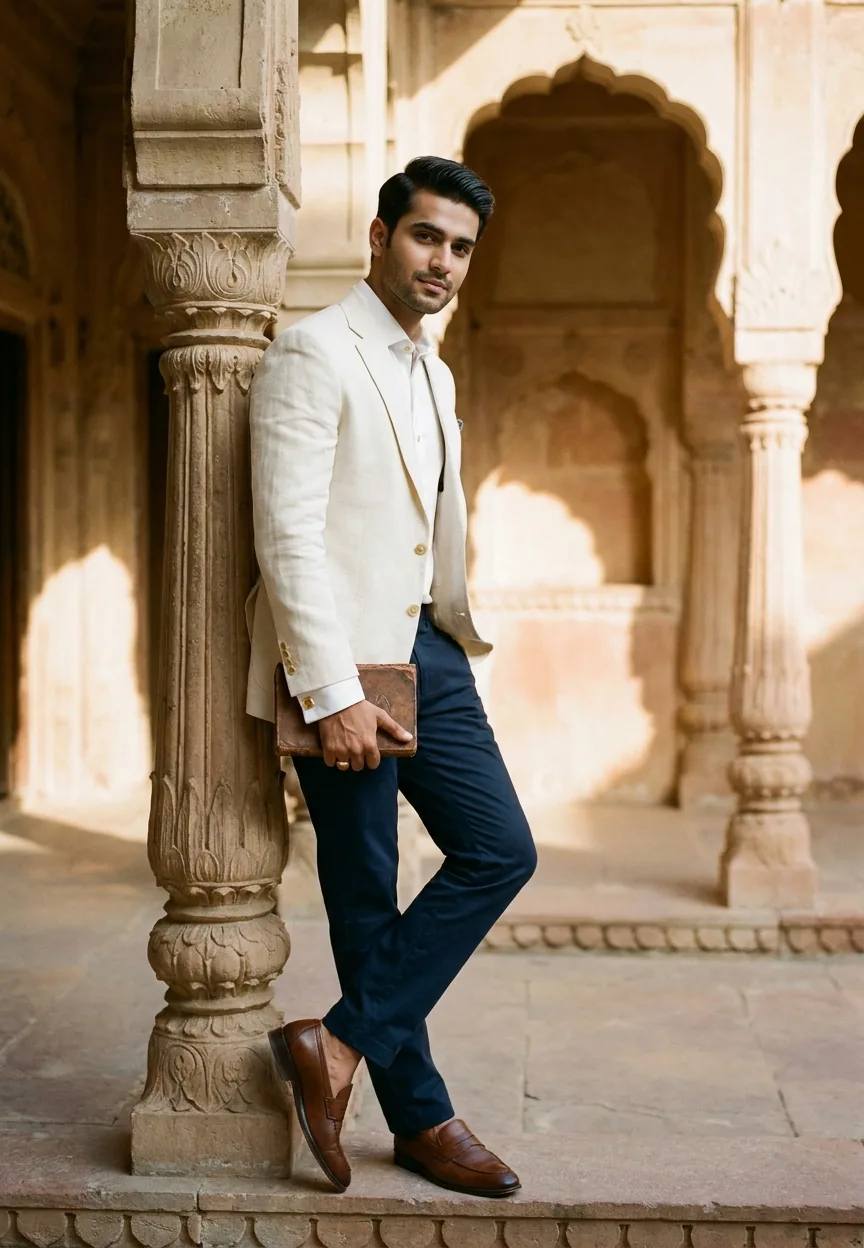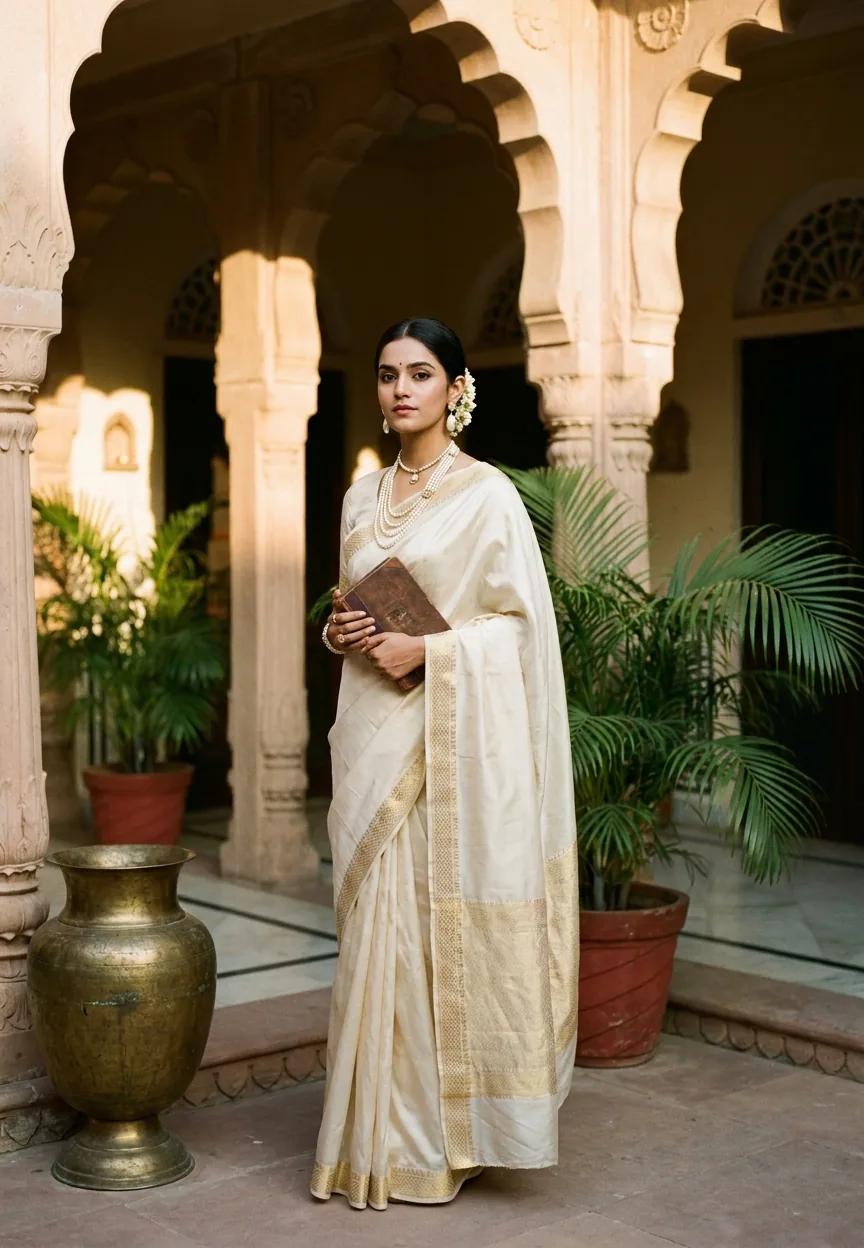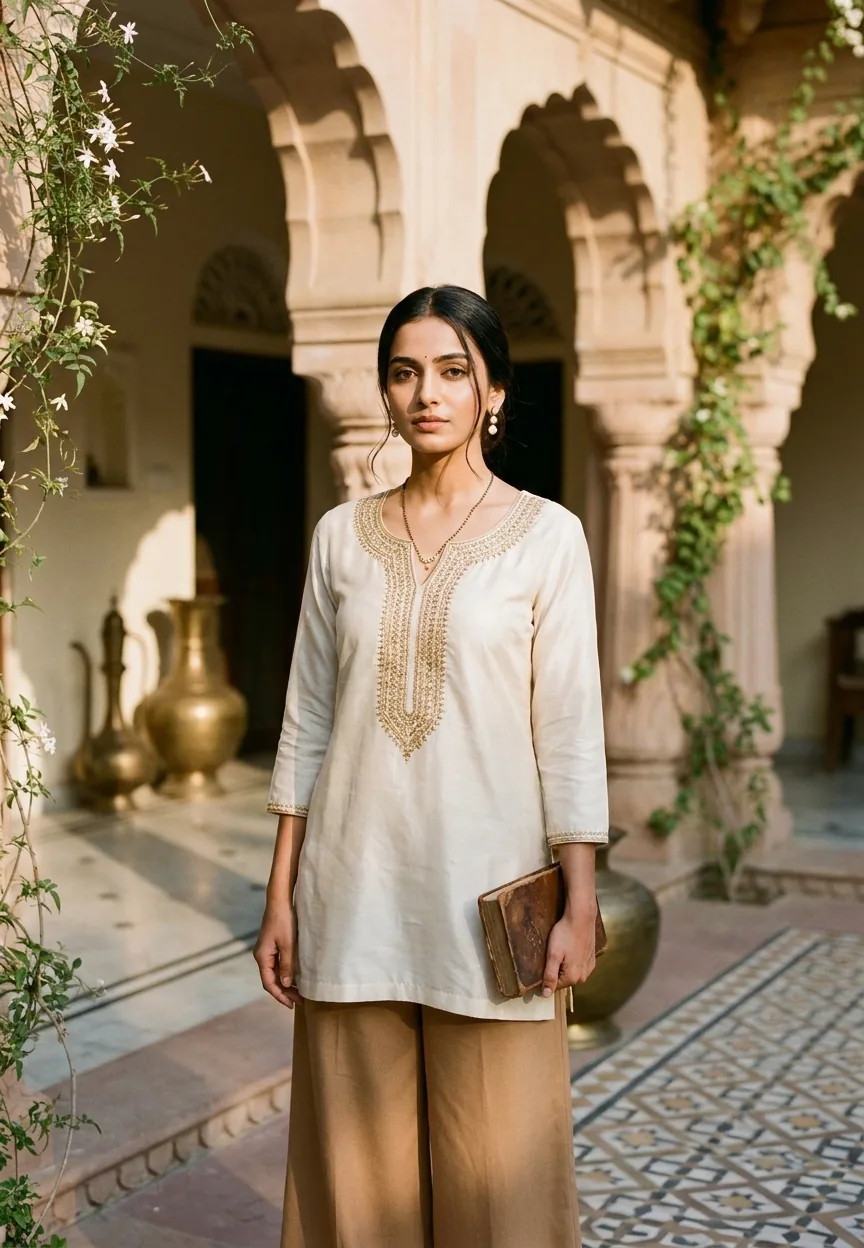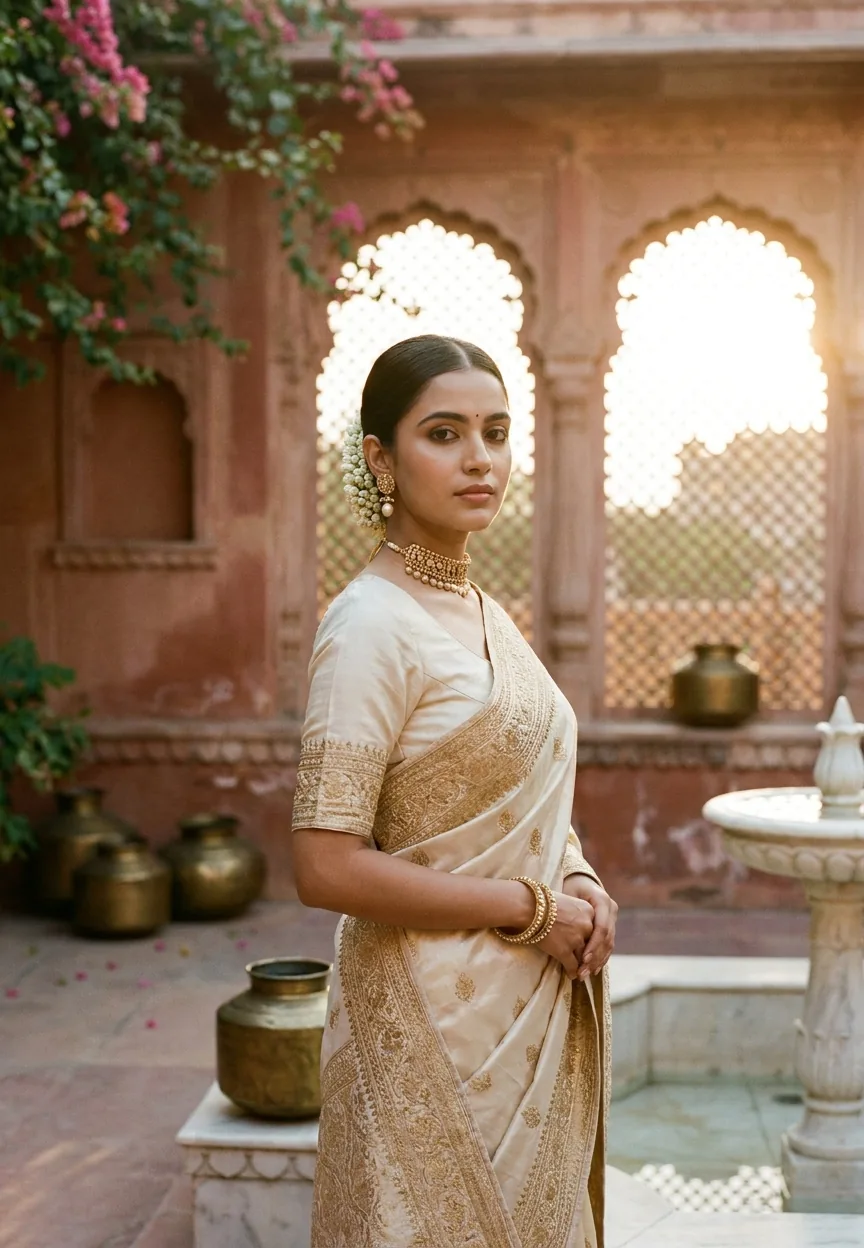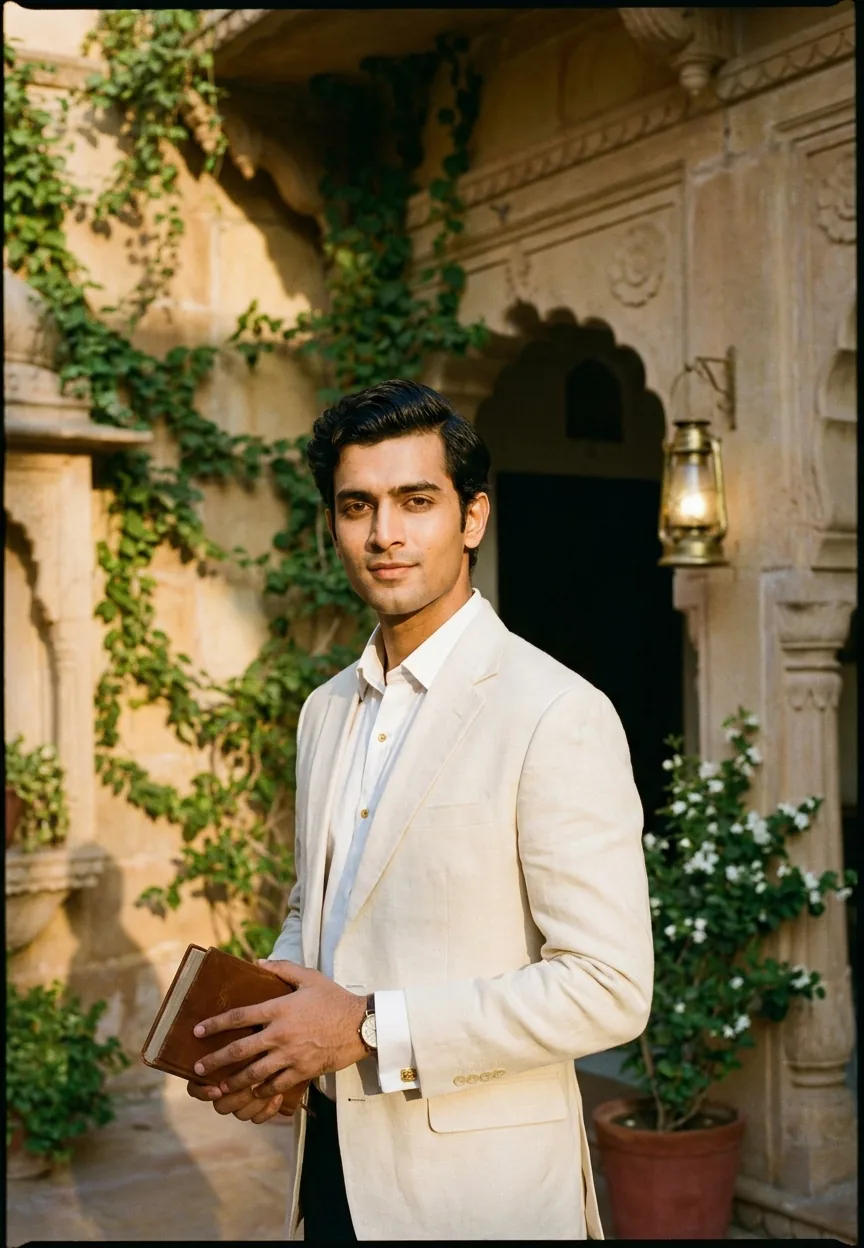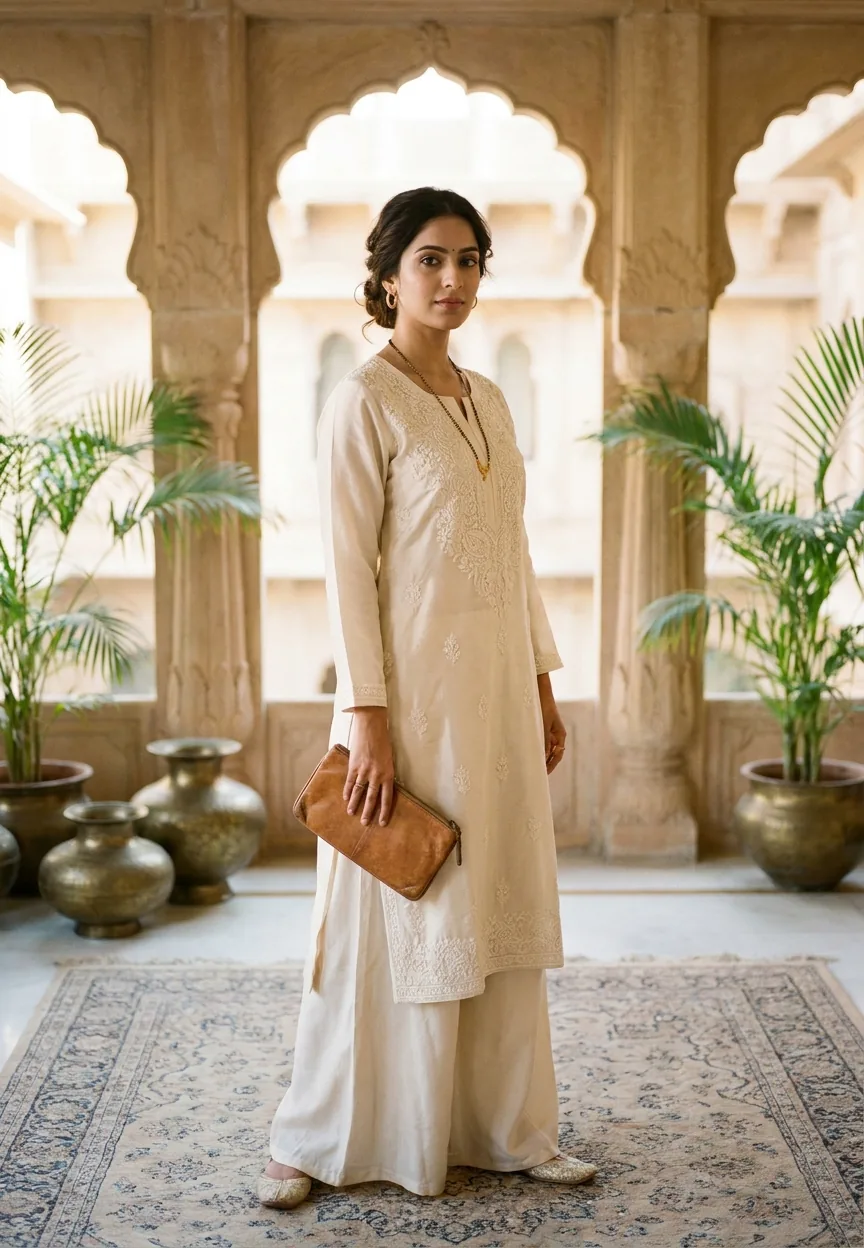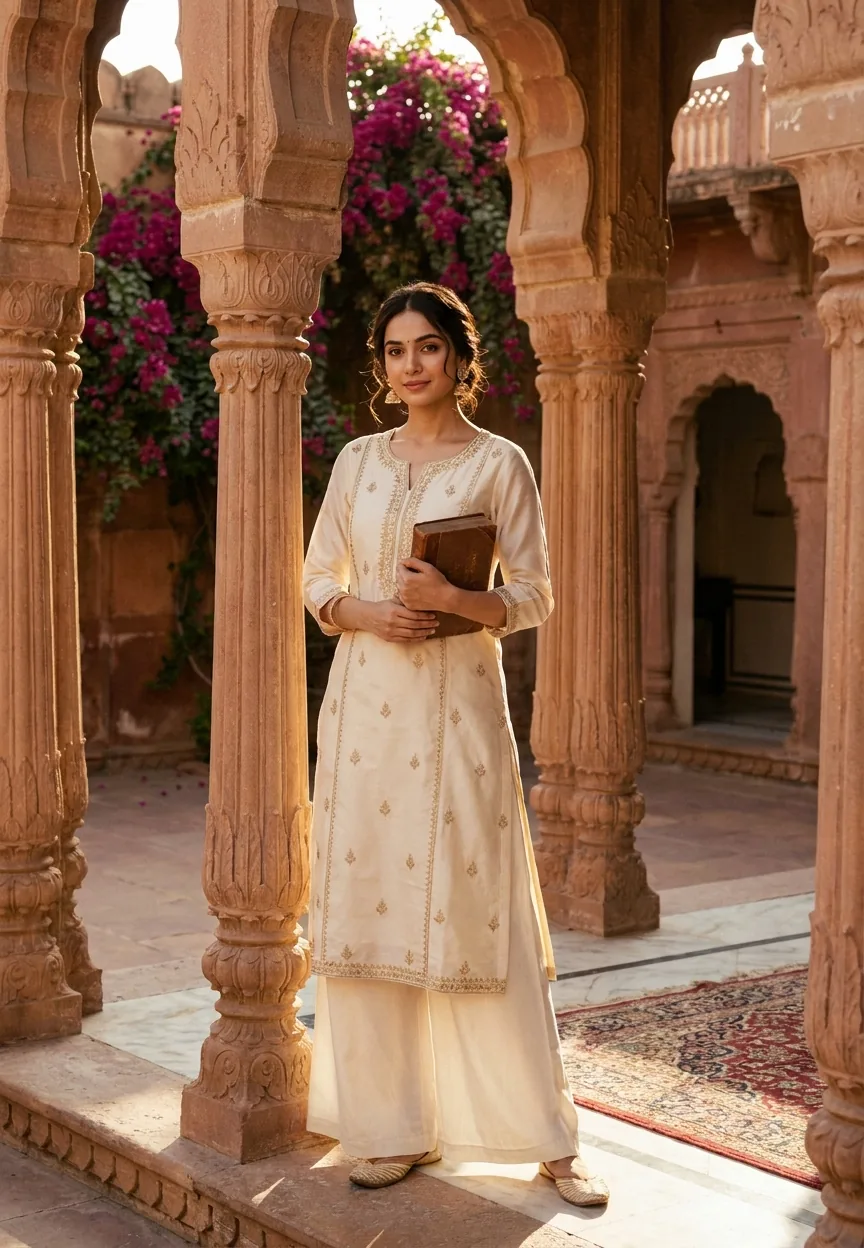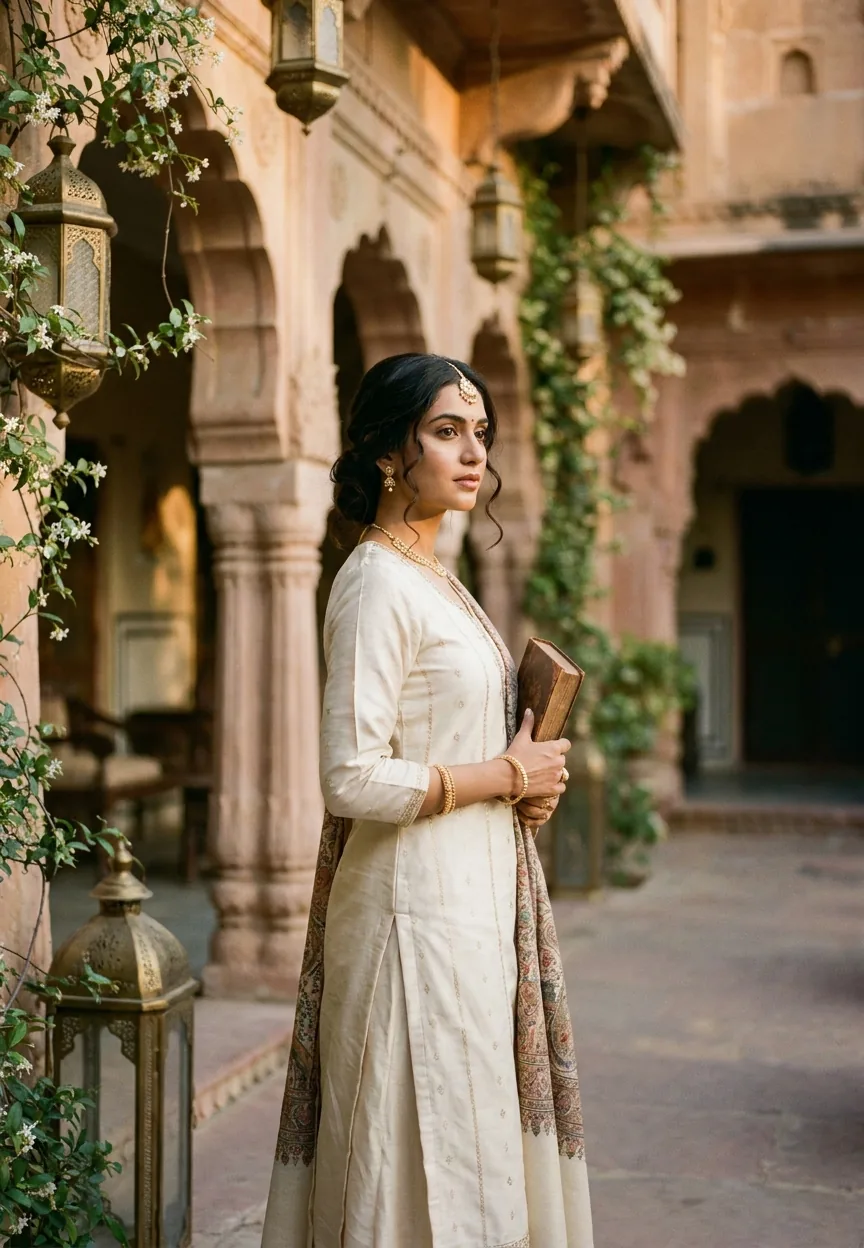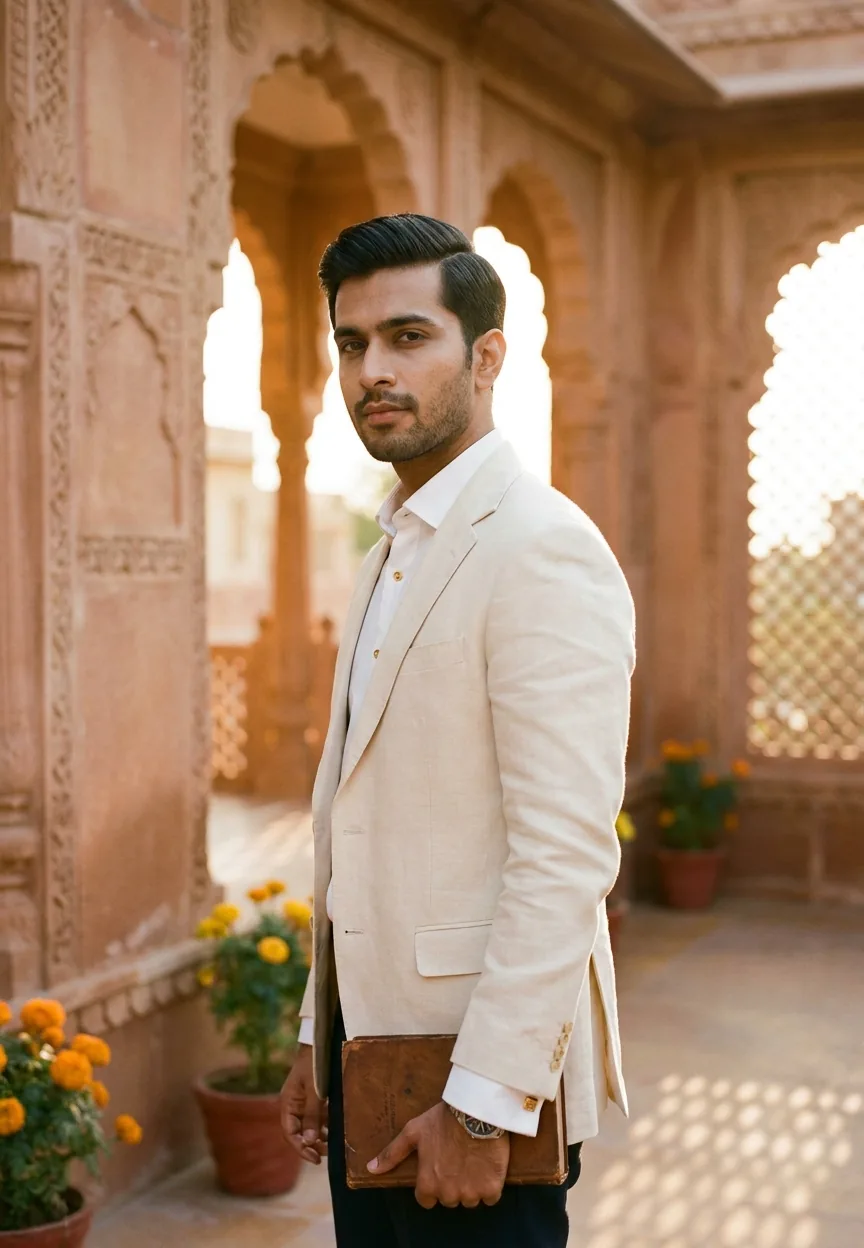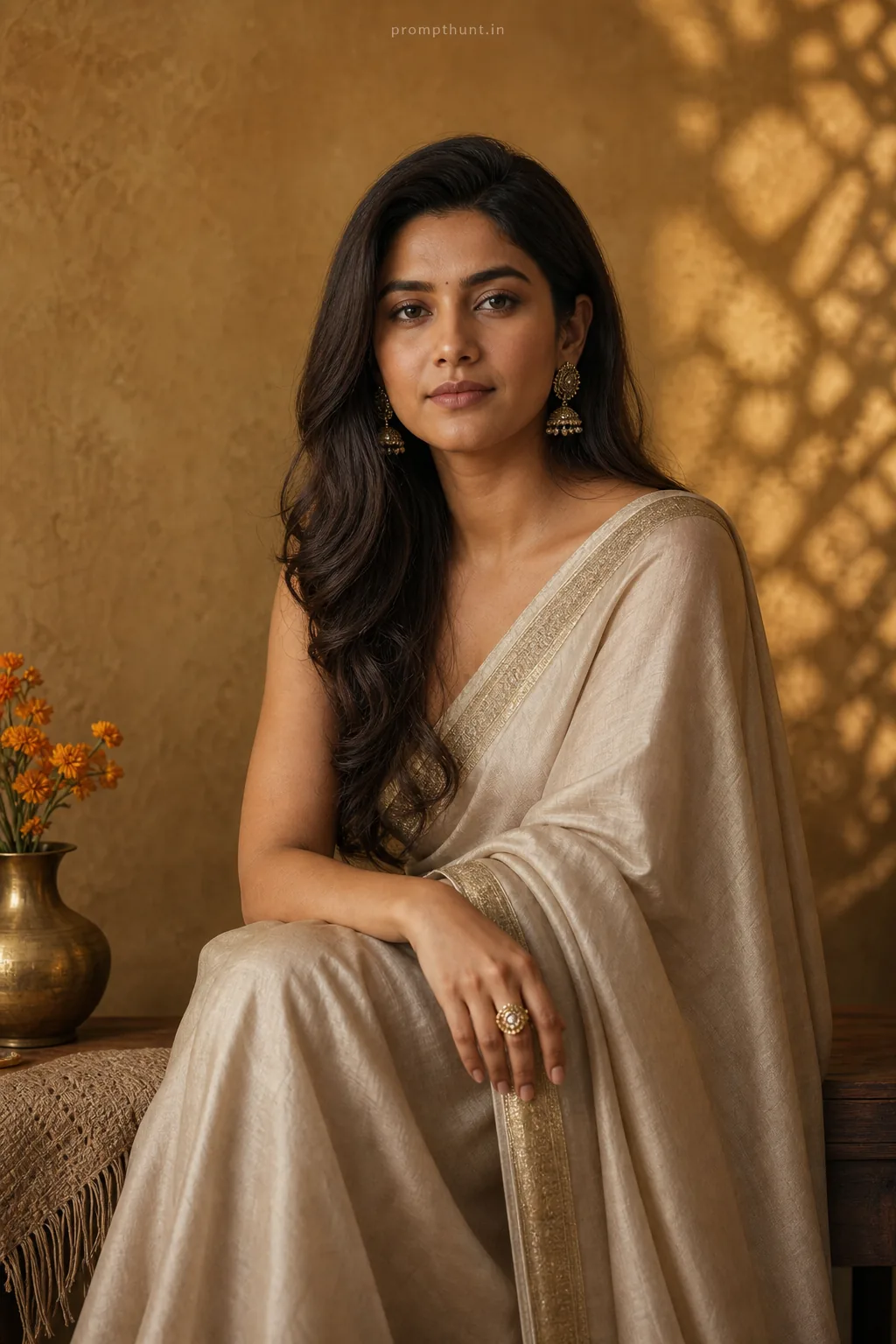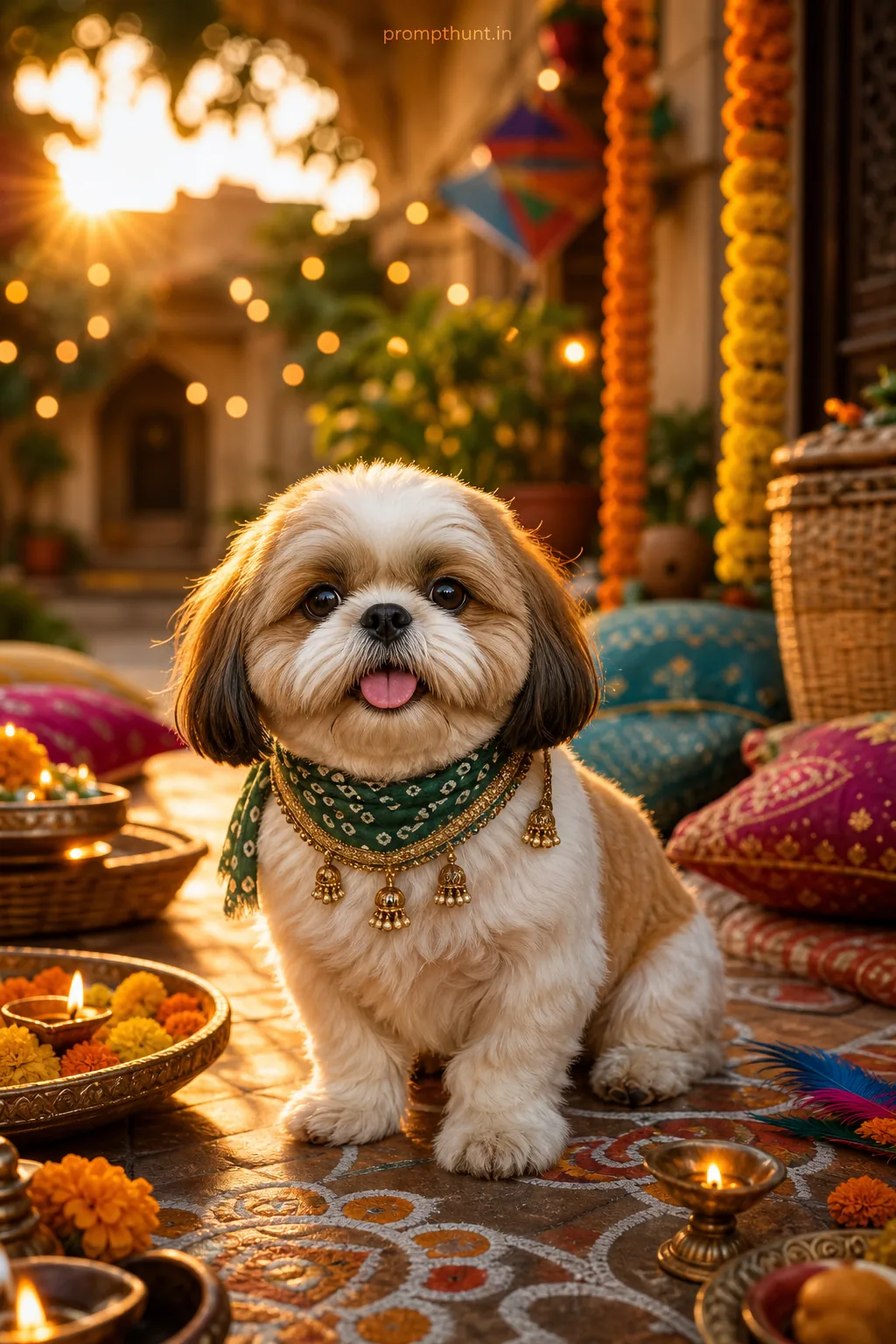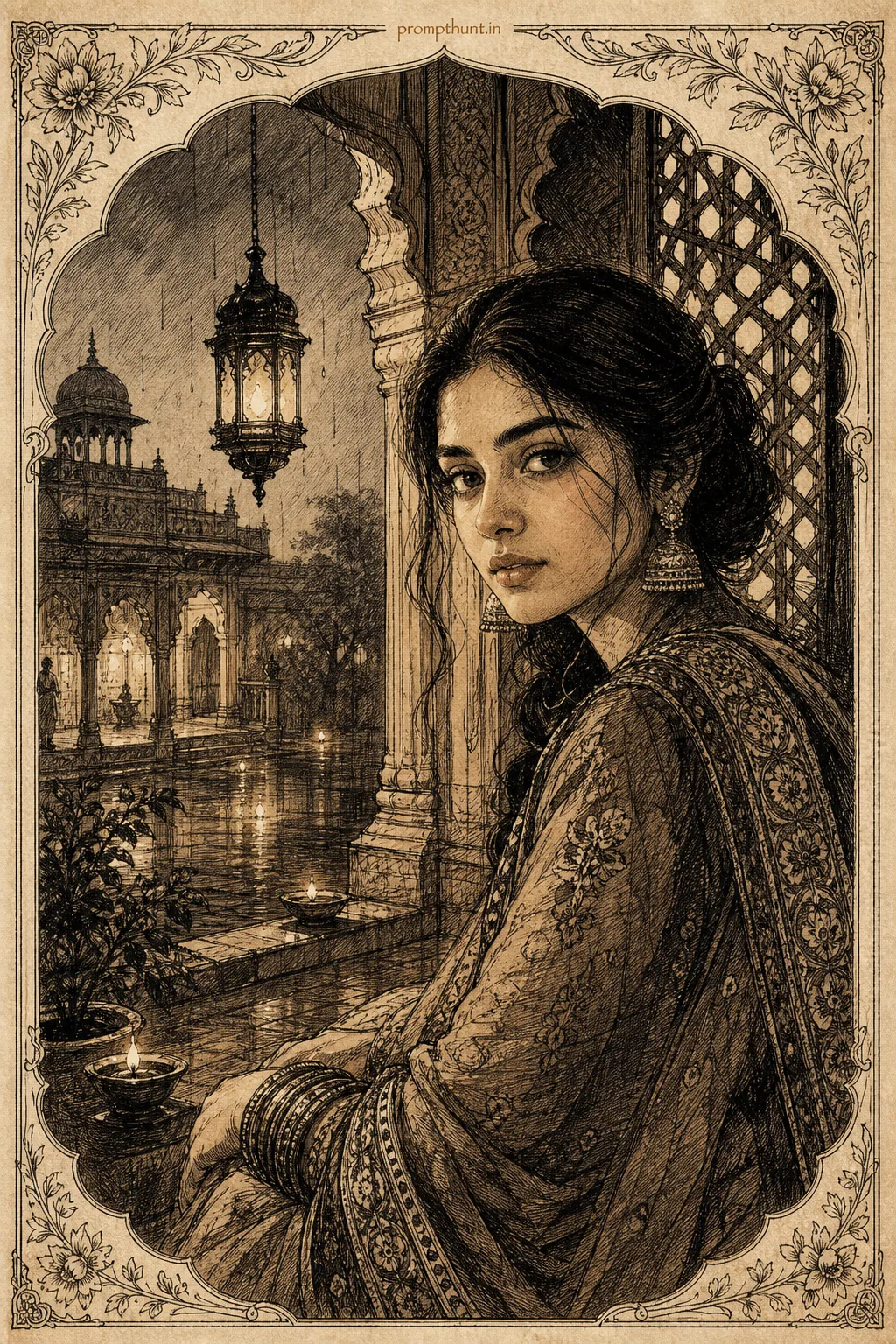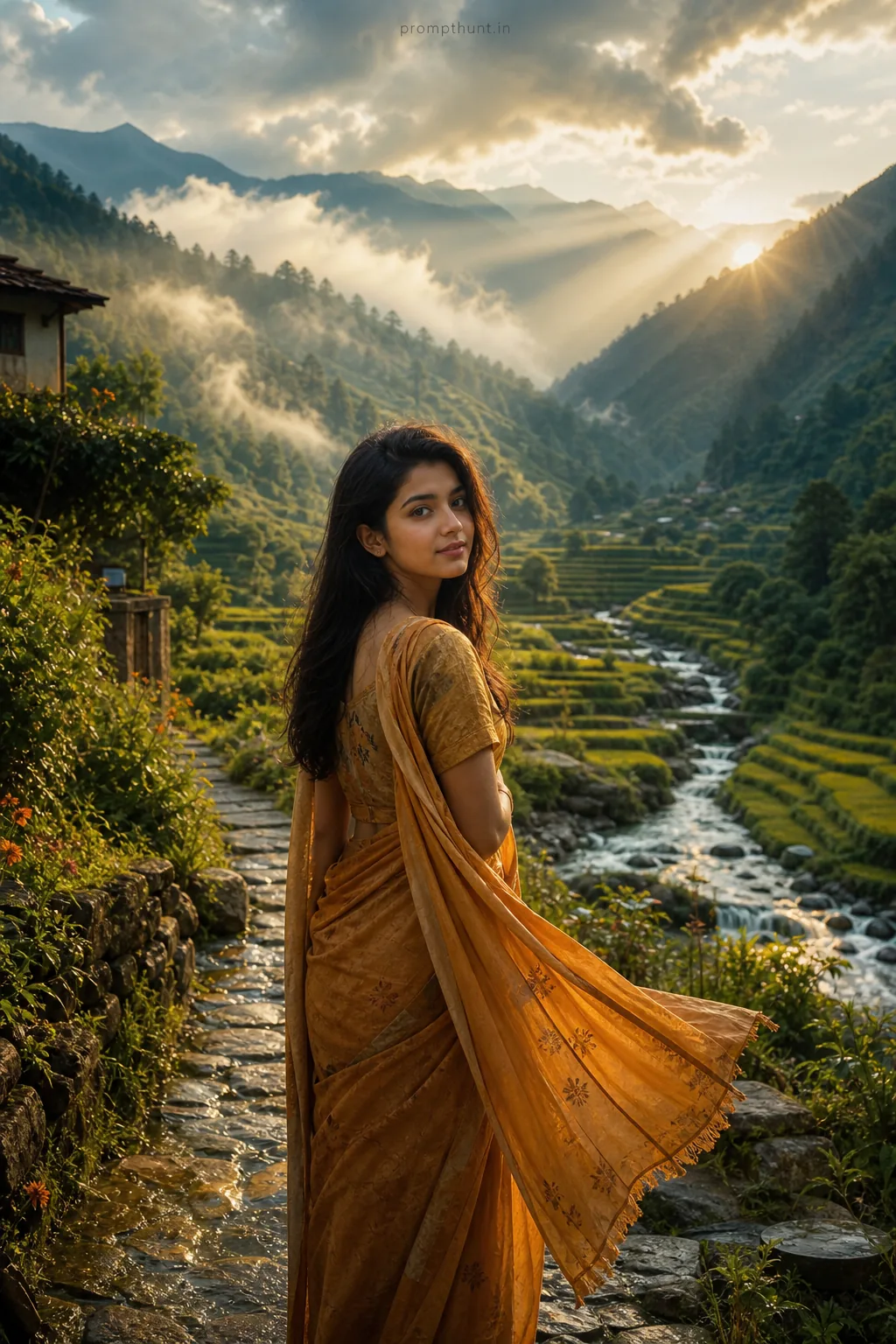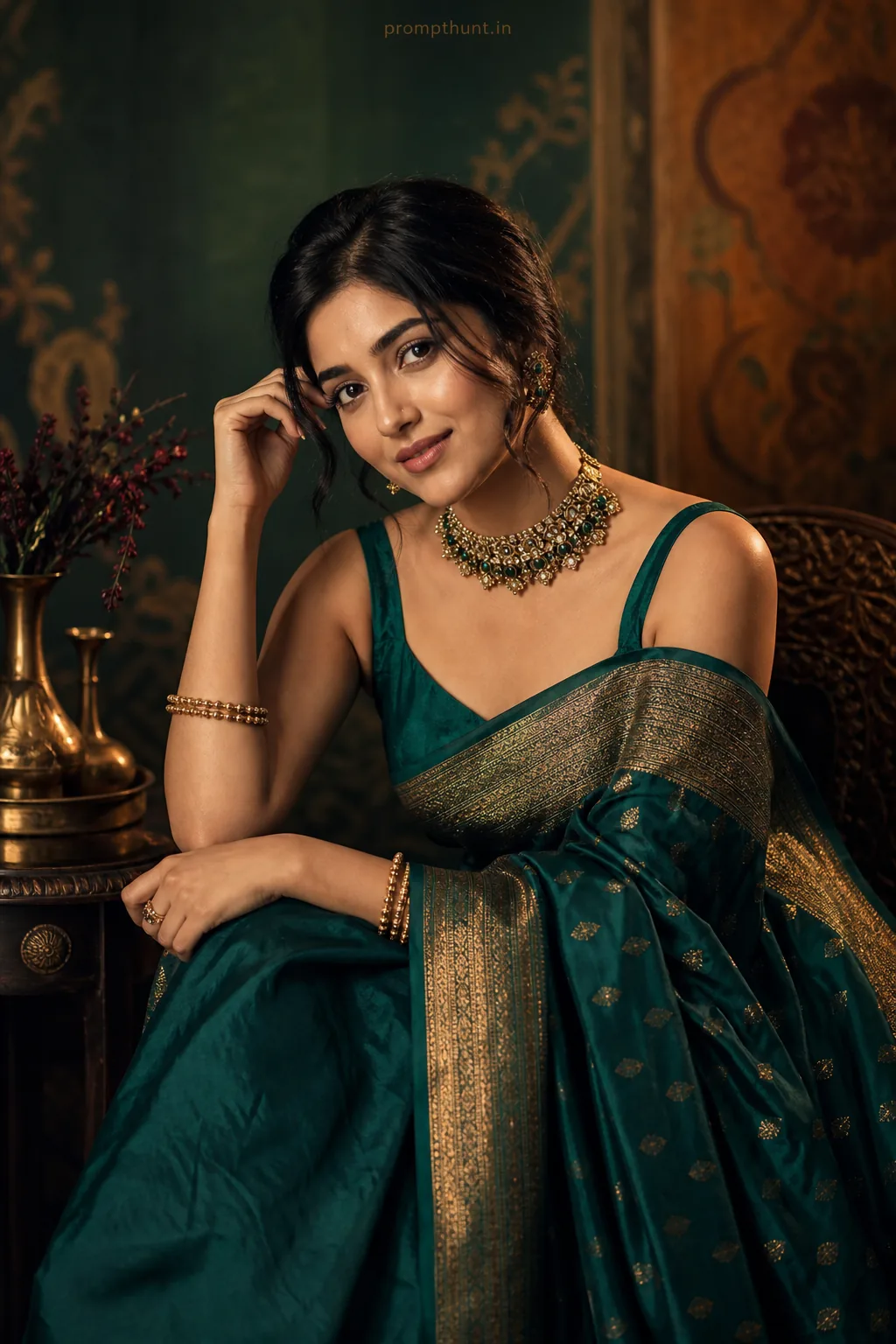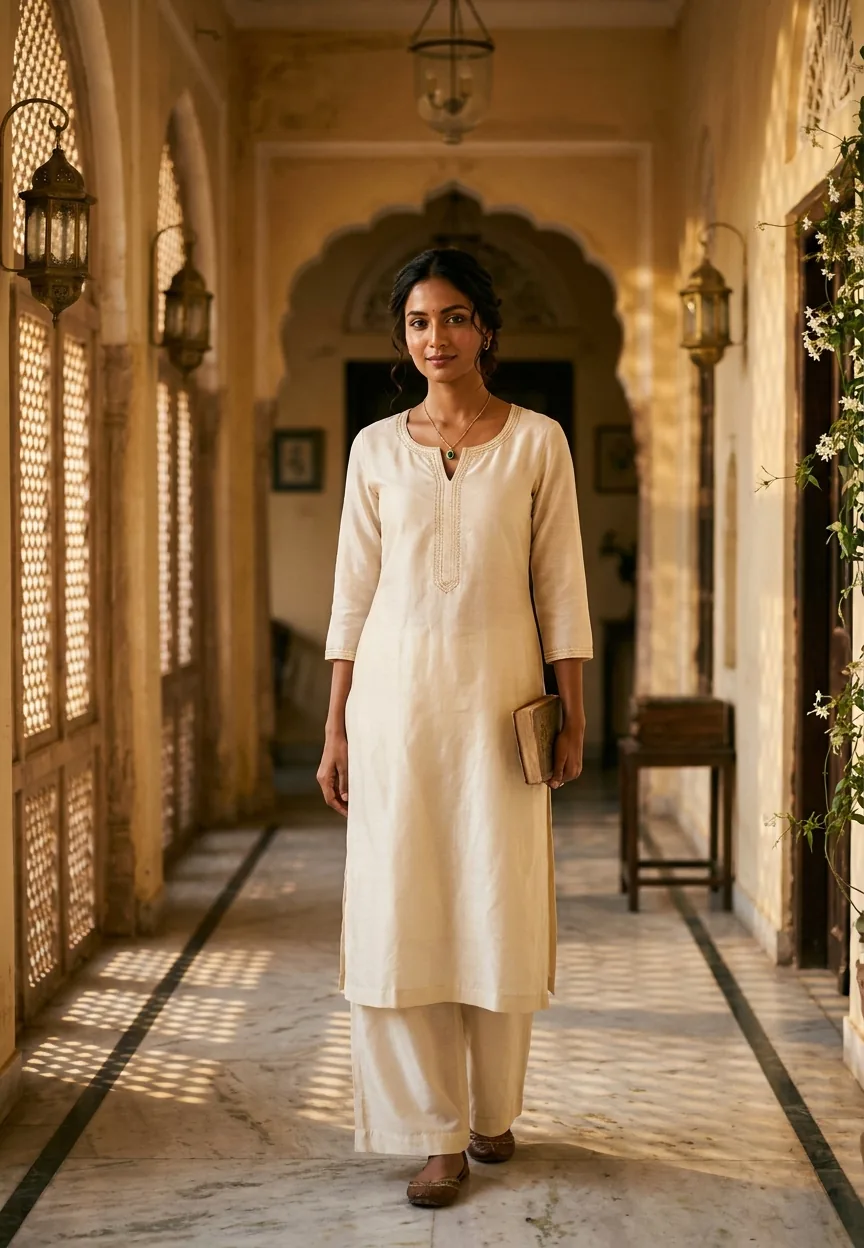

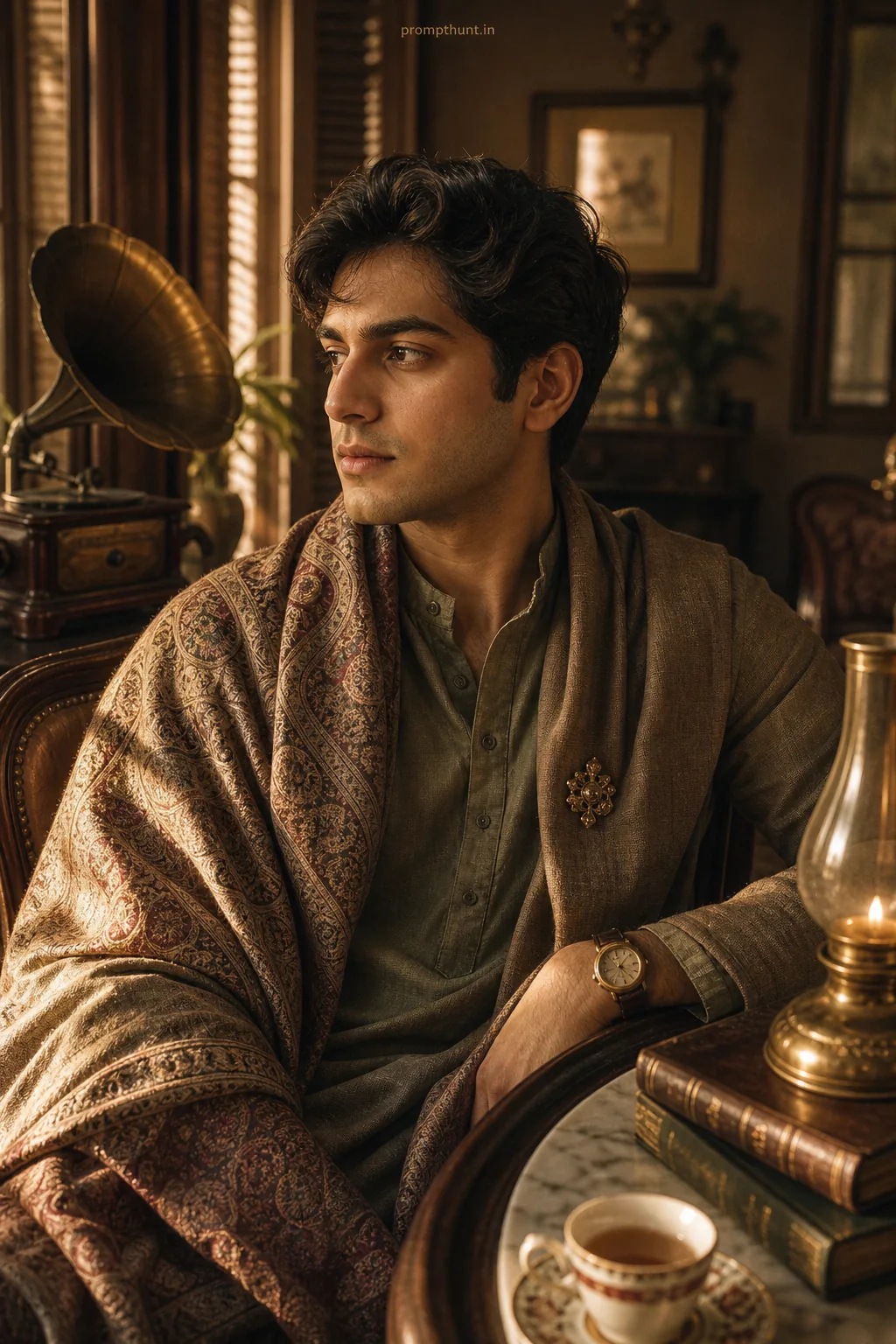
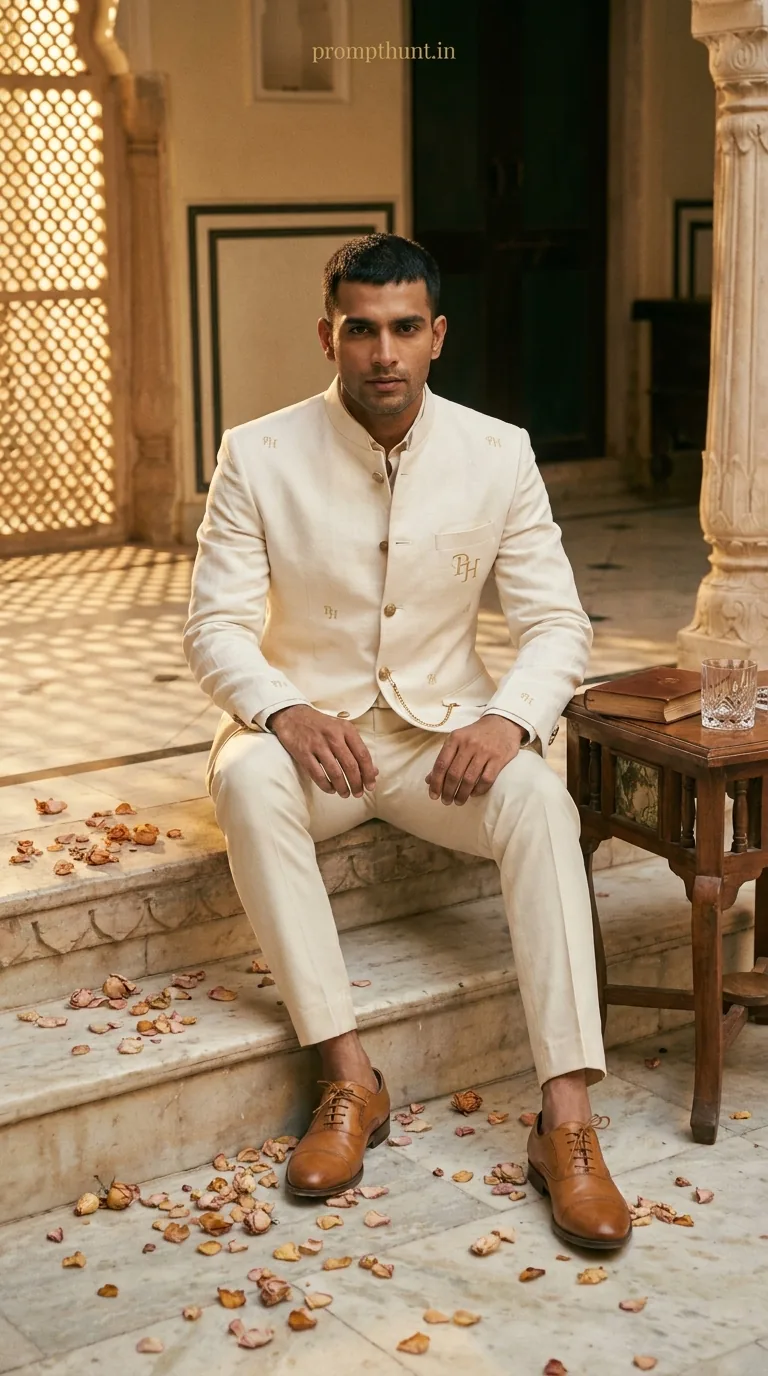
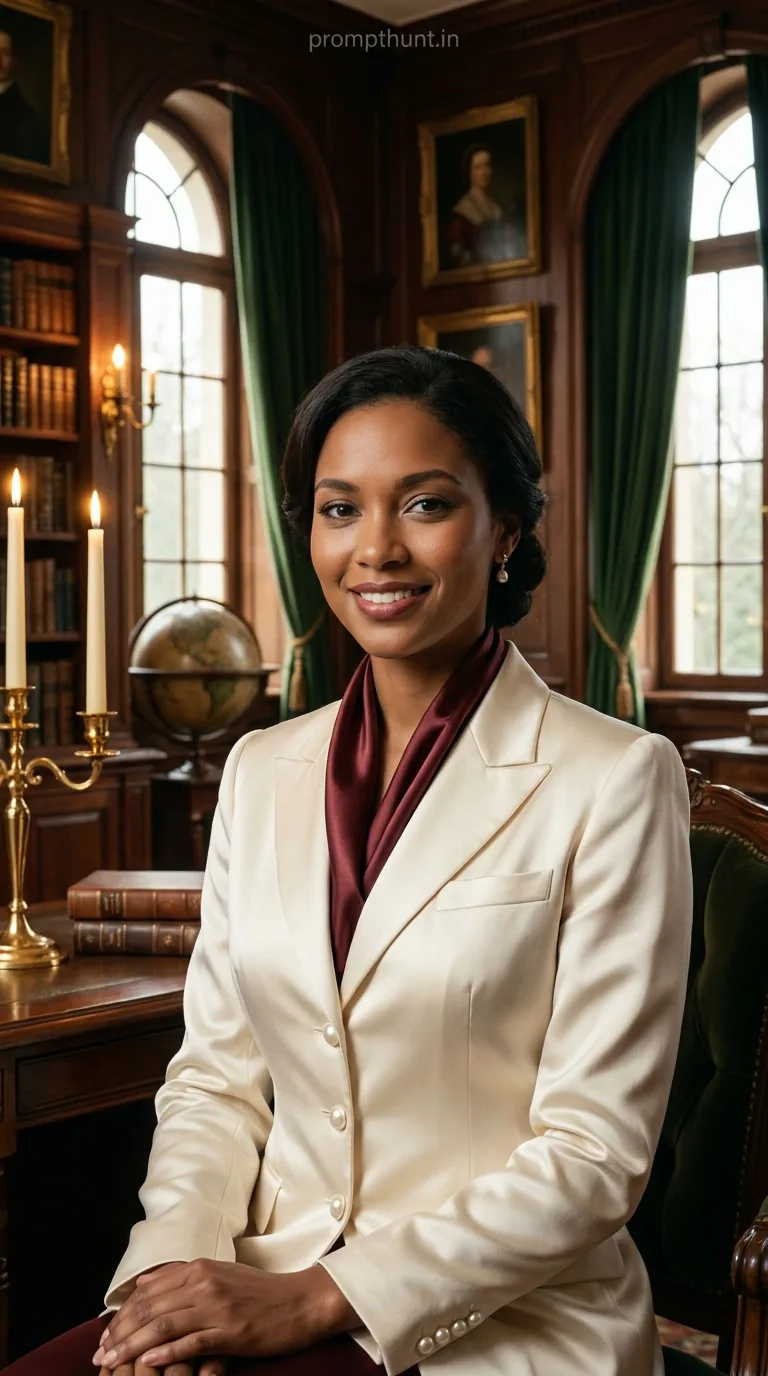
The Old Money Aesthetic in AI photography combines understated luxury with quiet confidence — think tailored silk, heritage architecture, and warm golden light. For an Indian interpretation, pair ivory or cream ethnic silhouettes with Rajasthani haveli backdrops, antique brass details, and film-like warm colour grading to generate portraits that look like they belong in a 1970s Vogue India spread.
There's a certain kind of wealth that doesn't announce itself. No logos, no flash, no peacocking about. Just a cream silk kurta, a small emerald pendant, and the kind of posture that says "my great-grandmother owned this building." That's the Old Money Aesthetic — and right now, Indian AI photo creators are absolutely running with it. Gemini's image generation handles this style better than most, mainly because the prompt details do the heavy lifting. Get the prompt right and you'll generate something genuinely stunning. Get it wrong and you'll end up with a sparkly disaster that looks like a Bollywood wedding invitation printer had a breakdown.
Use this Gemini prompt to generate a cinematic, heritage-styled portrait of an Indian woman in ivory silk against a Rajasthani haveli — it nails the Old Money Aesthetic in about 30 seconds flat.
What the Old Money Aesthetic Actually Is
Old Money isn't about looking rich. It's about looking like you've never had to think about money. Big difference.
The visual language is specific. Neutral palettes — cream, ivory, camel, forest green, deep navy. Natural fabrics. Understated jewellery with actual gemstones rather than cubic zirconia the size of a small planet. Heritage architecture. Books. Horses, occasionally. The vibe is "I summered at my family estate" not "I just bought my first estate."
The Indian interpretation of this aesthetic is genuinely its own thing. It pulls from the visual vocabulary of old Rajput nobility, Mughal-era refinement, and early 20th-century Bombay aristocracy. Havelis instead of English country houses. Zari embroidery instead of tweed. Jasmine vines instead of English roses. It's quieter than a bridal look, more considered than a festival outfit, and about a thousand times more photogenic than either.
The aesthetic also leans heavily on film photography's warm colour grading — those rich creams, deep golds, and muted greens that make everything look like a memory rather than a moment. That's what makes AI-generated images in this style so satisfying. Done well, they genuinely look like they were shot on a medium format camera by someone who charged a lot for the privilege.
The Prompt That Does the Work
Here's the full prompt. Copy it exactly first time around, then tweak from there once you see what Gemini does with it.
A strikingly elegant Indian woman in her late 20s, wearing a tailored cream-ivory silk kurta with subtle gold zari embroidery along the neckline, paired with wide-leg ivory trousers and a delicate gold chain necklace with a small emerald pendant. Her dark silky hair is swept back into a soft low bun with a few loose face-framing strands. She stands in the grand corridor of a heritage Rajasthani haveli, surrounded by ornate arched doorways with aged ochre walls, antique brass lanterns, and climbing jasmine vines. Warm golden hour sunlight filters through latticed jharokha windows, casting intricate shadow patterns across marble floors. Her expression is serene, confident, and quietly aristocratic — a subtle half-smile. She holds a vintage hardcover book casually at her side. Skin tone is warm medium-brown, naturally radiant with a dewy finish. Shot on a medium format camera with a 85mm lens, shallow depth of field, soft bokeh background, film-like warm color grading with rich creams, deep golds, and muted greens. Editorial fashion photography style, ultra-realistic, hyper-detailed, cinematic lighting, 9:13 vertical aspect ratio.
How to Use This Prompt — Three Steps, No Surprises
Step one: Open Gemini. You want Gemini Advanced if you have access — the image quality difference is real and not subtle. Go to gemini.google.com and make sure you're in a conversation that supports image generation.
Step two: Paste the prompt in full. Don't summarise it, don't trim it down, don't think you can describe the haveli in fewer words. Every detail in that prompt is pulling weight. The jharokha windows, the shadow patterns on marble floors, the dewy skin finish — Gemini reads all of that and uses it. Cut corners on the prompt and the output corners you right back.
Step three: Generate, review, and regenerate if needed. Nine times out of ten, the first result will be strong. But Gemini sometimes goes a bit heavy on the gold embroidery or softens the bokeh more than you'd like. Hit generate again with the same prompt — results vary per attempt, so a second or third try often lands the composition better.
If you want variations, change one element at a time. Swap the haveli corridor for a rooftop terrace at dusk. Change the emerald pendant to a pearl drop. Switch the low bun for loose waves. Keep everything else identical so you can isolate what's actually changing the image.
Tips for Getting the Best Results
Specify the skin tone explicitly. Gemini's default for "Indian woman" can vary wildly. "Warm medium-brown, naturally radiant with a dewy finish" gives it something concrete to work with. It's not being prescriptive about what's beautiful — it's giving the AI a reference point so it doesn't guess.
Keep the expression instruction in. "Serene, confident, and quietly aristocratic — a subtle half-smile" sounds like you're directing an actual actress. That's the point. Without it, you'll get either a full grin (too casual for Old Money) or a blank stare (too editorial, not enough warmth).
The aspect ratio matters more than people think. 9:13 vertical is close to a portrait photography crop and works brilliantly on Instagram Stories or Pinterest. If you're generating for a square grid post, adjust to 1:1 and add "centered composition" to the prompt.
Don't add "photorealistic" as a standalone word — it can push Gemini toward an overly processed look. The phrase "ultra-realistic, hyper-detailed, cinematic lighting" in the existing prompt already handles this and keeps the result feeling like a photograph rather than a render.
Rule of thumb: if the output looks too bright or saturated, add "muted, desaturated tones, low contrast" to the colour grading instruction. Old Money never shouts. (Neither should your colour palette.)
Why This Aesthetic Is Having Its Moment in India
The Old Money Aesthetic hit global TikTok and Pinterest hard in 2023, but the Indian interpretation picked up serious momentum through 2024 and hasn't slowed down. There are a few reasons for that.
First, the backlash to maximalism. A decade of heavily embellished bridal and festival content has created genuine appetite for something quieter. Cream silk and antique brass are basically the visual equivalent of turning the volume down after a very long party.
Second, heritage architecture content is genuinely popular in India right now. Rajasthan tourism content, haveli renovation accounts, old Bombay photography — there's a whole corner of Instagram and Pinterest that lives here. The Old Money Aesthetic AI prompt slots directly into that interest.
Third — and this one's straightforward — it photographs beautifully. Warm ochre walls, gold-hour light, and ivory fabric are doing about 70% of the aesthetic work before the subject even enters the frame. It's the kind of visual combination that makes people stop scrolling. Which is, at the end of the day, the entire game.
Honest Opinion — Including When Not to Use This
Right. Fair call to be straight about this.
This prompt works brilliantly as a creative portfolio piece, a concept image, or a personal project. If you're a fashion brand wanting to genuinely represent your aesthetic direction, it's a useful starting point for a mood board. All of that is legitimate use.
Where it gets murky: using these images to imply they're real photographs of real people, real locations, or real outfits you can sell. The haveli in this image doesn't exist. The woman doesn't exist. The kurta isn't available in any shop. If you're using AI-generated images to sell clothing or promote a real venue, you need to be transparent about what it is. Nine times out of ten, audiences can handle "AI-generated concept image" just fine. What they can't handle — and shouldn't have to — is being misled.
Also worth saying: this style can tip from "quietly elegant" into "completely sterile" very quickly. The Old Money Aesthetic, done badly, produces images that look like a luxury hotel lobby brochure designed by someone who has never felt joy. If your generated image has zero warmth or personality — if the subject looks like a high-resolution statue rather than a person — go back and add more specificity to the expression and the environmental details. The jasmine vines and the loose face-framing strands aren't decorative padding. They're what makes it feel lived-in rather than staged.
This is also a very specific aesthetic. Don't use it for vibrant festival content, bold bridal looks, or anything that benefits from colour and energy. The Old Money Aesthetic is a slow burn, not a fireworks display. Use it accordingly.
The Short Version, With a Proper Sign-Off
The Old Money Aesthetic AI prompt for Gemini works because every detail is doing