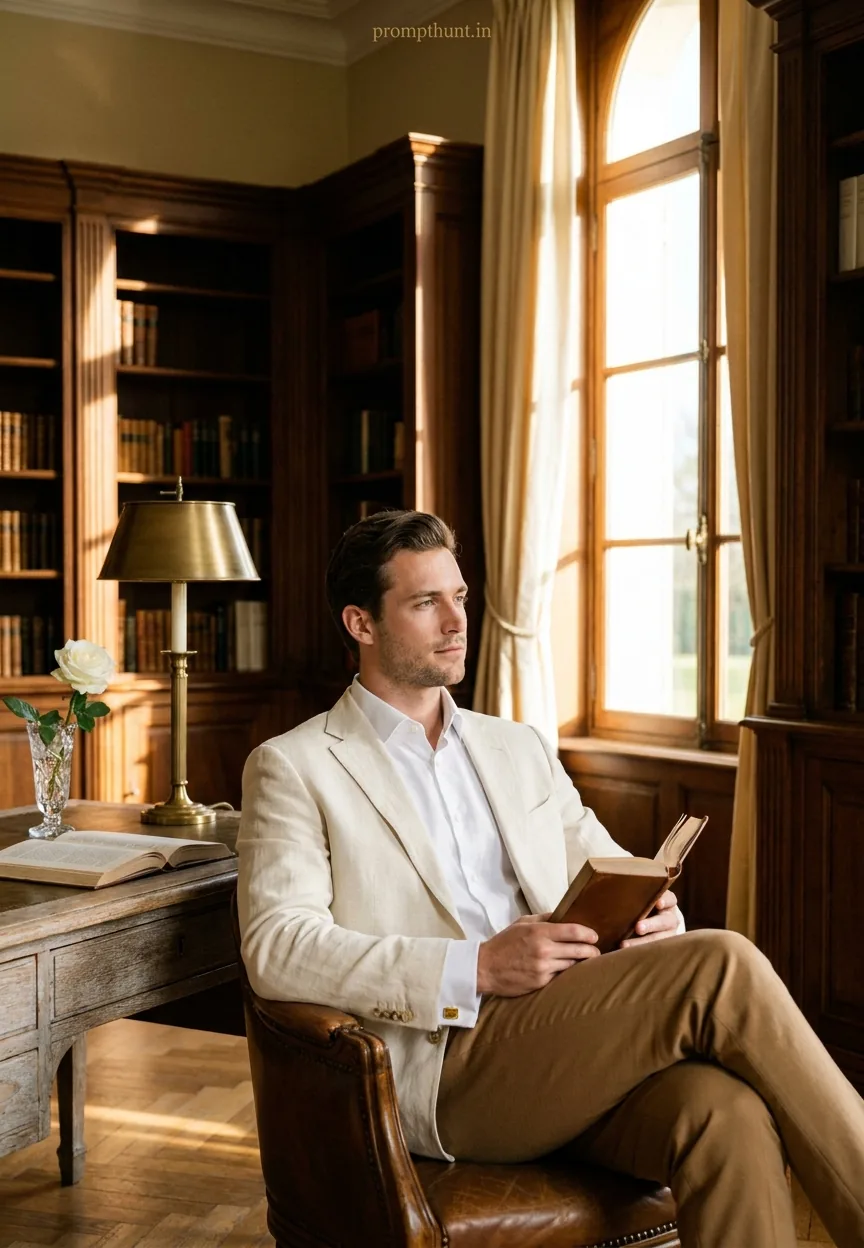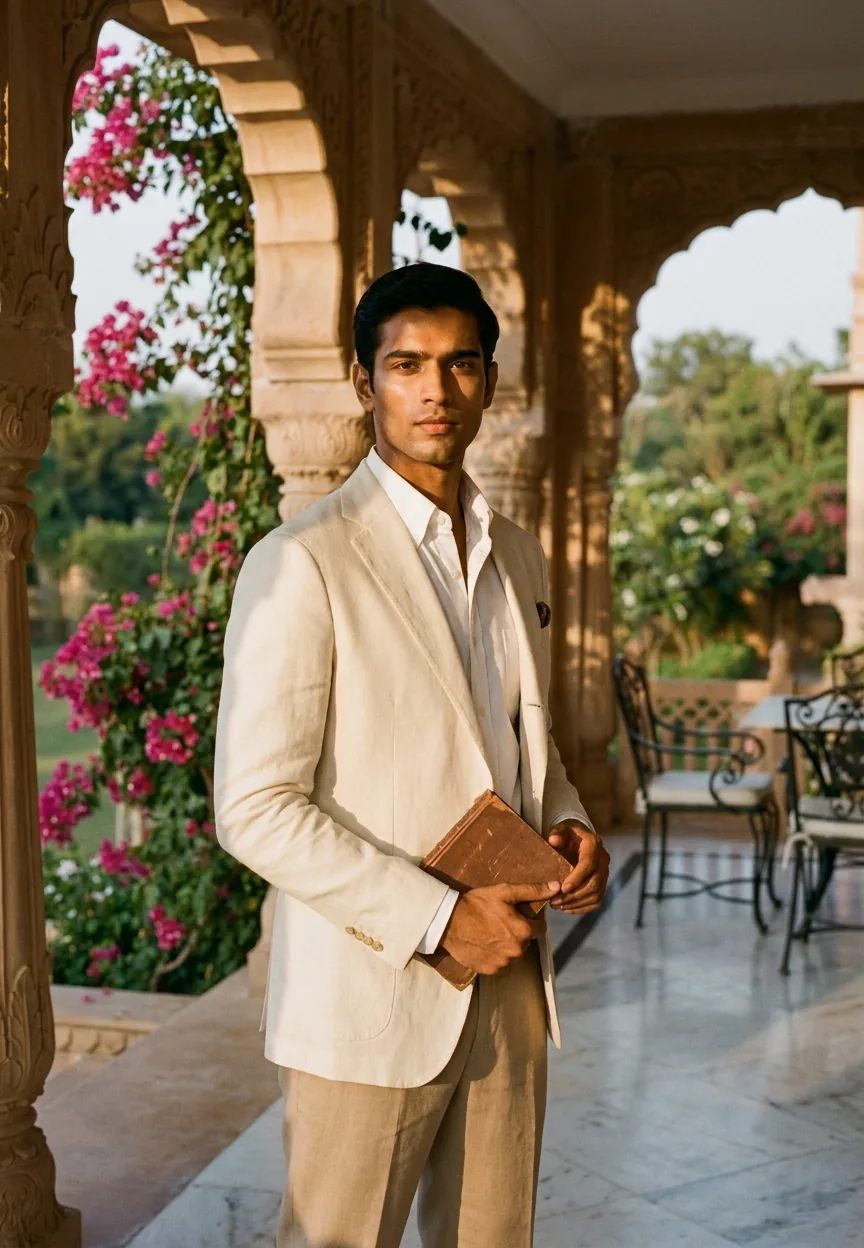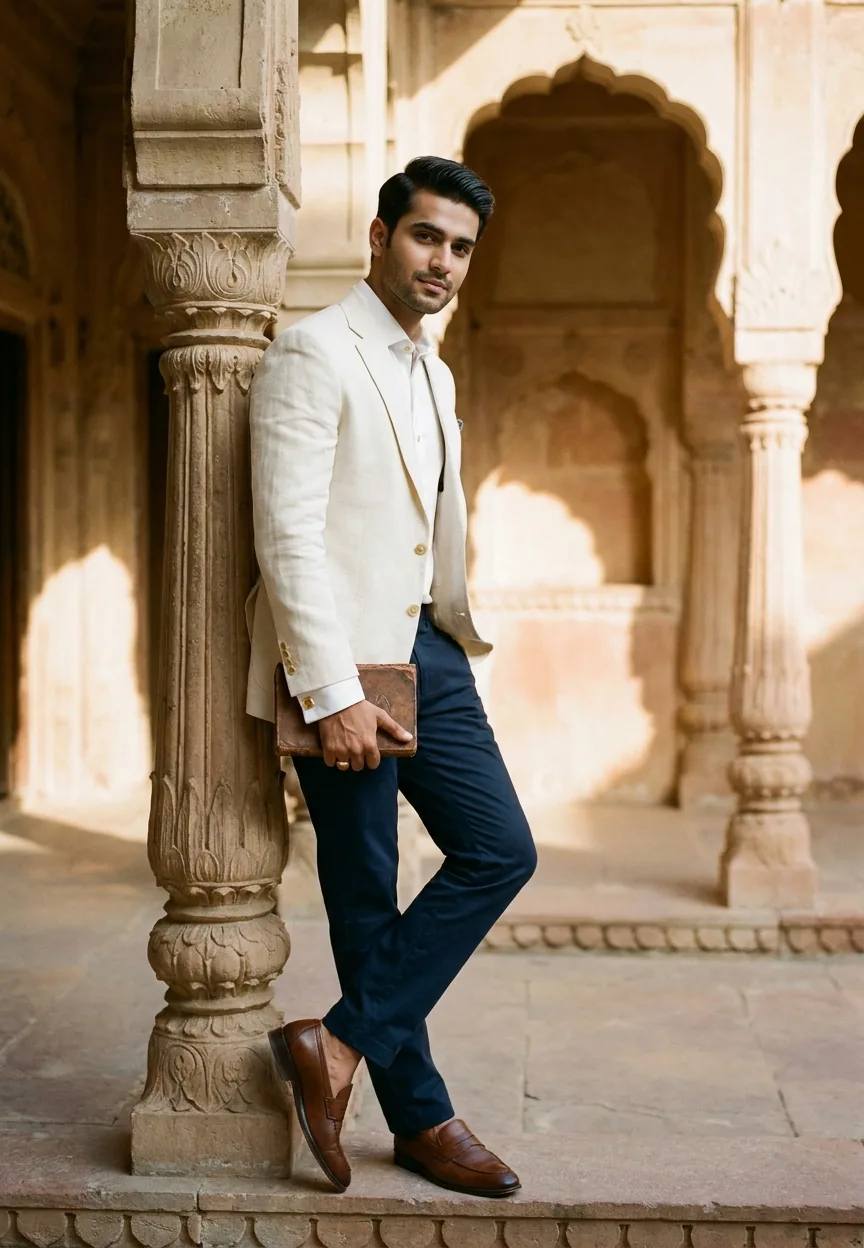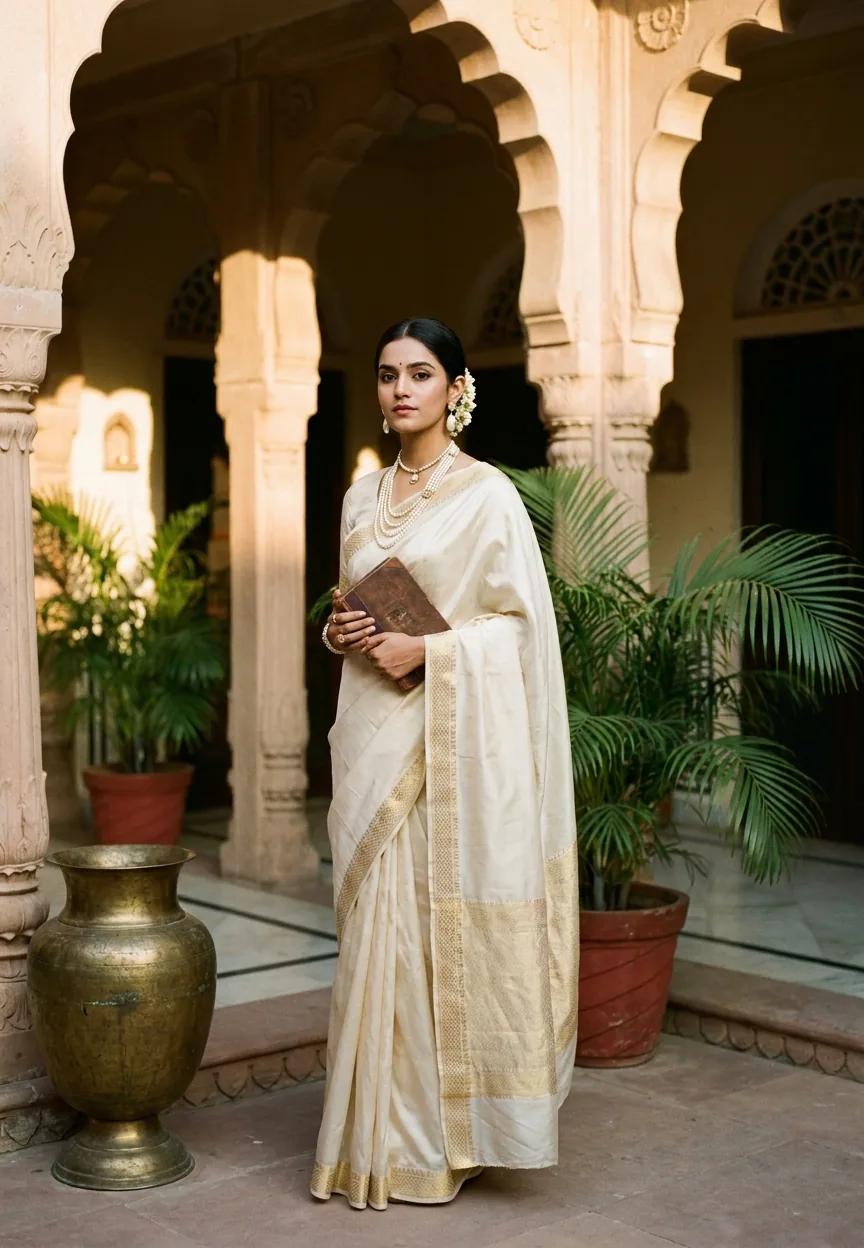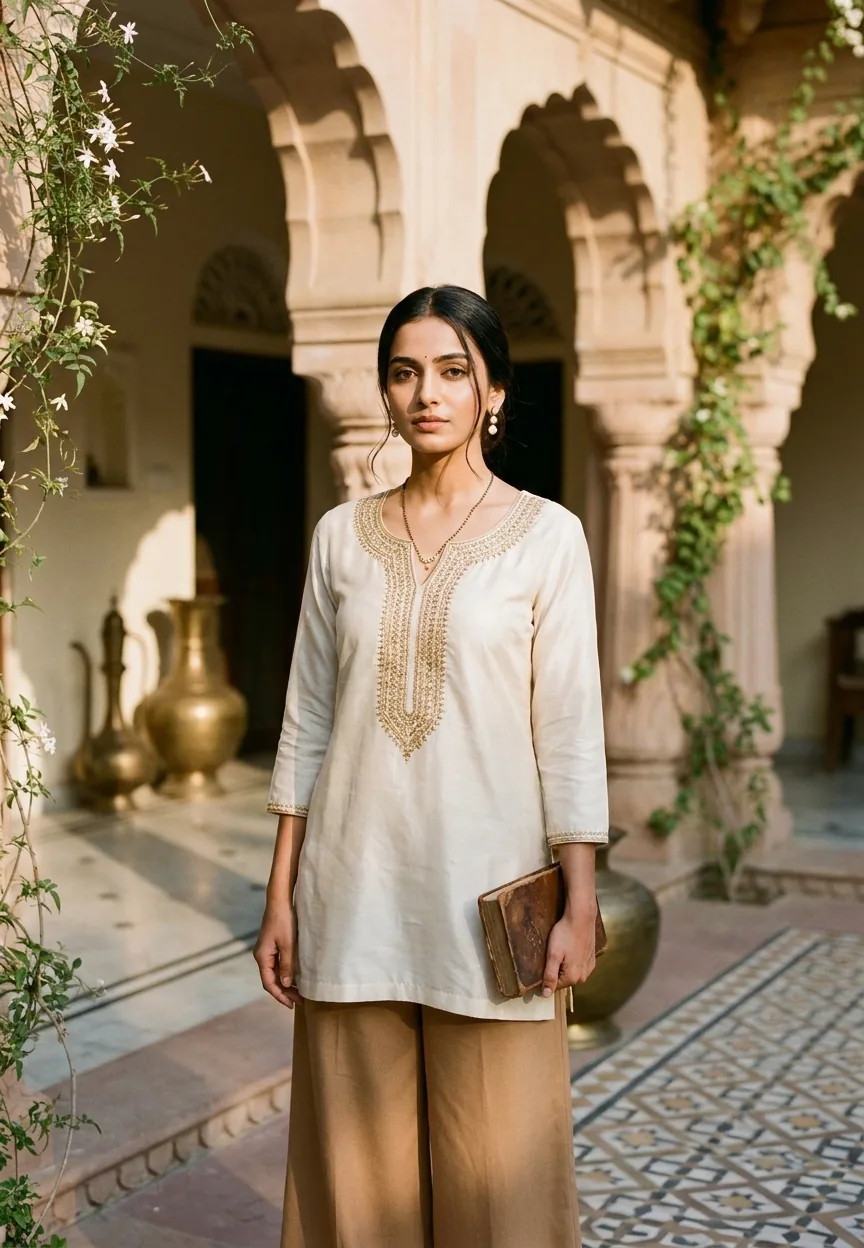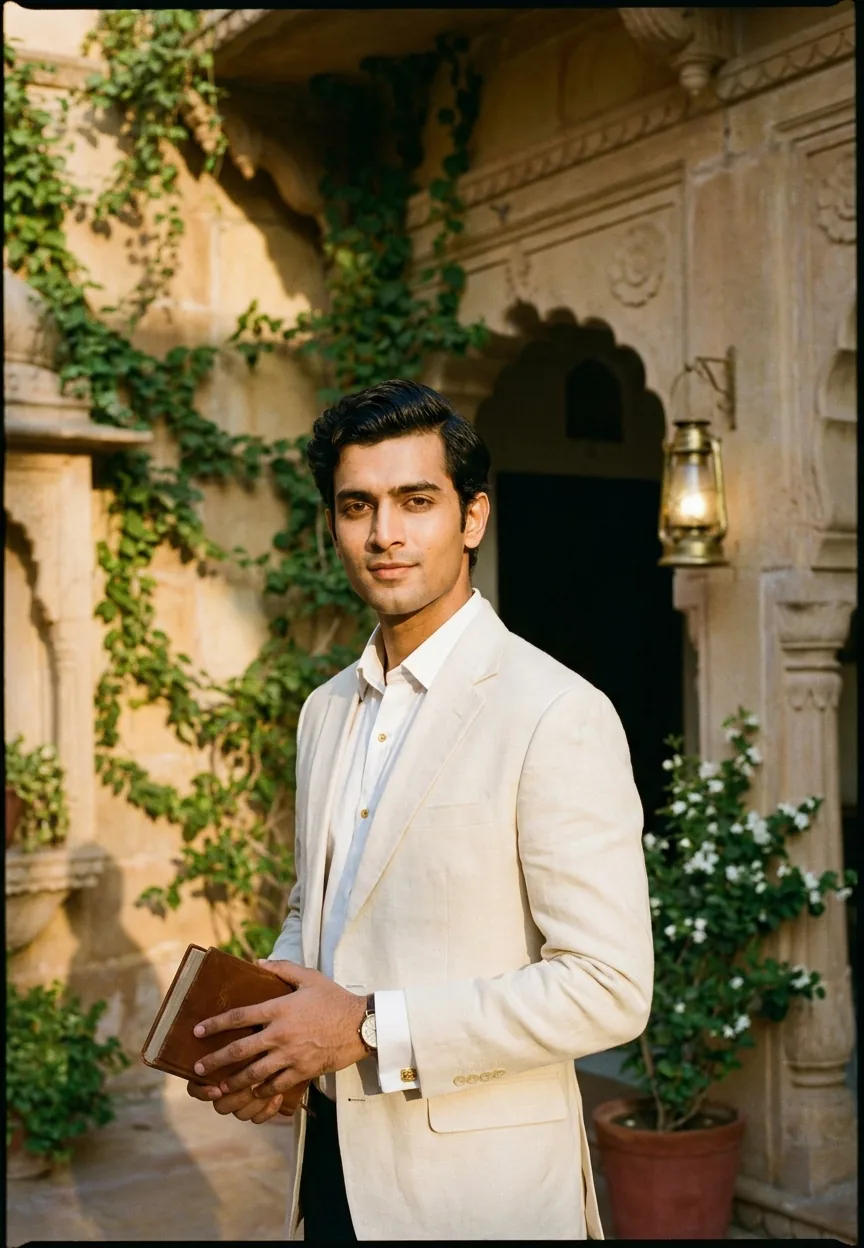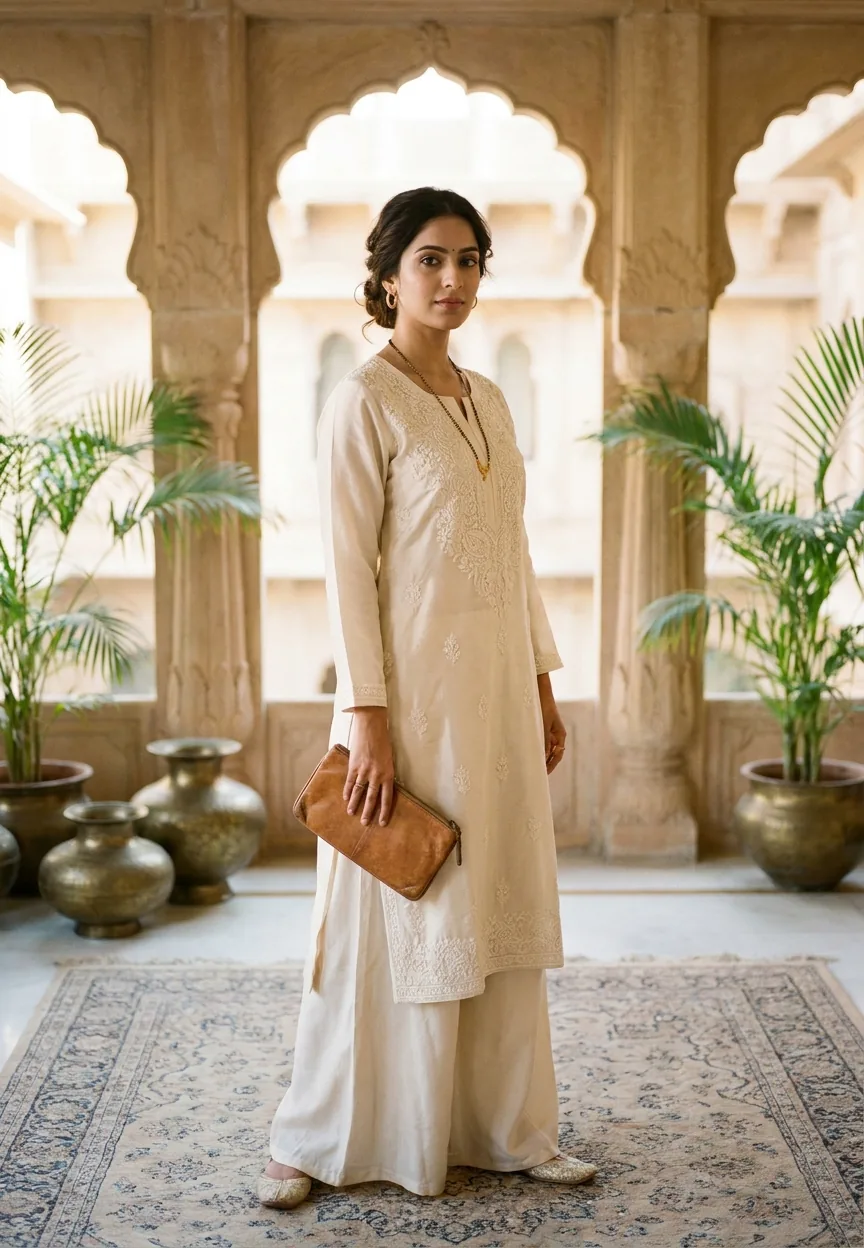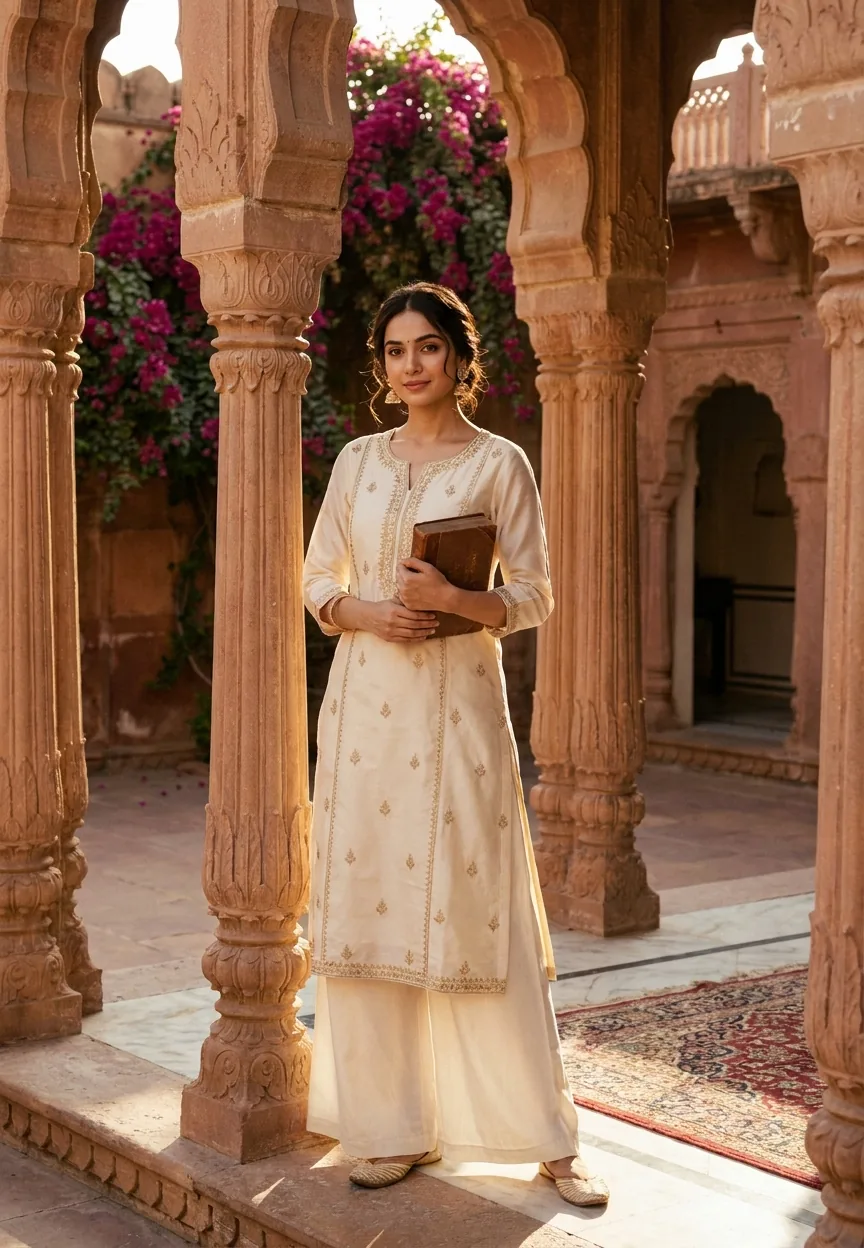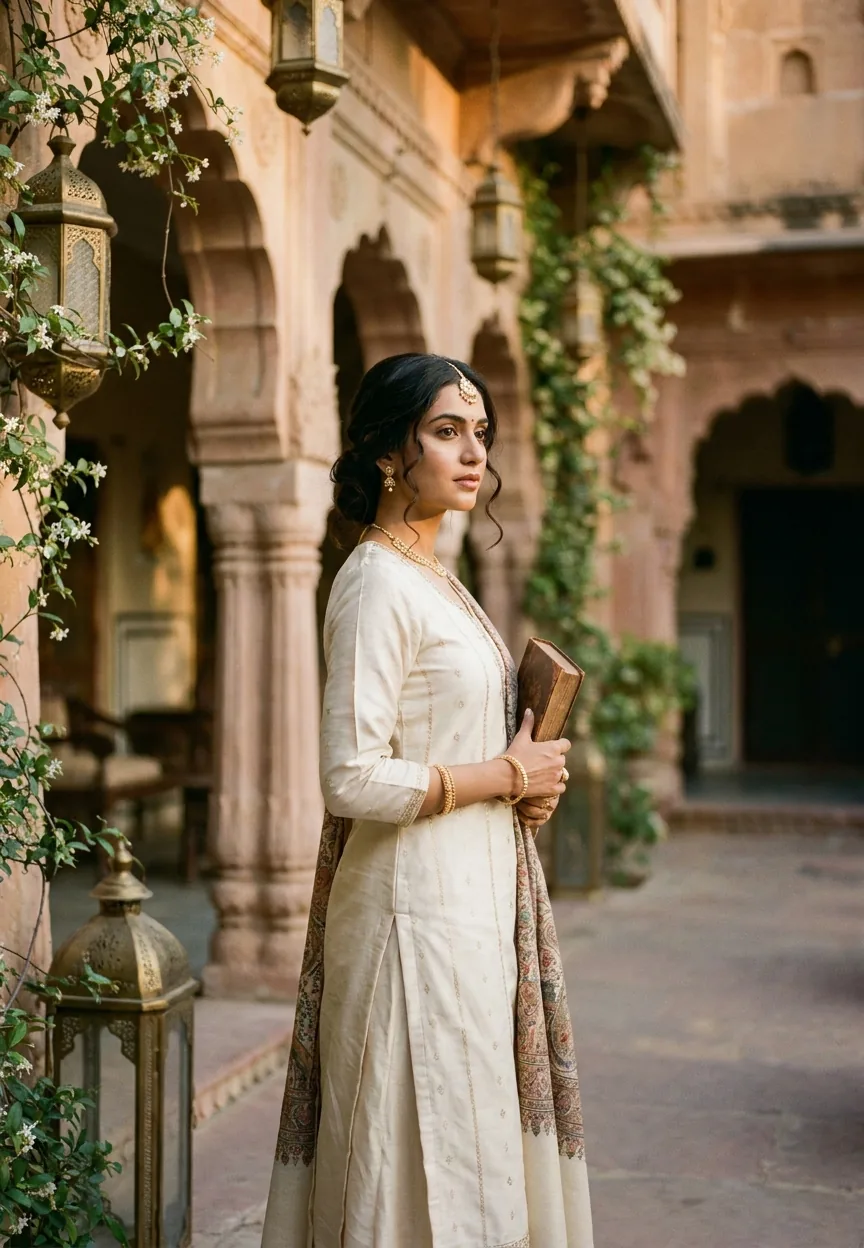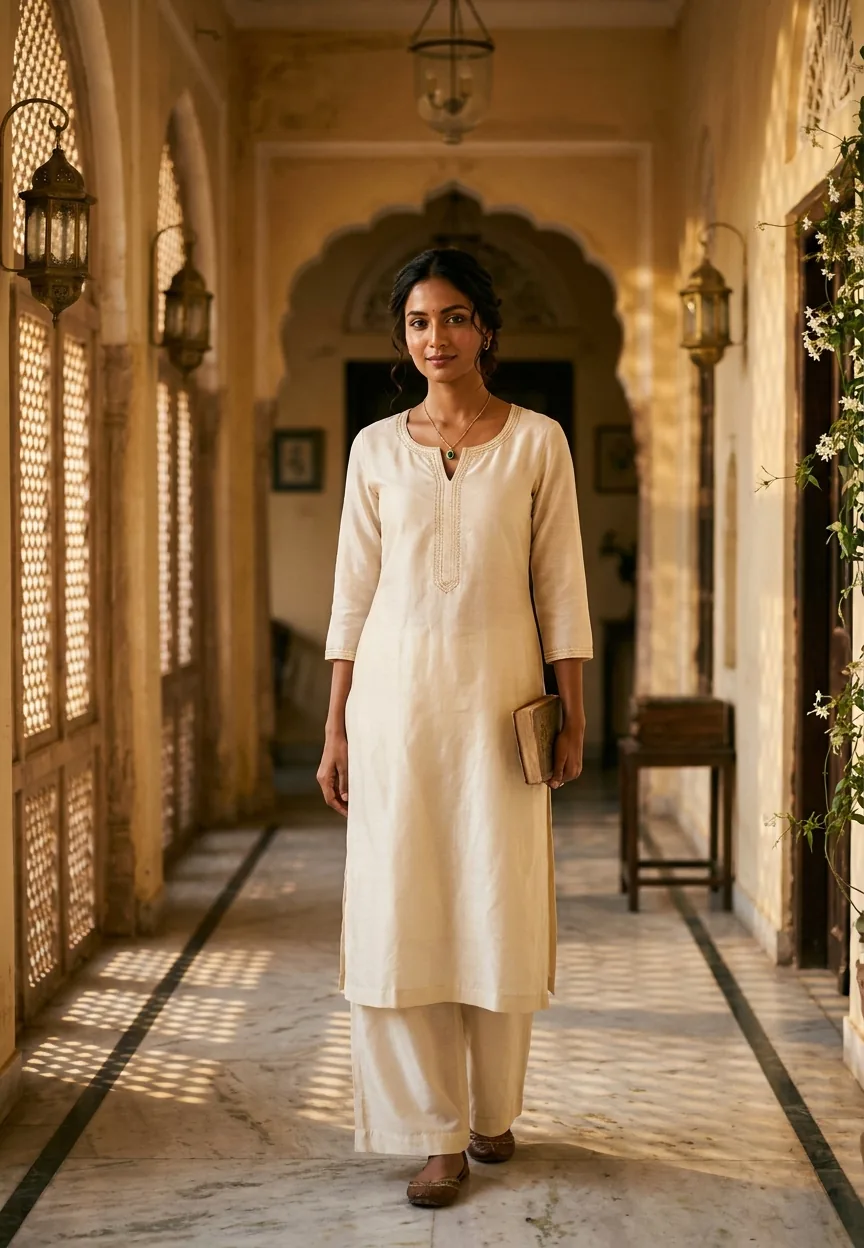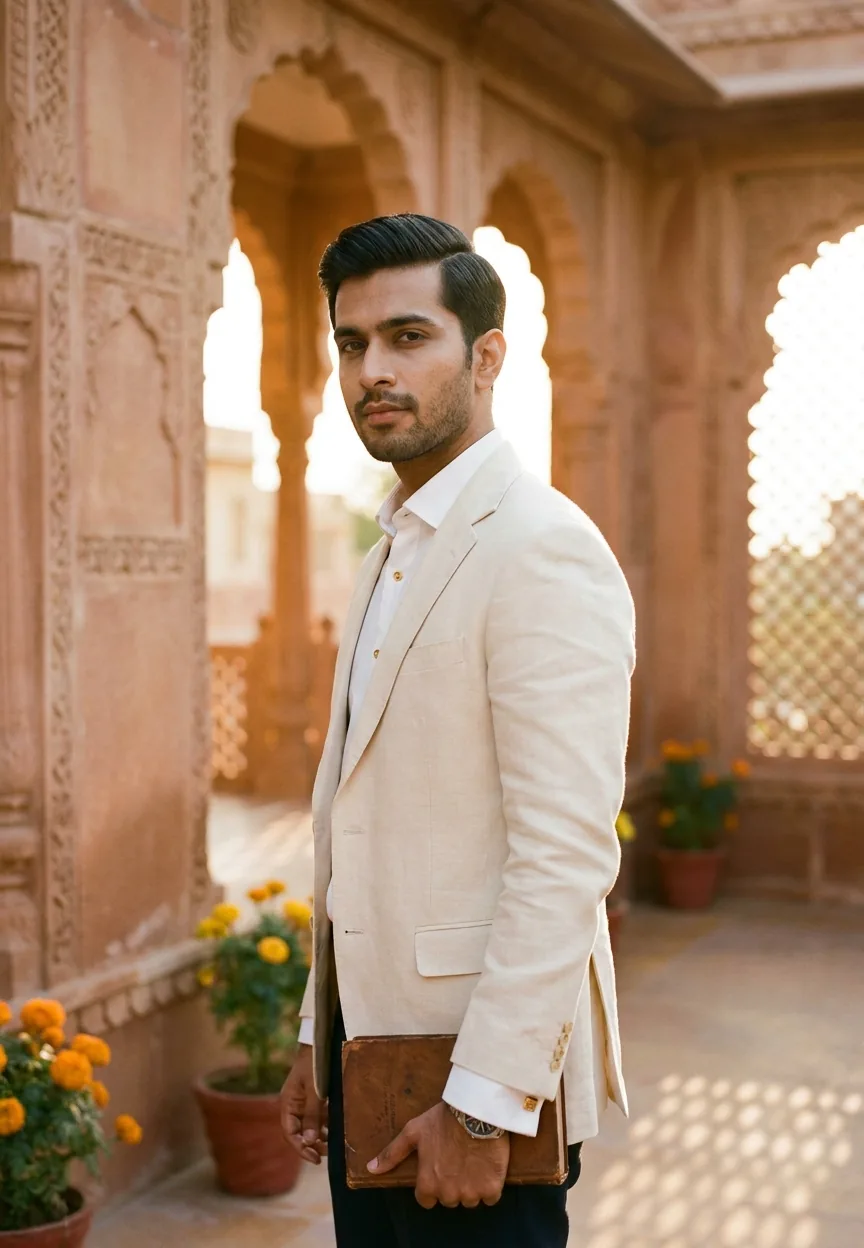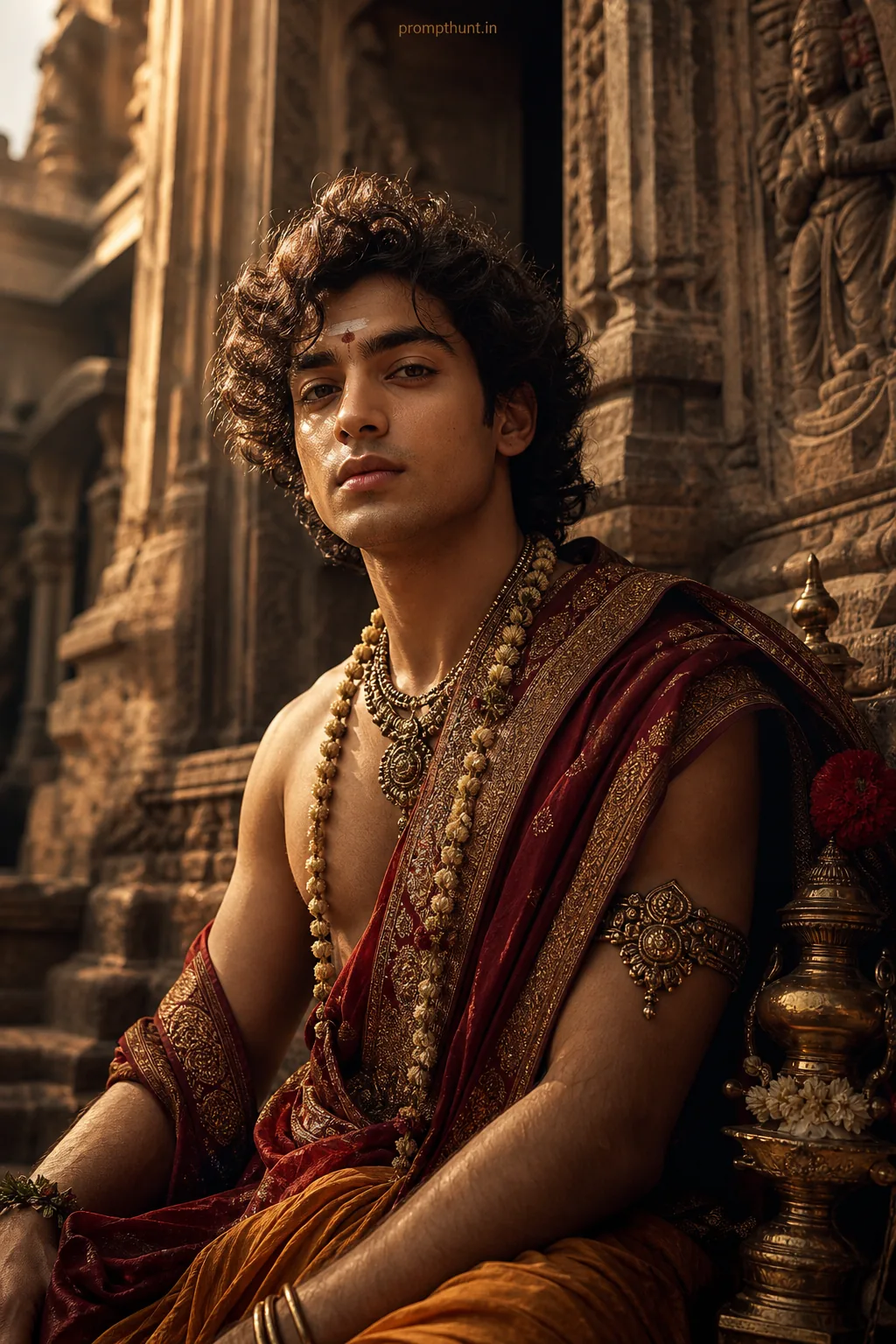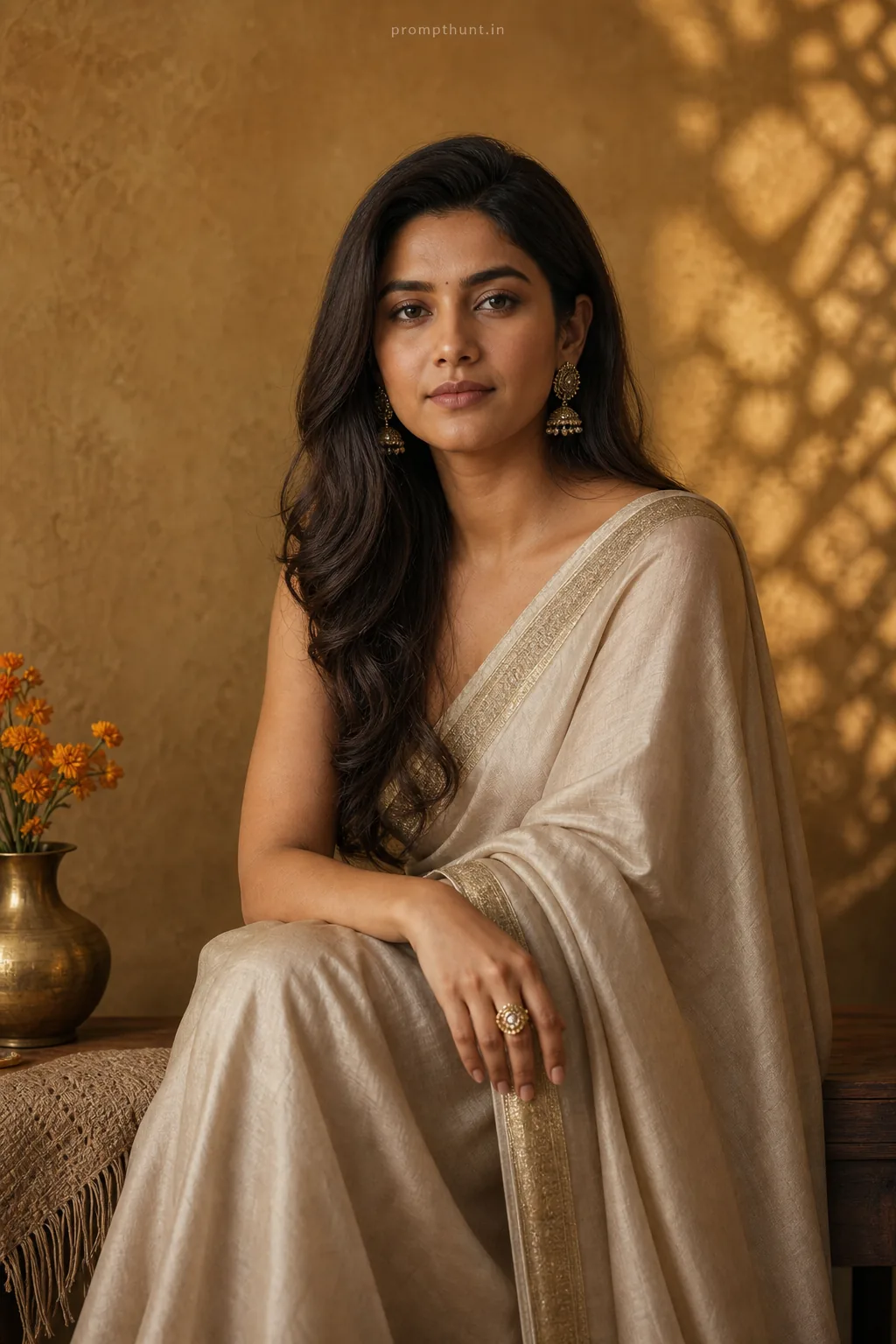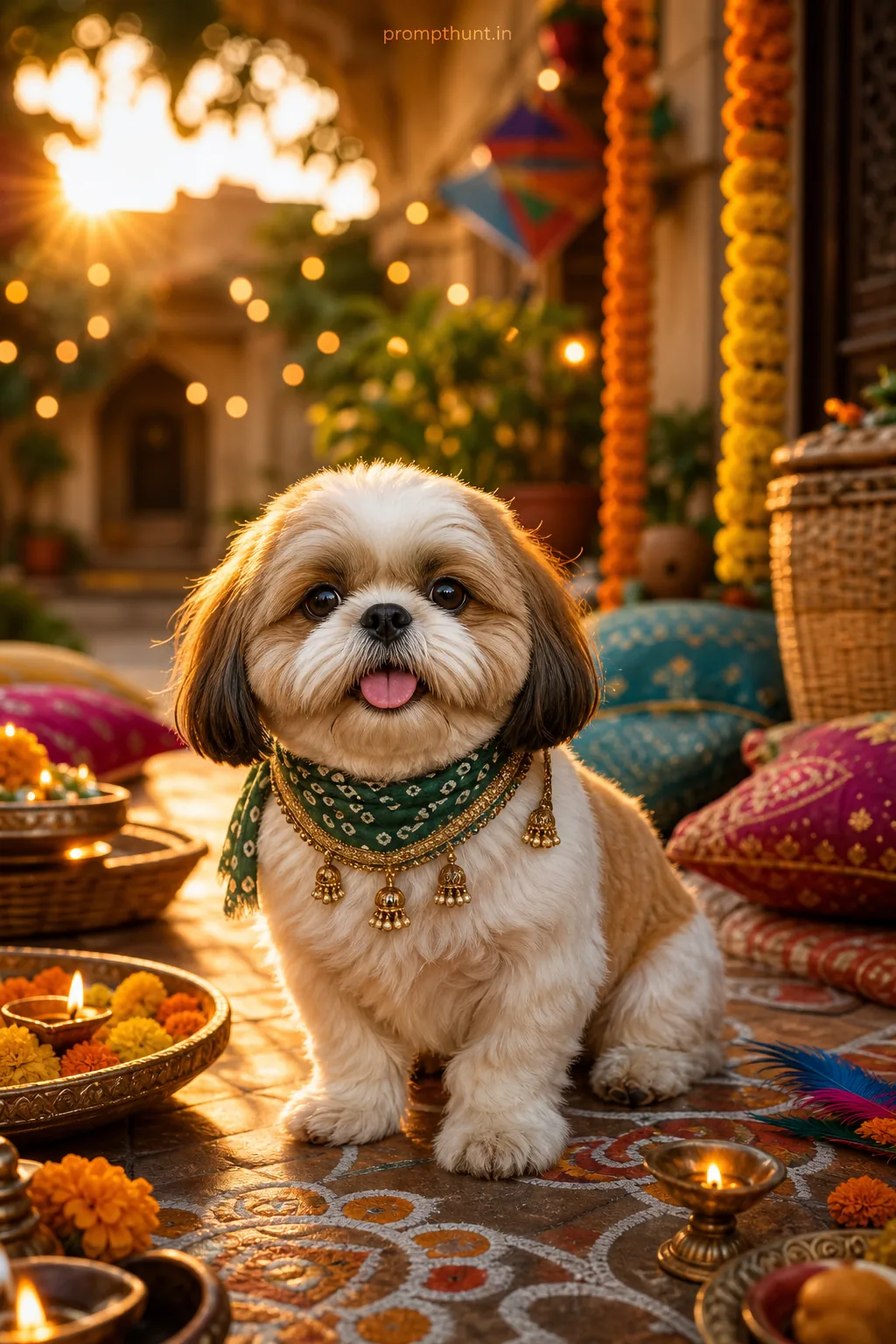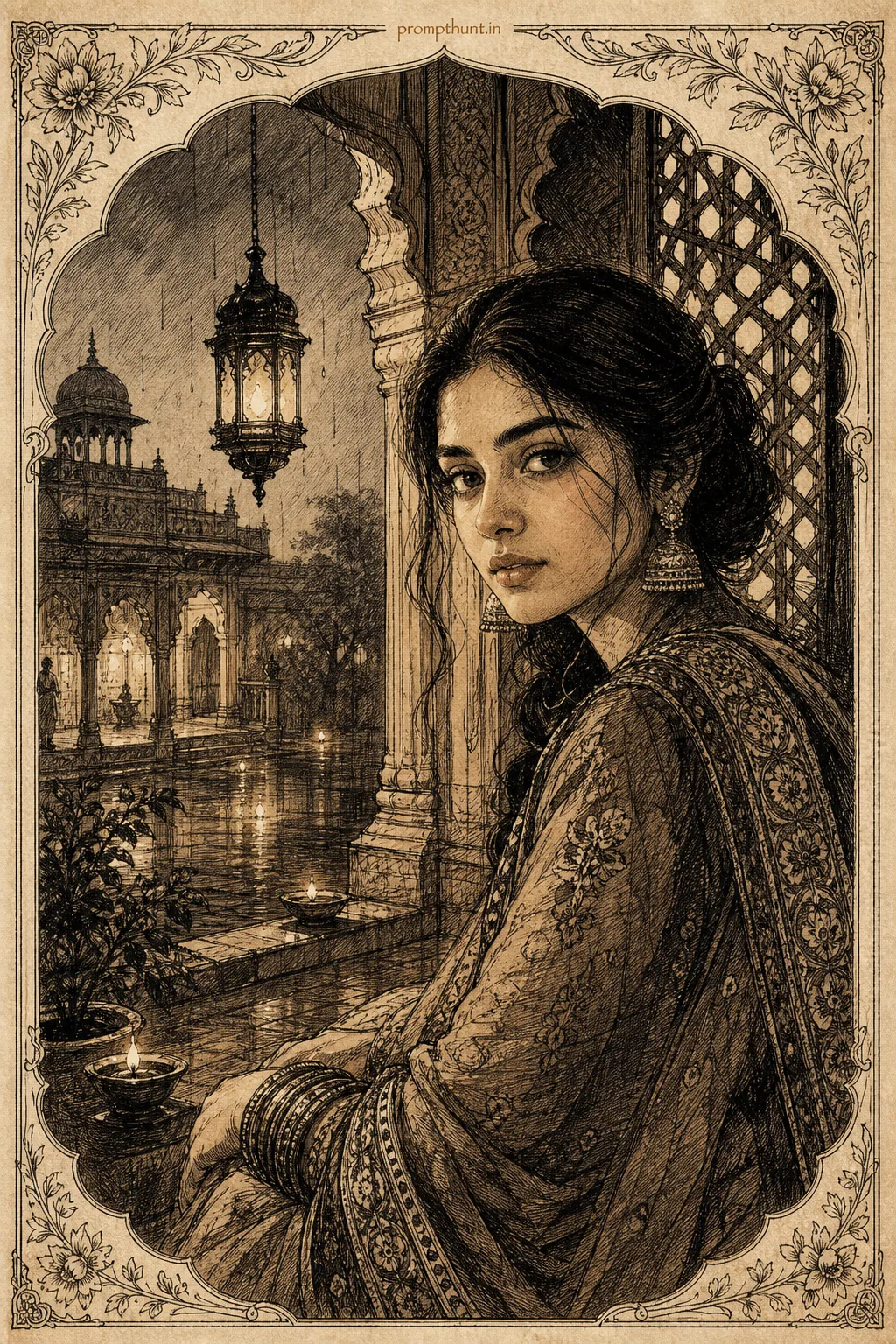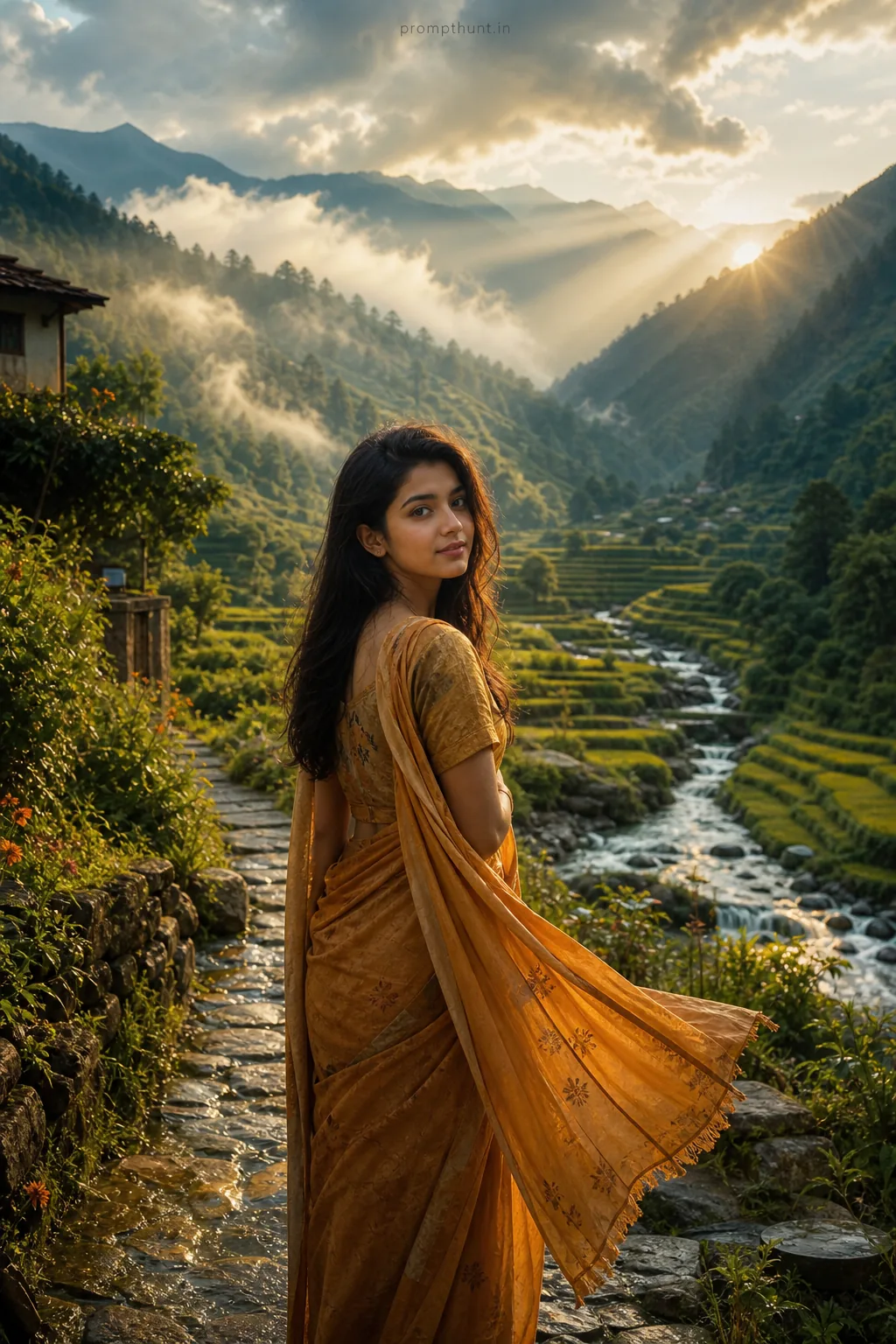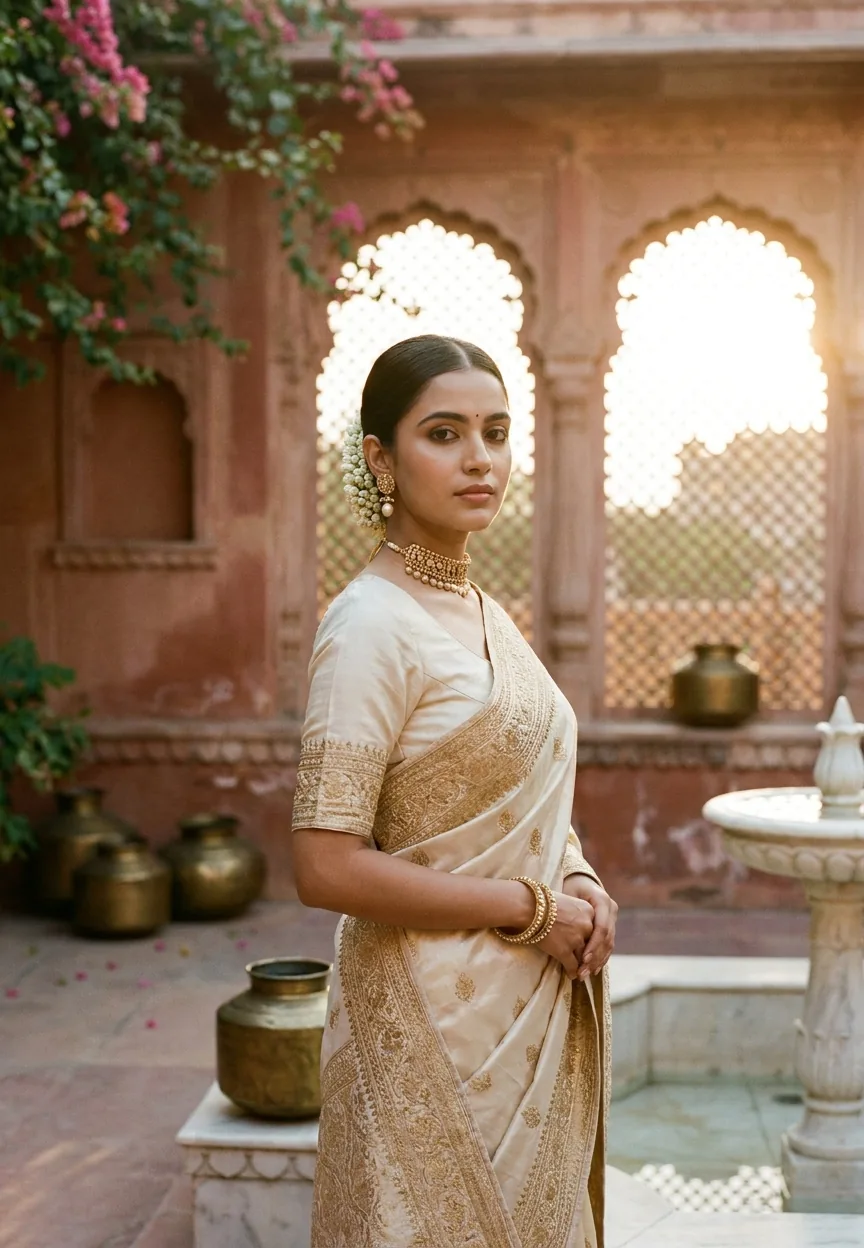
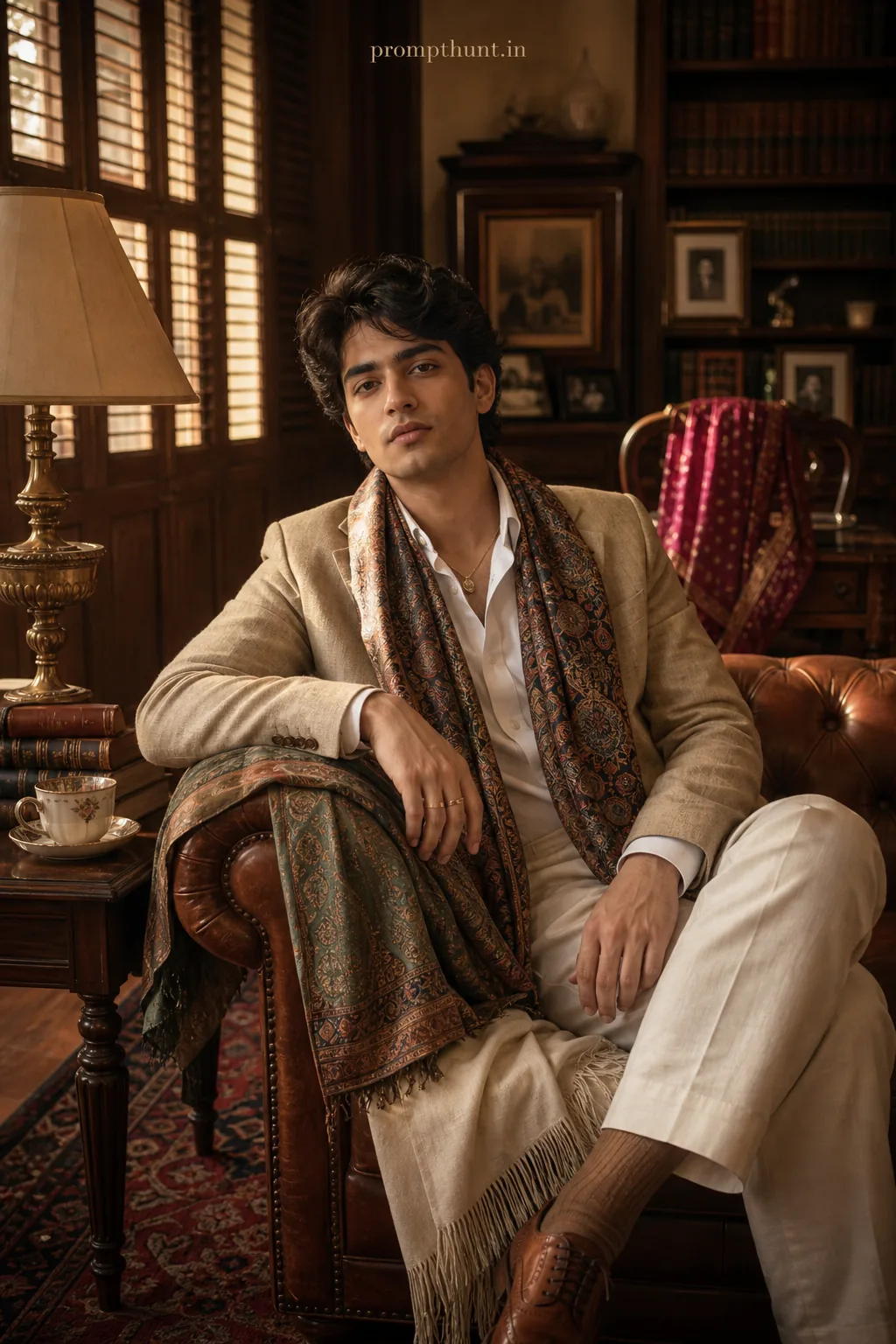
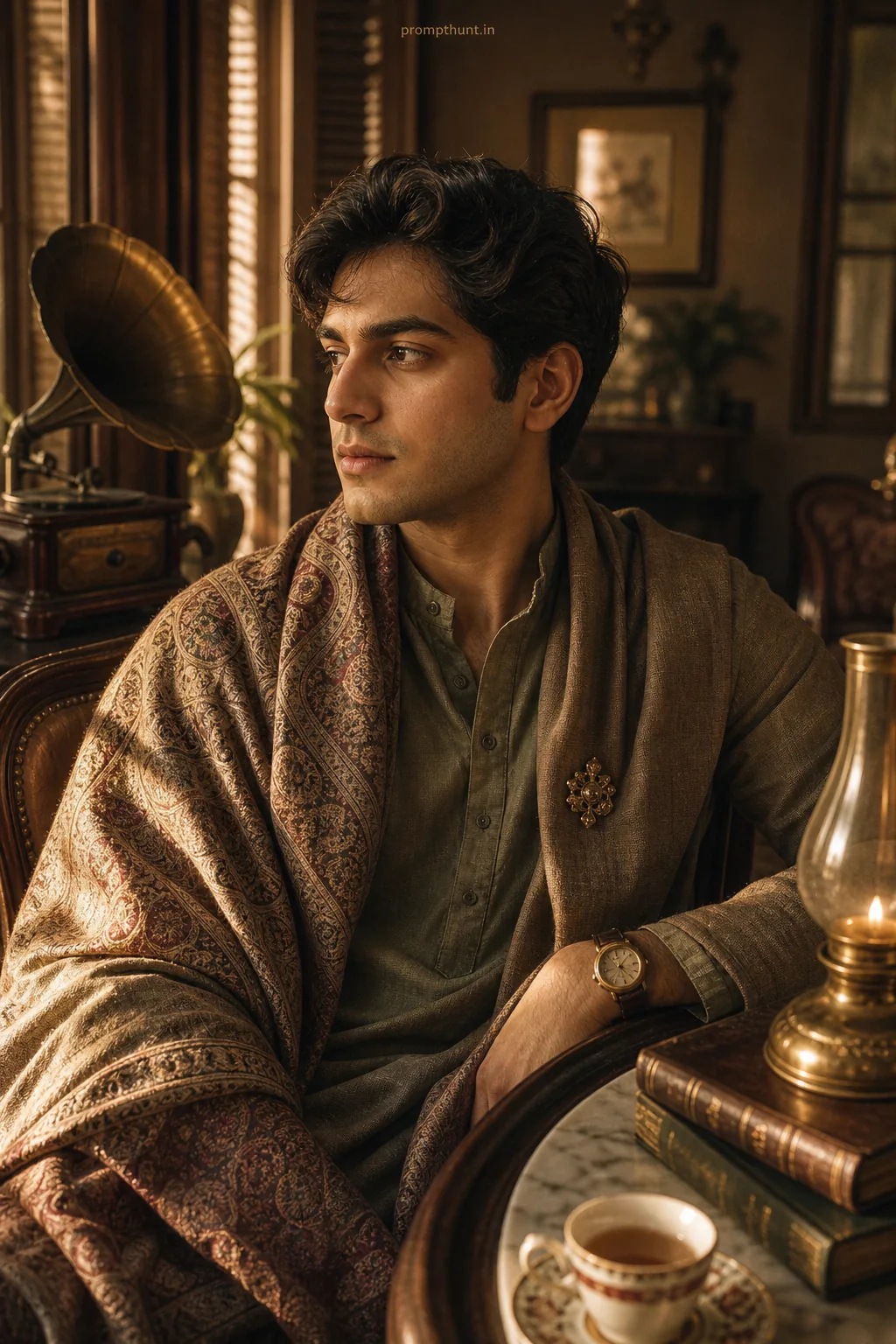
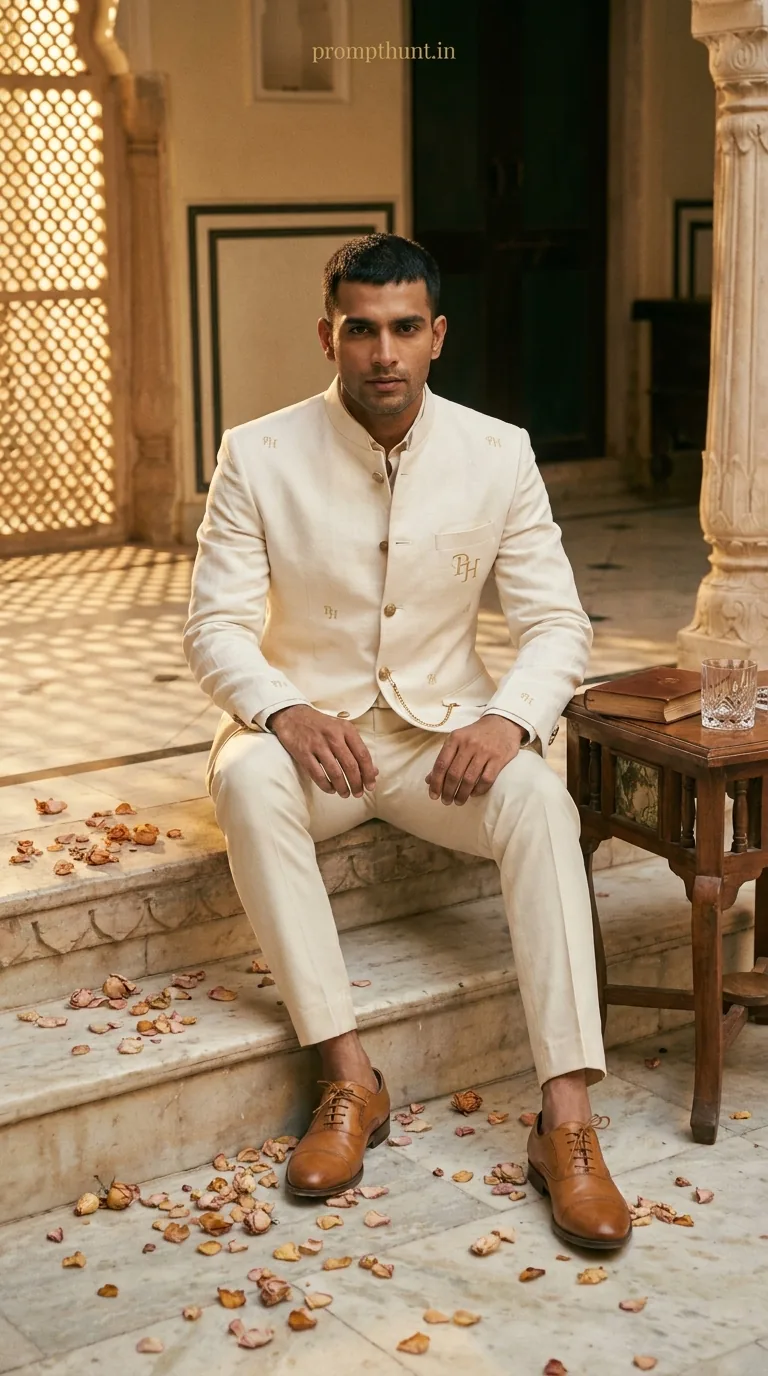
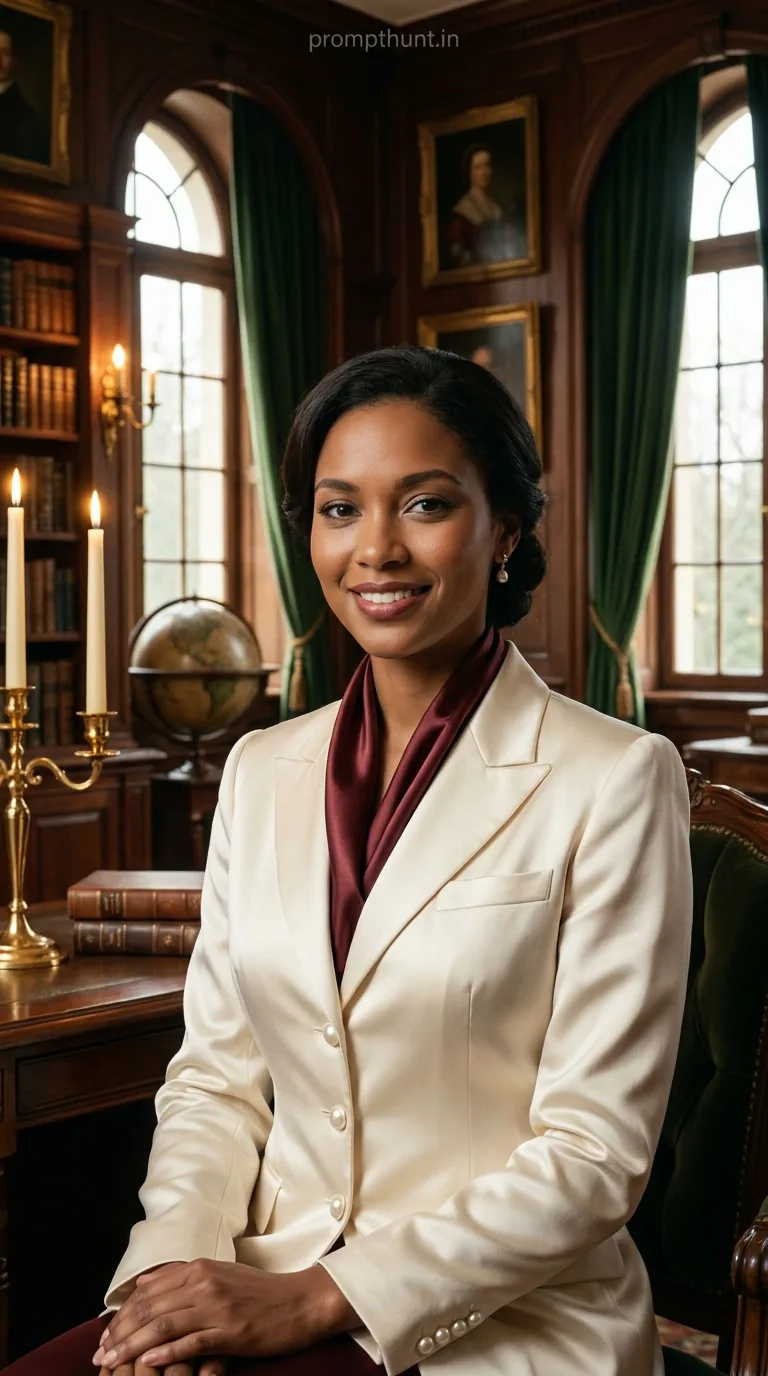
The Old Money Aesthetic Indian portrait prompt generates a cinematic, editorial-quality image of a young Indian woman in silk saree and understated gold jewelry, set inside a heritage Rajasthani haveli at golden hour. Use it in Gemini with the full prompt text, vertical 9:13 ratio, and Hasselblad camera reference for luxury magazine-quality results every single time.
Royal Old Money Aesthetic Indian Portrait Gemini AI Photo Prompt
Old money has a specific look. It's not flashy. It's not loud. It's the kind of wealth that doesn't need to announce itself — it just stands in a courtyard wearing ivory silk and lets the golden hour do the talking. This particular AI prompt nails that energy so precisely it almost feels like cheating. If you've been scrolling through Indian AI portrait trends and wondering why some images stop you cold while others look like a costume party gone wrong, this is exactly why. The Old Money Aesthetic, done right, is a whole mood — and this prompt delivers it consistently.
Paste this prompt into Gemini, set the aspect ratio to 9:13, and you'll get an editorial-grade Indian portrait that looks like it belongs on the cover of Vogue India — no photography degree required.
What the Old Money Aesthetic Actually Means
Old money isn't about looking expensive. It's about looking like you've never had to think about looking expensive. There's a difference, and AI tools feel it immediately in the output.
The aesthetic borrows from generational wealth visual cues: heritage architecture, understated jewelry, natural fabrics in muted tones, and a calm confidence that no filter can fake. In the Indian context, that translates to silk sarees over designer labels, haveli courtyards over rooftop infinity pools, and mogra flowers over statement necklaces.
Nine times out of ten, when someone tries to prompt "luxury Indian portrait" without this framework, they get oversaturated colours, too much jewellery, and a background that looks like a wedding venue catalogue. Old money aesthetic is the antidote. It whispers where others shout. (Unlike your neighbour's car horn at 7am. That one just shouts.)
The Prompt That Gets You There
Here it is. The full thing. Use it exactly as written — every detail is pulling its weight.
A strikingly elegant young Indian woman in her mid-20s, wearing a rich ivory and gold silk saree with delicate zari embroidery, draped in a classic Nivi style. She stands confidently in the grand courtyard of a heritage Rajasthani haveli, surrounded by ornate arched doorways with intricate jali lattice carvings. Soft golden hour sunlight streams through the archways, casting warm amber glows across her flawless brown skin. Her hair is styled in a sleek low bun adorned with a single strand of fresh white mogra flowers. She wears understated yet luxurious jewelry — a thin gold choker, pearl drop earrings, and delicate gold bangles. Her expression is serene, composed, and quietly confident — the classic old money look. The background features aged terracotta walls draped in bougainvillea, vintage brass urns, and a marble fountain. Color palette: warm ivory, antique gold, dusty rose, and deep cream. Shot on a Hasselblad medium format camera, 85mm lens, shallow depth of field, cinematic film grain, editorial fashion photography style, 9:13 vertical aspect ratio, ultra-high detail, luxury lifestyle magazine cover quality.
How to Use This Prompt — Step by Step
No mysteries here. Four steps and you're done.
Step one: Open Gemini. Go to gemini.google.com and make sure you're using a version with image generation enabled. Gemini Advanced handles this better than the free tier — the detail level on the jali carvings alone is worth it.
Step two: Paste the full prompt. Don't paraphrase it. Don't "tidy it up." Every element — the Hasselblad reference, the 85mm lens, the film grain — tells the model something specific about the quality register you want. Strip those out and you get a portrait. Leave them in and you get an editorial.
Step three: Set the aspect ratio. If your tool allows manual ratio input, go 9:13. This is a portrait orientation built for magazine covers. It gives the haveli courtyard room to breathe above and below the subject without cropping the architecture.
Step four: Generate and compare. Run it two or three times. Gemini will give you variations. The lighting on the zari embroidery shifts between generations — some will have richer amber, others a cooler gold. Pick the one where the mogra flowers in the hair are visible and the jali lattice is sharp in the background. That's your keeper.
Tips for Getting the Best Results
A few things I've learned from running this prompt more times than I'd like to admit (it's research, I swear).
Don't remove the camera reference. "Hasselblad medium format" is doing serious work here. It signals to the model that you want medium-format tonal depth — that creamy, slightly filmic quality that separates editorial photography from phone snaps. Change it to "DSLR" and the whole mood shifts.
Keep the colour palette line. "Warm ivory, antique gold, dusty rose, and deep cream" is a four-colour brief that stops the AI from going rogue with reds and oranges. Without it, Rajasthani setting prompts tend to drift toward vivid festival palettes. That's a different aesthetic entirely — perfectly valid, just not this one.
Rule of thumb: if your output looks like it belongs at a Holi celebration rather than a heritage hotel lobby, the colour palette instruction got ignored. Regenerate.
The expression note matters. "Serene, composed, and quietly confident" is the soul of old money aesthetic. If the subject looks startled, surprised, or — worst case — doing a full smile, that's not the look. Old money doesn't grin. Old money observes. (It's basically the Meryl Streep energy of aesthetic photography.)
Add your own location if needed. Rajasthani haveli is the default and it works beautifully. But you can swap it for "a colonial-era Chettinad mansion" or "a heritage Kerala tarawad" and the prompt adapts well. Keep everything else identical.
Why This Is Trending Across Indian Social Media Right Now
The Old Money Aesthetic hit global fashion timelines around 2022 and never really left. But its Indian iteration has accelerated sharply in 2024 and 2025 for a specific reason: there's now a generation of Indian creators who are done with the idea that luxury means Western.
Heritage architecture, handwoven textiles, traditional jewellery — these aren't consolation prizes for people who can't afford Prada. They're the actual thing. And this aesthetic articulates that clearly. A silk saree in a haveli courtyard at golden hour isn't aspirational in an anxious way. It's aspirational in a grounded way. It knows exactly what it is.
AI tools have accelerated this because they let creators visualise this aesthetic without a production budget. You don't need to hire a photographer, travel to Jodhpur, or source a vintage brass urn. You need this prompt and about forty seconds.
Pinterest boards tagged "old money India" have grown significantly through 2024. Instagram Reels showing AI-generated Indian heritage portraits regularly hit six-figure view counts. The appetite is real and it's not slowing down.
Honest Take — When Not to Use This Prompt
I genuinely rate this prompt. It's one of the tighter aesthetic briefs I've seen for Indian AI portraiture — specific enough to be consistent, flexible enough to adapt. But fair enough, it's not for everyone and it's not for every use case.
If you're creating content for a modern, urban brand, this will feel wrong. The haveli and the mogra flowers signal "heritage" loudly. For anything contemporary — a tech brand, a casual fashion label, a youth-oriented campaign — this aesthetic reads as costume, not context. Use it for the wrong brand and it comes across like showing up to a startup pitch in a sherwani from 1920. Technically impressive. Wildly misread.
It's also worth knowing that Gemini occasionally struggles with the saree drape. The Nivi style involves specific pleating and a particular way the pallu falls across the shoulder. Sometimes the AI gets this exactly right. Sometimes the fabric logic goes slightly sideways and you end up with something that looks like ivory toga energy. Run multiple generations and check the drape before using any output professionally.
The skin tone rendering is generally excellent — warm brown skin under amber light is a combination this prompt handles better than most. But if you're presenting this as photography rather than AI art, be transparent about it. The editorial quality can be convincing, and audiences deserve to know what they're looking at.
Use this prompt for: mood boards, creative references, personal projects, social content, AI art portfolios, and aesthetic exploration. Don't use it as a substitute for actual photography if your brief requires it, or as a representation of a real person.
The Bottom Line
This prompt is genuinely one of the best in the Indian AI portrait space right now. It nails the Old Money Aesthetic without overcomplicating it — every element from the Hasselblad reference to the mogra flowers earns its place. Paste it whole, run it a few times, pick the version where the jali lattice is sharp and the drape looks right, and you'll have something that looks like it cost a full editorial shoot budget. Which, technically, it