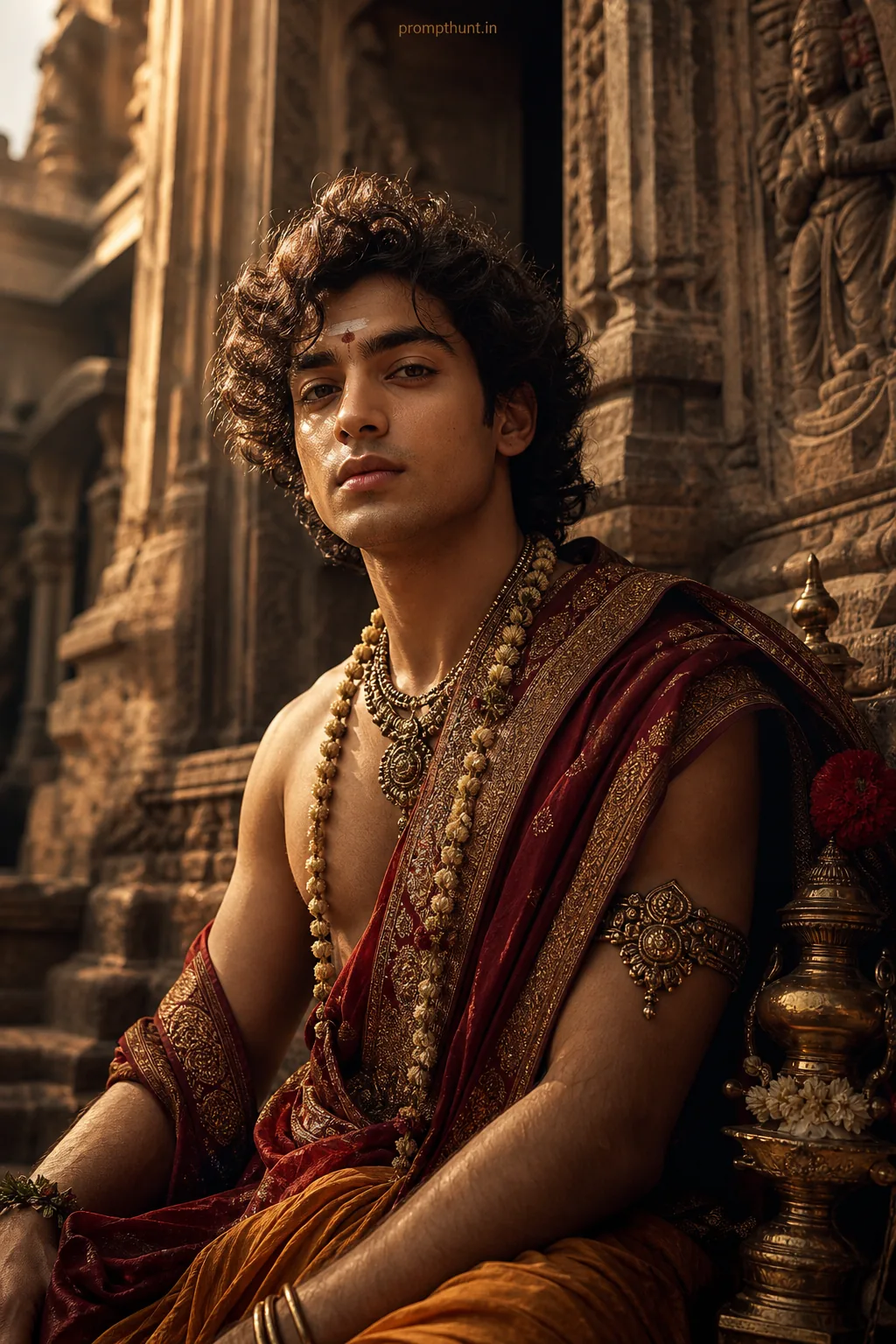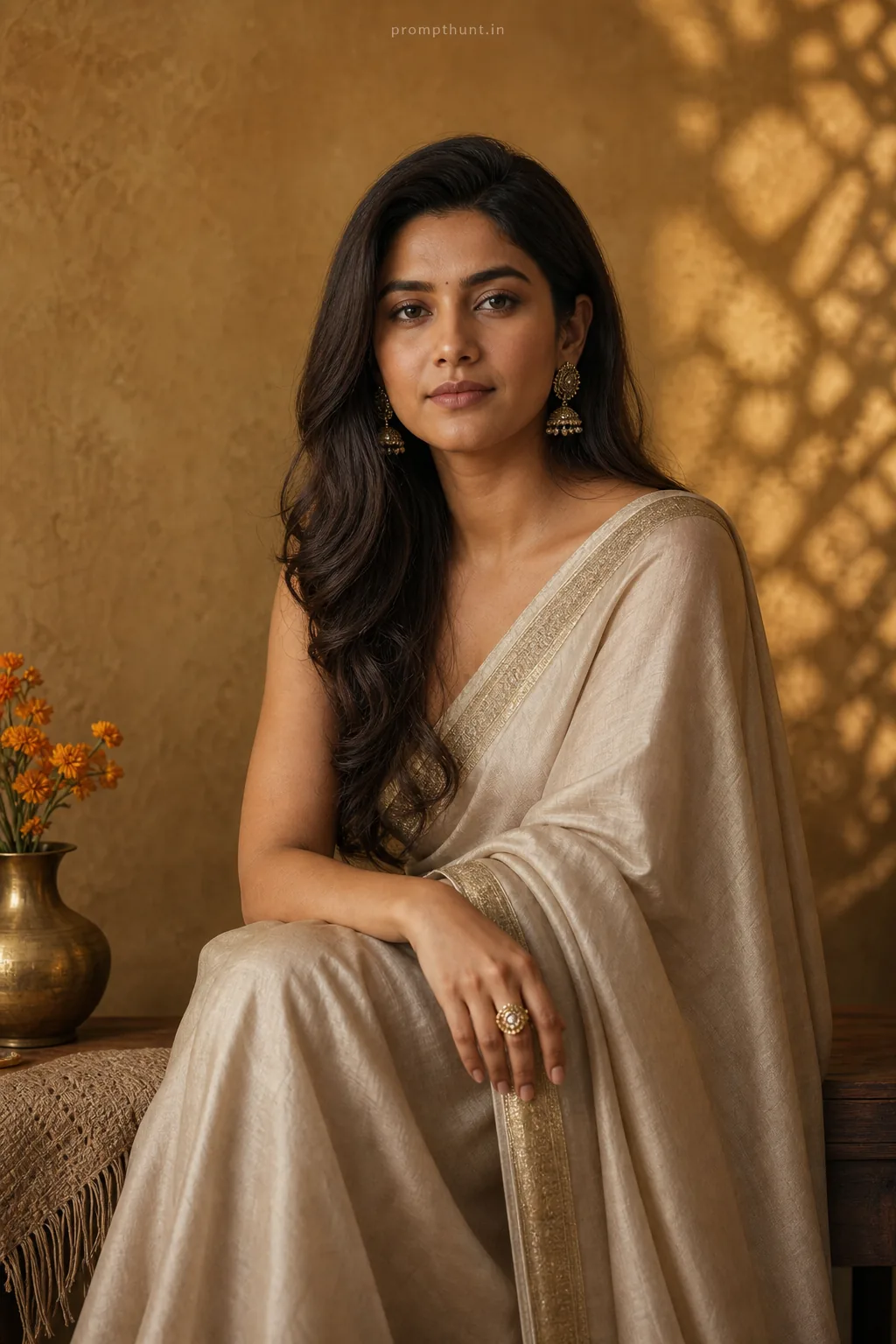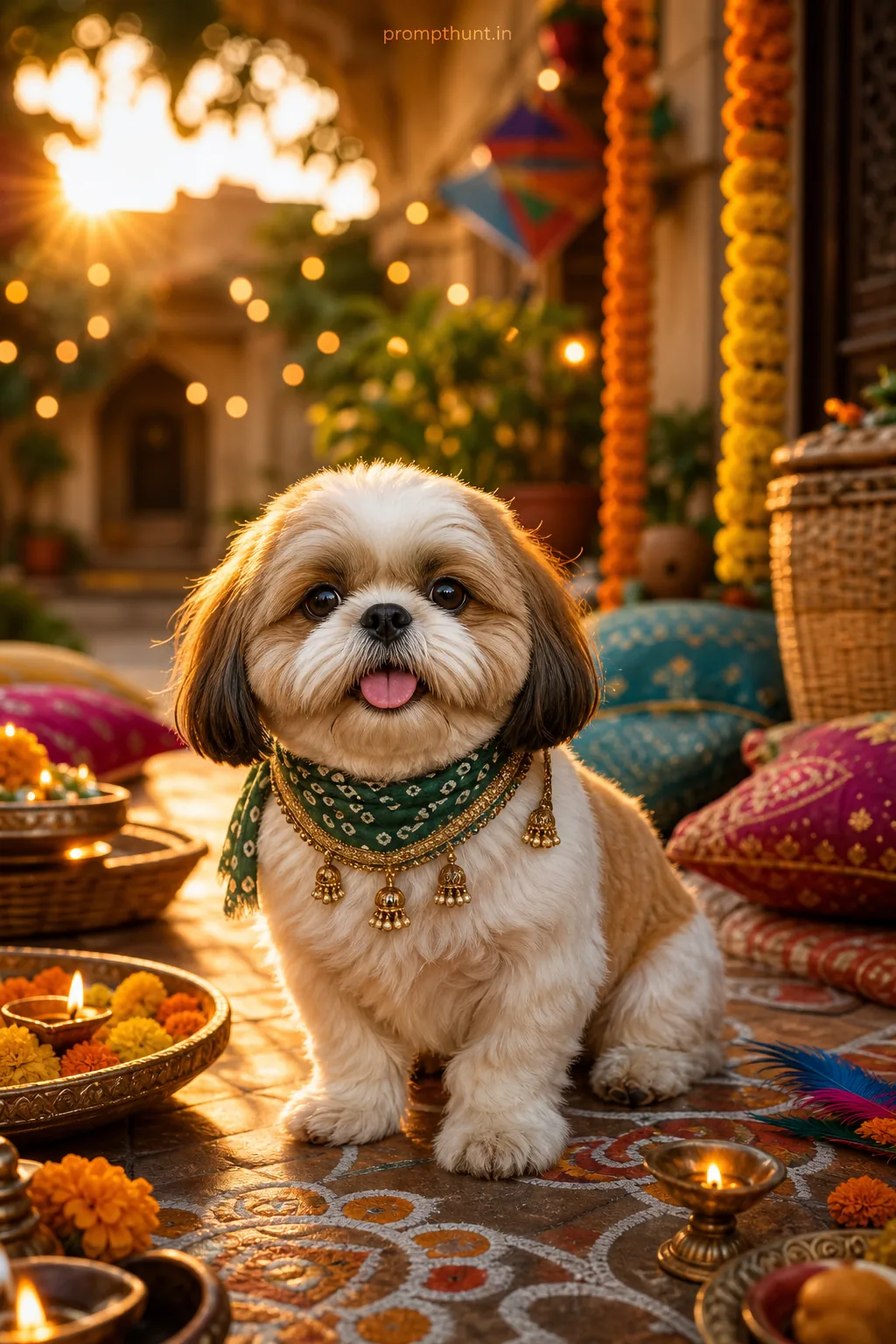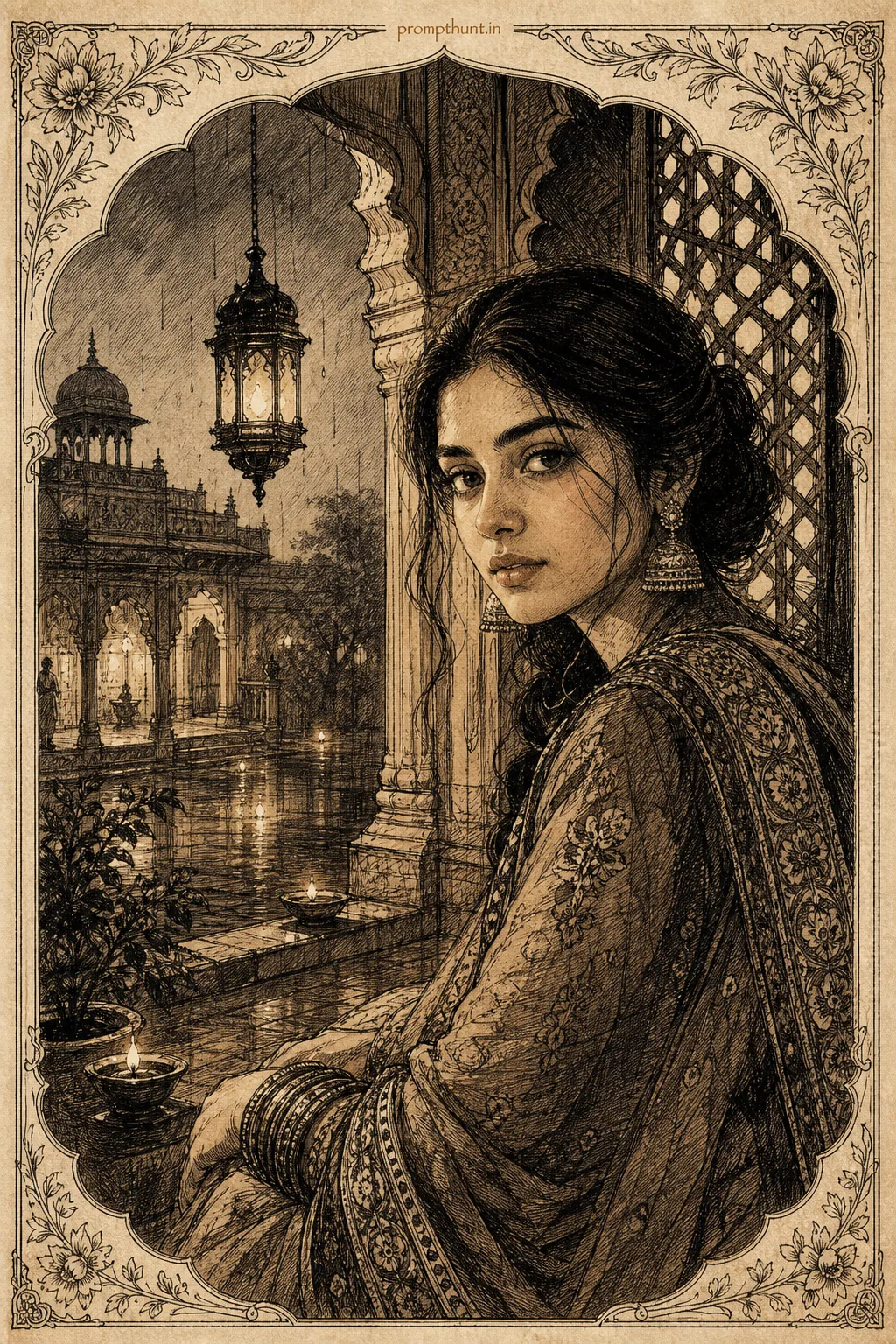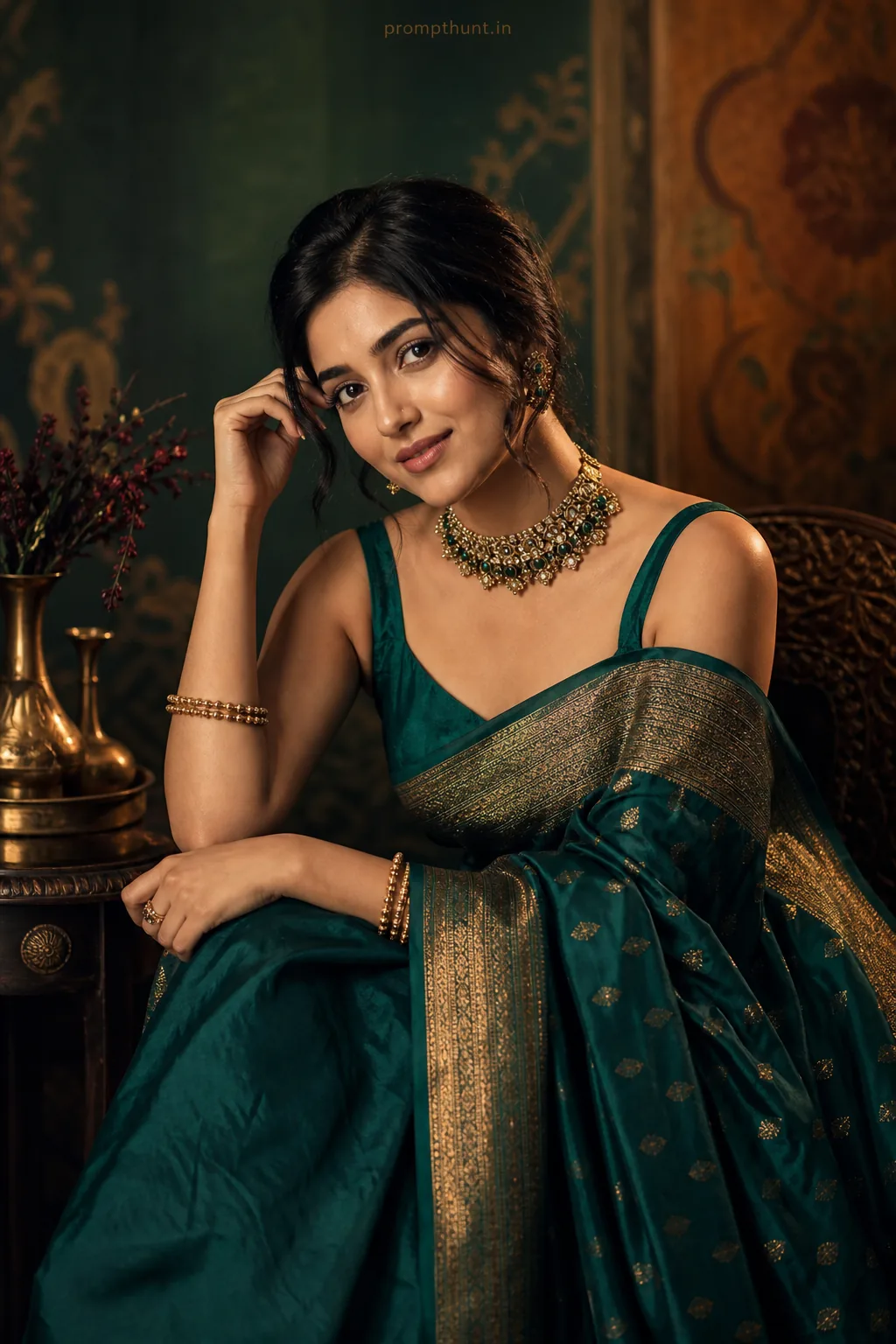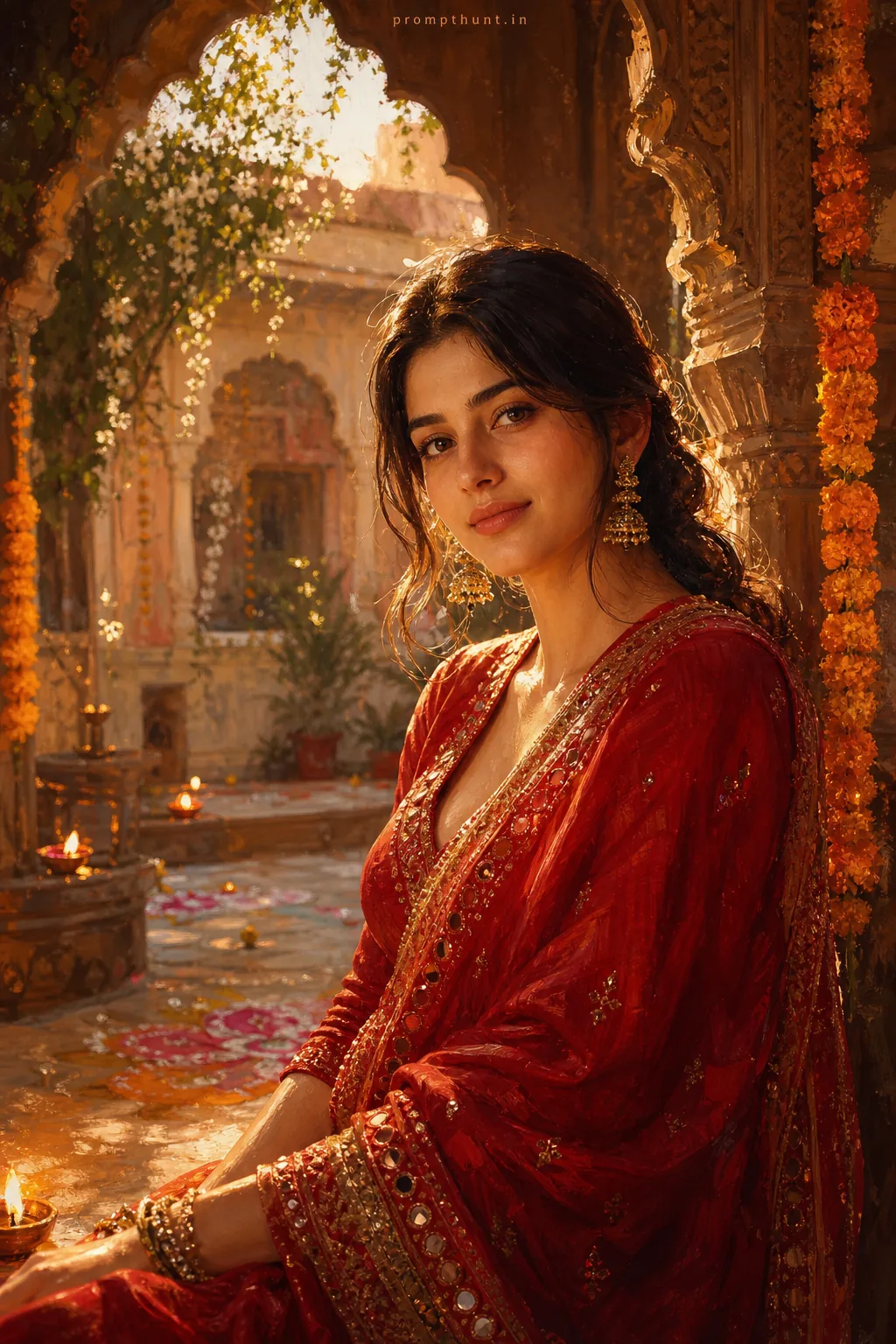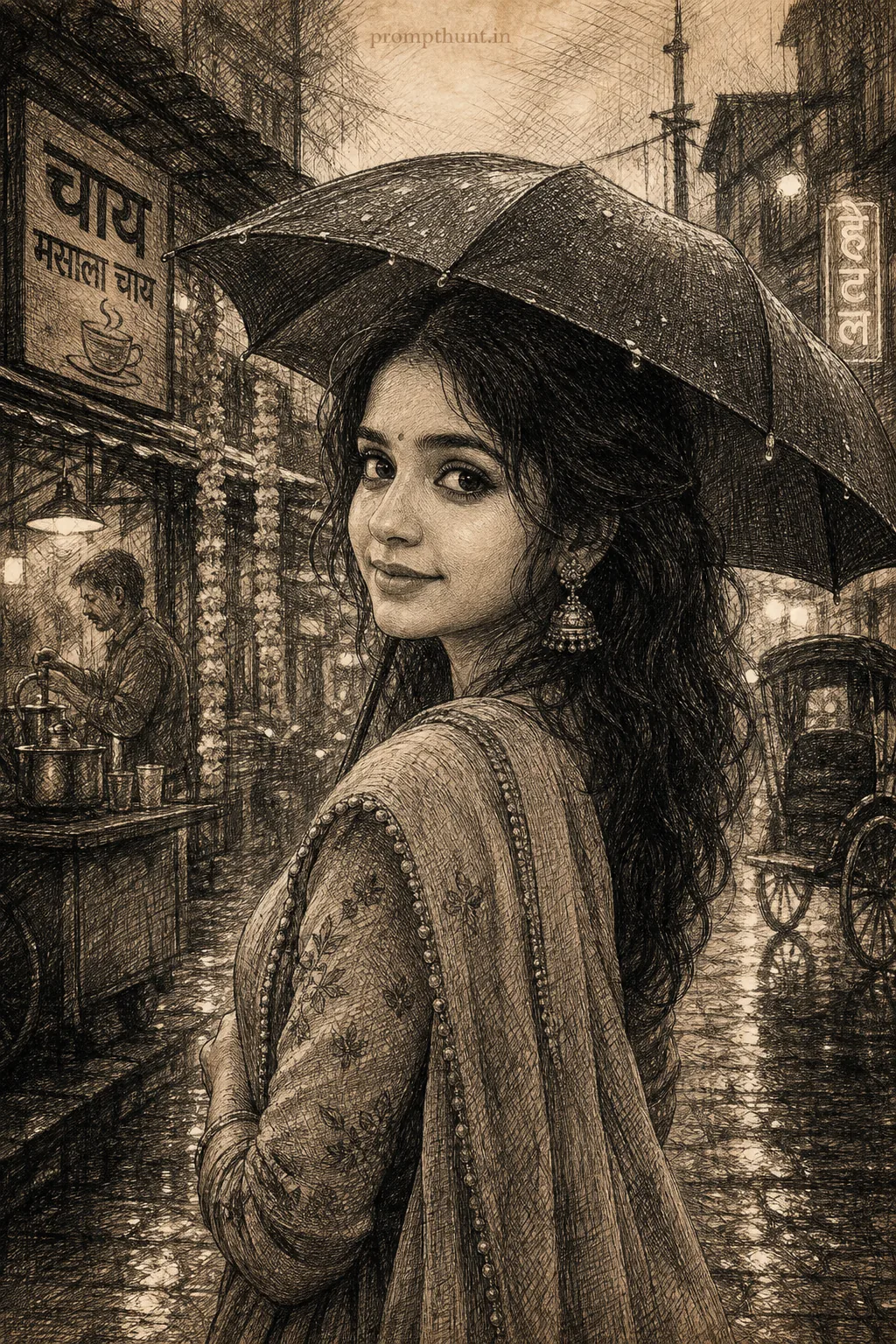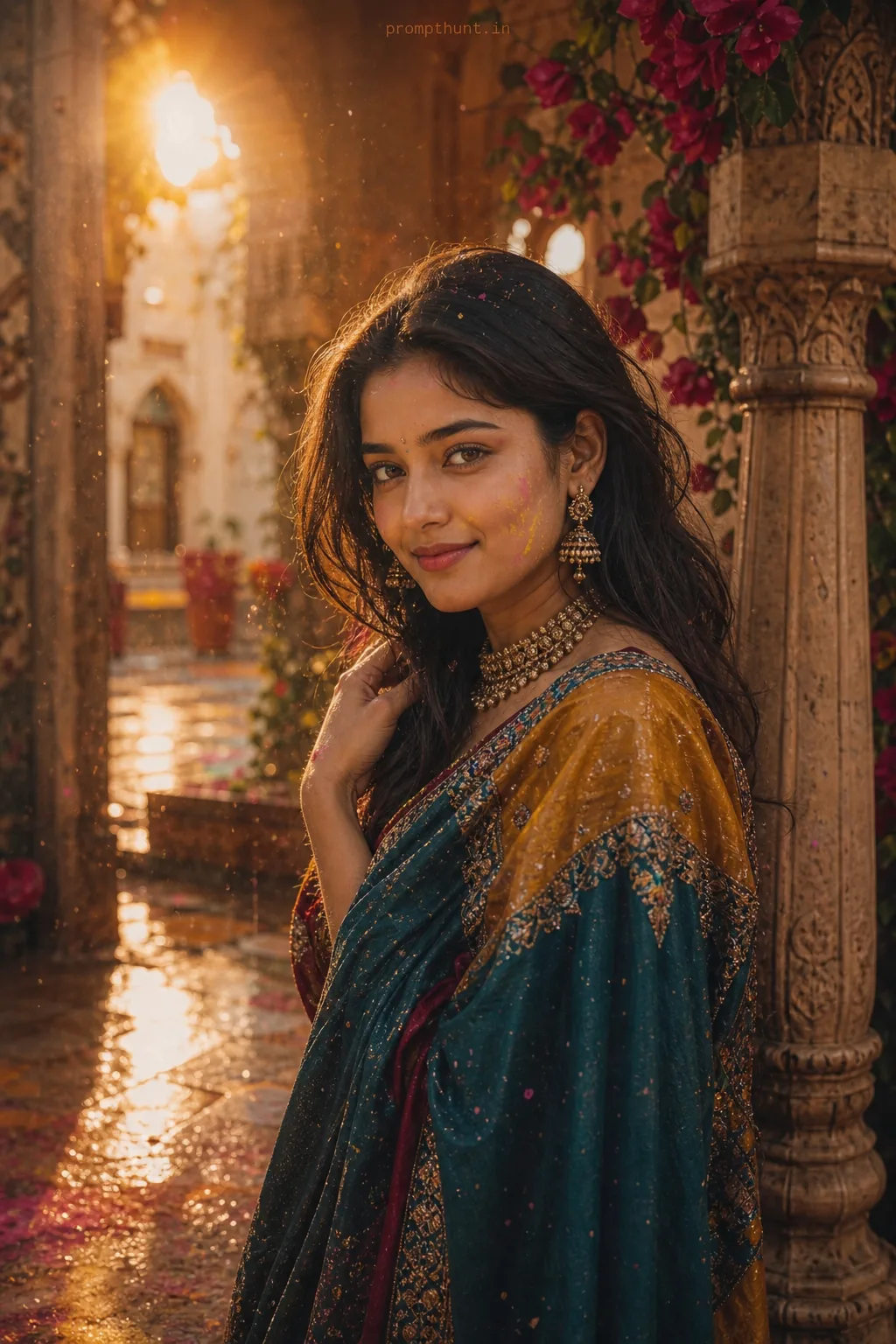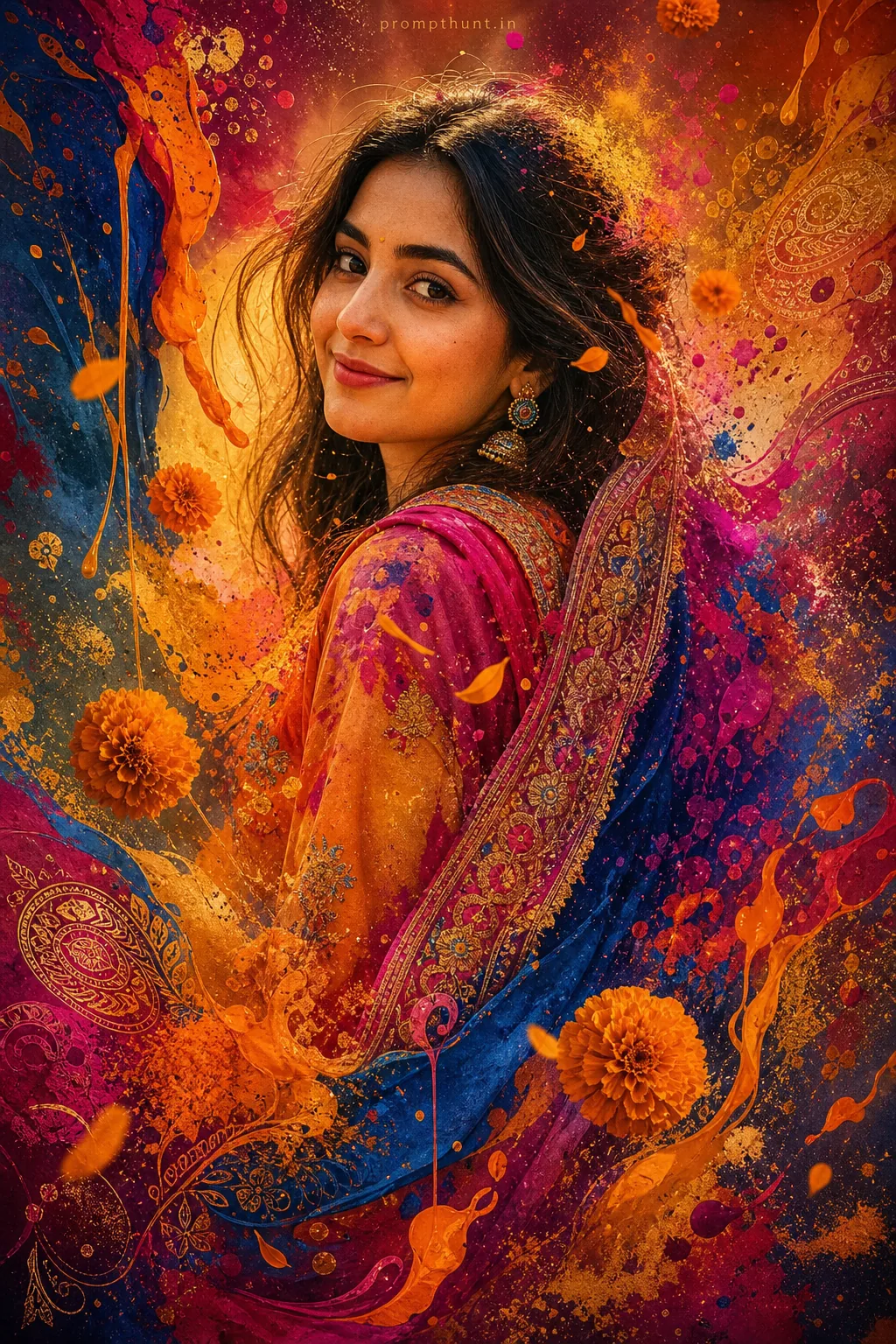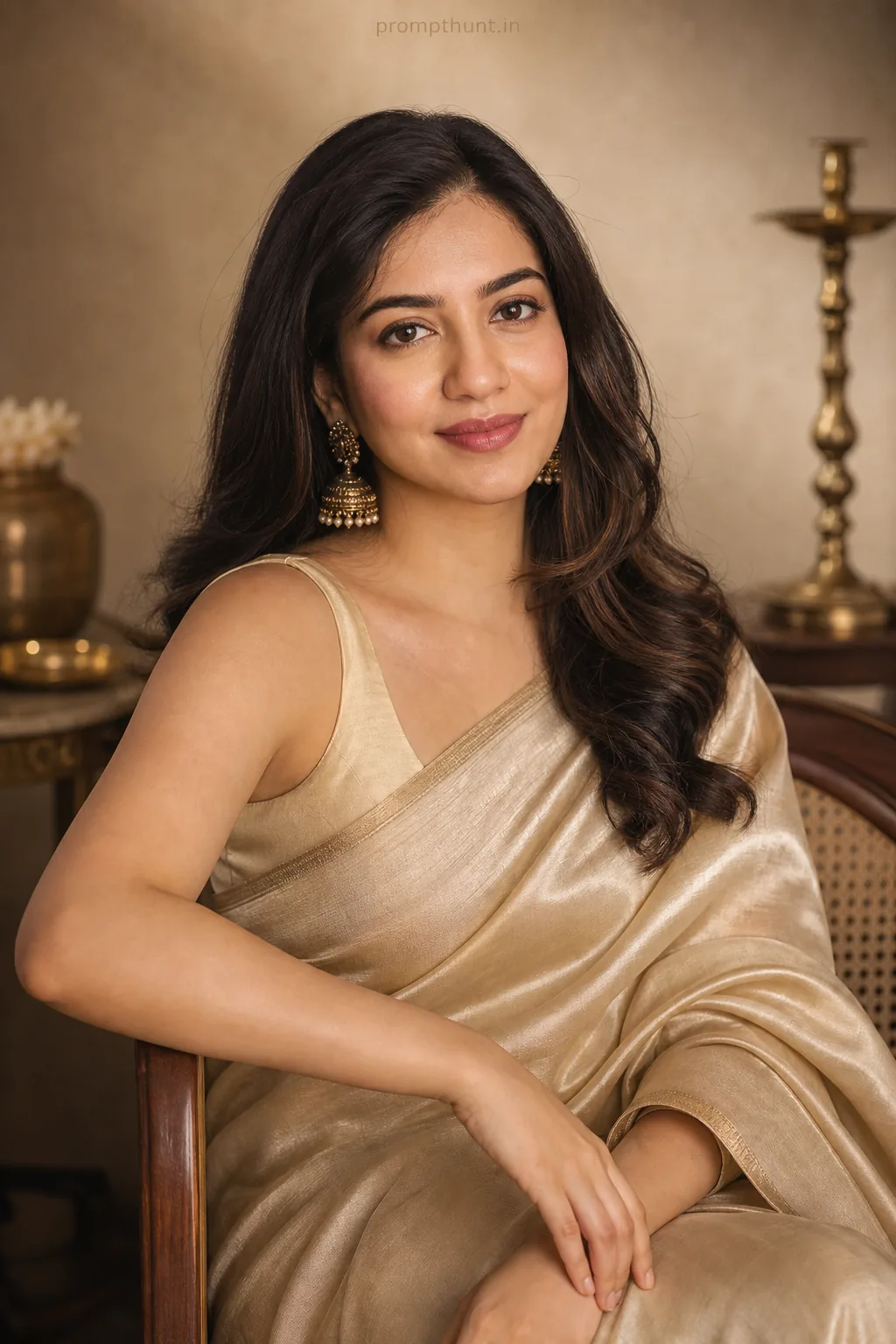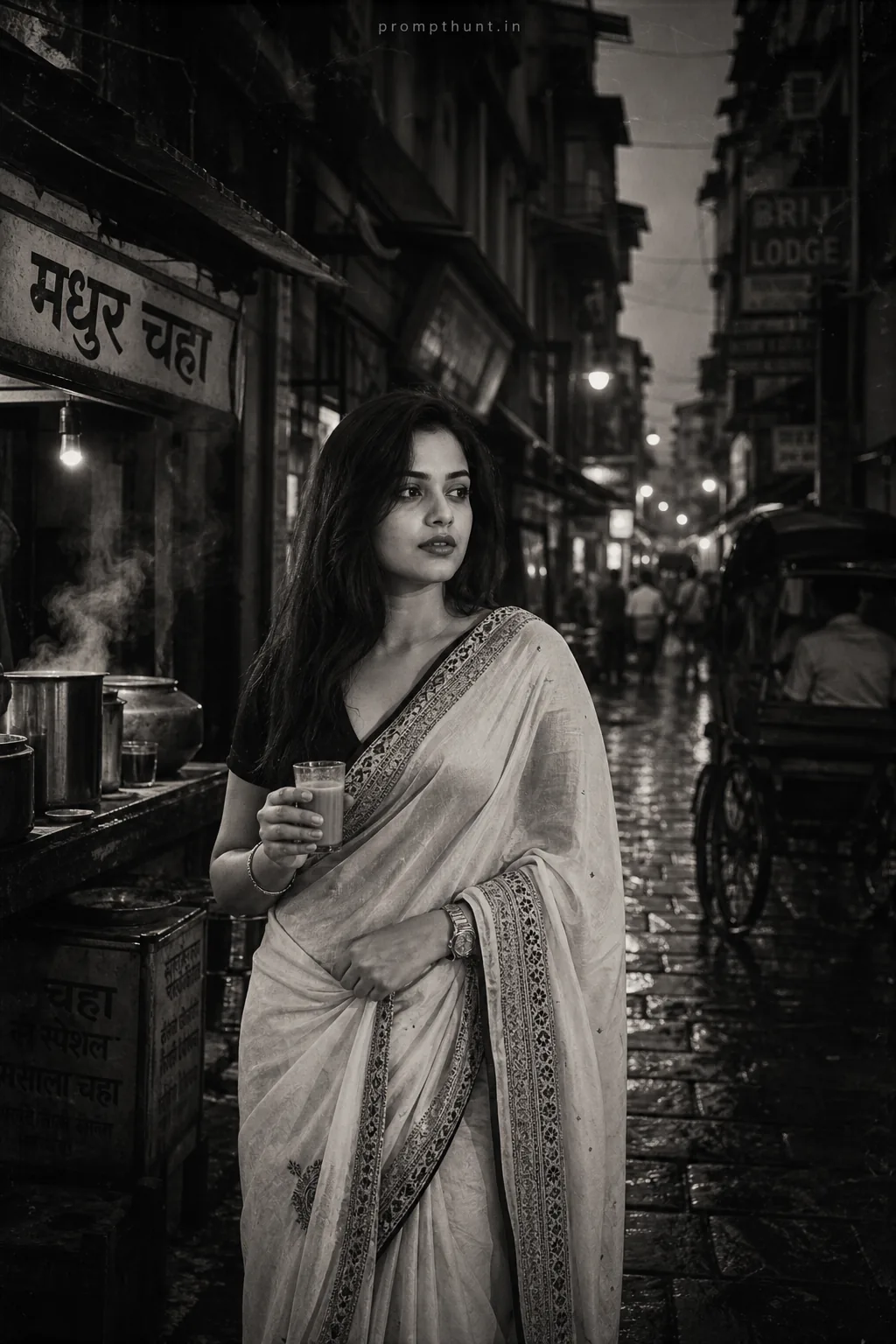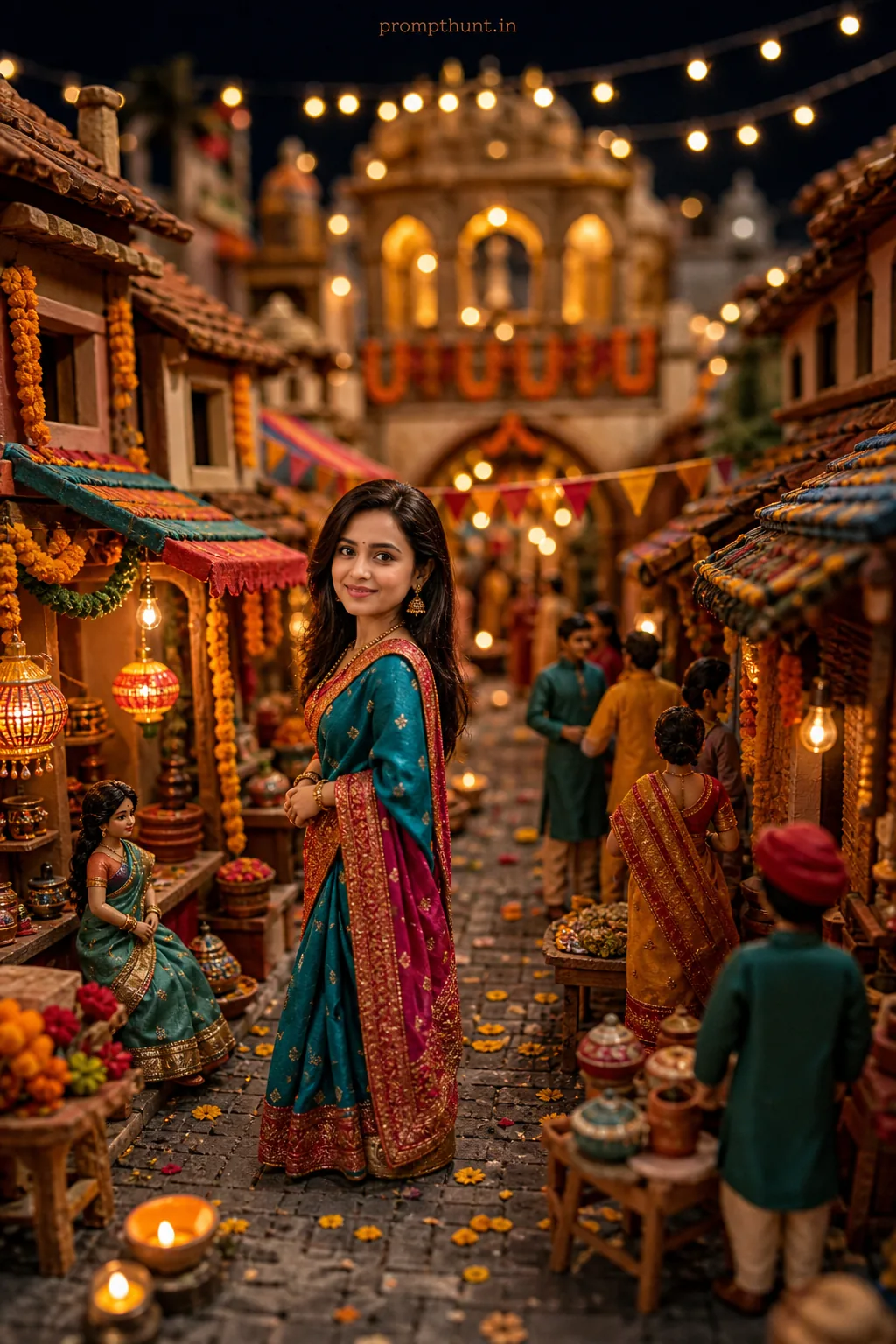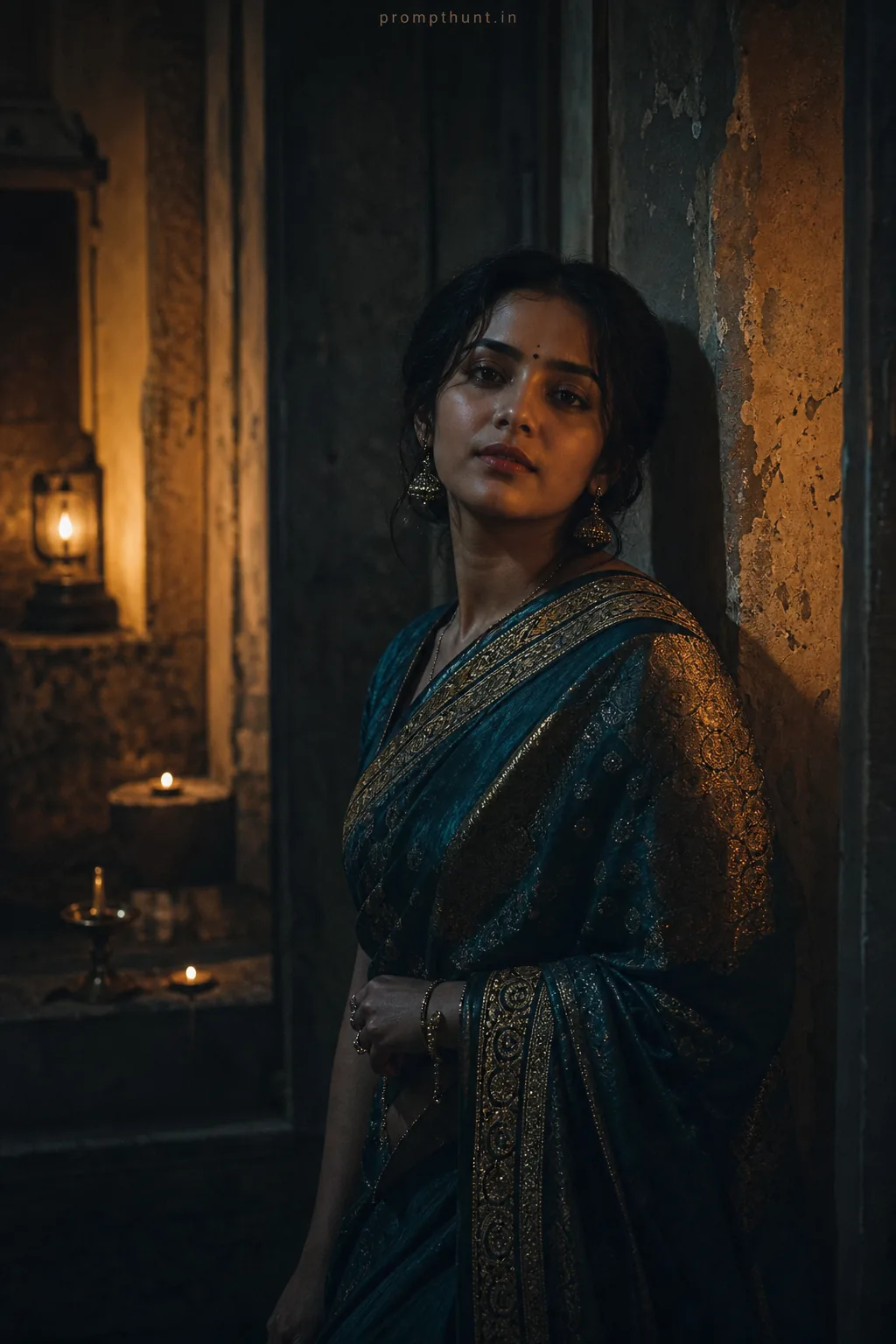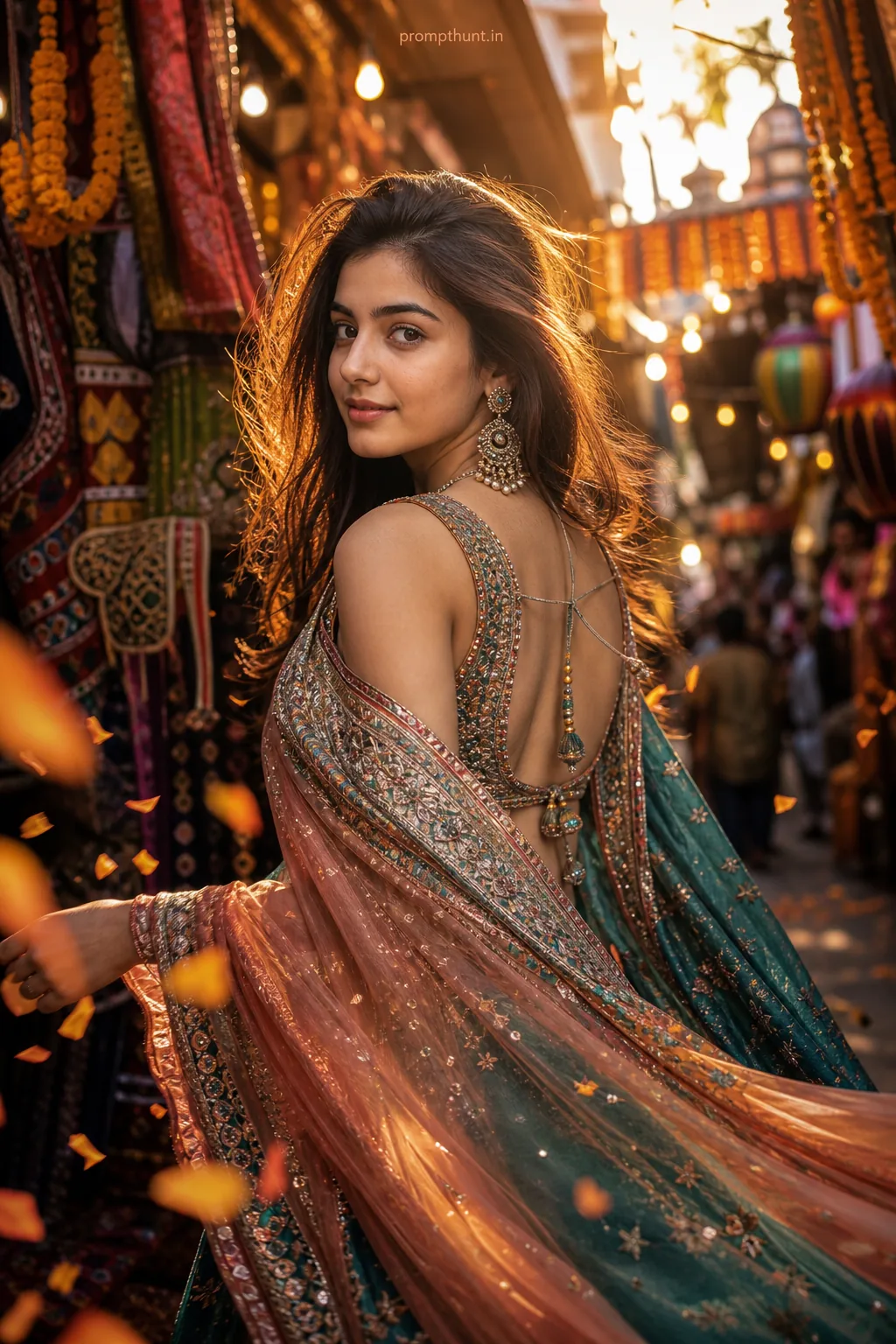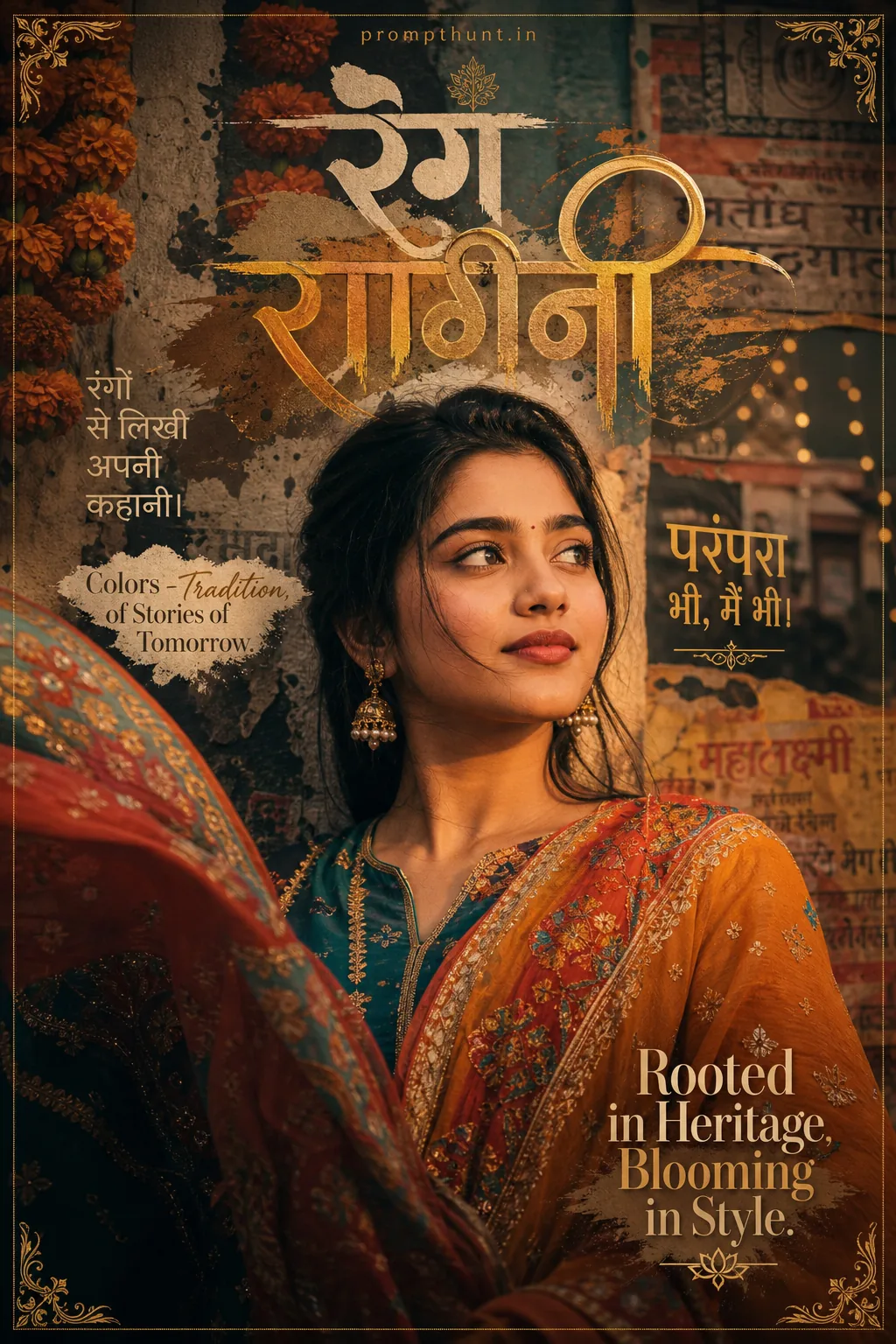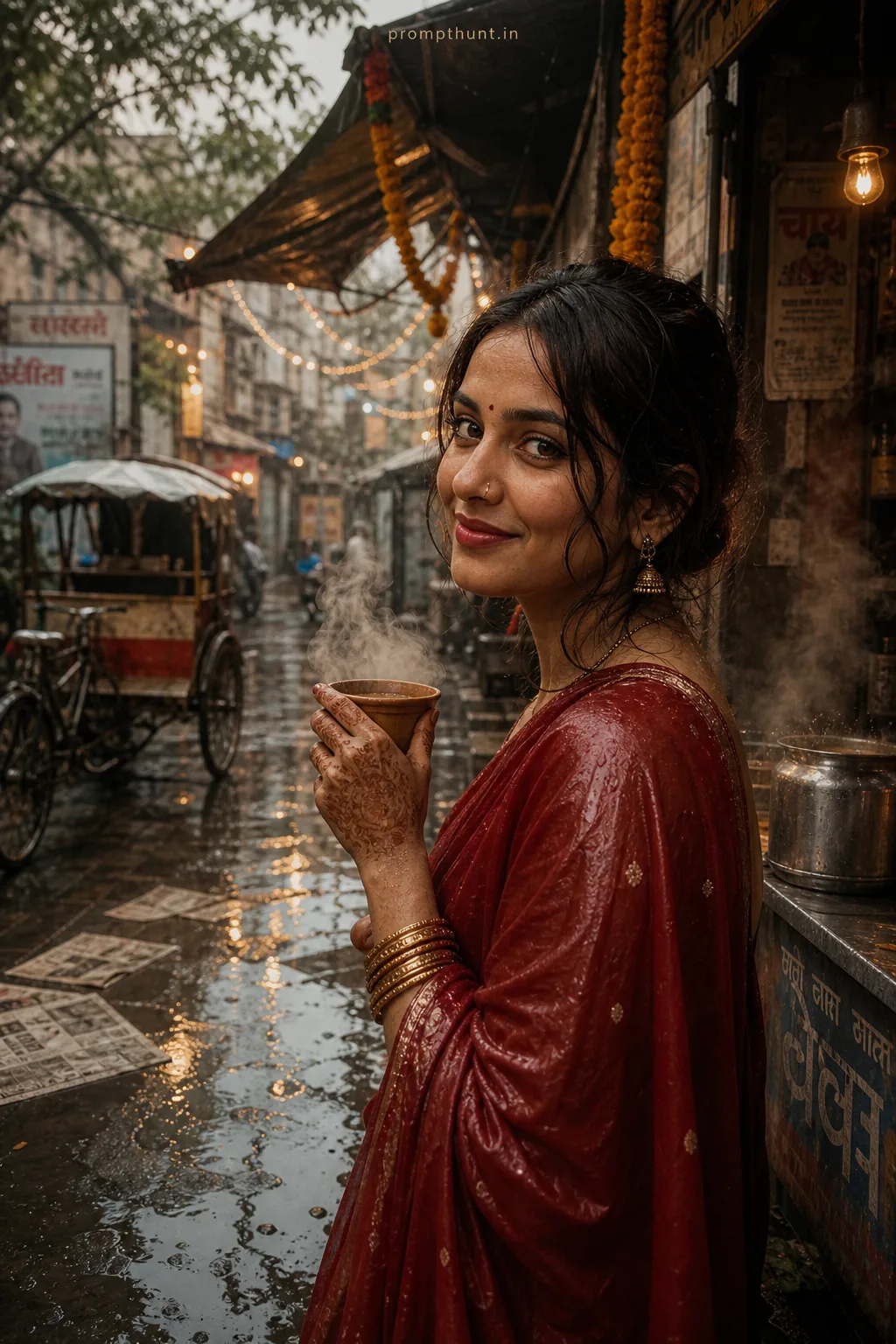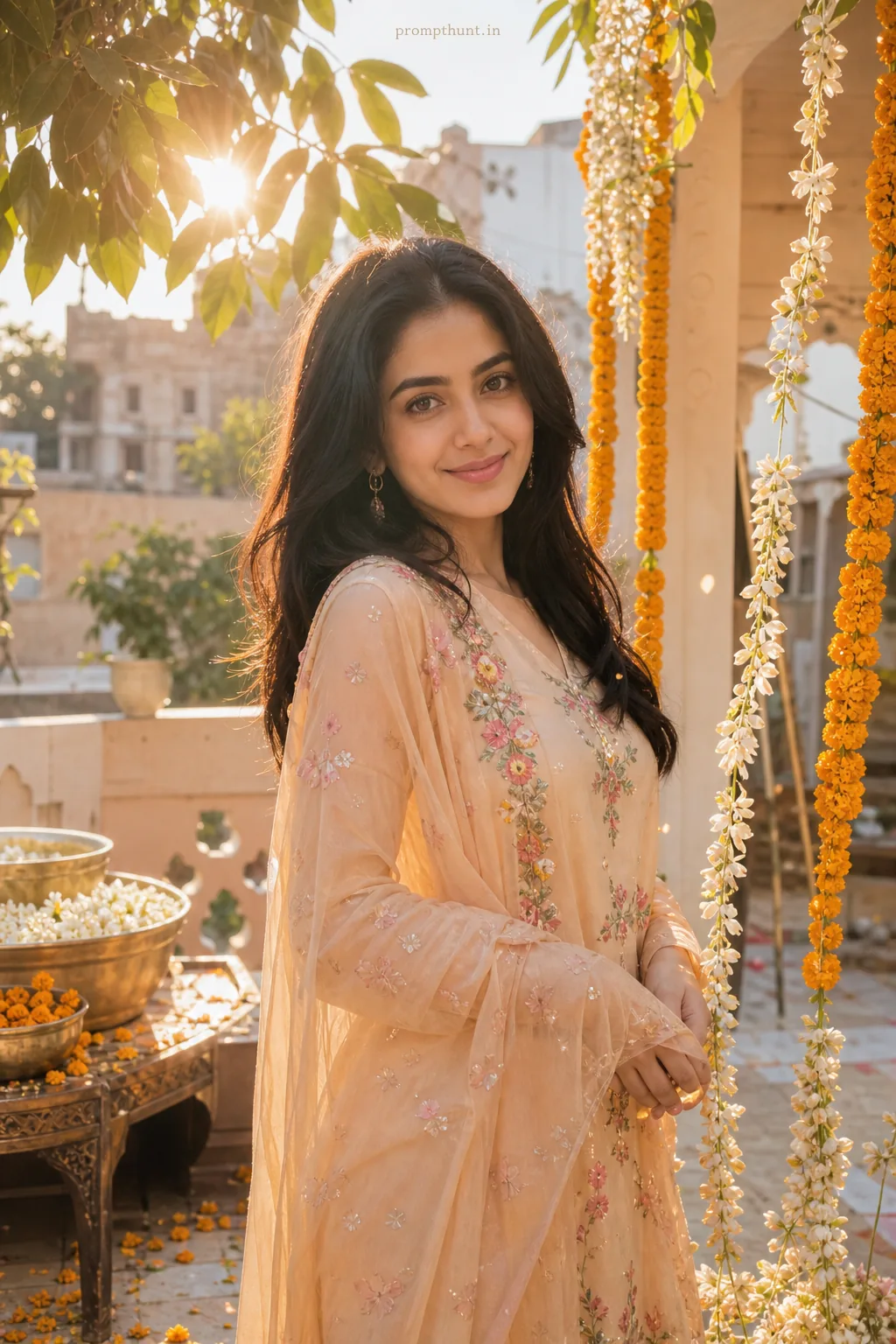

A High-Fashion Editorial AI prompt combines specific garment details, lighting conditions, camera aesthetics, and cultural context into one long instruction. For Rajasthani bridal couture, that means naming the embroidery style, the jewellery, the setting, the colour palette, and the mood — all in a single prompt. Gemini handles the rest. Results land somewhere between Vogue India and a fever dream about a very glamorous palace.
Here is the thing about AI bridal photography prompts — most of them are boring. "Indian bride, red lehenga, golden light." Fine. Perfectly adequate. About as exciting as a stock photo of someone shaking hands at an office. If you want something that looks like it was actually shot for a magazine cover, you need to put the magazine in the prompt. That is what the Royal Rajasthani Bridal Couture High-Fashion Editorial prompt does, and it does it without breaking a sweat or a single mirror-work sequin.
Name the fabric, the jewellery, the architecture, the lighting, the colour palette, and the specific publication aesthetic — all in one prompt — and Gemini will generate a bridal portrait that looks like a Vogue India shoot, not a wedding album from 2009.
What High-Fashion Editorial Actually Means in an AI Prompt
High-Fashion Editorial is not just a vibe. It is a set of visual rules borrowed from print magazine photography. Think Vogue, Harper's Bazaar, or Elle — where every frame is composed like a painting and the lighting has been argued over for forty-five minutes.
In AI prompting terms, it means three things. First, dramatic intentional lighting — not the flat brightness you get from saying "well-lit photo." Second, cinematic depth of field — a sharp subject against a soft, storytelling background. Third, a specific cultural or aesthetic context that gives the image a sense of place and moment.
The Rajasthani bridal version of this style layers all three with a fourth element: heritage. Carved sandstone havelis, zardozi embroidery, polki diamonds, mogra flowers. These are not random decorative words. Each one is a visual instruction that tells the AI exactly what the image should feel like. Miss one of them and you get a pretty picture. Include all of them and you get a photograph.
(Also, "polki diamond" is doing a lot of heavy lifting in that prompt. Respect to it.)
The Prompt — Copy It, Use It, Thank It Later
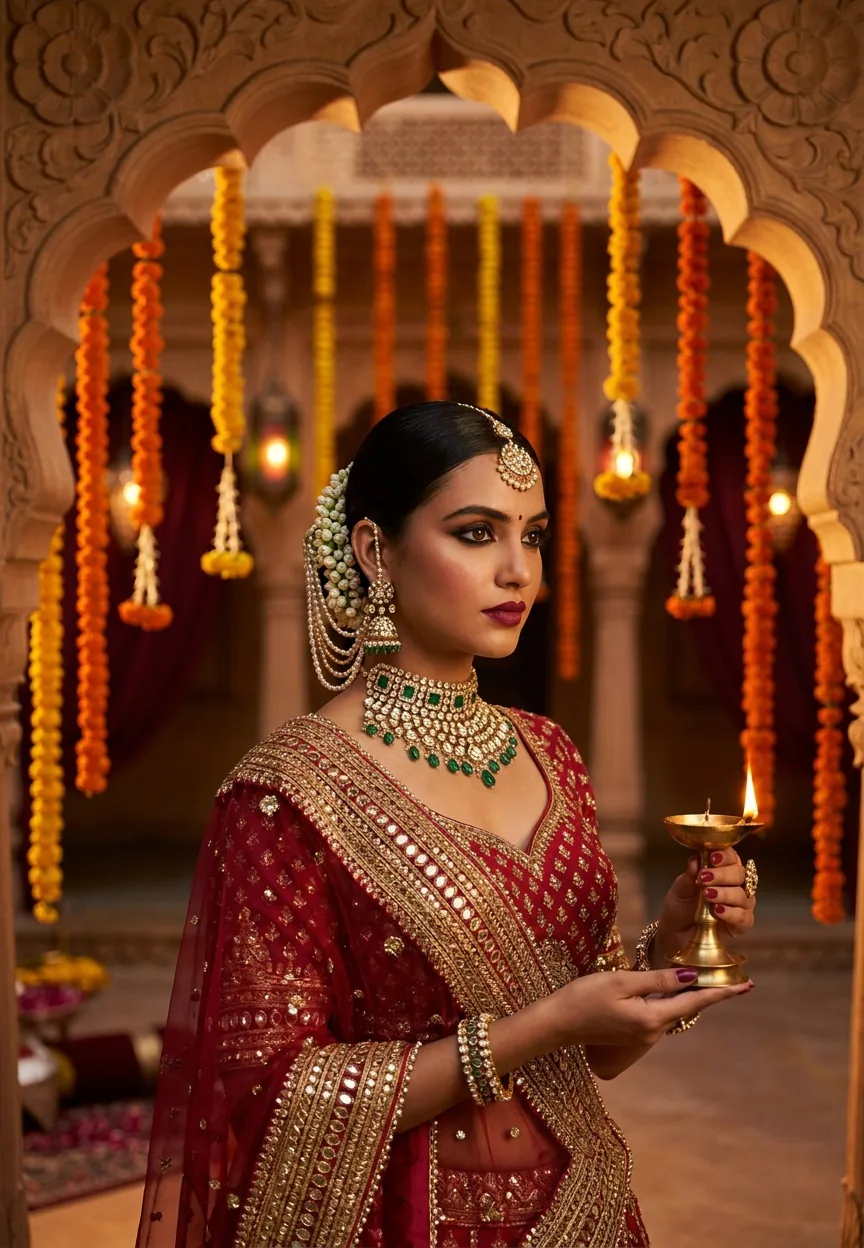
A stunning Indian woman in her mid-20s wearing an exquisite hand-embroidered deep crimson and gold Rajasthani lehenga with intricate zardozi and mirror-work detailing, standing in the golden hour light inside a grand haveli courtyard with ornate carved sandstone arches, she wears a heavy polki diamond and emerald choker necklace layered with maang tikka and statement jhumkas, her hair styled in a sleek low bun adorned with fresh mogra flowers and pearl strings, her makeup features bold kohl-rimmed eyes with a deep berry lip, she holds a vintage brass diya casting a warm amber glow on her face, the background features soft bokeh of marigold garlands and hanging lanterns, shot on a high-end fashion editorial camera with Vogue India aesthetic, dramatic contrast lighting with rich warm tones of saffron, burgundy and gold, ultra-realistic skin texture, 9:13 vertical portrait format, cinematic depth of field, luxury fashion photography style
How to Use This Prompt — Three Steps, No Surprises
First, open Gemini. The free tier works, but Gemini Advanced gives you noticeably better fabric texture and jewellery detail. Worth the upgrade if you are using this for anything beyond personal experimentation.
Second, paste the prompt exactly as written. Do not paraphrase it. Do not summarise it. AI image models reward specificity, and every word in this prompt is there because it earns its place. "Zardozi" tells the model a specific type of metallic thread embroidery. "Haveli courtyard" tells it the architectural grammar of the image. "9:13 vertical portrait format" tells it you want a magazine page, not a landscape wallpaper.
Third, run it two or three times. AI generation has variance built in. The first result might be extraordinary. The second might have given the subject six fingers on one hand, which is its own kind of editorial statement but probably not the one you were going for. Regenerate until the hands look human.
Tips That Actually Make a Difference
Rule of thumb: the more specific the cultural detail, the better the output. Gemini has been trained on enough Indian fashion photography to recognise terms like maang tikka, jhumkas, and mogra flowers as coherent visual categories. Use them and the model knows exactly where it is.
If the background is coming out too busy, add "minimal background, subject in sharp focus" at the end. The bokeh instruction is in the prompt already, but doubling down reinforces it.
For skin texture, "ultra-realistic skin texture" is already in the prompt. If you are still getting that slightly waxy AI-skin look, try adding "natural skin pores, shot on 85mm portrait lens." That last part tells the model to simulate the compression and flattery of an actual portrait focal length. Works nine times out of ten.
Want to swap the colour palette? Replace "deep crimson and gold" with "ivory and antique gold" for a more contemporary bridal look, or "royal blue and silver" for a bold non-traditional take. The rest of the prompt handles the heavy lifting.
One more thing: if Gemini is softening the jewellery detail, add "close-up jewellery detail visible, intricate metalwork" after the jewellery description. The model sometimes deprioritises accessories in favour of the face, which is understandable but not what you want when the entire point is the polki choker.
Why This Style Is Trending Right Now
Indian fashion photography has had a remarkable decade on social media. Accounts dedicated to heritage textiles, royal bridal aesthetics, and Rajasthani architecture have built audiences in the millions. The visual vocabulary — havelis, marigolds, diyas, silk lehengas at golden hour — is immediately recognisable and deeply aspirational.
AI image generation arrived and met that existing appetite head-on. Suddenly anyone could generate a Vogue India-style bridal portrait without a studio budget, a trip to Jaipur, or a photographer who actually understands how to light embroidery properly. (Embroidery is notoriously difficult to light. The mirror-work either blows out completely or disappears. This is apparently not the AI's problem.)
The trend picked up specifically in India's wedding planning and fashion content communities. Brides use these prompts to visualise looks before commissioning a lehenga. Designers use them to mock up editorial concepts. Bloggers use them for content. The Vogue India aesthetic instruction is key here — it grounds the image in a publication that the target audience genuinely respects and recognises.
It is also, fair enough, just a beautiful style. Not every trend needs a complicated explanation.
Honest Opinion — When Not to Use This
This prompt is excellent at what it does. That is not the same as saying it is right for every situation.
If you need to represent a specific person — a real bride, a specific model, a client — this prompt will not help you. AI-generated faces are consistent within a single run but not reproducible across sessions. You cannot brief a client on what their wedding portraits will look like using Gemini outputs as reference, because the face in the next batch will be someone else entirely. That is not a flaw, it is just what the technology is. Use it for mood boards and concept work, not client presentations that involve real humans with real expectations.
The jewellery, while beautiful, is also not technically accurate. Polki diamond settings have a specific construction that AI models approximate rather than replicate. If you are a jewellery designer reviewing the output for accuracy, you will spot things that a general audience would not. Reckon it is fine for fashion editorial context but not for product visualisation.
The haveli architecture is similarly evocative rather than precise. It reads as Rajasthani. It does not replicate any specific haveli. Again, fine for editorial work, not for architectural clients who need specific references.
One genuine limitation: the diya in the subject's hands. Gemini handles this inconsistently. Sometimes the light interaction is extraordinary — warm amber spilling up the face exactly as described. Other times the diya looks like a prop in a school play. If the diya is not working, try "she holds a lit brass oil lamp, warm amber light illuminating her face from below" as an alternative phrasing. Slight rewording, meaningfully better results.
Overall though? For bridal mood boards, fashion content, social posts, and editorial concept work, this prompt is doing everything right. The specificity is its strength. The cultural detail is its personality. The Vogue India instruction is what separates it from every generic "Indian bride" prompt that came before it.
The Bit Where We Wrap Up
The Royal Rajasthani Bridal Couture prompt works because it does not leave anything to chance. It names the embroidery, the jewellery, the architecture, the lighting, the colour palette, and the publication it wants to look like. Gemini rewards that level of detail with images that genuinely look like they belong in a magazine.
Run it a few times, swap the colour palette if you want, fix the hands if needed, and add detail reinforcement for the jewellery. You will land something worth keeping.
And if anyone asks how you got such a stunning bridal editorial without flying to Jaipur, just tell them you found it in the prompt-ure of good AI prompting.