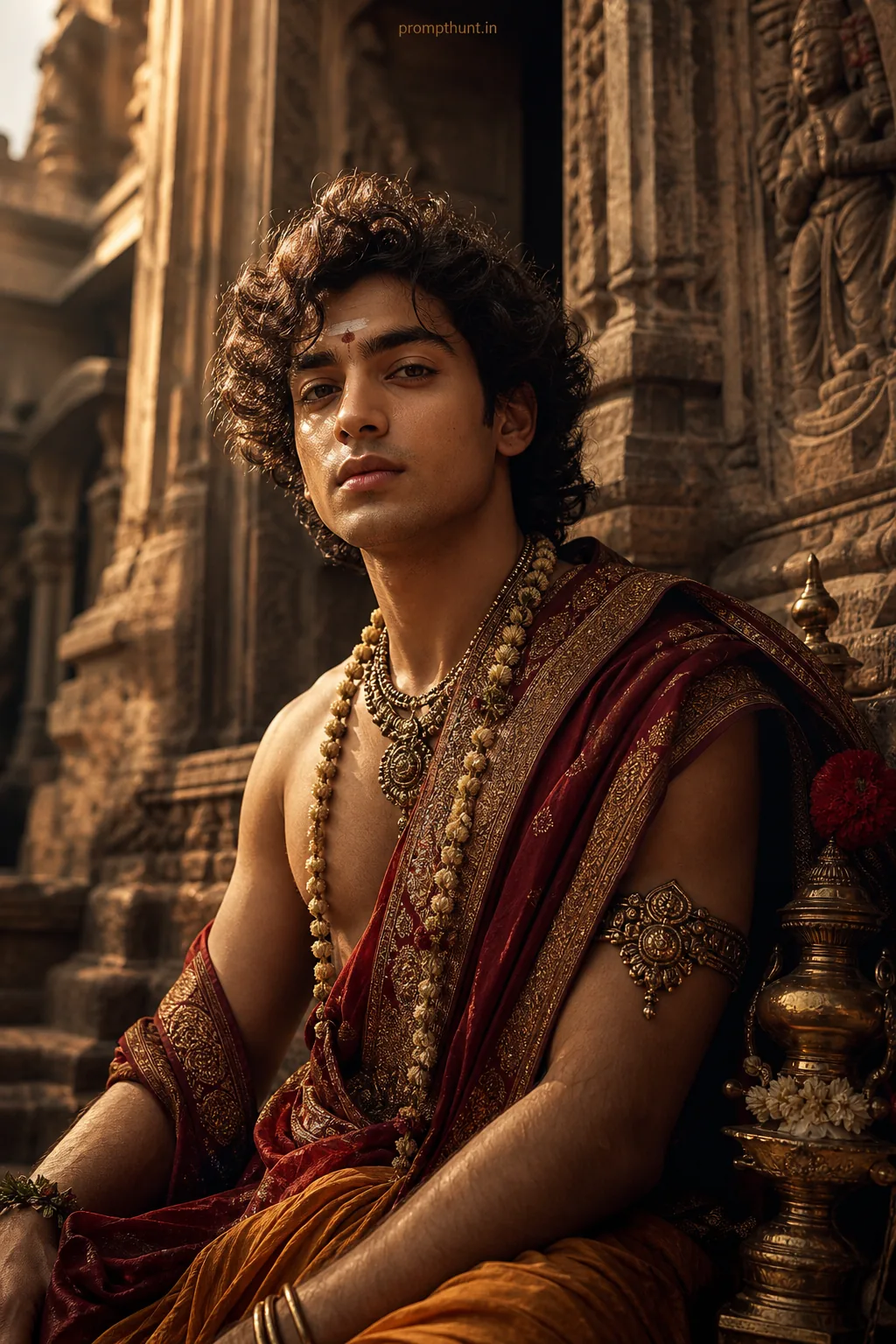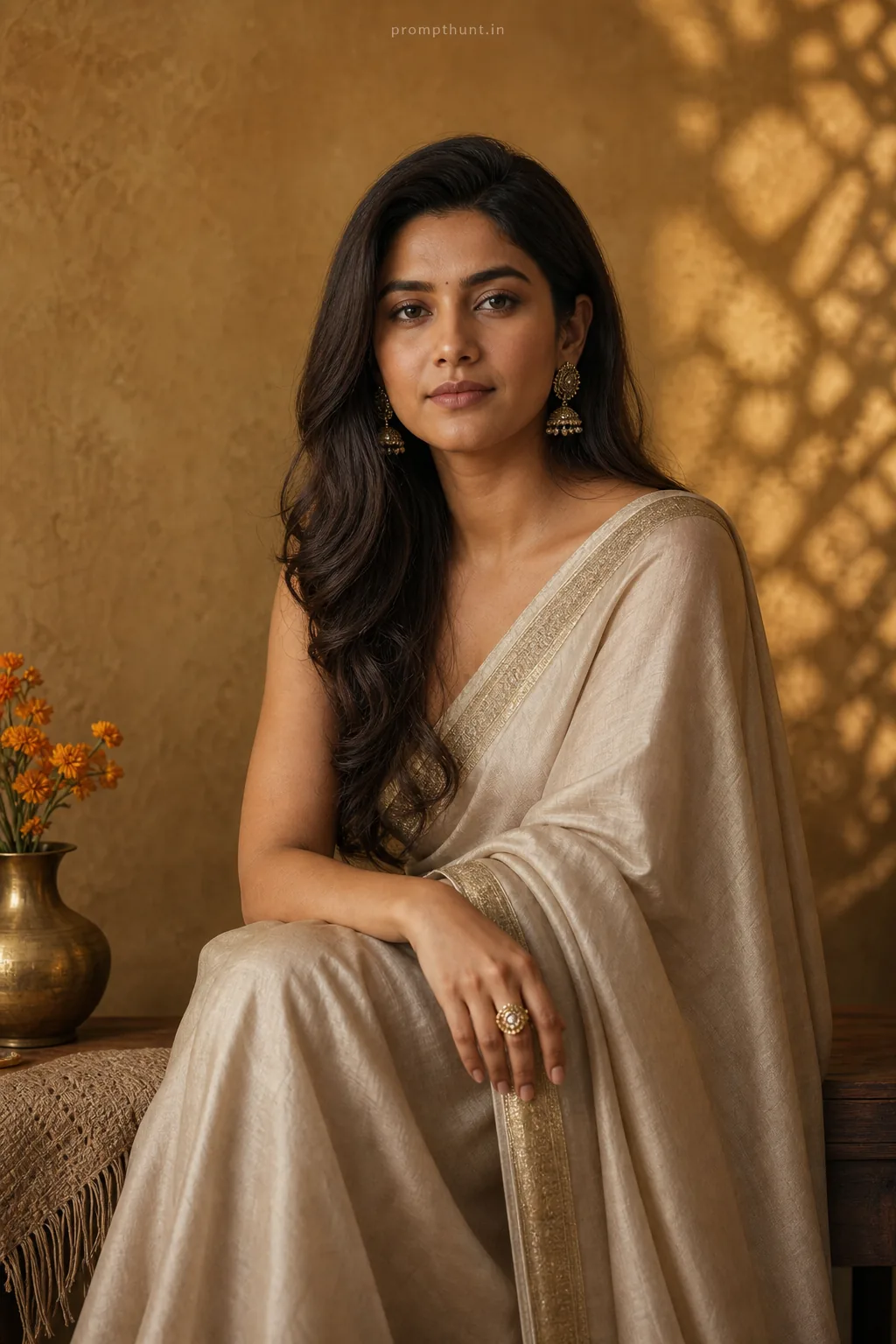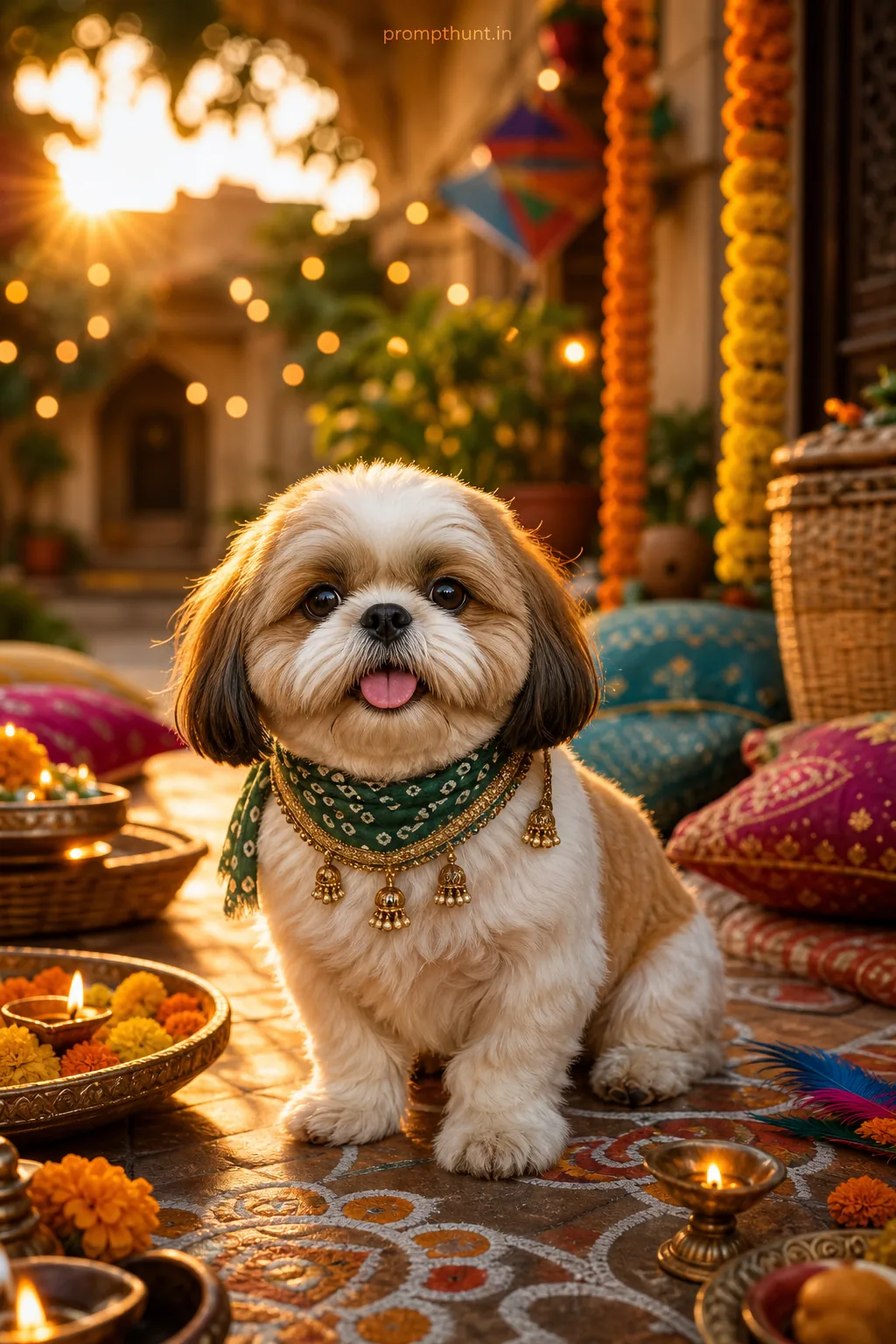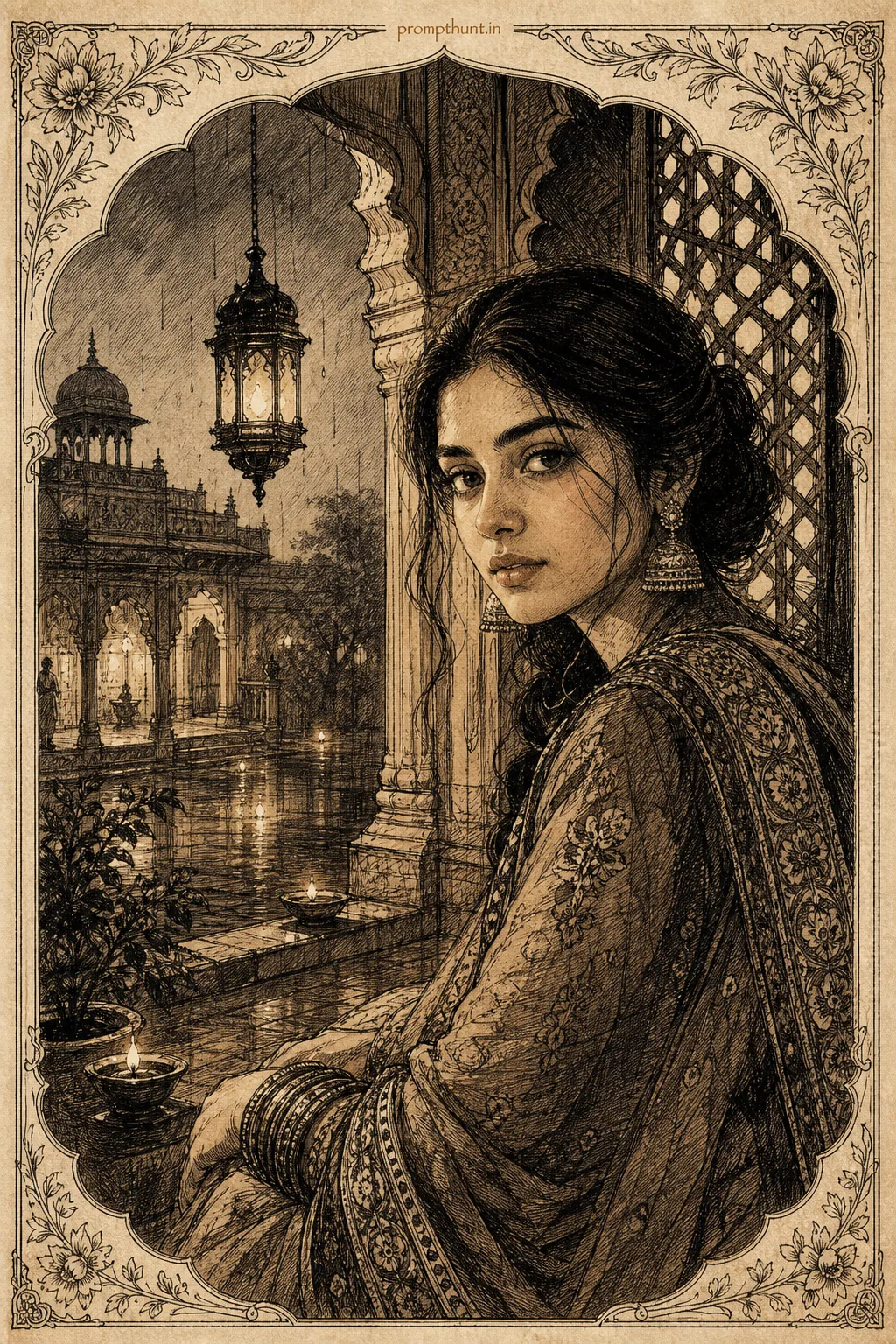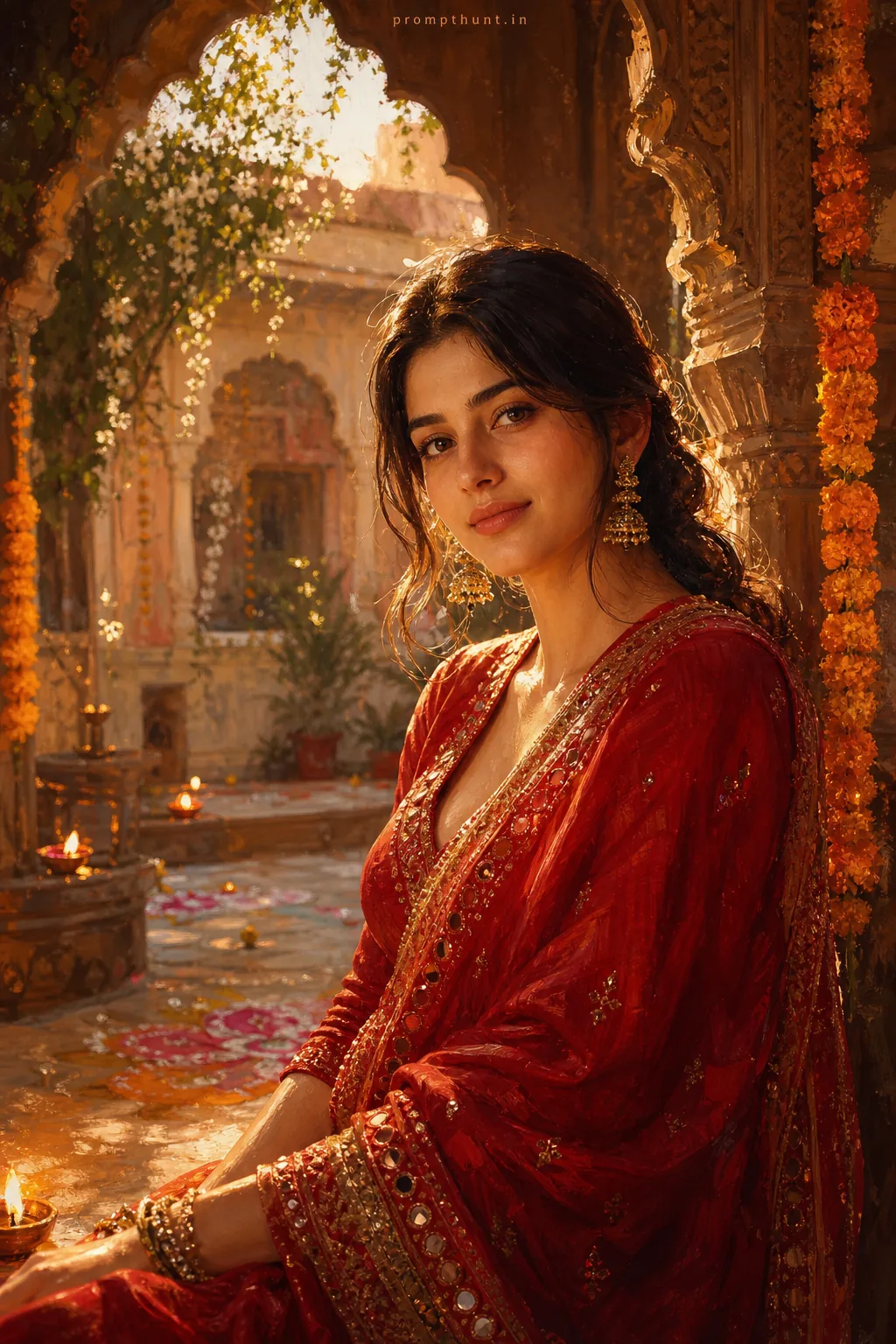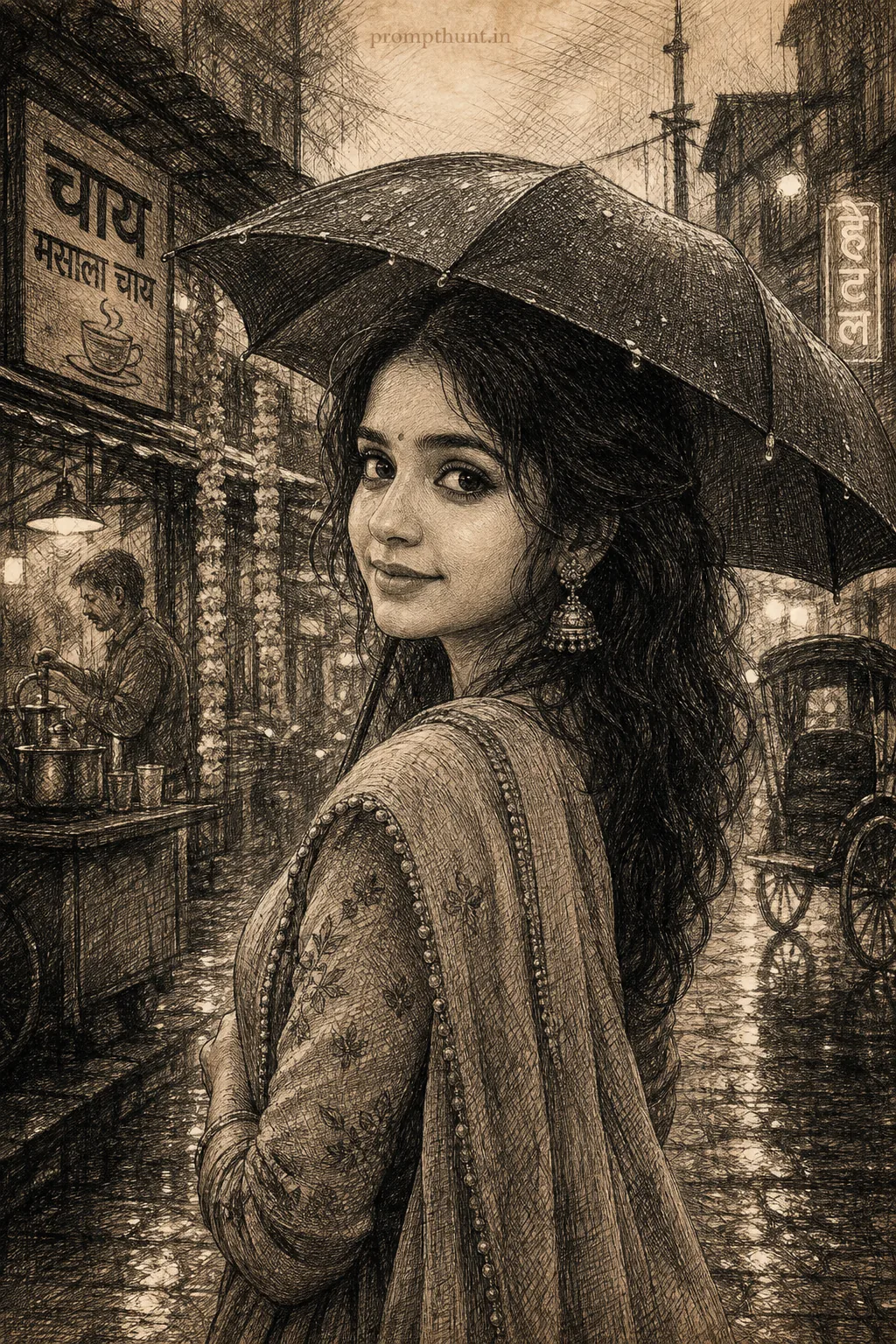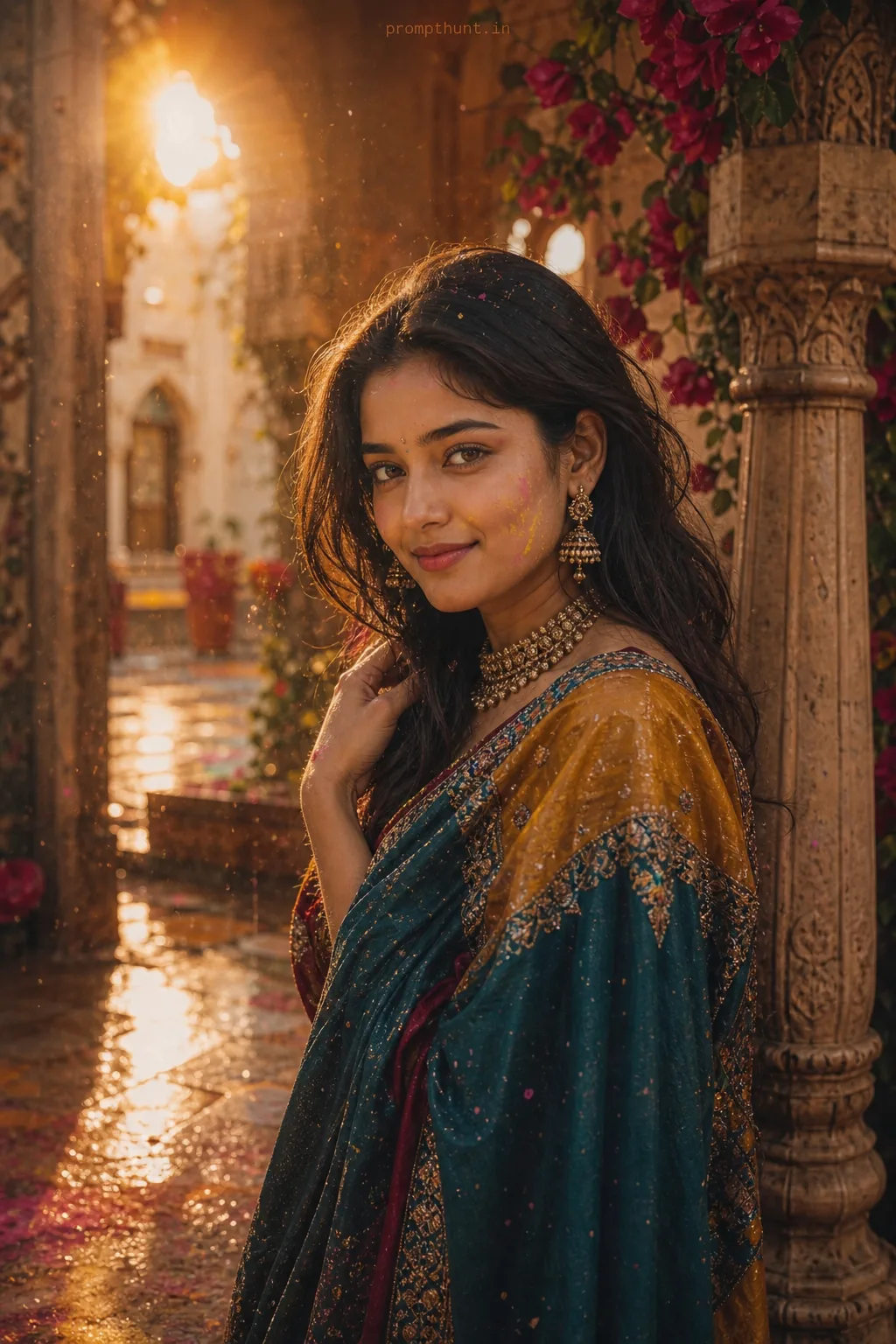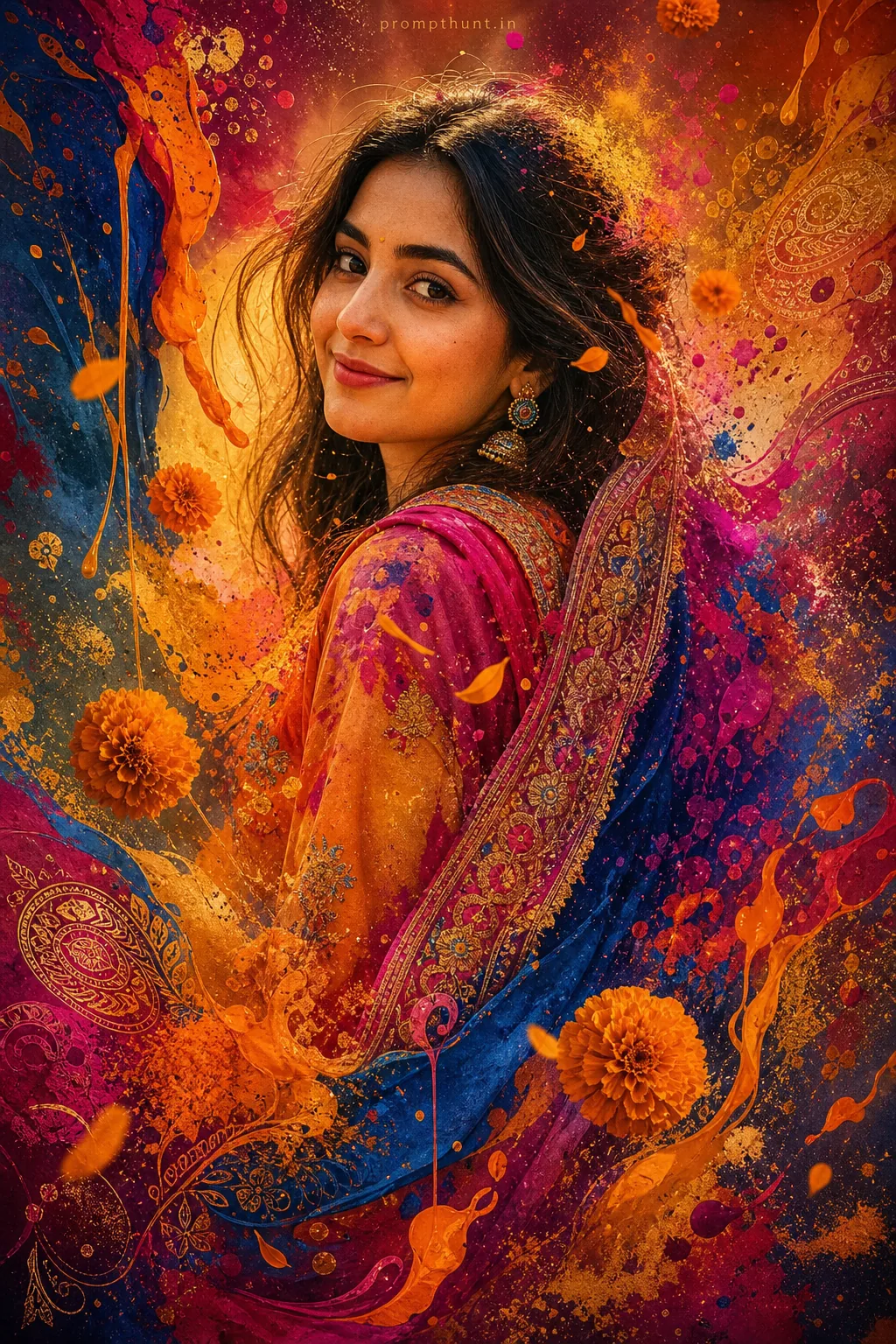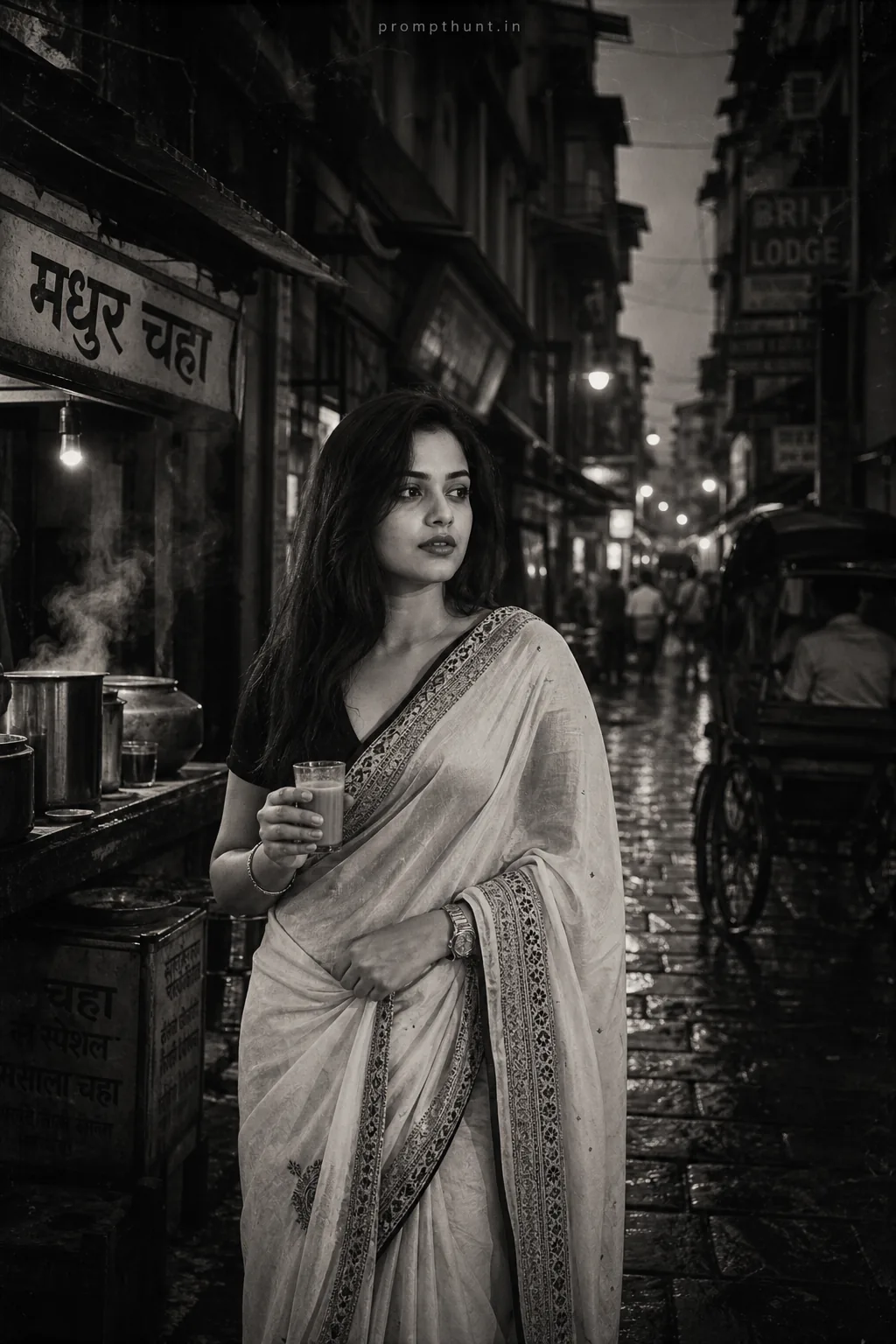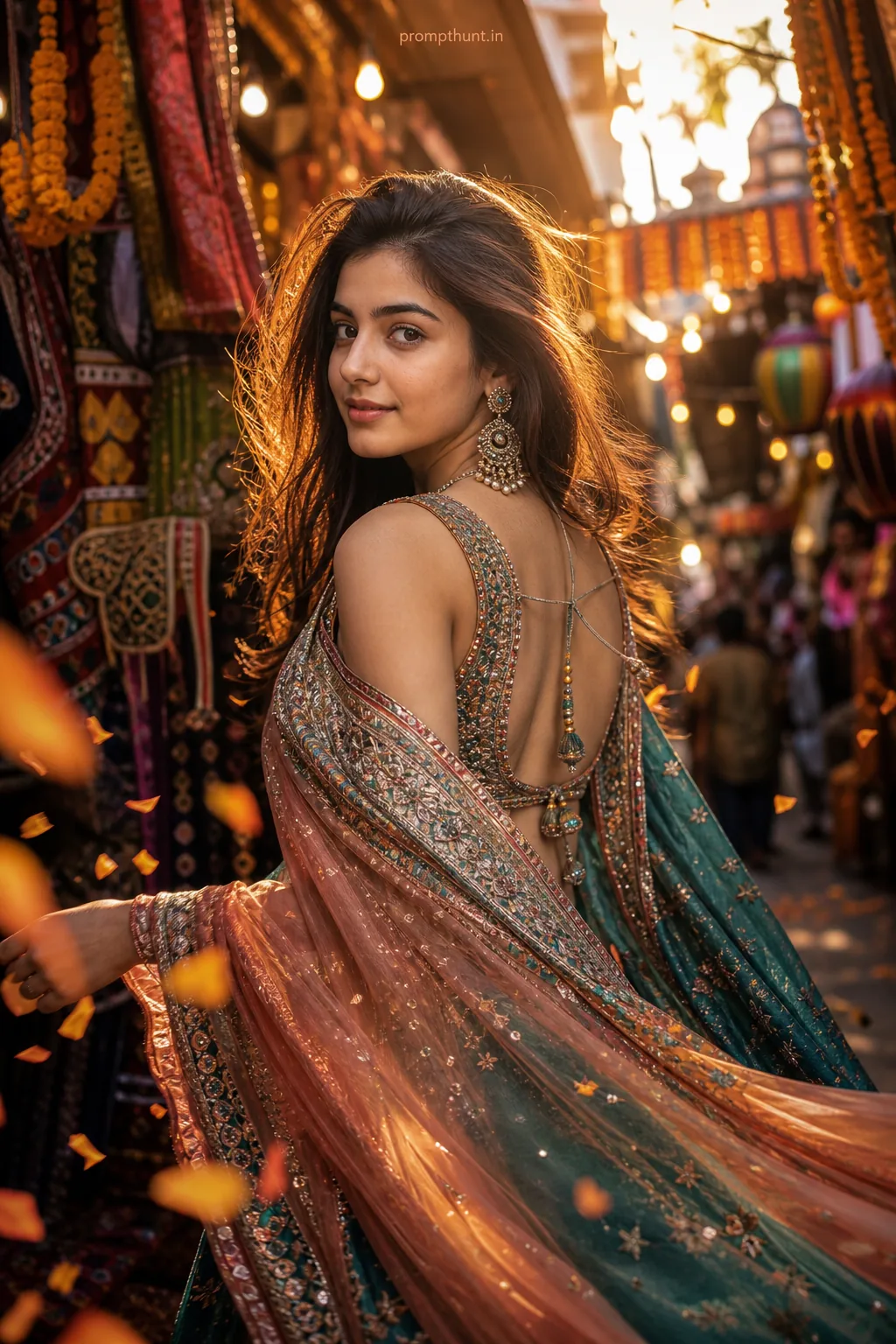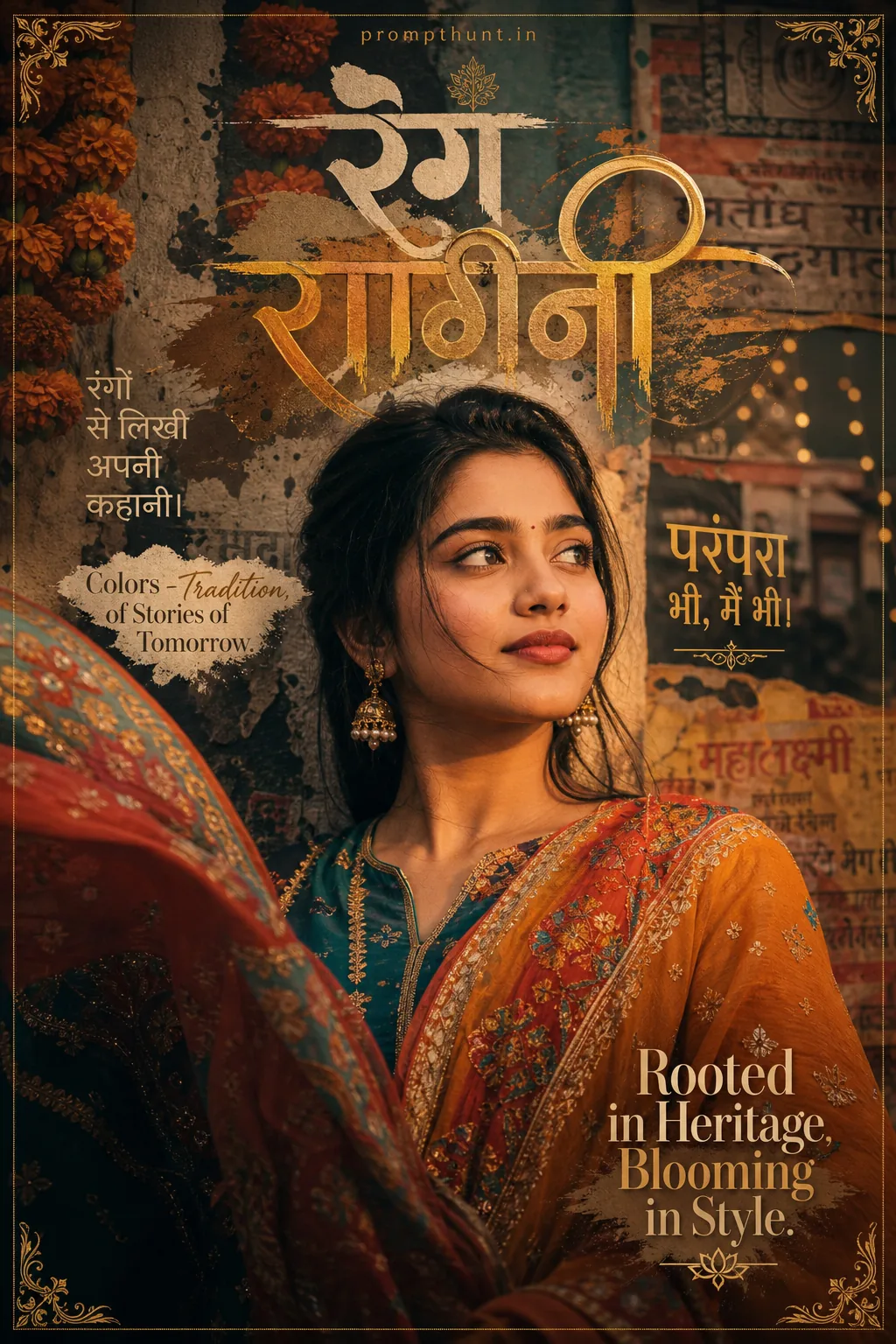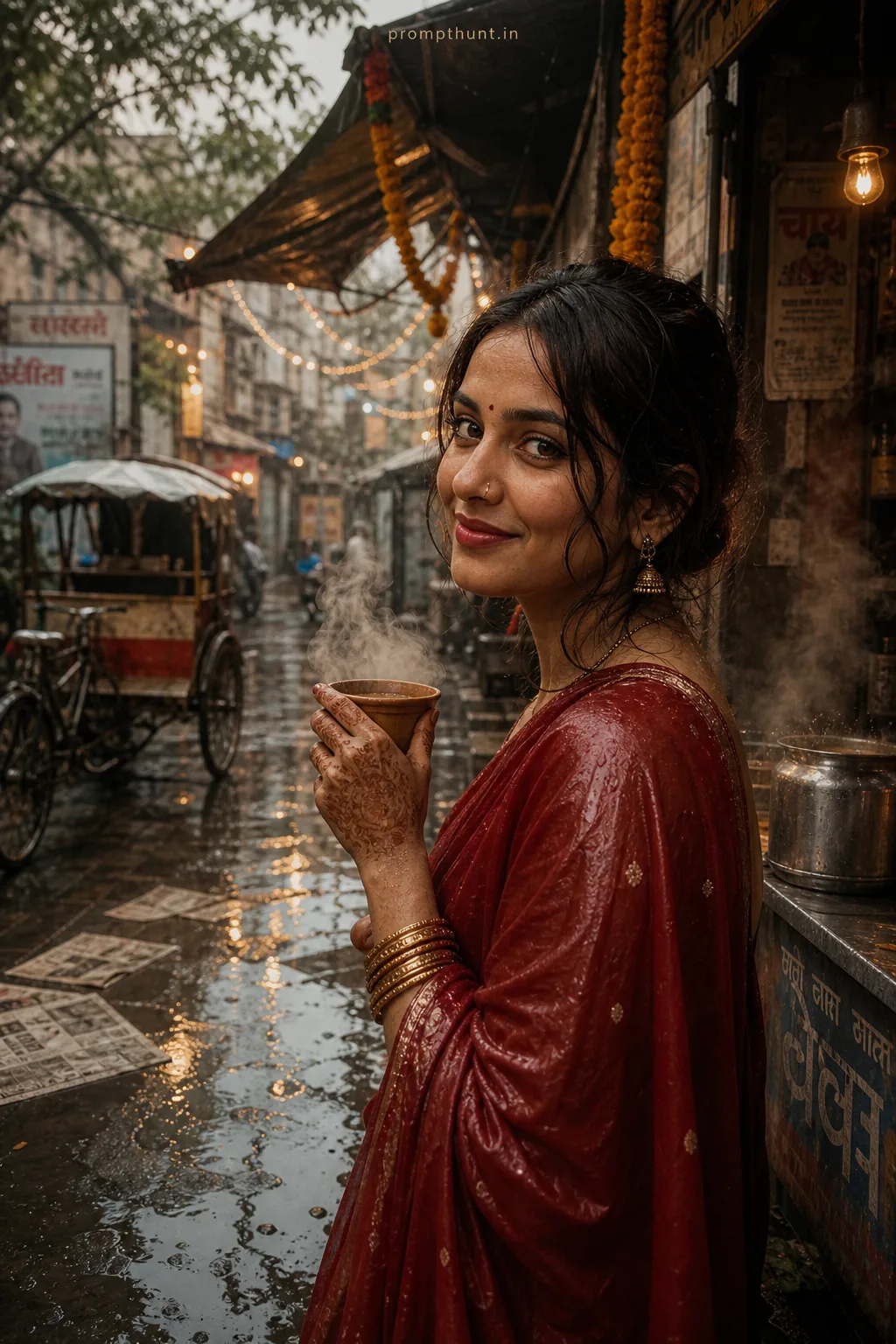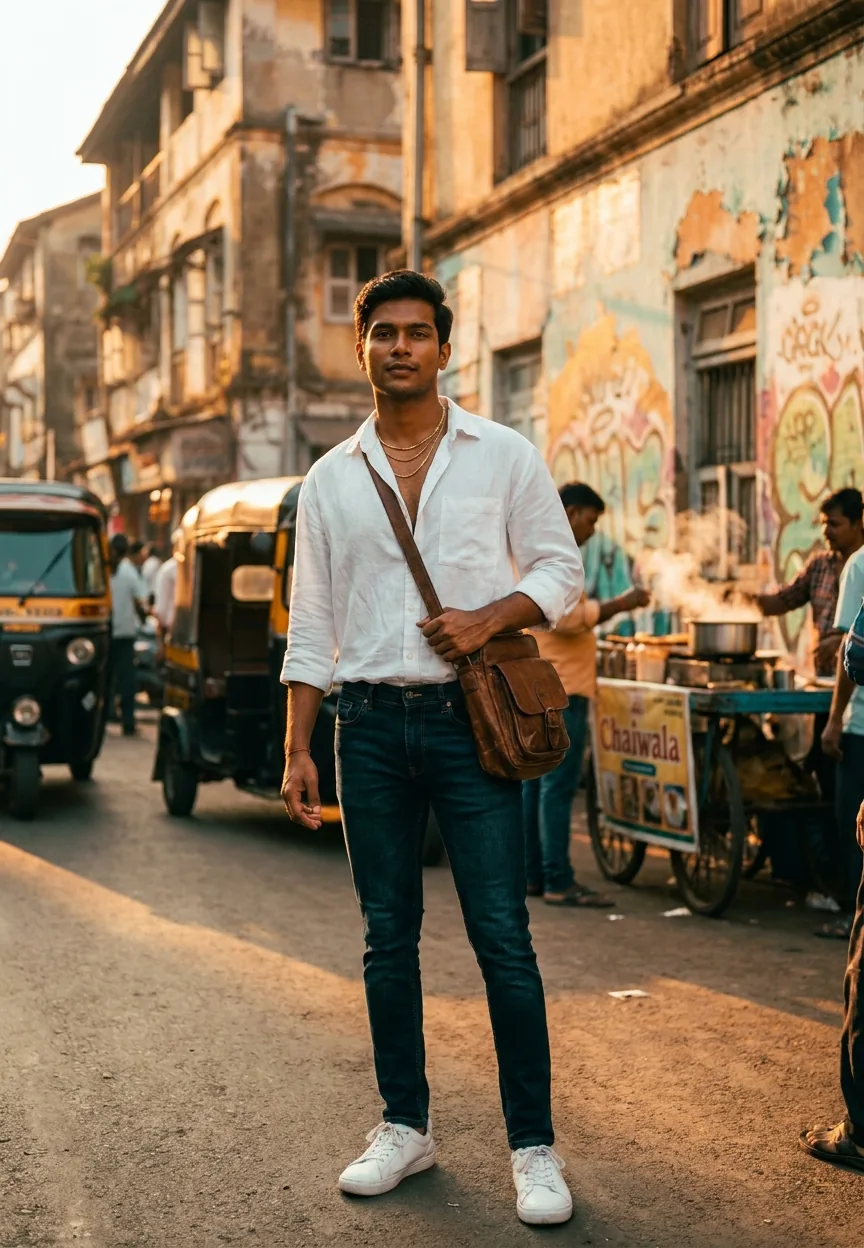
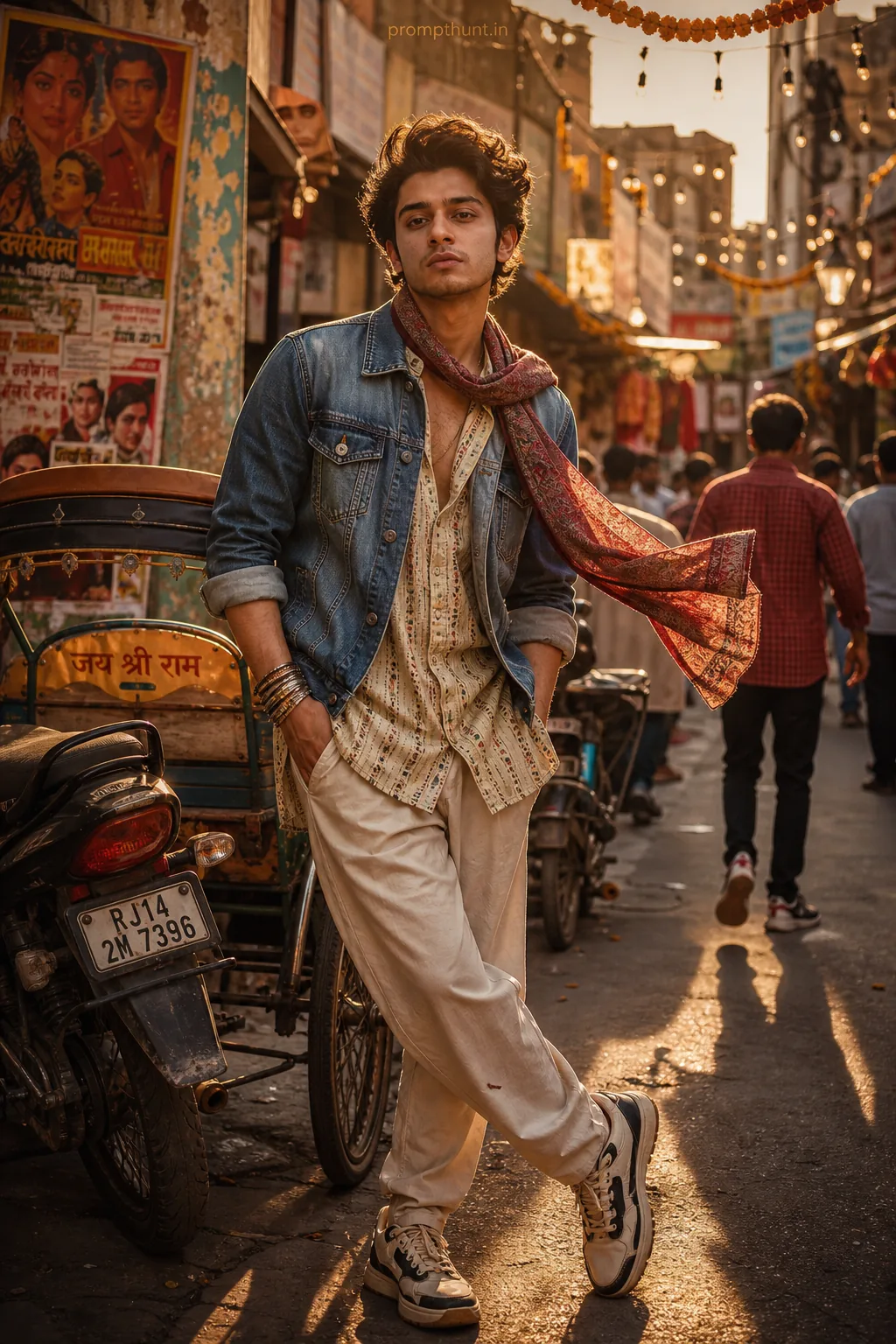
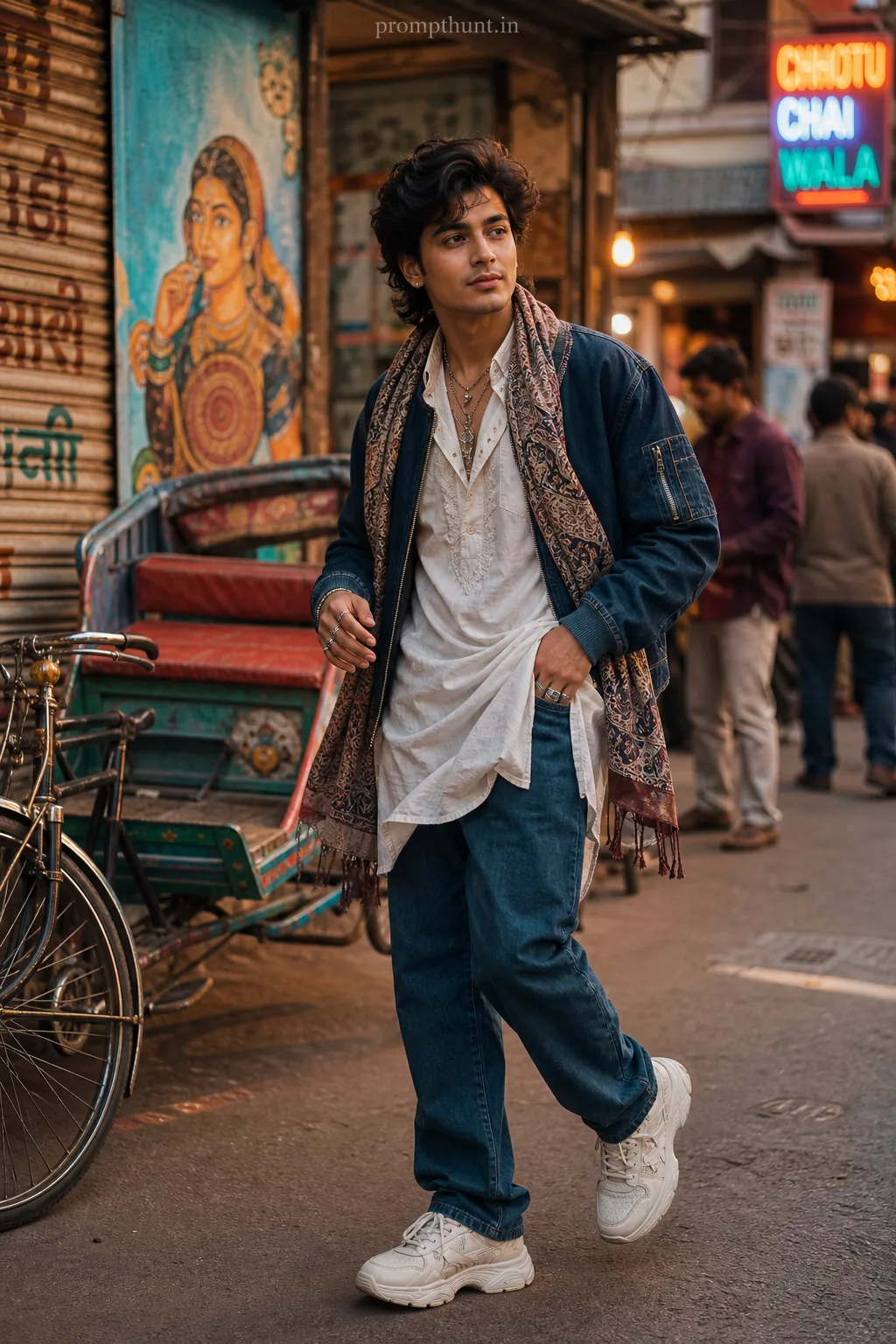
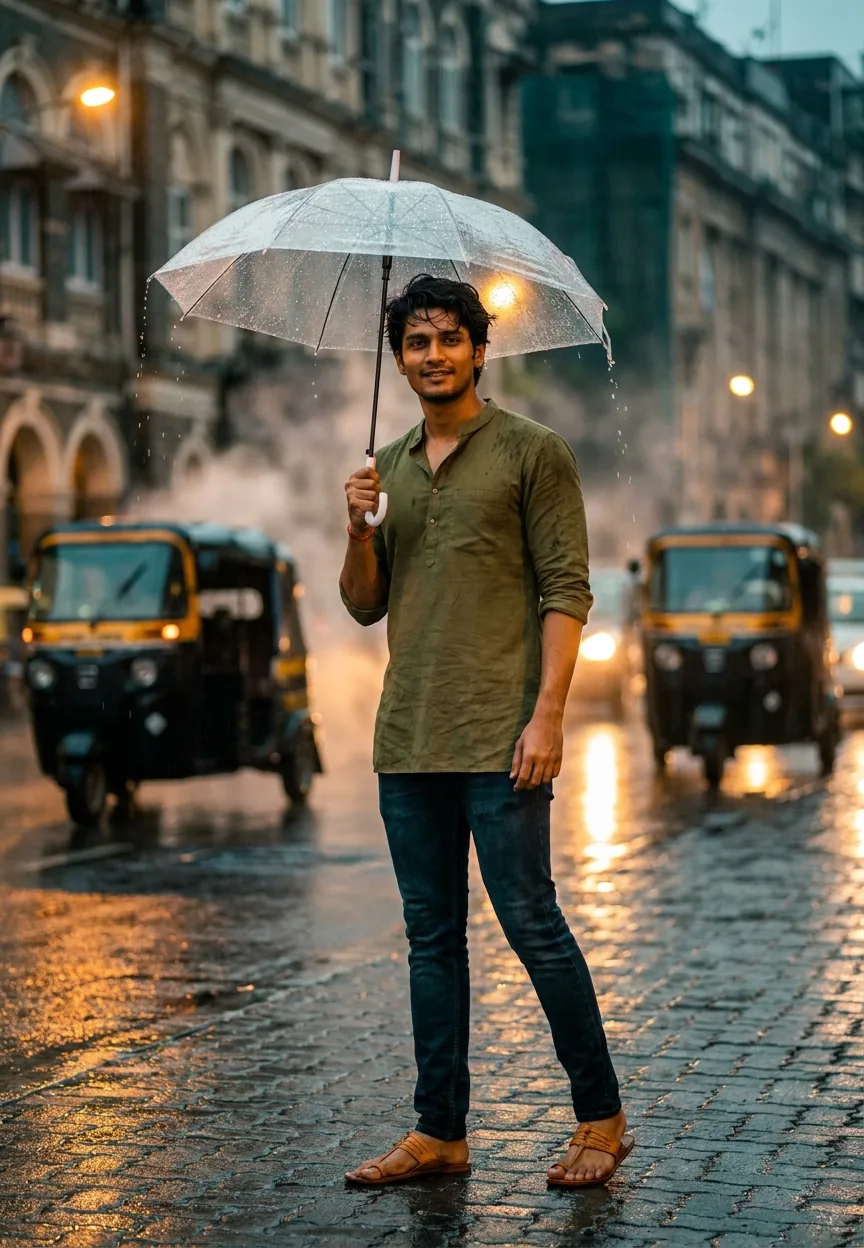
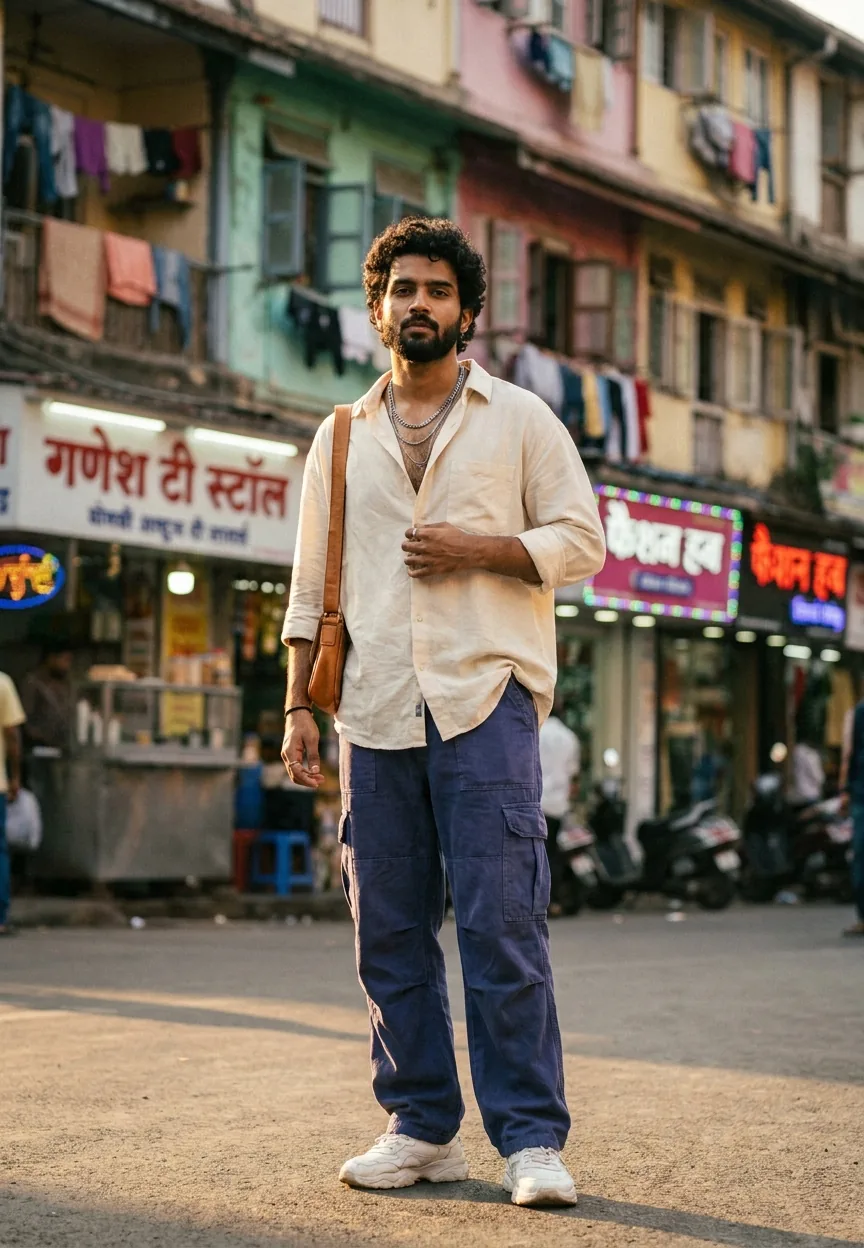
This Mumbai Street Style prompt generates editorial-quality AI portraits of stylish young Indian men shot against authentic Mumbai street backdrops — think golden hour light, chaiwala stalls, peeling painted walls, and cinematic warm-teal color grading. Drop it into Gemini, adjust the outfit details to match your vibe, and you get fashion-magazine results without the fashion-magazine budget.
Right. So someone looked at a chaiwala stall, an auto-rickshaw, and a wall covered in peeling paint and thought: that is the most stylish backdrop on earth. And honestly? They were not wrong. The Mumbai Street Style Swagger prompt has been quietly doing laps around Indian AI communities, producing portraits so good people are genuinely asking if they were shot on location. They were not. They were generated in about 40 seconds. Which is either impressive or deeply humbling depending on how much you spent on your last photography session.
Paste this prompt into Gemini, swap the outfit details for your own, and get a cinematic editorial portrait dripping in authentic Mumbai street culture — no plane ticket required.
What Mumbai Street Style Actually Is (And Why AI Nails It)
Street style photography is not just photos taken on a street. That would be surveillance footage. Street style is the art of capturing how real people dress in real urban environments — the layering, the attitude, the accidental genius of pairing a vintage bag with clean sneakers.
Mumbai specifically has a street style identity that is completely its own. It mixes Western silhouettes with South Asian sensibility. Oversized linen over slim-fit denim. Gold chains that mean business. Sun-kissed skin under that specific golden hour light you only get when the city decides to cooperate for about 45 minutes at 5pm.
AI models like Gemini handle this well because the prompt stacks three things that matter: a specific cultural context, precise clothing descriptors, and a defined photographic style. Give an AI all three and it stops guessing. That is when the results get genuinely good.
The "swagger" in the title is doing real work here, by the way. It is not just attitude — it is a compositional instruction. Confidence in the subject reads as posture in the image. Wide stance, relaxed shoulders, eyes that suggest the subject has somewhere better to be. The AI picks this up from the language. Good prompt writing is basically method acting notes for a machine. (I cannot believe I just typed that sentence but it is accurate.)
The Prompt That Is Doing All the Heavy Lifting
A stylish young Indian man in his mid-20s standing confidently on a vibrant Mumbai street, wearing a crisp oversized white linen shirt half-tucked into slim-fit dark indigo jeans, paired with clean white sneakers and layered gold chain necklaces, carrying a vintage leather sling bag, natural sun-kissed brown skin glowing under warm golden hour sunlight, background featuring colorful peeling painted walls with urban graffiti art, a chaiwala stall and auto-rickshaws softly blurred in the background, dynamic street energy, shot on Sony A7IV with 35mm f/1.4 lens, cinematic film-like color grading with warm amber and teal tones, sharp focus on subject with beautiful bokeh background, editorial fashion magazine quality, vertical 9:13 portrait composition, ultra-realistic 8K detail, authentic Indian metropolitan street culture aesthetic
How to Use This in Gemini — Three Steps, No Surprises
Step one: Open Gemini and go to the image generation mode. Make sure you are using a version that supports image output — Gemini Advanced handles this better than the free tier, full stop.
Step two: Paste the prompt exactly as written first. Get a baseline result. Nine times out of ten the first output will already be genuinely impressive. Let it cook before you start tweaking.
Step three: Personalise. Swap out the clothing details, adjust the age, change the background landmark. This is where the prompt stops being a template and starts being yours. More on the specific swaps below.
The prompt works in one generation. You do not need to chain it with a style reference image or upload anything. Paste, generate, done. The specificity of the language is doing all the heavy lifting that a reference image would otherwise do.
Tips That Actually Move the Needle on Results
Keep the camera and lens details. "Sony A7IV with 35mm f/1.4" sounds like you are showing off at a camera shop, but it genuinely shifts how the AI renders depth of field and grain. Remove it and the image gets flatter. Keep it.
The "half-tucked" shirt instruction is load-bearing. It sounds minor. It is not. Fully tucked reads formal. Fully untucked reads casual. Half-tucked reads like someone who gets it. Do not delete it.
Change the background location but keep the specificity. "A chaiwala stall" works because it is precise. If you swap it for something vague like "a busy street" you will get a generic result. Try "a Dharavi mural wall" or "a Bandra sea-link view at dusk" — specific Mumbai geography keeps the cultural authenticity locked in.
Warm amber and teal is a classic cinematic grade for a reason. It is the colour palette that made half of your favourite films look expensive. Keep it unless you specifically want a different mood — cooler tones for a moodier, editorial-dark result, or desaturated film grain for a 90s Bollywood throwback feel.
If the face looks slightly off on the first attempt, add "symmetrical facial features, natural expression" to the prompt. It is a small fix with a noticeable impact on realism.
Why This Street Style Trend Is Blowing Up in India Right Now
The honest answer is Instagram Reels, but let me give you the longer version because it is more interesting.
Indian fashion content has historically been dominated by either Bollywood-adjacent glam or traditional occasion wear. Neither of those is what young urban Indians in Mumbai, Bangalore, or Delhi are actually wearing on a Tuesday. There is a gap between the content and the reality — and street style AI prompts are filling it.
Creators are using this prompt to build portfolio content without hiring a photographer. Small fashion brands are using it to generate lookbook imagery. Personal style accounts are using it to visualise outfit concepts before buying anything. The use cases are stacking up fast.
There is also something genuinely meaningful about AI-generated fashion content that centres Indian faces, Indian streets, and Indian cultural textures without making it an "ethnic fashion" editorial. This prompt treats Mumbai street style as fashion — full stop — not as a cultural exhibit. That distinction matters and people can feel it in the output.
The numbers back this up. Search interest for AI fashion prompts with Indian cultural contexts roughly tripled across Indian creator communities between late 2024 and mid-2025. This is not a niche experiment. It is a mainstream content format in the making.
My Honest Take — Including When Not to Use This
This prompt is genuinely one of the better cultural-specific fashion prompts doing the rounds. The specificity is smart, the visual language is consistent, and the results land closer to editorial than most AI portrait prompts manage. I have tested a fair few, and this one earns its reputation.
But here is when you should not reach for it.
If you need a real person's likeness — a client, a model, someone with a distinct face — this will not help you. AI-generated portraits have consistent faces but they are nobody's face. For anything requiring a specific individual, you still need a photographer and a real human being. Shockingly.
If your audience is hyper-sensitive to AI-generated imagery and expects authentic documentation of real street style, using this without disclosure is a bad move. The fashion and photography community has real opinions about this. Fair enough, honestly.
And if you are building a brand identity around authenticity — real people, real locations, genuine community — leaning too hard on AI imagery can undercut that story. Use this for ideation, for quick visualisation, for content that makes the mood board before the shoot. Not as a permanent replacement for the real thing.
That said, for anyone who wants cinematic, culturally specific, high-quality street style imagery for content, creative exploration, or personal projects — this prompt delivers. It punches well above its weight class. The golden hour light alone is worth the paste.
The Bottom Line
Mumbai street style has always had the aesthetic credentials. The layered gold. The linen. The chaiwala backdrop that no studio set could ever convincingly replicate. This prompt captures that energy in a single generation and hands it to anyone with a Gemini account and 40 spare seconds.
Paste it, tweak the outfit, keep the camera specs, protect the half-tuck at all costs. The results will make you look like you hired a very talented photographer who also happens to know every side street in Bandra.
And if anyone asks where you shot it, just tell them golden hour. You are not technically lying — the AI thought about nothing else.