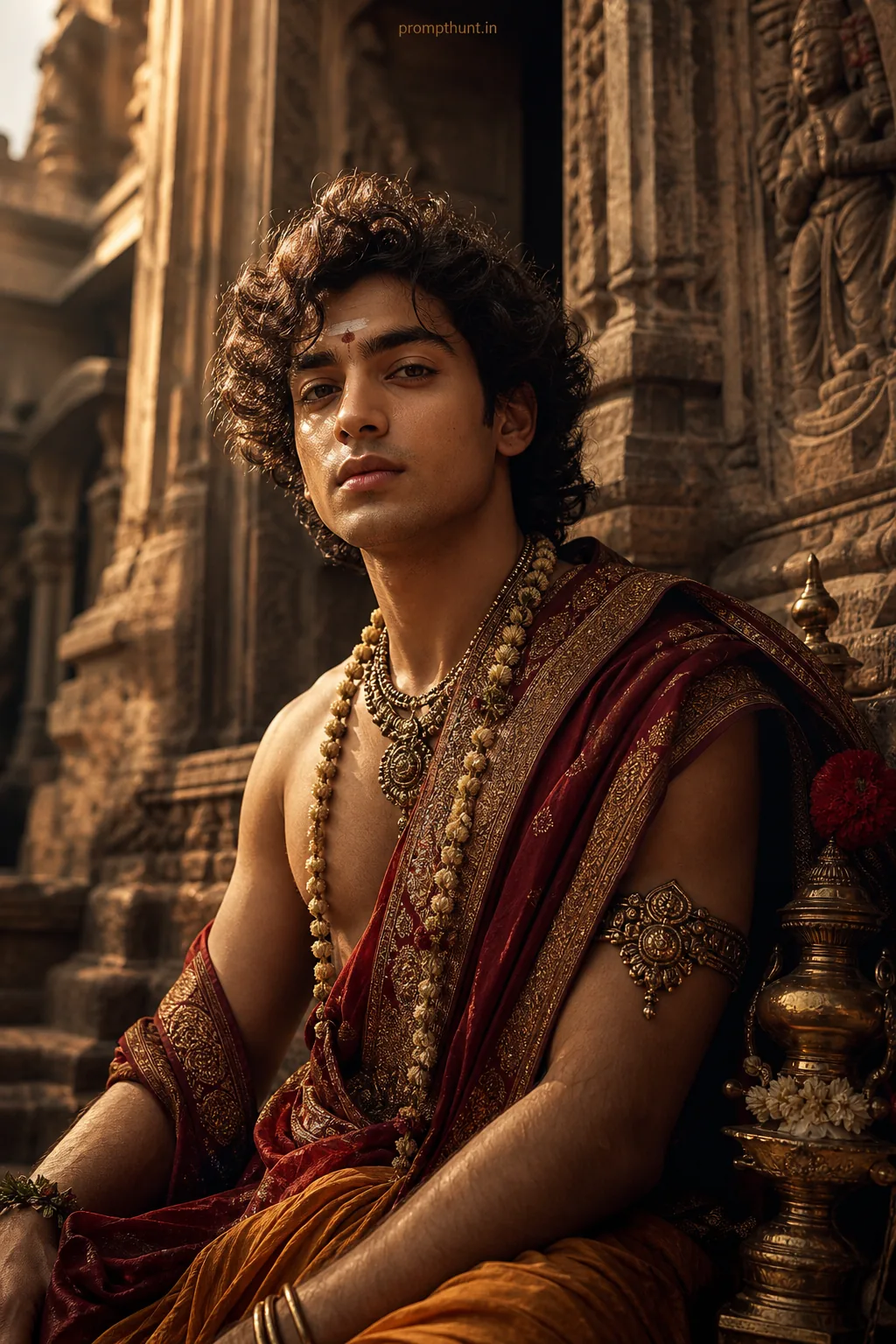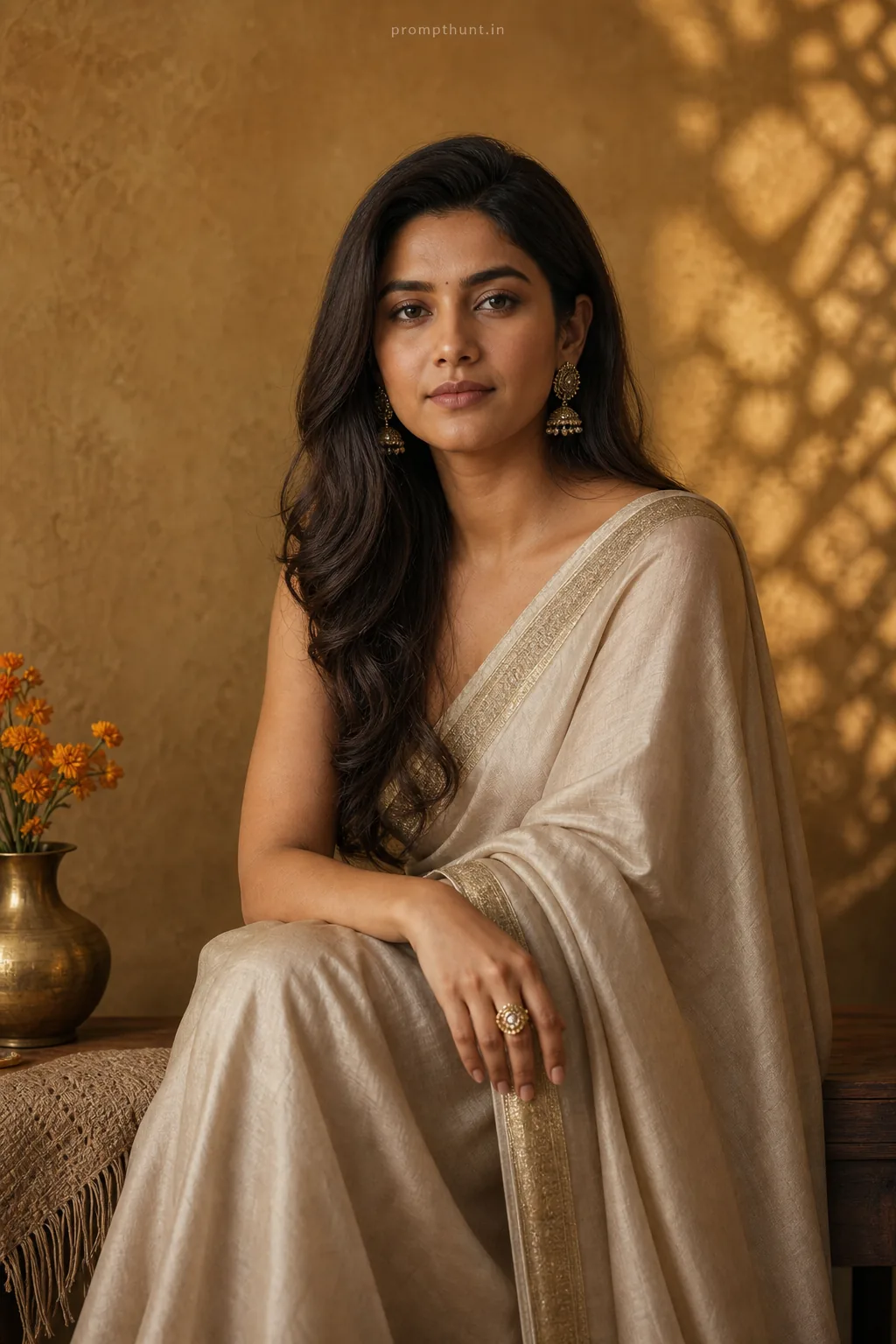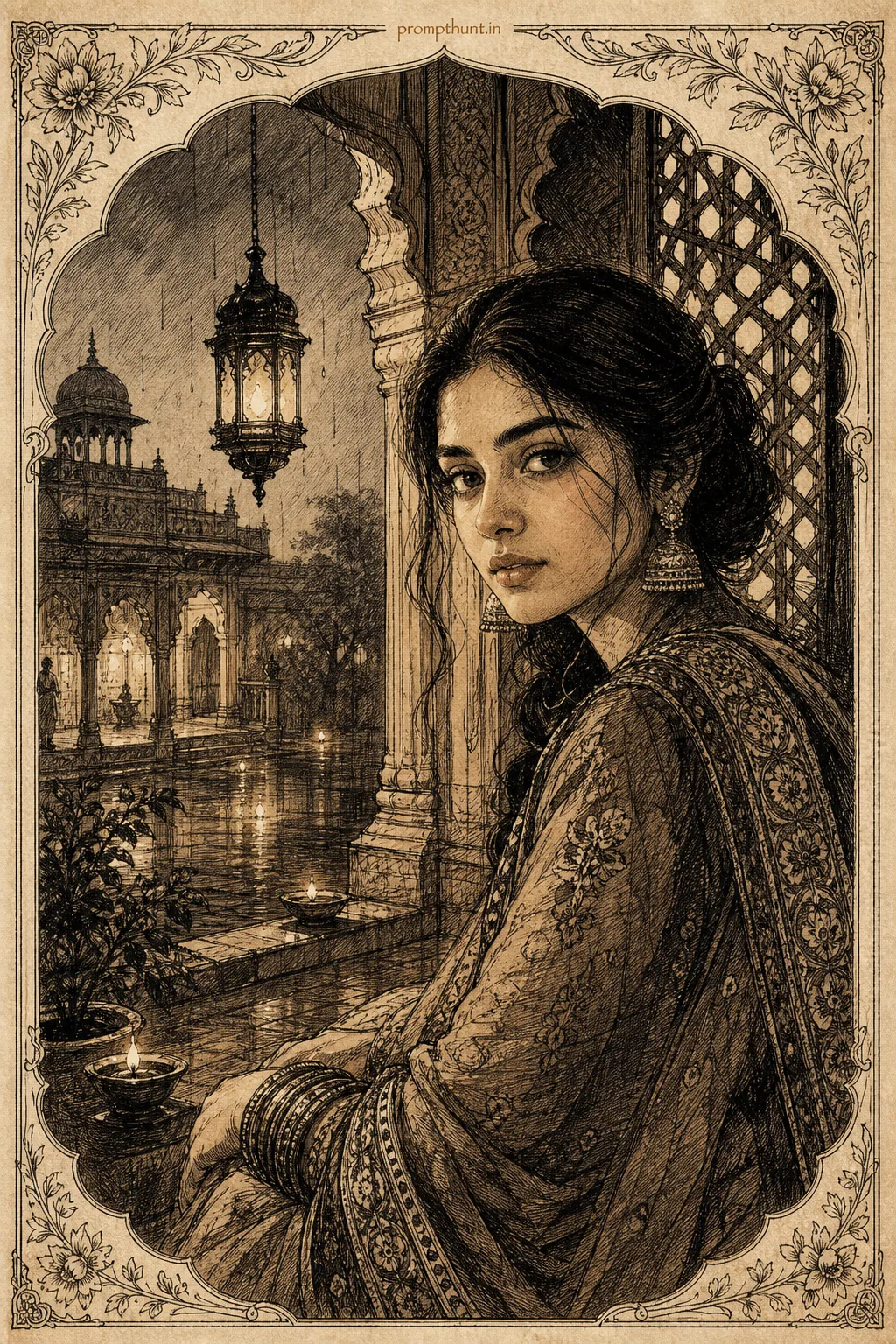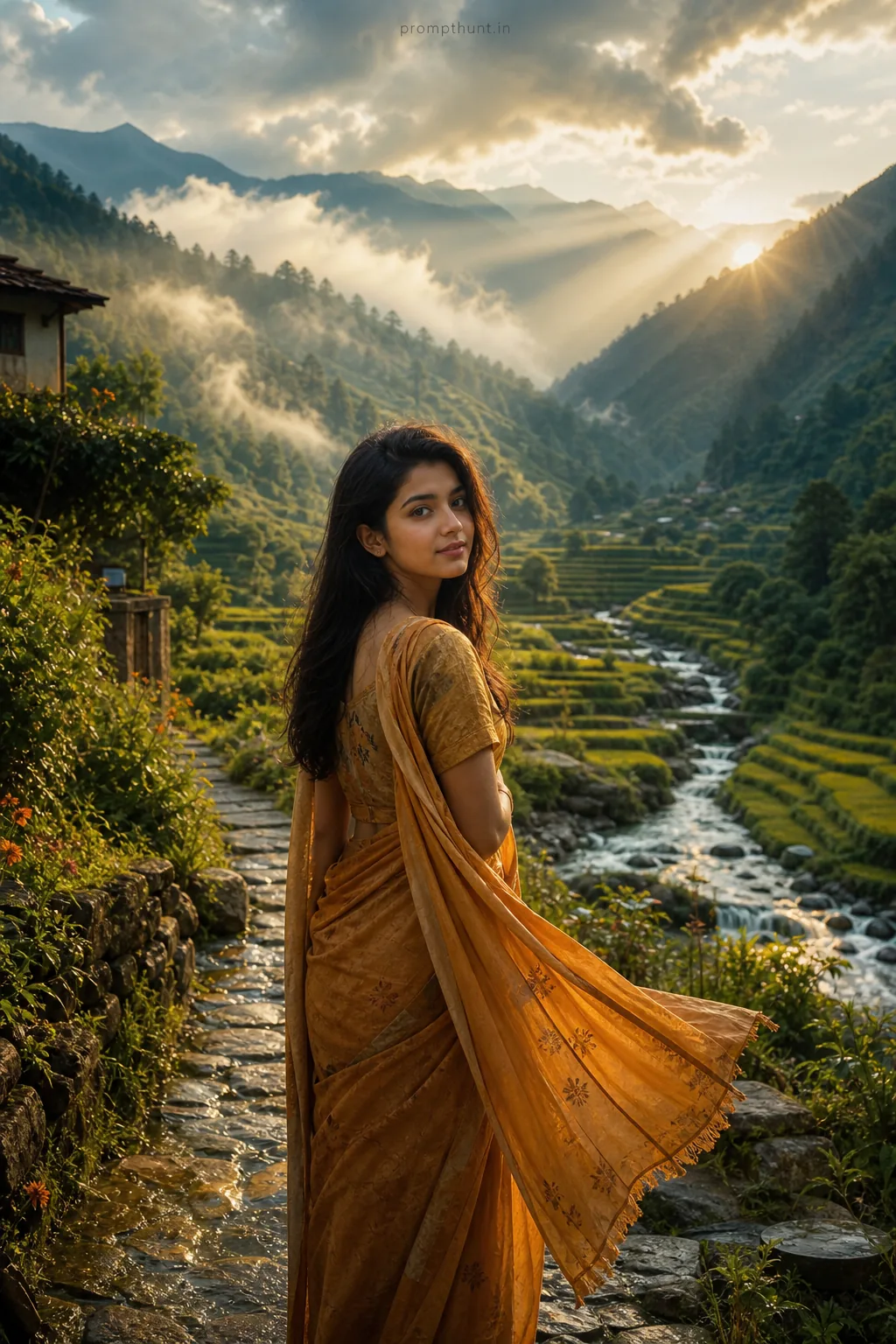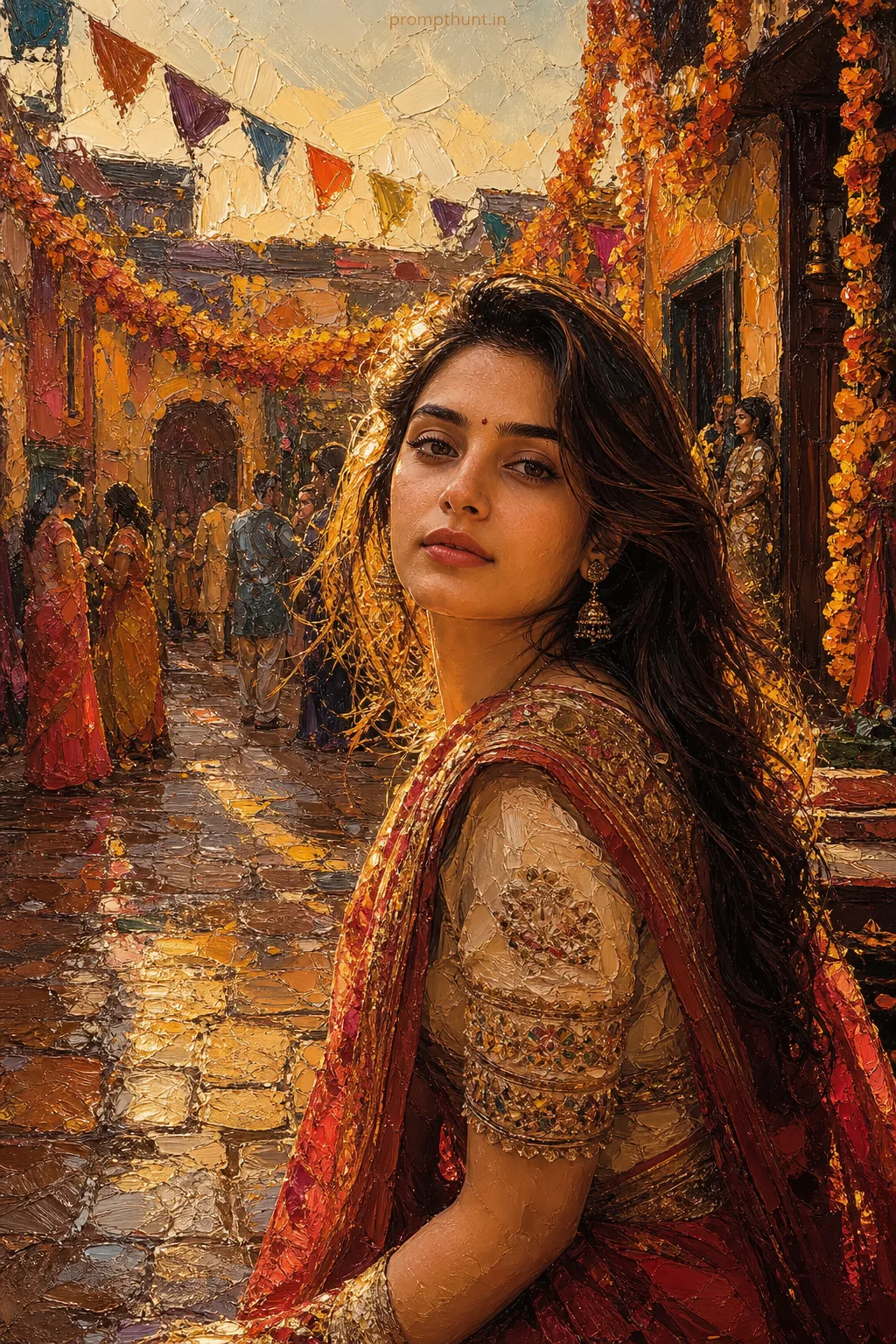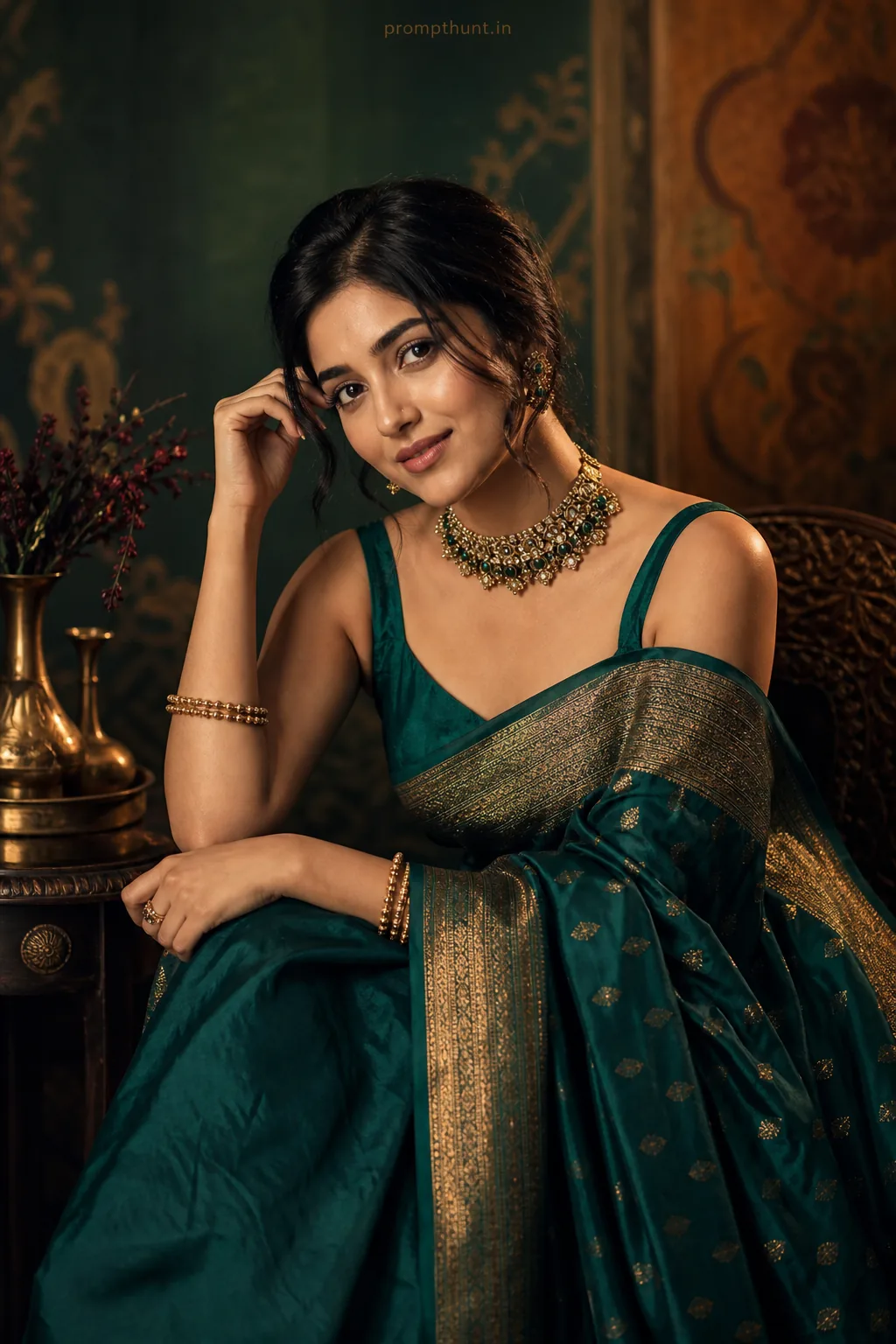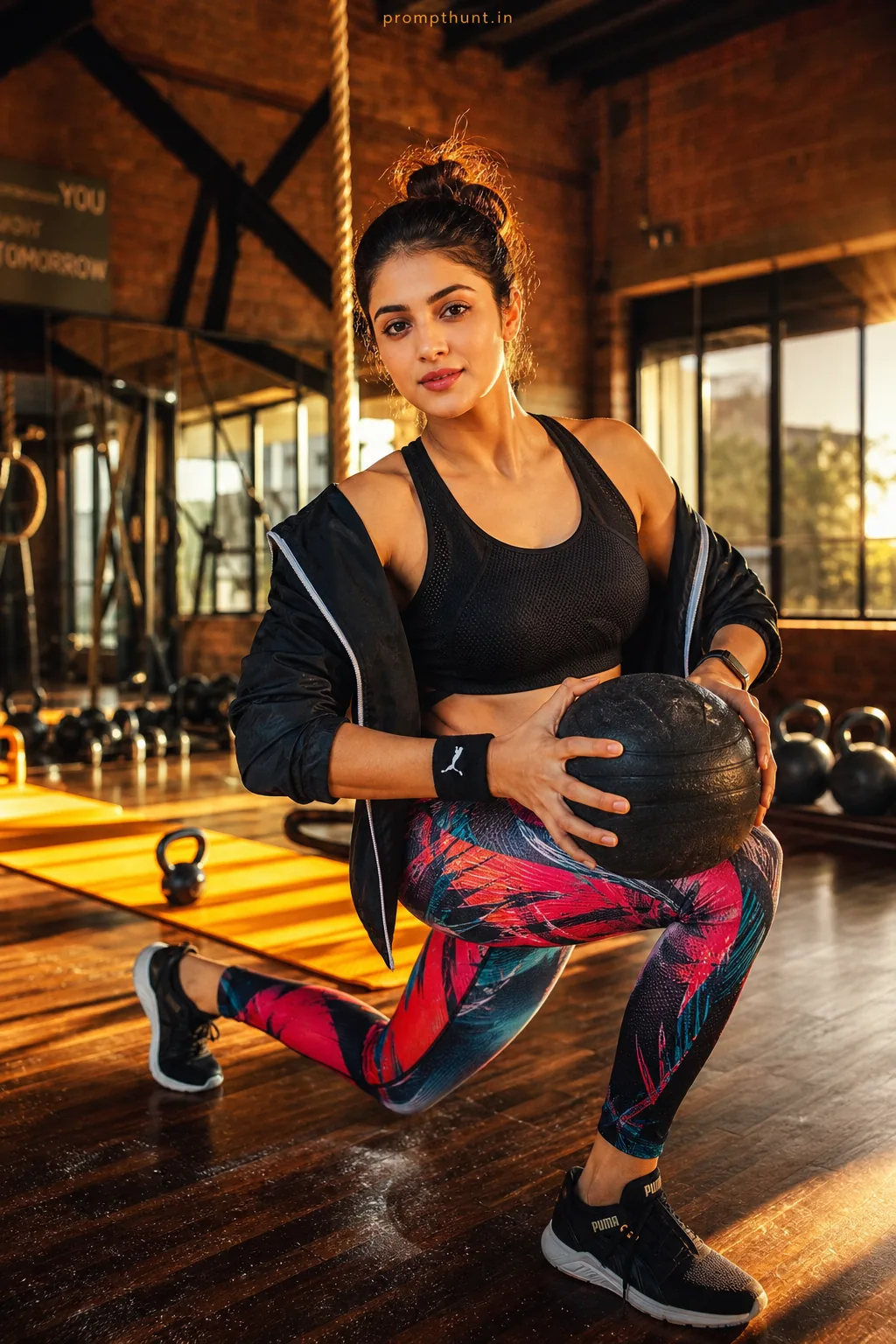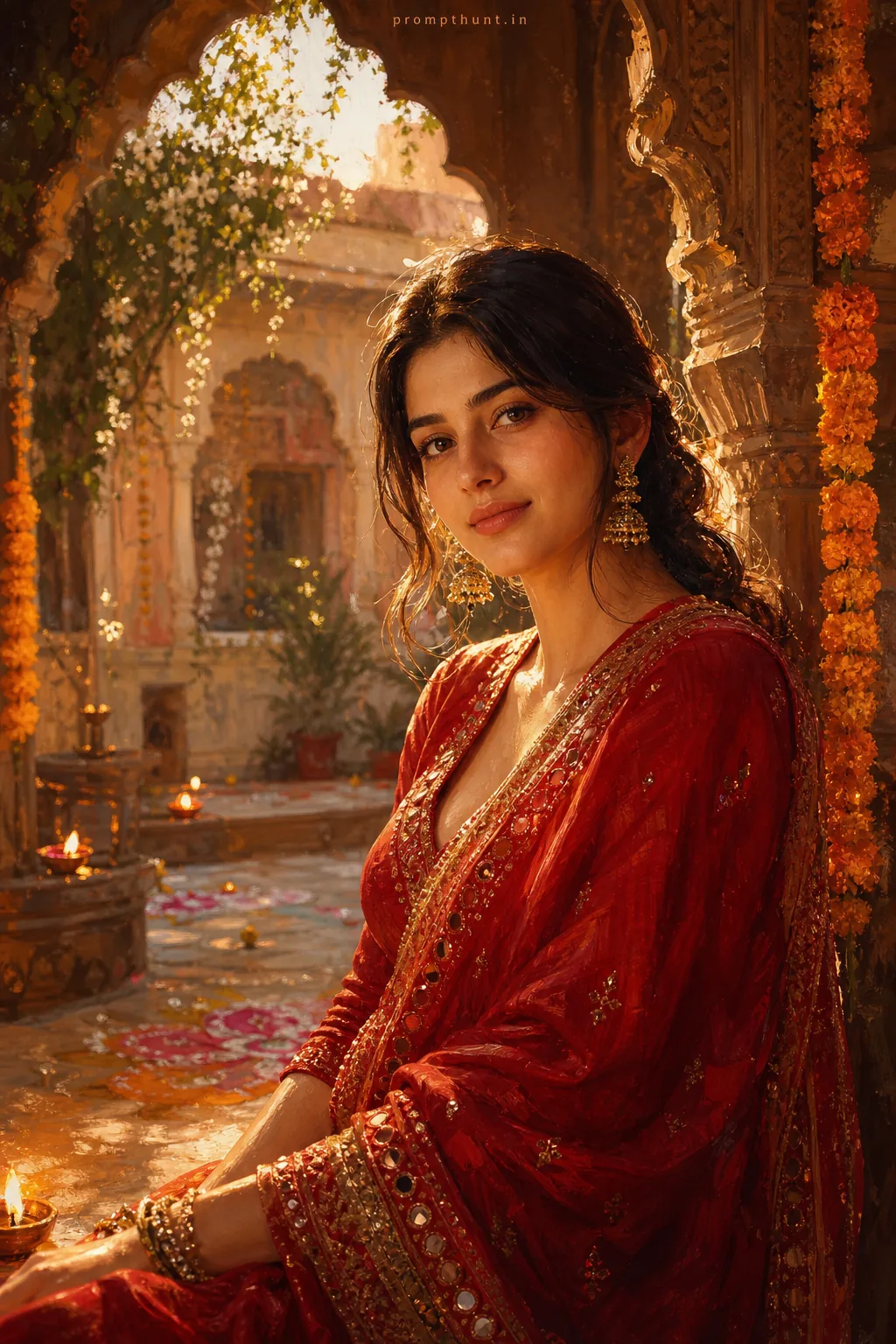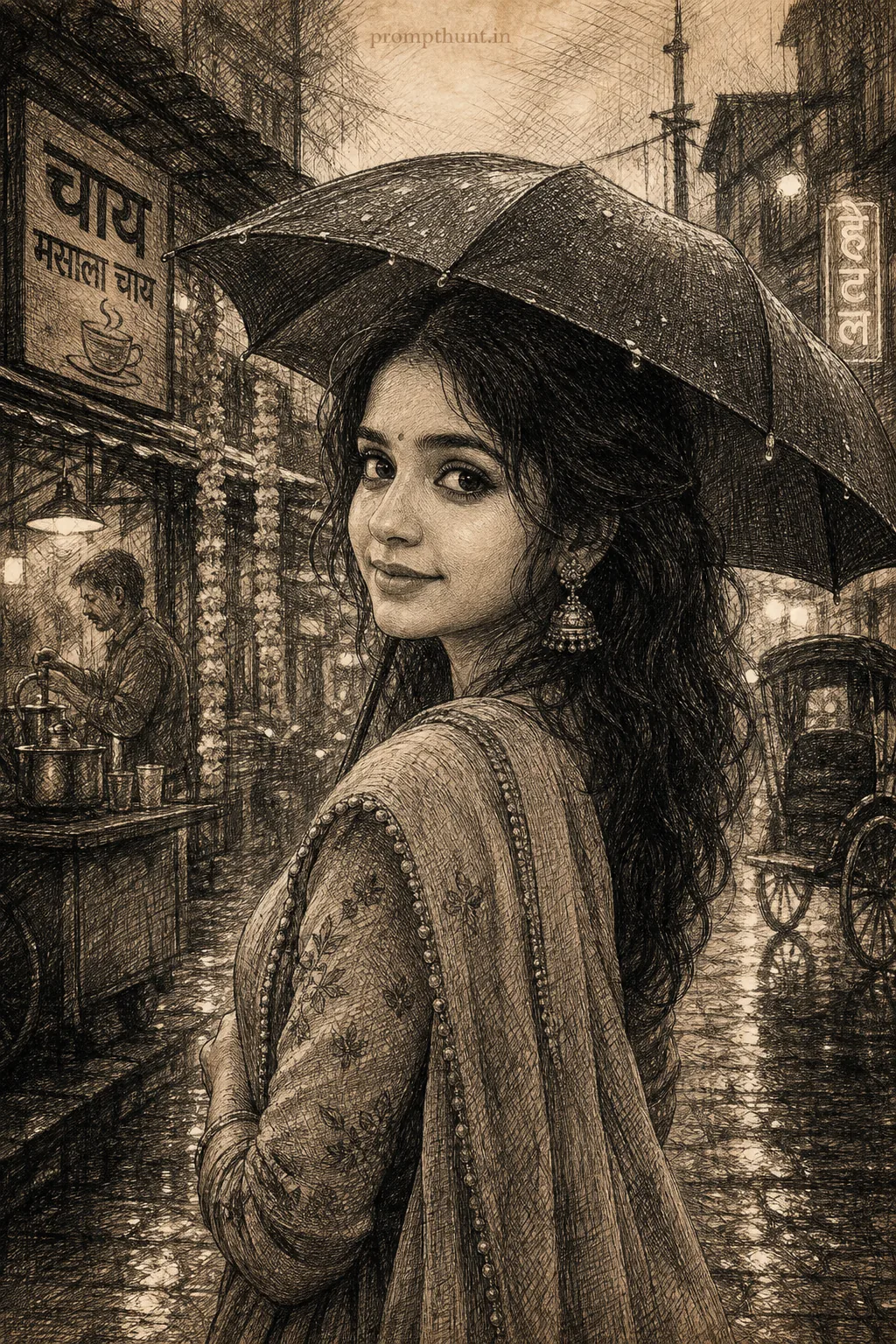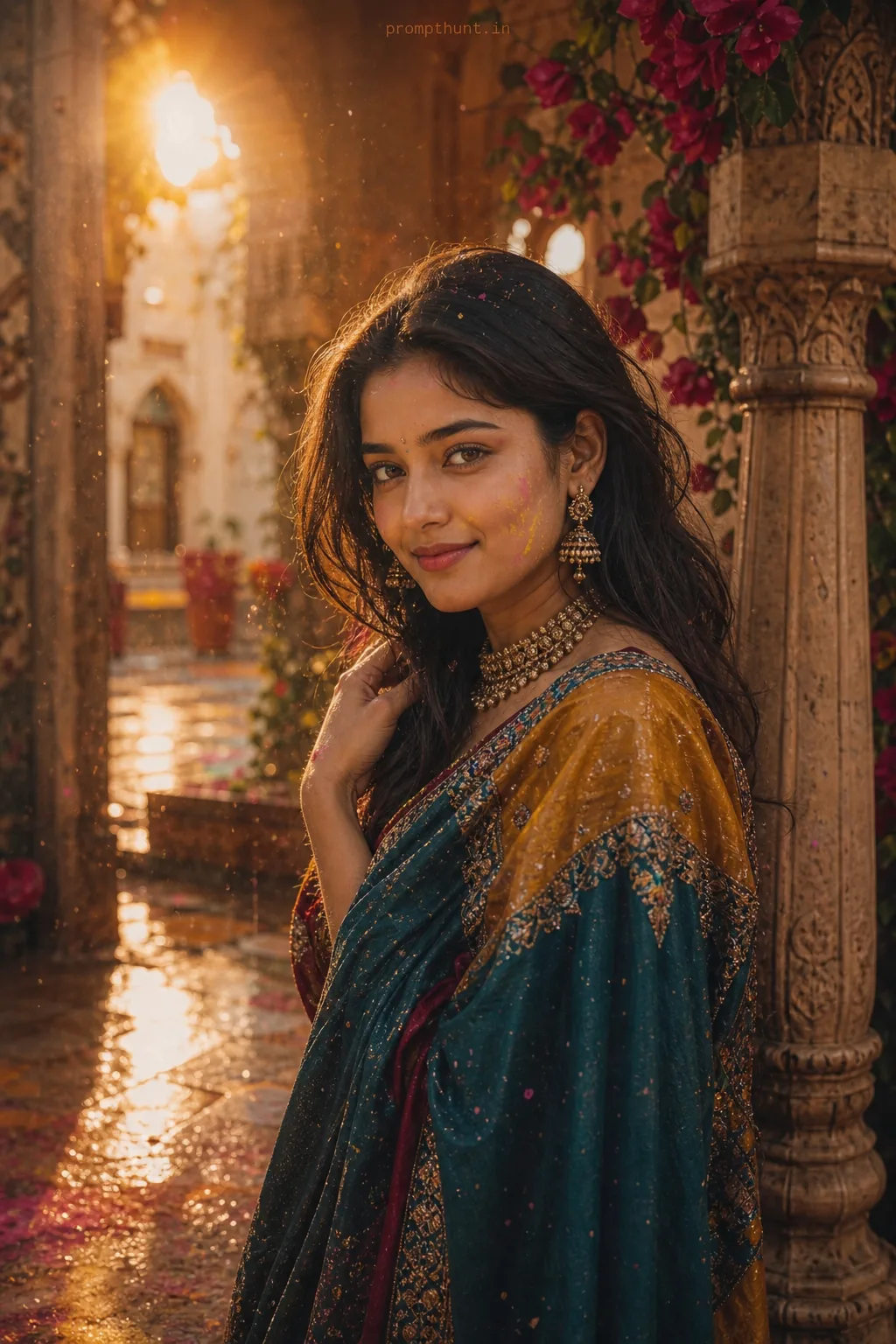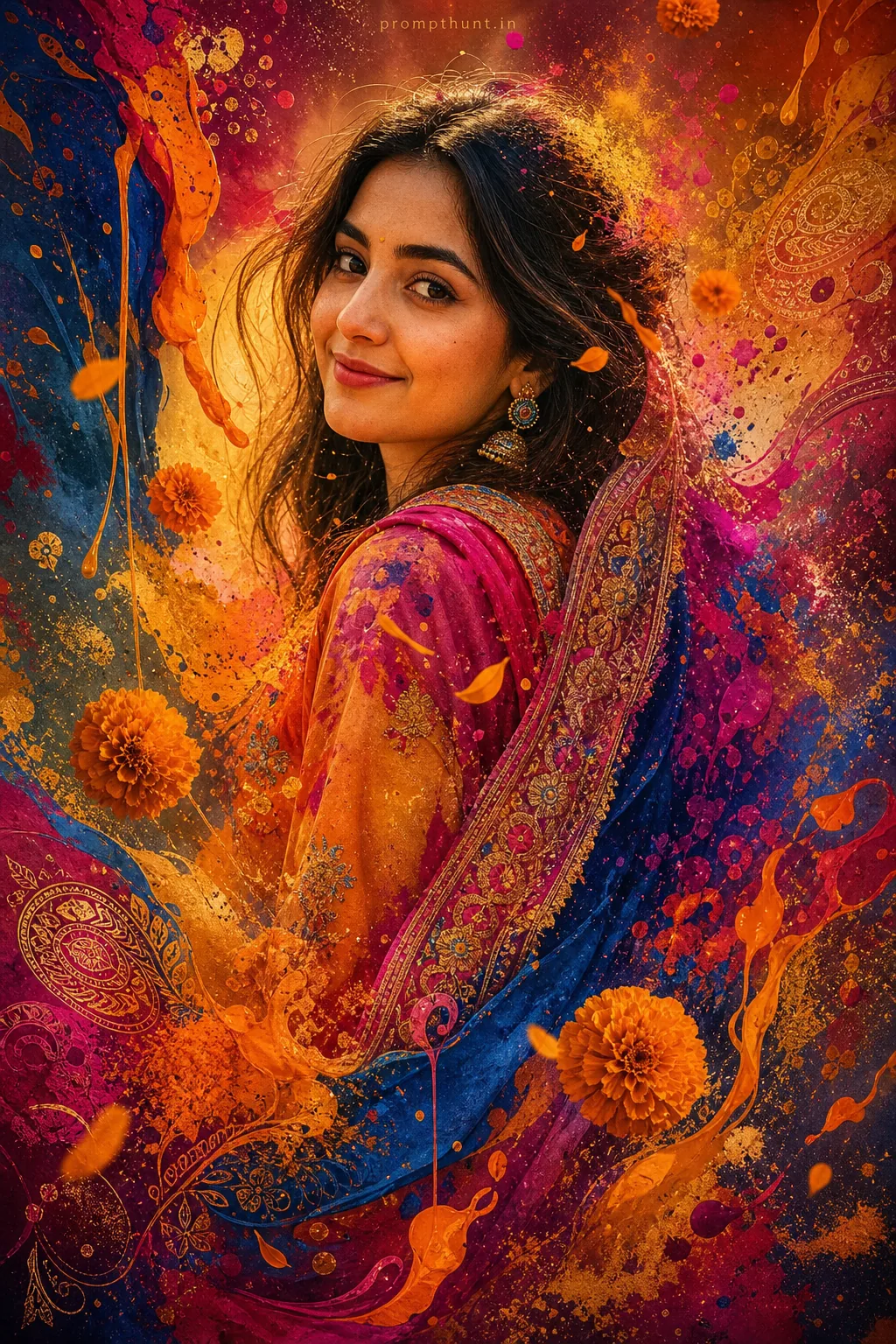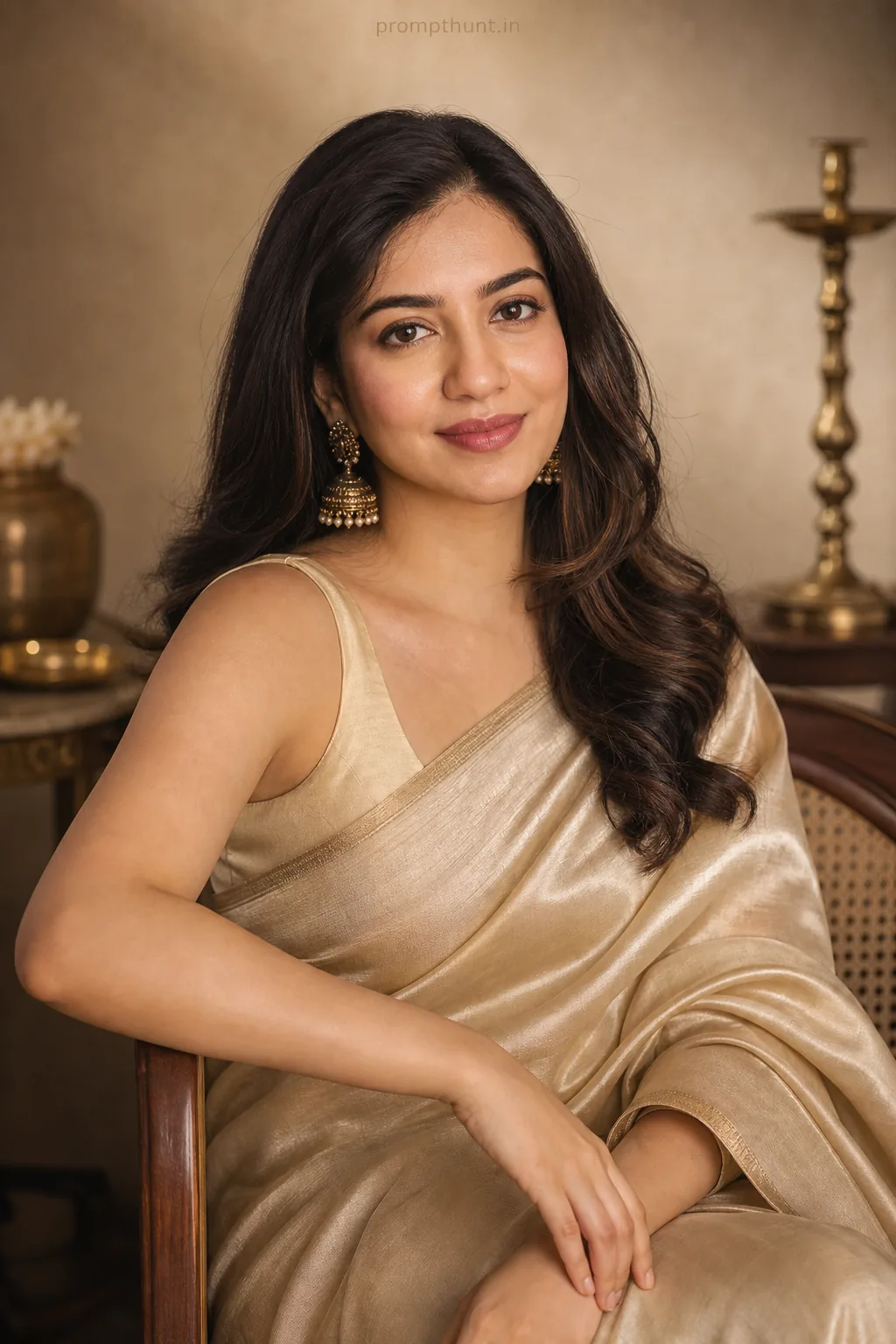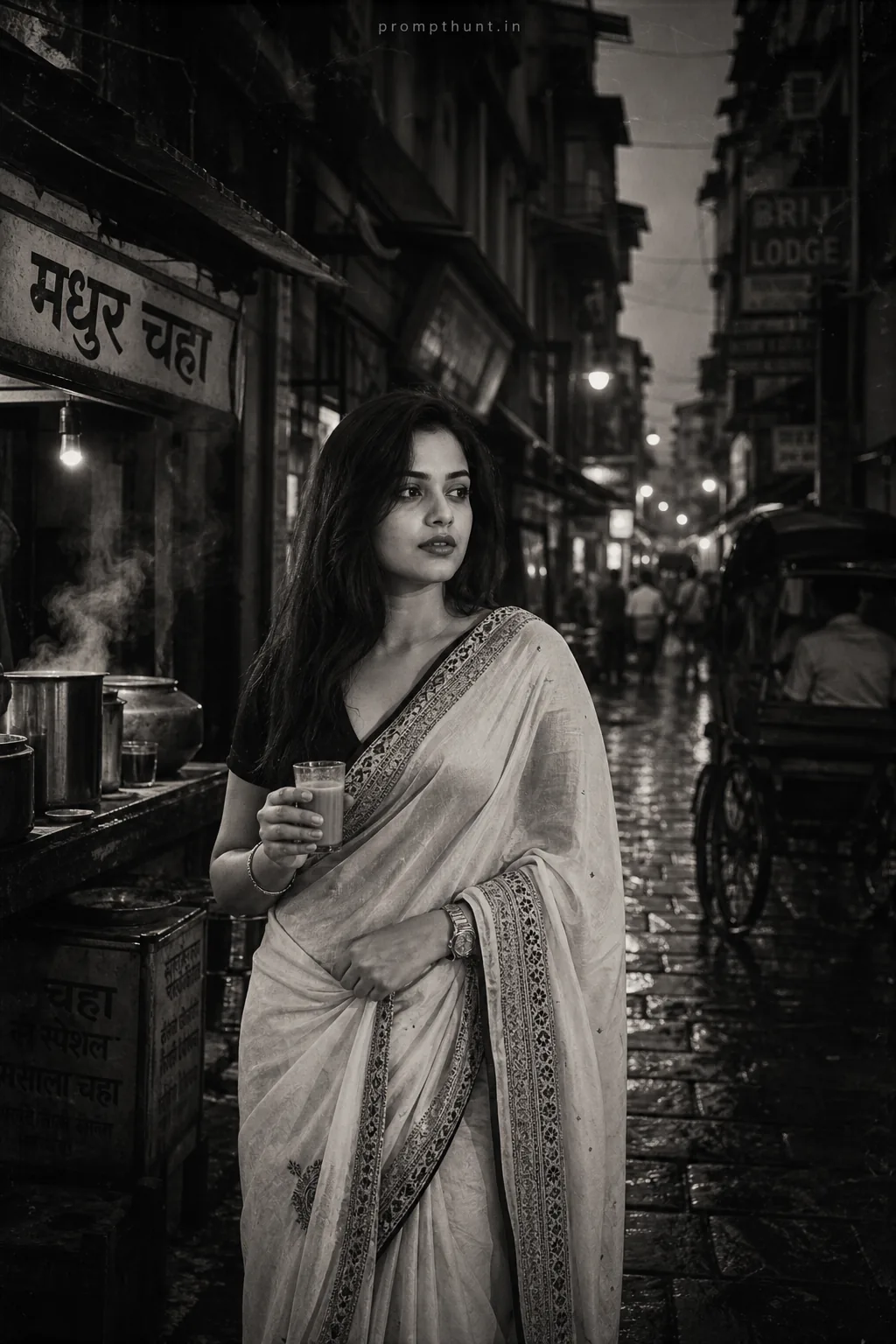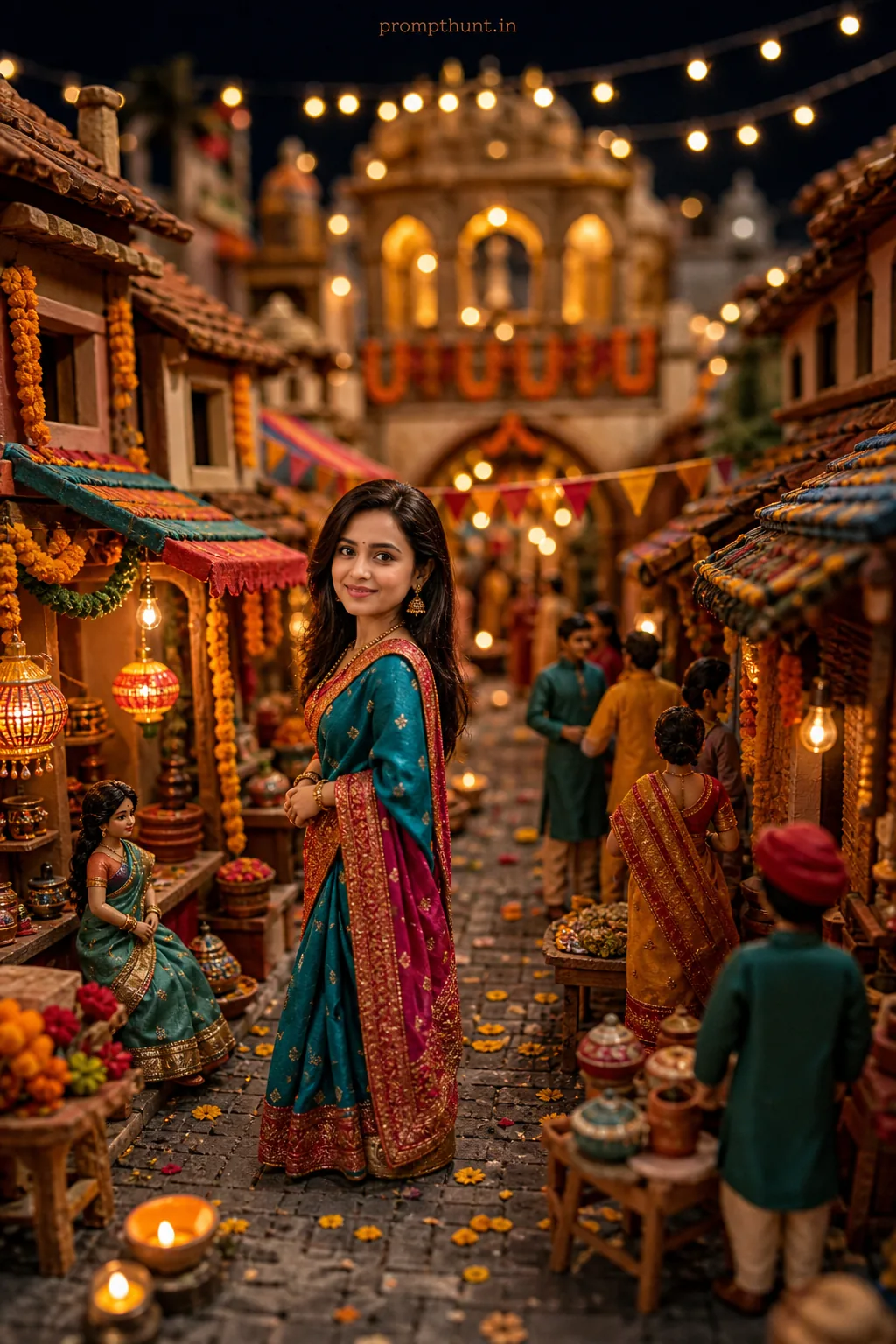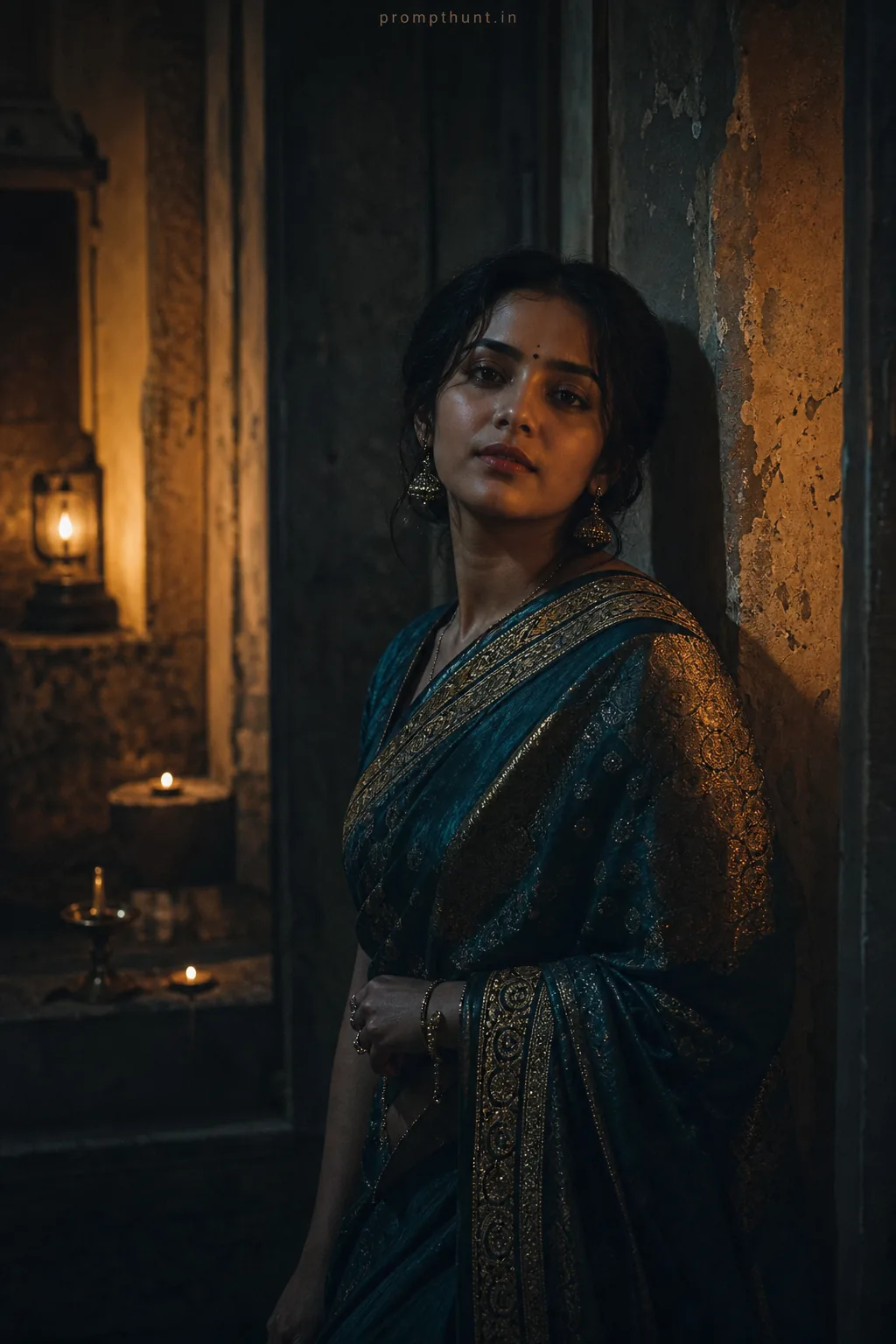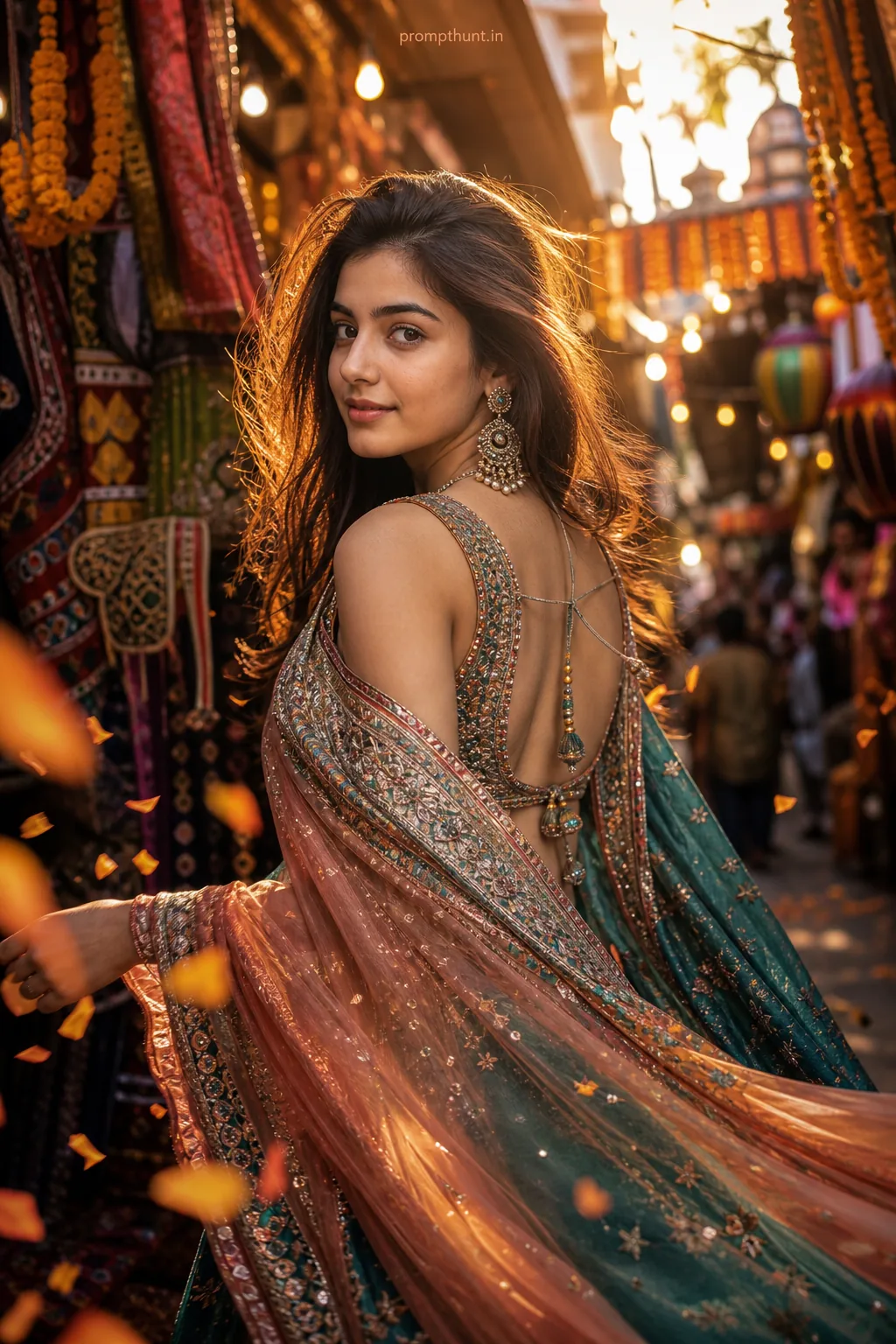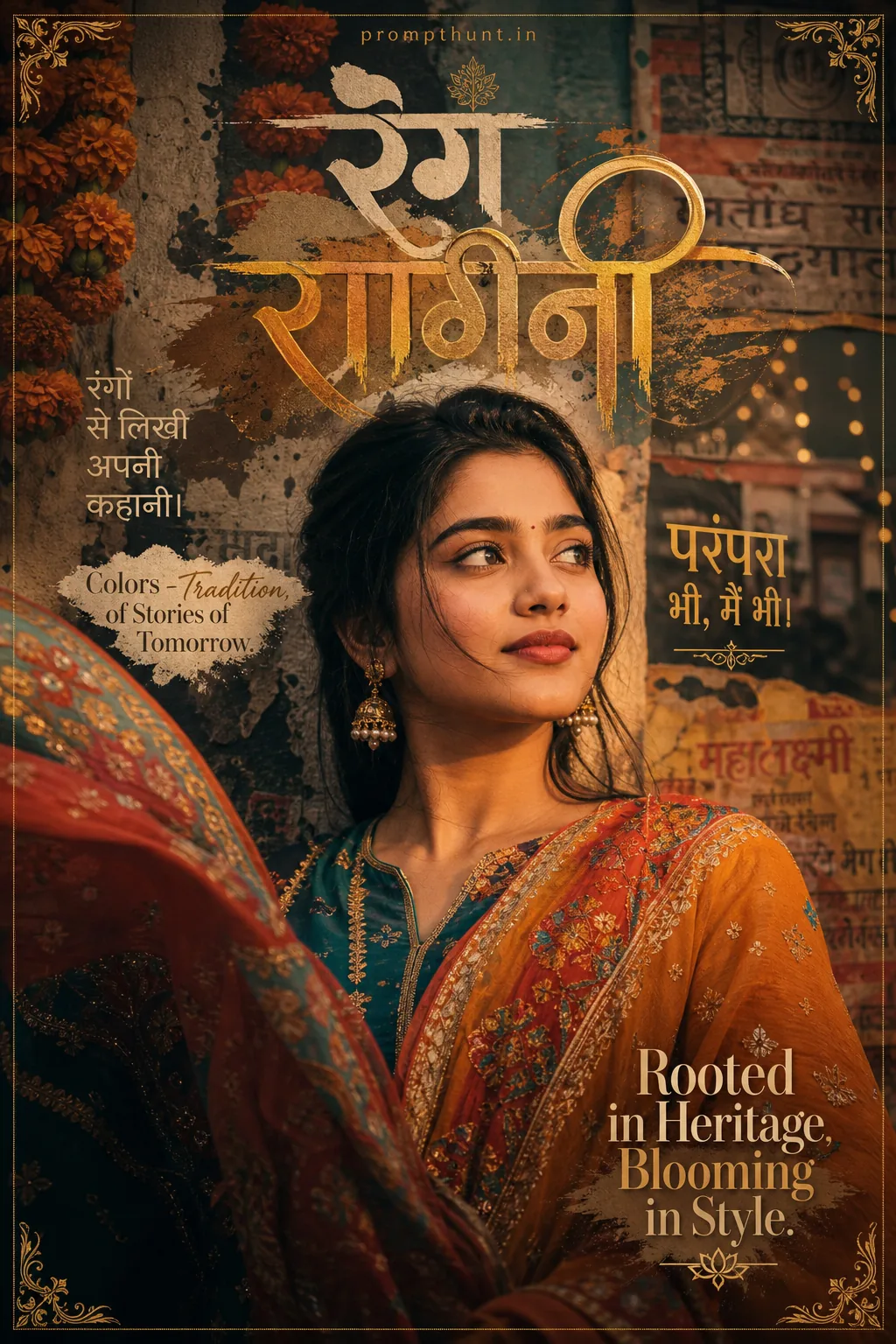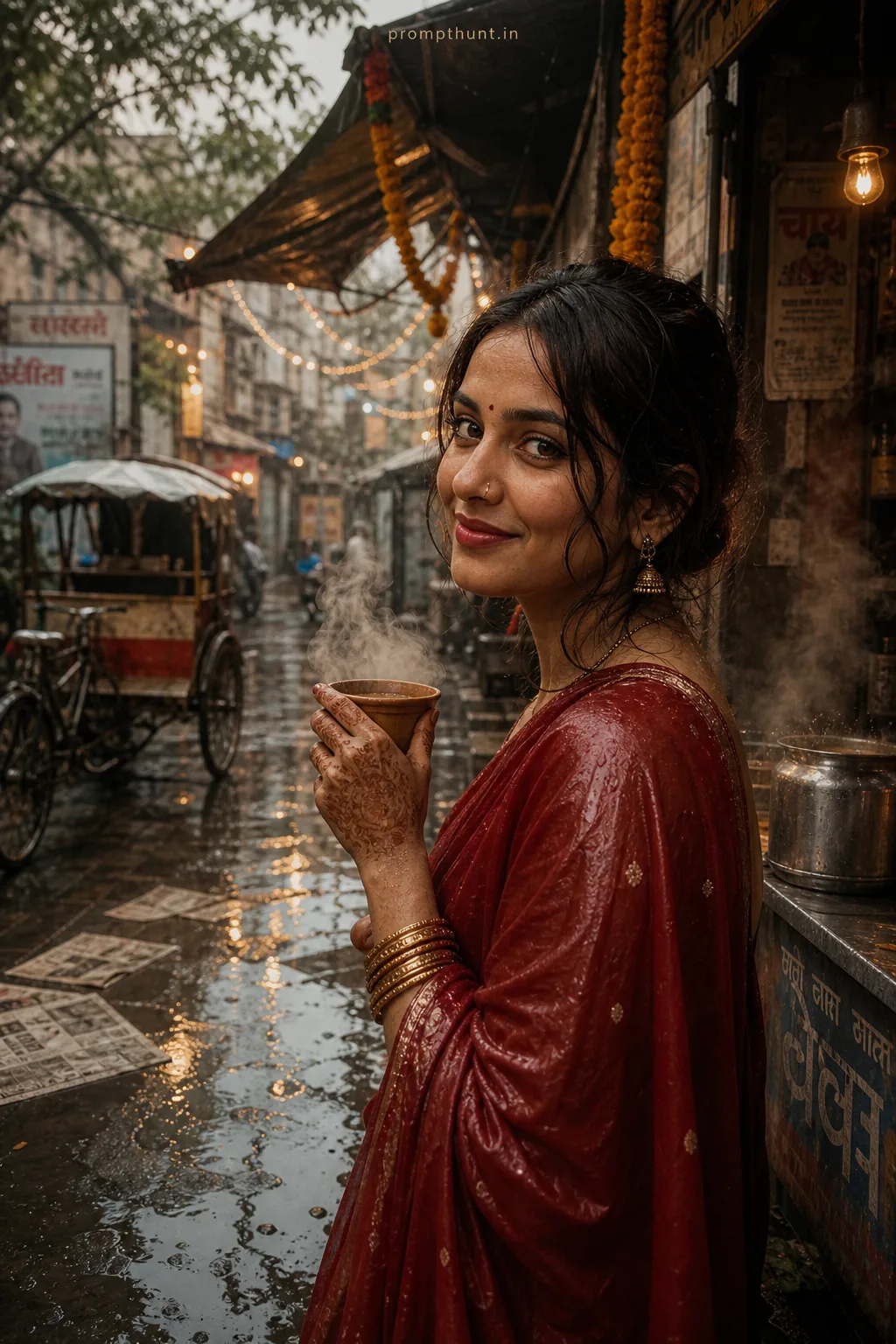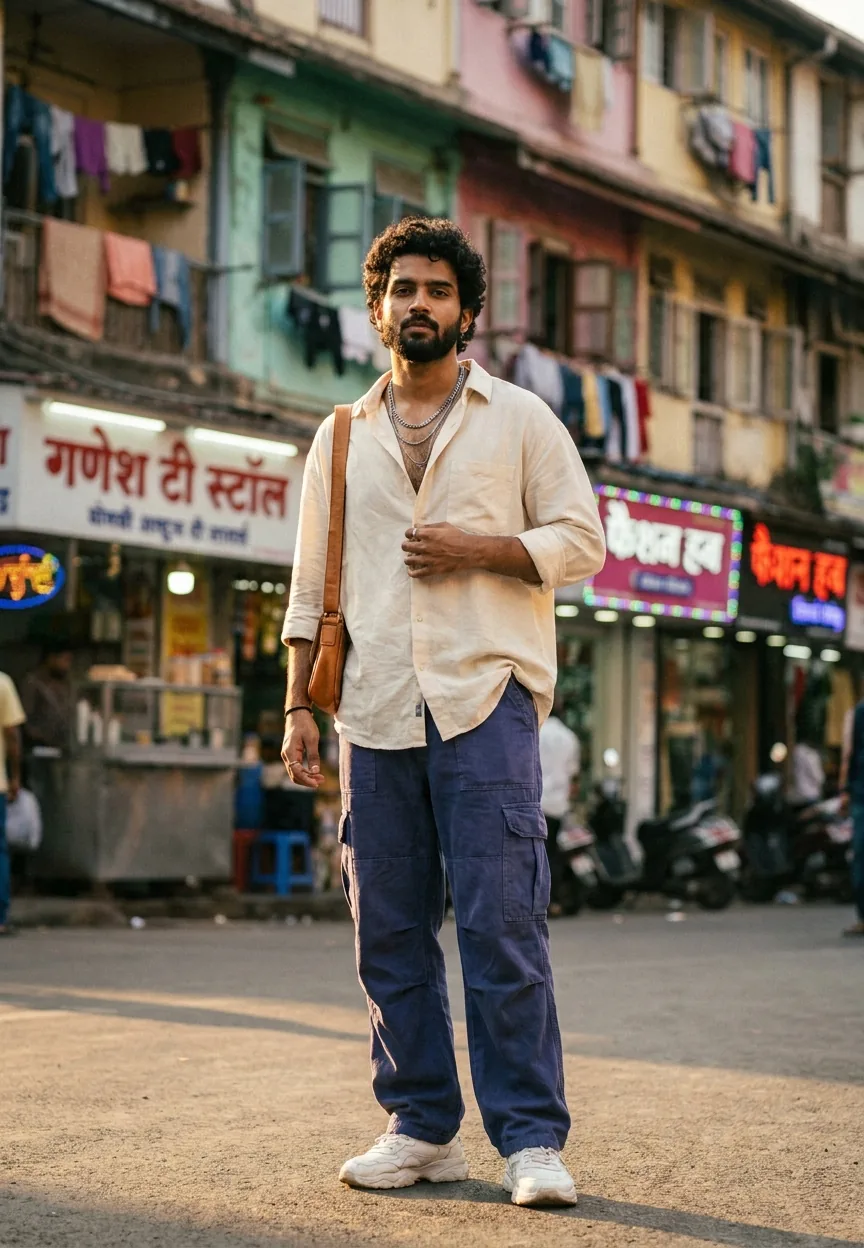
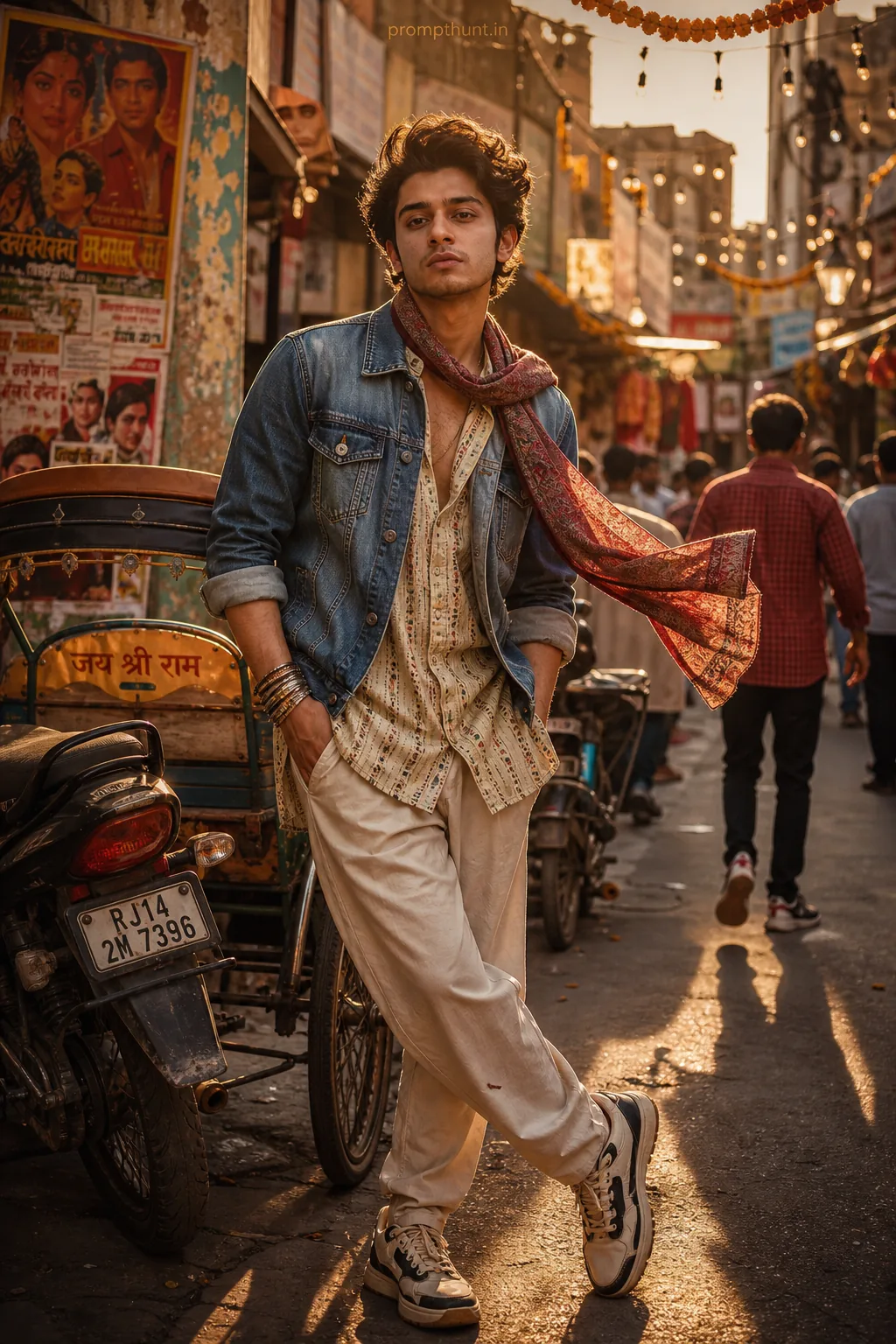
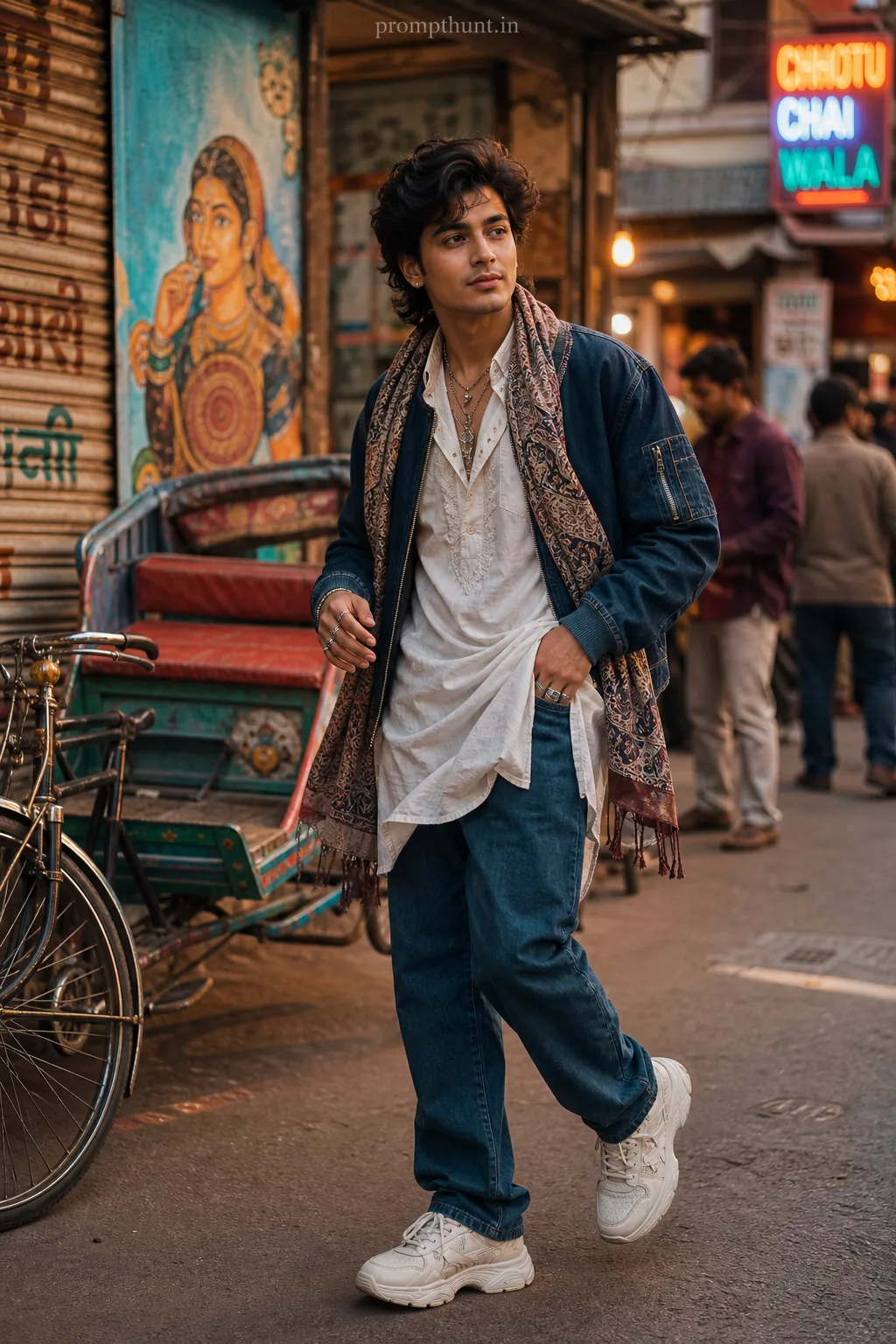
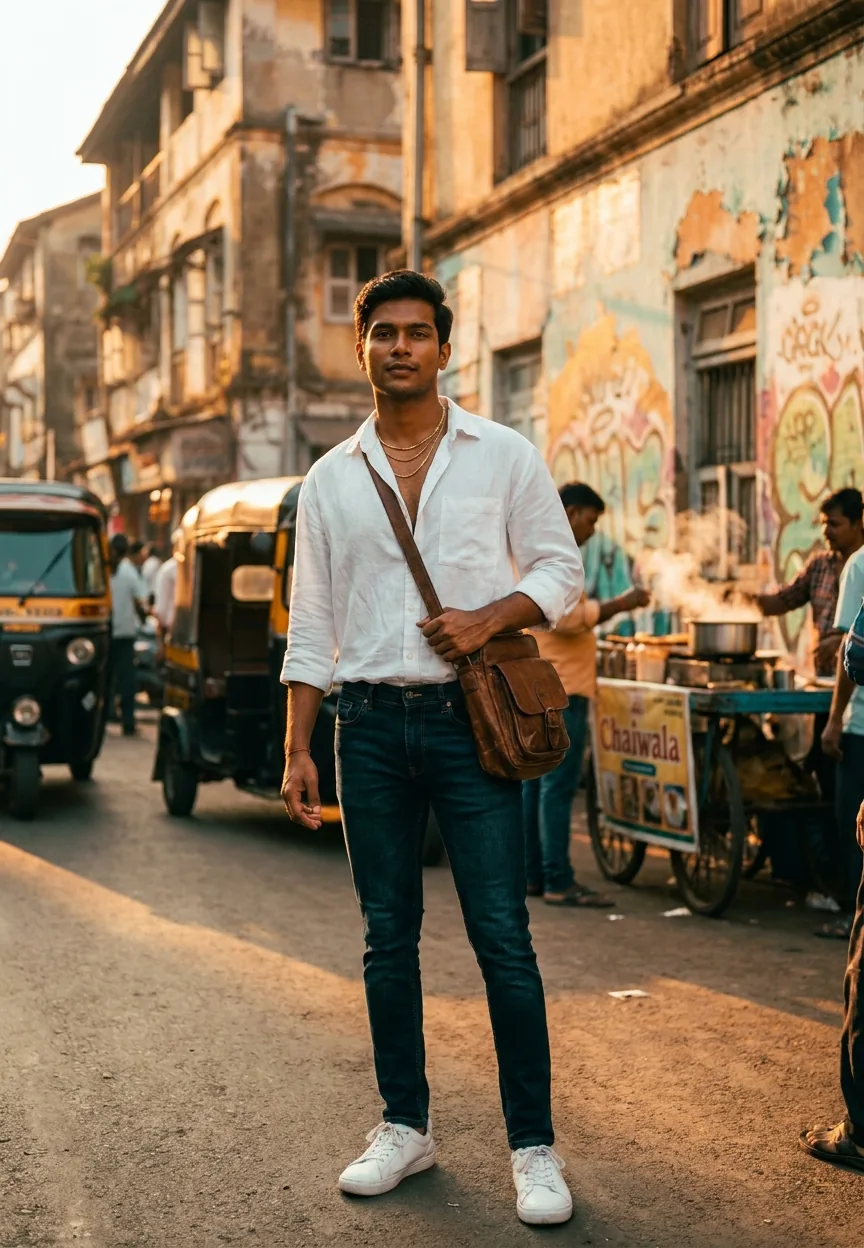
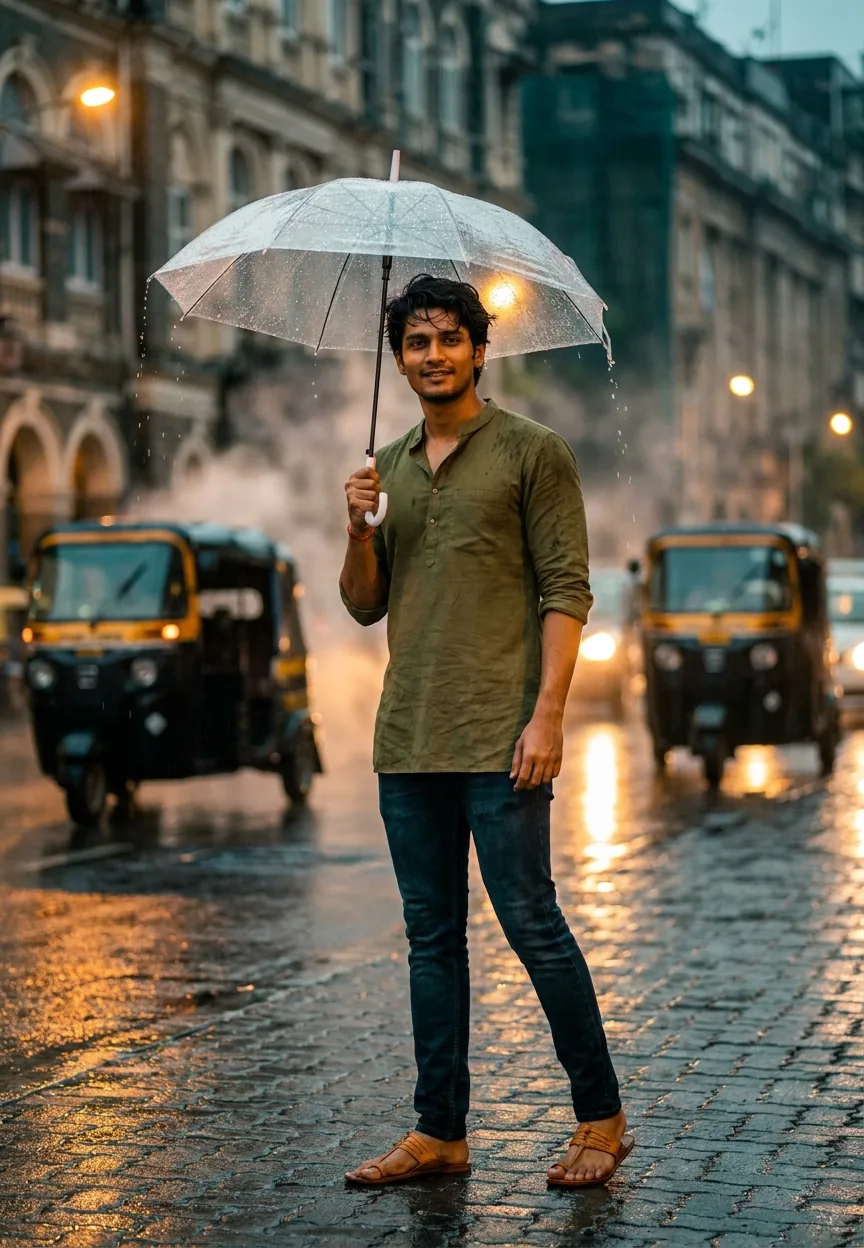
The Mumbai Street Style prompt for Gemini AI generates cinematic, editorial-quality fashion portraits set against authentic Mumbai street backdrops. It combines golden hour lighting, film grain texture, and hyper-realistic skin detail to produce images that look like they belong in a high-end Indian fashion magazine — without the budget for a flight to Dharavi.
Street style photography has always had a problem. Getting the shot requires the right person, the right street, the right light, and roughly seventeen near-misses with a rickshaw. Gemini AI has decided that is far too much effort and has produced something genuinely impressive: a prompt that captures the energy of Mumbai's streets — the chaos, the colour, the golden hour glow on brown skin — without anyone having to negotiate with Mumbai traffic. This is the street style prompt worth saving to your favourites.
Use this Gemini AI prompt to generate cinematic Mumbai street style portraits with editorial fashion photography aesthetics, warm golden hour lighting, and authentic Indian urban detail — ideal for fashion content, mood boards, and social media visuals.
What Mumbai Street Style Actually Looks Like
Mumbai street style is not what Bollywood told you it was. There are no dramatic wind machines. Nobody is dancing in a field.
Real Mumbai street fashion is quieter and more considered. It mixes global silhouettes — oversized fits, wide-leg trousers, chunky sneakers — with distinctly Indian details. Layered silver jewellery. Linen in earth tones. A vintage leather bag that has clearly seen things. It is the aesthetic of someone who has absorbed both Highsnobiety and the chaos of the local train and come out looking effortlessly put together.
The backdrop matters as much as the outfit. Chawl architecture, faded pastel walls, Hindi signboards, laundry strung between buildings — these are not just backgrounds. They are the context that gives the image its soul. Strip them out and you have any city. Keep them in and you have specifically, unmistakably, Mumbai.
This prompt understands that. It is doing a lot of the heavy lifting so you do not have to.
The Prompt Itself
A young Indian man in his mid-20s standing confidently on a vibrant Mumbai street, wearing a perfectly fitted oversized cream linen shirt half-tucked into wide-leg dark indigo cargo pants, paired with fresh white chunky sneakers and layered silver chain necklaces, carrying a vintage tan leather sling bag, golden hour sunlight casting warm amber tones across his brown skin, cinematic bokeh background featuring colorful Mumbai chawl architecture with hanging laundry and neon shop signboards in Hindi script blurred softly behind him, candid editorial fashion photography style, shot on Sony A7IV with 85mm portrait lens, f/1.8 aperture creating creamy depth of field, film grain texture overlay, muted earthy color grading with lifted shadows, hyper-realistic skin texture, trending Indian street fashion editorial aesthetic, 9:13 vertical aspect ratio, ultra-high resolution
How to Use This Prompt — Step by Step
No degree required. Barely any patience required either.
Step one. Open Gemini. You want the image generation function, not the chat. Make sure you are in a version that supports image output — Gemini Advanced is the safe bet.
Step two. Paste the full prompt as written. Do not paraphrase it. The specific technical language — the lens choice, the aperture, the aspect ratio — is doing real work. Trim it and you will get something noticeably blander. (Think of it like a recipe. You can leave out the cinnamon, but you will know.)
Step three. Generate and review. Gemini will produce multiple options. Look at the background detail first. If the chawl architecture reads as generic city street rather than specifically South Asian urban, regenerate. The Hindi signboards are a good litmus test — they should be readable in feel even if not perfectly accurate in letter form.
Step four. Adjust for your use case. Need a woman instead? Swap the description. Want a different neighbourhood feel — say, Bandra rather than a working-class chawl district? Specify that. The prompt is a template, not a prison sentence.
Step five. Download at the highest resolution available and run it through a light touch of post-processing if needed. The colour grading is already baked in, so nine times out of ten you will not need much.
Tips for Getting the Best Results
A few things that make the difference between "pretty good" and "genuinely impressive".
Keep the camera specs in. "Shot on Sony A7IV with 85mm portrait lens, f/1.8 aperture" sounds unnecessarily technical for an AI prompt. It is not. These references tell the model exactly what kind of image you want — shallow depth of field, portrait compression, professional sensor quality. Remove them and the image goes slightly flat.
Be specific about skin tone and light interaction. "Golden hour sunlight casting warm amber tones across his brown skin" is precise on purpose. Generic light prompts produce generic results. When you describe how light lands on a particular skin tone, the output becomes significantly more realistic and — more importantly — more beautiful.
The aspect ratio matters. 9:13 vertical is built for mobile screens and Instagram Stories. If you are generating for a desktop banner or a landscape post, adjust accordingly. The composition will need to shift too, so note that in your edit.
Regenerate at least three times. Even with an excellent prompt, the first generation is not always the best. The background detail in particular varies quite a bit between runs. Spend two extra minutes regenerating and you will usually find one standout image.
Do not over-edit afterward. The muted earthy grading and lifted shadows are already dialled in. Adding more contrast or saturation will fight the prompt's intention. Trust it.
Why This Street Style Aesthetic Is Trending Right Now
Indian fashion content has had a visibility problem for a while. Global fashion media has been slow to reflect South Asian urban aesthetics in the same way it covers, say, Seoul or Tokyo street style. The result is a generation of Indian fashion creators working without a strong visual language that represents them.
That is changing fast. Instagram creators, stylists, and photographers across Mumbai, Delhi, and Bengaluru have been building a distinctly Indian street style identity — one that does not need to reference Western trends to feel current. Wide-leg silhouettes, layered traditional jewellery worn casually, earth tones, linen — these choices are showing up everywhere, and they are generating serious engagement.
AI image generation is accelerating this. Creators who cannot afford professional shoots can now generate mood boards, test aesthetics, and produce content that looks editorial. For a fashion brand out of Bandra with a tight budget, this prompt is worth real money.
There is also something simpler going on. The image this prompt generates is just genuinely good-looking. Golden hour light is flattering to every skin tone. Cinematic bokeh makes any background look intentional. Mumbai's architecture is visually extraordinary. Put those three things together and you have a formula that works.
Honest Opinion — When to Use This and When to Skip It
Here is the bit I actually reckon is useful: knowing when this prompt is not the right tool.
If you are a photographer documenting real street culture, this is not a substitute for going outside. AI-generated images of Indian streets occasionally get details wrong — signage that looks right but says nothing, architectural features that are almost Mumbai but not quite. For documentary or journalistic purposes, these small errors matter a lot.
If you are generating images of specific real people or trying to represent a real brand's actual aesthetic, you need human photography. This prompt is outstanding for mood boards, concept visualisation, and content generation. It is not a replacement for authentic representation when authenticity is the point.
There is also the question of diversity within the prompt itself. The description specifies one character type. If your project needs a range of body types, ages, or gender expressions, you will need to rewrite the character description each time. Worth the effort, genuinely, but worth knowing upfront.
For social content, creative mood boards, testing fashion concepts, or generating aspirational lifestyle imagery on a budget, this prompt is among the best I have seen for Indian street style specifically. The level of environmental detail — the chawl architecture, the Hindi signboards, the hanging laundry — is what lifts it above generic "urban portrait" prompts. Most prompts get the person right and ignore the world around them. This one gets both.
Use it for what it is good at. Do not ask it to be a photojournalist. Fair enough all round.
One Last Thing Before You Go Generate Something Excellent
Mumbai street style has a specific energy — confident, layered, slightly chaotic in the best way, always interesting. This prompt captures a genuine slice of it. The golden hour light, the chawl backdrop, the earth-toned outfit — it is a combination that works because someone thought carefully about what actually makes Mumbai street photography special, and then translated that into language an AI can act on.
Save the prompt. Tweak the character description to suit your project. Regenerate until one version makes you stop scrolling. Then wonder, briefly, how a machine learned to understand golden hour on brown skin better than most photography briefs you have ever read.
It is quite good at this. Not quite as good as actually being on the streets of Mumbai at 6pm in February — but considerably easier to park.