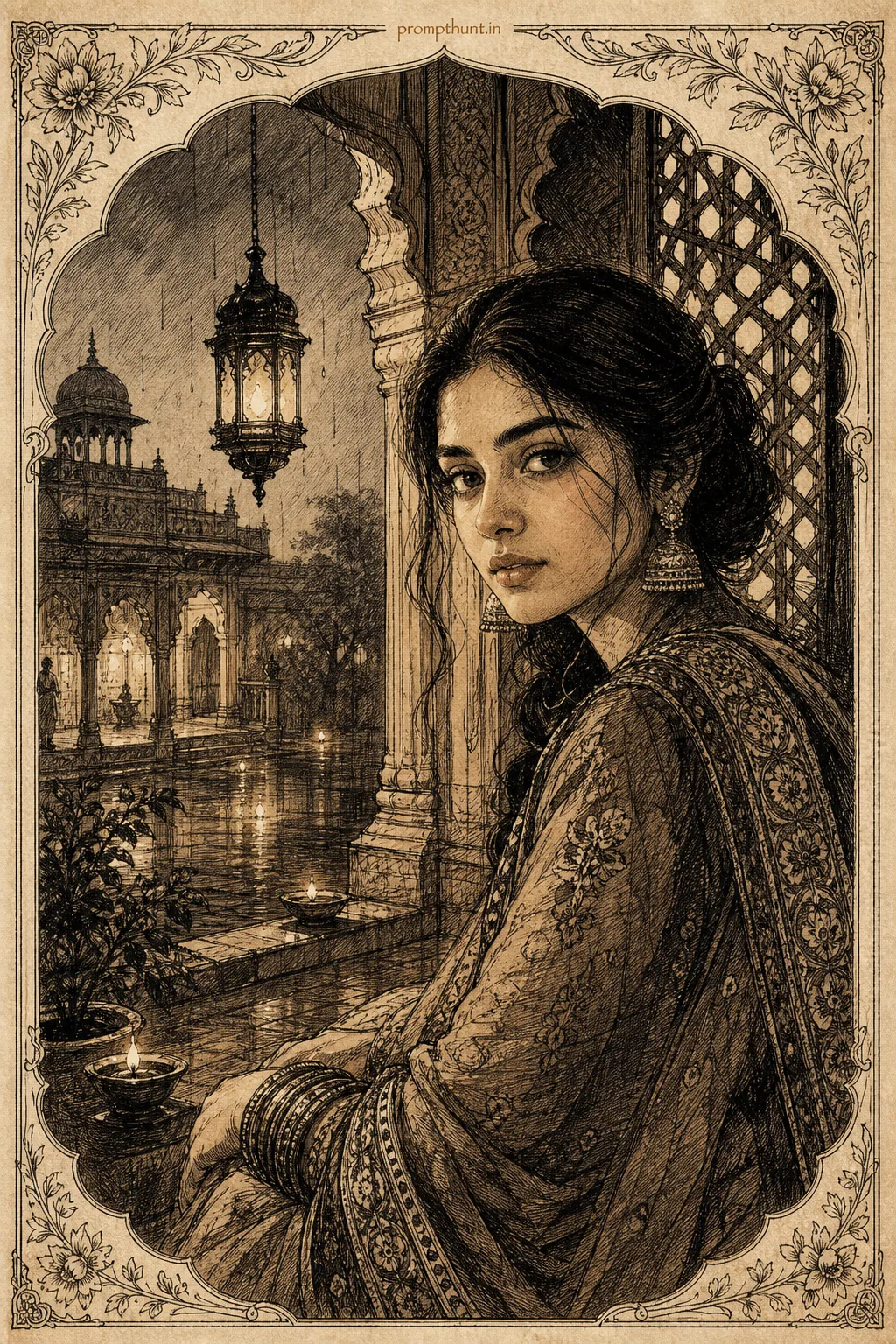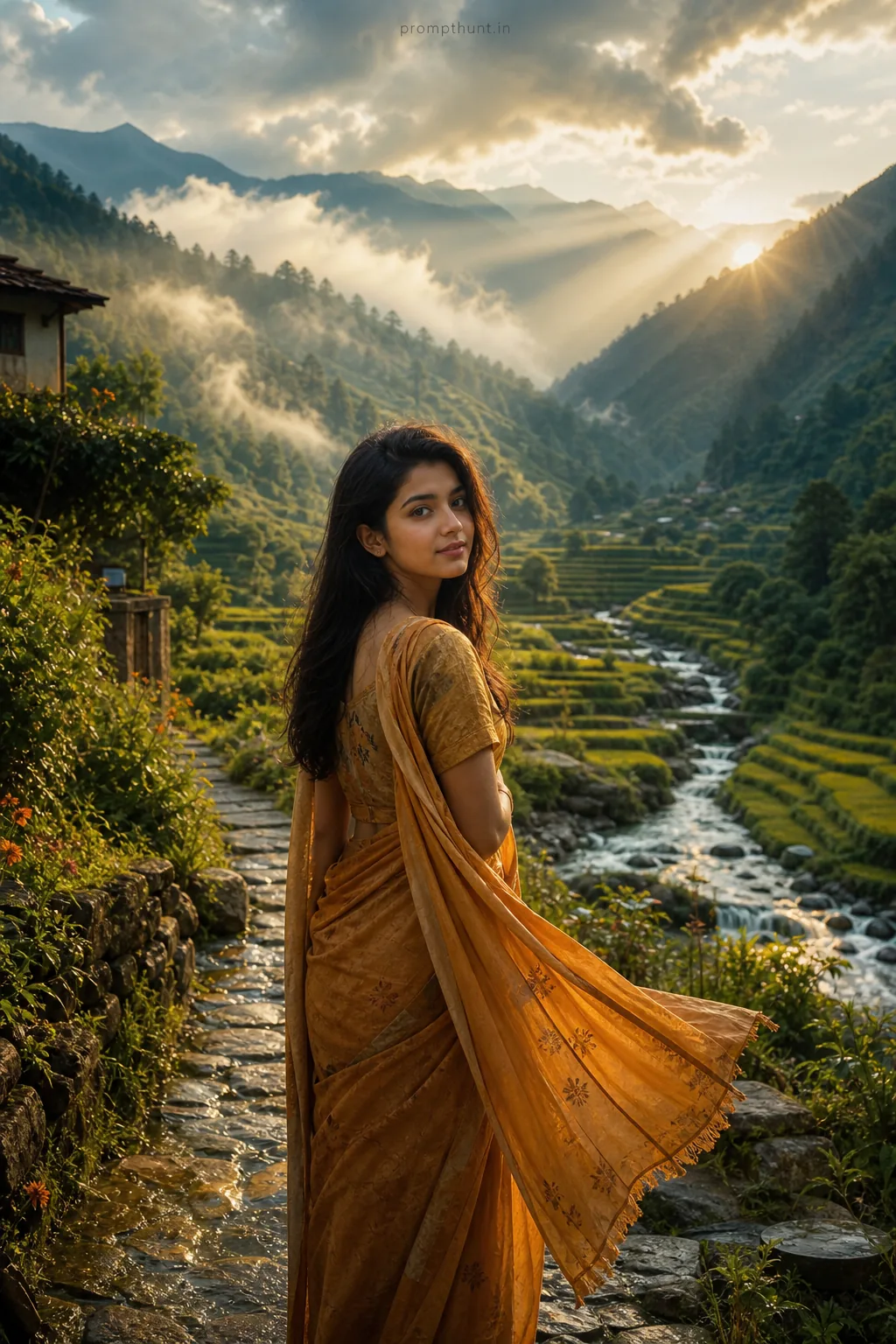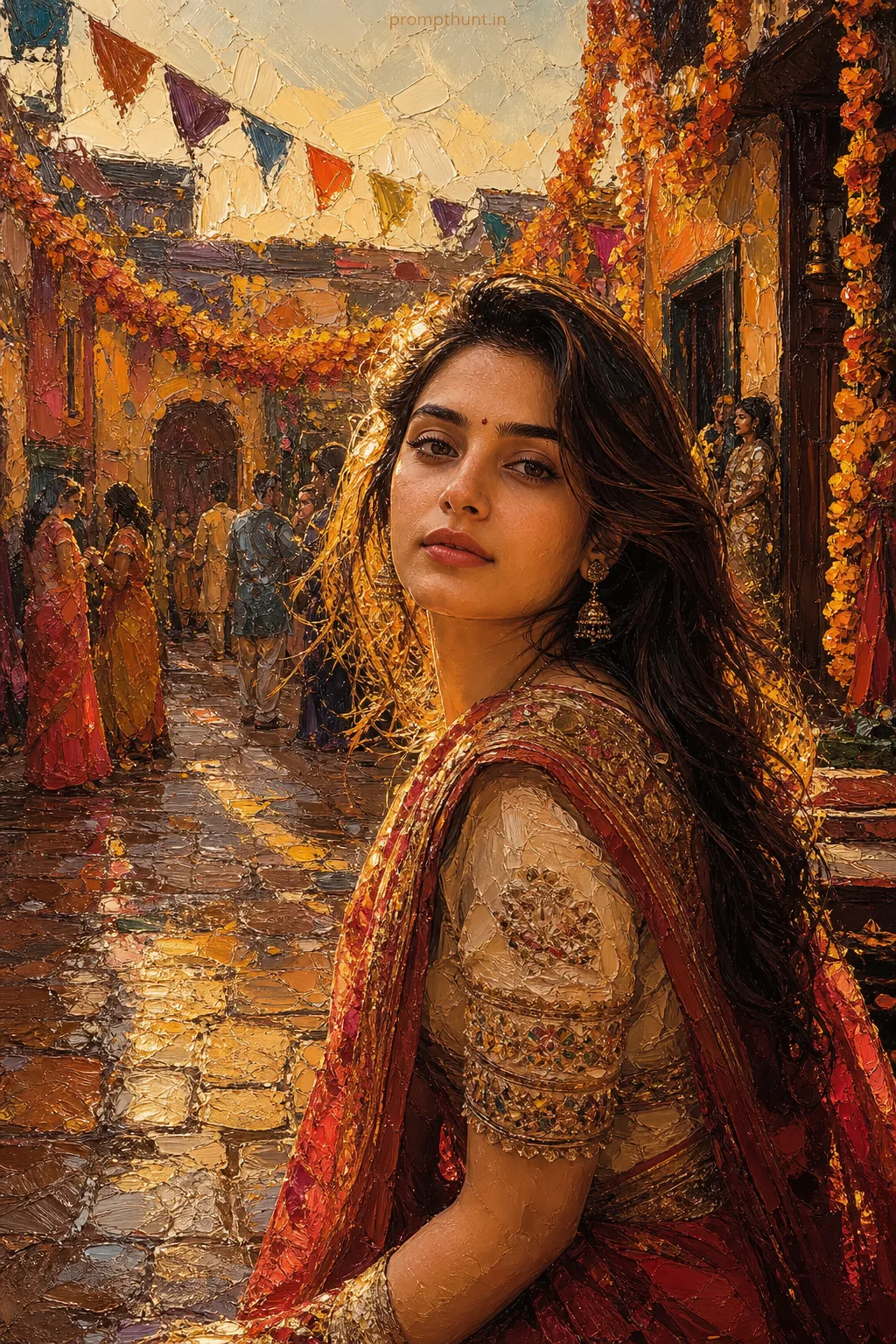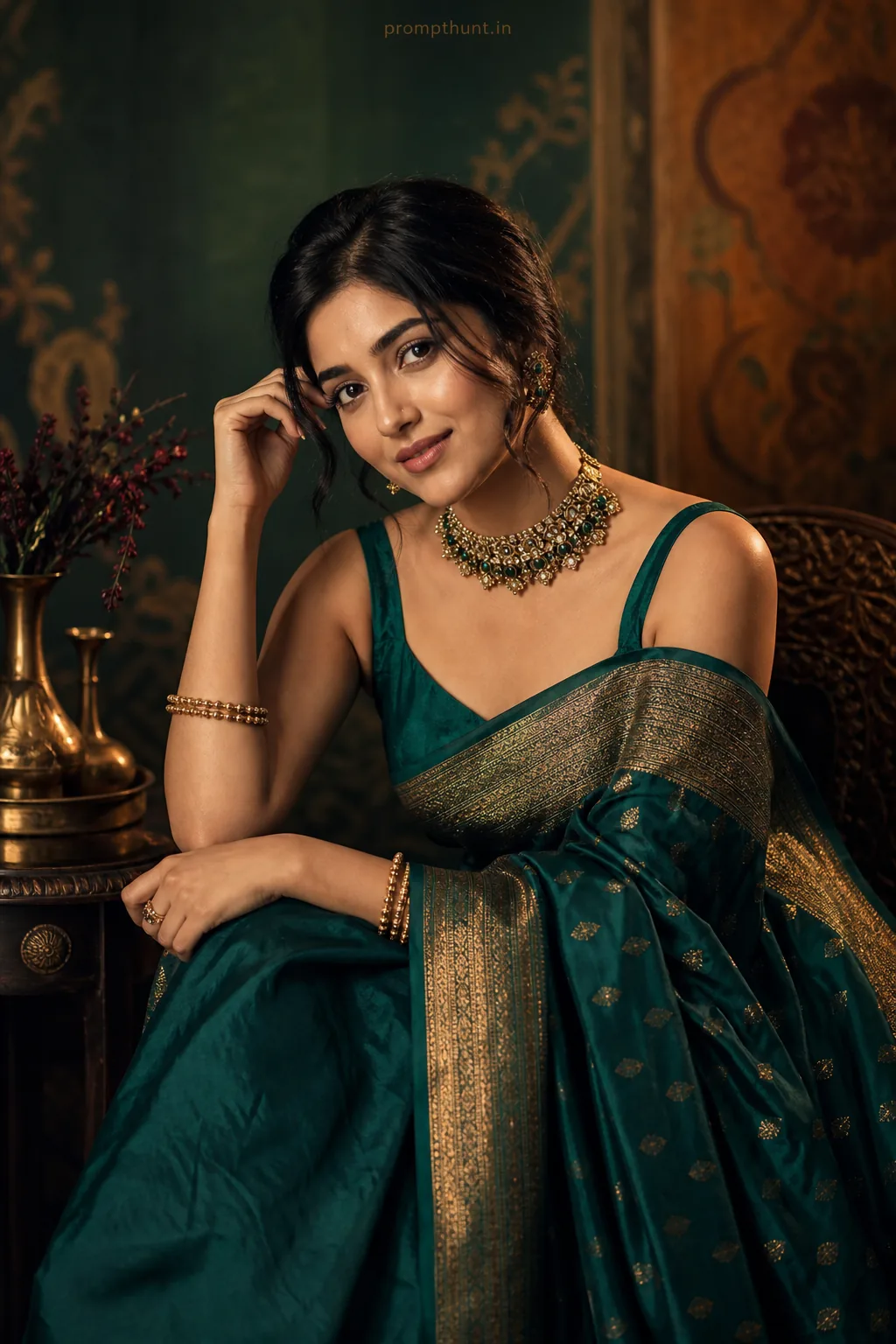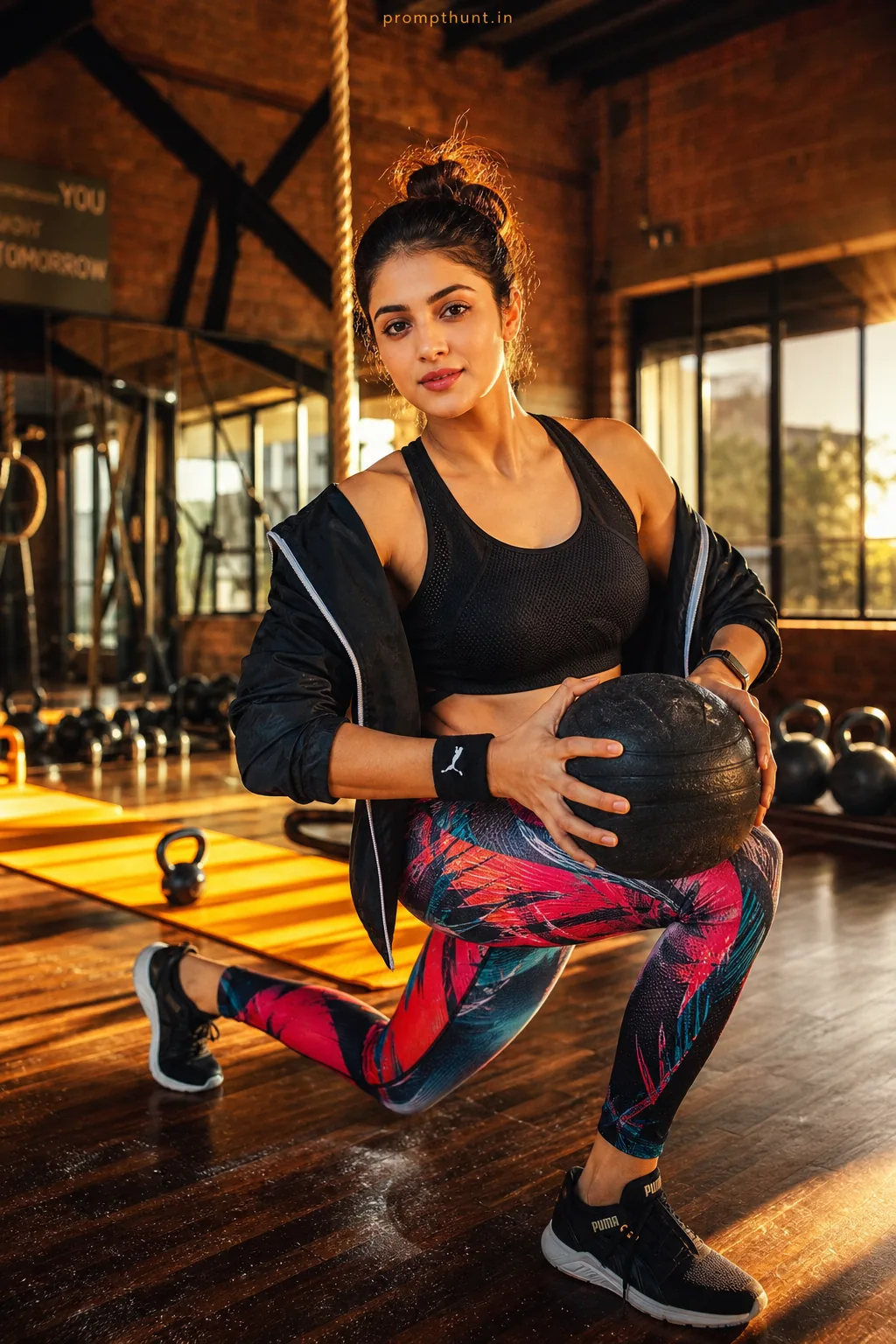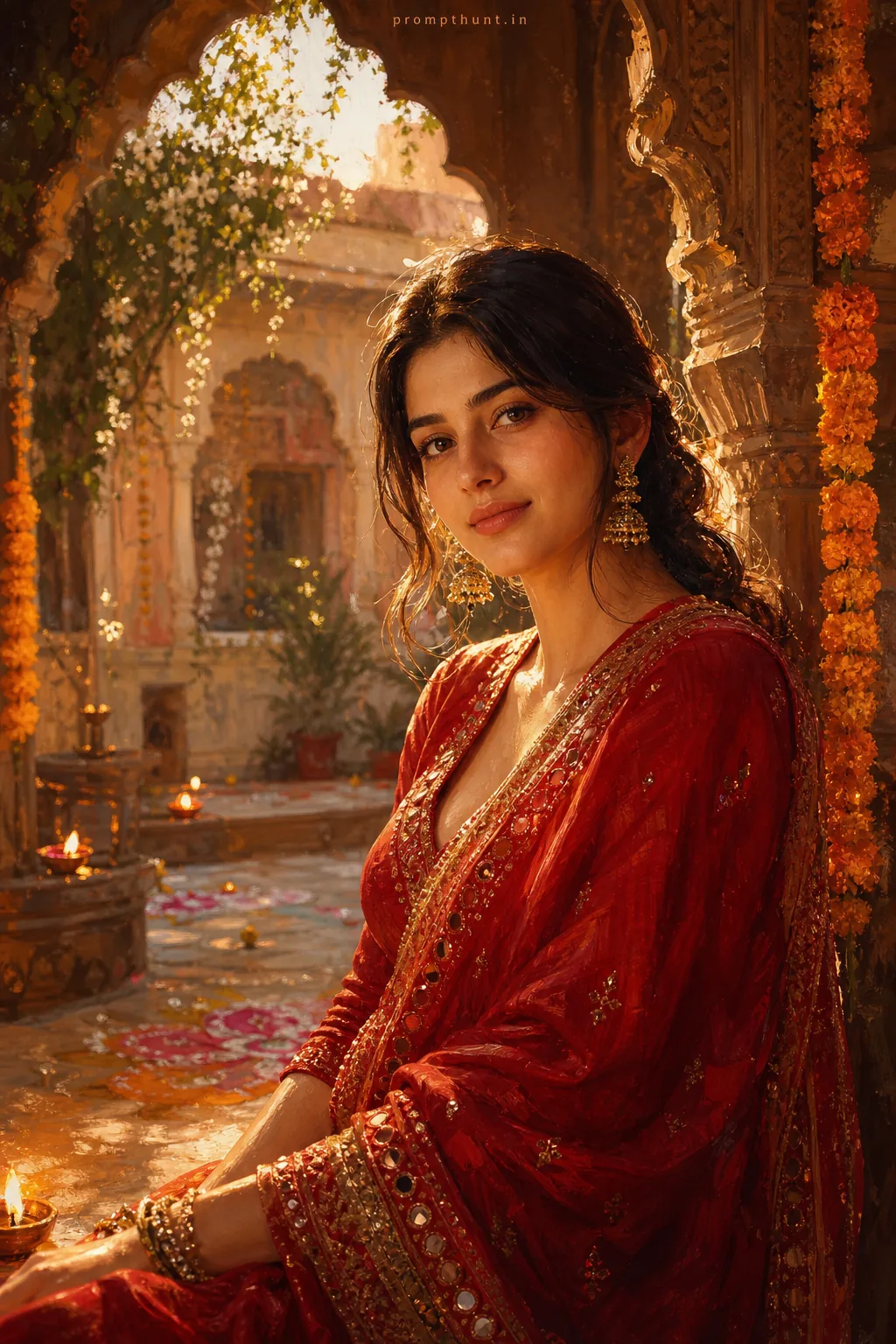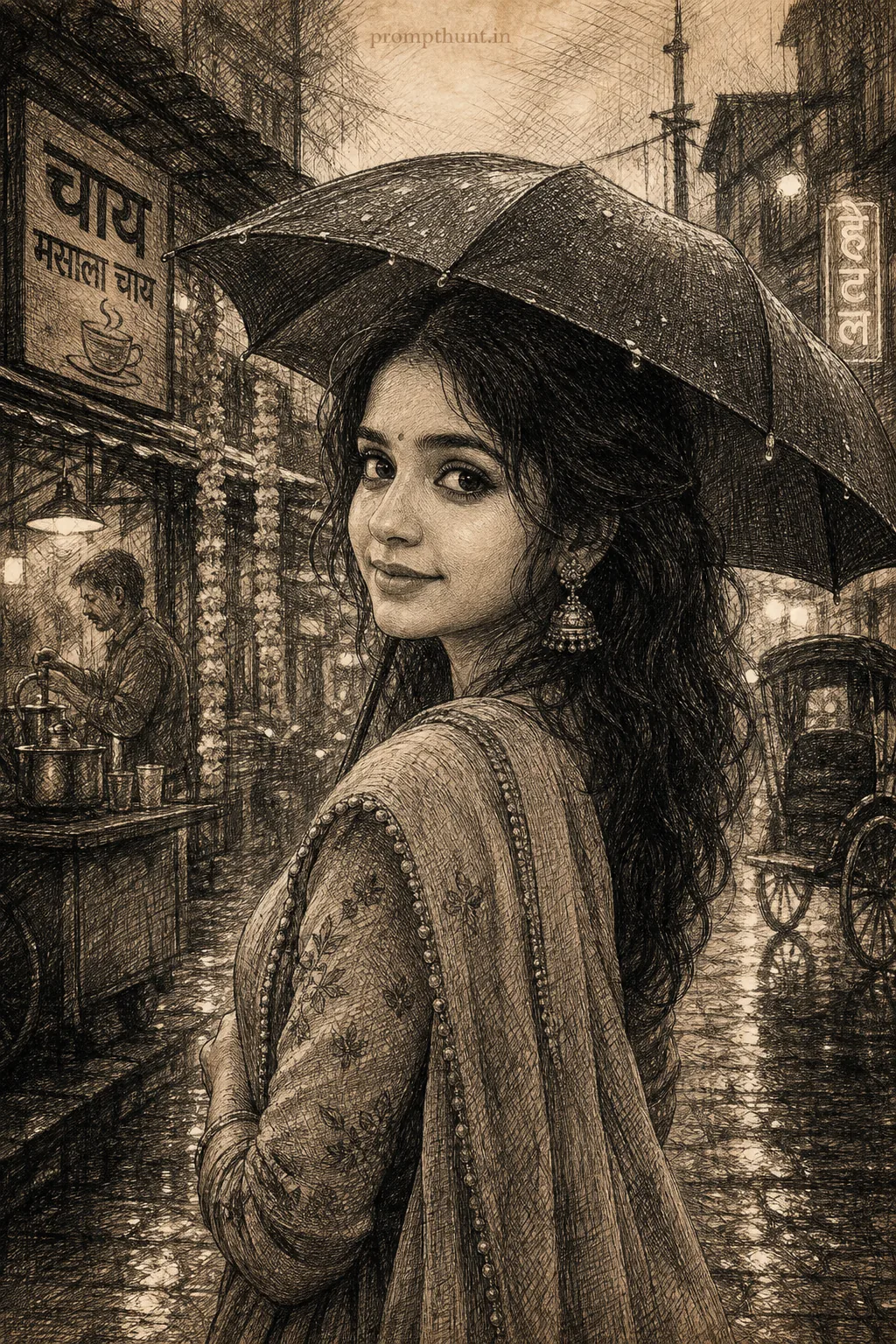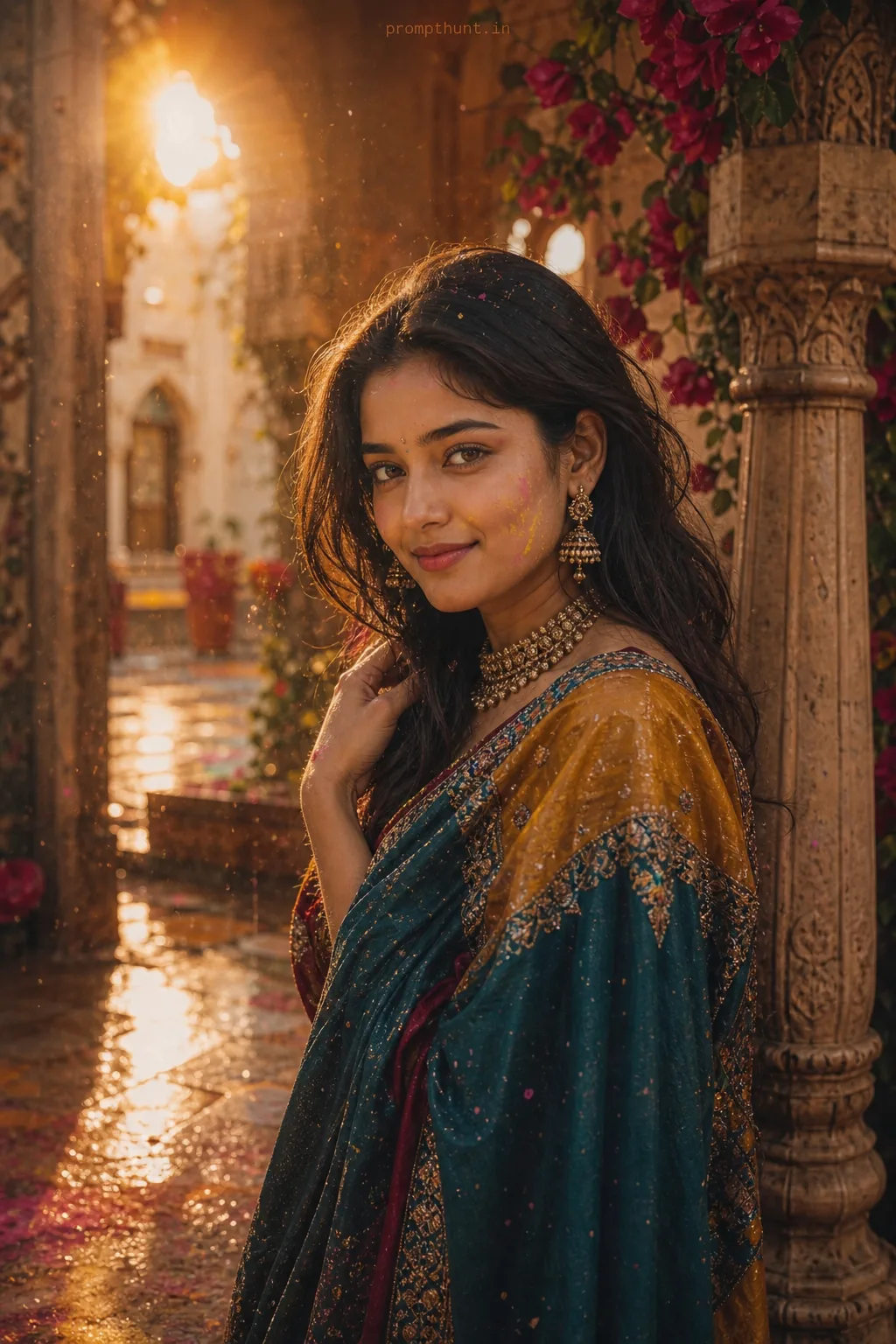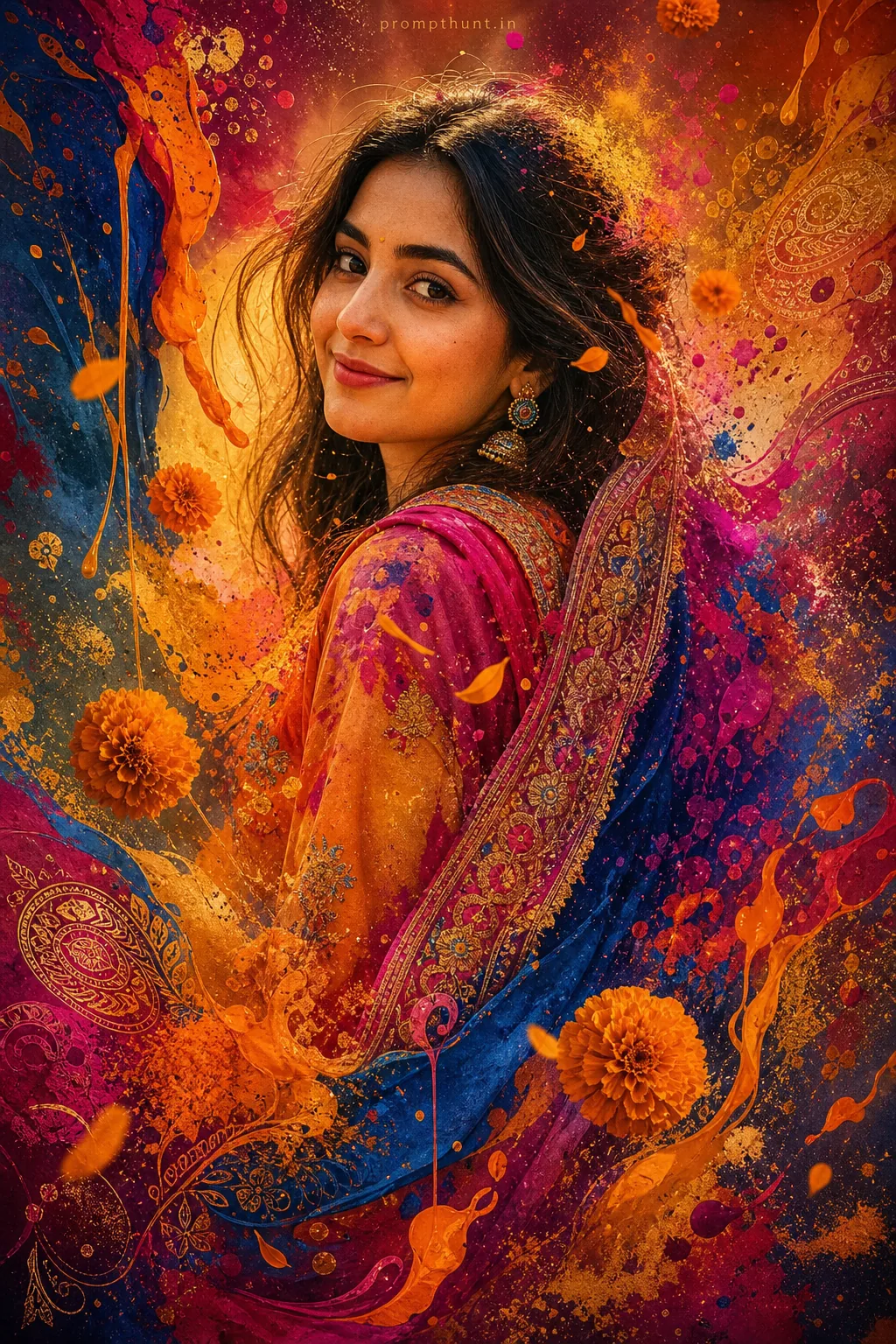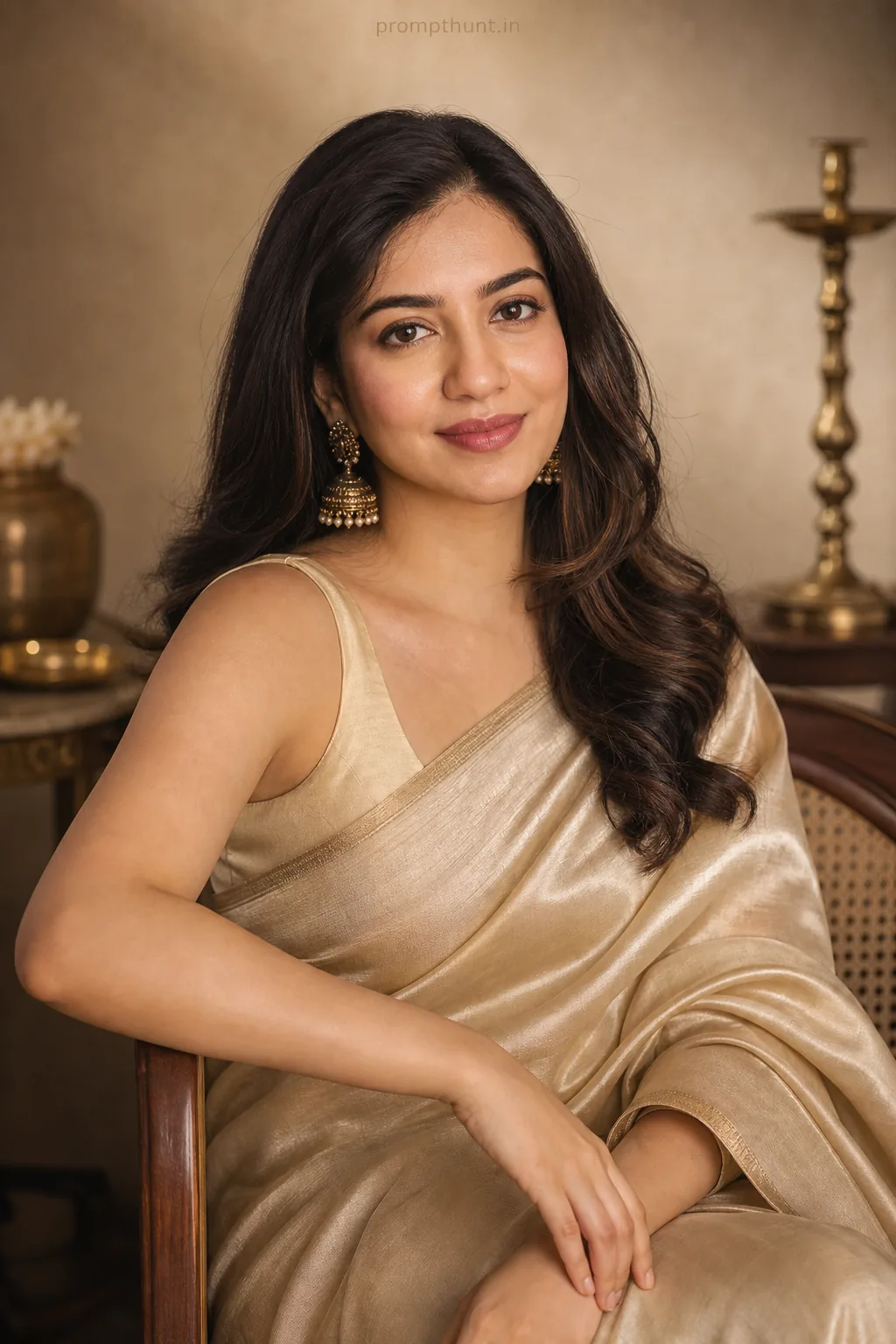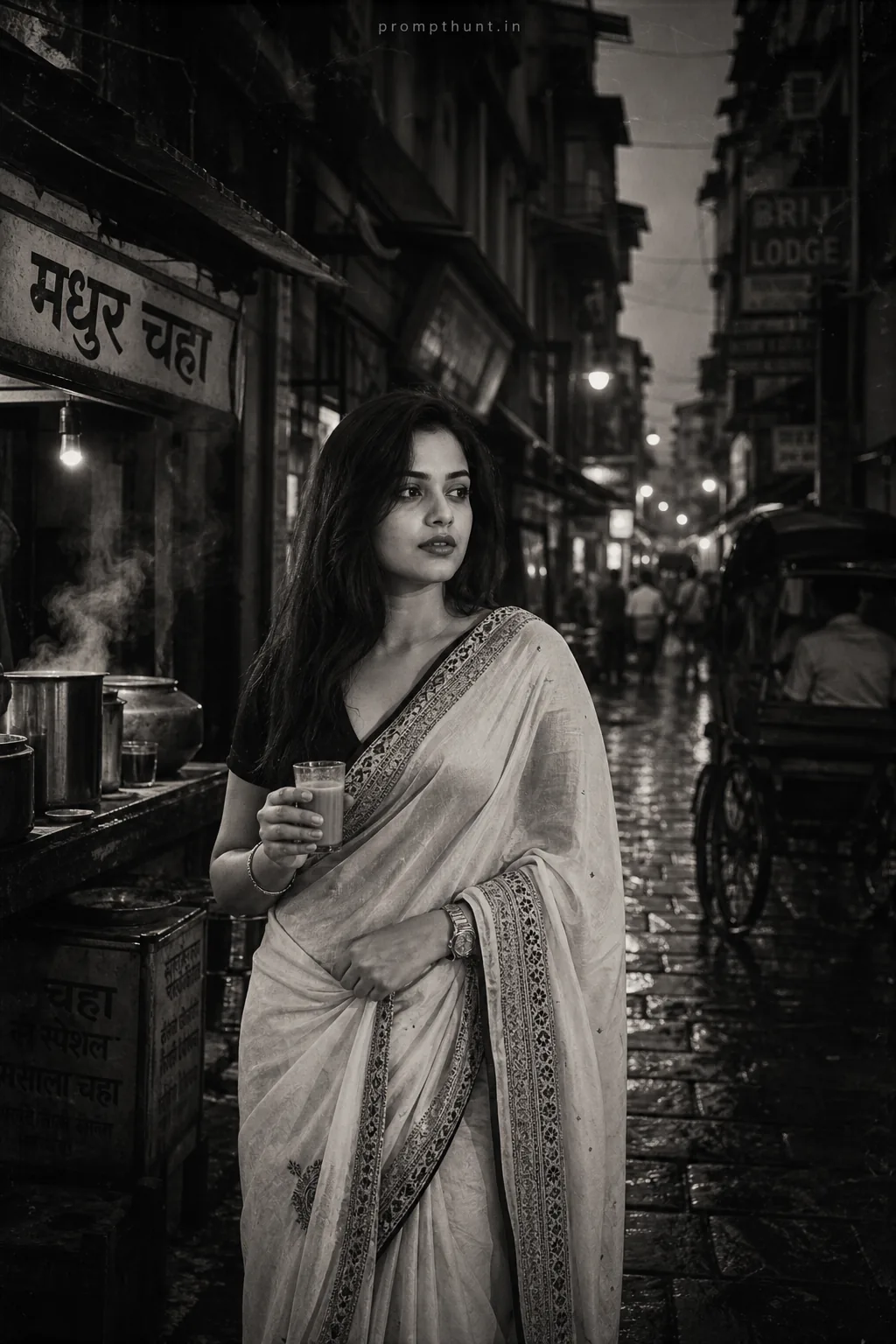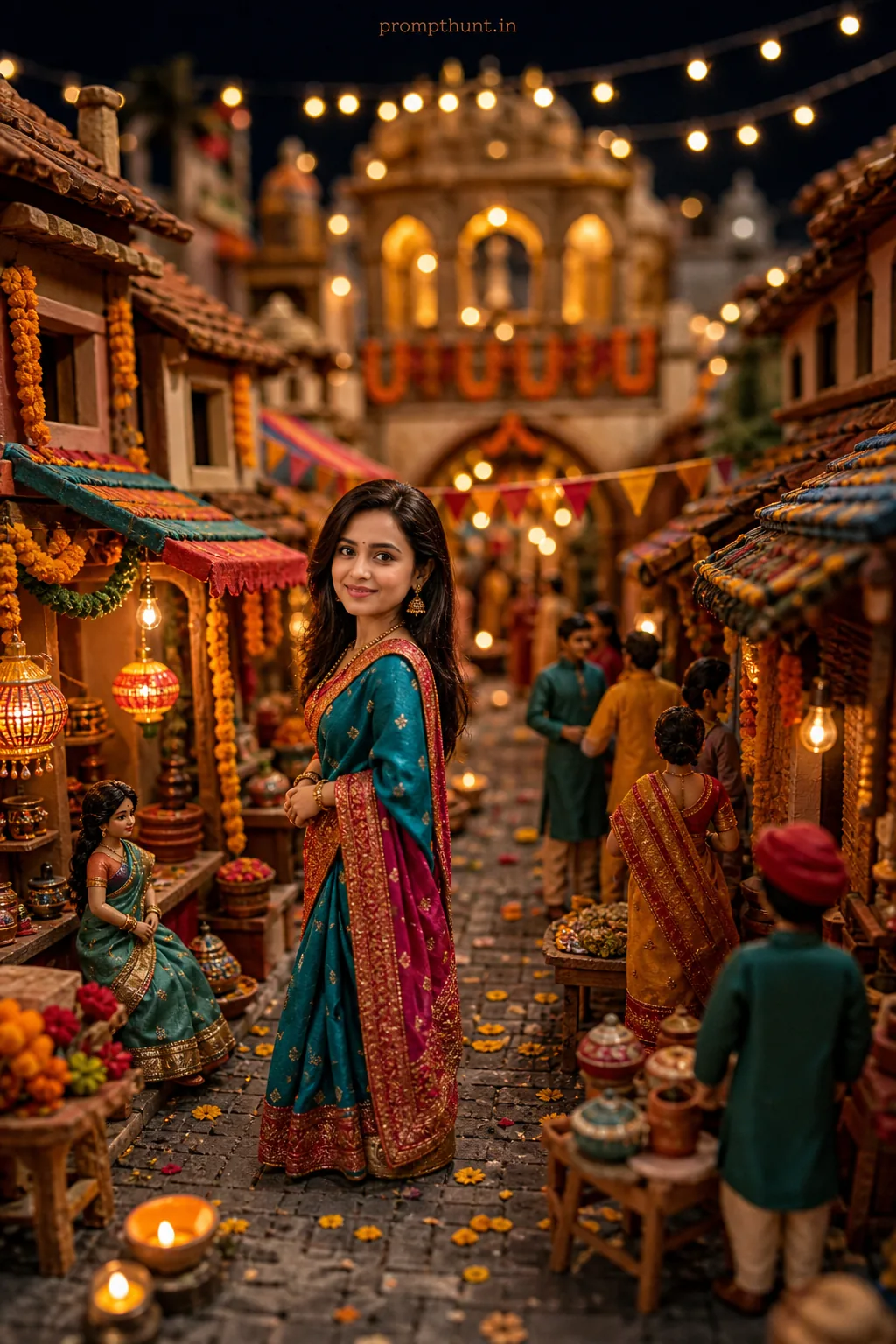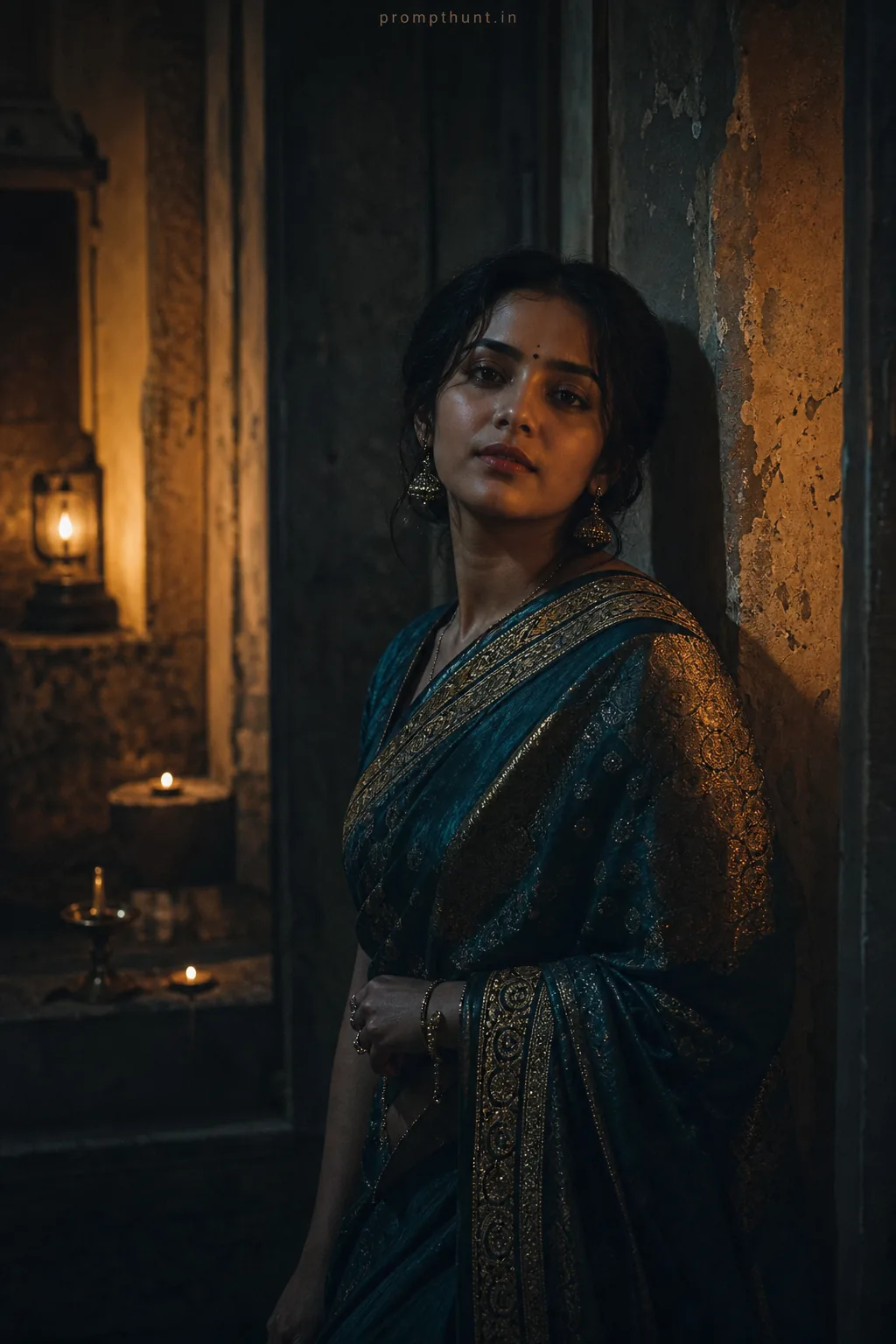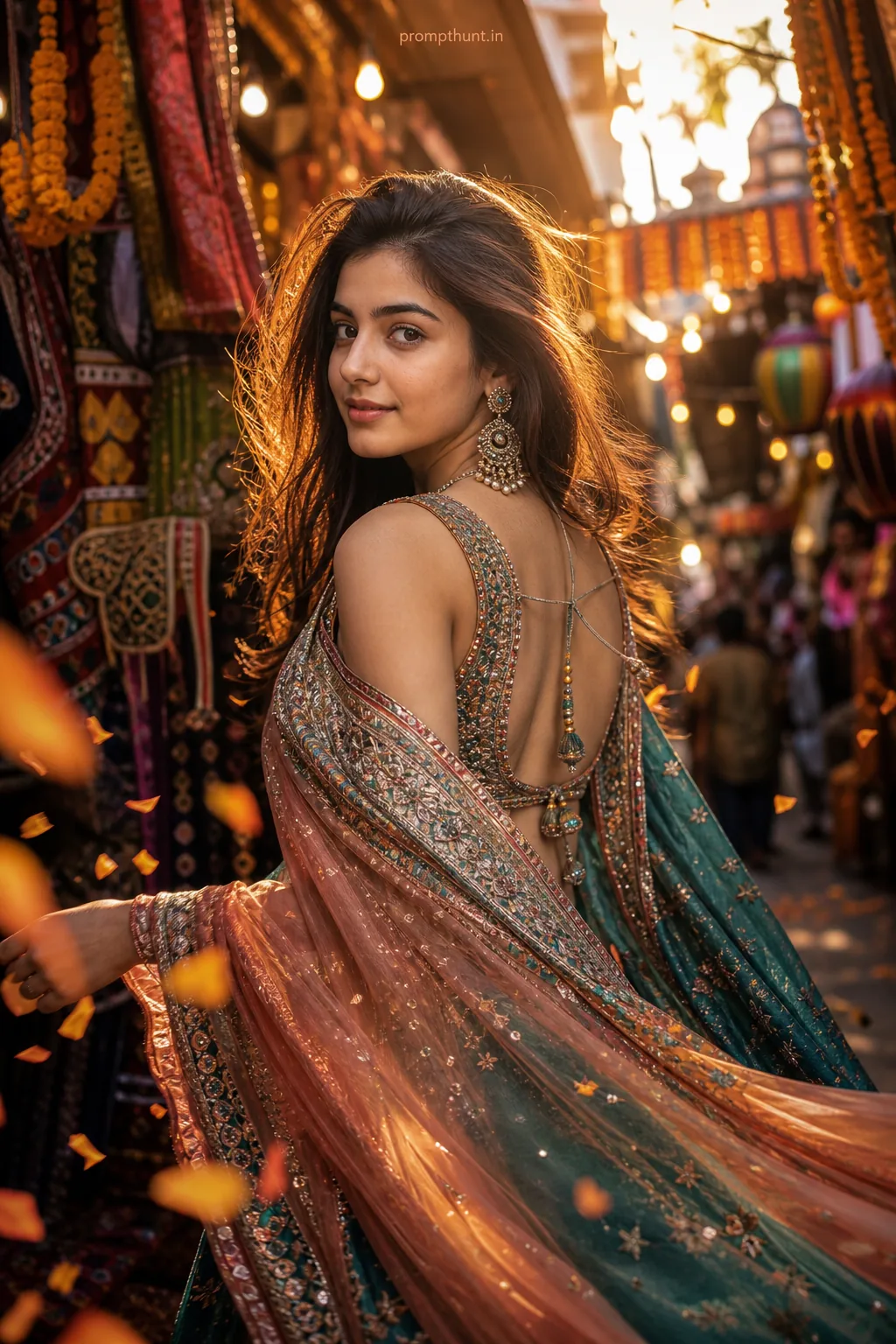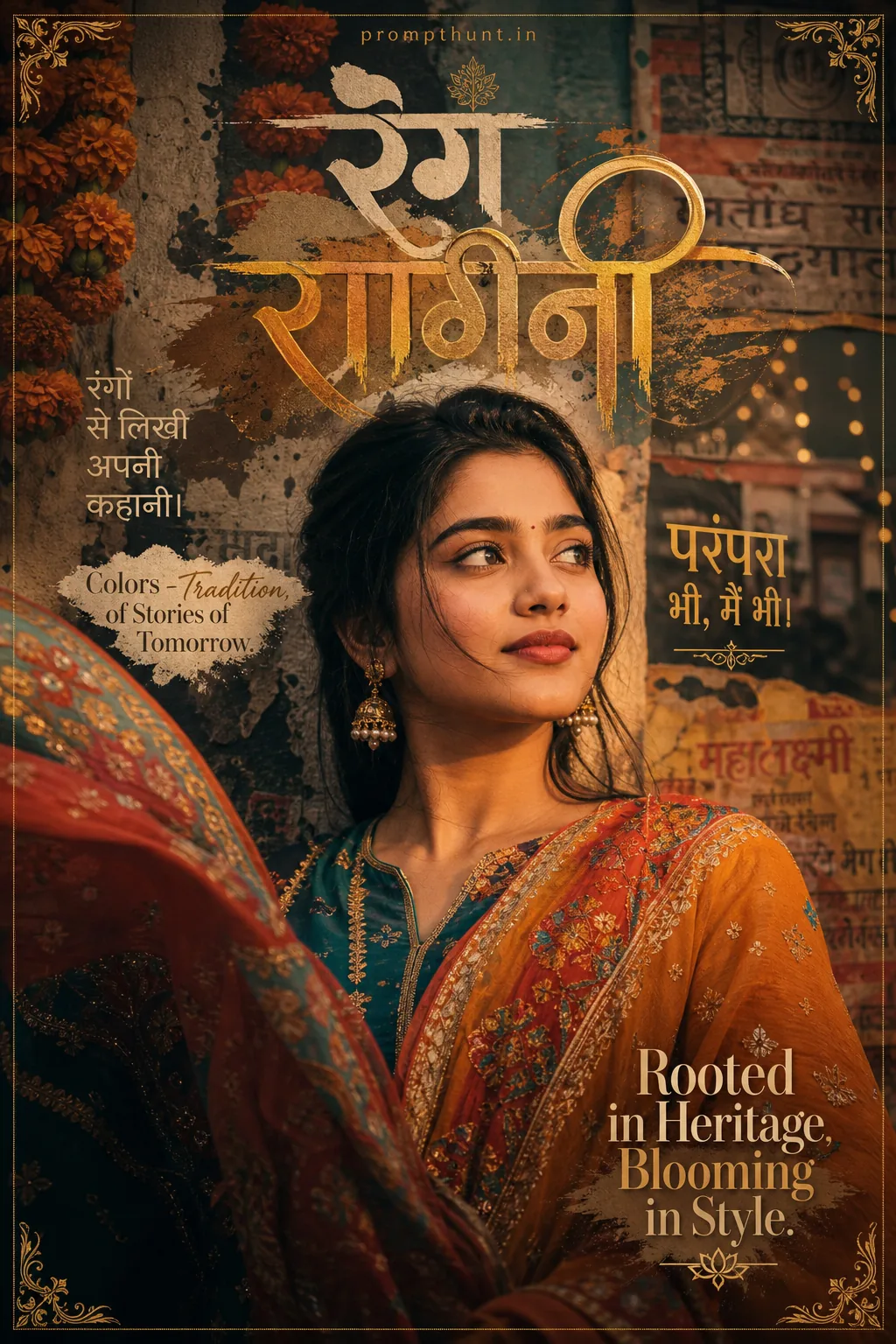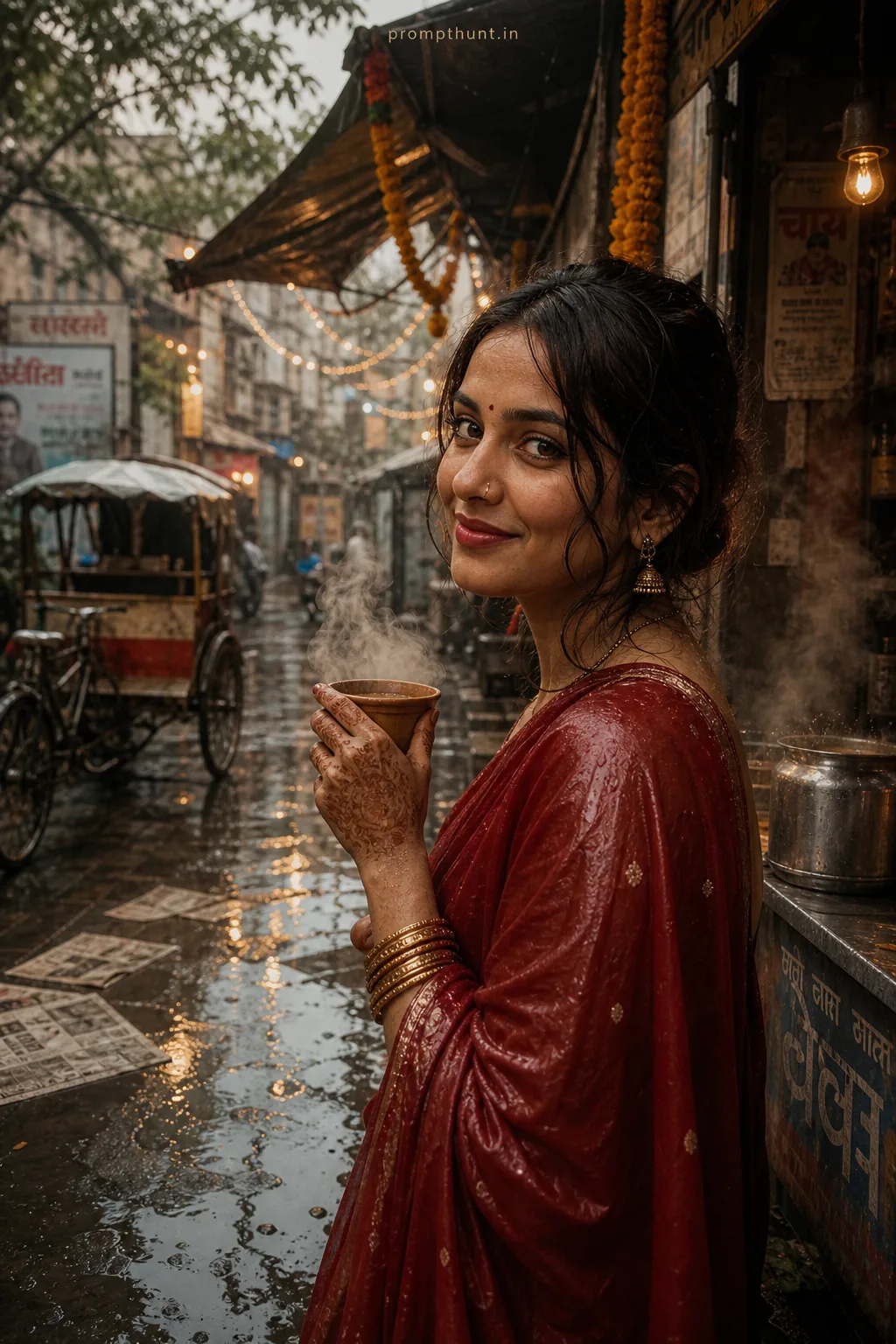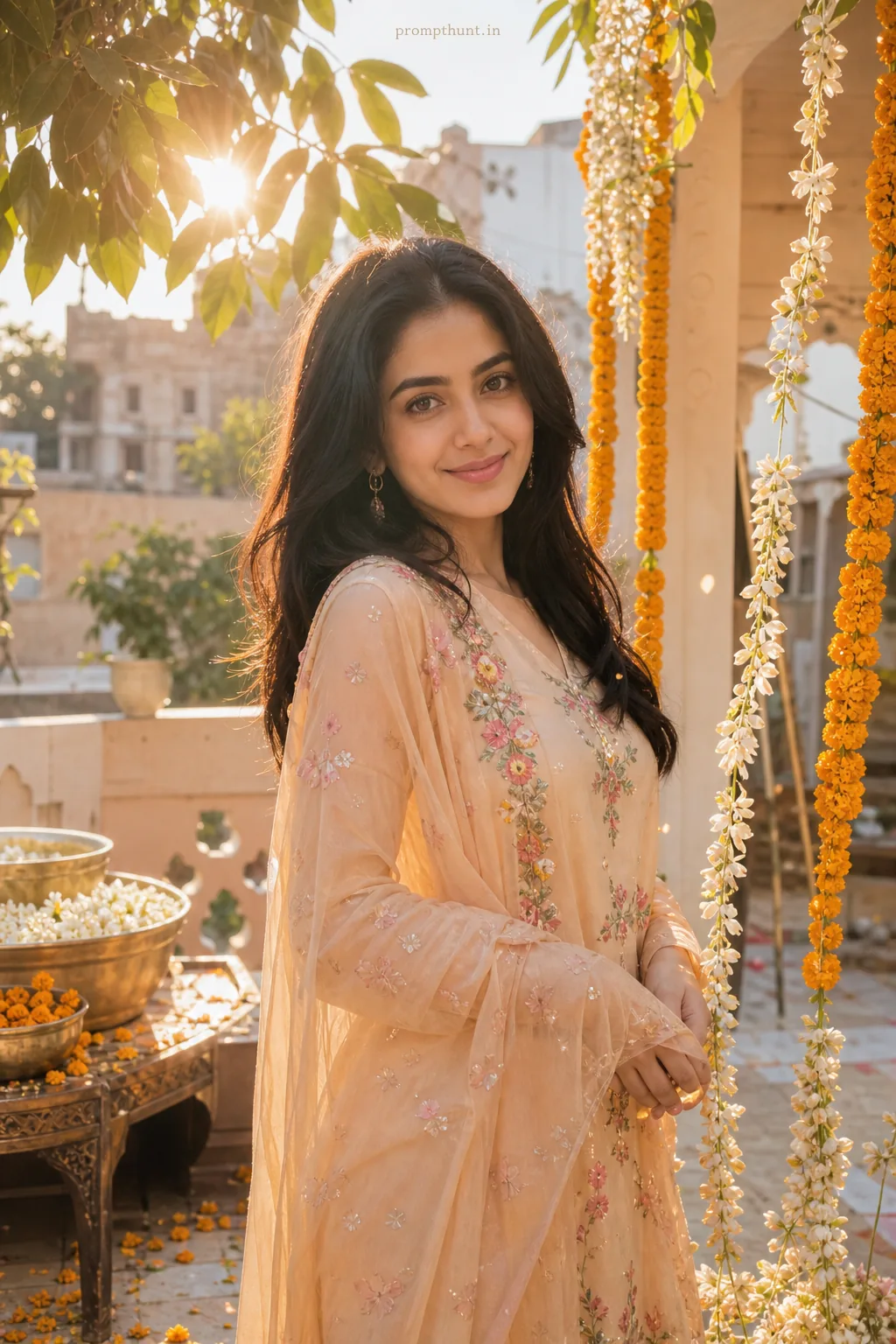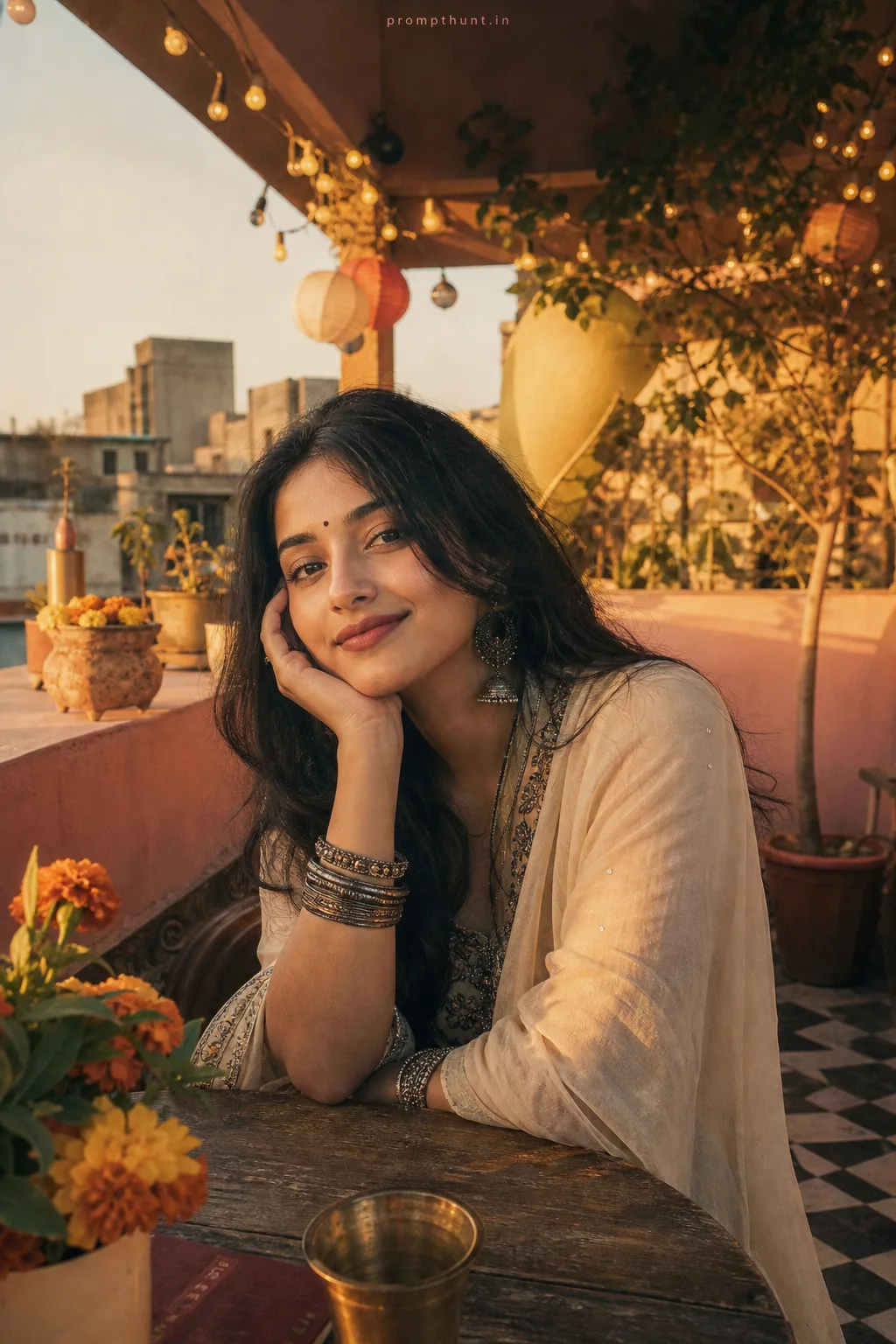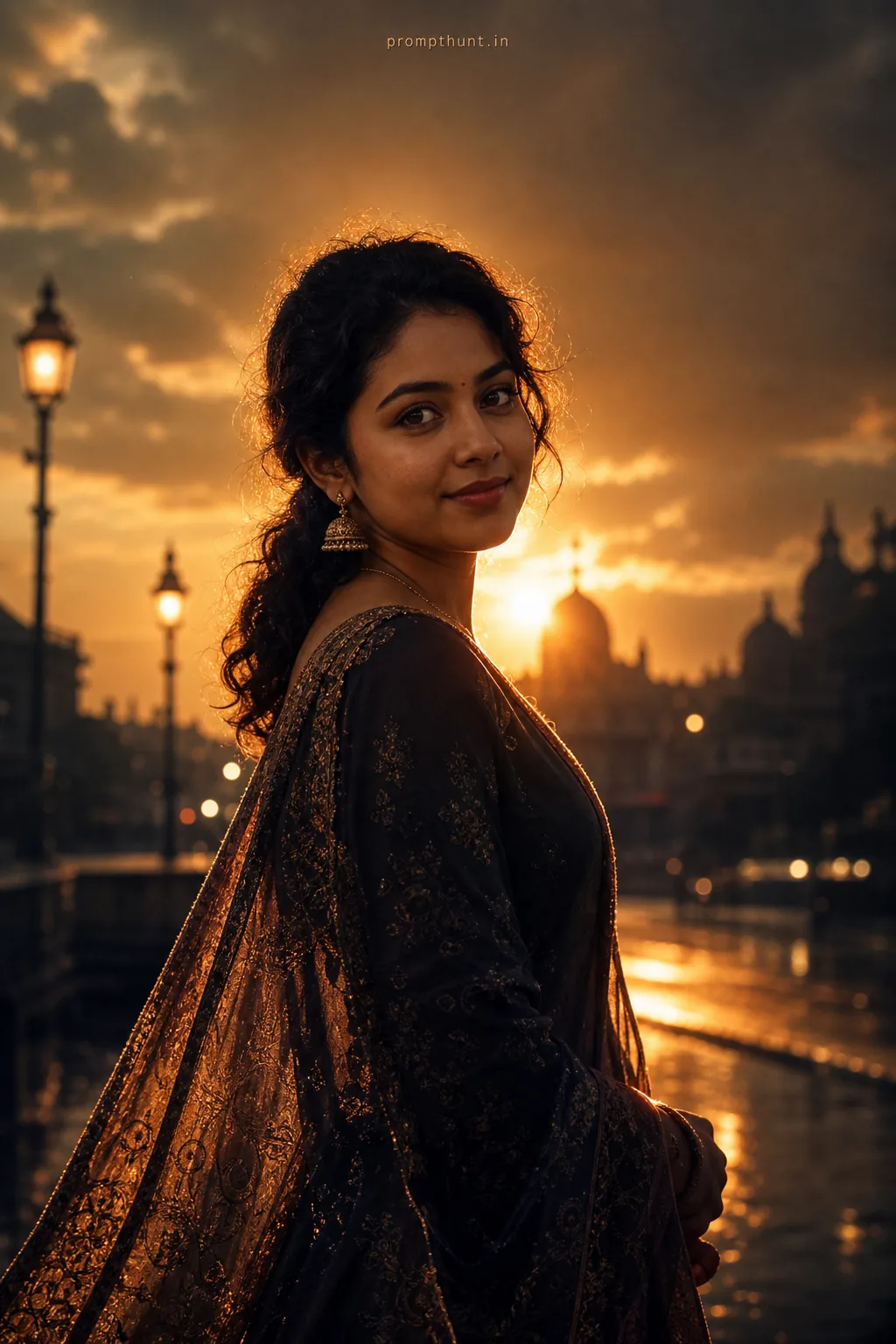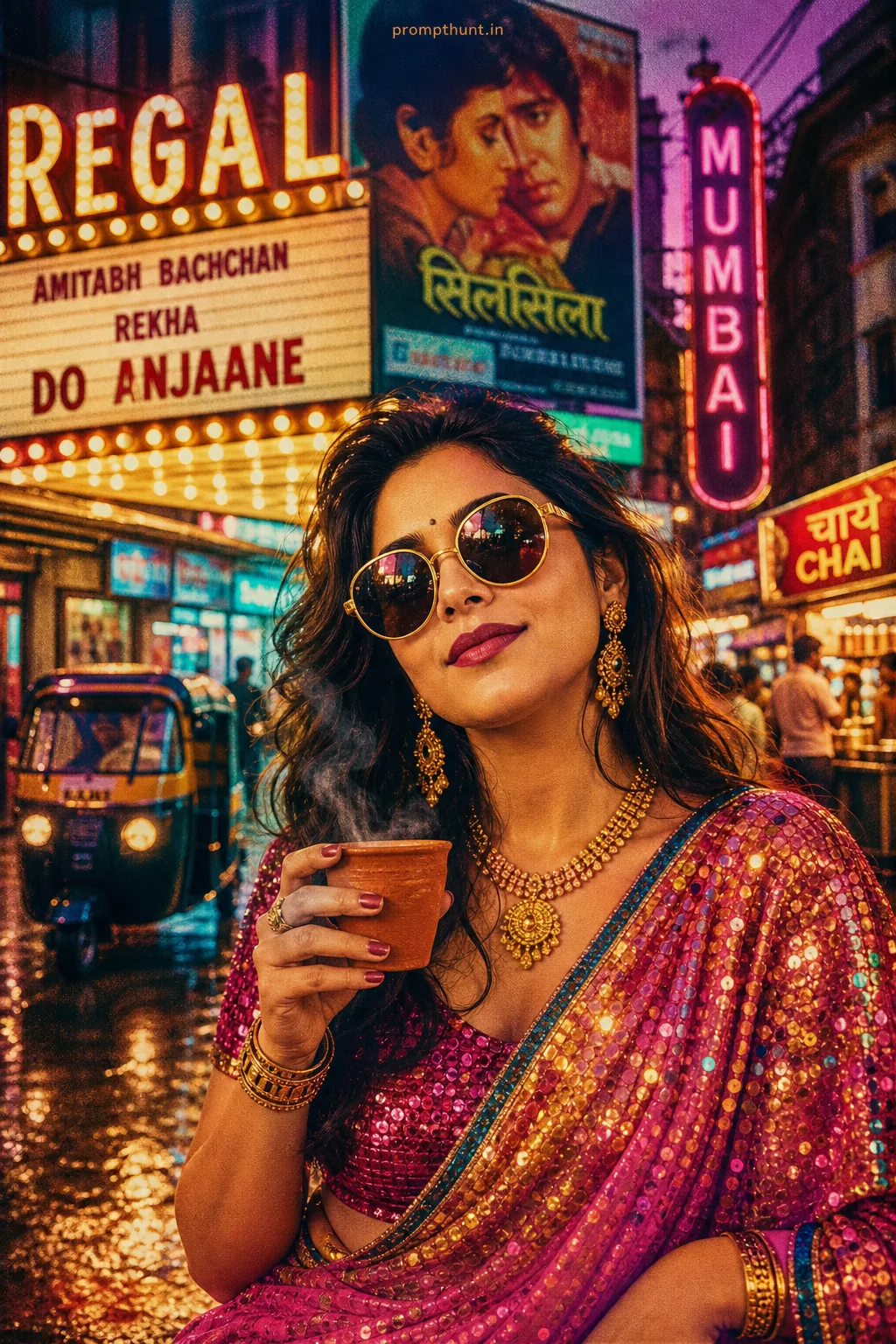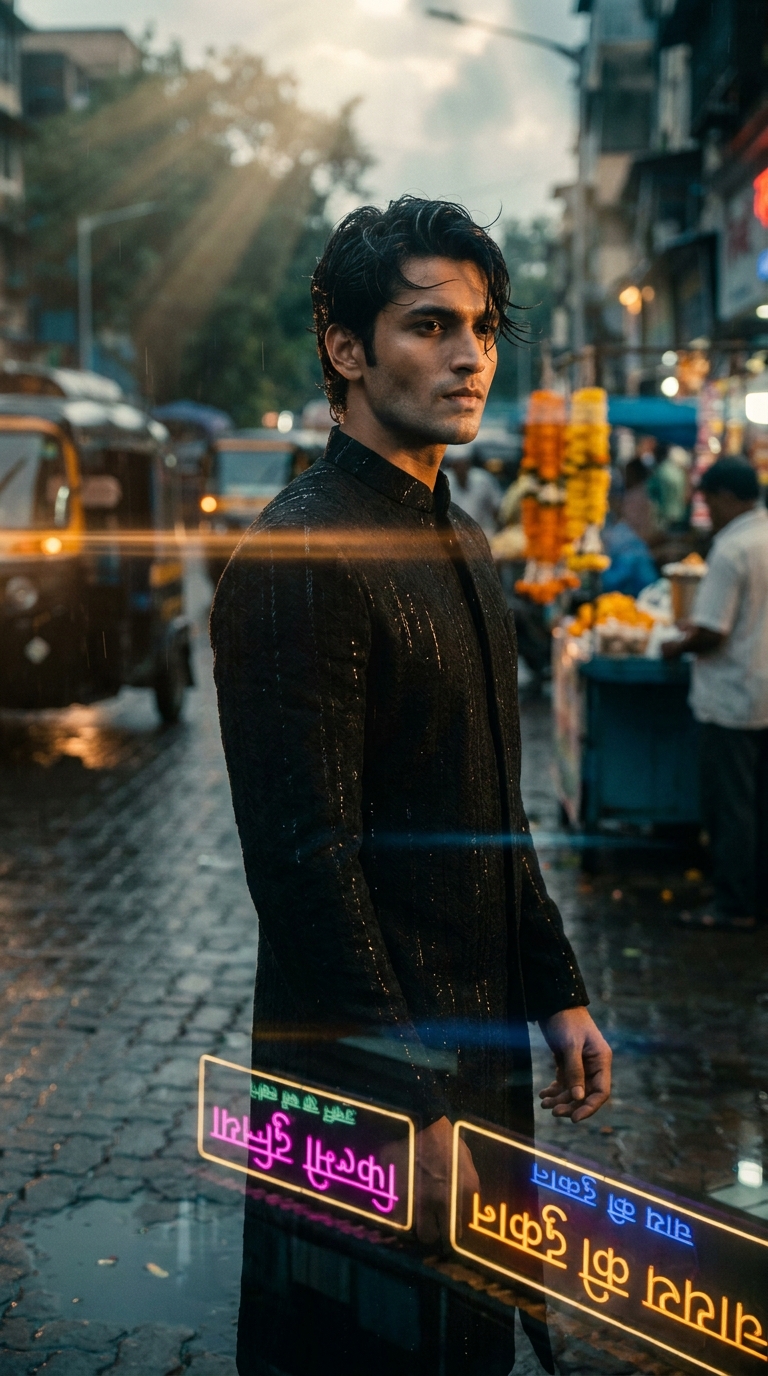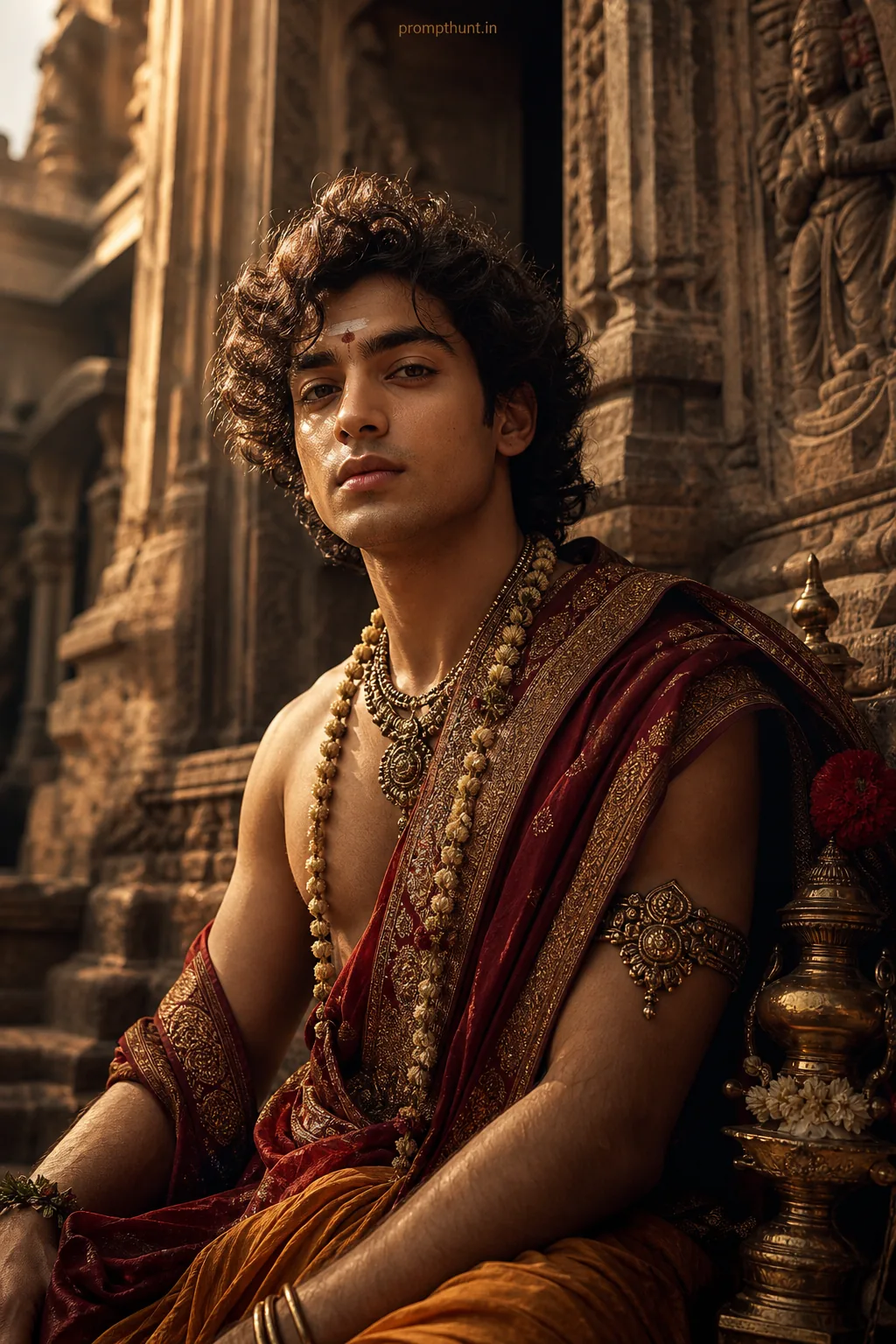
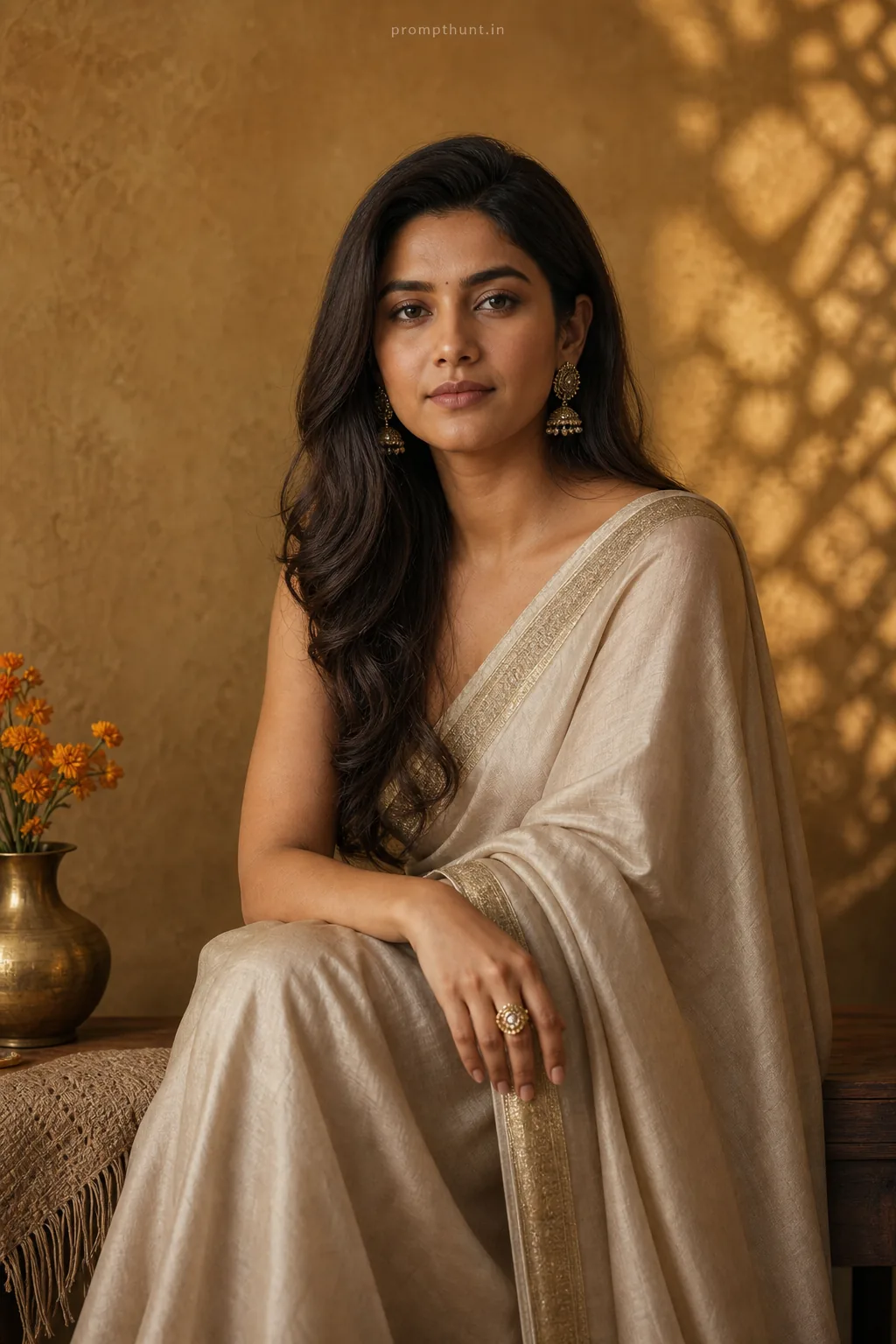

The Bollywood Superstar Hyper-Cinematic prompt uses Gemini AI to generate ultra-realistic vertical portrait images styled like big-budget Indian cinema — combining rain-soaked Mumbai streets, anamorphic lens flares, teal-orange colour grading, and Dolby Vision HDR aesthetics to make any subject look like they just walked off a Rs 200-crore film set.
There's a moment in every great Bollywood film where the hero steps out of a car in slow motion, rain falling at a cinematically convenient 45-degree angle, neon lights doing their absolute best to make his cheekbones look sculpted by the gods themselves. That moment used to require a crew of 200, a director with a vision, and Shah Rukh Khan's actual face. Not anymore. The hyper-cinematic AI photo editing trend has arrived, and it's brought Mumbai's golden hour with it.
Paste this prompt into Gemini and it generates a jaw-dropping vertical portrait styled like a prestige Bollywood production — complete with anamorphic flares, monsoon puddle reflections, and a cinematic colour grade that makes anyone look like the main character.
What Hyper-Cinematic Actually Means
Hyper-cinematic isn't just a fancy word for "looks good on a phone." It's a specific visual language borrowed from professional film production — and it stacks about twelve techniques on top of each other simultaneously.
Think anamorphic lens flares. Shallow depth of field with serious bokeh. Teal shadows crushed hard against warm skin tones. Volumetric lighting — those god-ray beams that pierce through clouds like the universe is specifically spotlighting your protagonist. Film grain at low opacity to kill the plasticky AI sheen. The ARRI Alexa 35 reference alone tells the AI to model its output on the camera used in productions like Brahmastra and countless prestige Hollywood features.
In a 9:16 vertical format, all of that hits differently. Your phone screen becomes a cinema screen. The proportions are made for the way humans actually hold their devices, which means the visual impact lands immediately. No awkward black bars. No cropping a face in half to fit a story frame.
Bollywood, specifically, has its own hyper-cinematic grammar. The palette runs warm — ambers, magentas, bronzed skin tones. The environments are maximalist. Rain-soaked streets, marigold garlands, Hindi neon signage reflected in puddles. It's busy and beautiful and somehow never cluttered. That's the look this prompt is chasing.
The Prompt Itself
A strikingly handsome young Indian man in his mid-20s stands confidently on a rain-soaked Mumbai street at golden hour, wearing a perfectly tailored black sherwani with subtle silver embroidery that catches the light, hair dramatically windswept, jaw sharp and defined. The scene is shot in hyper-cinematic 9:16 vertical format with anamorphic lens flares streaking horizontally across the frame in warm amber and electric blue tones. Neon signs in Hindi script reflect in the wet cobblestones below his feet creating mirror-like puddles of magenta and gold light. Shallow depth of field blurs a bustling Old Delhi marketplace behind him — auto-rickshaws, marigold garlands, and street vendors softly bokeh'd into impressionistic color blobs. Volumetric god rays pierce through monsoon clouds above. His expression is intense yet magnetic, looking slightly off-camera. Dramatic cinematic color grade — deep teal shadows, crushed blacks, warm skin tones preserved with rich bronze undertones. Film grain overlay at 15% opacity. Dolby Vision HDR aesthetic. Ultra-photorealistic, 8K resolution, shot on ARRI Alexa 35 with Zeiss Supreme Prime lens. Aspect ratio 9:16 vertical portrait. Cinematic masterpiece quality.
How to Use This in Gemini — Step by Step
This is genuinely straightforward. Which is almost suspicious, given how good the results are.
Open Gemini. If you're using Gemini Advanced, you're in better shape — the image generation quality scales up noticeably with the higher tier. Paste the prompt exactly as written. Hit generate and wait about 15 to 30 seconds.
Nine times out of ten, the first output will be strong. If it isn't, regenerate once before you start tweaking. The model sometimes needs a second attempt to fully commit to the brief. (It's basically method acting. Give it a moment to get into character.)
Once you have a result you like, download at the highest resolution available. The prompt specifies 8K, though actual output resolution depends on Gemini's current generation limits — what you're really doing with that reference is telling the AI to prioritise sharpness and fine detail over painterly softness.
To adapt it for a specific person, add a physical description before the word "stands" — skin tone, hair length, facial features, anything that distinguishes them. Keep everything else in the prompt intact. The cinematic scaffolding does the heavy lifting regardless of who's standing in the frame.
Tips That Actually Make a Difference
Keep the camera reference in. "ARRI Alexa 35 with Zeiss Supreme Prime lens" sounds like you're showing off at a cinematography convention, but it genuinely anchors the AI's output to a specific aesthetic family. Remove it and results get looser.
The "15% film grain overlay" is doing quiet, important work. Film grain at low opacity kills the uncanny valley effect — that slightly-too-smooth look that makes AI portraits feel generated rather than photographed. Don't bump it above 20% or the image starts looking like it was shot in a car park in 1987.
If you want a female subject, swap the physical descriptors and "sherwani" for "a heavily embroidered lehenga in deep jewel tones." The rest of the prompt transfers cleanly. The colour grade and environment are not gender-specific — the cinematic logic works the same way.
Specify the off-camera gaze. "Looking slightly off-camera" produces dramatically better portraits than "looking at camera." Direct eye contact reads as passport photo. Slightly off-camera reads as movie poster. The difference is enormous and the change is four words.
Rule of thumb: if the first generation has lens flares that look too symmetrical or artificial, add "organic lens flare, not CGI" to the prompt. Gemini occasionally over-renders flares into something that looks more like a screensaver than a film still.
Why This Is Everywhere Right Now
India has the largest Instagram Reels and YouTube Shorts audience on the planet. Vertical content is the dominant format. And Bollywood visual language — the colour palette, the dramatic lighting, the maximalist environments — is deeply embedded in the cultural vocabulary of hundreds of millions of people.
This prompt sits at the exact intersection of those three facts. It produces content that looks native to Indian digital culture, renders beautifully on mobile screens, and flatters subjects in the specific way that Bollywood cinematography has spent decades perfecting.
The timing matters too. Gemini's image generation improved significantly through 2024 and into 2025. Earlier versions struggled with photorealism in complex environmental scenes — rain reflections, volumetric lighting, crowd bokeh all in the same frame. That's a hard compositional brief. The model can now handle it without the output falling apart into a muddy impressionistic mess.
Content creators, wedding photographers looking for client-facing mood boards, and social media managers running campaigns for South Asian fashion brands have all landed on this prompt independently. When something works that well across that many different use cases, it spreads fast.
Honest Opinion: When to Use This and When to Walk Away
This prompt is genuinely brilliant for what it does. But "what it does" is quite specific, and it's worth being clear about the edges of its usefulness.
It excels at aspirational portraiture — editorial fashion content, conceptual profile imagery, mood board generation for film or event production. If you need something that looks like a still from a prestige Bollywood production, this delivers with alarming consistency.
It is not the right tool for documentary or authentic street photography aesthetics. The hyper-cinematic treatment is heavy by design — teal shadows, crushed blacks, volumetric lighting, anamorphic flares. It's cinematic maximalism. If your brief calls for something that looks candid, naturalistic, or unstaged, this prompt will fight you the entire way. Using it for "authentic" content is a bit like asking someone to nip to the shops and they show up in a helicopter. Technically they arrived. That's not quite what you meant.
There's also an identity consideration worth raising directly. This prompt is written for a specific subject — a young Indian man in his mid-20s in a sherwani. That's deliberate cultural specificity, and it's one of the reasons the output is so cohesive. But if you need to represent a wider range of subjects, ages, or cultural contexts, you'll need to rewrite the physical and wardrobe descriptors thoughtfully rather than just swapping a few words. The cinematic grammar transfers. The cultural specifics need active attention.
One more thing: the "cinematic masterpiece quality" instruction at the end of the prompt is the AI equivalent of telling yourself you're going to the gym. It's aspirational rather than technically instructive. It doesn't hurt, but don't think that phrase alone is doing the heavy lifting. The technical specifications earlier in the prompt are what actually produce the quality. The closing line is just encouragement — and honestly, we could all use a bit of that.
The Scene Has Been Set
A rain-soaked street. A perfectly tailored sherwani. Anamorphic flares in amber and electric blue. Puddles that look like they were personally lit by