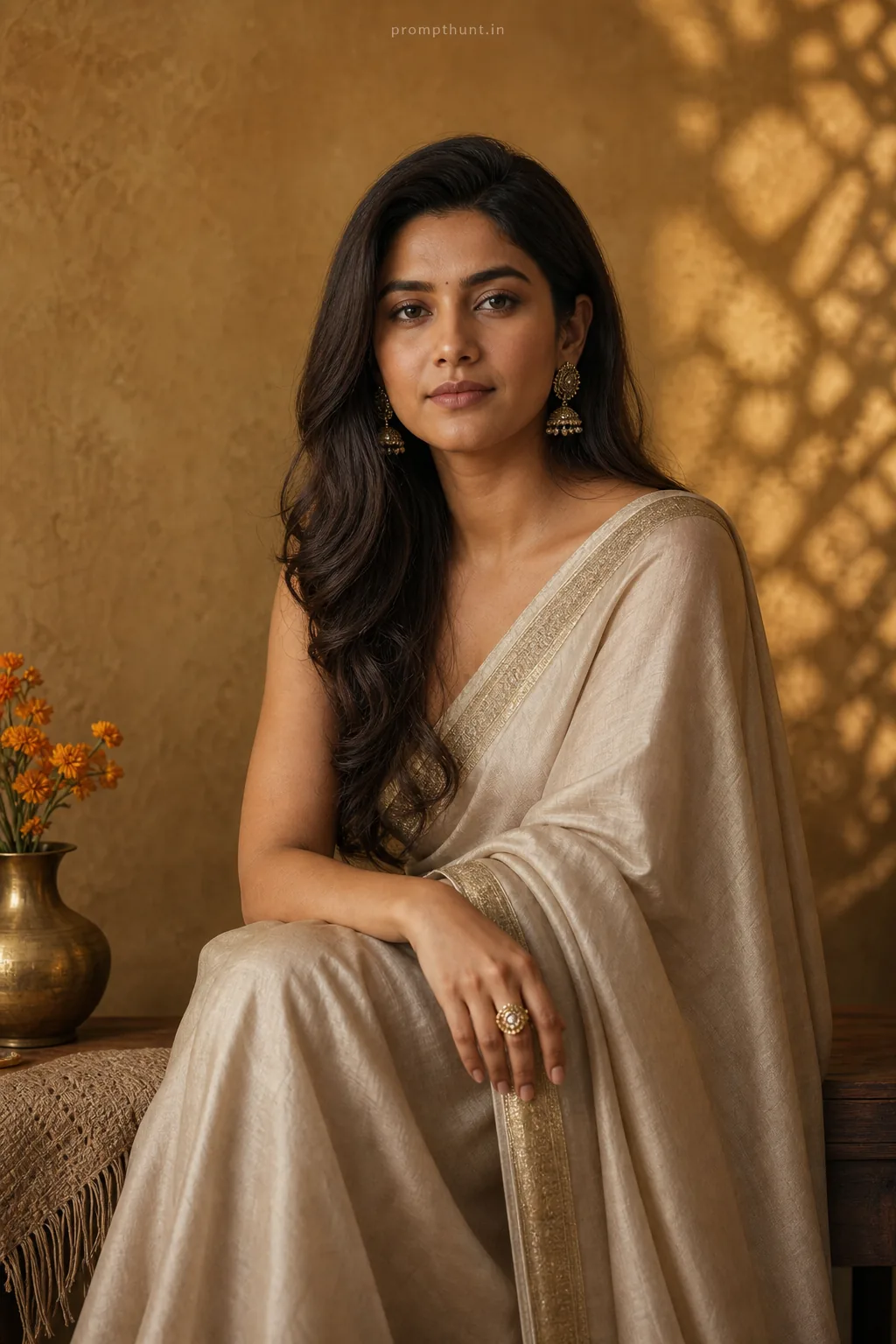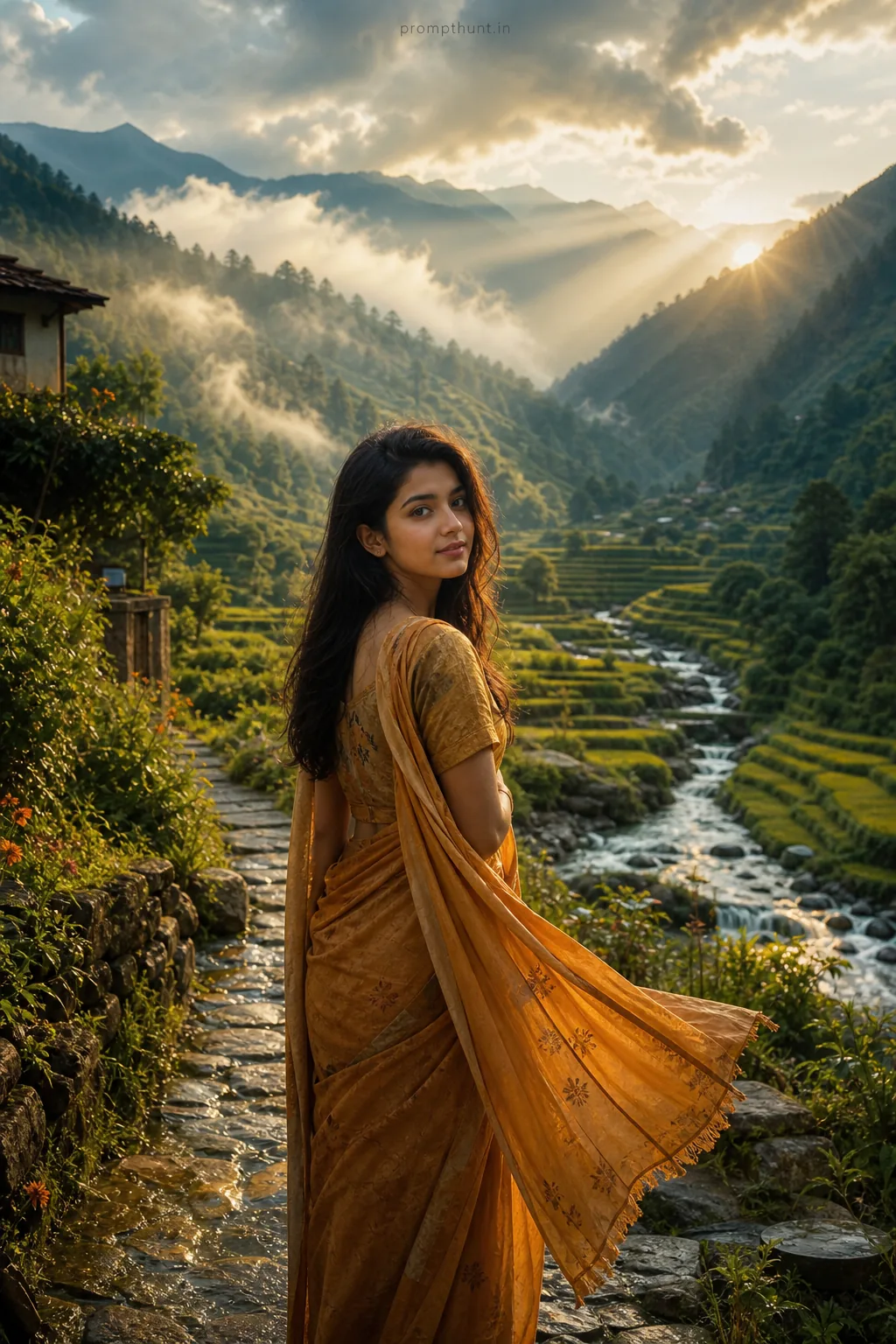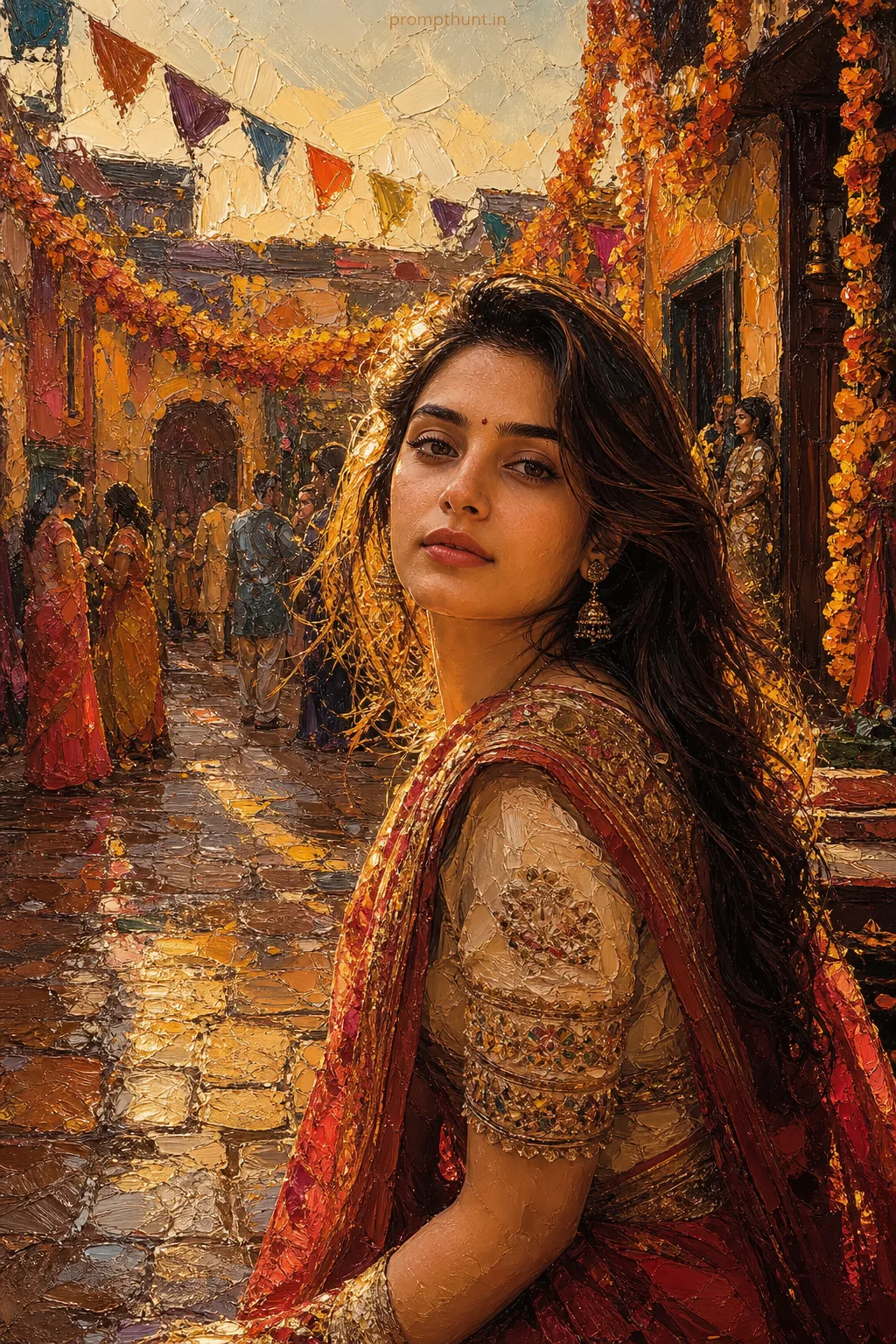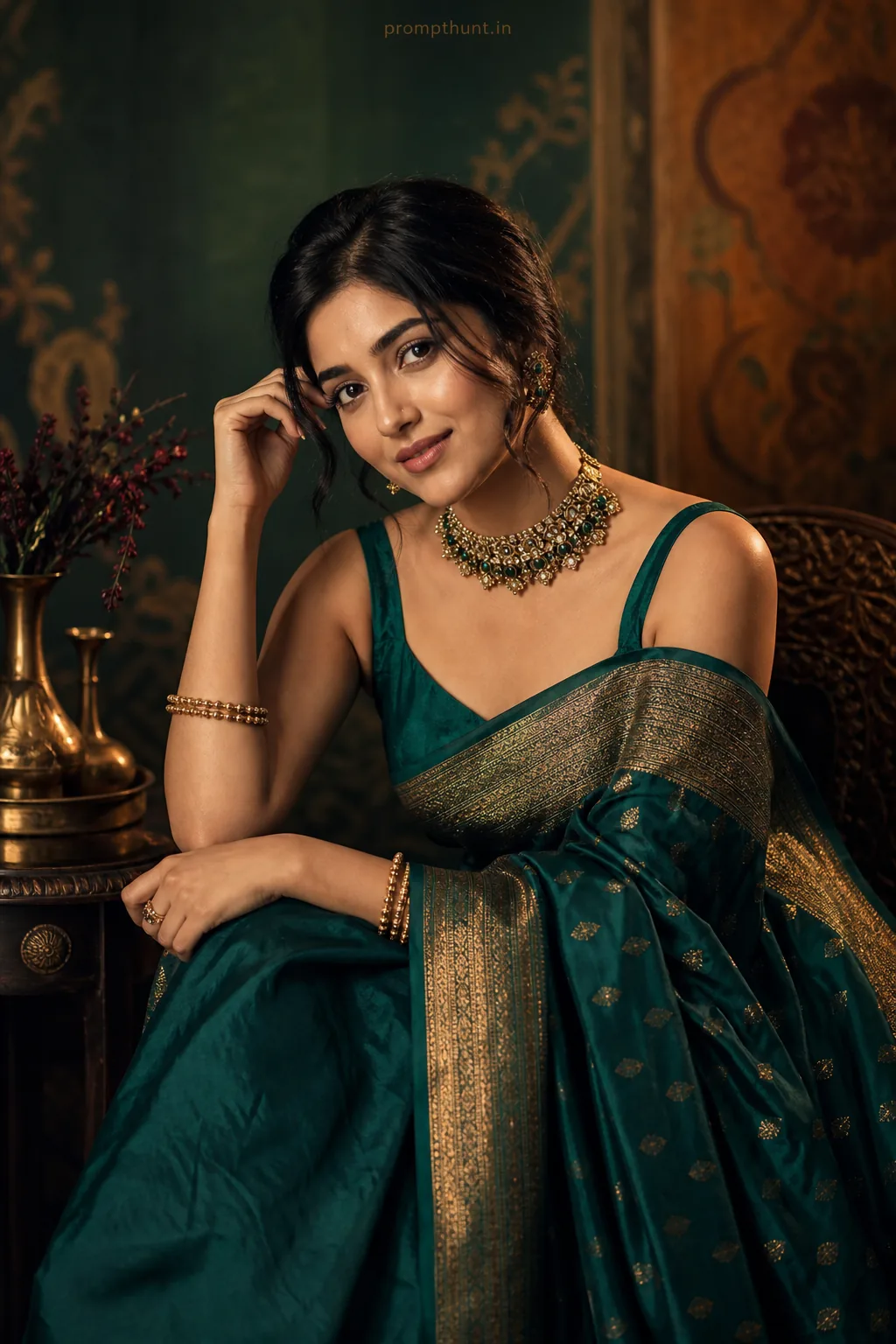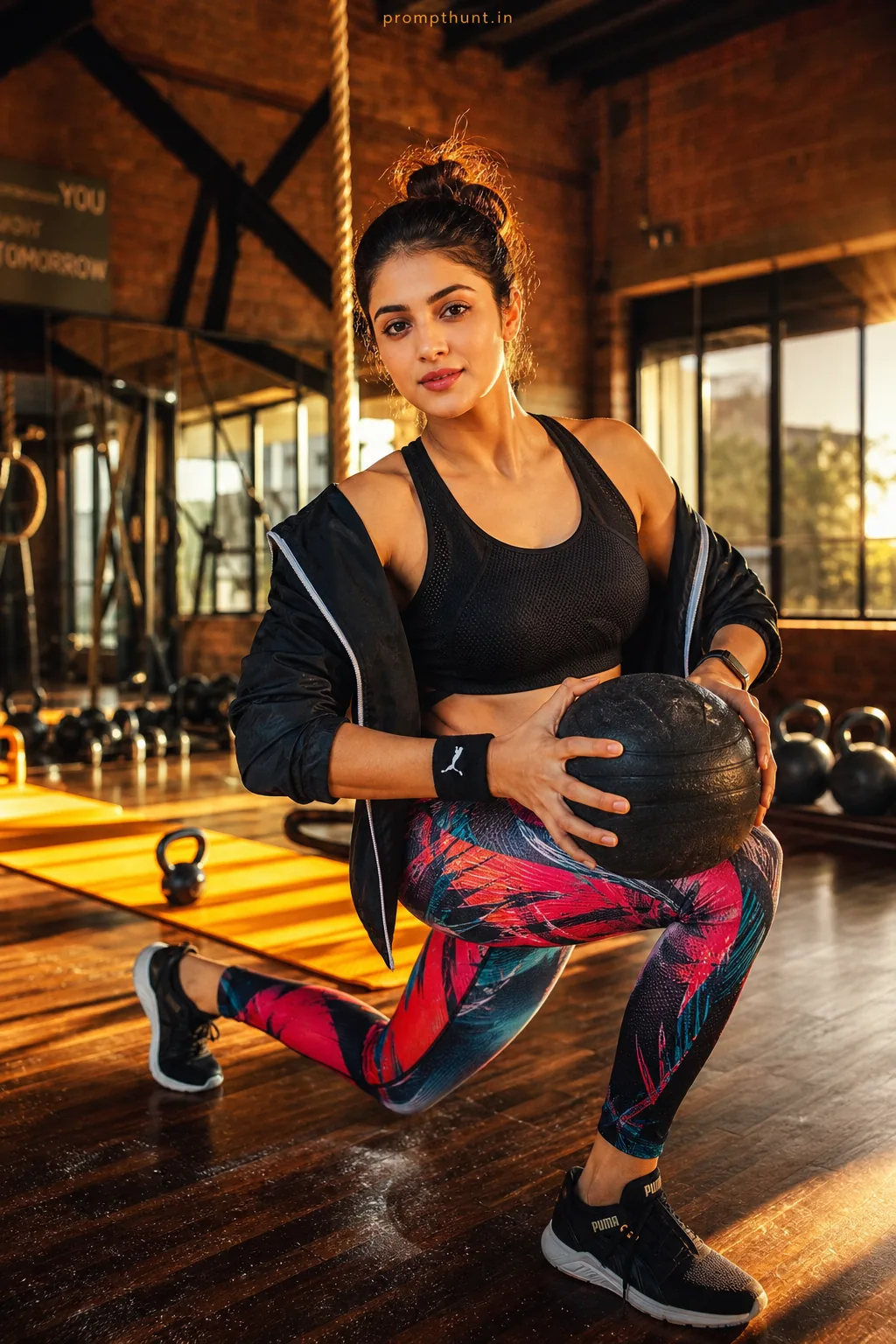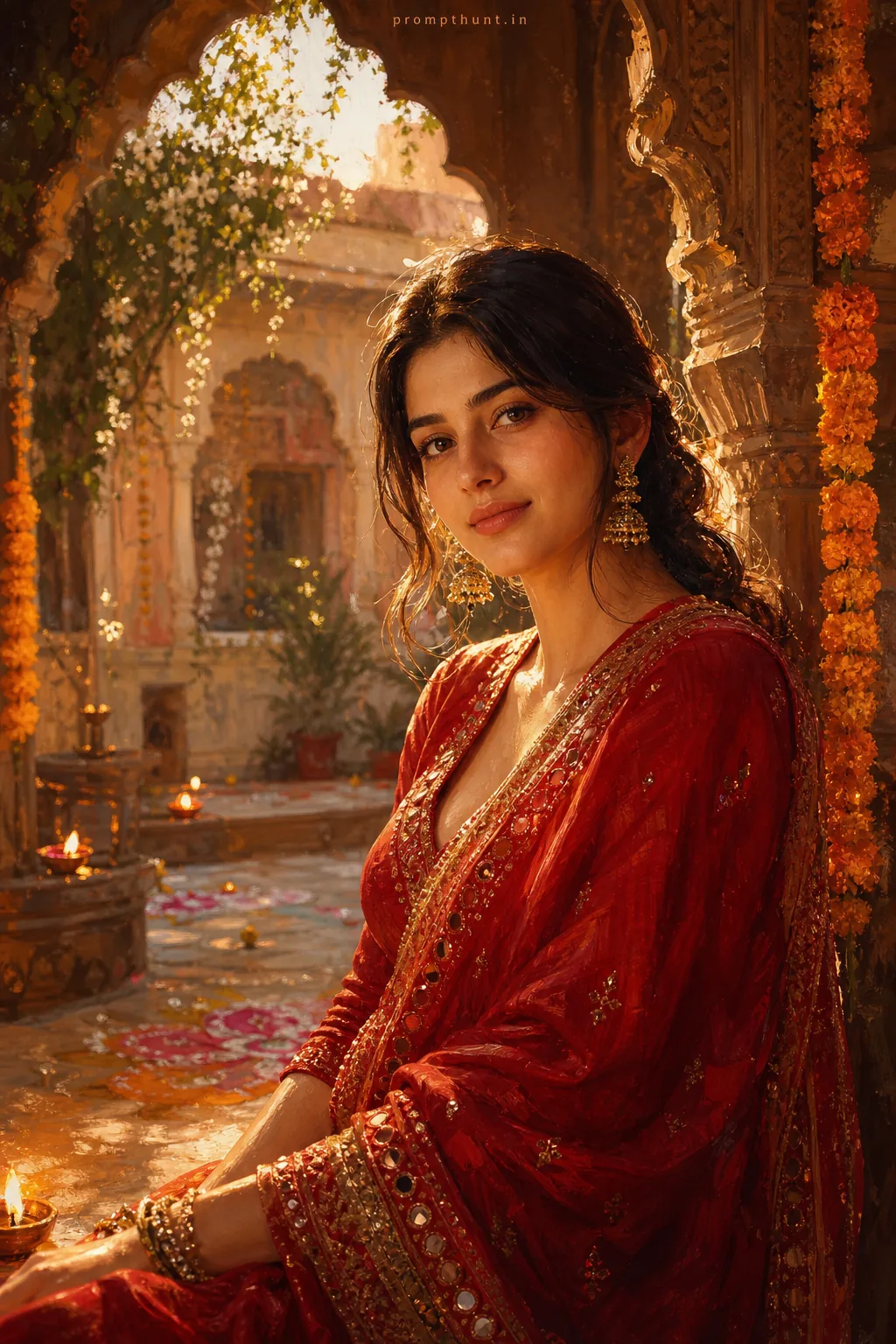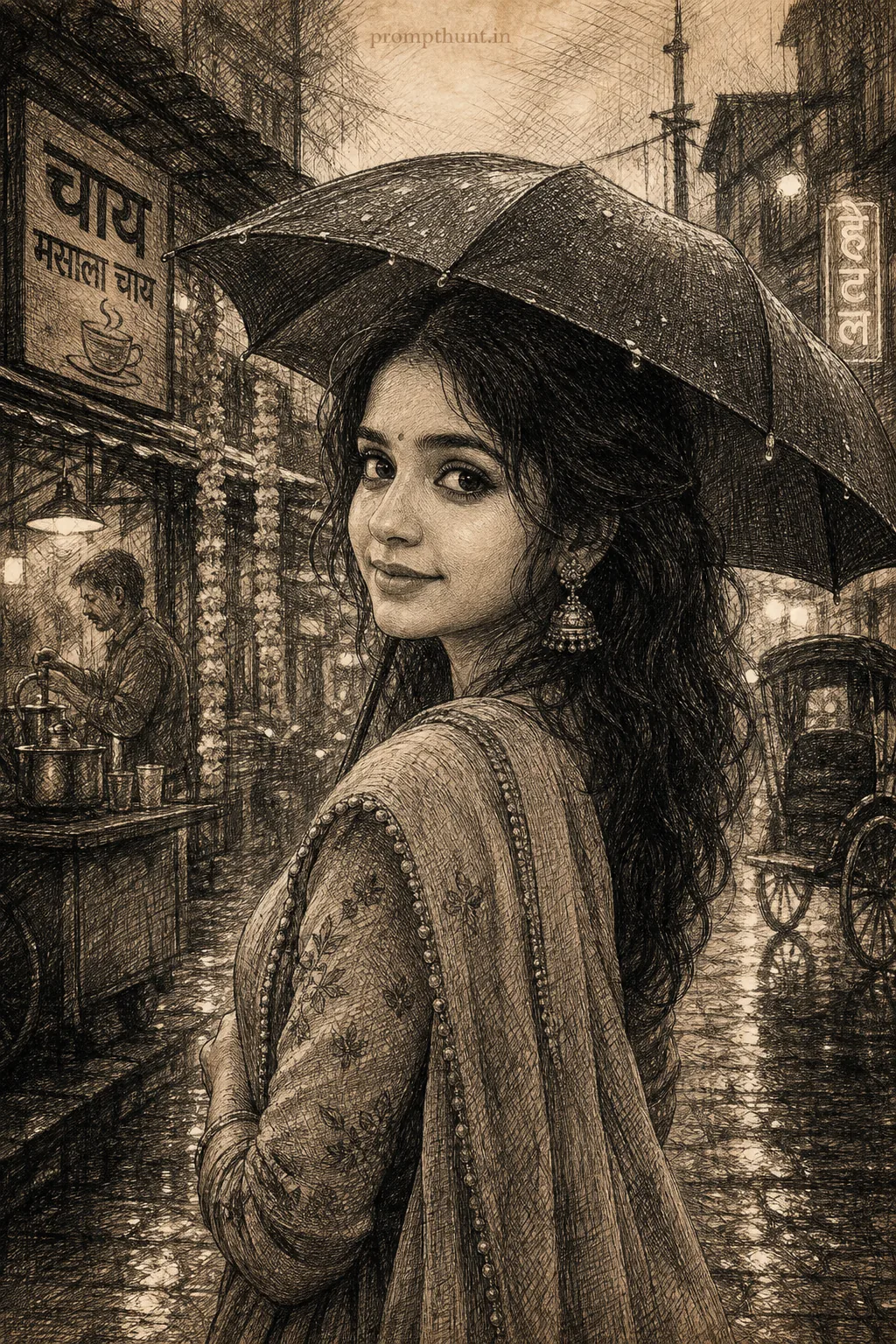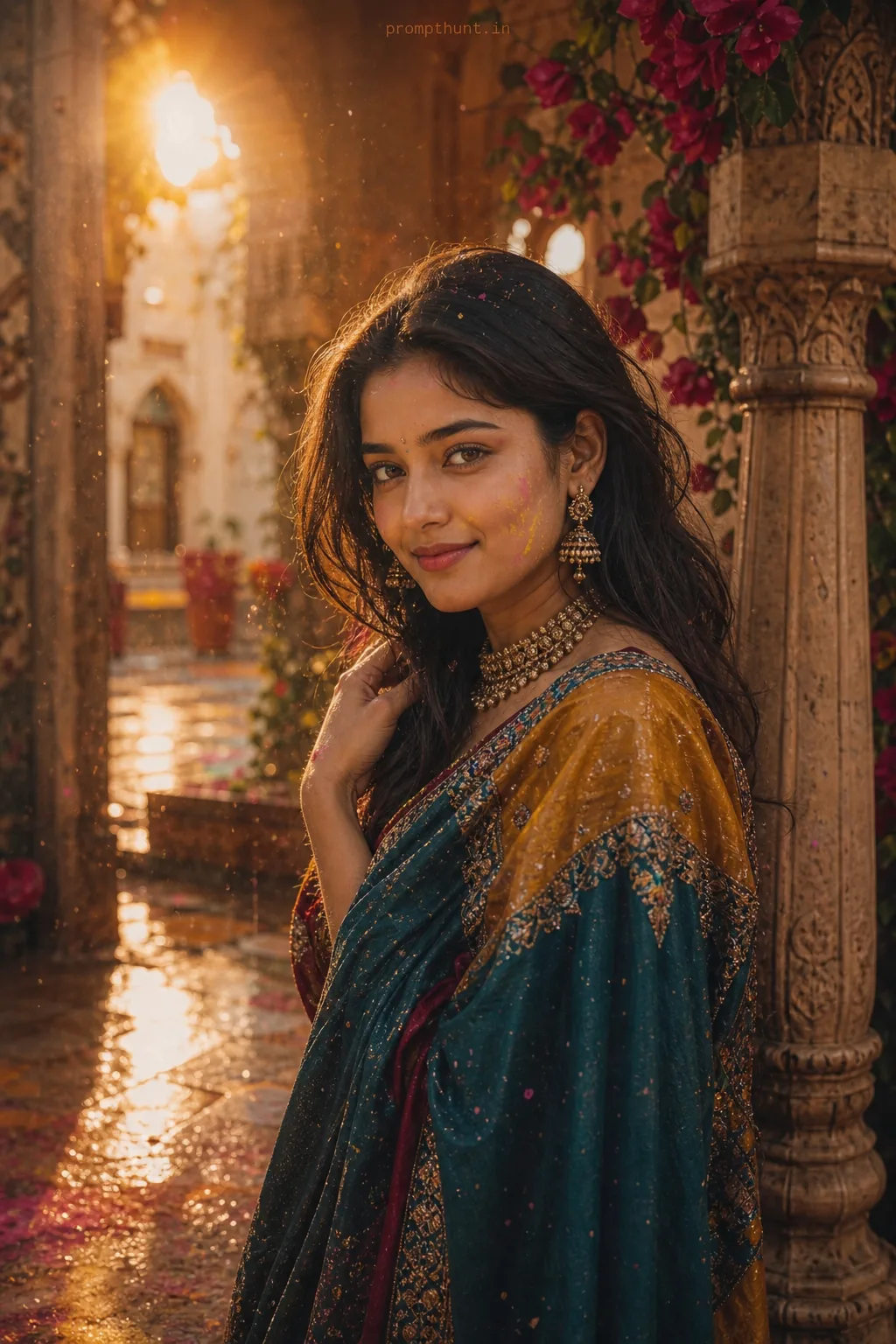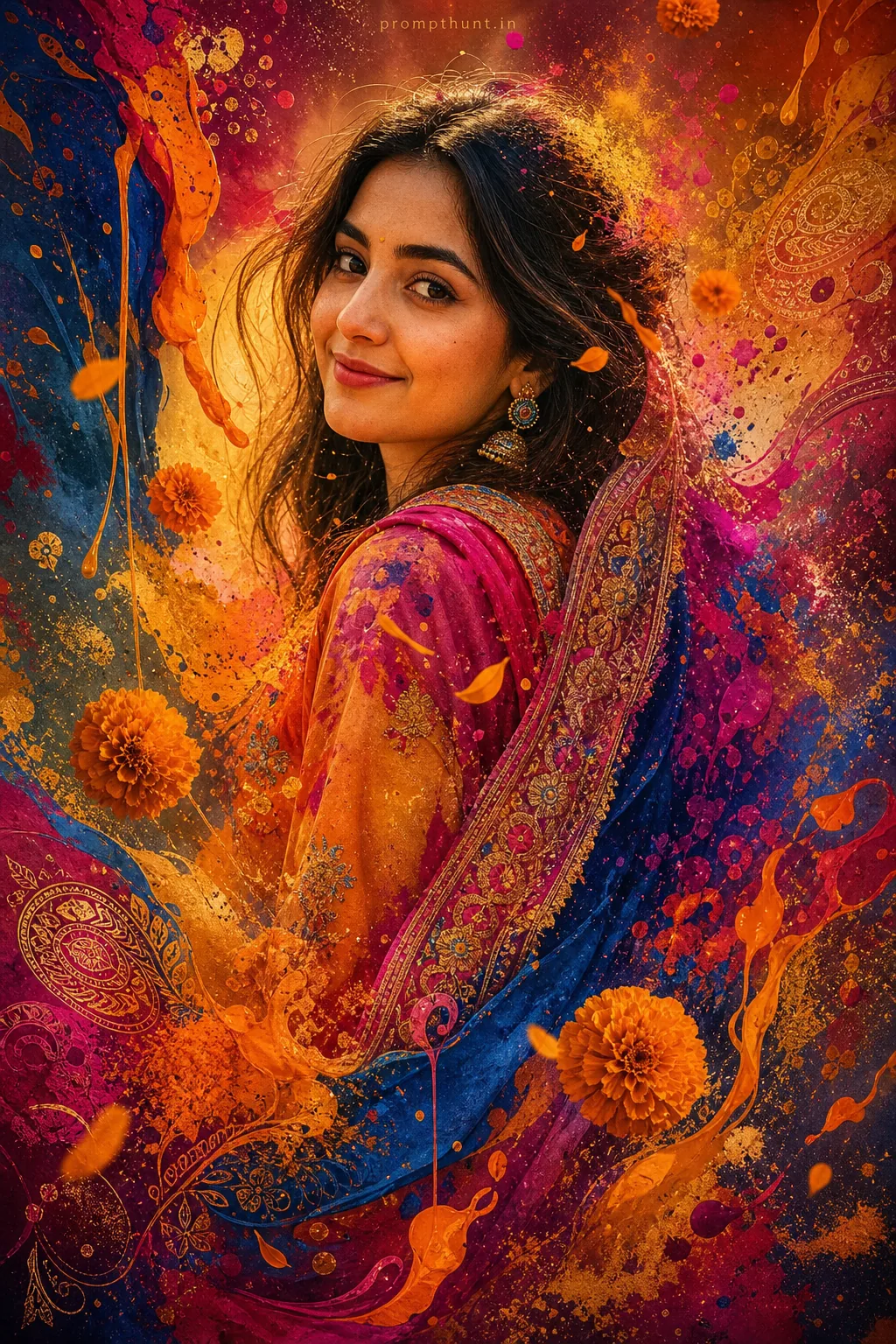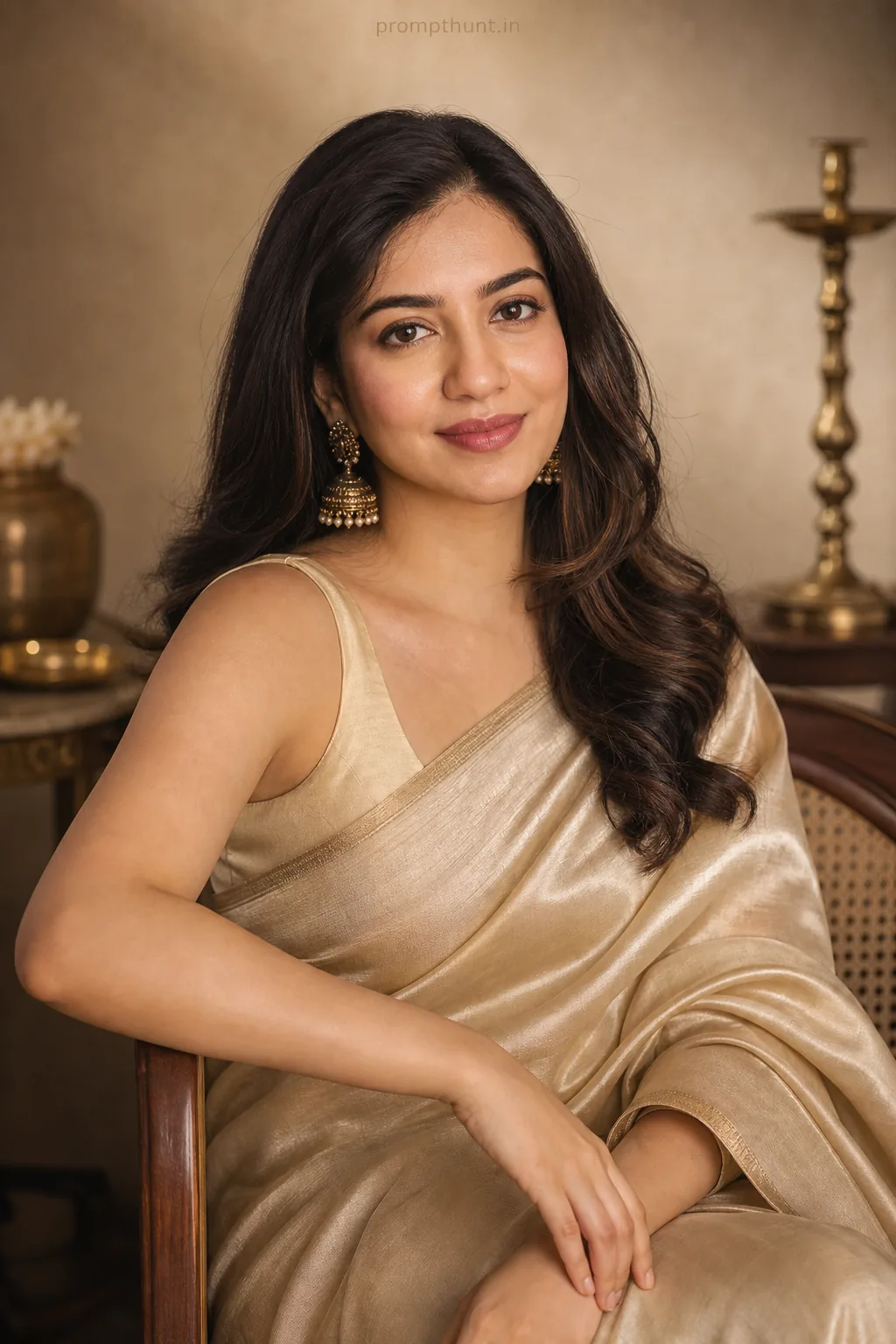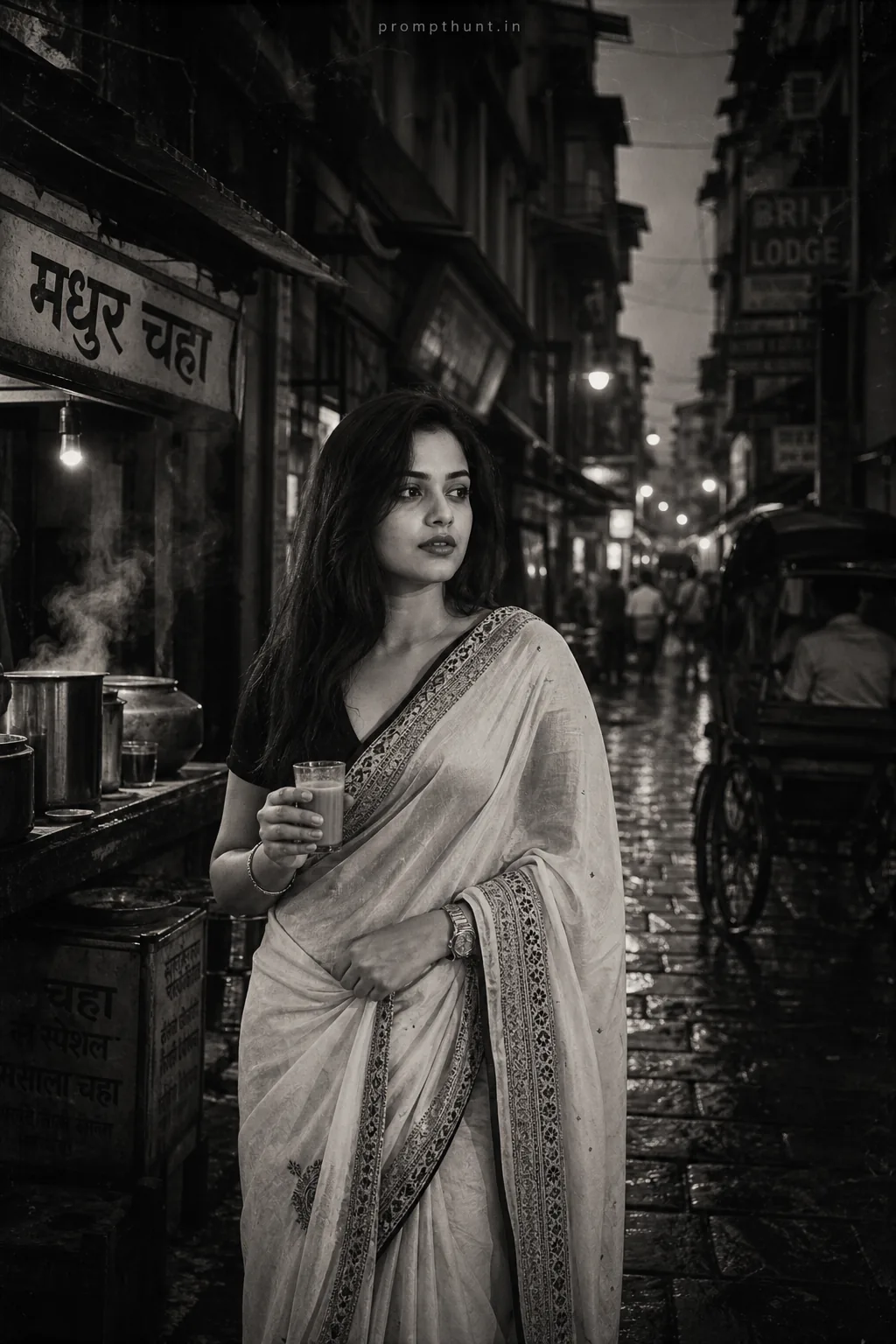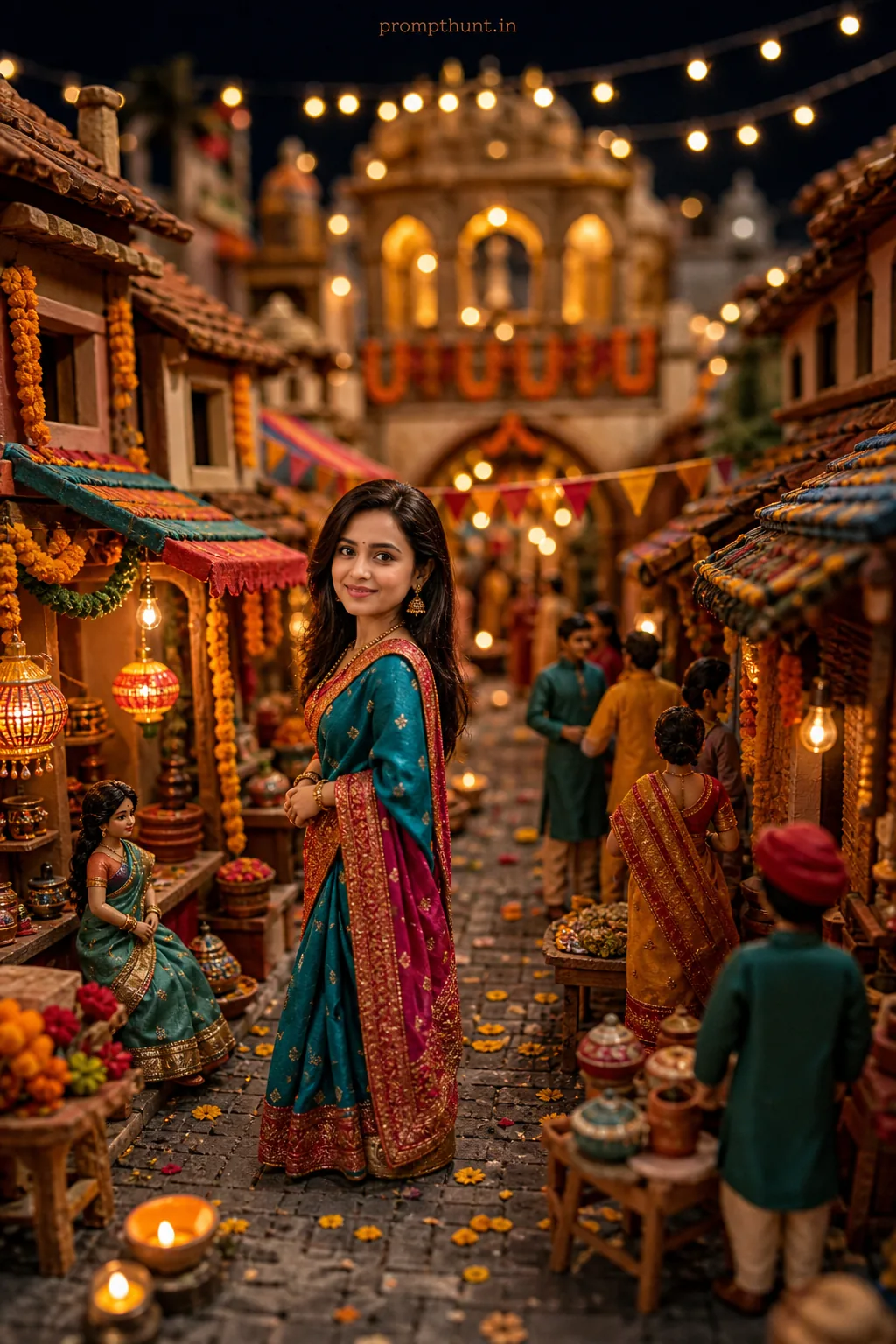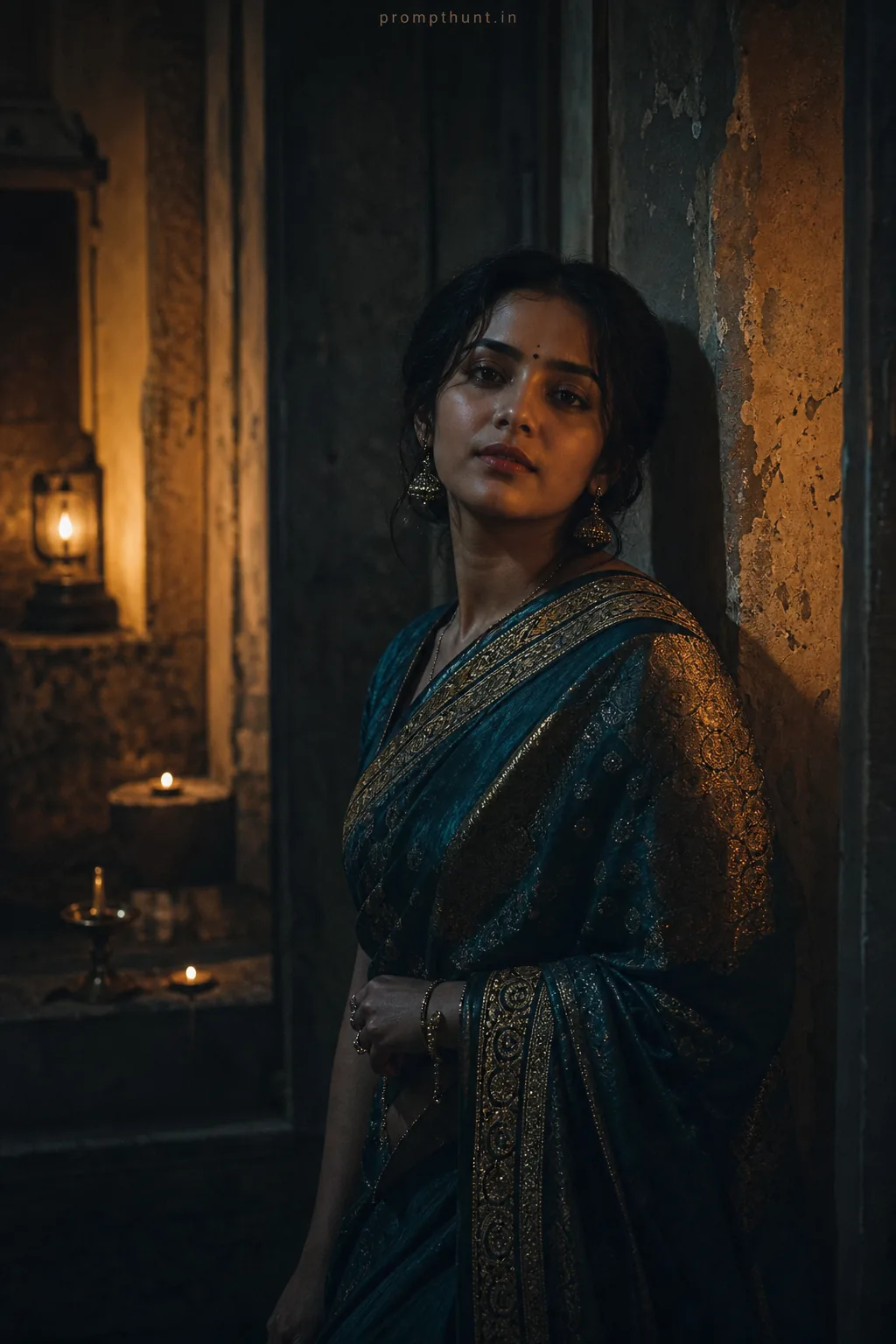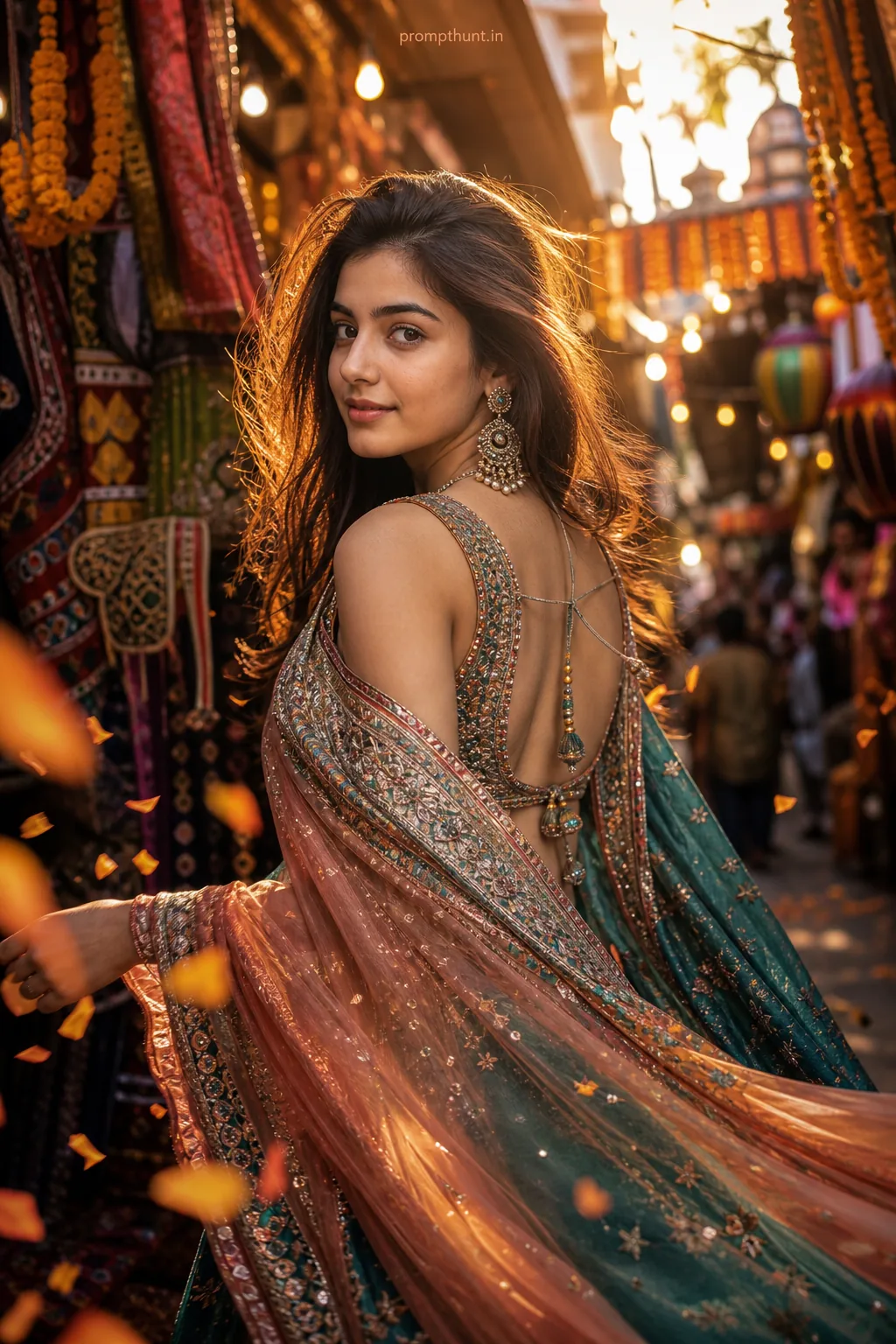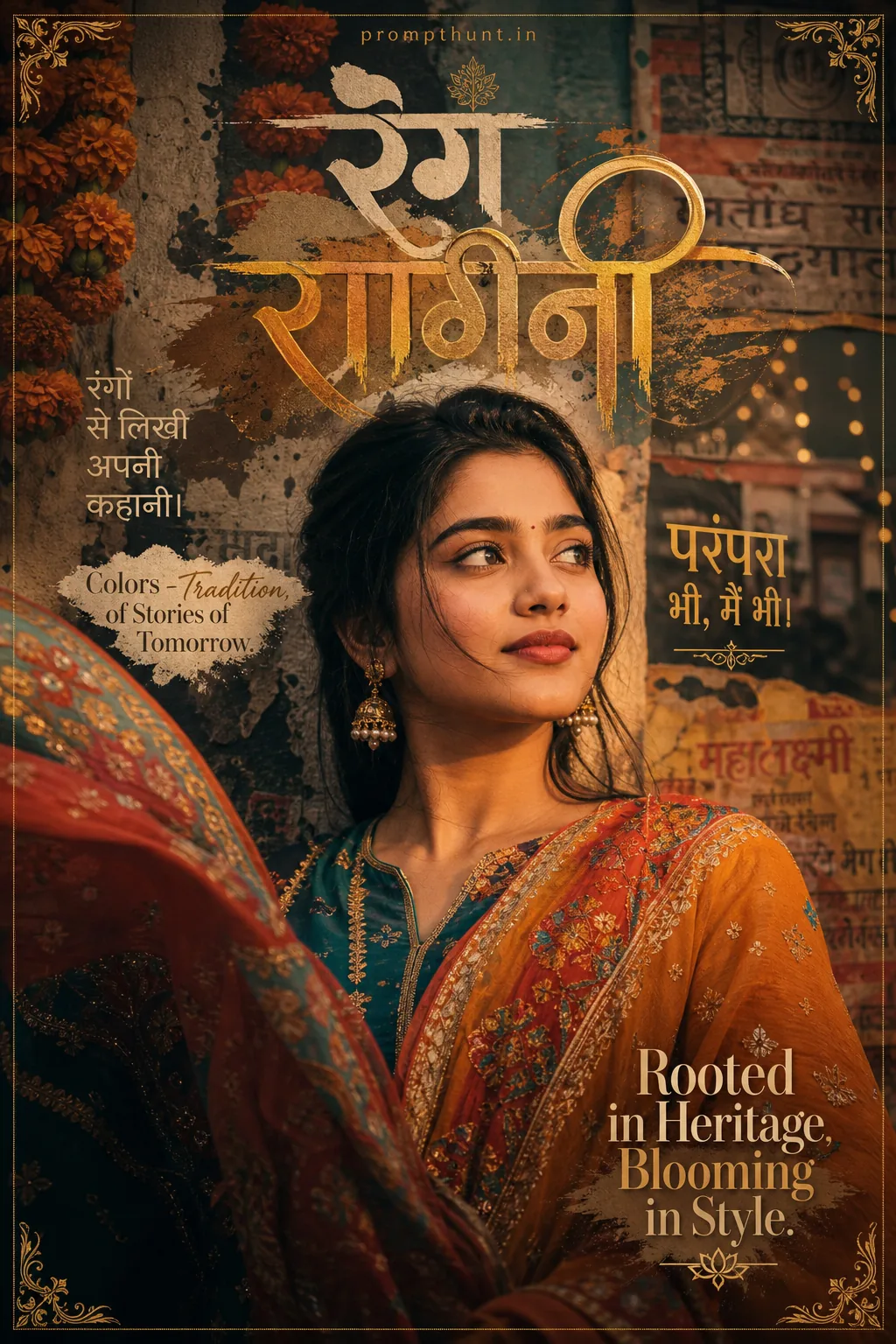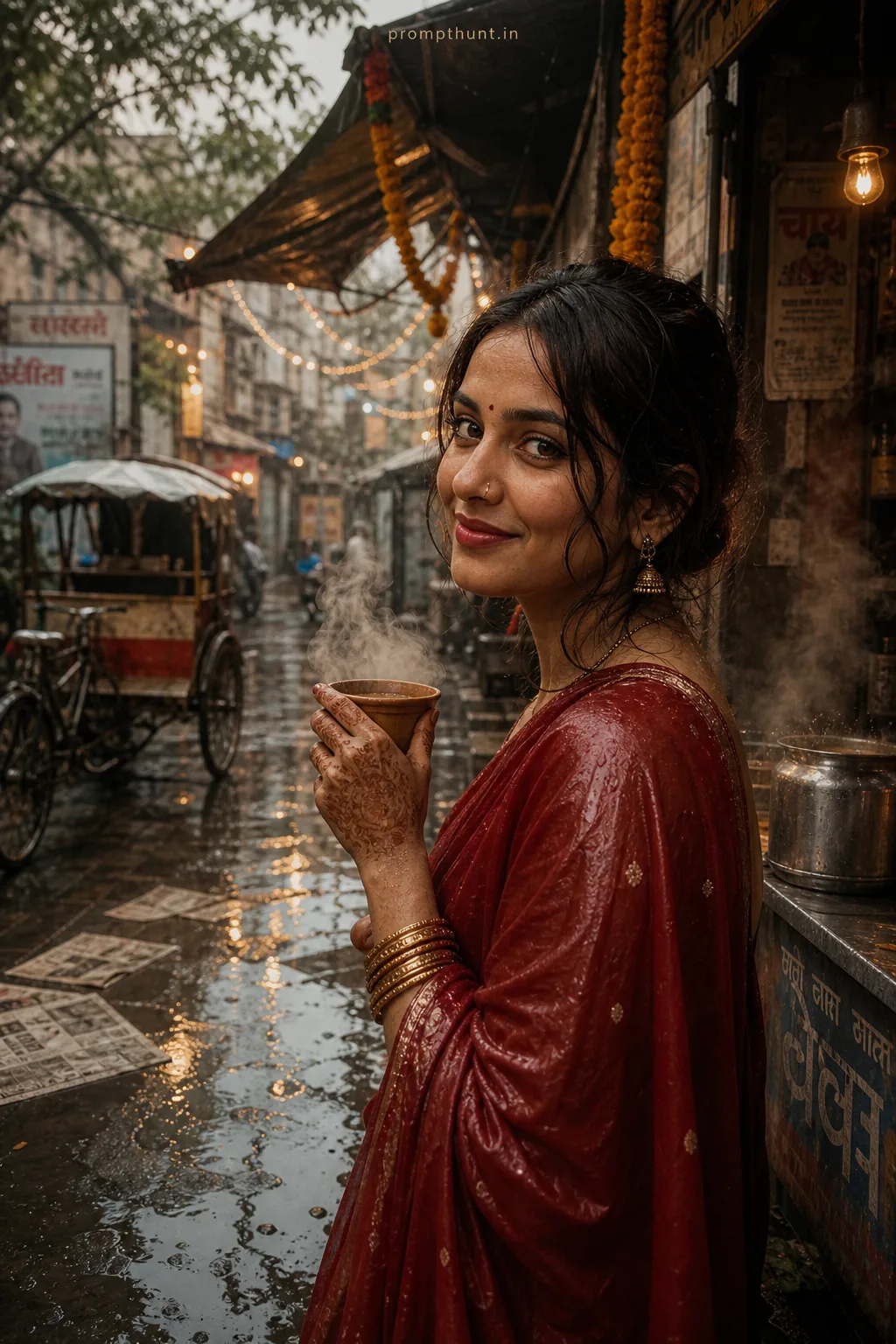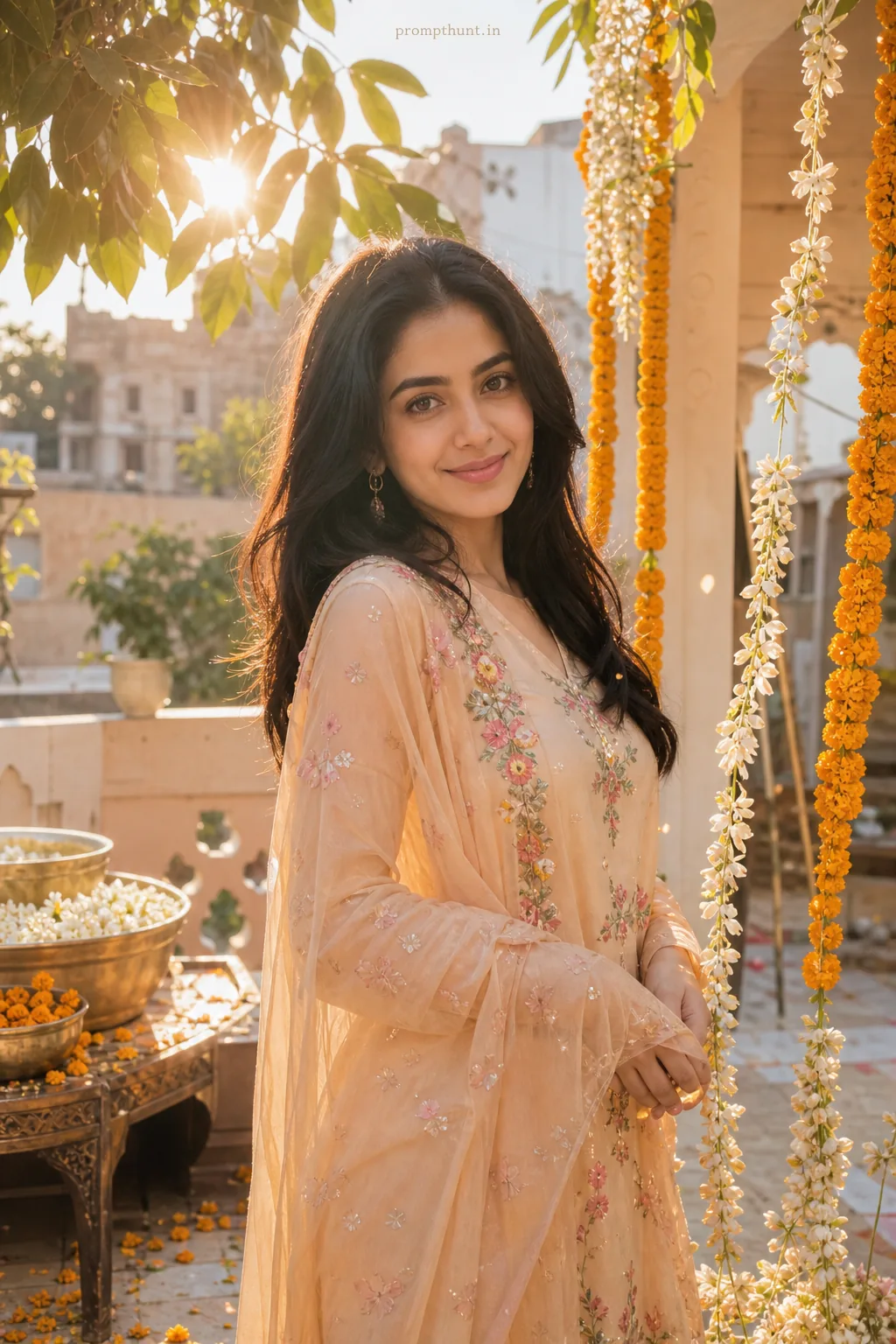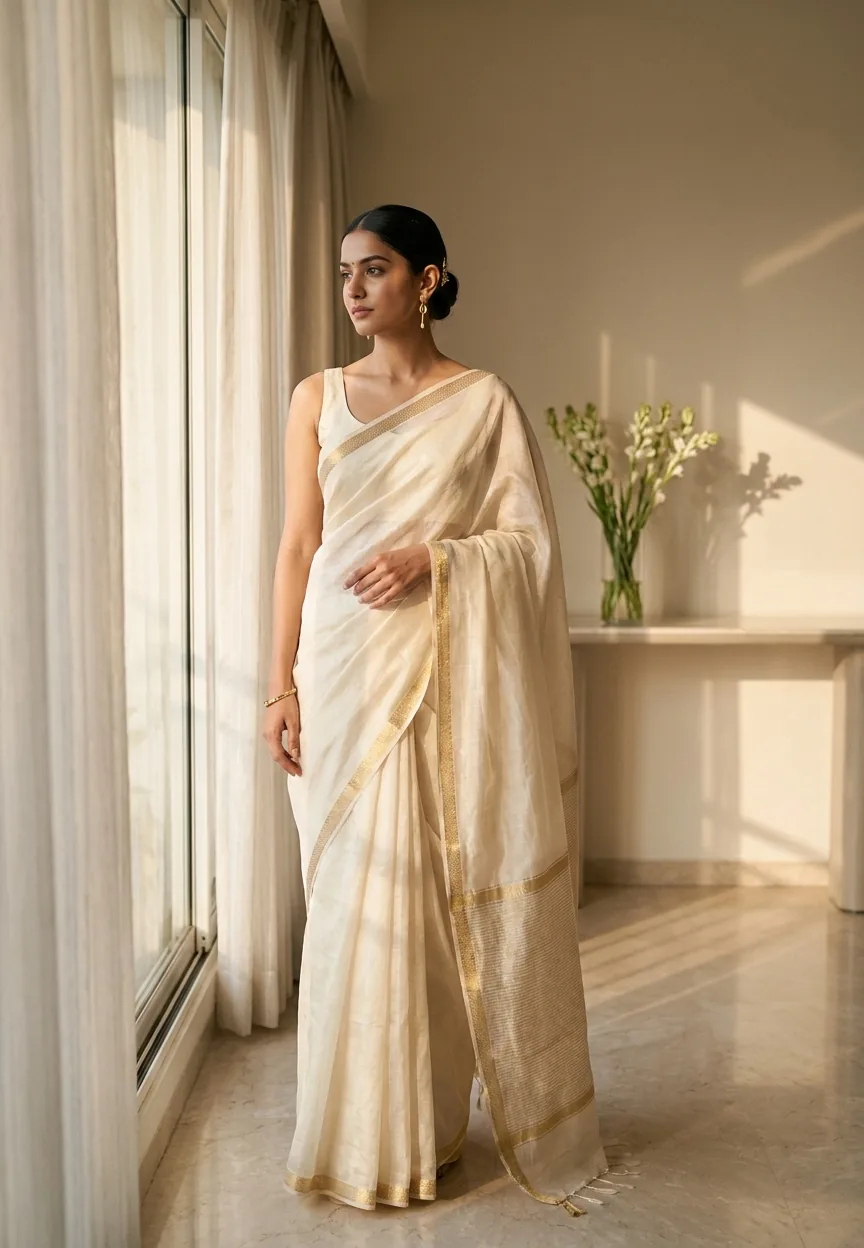
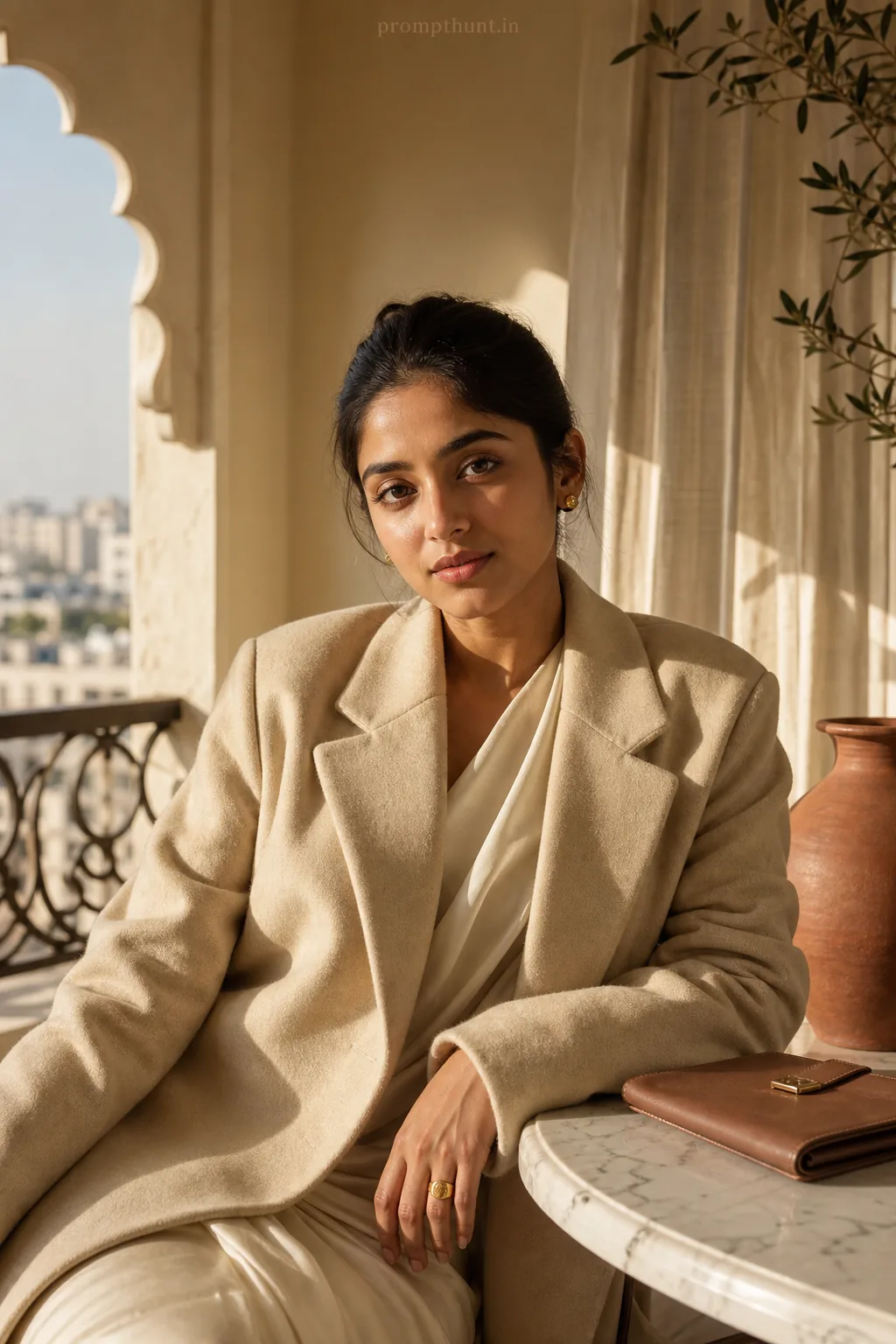
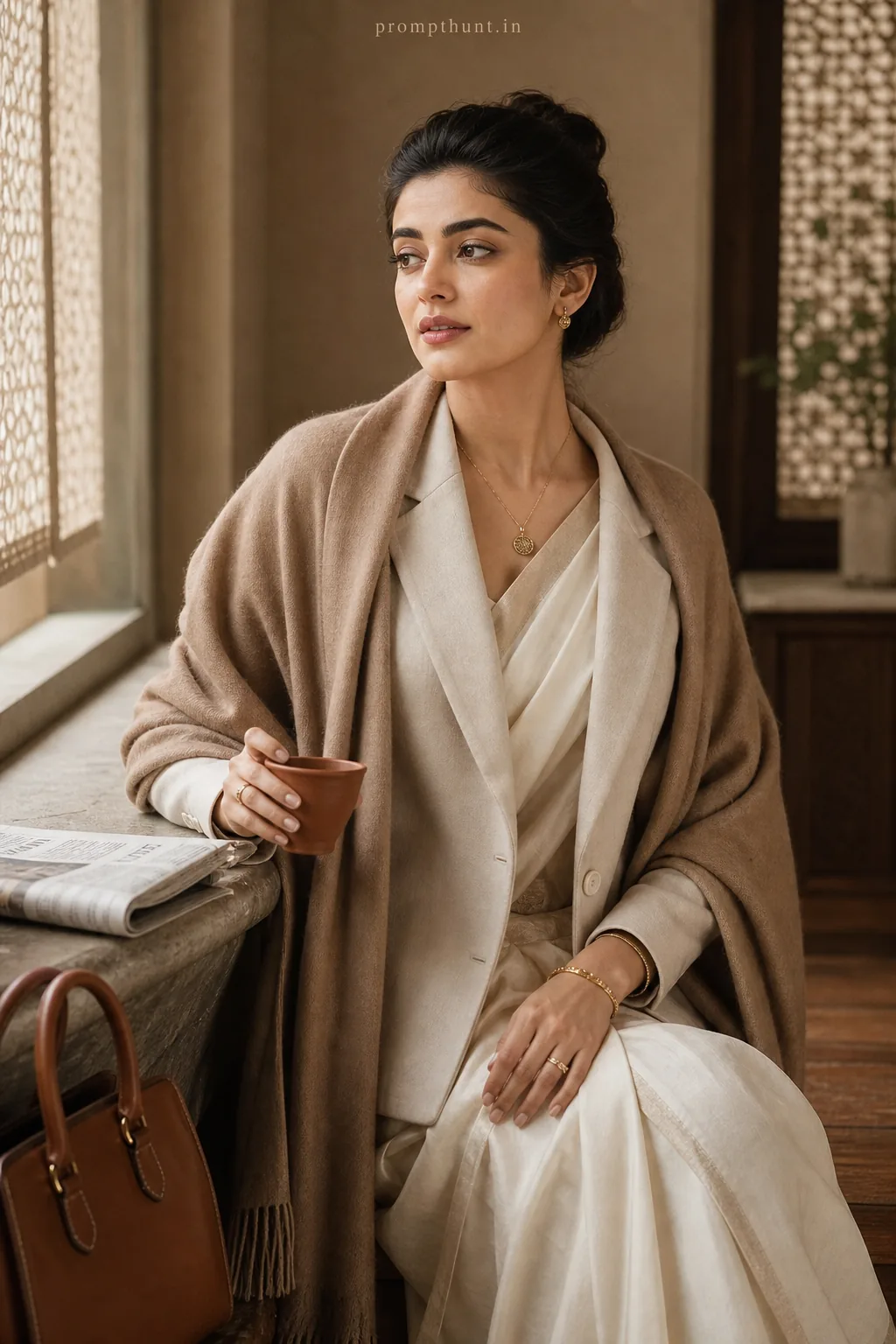
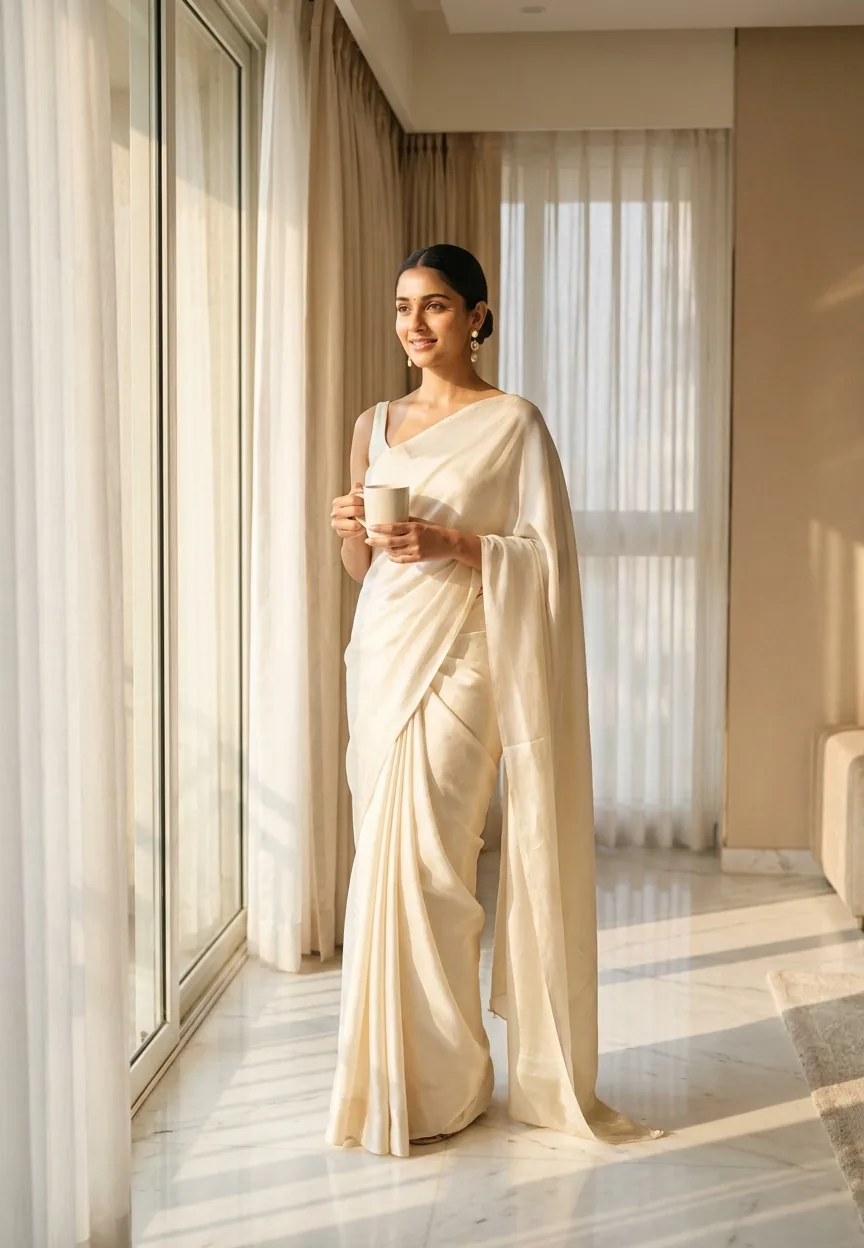

The Quiet Luxury saree editorial prompt creates a high-fashion AI image of an Indian woman in a minimalist Mumbai apartment wearing an ivory chanderi silk saree — using warm champagne tones, soft morning light, shallow depth of field, and restrained gold accents to produce understated, magazine-quality elegance without a single loud element in frame.
There's a certain kind of beautiful that doesn't announce itself. No sequins. No noise. Just a woman in a perfectly draped saree standing in morning light, looking like she owns three floors of a Bandra building and doesn't need to tell you about it. That's Quiet Luxury — and right now, it's the most searched AI photo editing style in India for a reason. This prompt nails it. Let's get into it.
Use this Gemini AI prompt to generate a cinematic, high-fashion portrait of a woman in an ivory chanderi saree — warm light, muted interiors, no heavy jewellery, pure understated elegance.
Quiet Luxury Is the Opposite of Loud — and That's the Point
Quiet Luxury as an aesthetic is simple to explain: wealth that whispers. Think Loro Piana over Louis Vuitton logos. Think marble floors and fresh tuberoses over crystal chandeliers and velvet drapes.
In the Indian context, it translates beautifully. A handwoven chanderi saree tells more of a story than a heavily embroidered lehenga. A 22k gold drop earring says more than a full bridal set. Less, done precisely right, is the entire brief.
The AI photo version of this style leans on a very specific visual language: warm champagne and taupe colour grading, shallow depth of field, film grain, ultra-realistic skin texture, and soft natural light. No filters that look like filters. No dramatic shadows. Nothing that screams "edited."
It's the hardest aesthetic to fake — and the easiest to ruin by adding one thing too many. (This is me speaking from painful personal experience involving a prompt that included "gold chandeliers" and produced something that looked like a Diwali pop-up stall.)
The Prompt That Actually Works
Here it is. Use it exactly. Resist the urge to add things.
A strikingly elegant Indian woman in her late 20s standing in a sunlit minimalist Mumbai apartment, wearing a pristine ivory handwoven chanderi silk saree with subtle gold zari border, paired with a fitted sleeveless blouse in warm cream, hair pulled back into a sleek low bun with a single delicate gold pin, wearing understated 22k gold drop earrings and a thin gold kada bracelet, expression calm and confident, soft natural morning light streaming through large floor-to-ceiling windows casting warm golden shadows, muted neutral interior with cream walls and marble flooring, fresh white tuberose arrangement in background, shot in vertical 9:13 portrait editorial style, shallow depth of field, warm beige and ivory tones, ultra-realistic skin texture, film grain aesthetic, high-fashion magazine quality, hyper-detailed fabric texture on saree, cinematic color grading in warm champagne and taupe tones, no heavy jewelry, no bold colors, pure understated opulence
How to Use This in Gemini — Three Steps, No Surprises
Open Google Gemini. You want Gemini Advanced with image generation turned on — the free tier sometimes struggles with the fabric detail here.
Paste the prompt in full. Don't summarise it. Don't rephrase. The specificity is doing the heavy lifting. "Handwoven chanderi silk" tells the model something very different from "saree." Every detail is load-bearing.
Run it two or three times. Gemini is not a vending machine — you won't get the identical result twice. The first generation gives you a baseline. The second usually sharpens the fabric texture. The third is often where the lighting really settles into that warm champagne tone the prompt is asking for. Pick the best one. Done.
If the output is reading too bright or too editorial-magazine-glossy, add "analogue film grain, slightly underexposed, soft matte finish" at the end of the prompt on your next run. That tends to bring it back to the quieter, more intimate register the style needs.
Five Things That Make or Break This Style
Keep the jewellery language intact. The prompt says "no heavy jewelry" for a reason. The moment you swap in a statement necklace or a maang tikka, the entire tonal register shifts. Quiet Luxury is about restraint. The gold kada bracelet and the drop earrings are already doing enough.
Don't change the interior. Cream walls and marble flooring aren't decoration — they're contrast. The ivory saree needs a neutral background to read as sophisticated rather than washed out. Swap in a printed wallpaper and you've got a catalogue shoot, not an editorial.
The tuberose arrangement matters more than you'd think. White florals in the background create a soft visual anchor without adding colour. It's a small detail that stops the image feeling empty. Leave it in.
Film grain is your friend. A lot of people instinctively try to remove grain cues from AI prompts because they want "clean" images. Here, the grain is what separates this from a generic stock photo. It adds age, texture, and a kind of lived-in quality that high-fashion film photography has always used.
The 9:13 vertical ratio is non-negotiable for editorial use. If you're adapting this for Instagram Reels covers or Pinterest, it's already formatted correctly. For a standard post, you can trim to 4:5 from the centre.
Why This Is Trending Hard in India Right Now
Quiet Luxury hit the global fashion conversation hard in 2023 via HBO's Succession, but India caught the specific saree version of it about eighteen months later — and when it landed, it landed properly.
There are a few reasons. The middle-class aspiration narrative in Indian fashion has been shifting away from maximalism for a while. Brides and their sisters are increasingly choosing handloom over heavy embroidery. Designers like Anavila Misra and labels built around quiet cotton and silk have been growing steadily. The aesthetic was already moving in this direction culturally.
AI image generation made it visual and shareable. Instead of waiting for a photographer, a studio, and the actual saree, anyone can now generate what this look feels like — and post it. That's a powerful thing. The images spread. People search the prompt. The prompt spreads further. Nine times out of ten, this is how a visual trend becomes a search trend.
There's also something genuinely resonant about a high-fashion visual language built around Indian textiles and Indian spaces. Mumbai apartments. Tuberose. Chanderi silk. It's not borrowing from a Western minimalism template — it's finding the Indian version of it. That specificity is what gives the prompt its pull.
Honest Take — When Not to Use This Prompt
Let's be straight about a few things.
This prompt is not designed for variety. It does one thing exceptionally well — a calm, warm, editorial portrait in a specific tonal register. If you want energy, movement, celebration, festivity, or drama, this is the wrong tool. Trying to bend Quiet Luxury into a wedding reception setting or a colourful festive context is like asking Jiro to make you a burrito. Technically possible. Spiritually wrong.
The hyper-realistic skin texture cue works well in Gemini but can occasionally produce odd results around the hands and wrists — particularly around the kada bracelet. If that's coming out strangely, add "realistic natural hands, correct finger proportion" to the prompt and run it again. It's a known quirk, not a dealbreaker.
This also isn't the prompt to use if you want something that reads distinctly Indian in a festive or celebratory sense. Quiet Luxury, almost by definition, removes cultural noise. The chanderi saree and the Mumbai apartment are Indian, yes — but the overall visual register is global editorial. That's a deliberate trade-off. Some people love it. Some people feel it flattens something. Fair enough either way — just know what you're getting before you generate thirty versions.
And finally: if you're using this for actual fashion or brand content, pair it with a real art director. AI-generated editorial images are a starting point for a mood board, a reference for a shoot, a way to quickly test a visual concept. They're genuinely useful. They're not a replacement for a photographer who understands light. That person still earns their day rate, and rightly so.
The Bottom Line
The Quiet Luxury saree prompt is one of the cleaner, more culturally specific AI editorial prompts doing the rounds right now. It works because every element earns its place — the chanderi silk, the morning light, the film grain, the tuberose. Nothing is there by accident. Use it in Gemini, run it a few times, resist the urge to add a chandelier, and you'll get something genuinely beautiful.
Understated elegance, they call it. The kind of image that makes people ask "who shot this?" rather than "what app did you use?" Which, if you think about it, is the most Quiet Luxury outcome of all — the flex so quiet, the technology itself becomes invisible.
Now if you'll excuse me, I have seventeen more chandelier-ruined prompts to go and quietly delete.