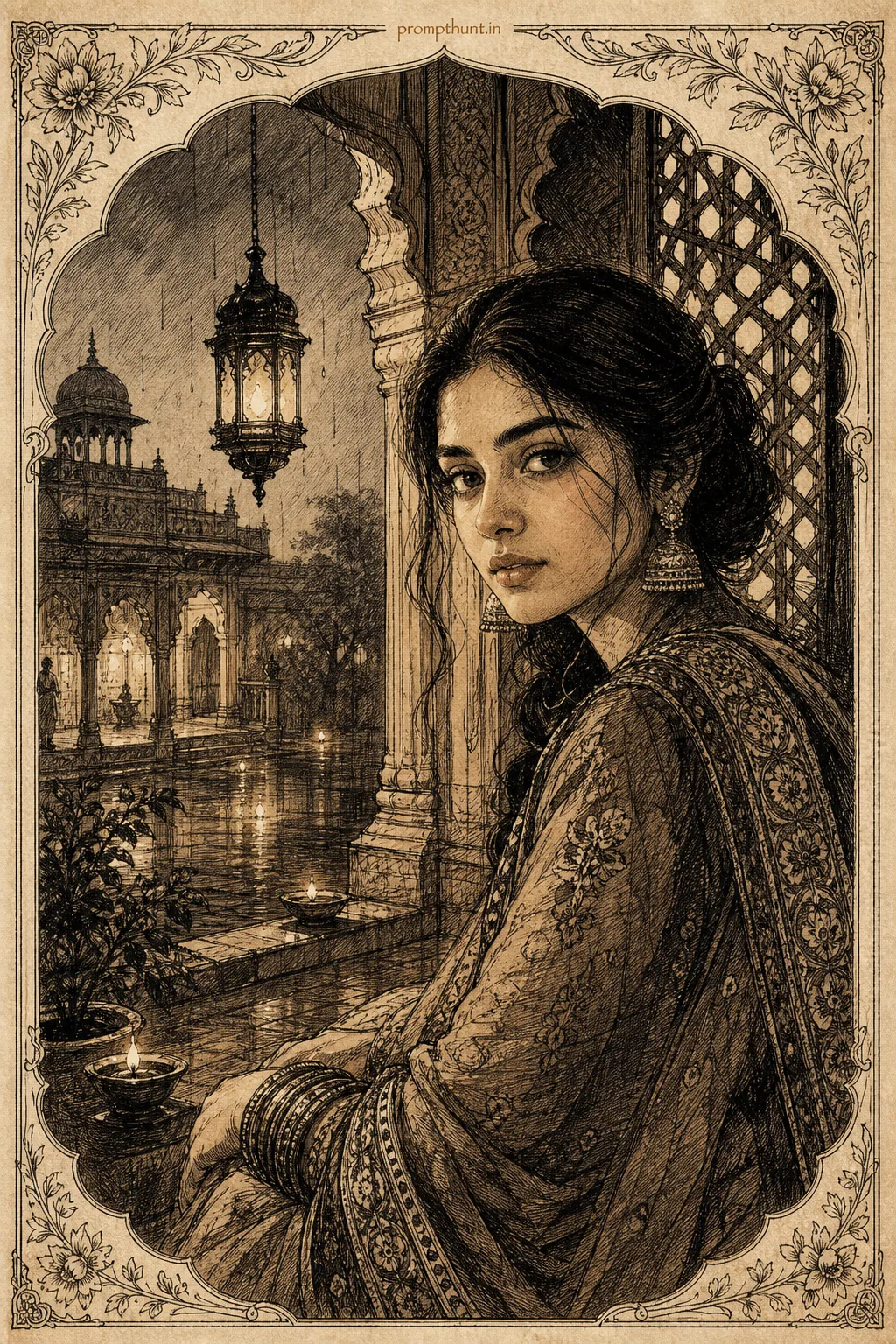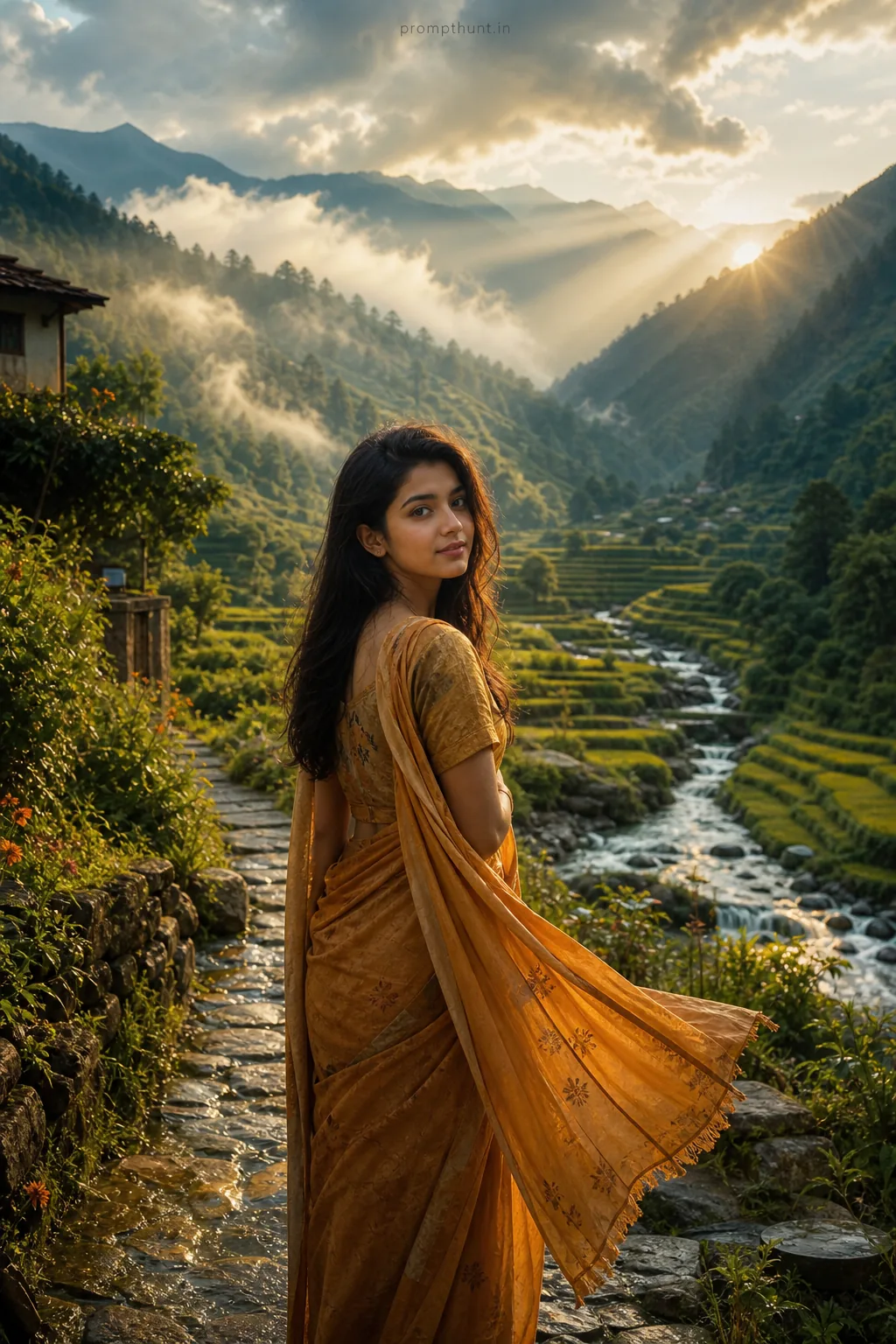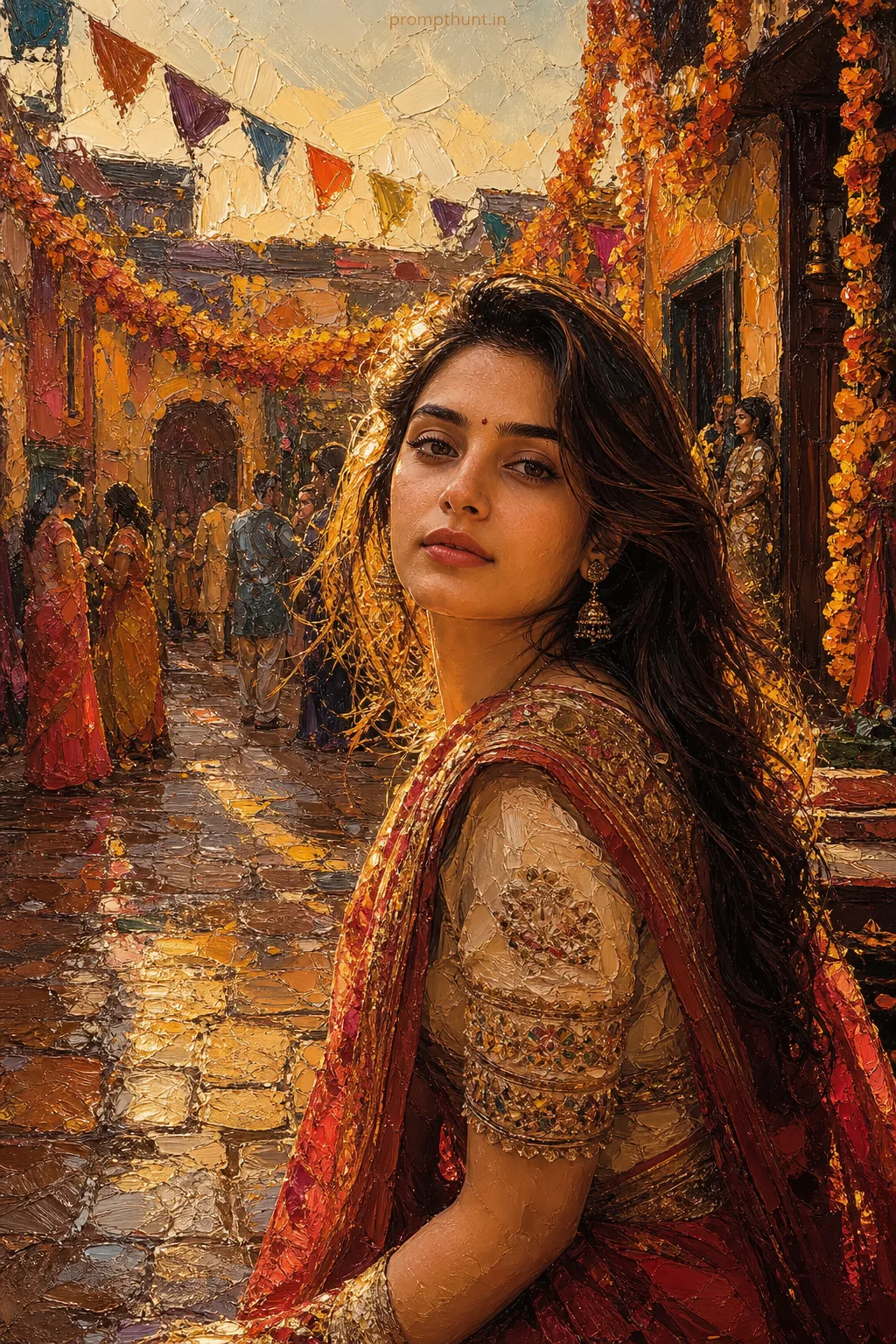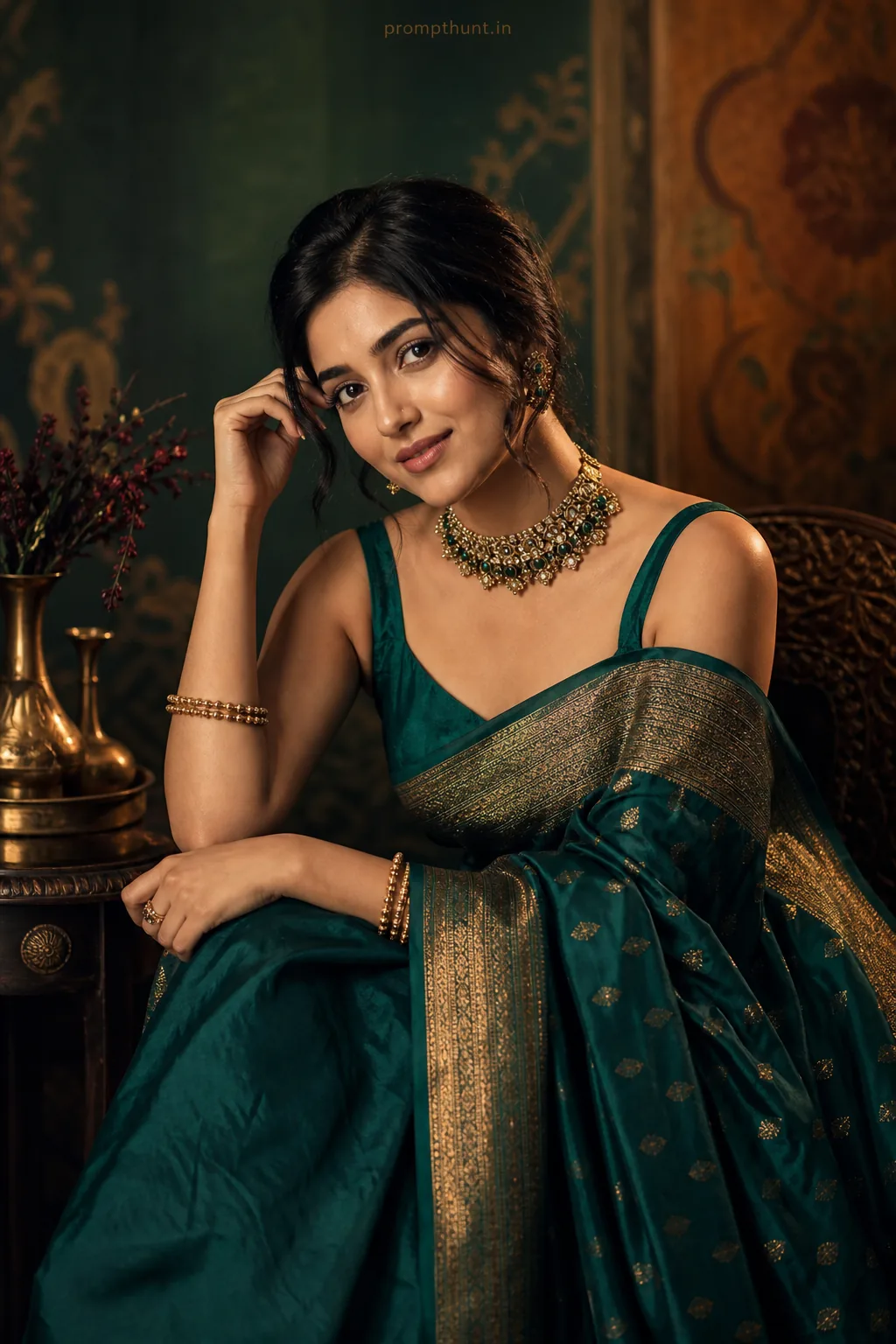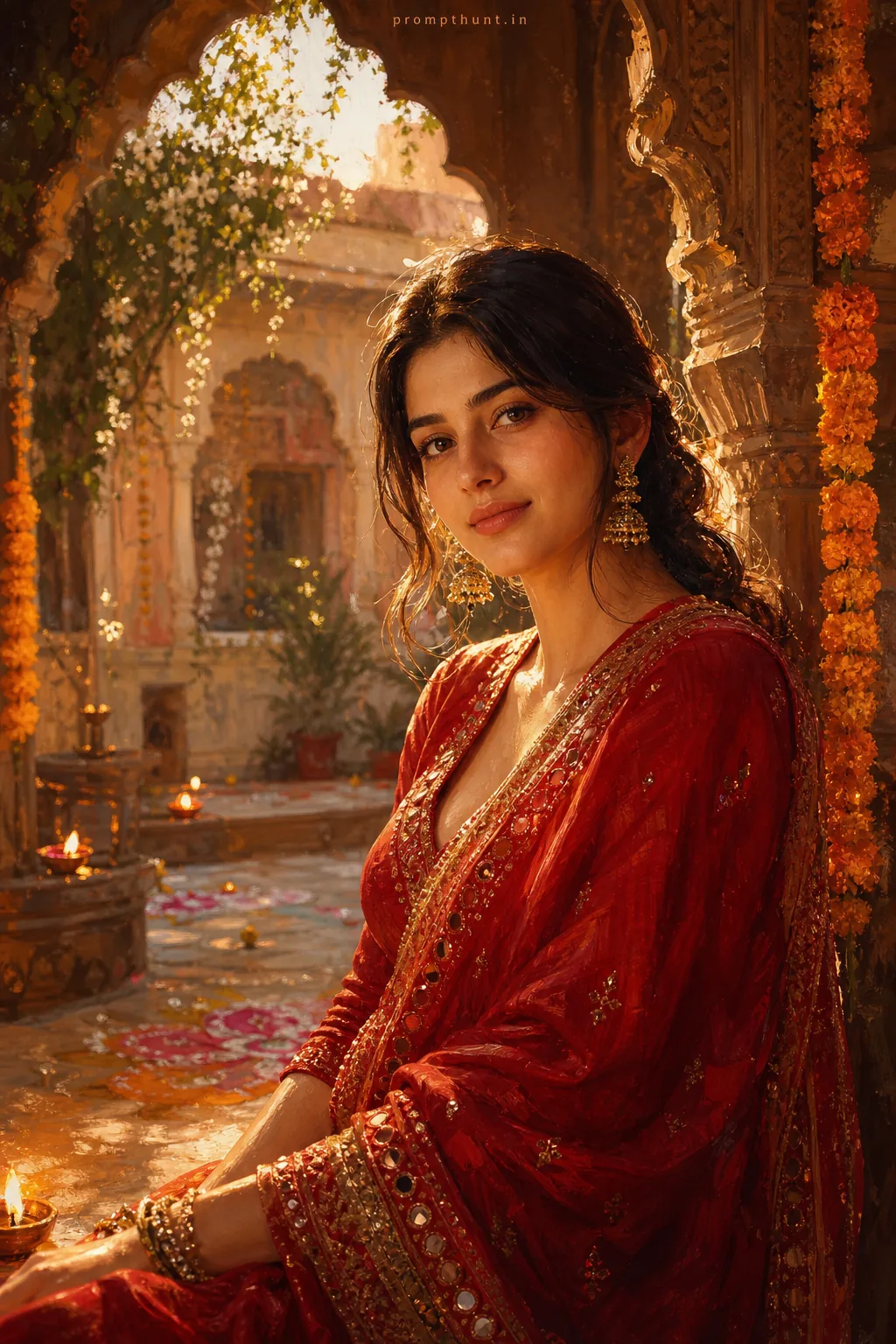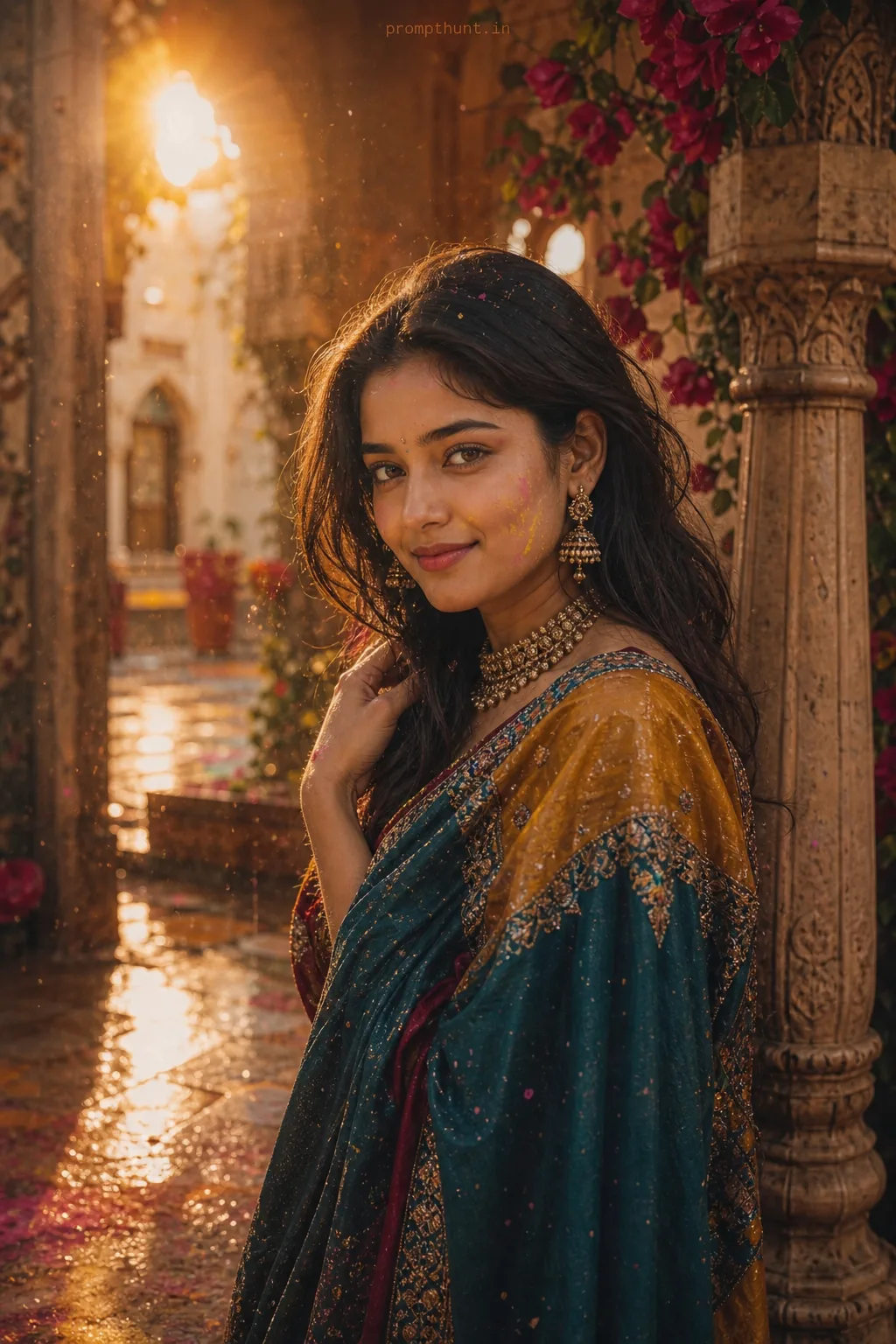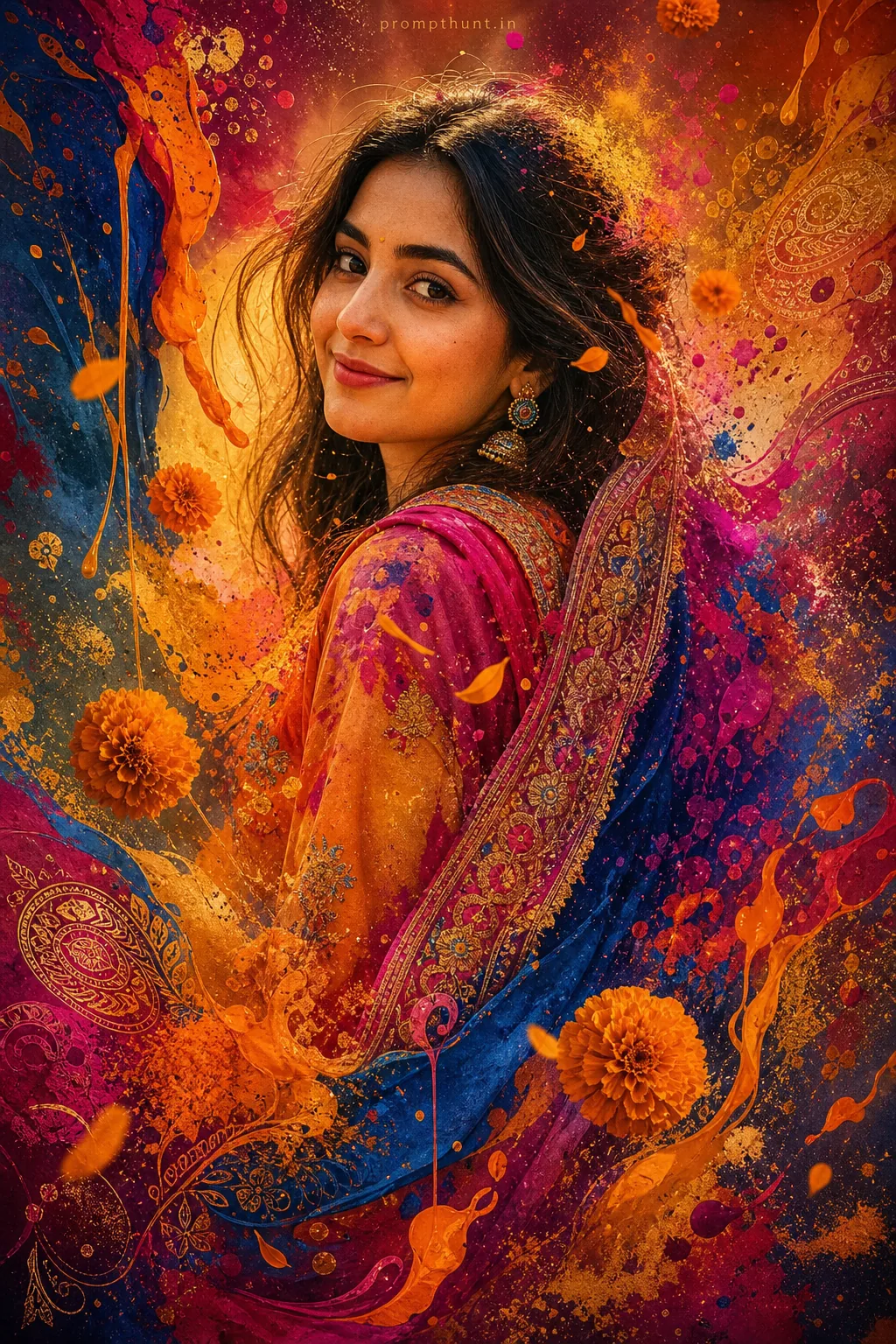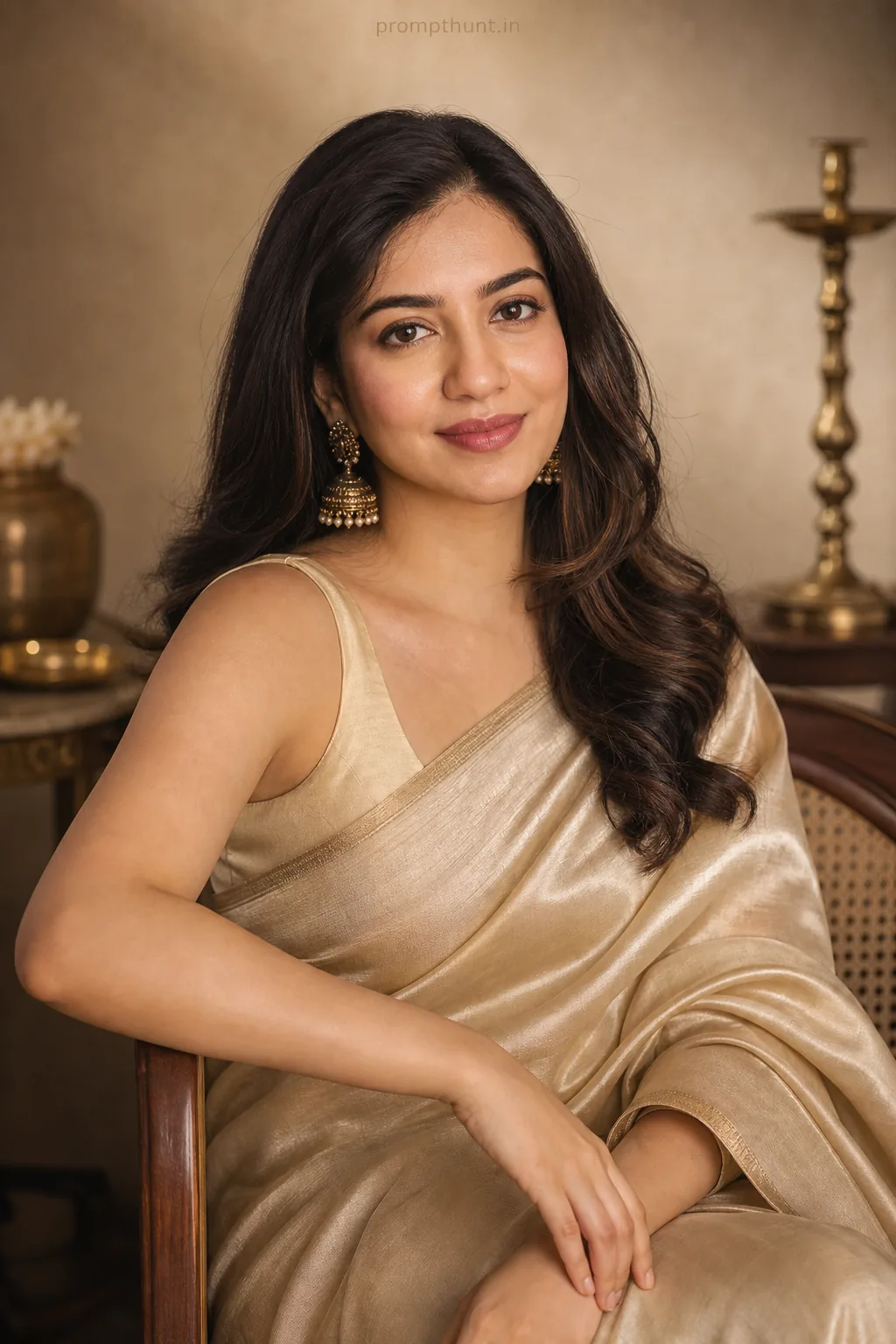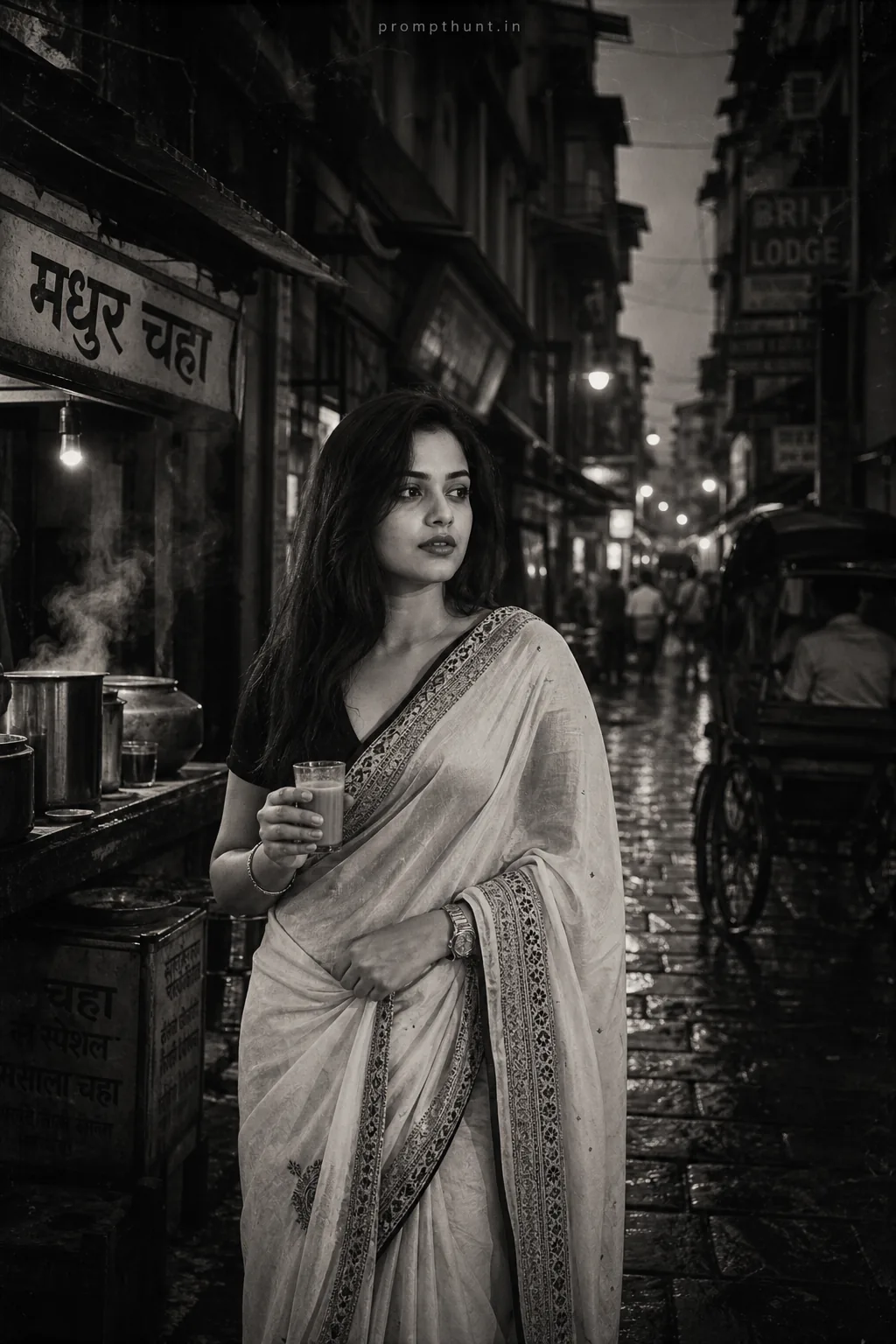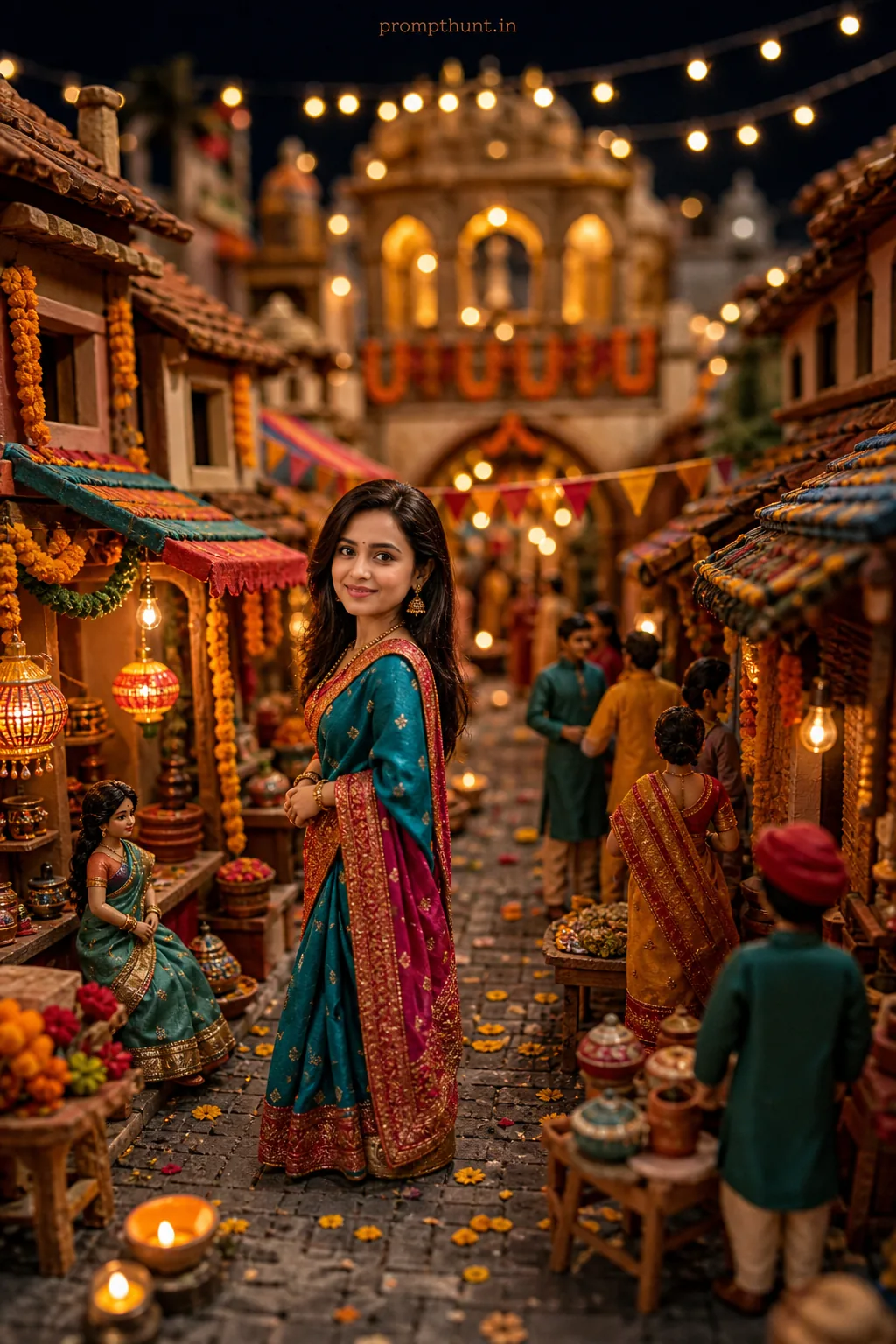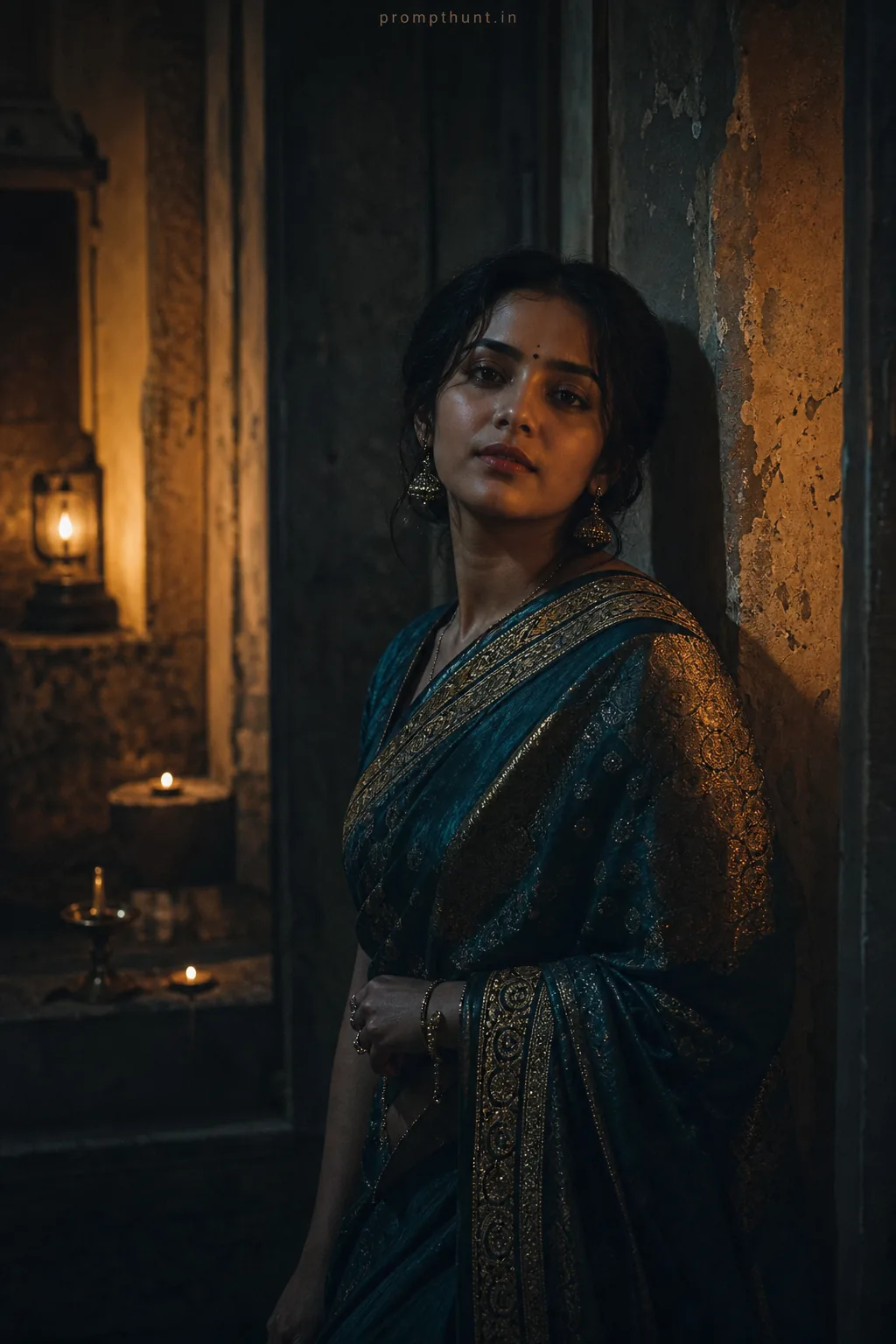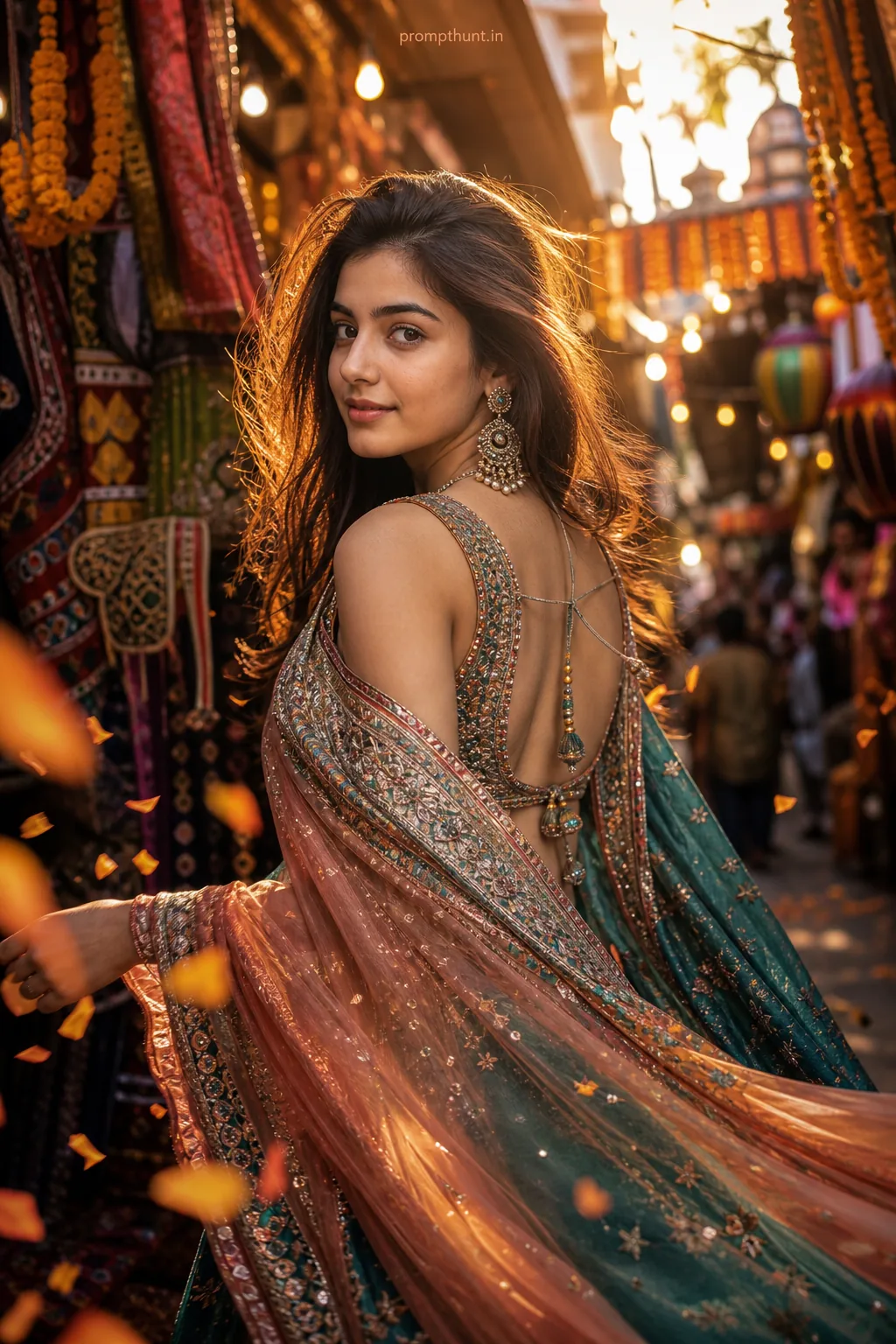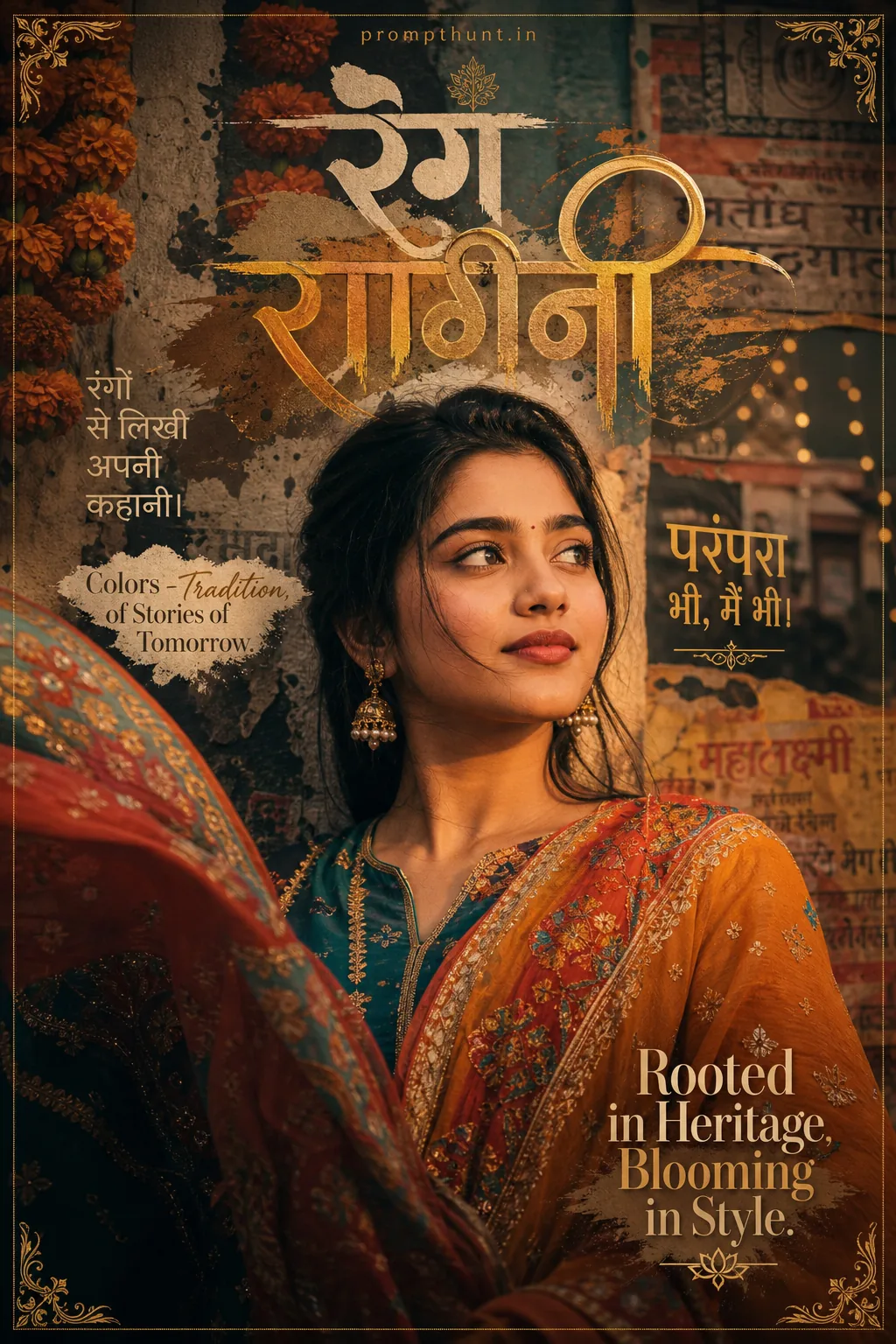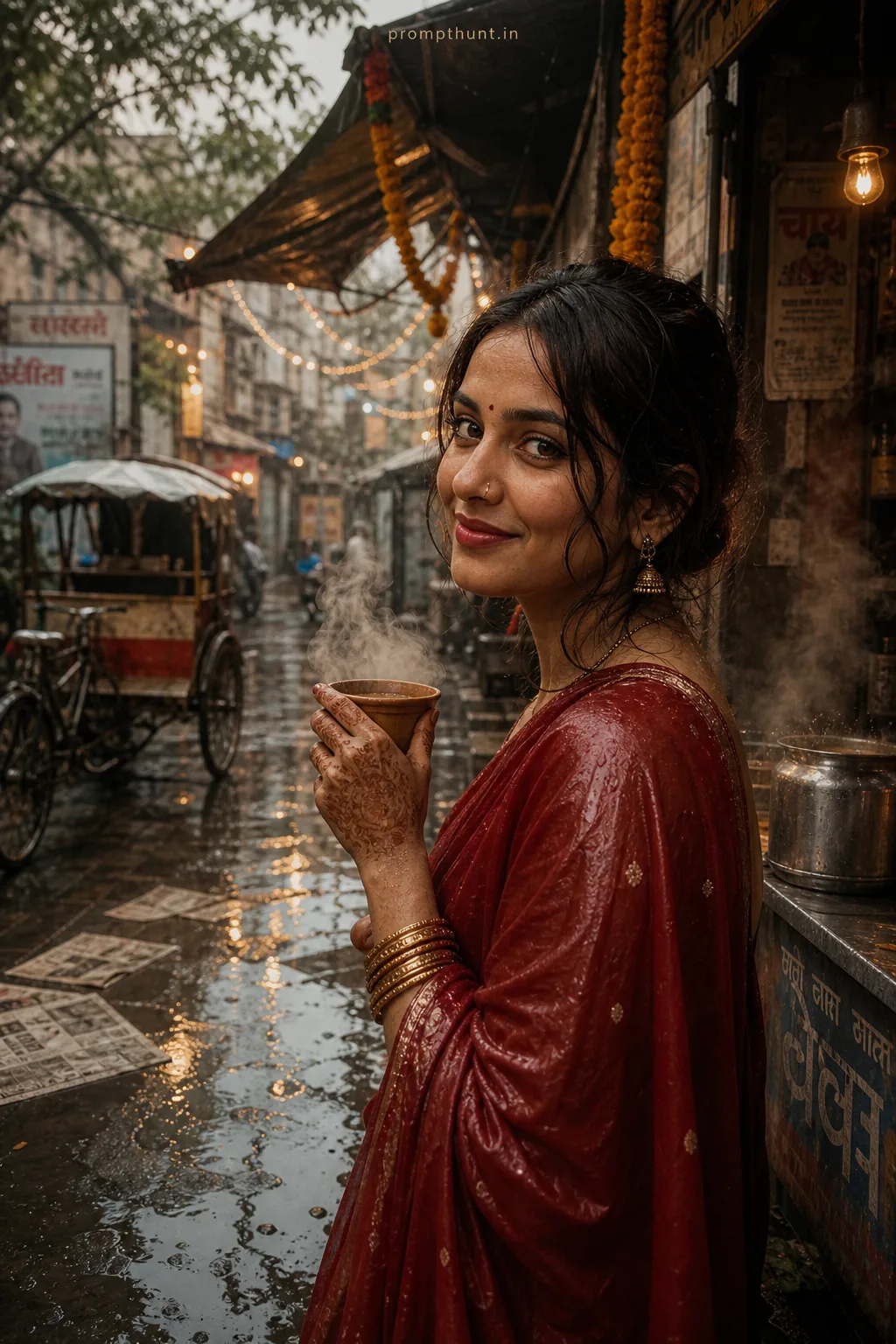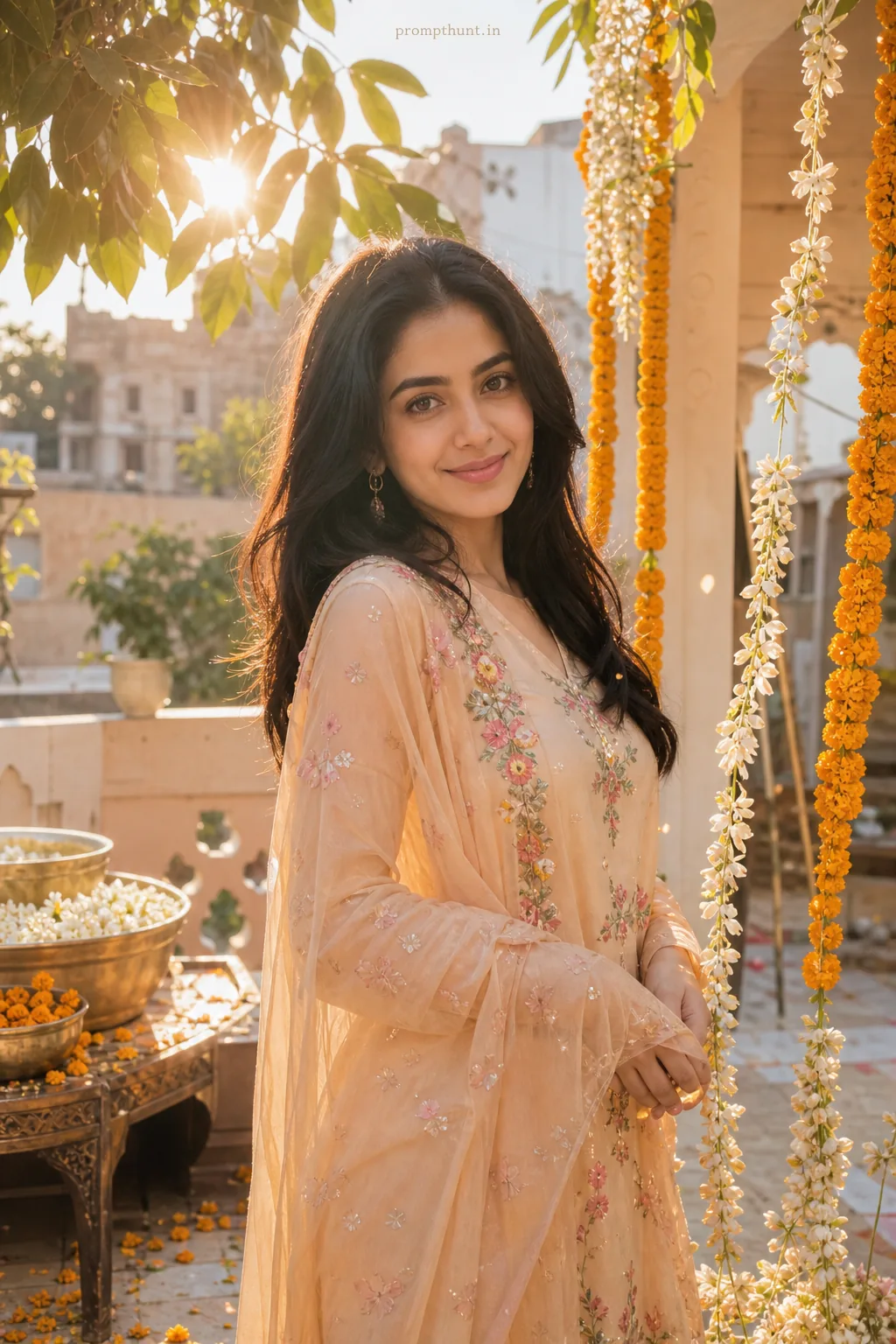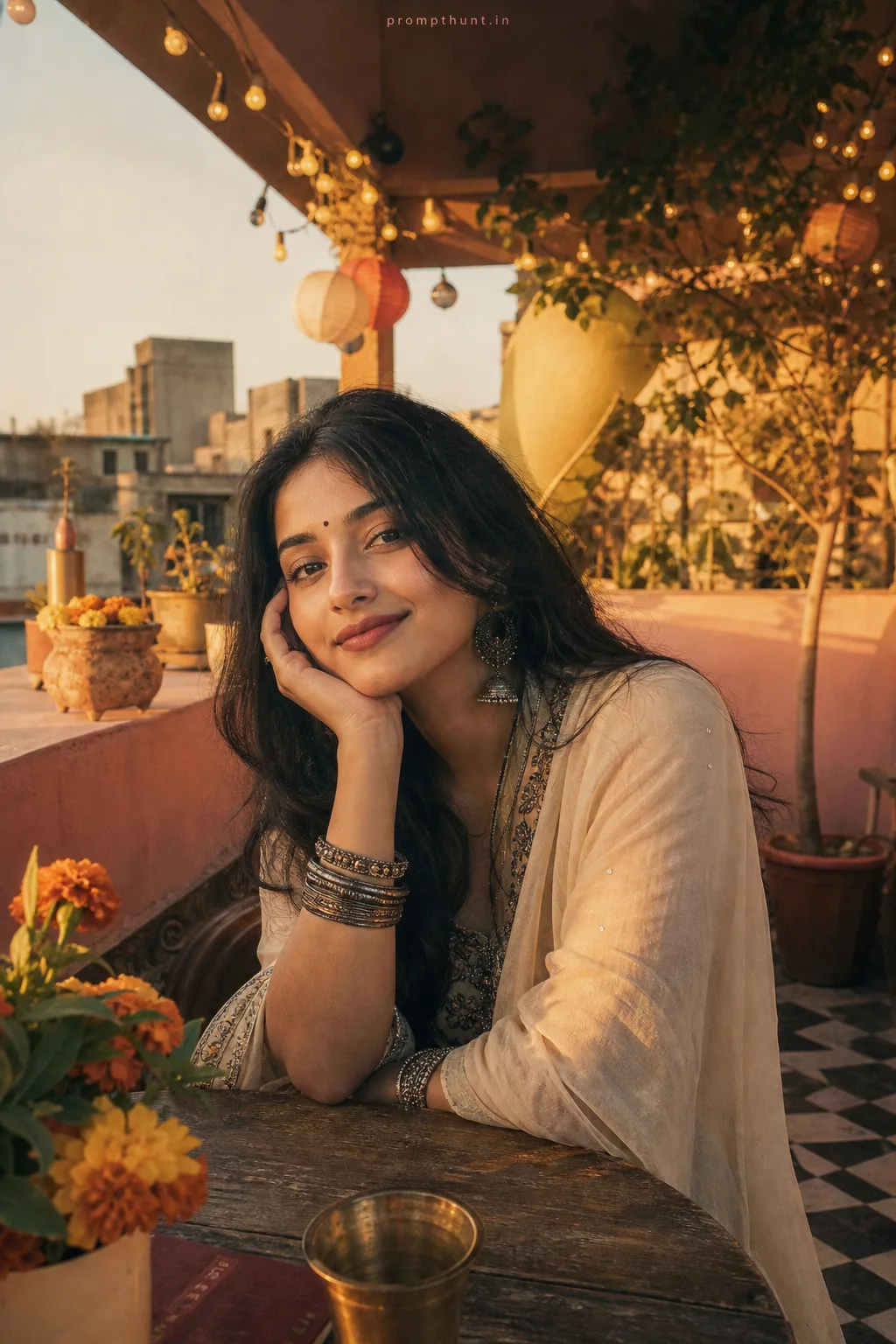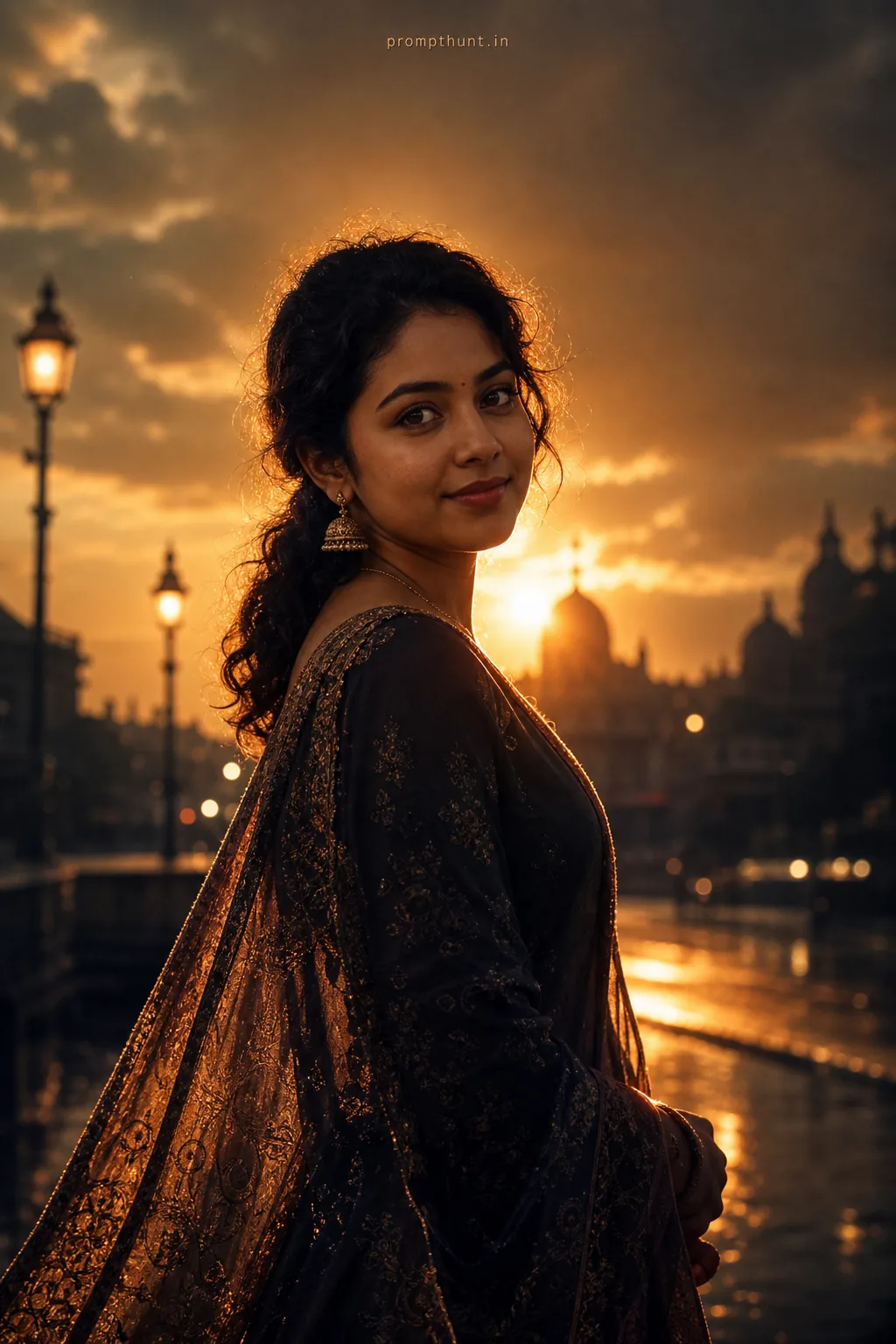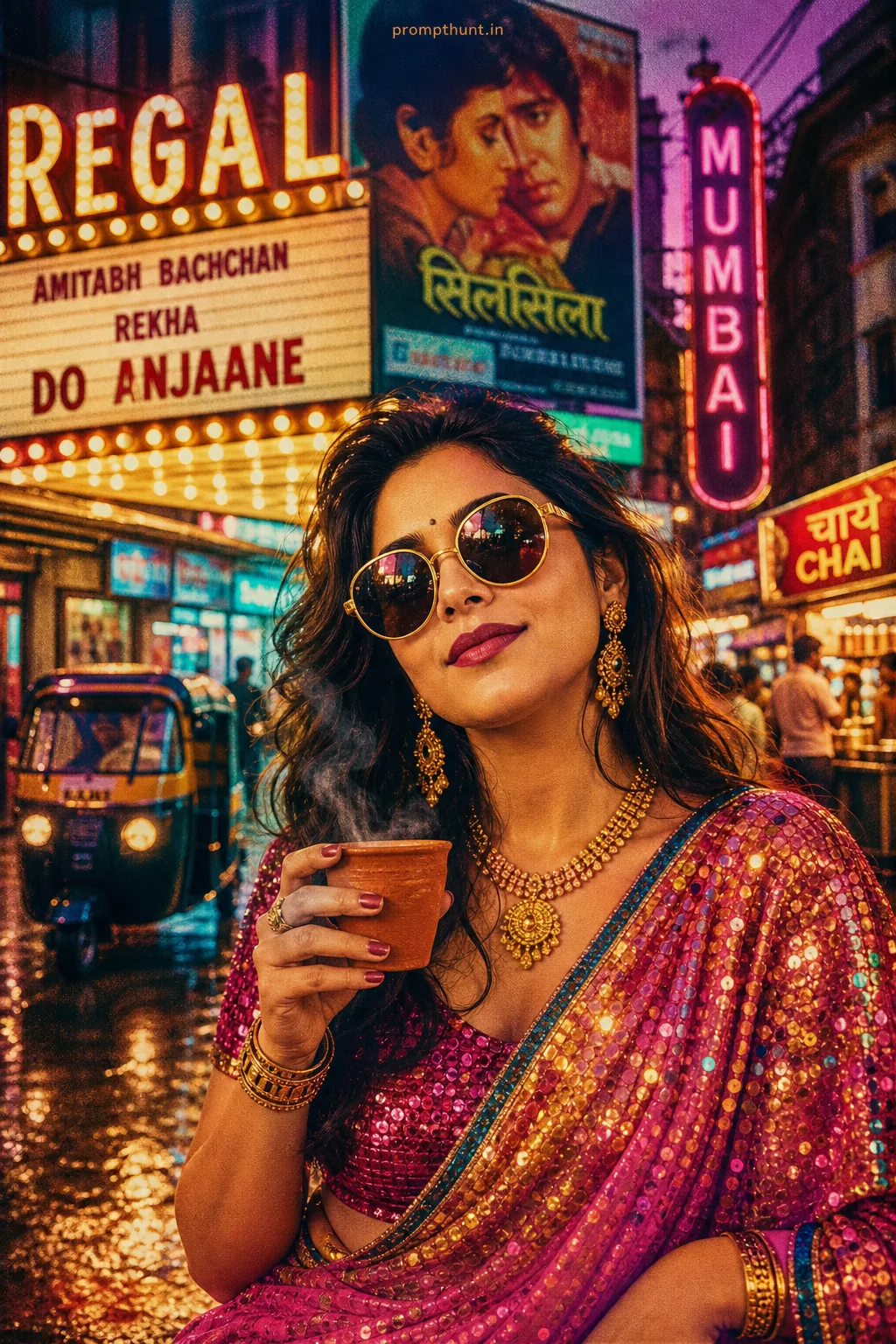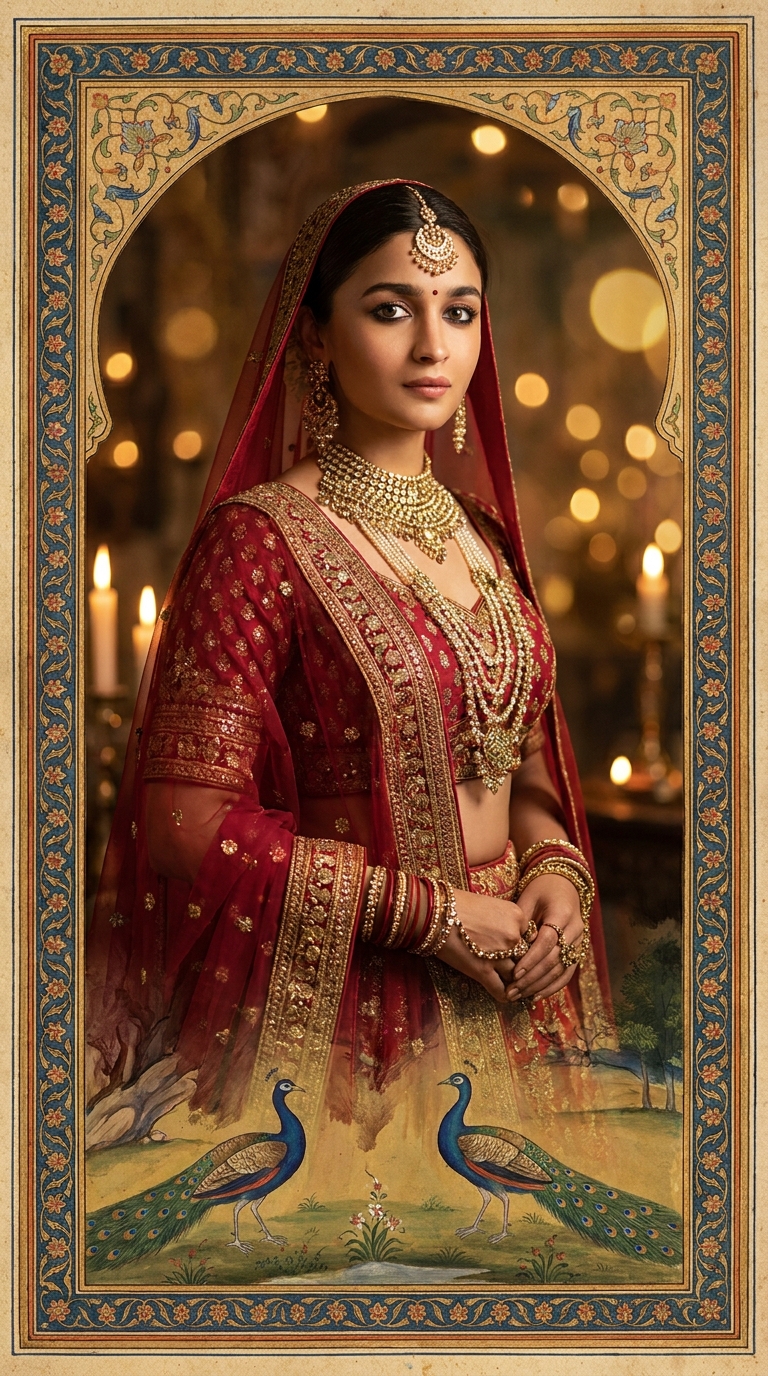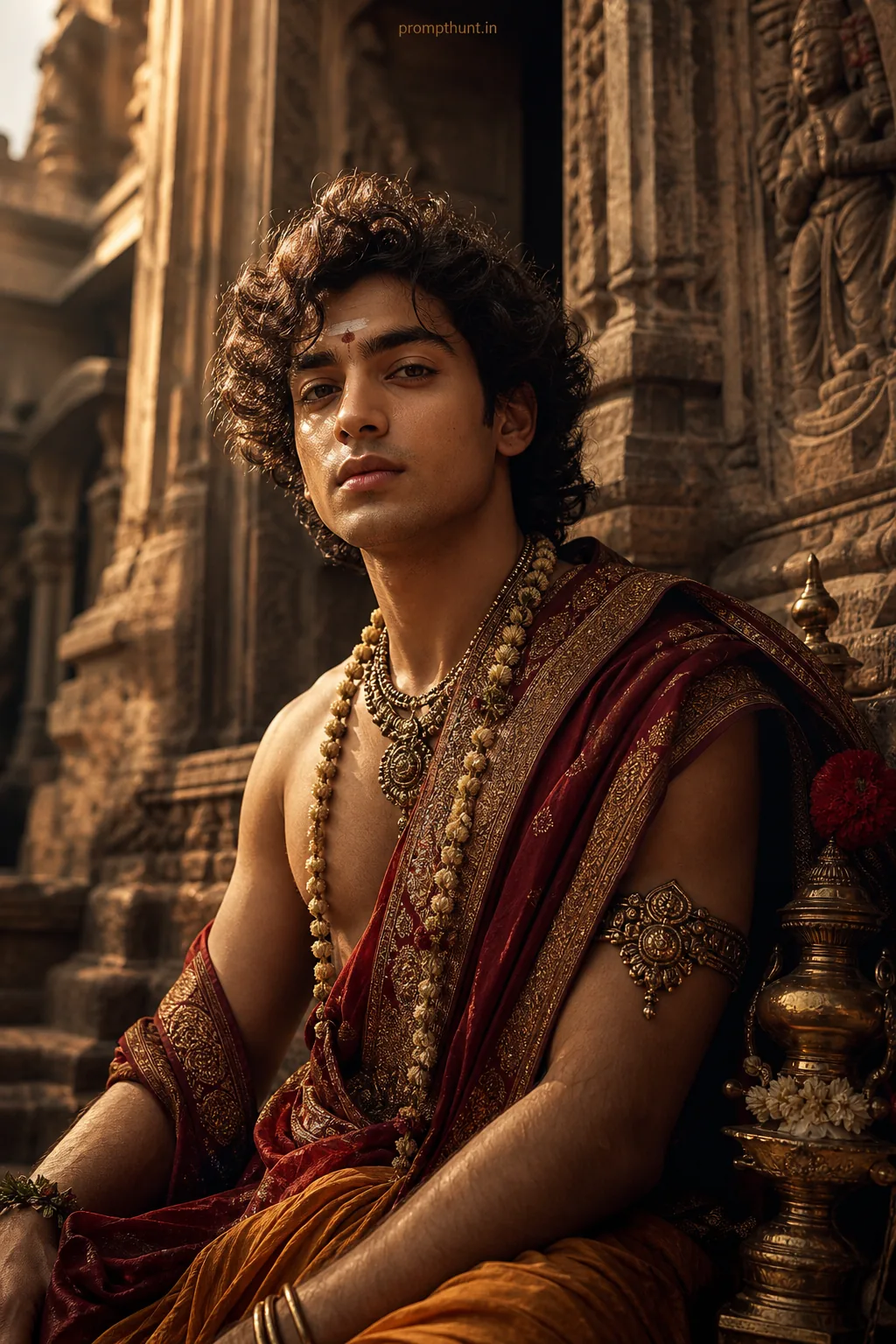
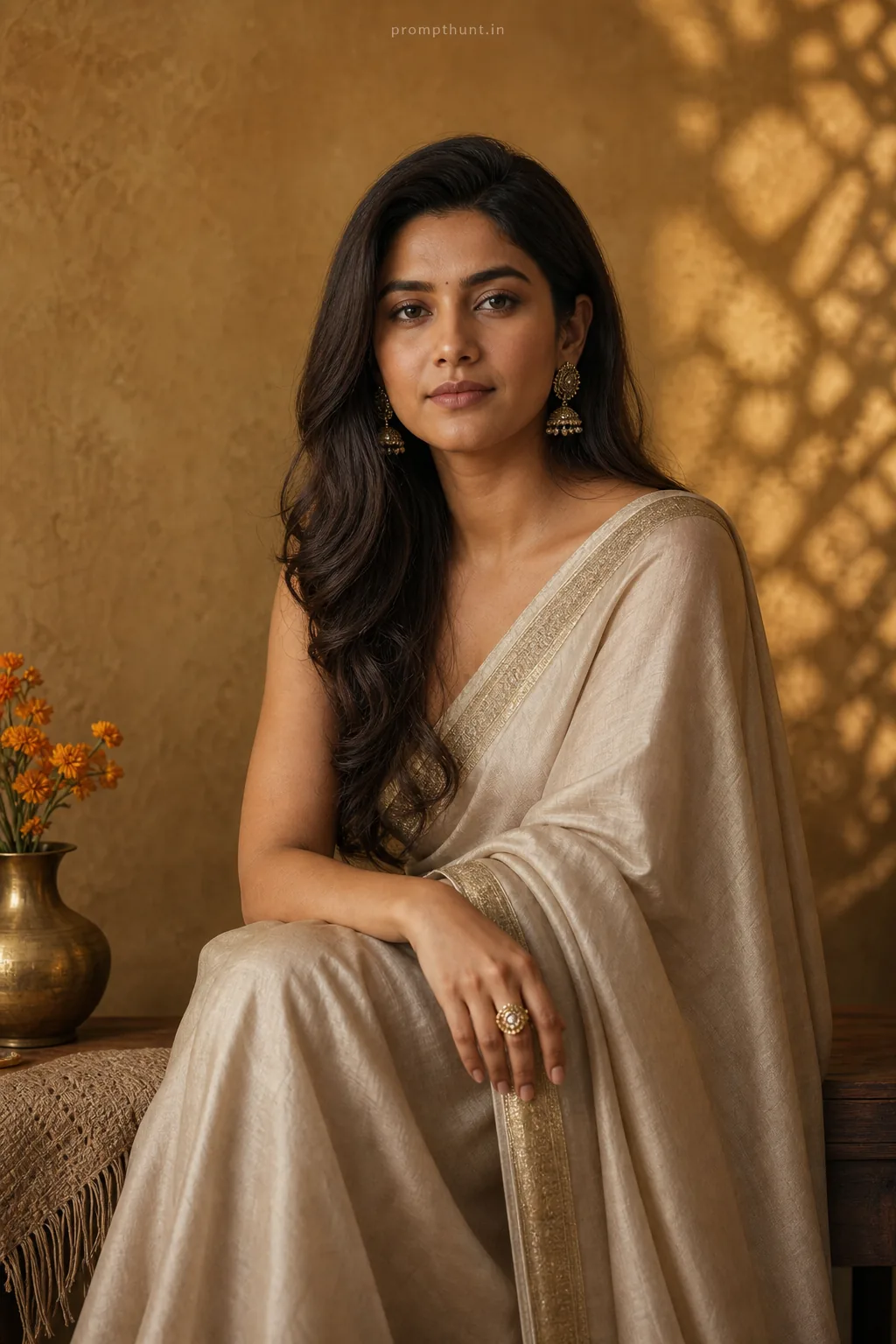
A Mughal Miniature Living Portrait blends a hyper-realistic face with an ancient hand-painted miniature art style for the body and background. The result looks like a royal figure stepping out of a 16th-century illuminated manuscript. Use Gemini with a detailed vertical-format prompt to generate this in one pass. It works best with jewel-tone clothing descriptions and explicit brushstroke texture instructions.
Someone in a WhatsApp group shared one of these last month and within 48 hours the thread had 200 replies, half of them "HOW." A young woman's face — sharp, luminous, real — gazing out from what is unmistakably a Mughal painting. Peacocks. Gold borders. Lapis lazuli blue everywhere. Her eyes catch the light like she's about to say something. The Living Portrait style has been doing its rounds, but this version — rooted in India's own artistic heritage — hit different. Let's get into it.
Paste a detailed Mughal miniature prompt into Gemini with explicit instructions for a photorealistic face, visible brushstroke textures on clothing, and illuminated manuscript borders — and you'll get a portrait that looks like history just blinked.
What Is a Mughal Miniature Living Portrait, Exactly
The Living Portrait style works on a single visual trick: one part of the image is photorealistic, everything else is painted. Your eye does not know what to do with it. And that confusion is the whole point.
The Mughal miniature version specifically borrows from a 16th and 17th century Indian court art tradition. Real Mughal miniatures were painted on paper or ivory, often illustrating epic poems or documenting court life. They used lapis lazuli, saffron, and verdigris pigments. They had dense floral borders, architectural details, and tiny faces with enormous expressive eyes.
This AI prompt takes that visual vocabulary and applies it everywhere except the subject's face. The face stays hyper-real. The clothing gets brushstroke texture. The background becomes an illuminated page. The border looks like it was ruled by a court artist in Fatehpur Sikri. The effect is a portrait that feels simultaneously ancient and alive — like the painting missed her and she's come back to collect.
Rule of thumb: the sharper the contrast between the realistic face and the painted surroundings, the stronger the image lands.
The Prompt — Copy This Exactly
A stunning 9:16 vertical portrait of a young Indian woman dressed in an ornate royal Mughal-era outfit — deep jewel-toned silk lehenga in crimson and gold zari embroidery, layered pearl and kundan necklaces, a maang tikka resting on her forehead, and kohl-lined eyes. Her face is hyper-realistic and luminous, but her body and background seamlessly blend into an ancient Mughal miniature painting — intricate hand-painted floral borders in lapis lazuli blue, saffron yellow, and emerald green frame the edges like an illuminated manuscript. Paint brushstrokes visibly texture her clothing and surroundings while her face remains photorealistic and alive, eyes gleaming with golden light as if she is stepping OUT of the painting into the real world. Peacocks rendered in miniature art style perch beside her. Warm candlelight and ambient golden bokeh illuminate the scene. Cinematic depth, ultra-detailed, 8K resolution, dramatic lighting, seamless transition between painting and realism, vertical format optimized for Instagram Reels cover.
How to Use This Prompt — Three Steps, No Surprises
Open Gemini. You want Gemini Advanced if you have it — the image generation quality on the standard tier is noticeably softer for this style.
Paste the prompt as written. Do not trim it. The length is doing work. Every clause — the maang tikka, the lapis lazuli, the explicit instruction about brushstroke visibility — is a signal to the model. Cut it and you get a vague approximation. Keep it and you get the thing.
Generate three to five variants in one session. Gemini's outputs vary enough that your second or third attempt will often nail the face-to-painting transition better than the first. The first pass is reconnaissance. The third pass is usually the one you screenshot.
If the face is coming out too painterly — too flat, too stylised — add this line to your prompt: "face must remain fully photorealistic, like a photograph, not illustrated." Gemini sometimes drifts toward consistency and flattens the whole image. That line is a hard boundary.
Tips That Actually Make a Difference
Specify the border style explicitly. "Illuminated manuscript borders" gets you close. "Intricate floral borders in the style of a 17th-century Mughal court painting, using lapis lazuli blue, saffron yellow, and emerald green" gets you exactly there. Vague inputs produce vague outputs. Nine times out of ten, the border is what makes or breaks the composition.
Peacocks are doing heavy lifting in this prompt. They are a genuine motif in Mughal miniature art — not decorative fluff — and Gemini recognises them as a style anchor. Keep them. If you want to experiment, swap them for a Persian manuscript ibex or a Mughal-era elephant, but do not remove the animal reference entirely. The model uses it to lock the art style.
Golden bokeh and candlelight in the same prompt creates a warm amber atmosphere that photographs beautifully for Reels covers. It also helps the AI decide how to handle the lighting transition between the painted body and the real face. Think of it as giving the model permission to glow.
For variations, try changing the lehenga colour. Deep teal with silver zari, or an indigo and gold combination, both test extremely well. The jewel-tone instruction is more important than the specific colour — it tells the model to saturate, not pastel.
And yes, 8K in the prompt is aspirational. Gemini is not actually generating 8K files. But including it pushes the model toward finer detail in the output. Think of it less as a resolution instruction and more as a "please try harder" note. (It works. Embarrassingly well.)
Why This Is Trending — and Why India Specifically
The broader Living Portrait trend has been circulating globally since early 2024. But the Mughal miniature variant caught fire in India for a specific reason: it is not a borrowed aesthetic. It is a homecoming.
Indian creators on Instagram and YouTube Shorts have been generating and sharing these portraits at serious volume. The style resonates because it references something culturally legible — anyone who grew up with school textbook illustrations of Akbar's court, or visited the National Museum in Delhi, immediately recognises the visual grammar. It does not feel like AI doing a foreign art style. It feels like AI doing our art style.
Bridal content creators picked it up first, then wedding photographers, then general lifestyle accounts. The 9:16 vertical format is purpose-built for Reels covers, which is exactly where most of these are appearing. A portrait that looks like it belongs in an imperial archive — but formatted for your phone screen — is a genuinely unusual thing to see. Unusual things get saved. Saved things get shared.
The timing also matters. There's a broader cultural moment around reclaiming and celebrating Indian heritage aesthetics in digital content. This prompt sits right in the middle of that conversation. It's not cosplay. It's not pastiche. It's something that feels genuinely proud of where it comes from.
Honest Opinion — Including When Not to Use This
This is one of the stronger Living Portrait prompts I've seen specifically because it has roots. The aesthetic is not invented. Mughal miniature painting is a real, documented, sophisticated art form with centuries of technique behind it. When AI draws on something that actually exists in detail — rather than a vague mood board — the output quality improves. The model has more to reference. You can feel it in the borders.
That said: be honest with yourself about the use case. If you are a photographer, this is a fantastic creative tool for concept work or for adding an editorial option to a client's gallery. If you are a content creator, it is an excellent Reels cover. If you are using it to represent actual Mughal art or pass it off as traditional craft — that is where it gets murky, and I'd steer clear of that framing.
The face realism can also misfire. I have seen outputs where the face lands perfectly and the painting transition is extraordinary. I have also seen outputs where the face looks like a wax figure in a costume drama. The variance is real. Budget time for multiple generations. Do not submit the first result to a client.
One more honest note: this prompt is designed around a specific subject — a young Indian woman in Mughal-era dress. If you want to use a different subject, you will need to rewrite the clothing, jewellery, and context details substantially. The prompt is not a template you can lightly swap names into. The specificity is the mechanism.
The Last Word
The Mughal Miniature Living Portrait is the rare AI image trend that earns its hype. It is rooted in real art history, it is technically interesting to generate, and it produces images that people genuinely stop scrolling for. Paste the prompt, run three or four variants, pick the one where her eyes look like they are about to say something imperious and magnificent, and post it. The Mughal emperors commissioned art to be remembered by. Turns out Gemini is just the latest court painter. I reckon they would have had opinions about the 9:16 aspect ratio, but we will never know.