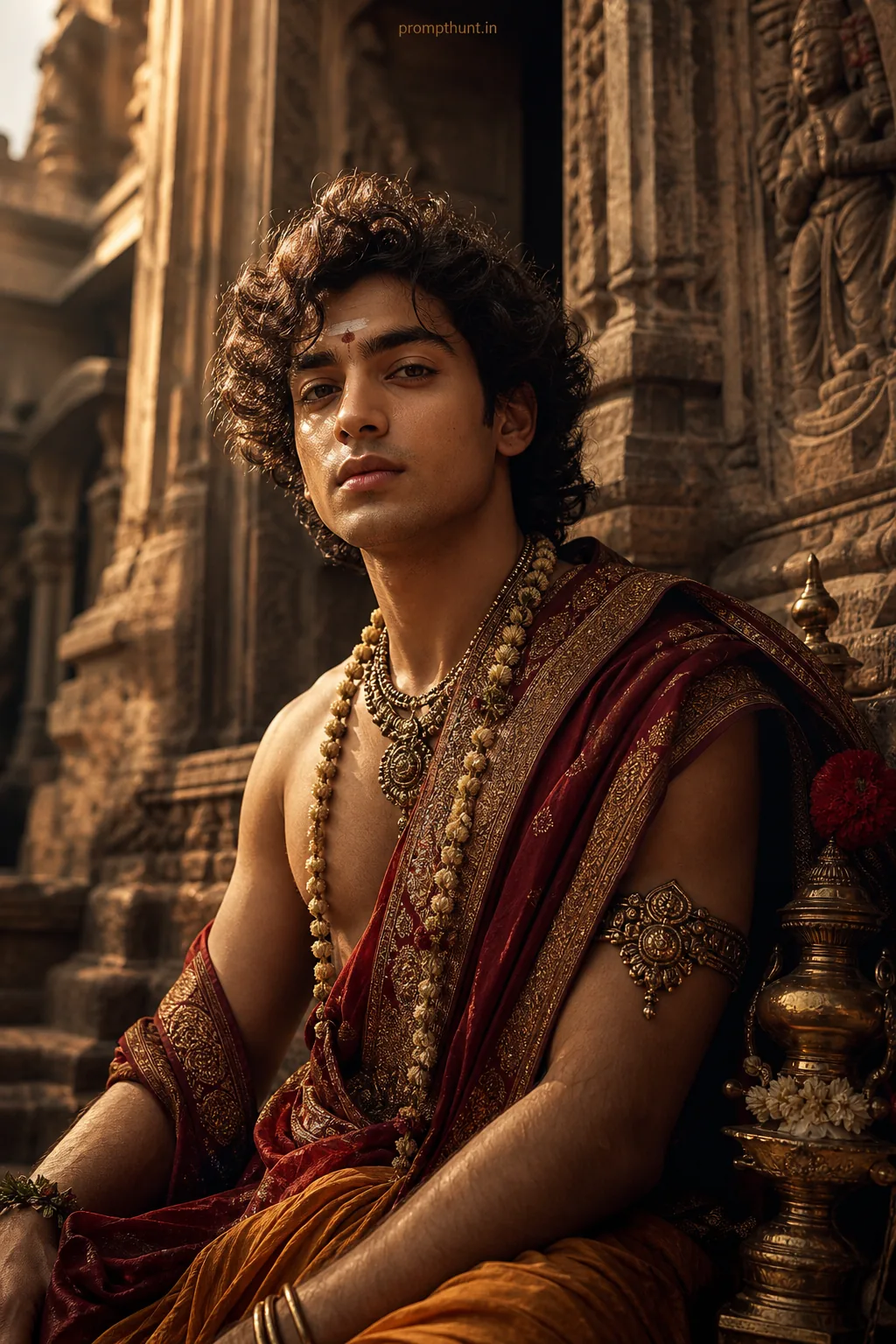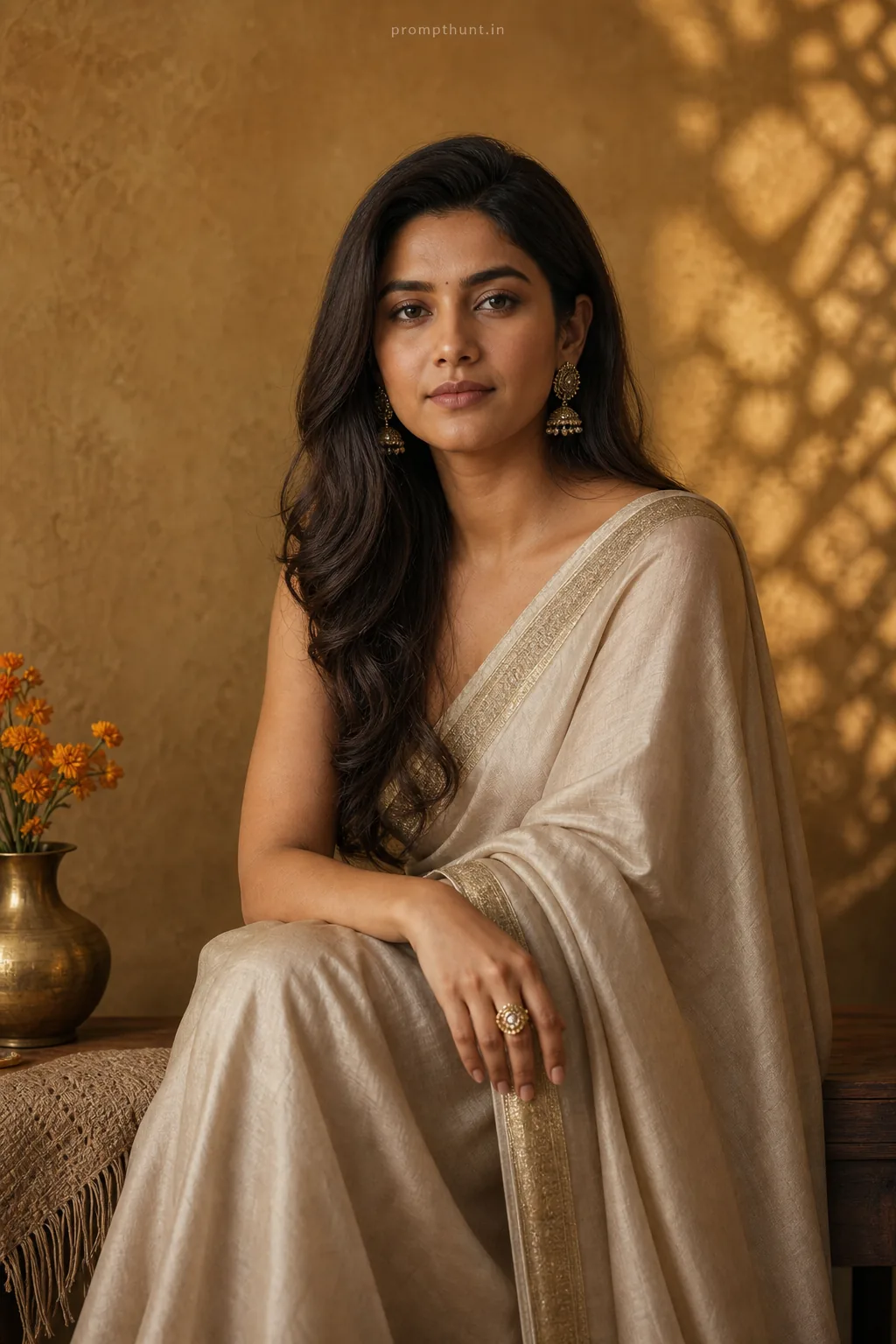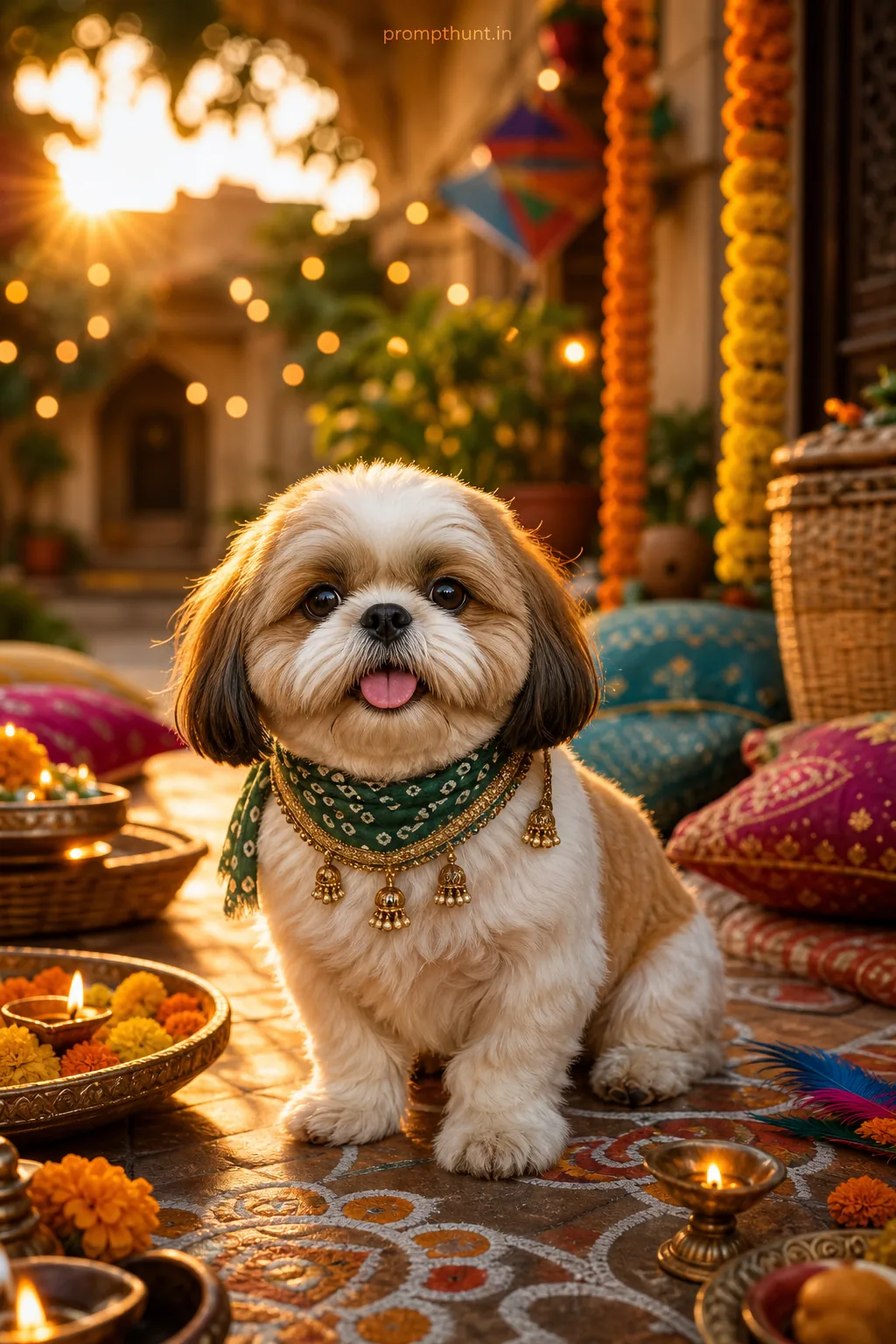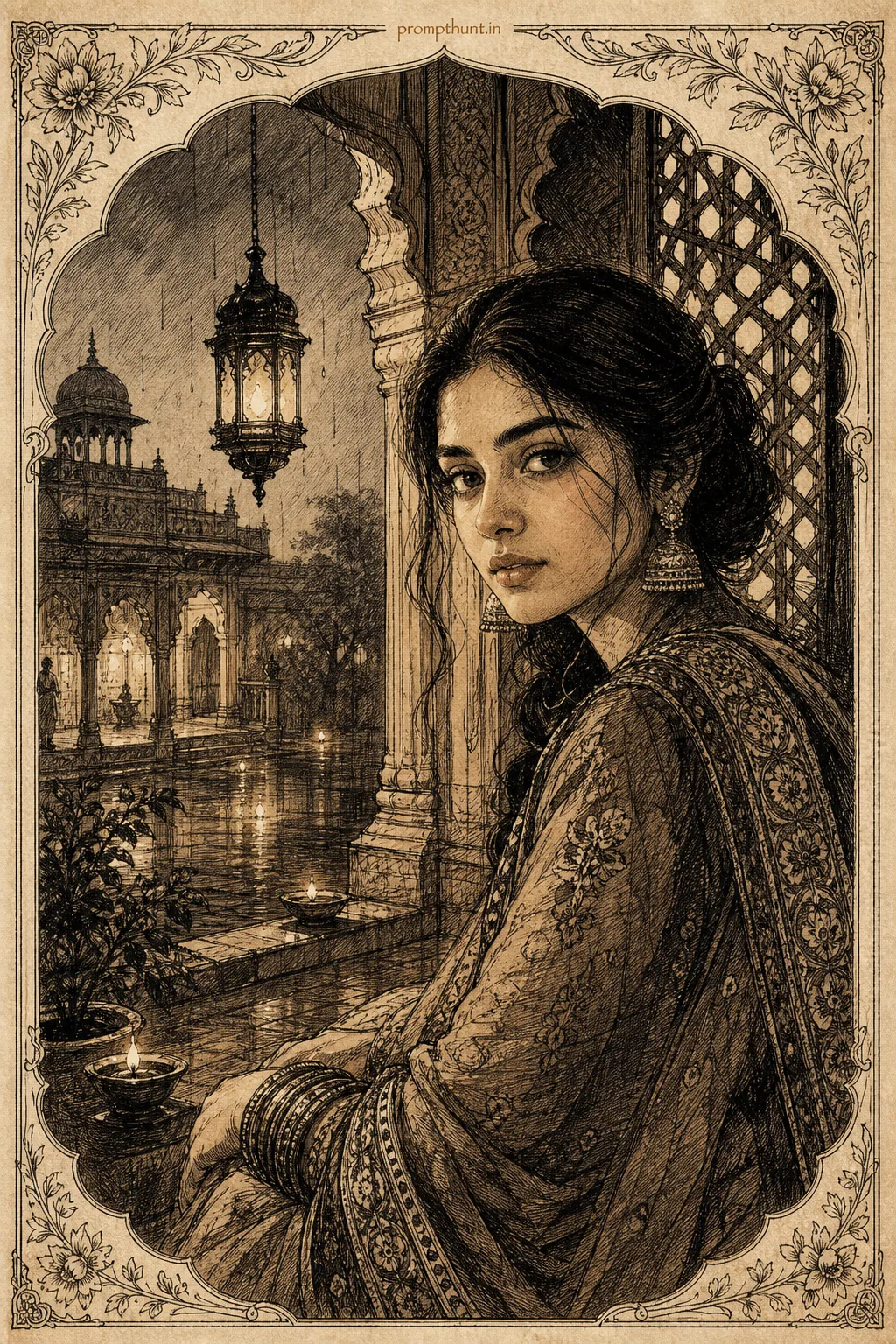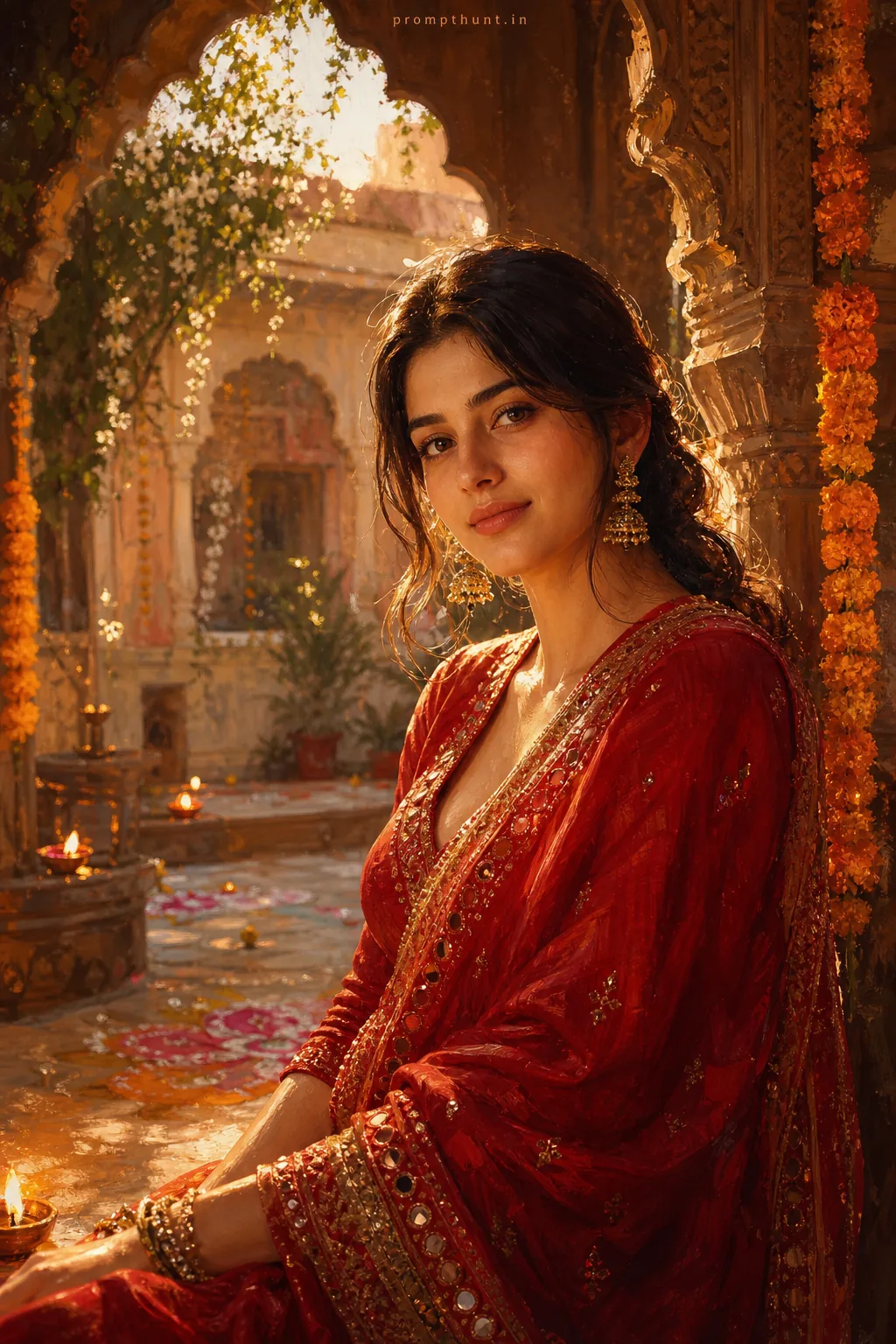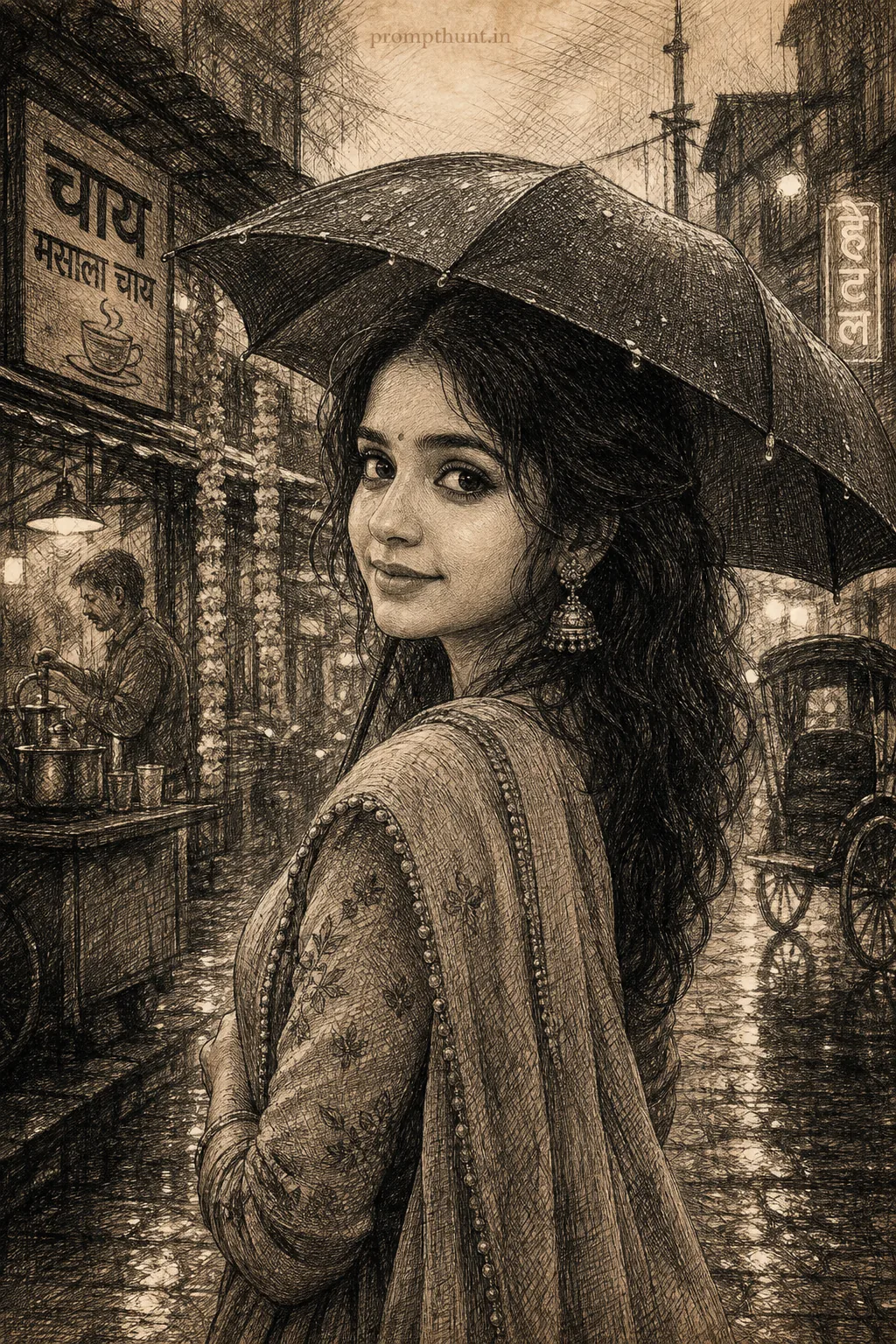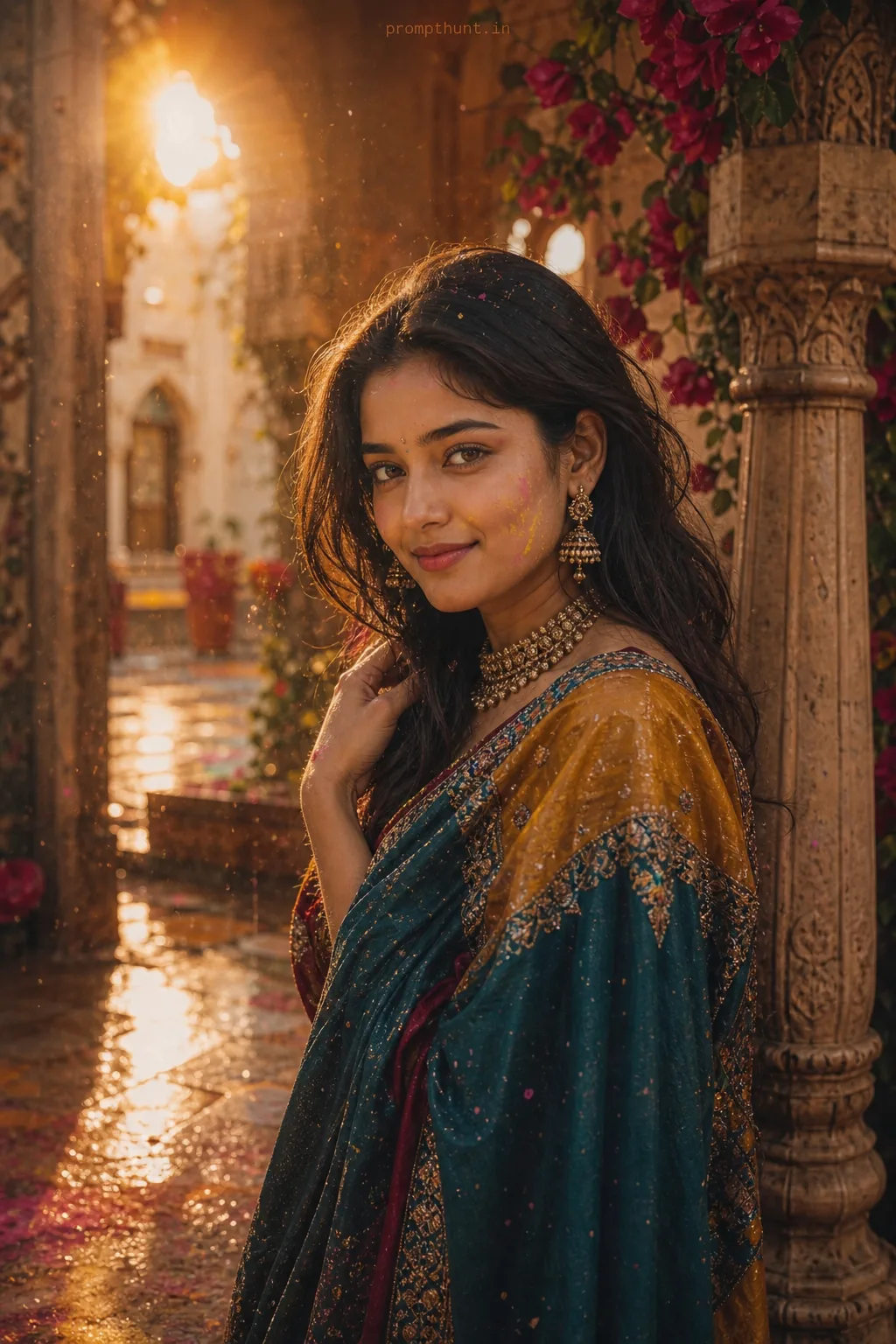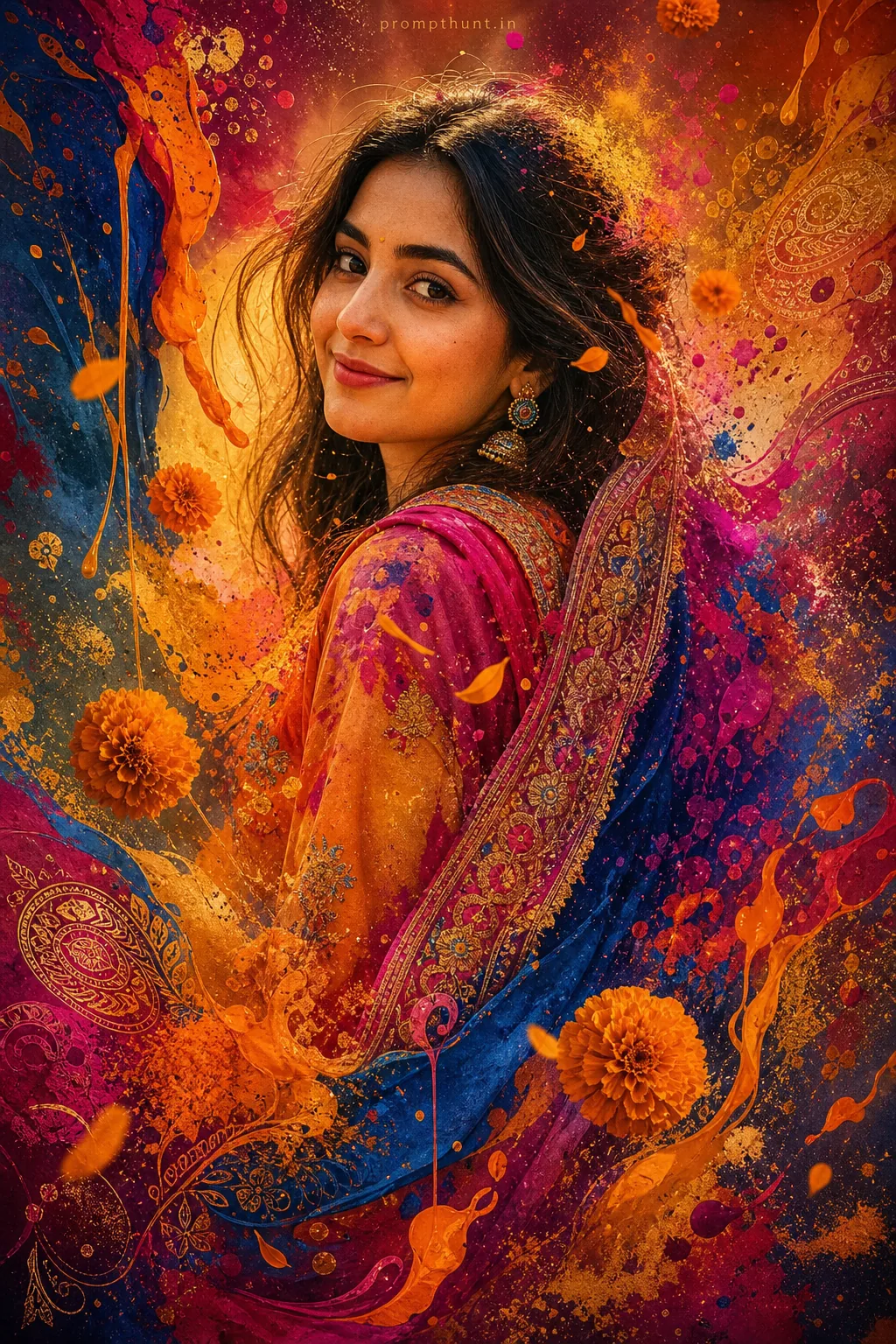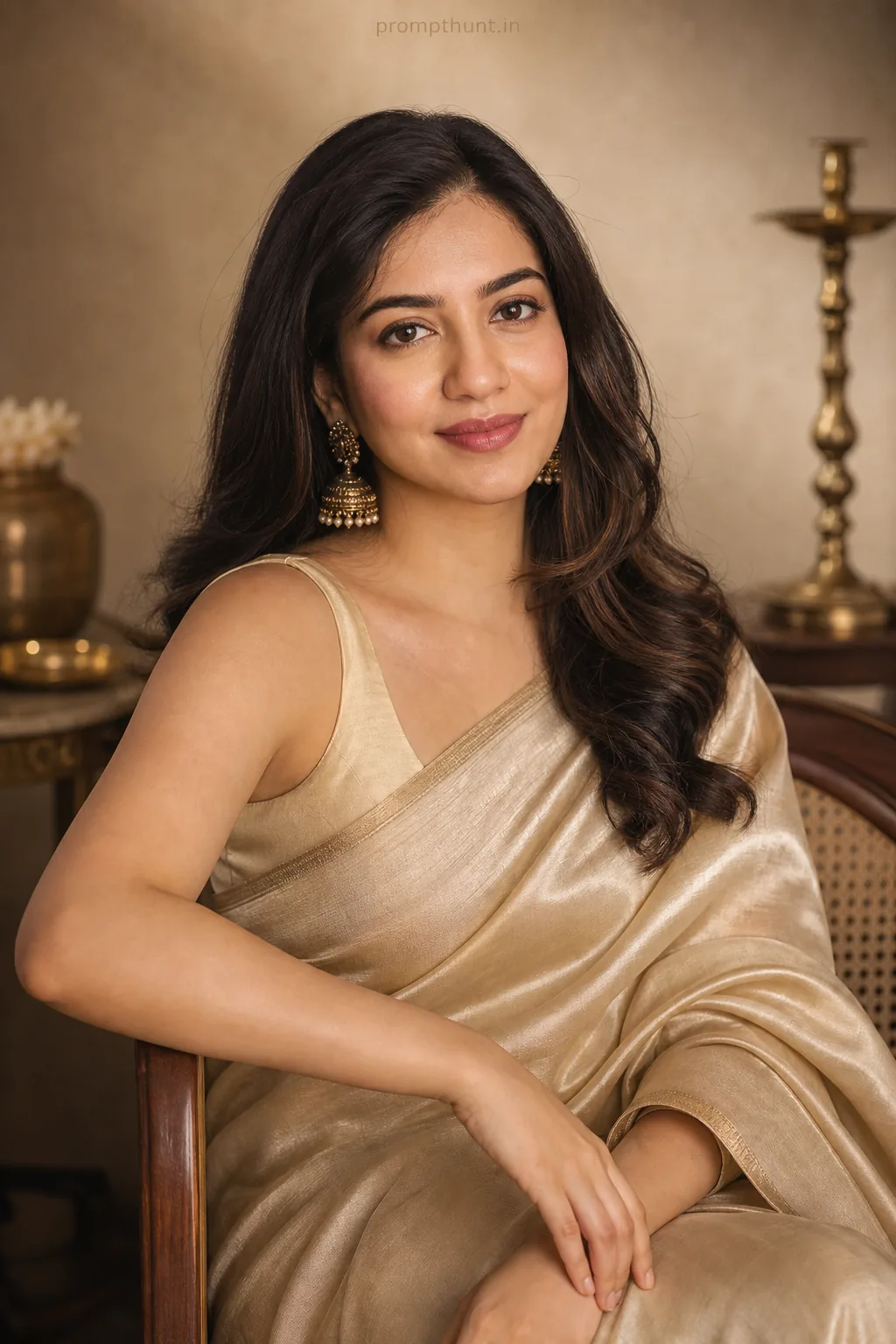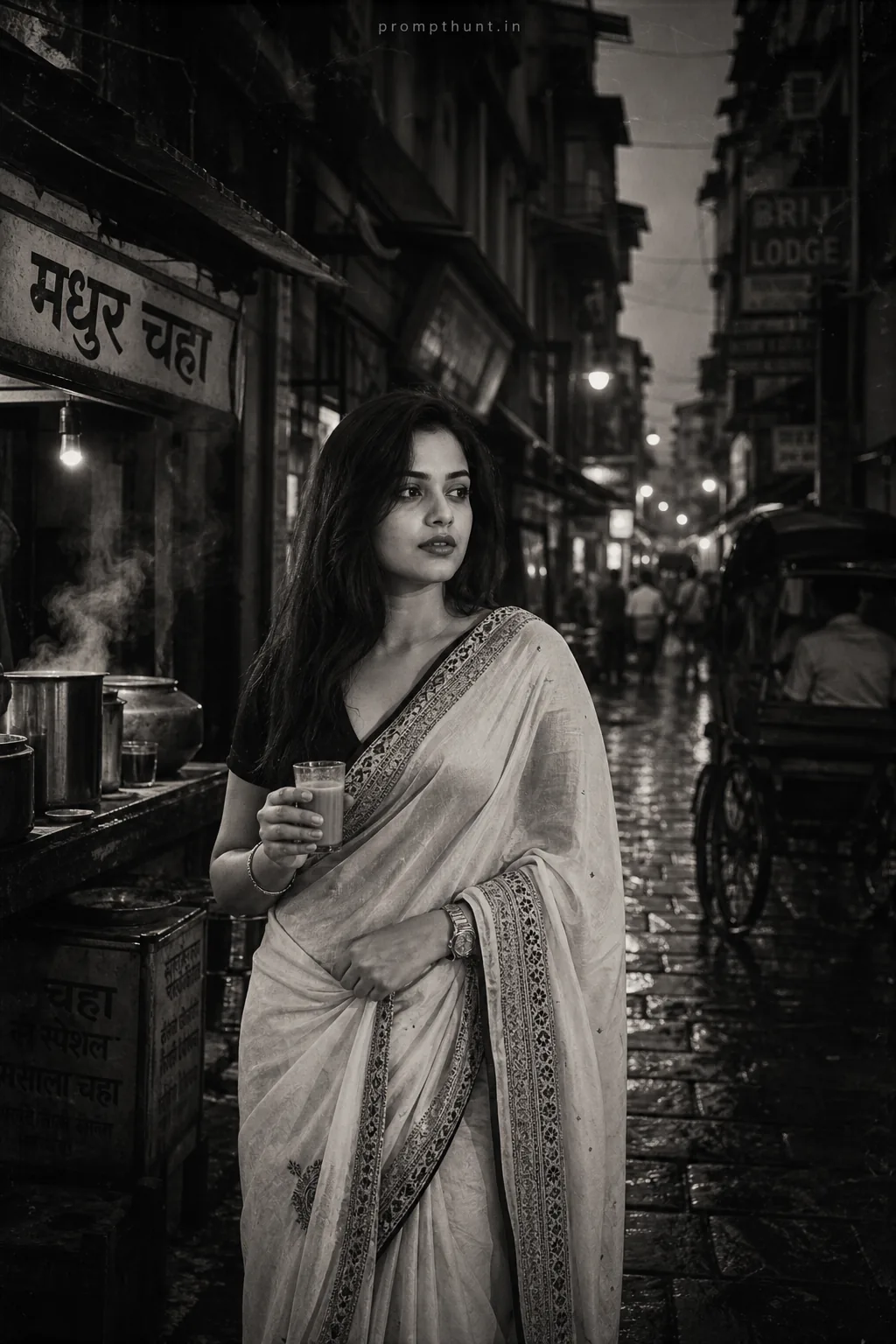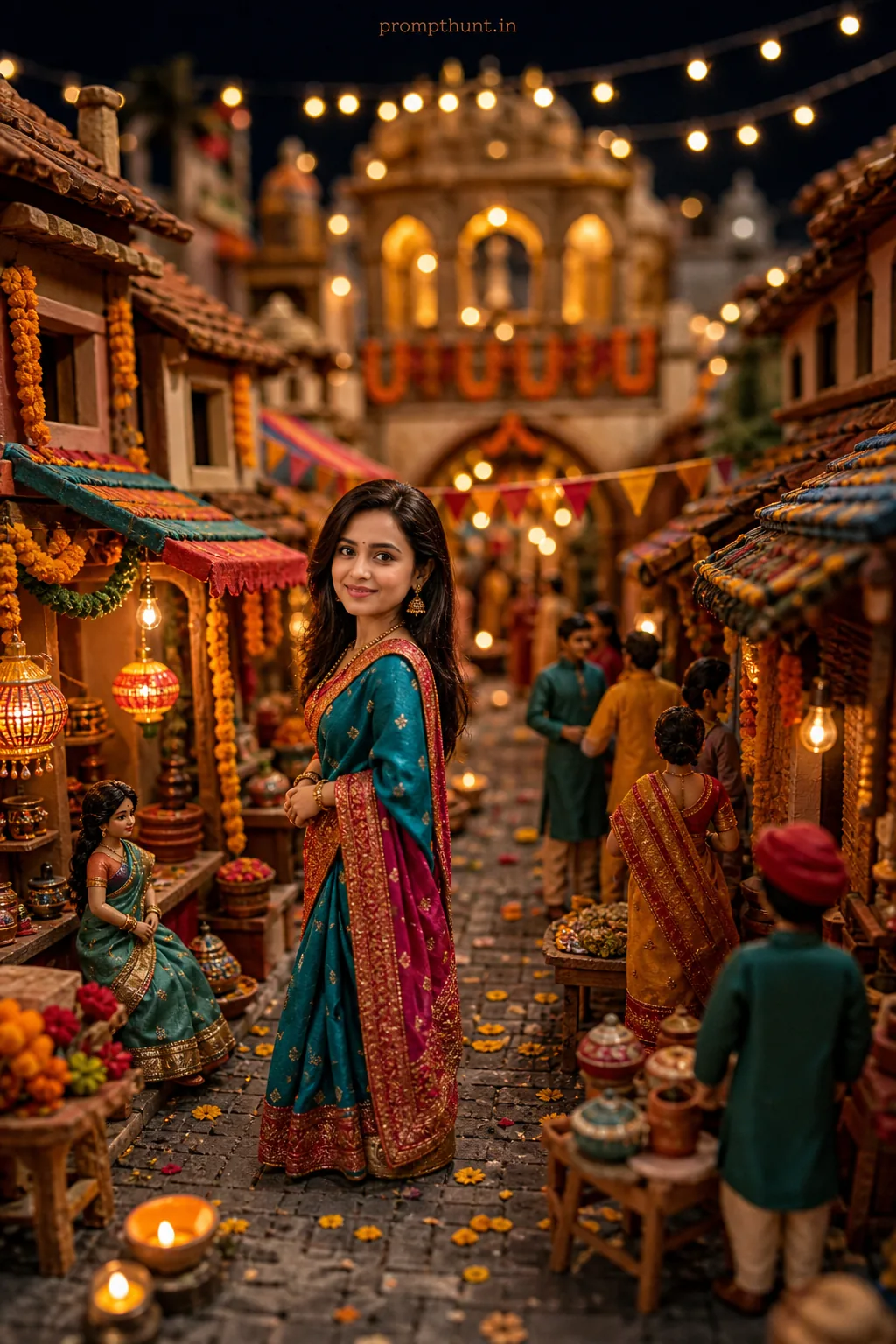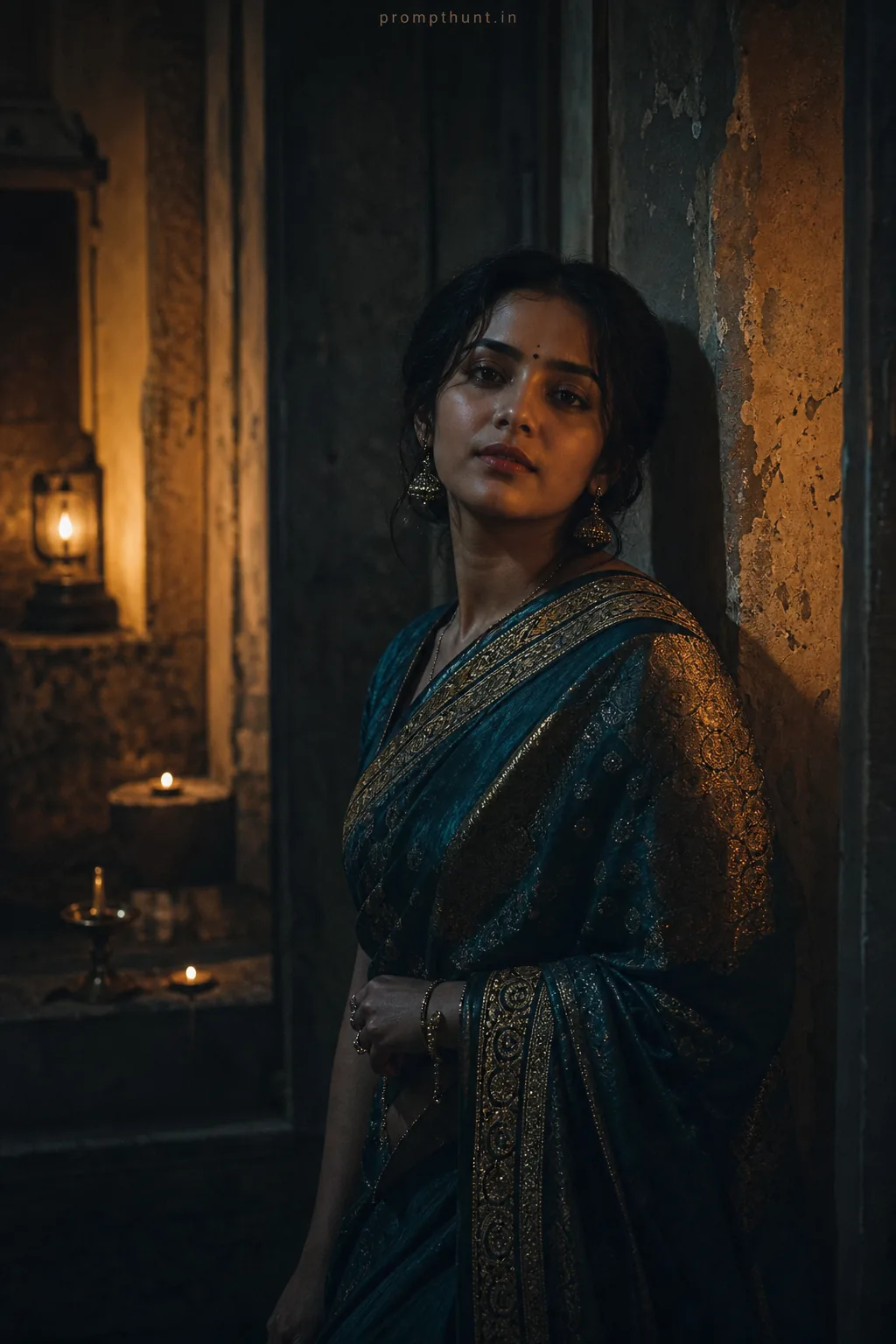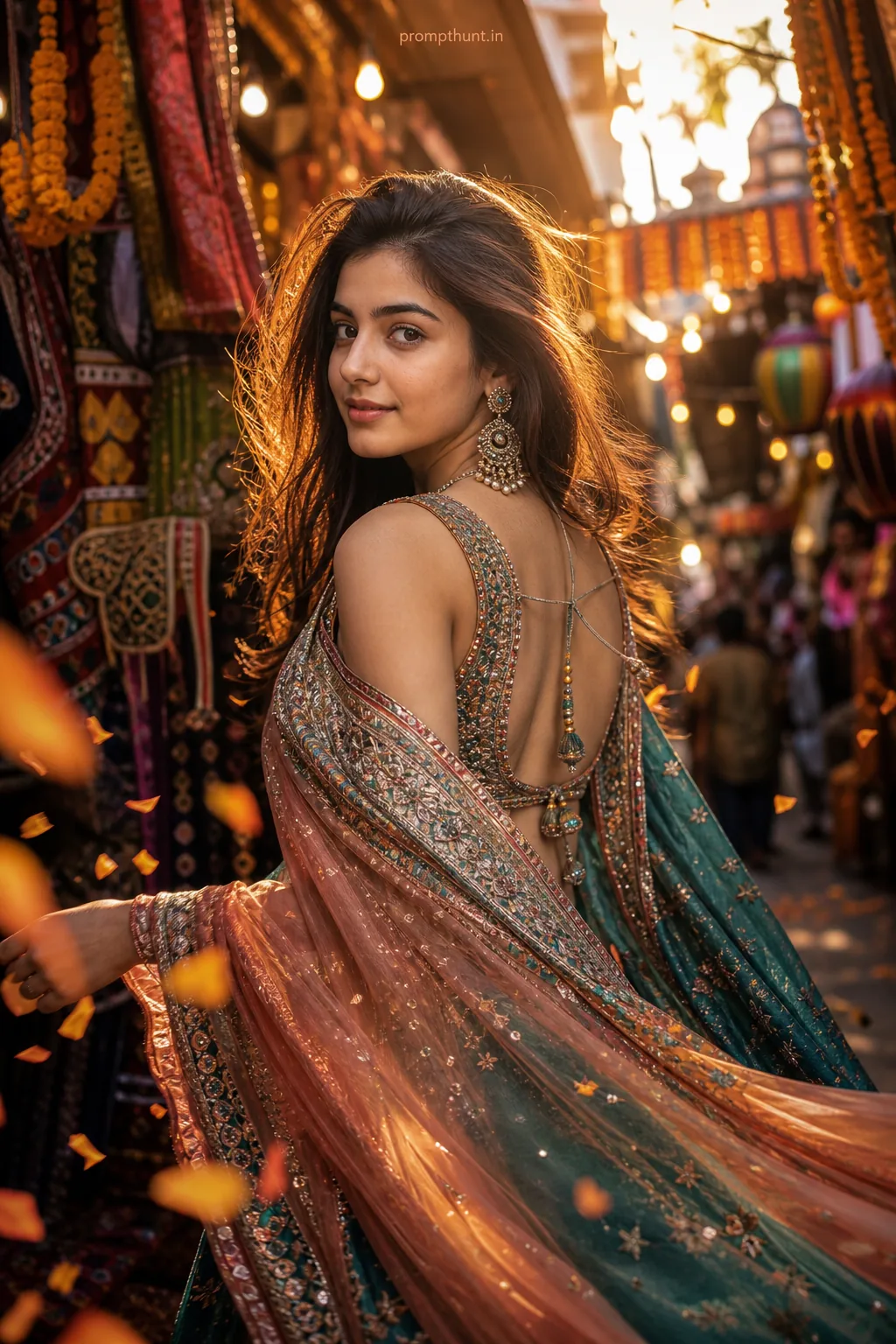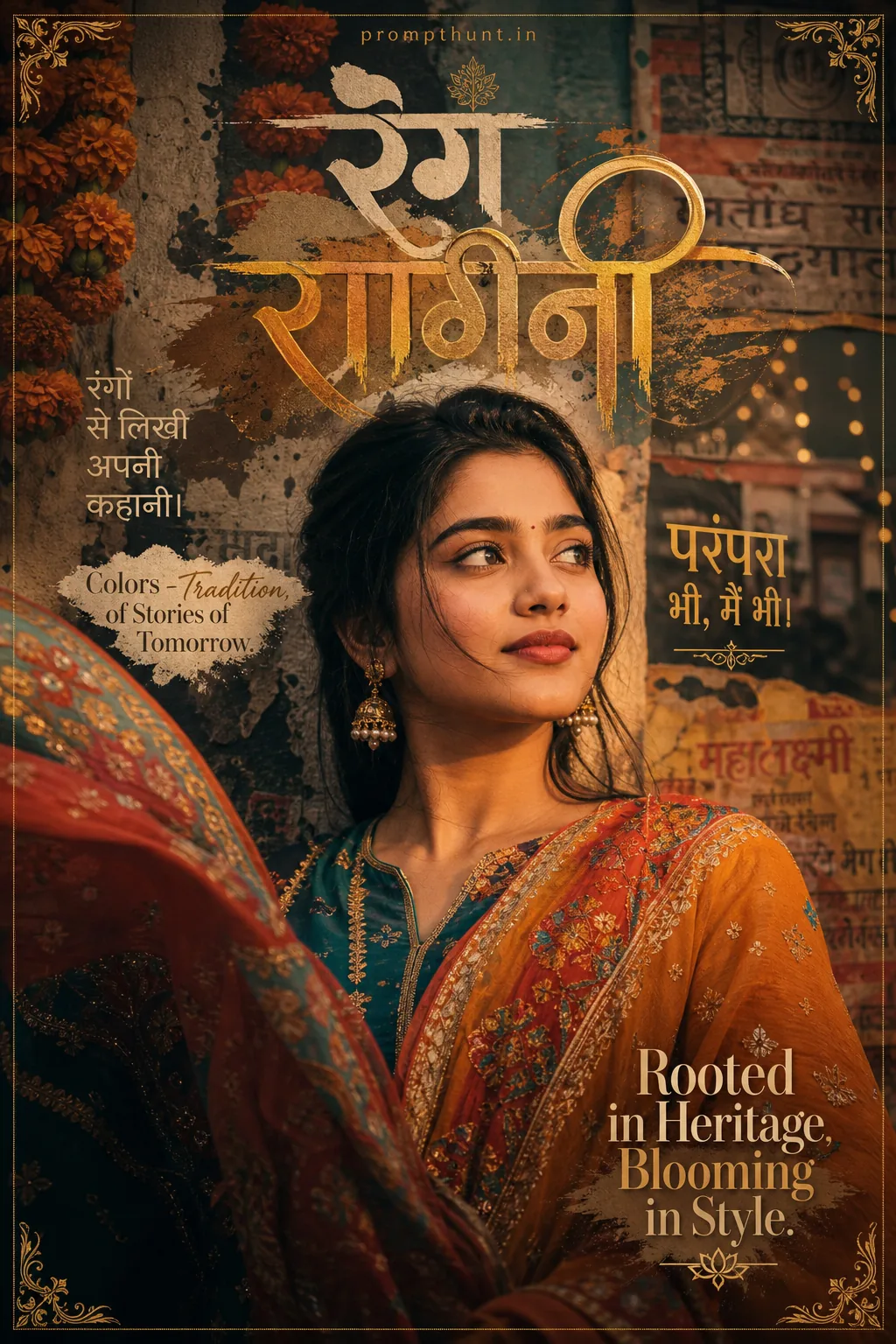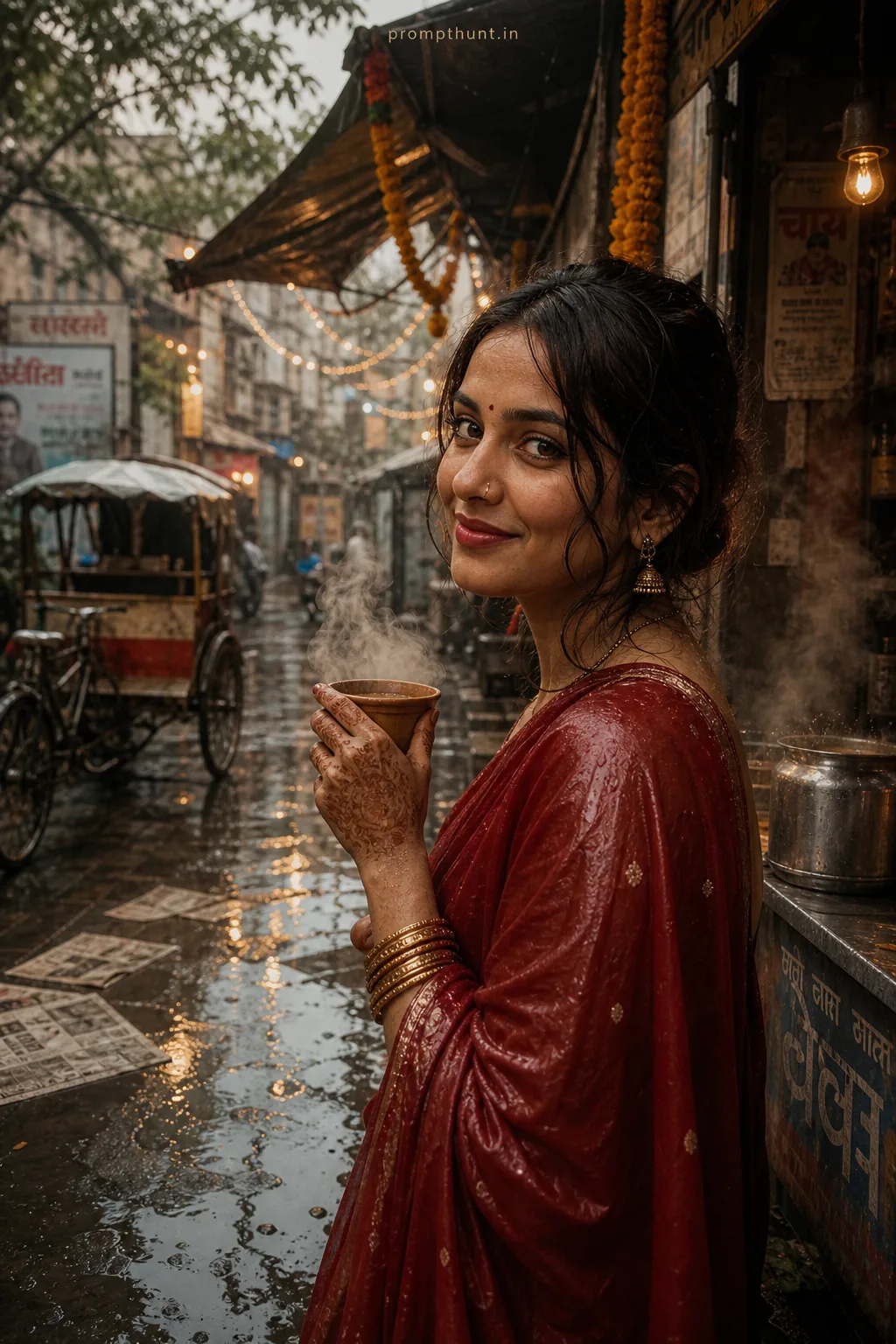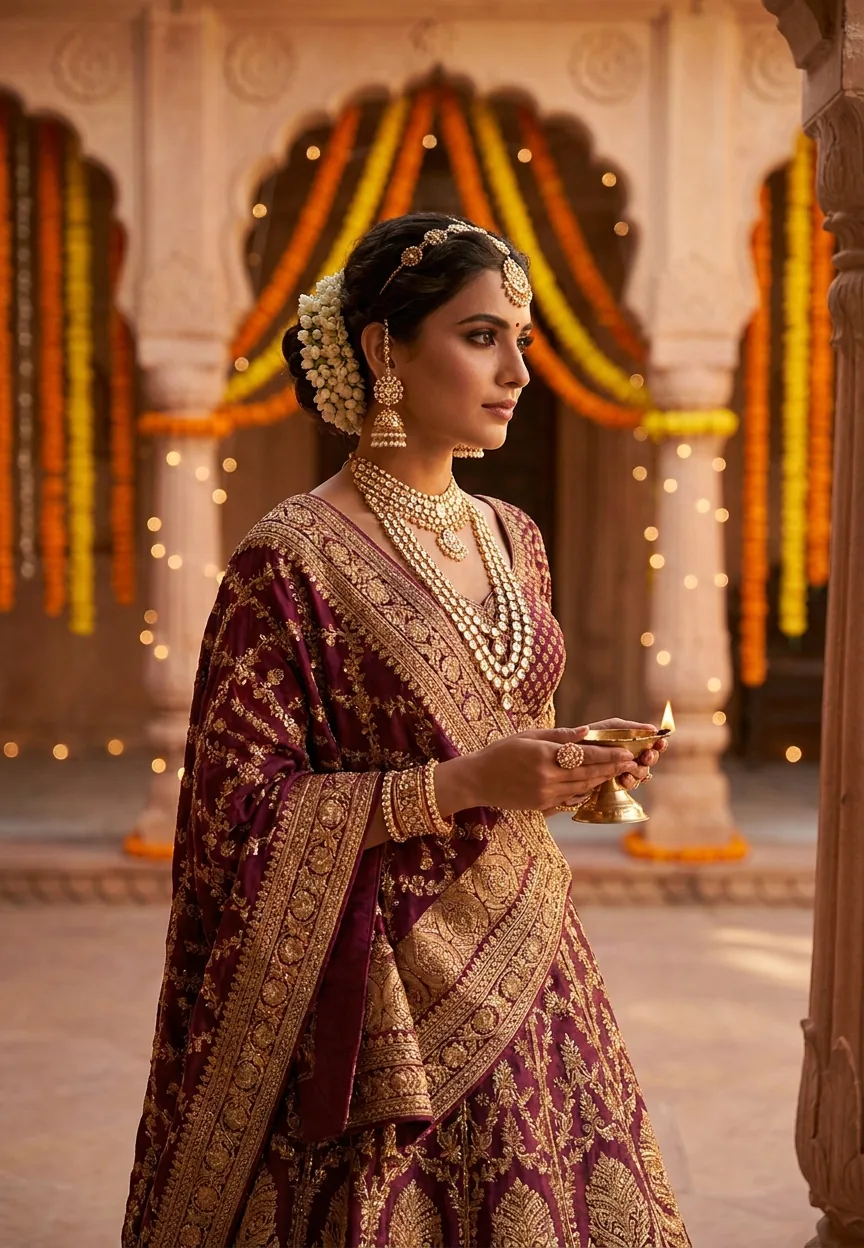
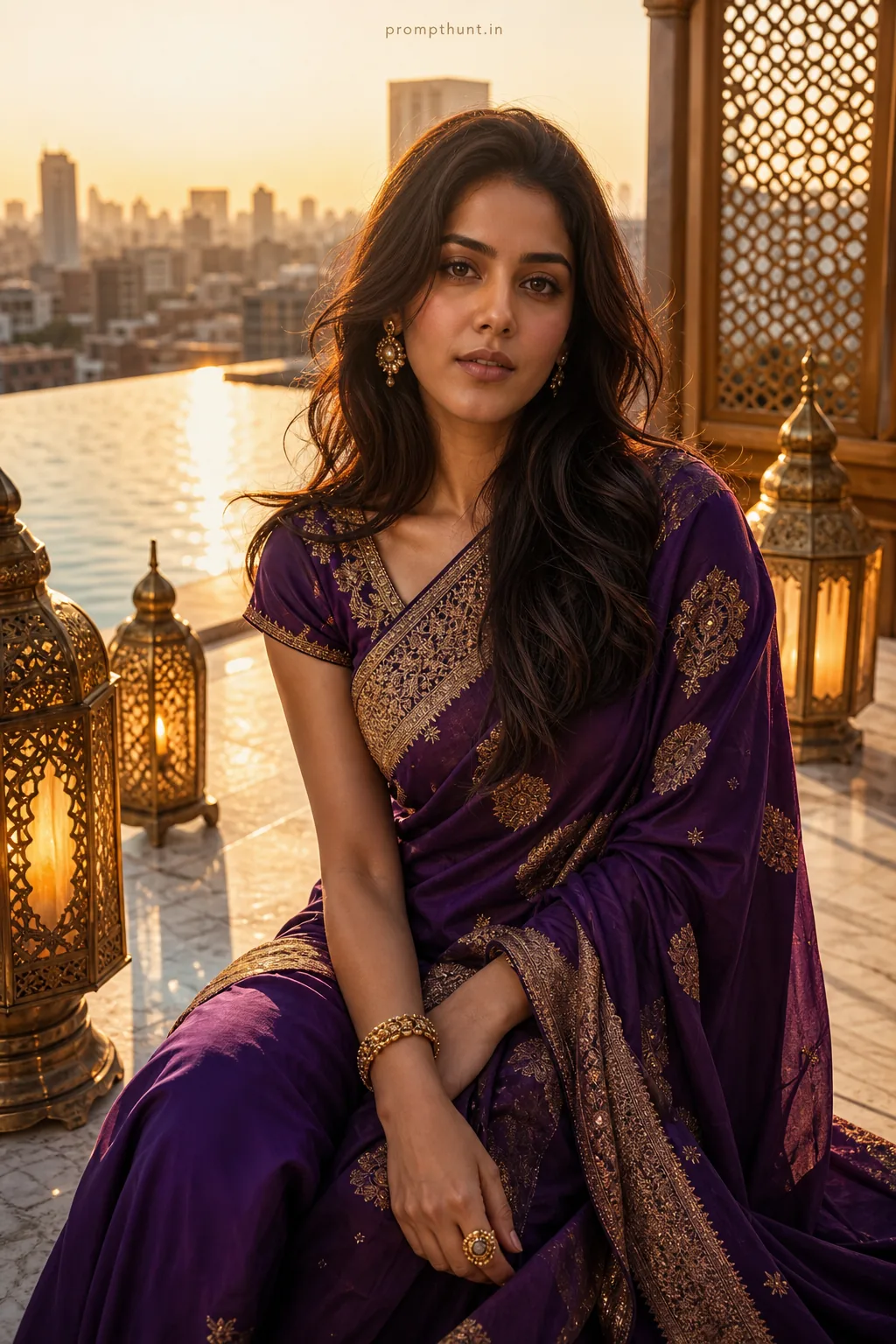
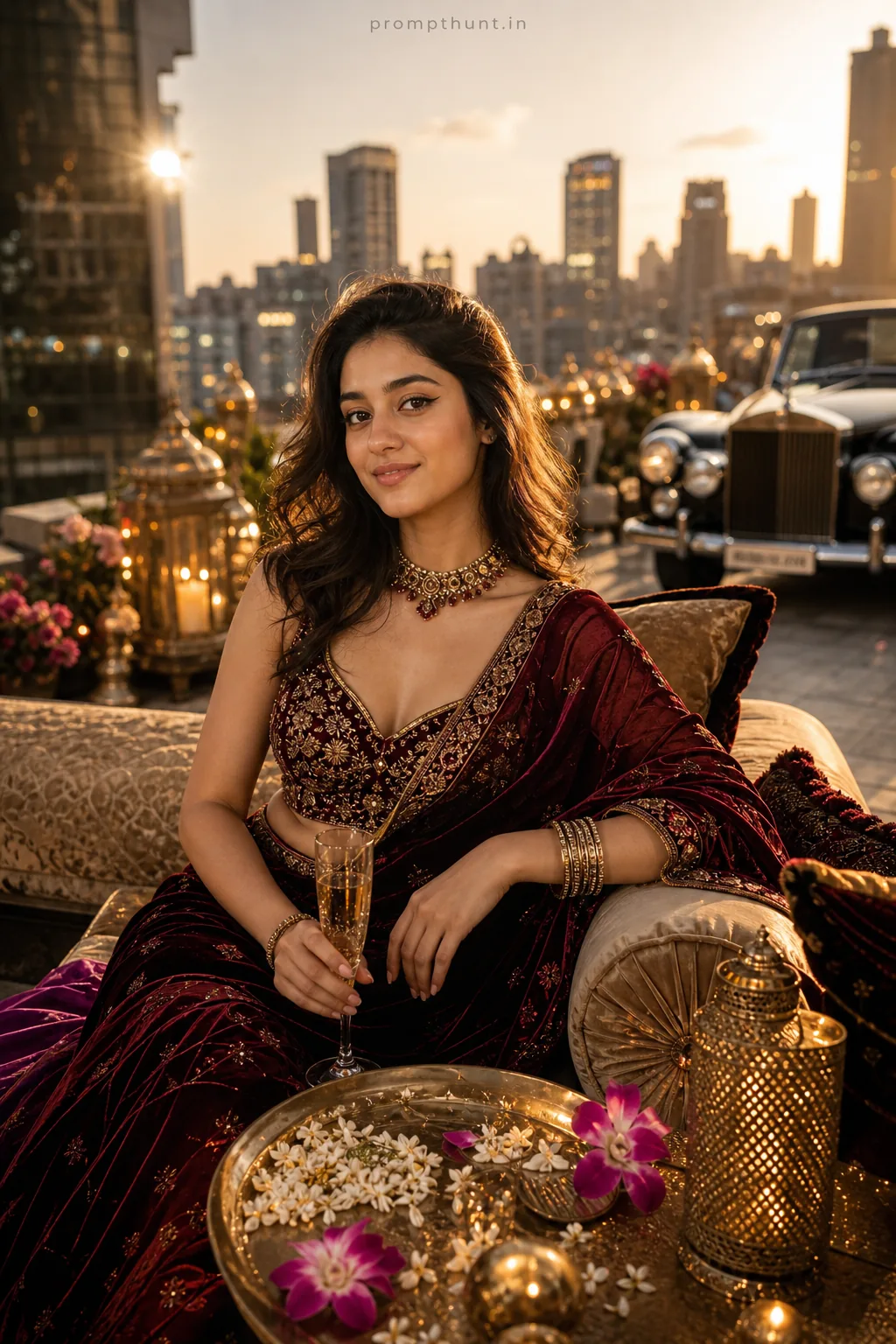
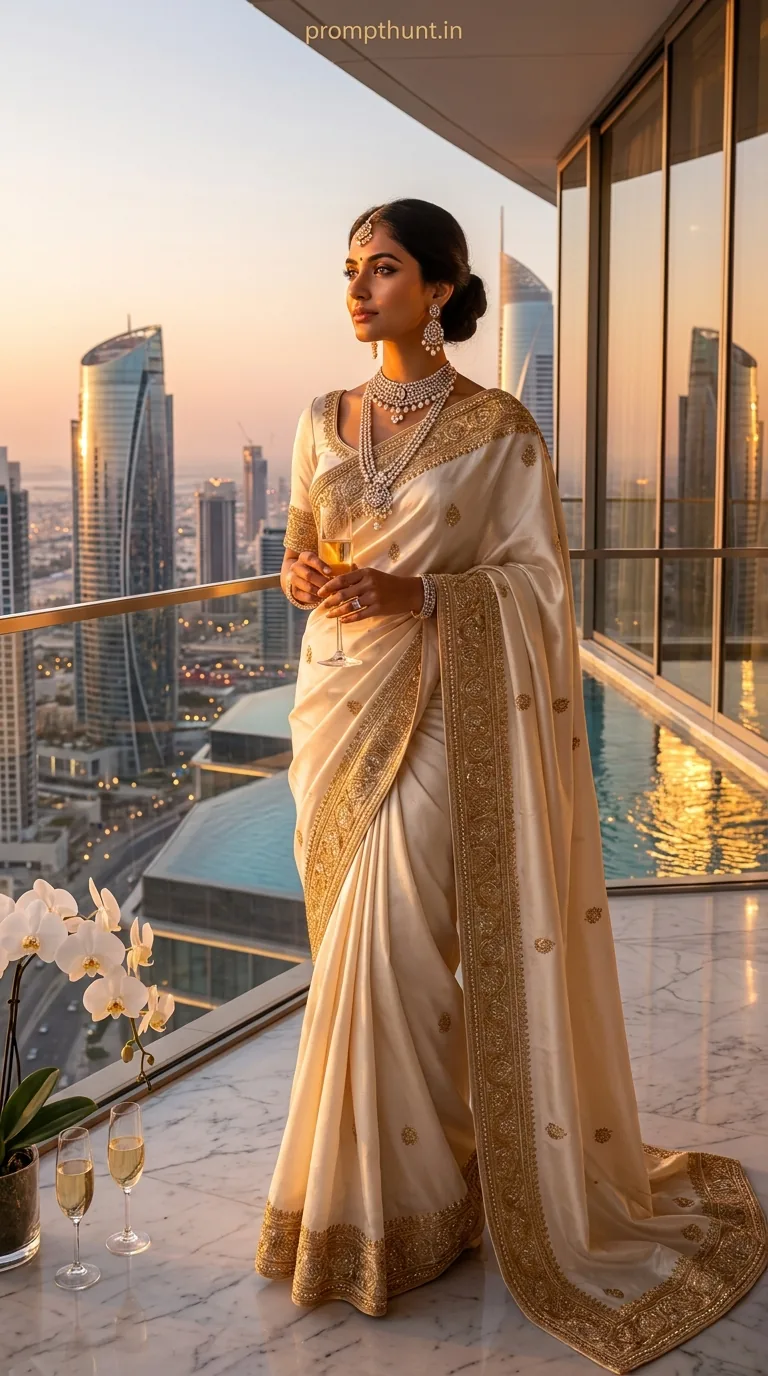
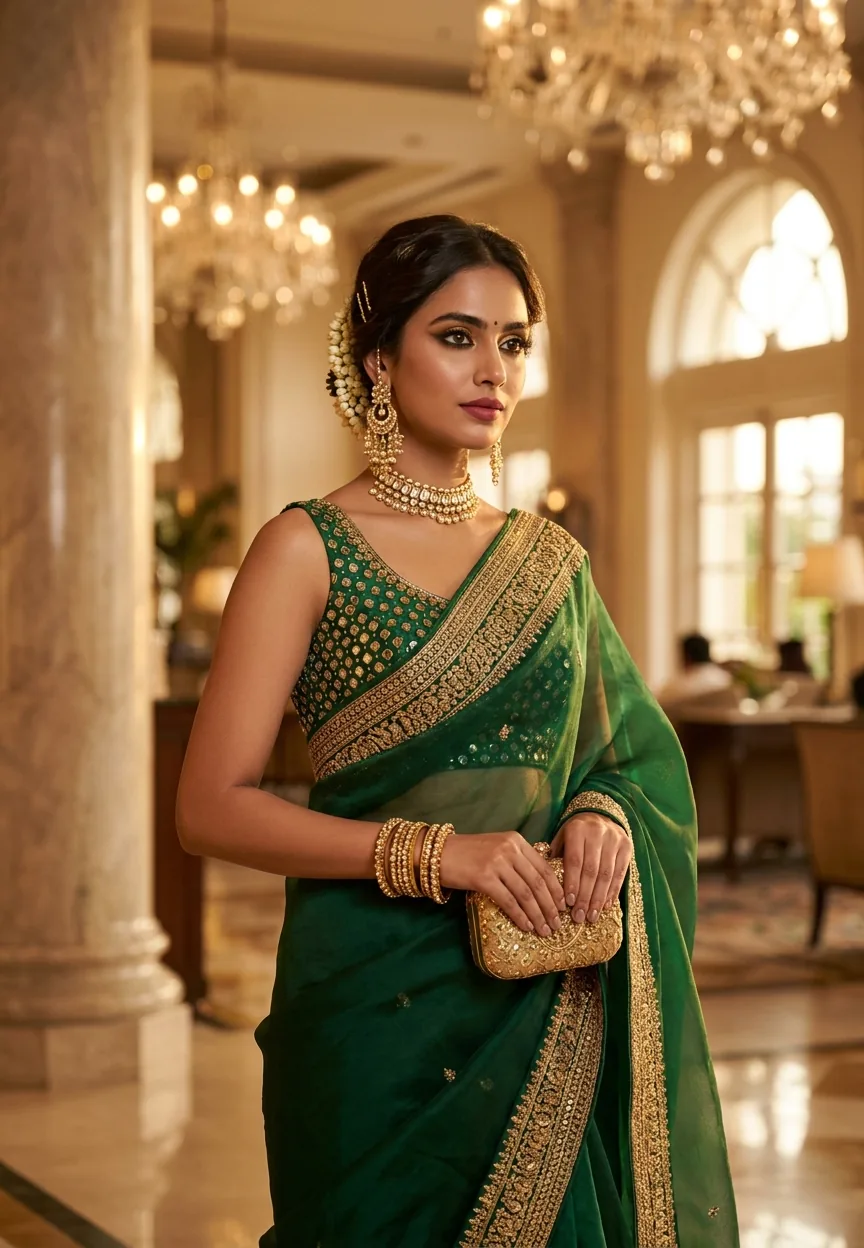
This Royal Indian Wedding Luxury Portrait prompt generates an ultra-photorealistic editorial image of a bride in a Banarasi silk lehenga, set inside a Rajasthani haveli at golden hour. Paste it into Gemini, Midjourney, or any major AI image tool for a cinematic, jewel-toned luxury lifestyle portrait at 8K quality in under sixty seconds.
Royal Indian Wedding Luxury Portrait Gemini AI Photo Prompt
The luxury lifestyle aesthetic has found its most dazzling form yet — and it smells faintly of mogra flowers and marigolds. Indian wedding photography has always been a visual feast, but AI-generated portraits in this style are pushing the grandeur to places even the most extravagant real-world shoots struggle to reach. We're talking palatial havelis, polki diamonds catching golden-hour light, and embroidery so detailed you can practically feel the zardozi threadwork. This prompt delivers all of it, and it does it in about the same time it takes to order a chai.
Paste this prompt into Gemini, Midjourney, or Adobe Firefly and you'll get a cinematic, magazine-quality Indian bridal portrait with rich jewel tones, dramatic lighting, and enough detail to make a real photographer slightly nervous about their career choices.
What the Royal Indian Wedding Luxury Portrait Style Actually Is
This is editorial luxury lifestyle photography — AI edition. The style sits right at the intersection of Vogue India's front cover and a high-end wedding photographer's hero shot. It draws from the visual language of Rajasthani palace photography: warm amber light, ornate carved stonework, cascading florals, and that cinematic depth of field that makes everything feel just slightly larger than life.
The key ingredients are jewel-toned colour palettes, ultra-detailed fabric textures, and architectural grandeur used as a backdrop rather than a setting. The subject is always the centre of gravity. Everything else — the fairy lights, the sandstone arches, the flickering diya — is pulling focus toward her without competing with her.
Rule of thumb: if it could appear on the cover of a luxury bridal magazine sold exclusively at five-star hotel lobbies, this prompt is in the right ballpark.
The Prompt You Actually Need
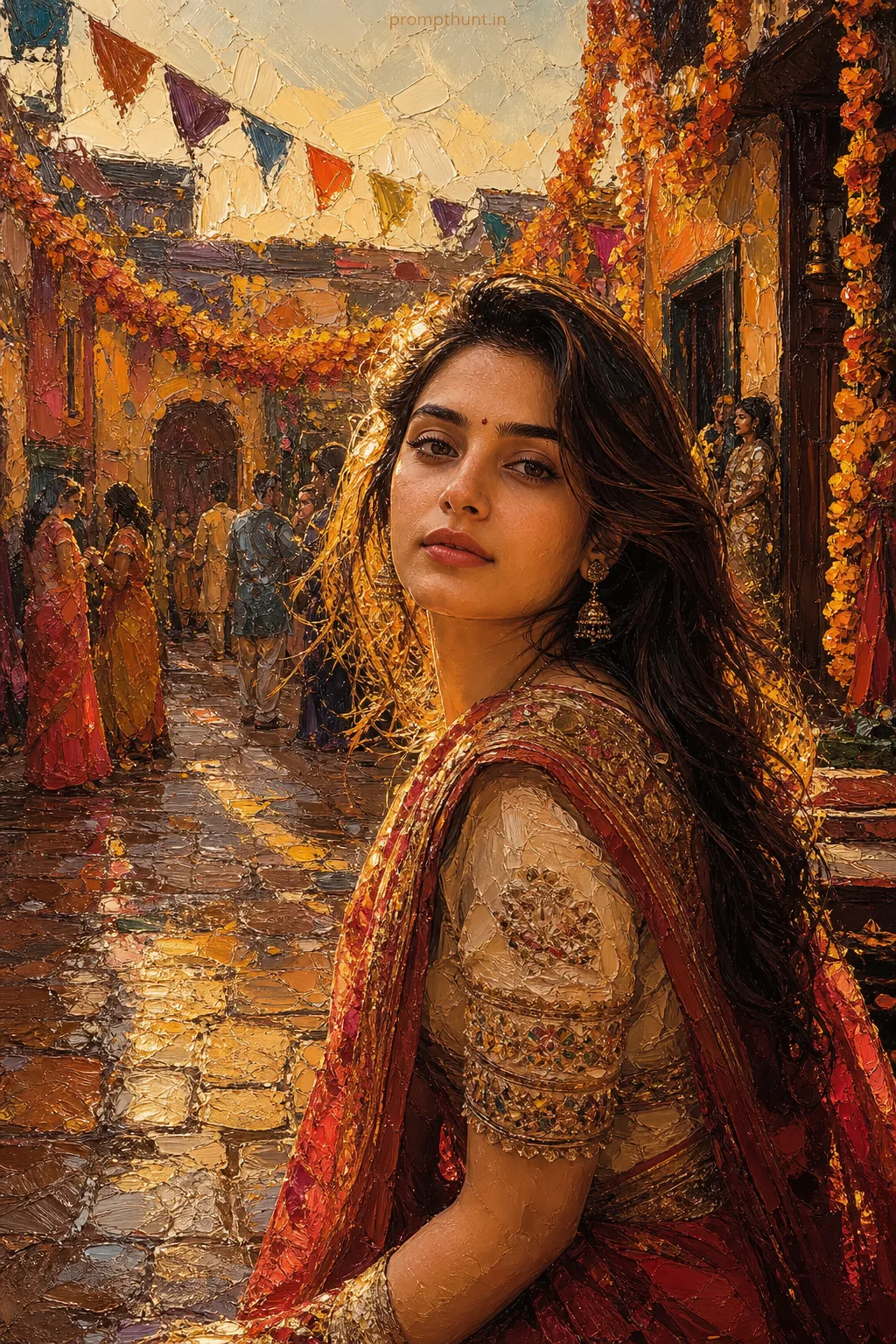
A stunning Indian woman in her late 20s wearing an exquisite deep burgundy and gold Banarasi silk lehenga with intricate zardozi embroidery, standing in the grand courtyard of a palatial Rajasthani haveli at golden hour. Her jewelry includes layered polki diamond choker necklace, maang tikka, and statement jhumka earrings catching warm sunlight. Her hair is styled in an elaborate low bun adorned with fresh mogra flowers and golden pins. She holds a vintage brass diya with soft flickering flame. The background features ornate carved sandstone arches, cascading marigold flower decorations in saffron and gold, and soft bokeh of fairy lights. Warm amber and rose gold color grading with cinematic depth of field. Shot from a slight low angle to emphasize elegance and grandeur. Ultra-photorealistic, editorial luxury magazine quality, rich jewel-toned color palette, dramatic yet soft diffused lighting, extremely detailed fabric texture, 9:13 vertical portrait format, 8K resolution.
How to Use This Prompt — Three Steps, No Surprises
Step one: copy the prompt exactly as written. Do not summarise it, trim it, or decide that "jewel-toned" is probably fine on its own. The specificity is the point. Each detail — the polki diamonds, the low angle, the 9:13 format — is doing real work.
Step two: paste it into your AI image tool of choice. Gemini Image Generation handles photorealistic portraits with strong colour grading particularly well. Midjourney with the --ar 9:13 flag and the --style raw parameter will keep the output close to editorial photography rather than sliding into illustration. Adobe Firefly is worth trying if you want cleaner fabric texture on the lehenga.
Step three: regenerate two or three times. Even a prompt this detailed will produce variation across outputs. The first result is rarely the best one. Nine times out of ten, the third generation hits the lighting and depth of field exactly right.
Tips for Getting the Best Results Out of This Prompt
Keep the vertical format. The 9:13 ratio is doing heavy lifting here. It gives the haveli arches room to frame the subject properly and gives the lehenga enough vertical space to read as genuinely grand rather than cropped.
If the jewellery looks flat or generic, add "hand-crafted polki diamond jewellery with kundan setting, reflecting warm golden light" as a supplementary detail. AI tools sometimes flatten fine jewellery detail on first pass. Being annoyingly specific fixes this almost every time.
The diya is optional but worth keeping. That small flickering flame creates a natural warm light source within the frame, which gives the tool a logical reason to apply warm tones to her face rather than just applying a filter over the whole image. It's a compositional trick that real photographers use — and it works just as well when you describe it in text.
For Midjourney users, add --q 2 for higher quality rendering on the fabric textures. Banarasi silk embroidery is genuinely complex to render and the extra quality pass makes a visible difference.
If the background haveli architecture looks too generic or too Western, append "traditional Rajasthani jharokha windows, pink sandstone jali screens, Mughal-inspired arches" to sharpen the regional specificity.
Why This Style Is Trending Right Now
Indian wedding content is one of the fastest-growing categories in luxury lifestyle photography — and that is not a coincidence. The Indian luxury market is expanding rapidly, and with it comes demand for high-production visual content that reflects that scale. Brands, wedding planners, and content creators all need hero imagery that communicates opulence without a two-day palace shoot budget.
AI-generated portraits in this style are filling that gap. They are being used for wedding invitation mock-ups, social media branding for bridal boutiques, lookbook imagery for jewellery designers, and editorial content for lifestyle publications. The demand is real and the quality threshold has crossed the point where many audiences cannot reliably distinguish these from professional photographs.
There is also a cultural resonance happening here. This aesthetic celebrates Indian craft traditions — Banarasi silk, zardozi embroidery, polki jewellery, Rajasthani architecture — with the kind of editorial reverence they absolutely deserve. It is luxury lifestyle content that is not borrowing from European aesthetics. It is firmly, proudly its own thing.
(Also, marigolds photograph beautifully in golden hour light, and every AI tool seems to know it. Fair call.)
The Honest Take — When This Prompt Works and When It Does Not
This prompt is excellent. It is one of the better-constructed luxury portrait prompts I have tested, and the results across multiple tools are consistently strong. The combination of specific garment description, named jewellery types, architectural detail, lighting direction, camera angle, and technical output specifications gives AI tools an unusually complete brief to work from. Most prompts leave three or four of those elements vague. This one does not.
That said, it is not a universal solution. If you are a working photographer who shoots real Indian weddings, this is a creative tool, not a replacement for what you do. Real weddings have a grandmother crying in the third row, a flower girl who has abandoned her duties to eat the marigolds, and a groom who is visibly overwhelmed by the whole magnificent chaos of it. No prompt captures that. AI images at this level of polish are beautiful, but they are stillness. They are the ideal rather than the moment.
Use this prompt for mood boards, brand imagery, and content creation. Do not use it to misrepresent a real event or a real person. Transparency about AI-generated content matters, particularly in a space where authenticity carries significant cultural weight.
The other limitation worth naming honestly: jewellery rendering is still the weakest point for most AI tools on this type of prompt. Polki diamonds have a very specific handcrafted irregularity that AI tends to smooth out into something that looks more like CGI than craft. It is improving generation by generation, but it is not perfect yet. If jewellery accuracy is critical for your use case — say, you are a jewellery designer using this for product representation — additional prompt refinement or post-processing will likely be needed.
For everything else, this prompt delivers. The fabric textures, the architecture, the golden-hour colour grading — those all land consistently well. It is a strong, honest, well-specified prompt, and the results show it.
The Bottom Line
This is one of those prompts that reminds you why the luxury lifestyle genre works so well in AI image generation. The specificity is high, the cultural reference points are precise, and the visual language is rich enough that AI tools have plenty to work with. Copy the prompt, run it two or three times, and keep the format vertical. You will have editorial-quality luxury lifestyle imagery in under two minutes.
Just try not to feel too smug about it. Real photographers spent years mastering golden-hour light in Rajasthani courtyards. You just typed "Banarasi silk" and hit enter. At least one of you deserves a marigold garland for the effort — and it probably is not us. (It is definitely not us.)