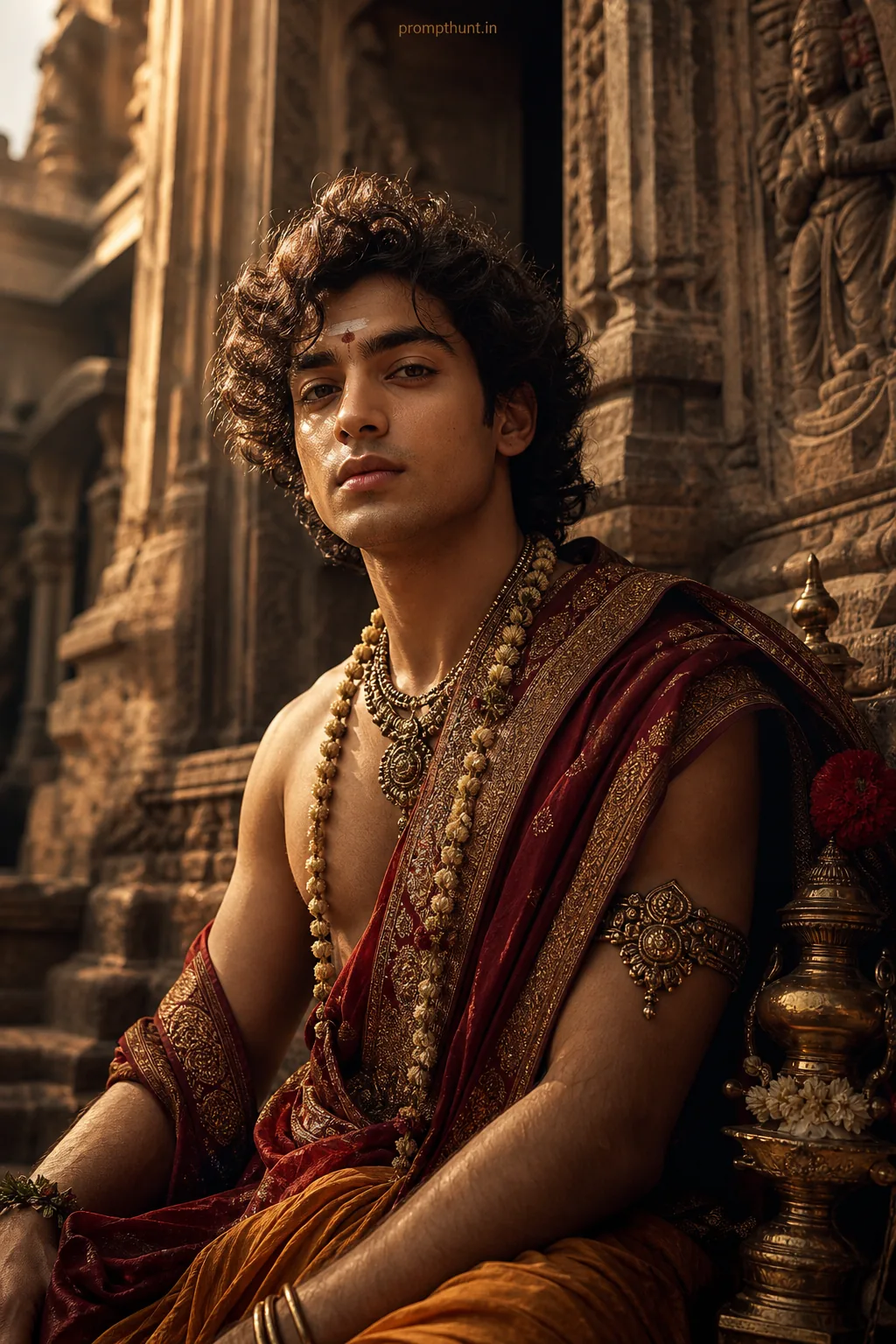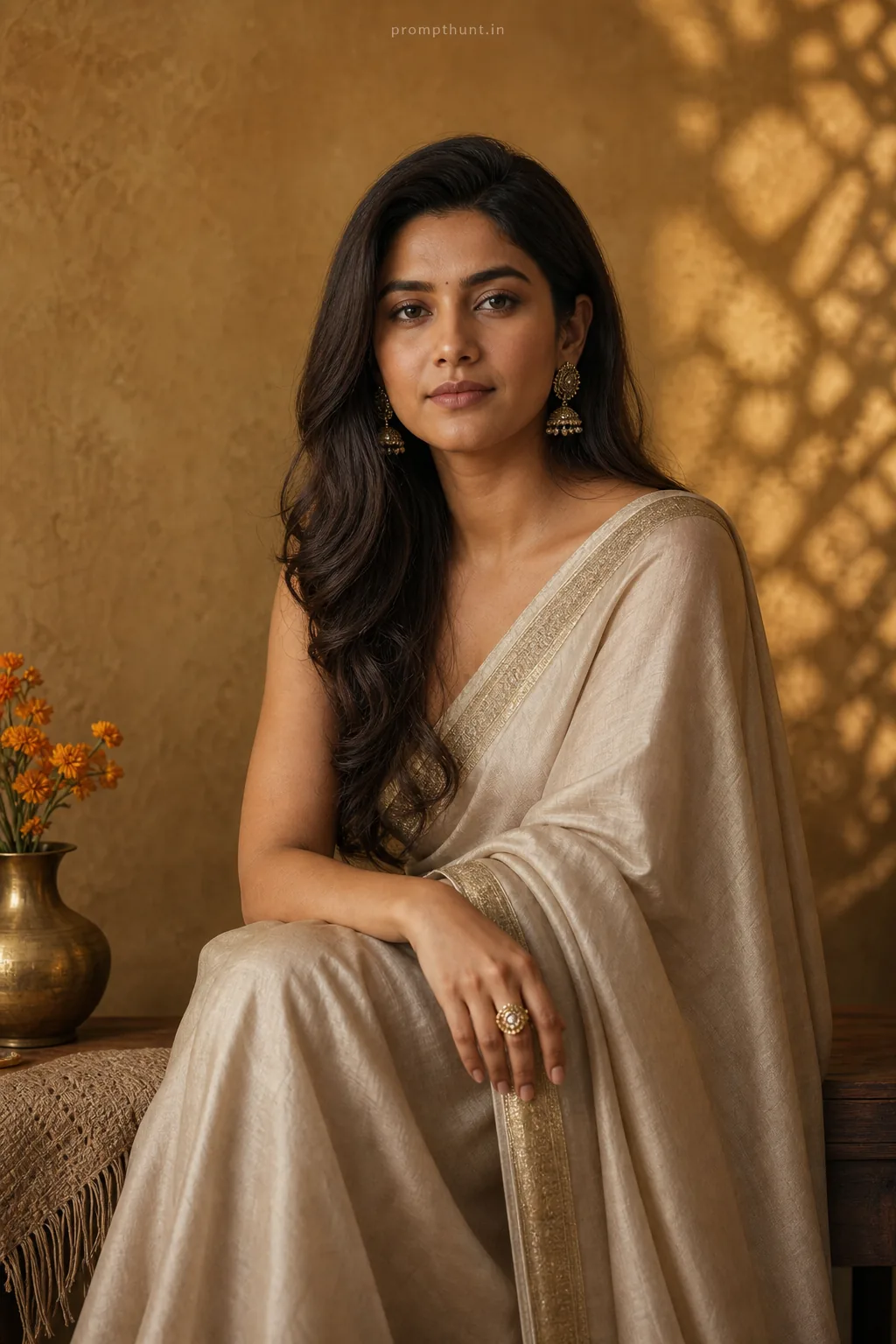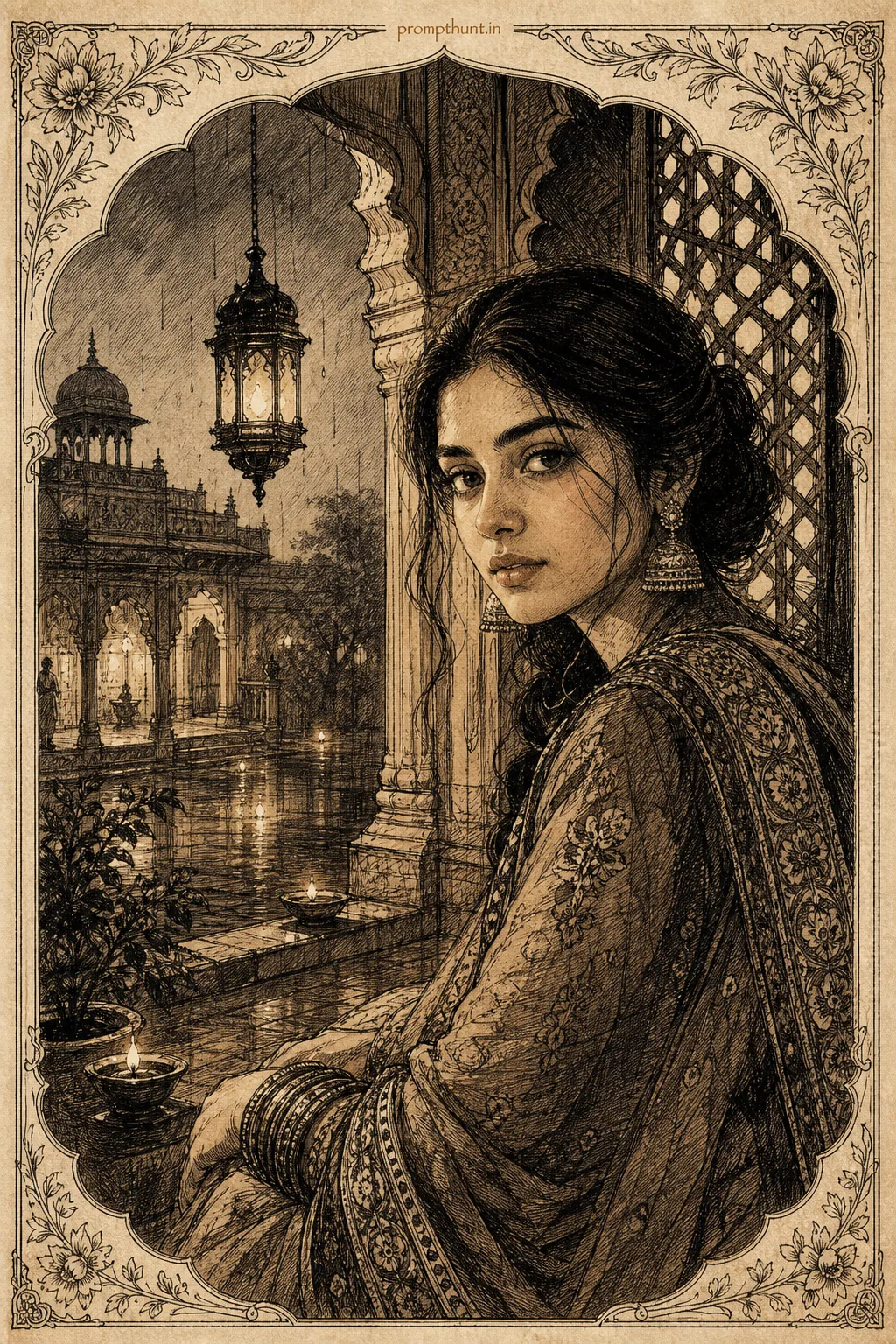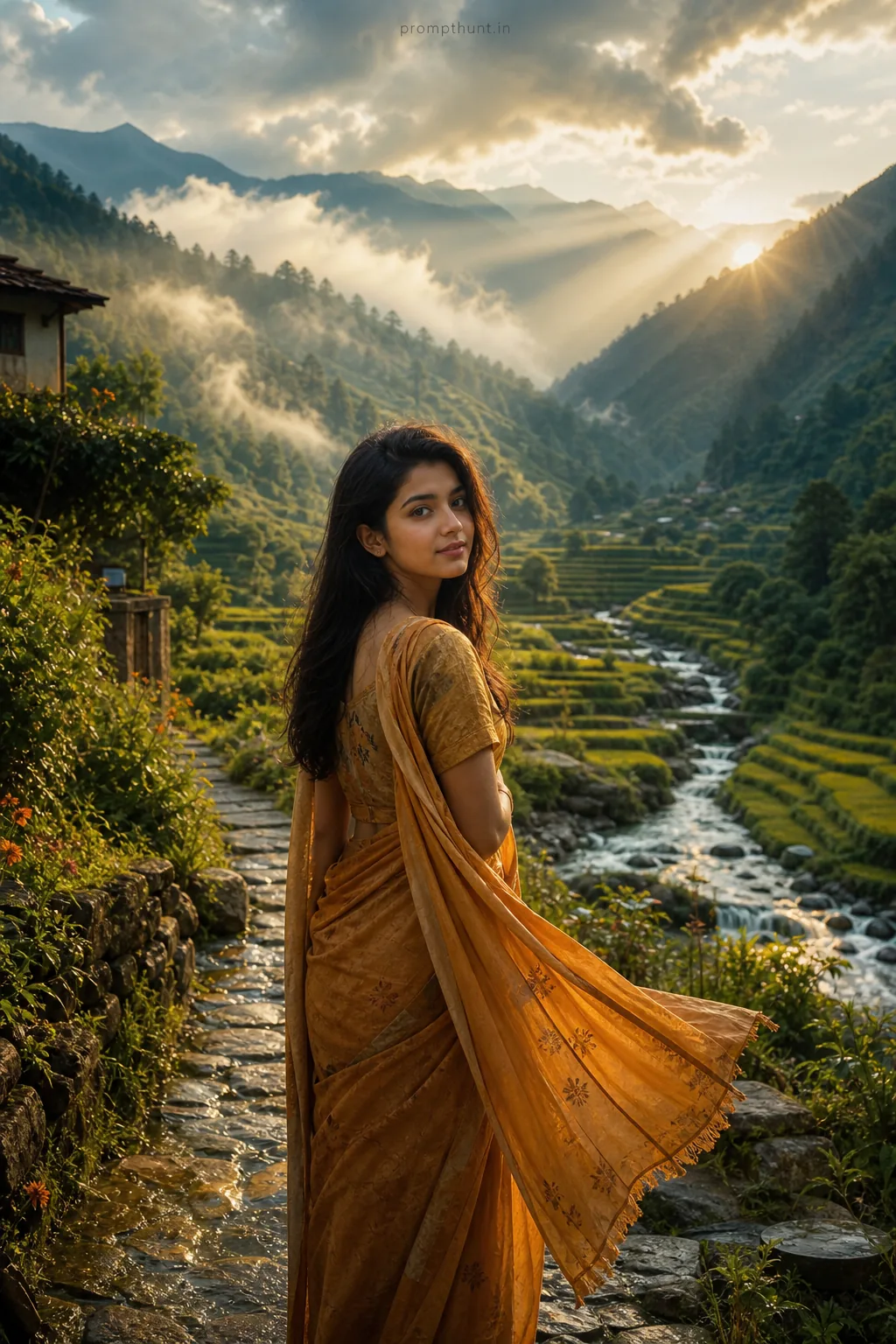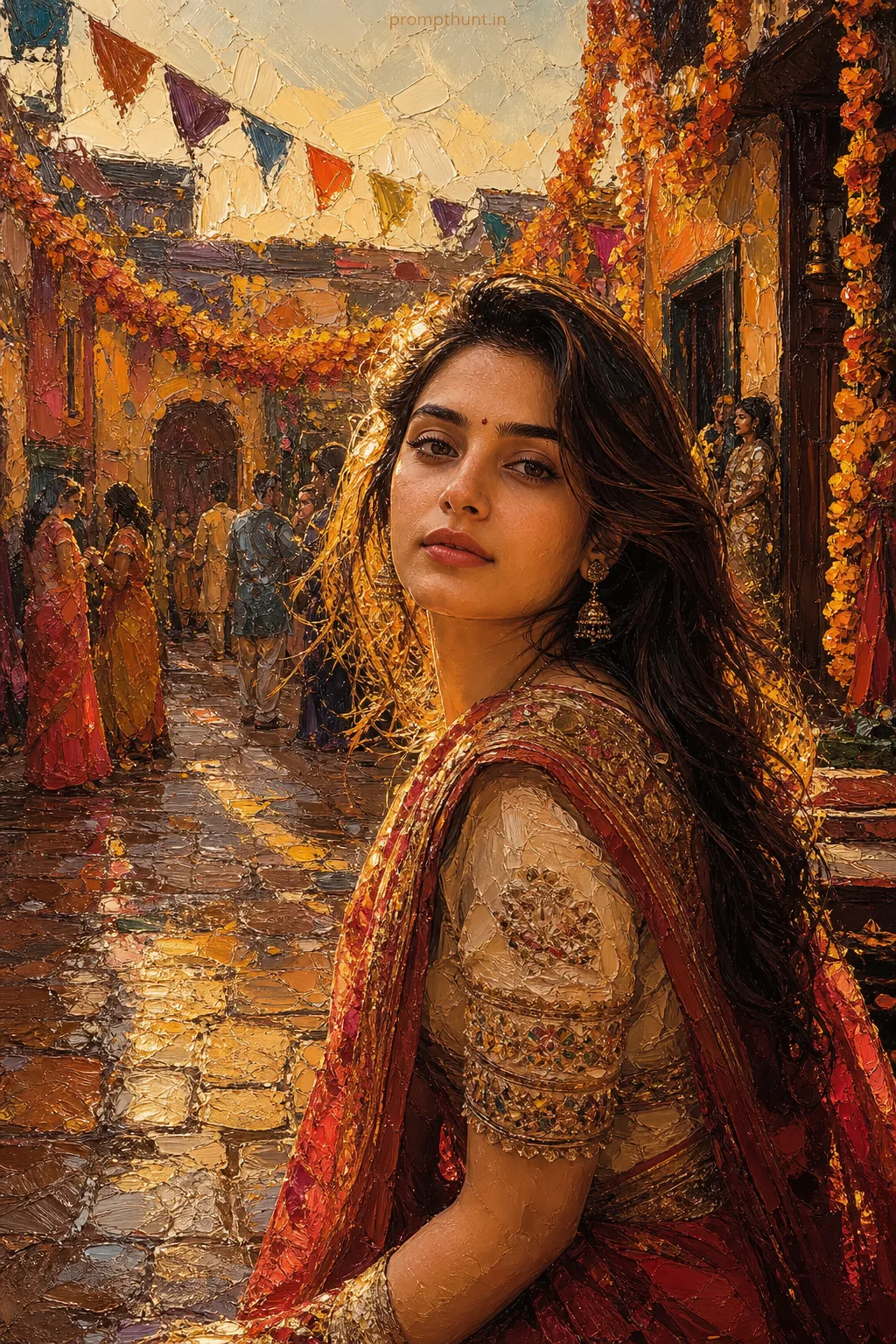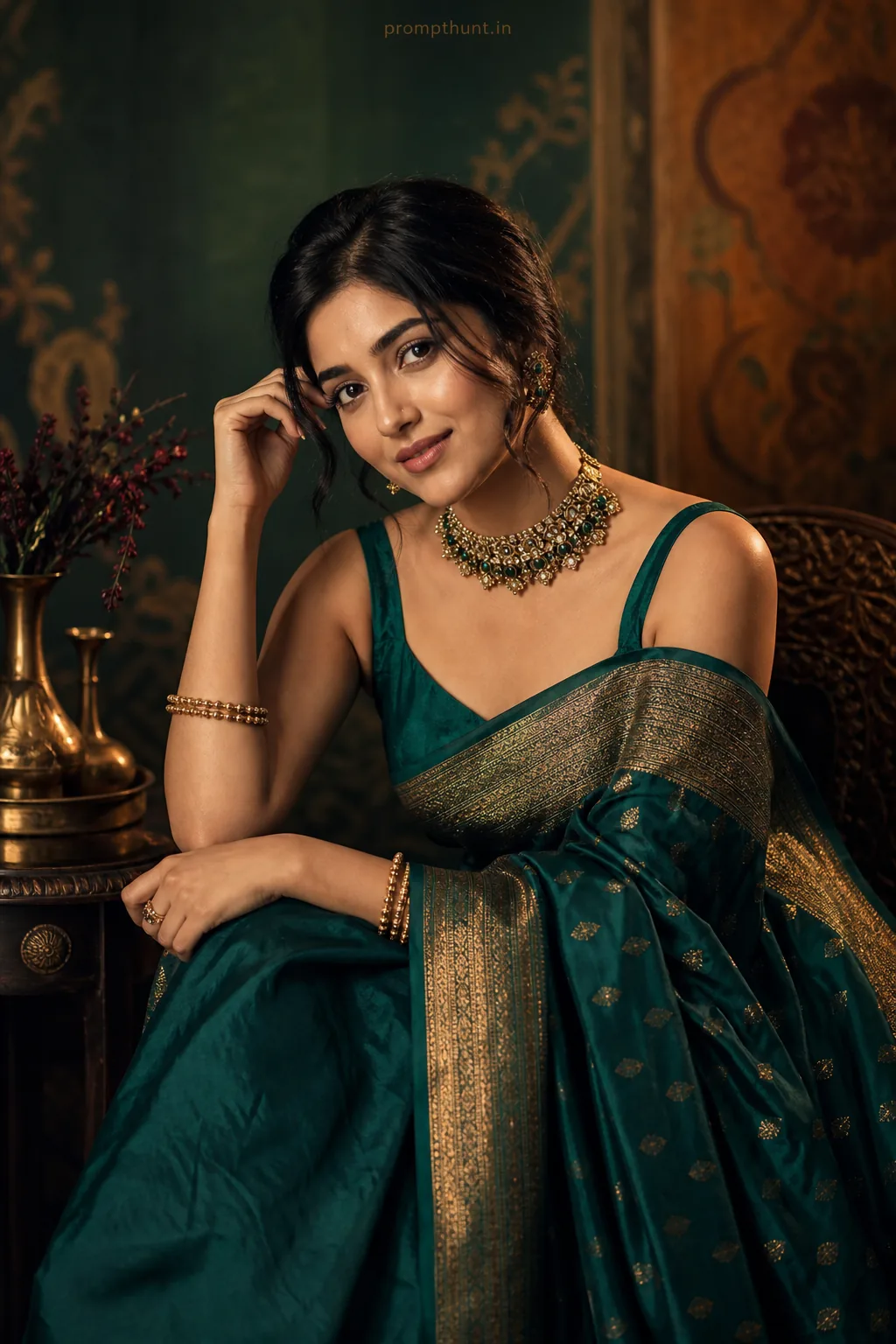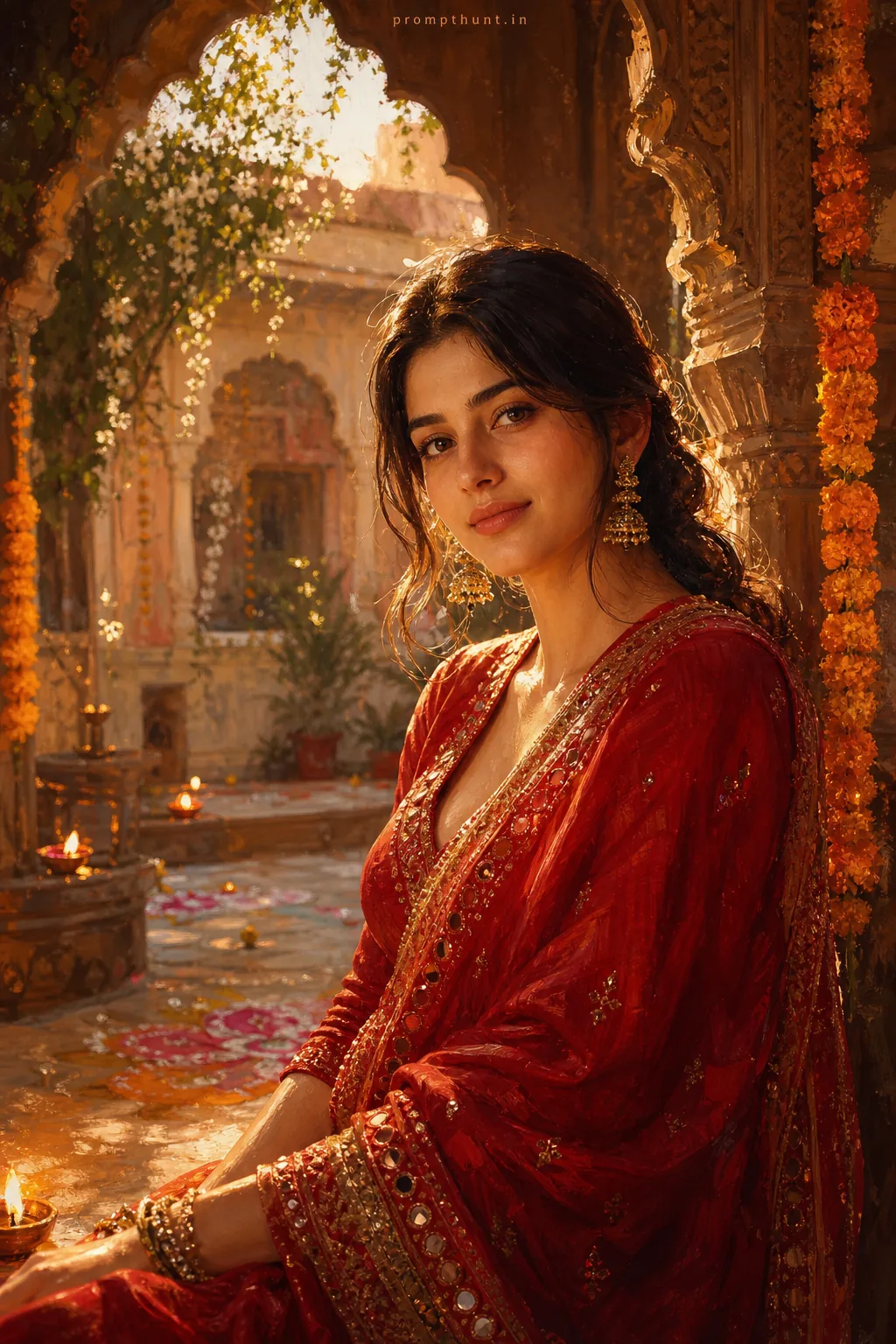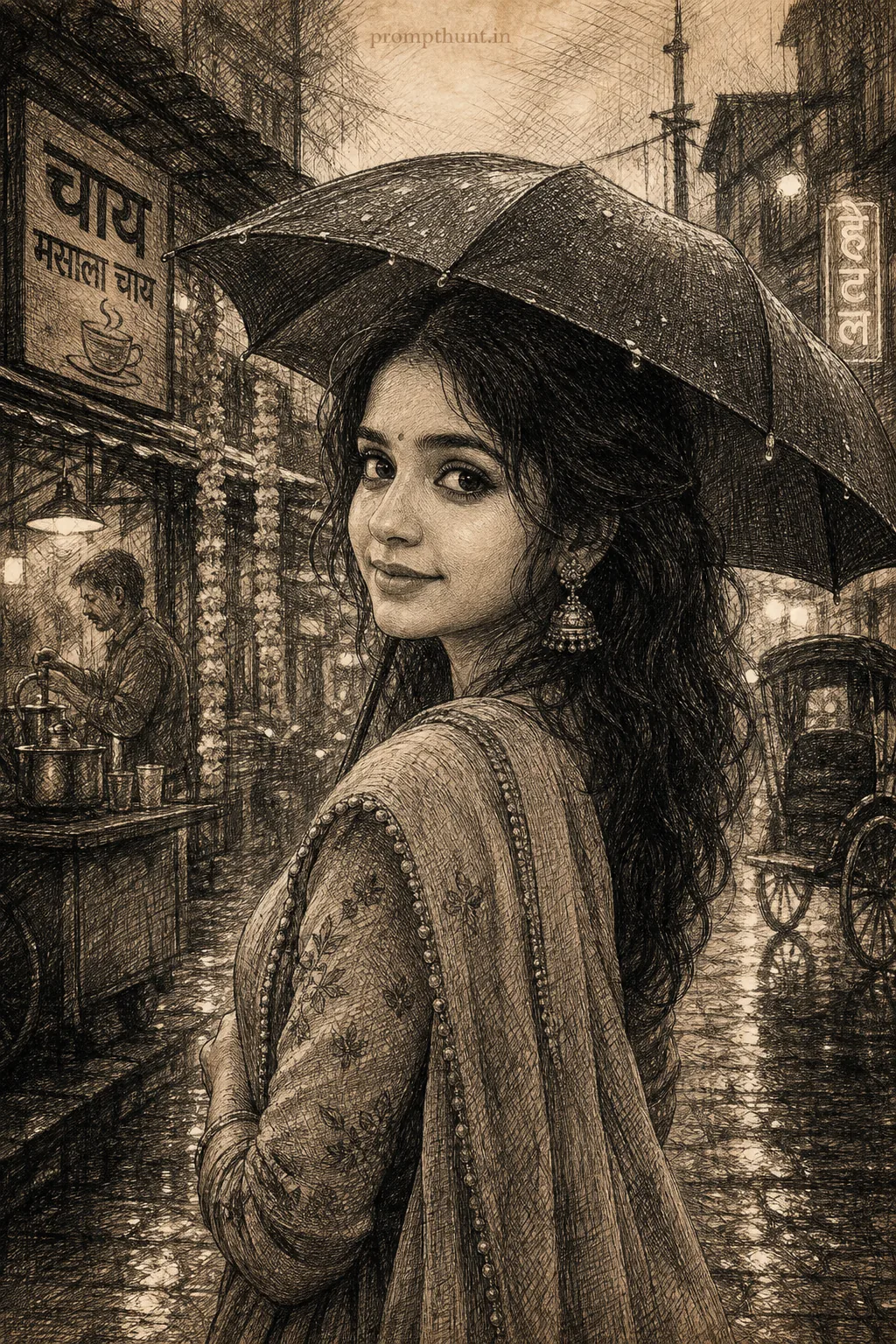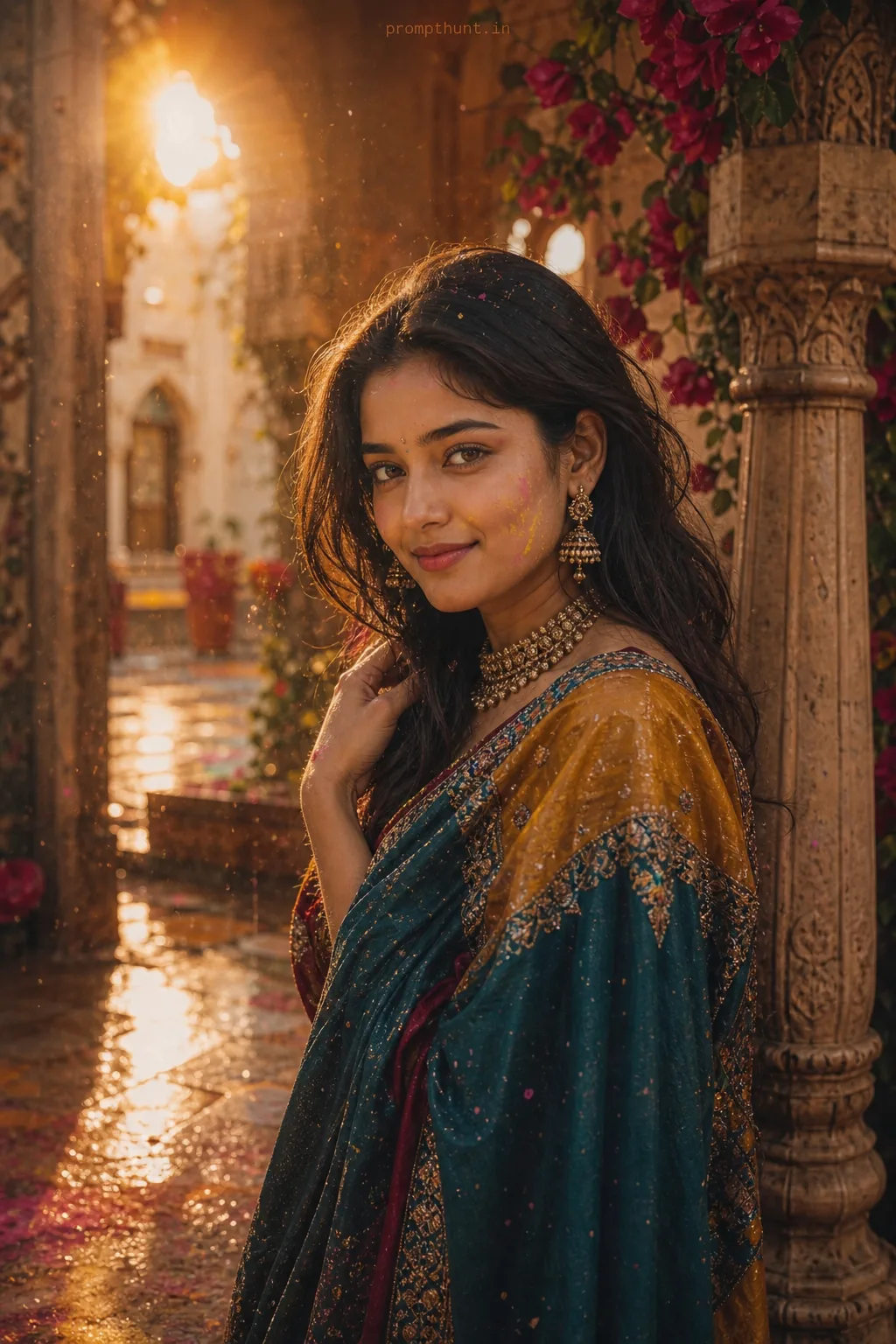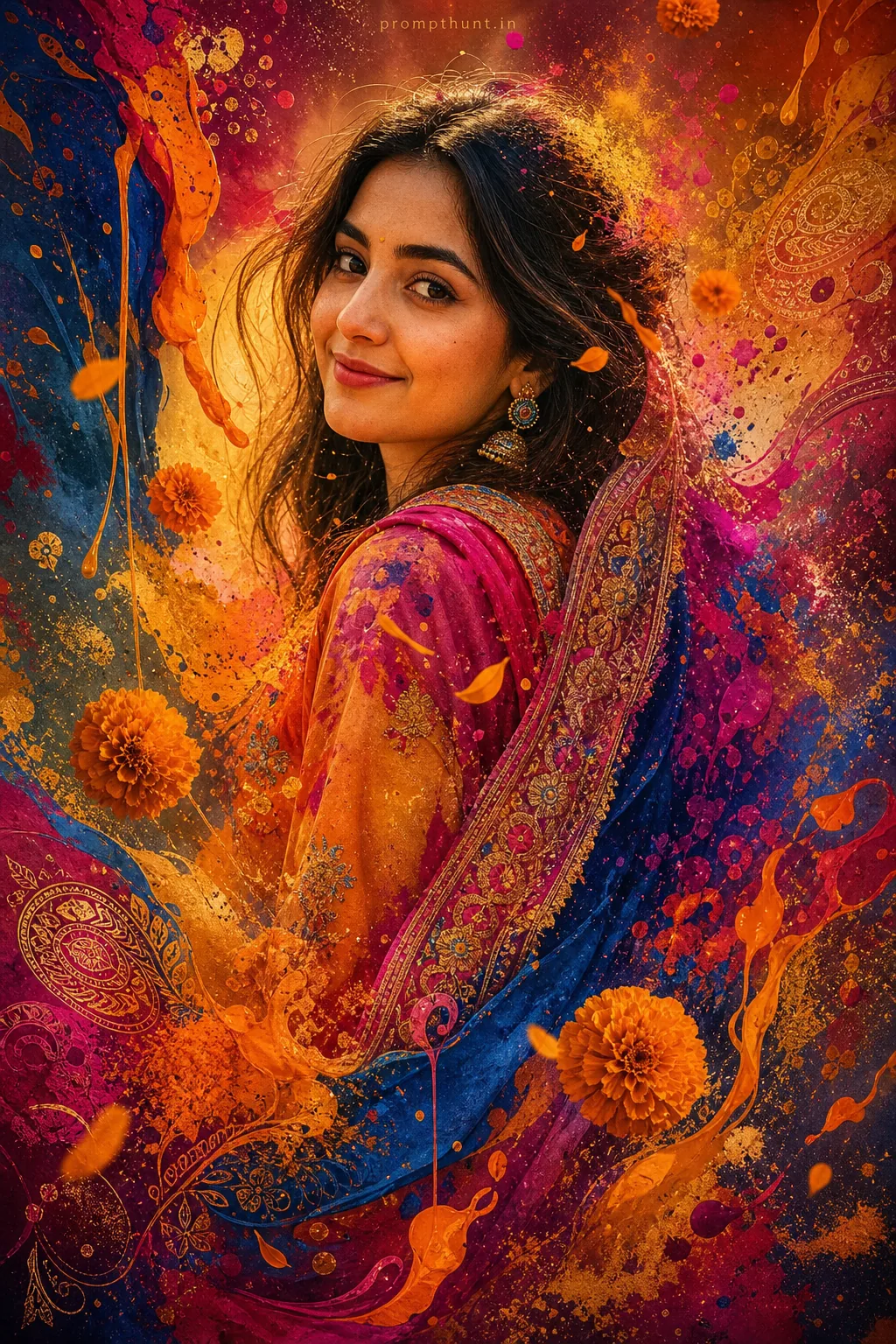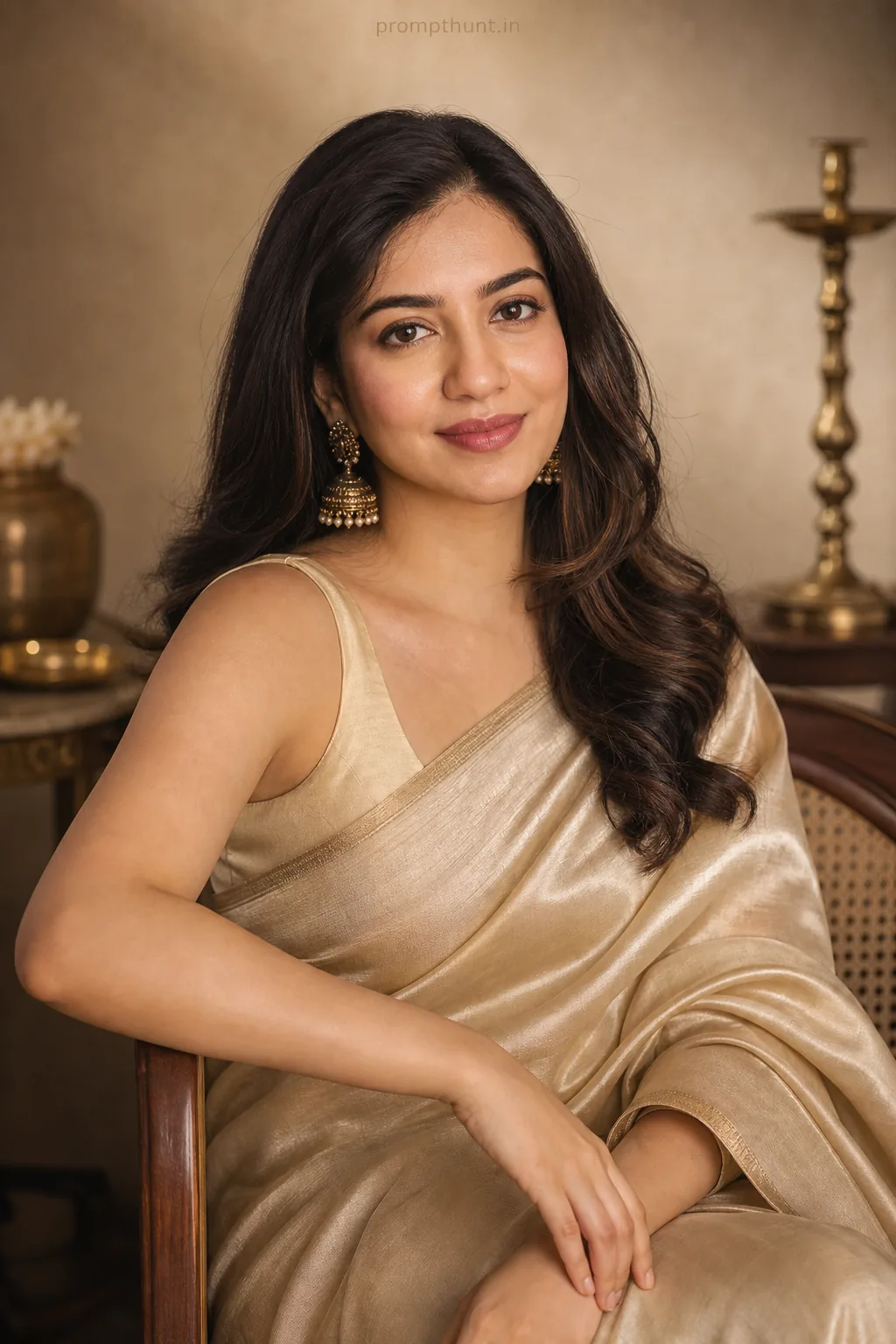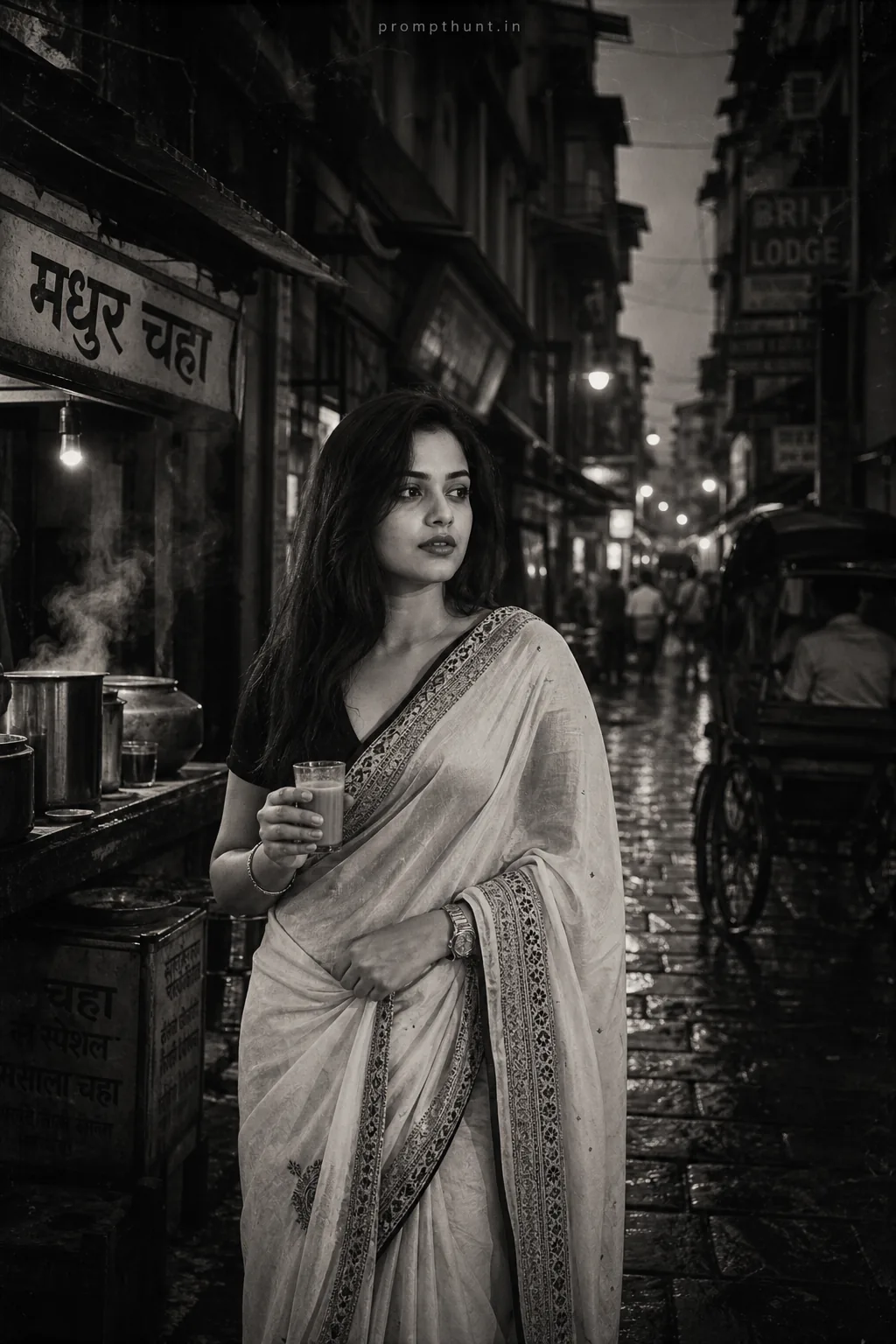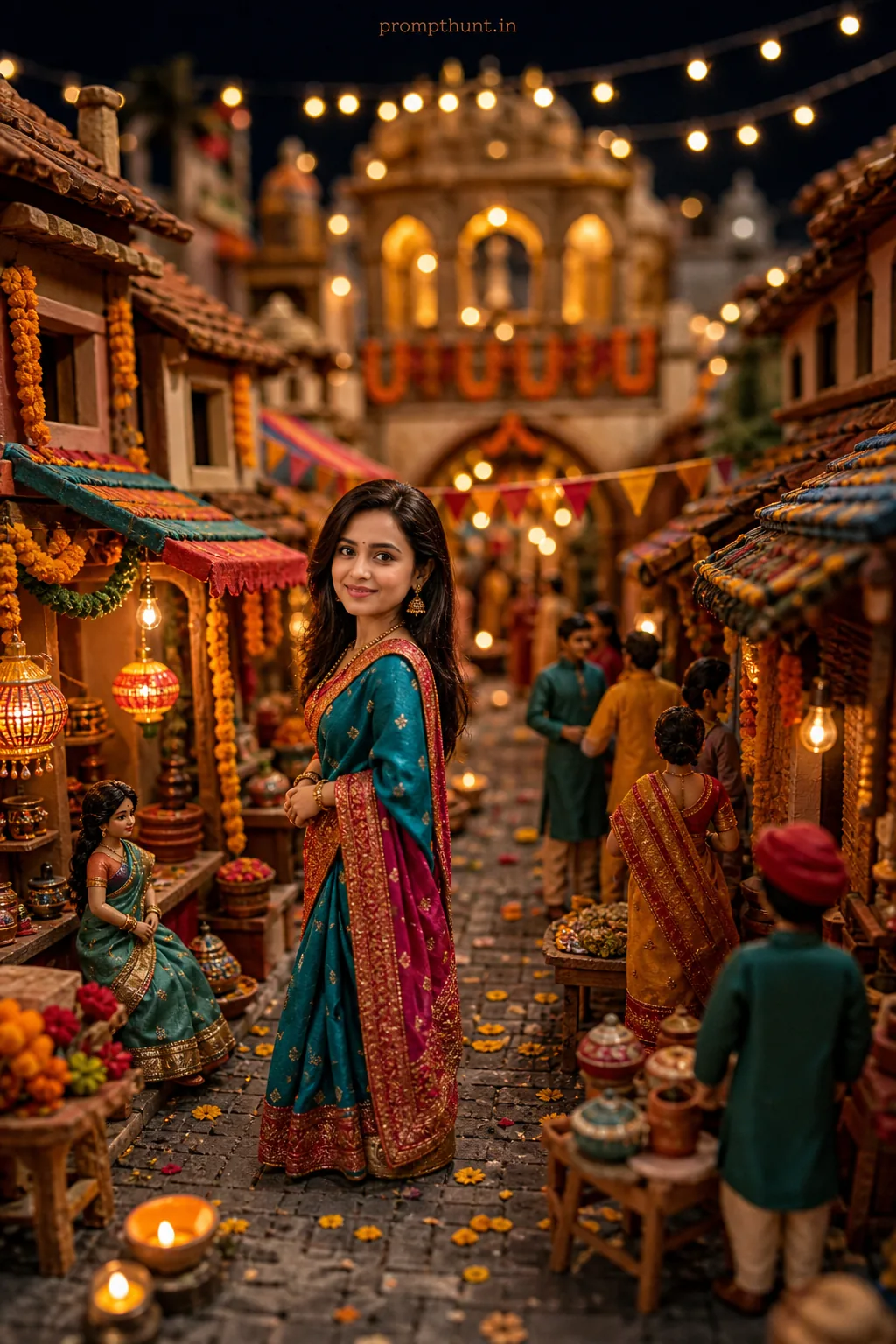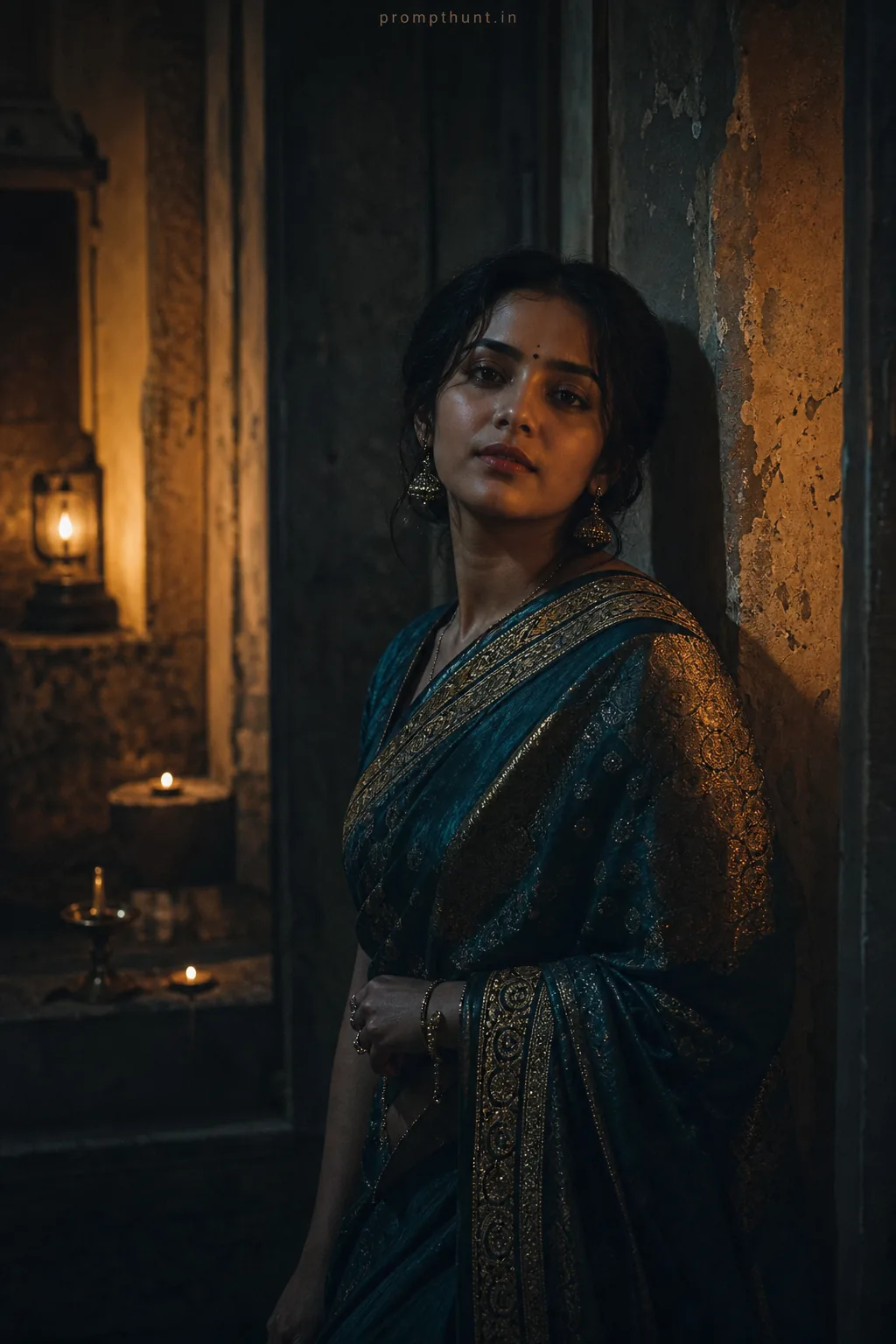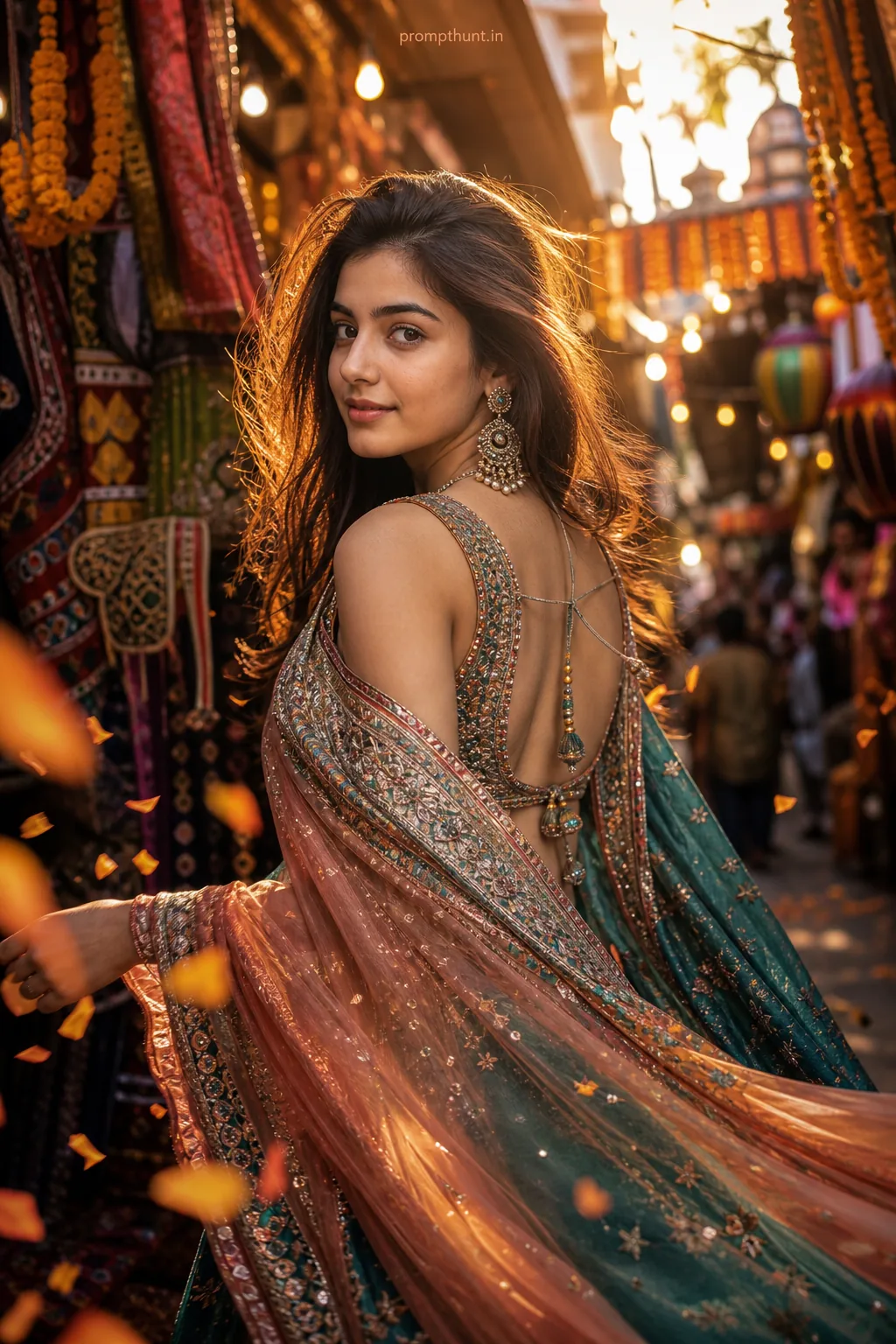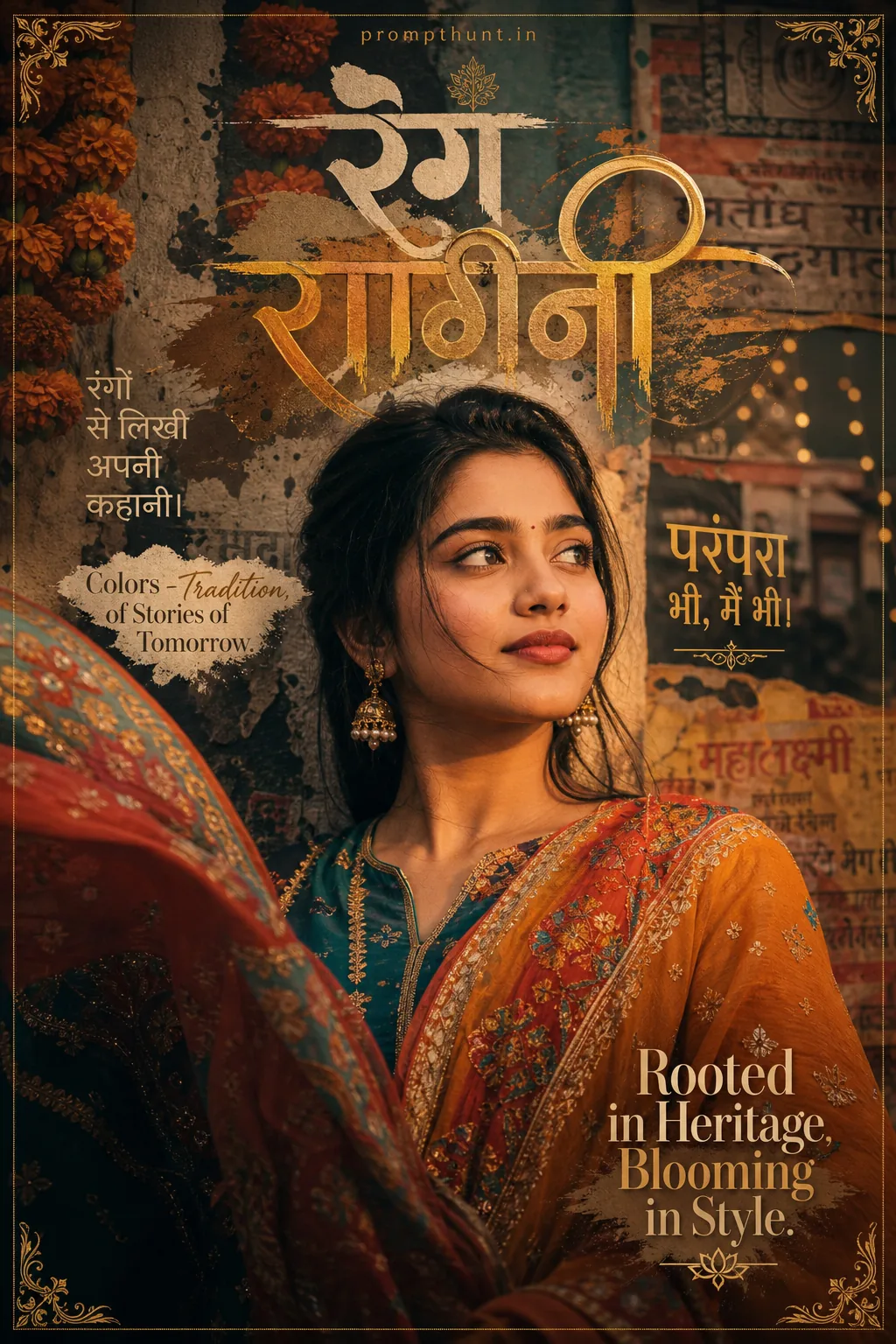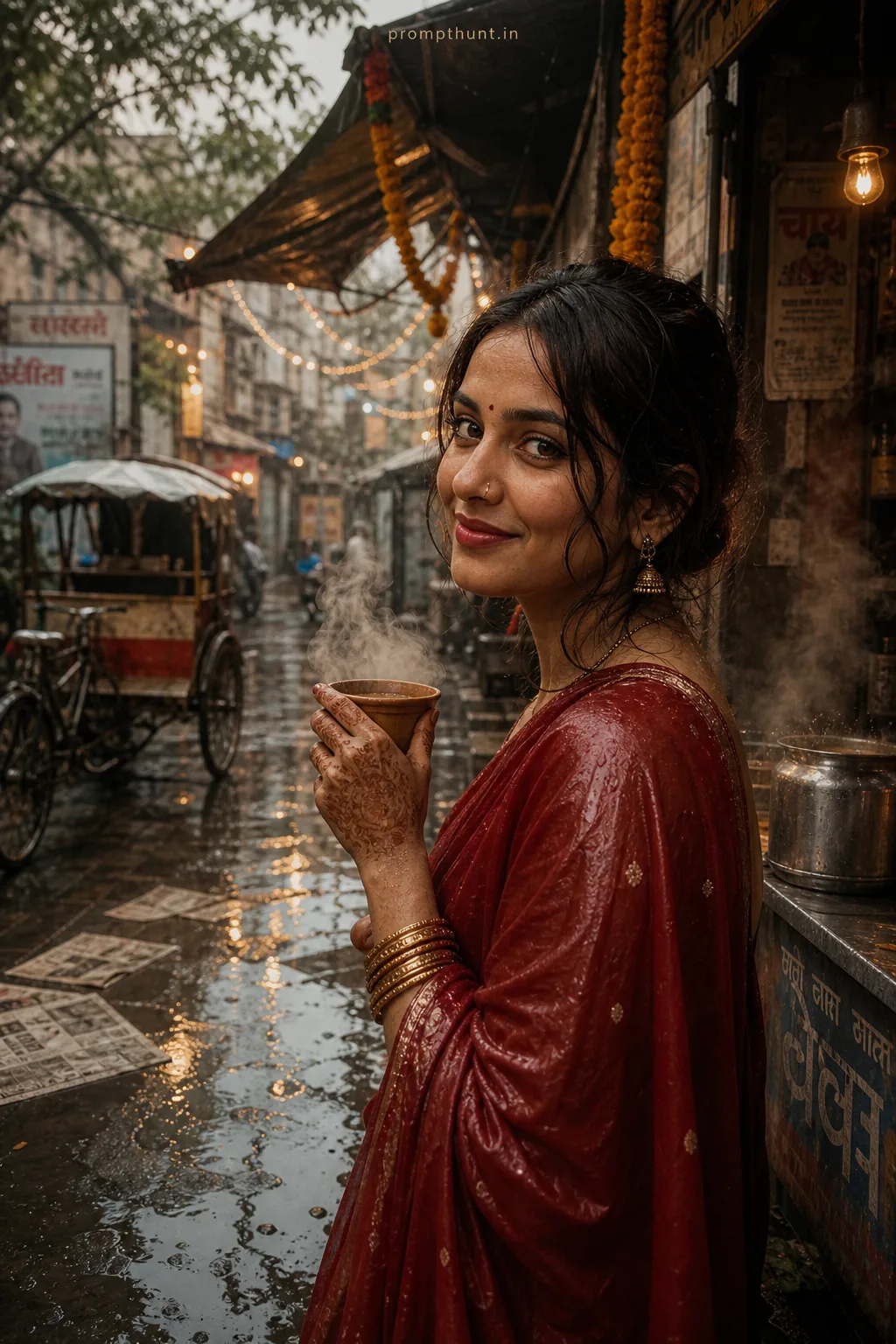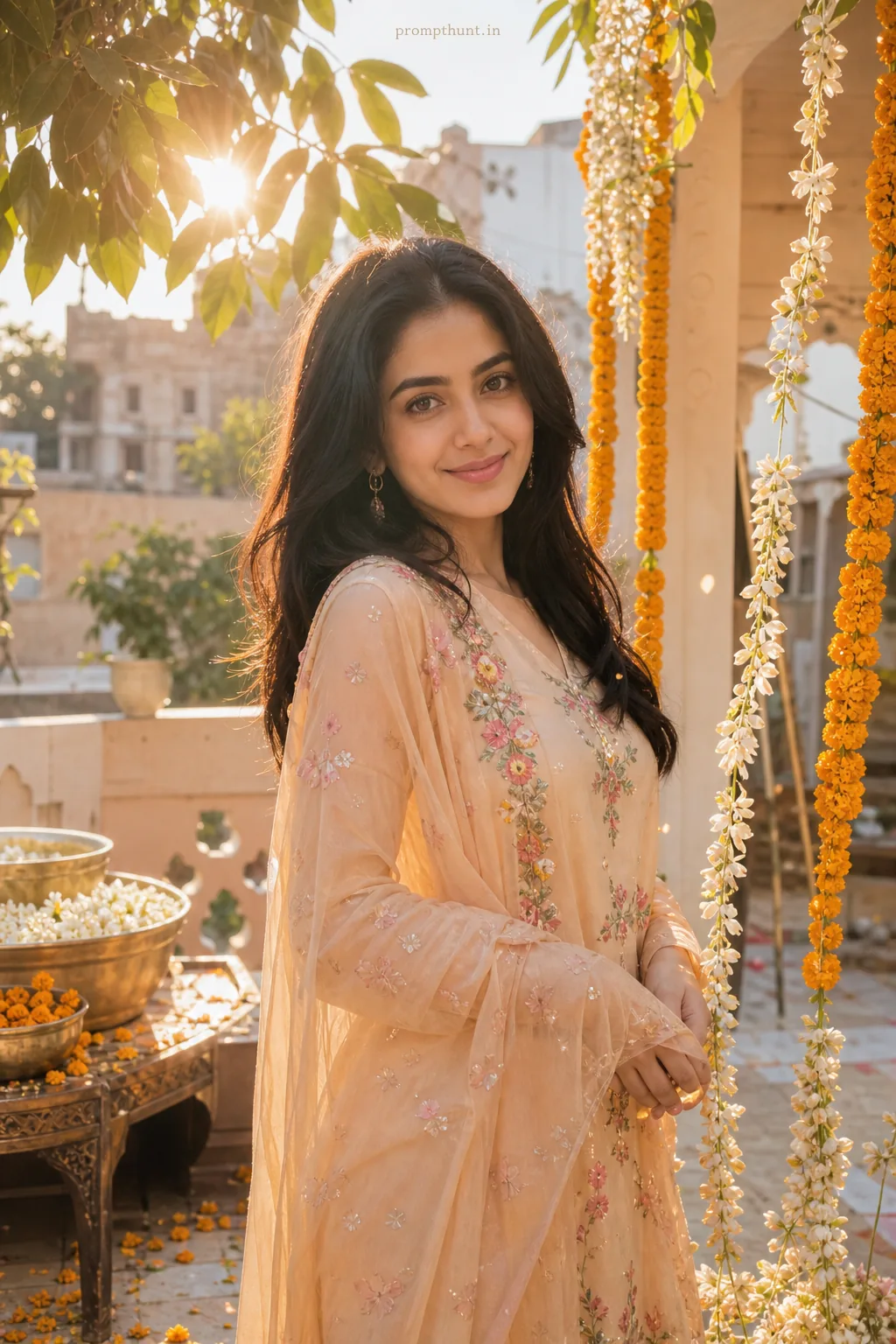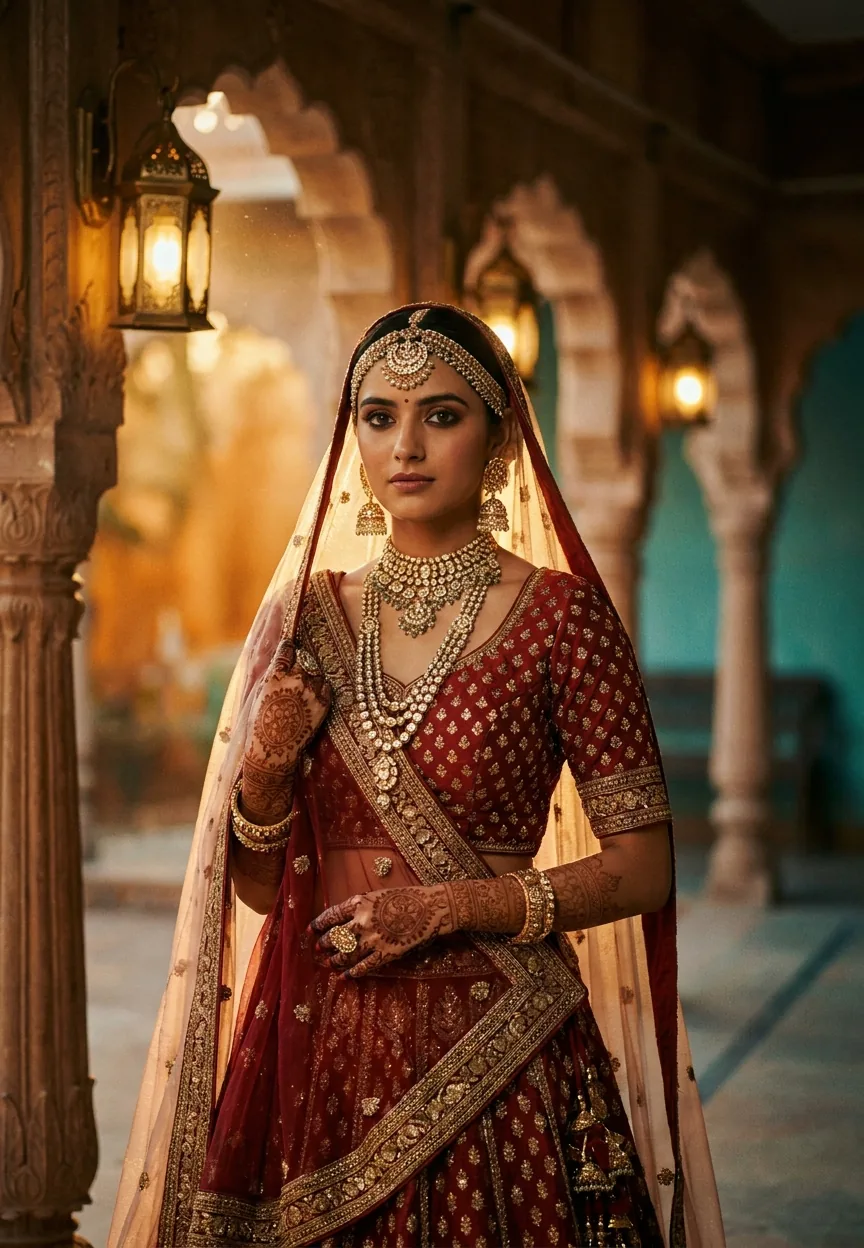
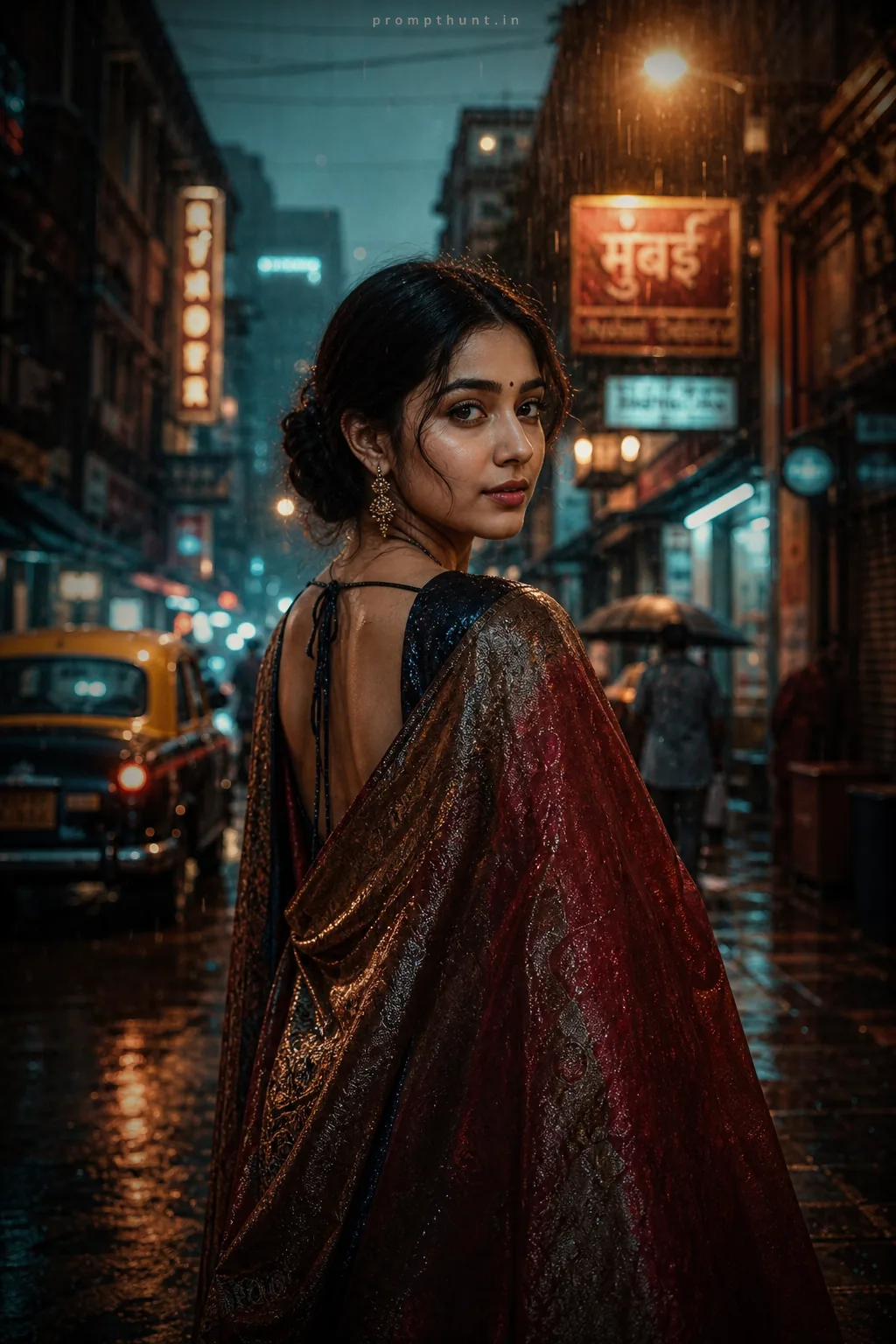
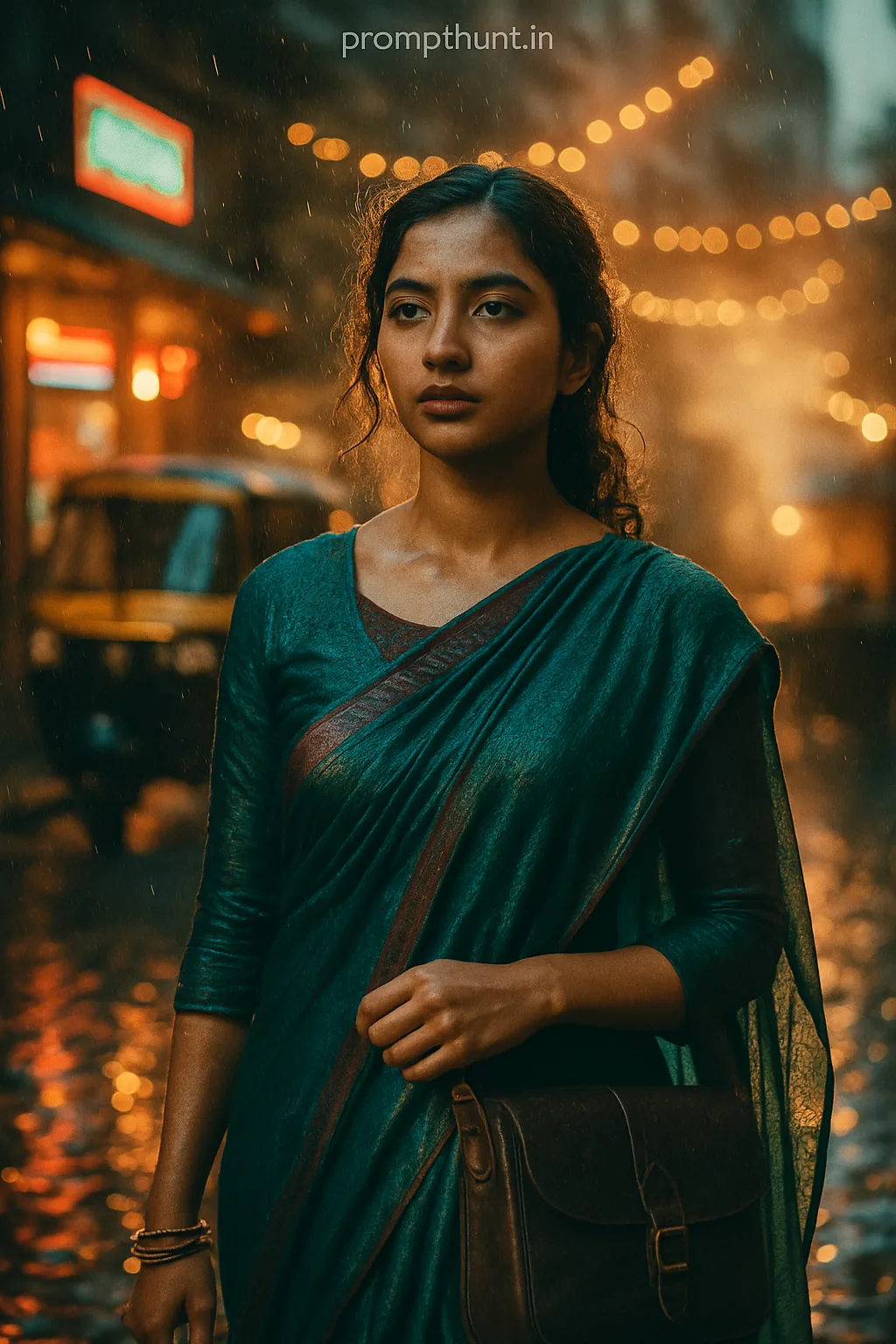
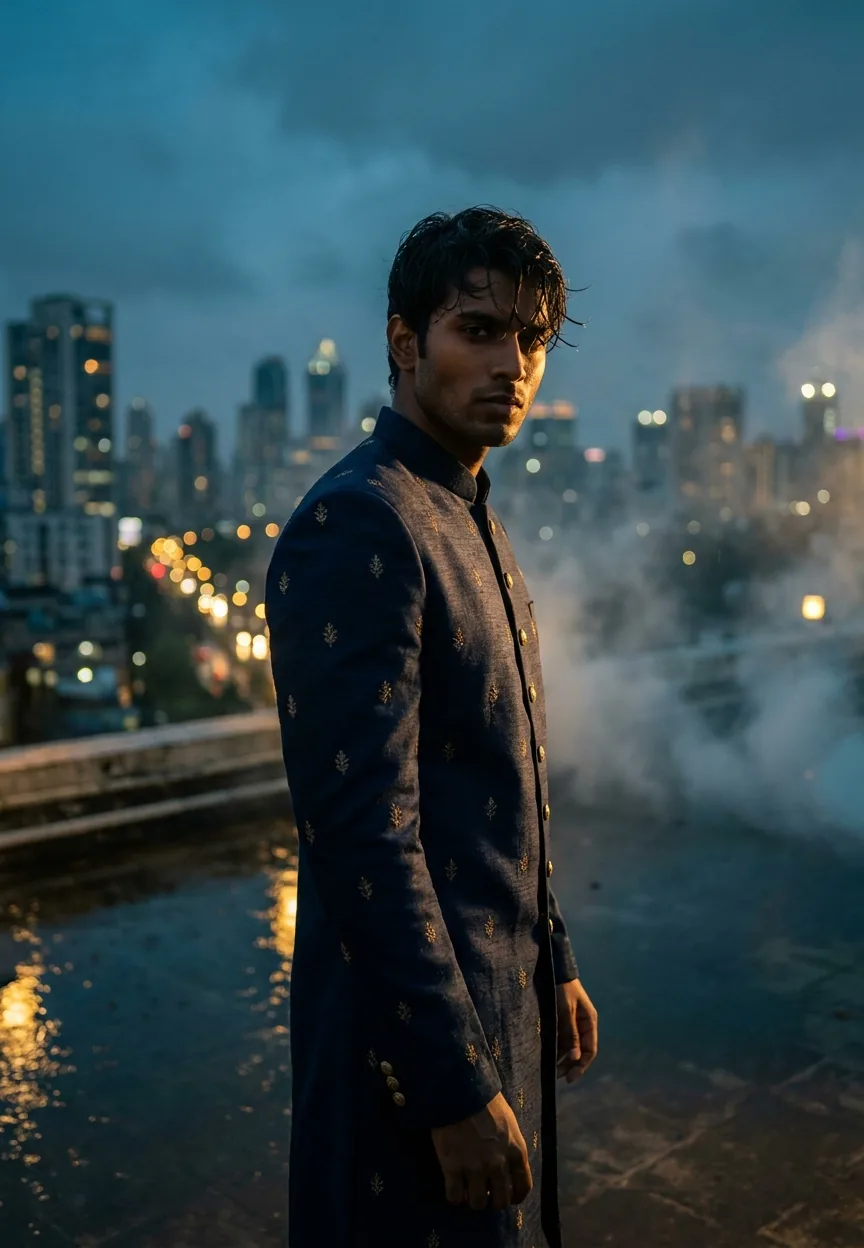

The Royal Rajasthani Bride Cinematic Glow prompt transforms AI-generated portraits into dramatic, film-quality bridal images using golden hour lighting, teal-amber color grading, shallow depth of field, and hyper-realistic textures. Feed it into Gemini, add your subject, and the output looks like a frame pulled straight from a Sanjay Leela Bhansali production — minus the three-year shoot schedule.
There's a moment in every Indian wedding where the photographer says "golden hour, let's go" and suddenly everyone's running across the haveli courtyard like it's a Bollywood chase sequence. The light is perfect for about eleven minutes. You miss it, you're done. AI doesn't have that problem. The Royal Rajasthani Bride Cinematic Glow prompt gives you that eleven-minute window on demand, every single time, with dust motes, bokeh, and kundan jewelry that catches the light like it was designed by someone who genuinely understood drama. Which, to be fair, Rajasthan always has.
This cinematic AI prompt generates stunning bridal portrait images with warm amber-teal grading, film grain, and opulent Rajasthani detail — works best in Gemini with a clear subject description and vertical 9:13 framing.
What the Cinematic Glow Style Actually Is
Cinematic photography isn't just "looks nice." It's a specific set of technical choices borrowed from film production. We're talking shallow depth of field — where your subject is razor sharp and the background turns into soft, dreamy bokeh. We're talking a color grade: in this case, warm amber in the highlights, deep teal in the shadows. That contrast is what makes your eye pop open.
Add film grain, which sounds like a flaw but works like seasoning on a steak, and you've got images that feel expensive without anyone spending a rupee on a location permit. The ARRI camera reference in this prompt is doing heavy lifting. ARRI is what directors use on actual feature films. Telling the AI you want an ARRI aesthetic is like telling it to put on a tuxedo before taking the photo.
For a Rajasthani bridal subject specifically, this style is almost unfair in how well it works. Crimson and gold lehenga against a teal shadow? That's a colour theory masterclass sitting right there. The kundan jewellery catches warm amber light the way it was designed to. The arched haveli doorways frame the subject like a Renaissance painting. This prompt didn't accidentally land on these choices — every element earns its place.
The Prompt You Actually Need
A stunningly beautiful young Indian woman dressed as a traditional Rajasthani bride, wearing a rich crimson and gold lehenga with intricate zari embroidery, heavy kundan and polki bridal jewelry including a maang tikka, layered necklaces, and jhumkas, hands adorned with detailed mehndi, soft dupatta draped elegantly over her head, standing in a grand haveli courtyard with ornate arched doorways and warm golden lantern light, shot in cinematic 9:13 vertical format, dramatic golden hour lighting casting a warm amber and deep teal color grade, shallow depth of field with the background softly blurred into bokeh, dust particles floating in the air catching the light, hyper-realistic skin texture, film grain overlay, ultra-detailed, high fashion editorial photography style, moody and opulent atmosphere, shot on ARRI cinema camera
How to Use This Prompt — Step by Step
Open Gemini. Paste the prompt exactly as it appears above. Do not paraphrase it, do not try to "simplify" it, and absolutely do not remove the ARRI camera reference because you think it sounds unnecessary. It isn't.
Here's the step-by-step without the fluff:
Step one. Copy the full prompt above. Every word matters — the mehndi detail, the dust particles, the 9:13 ratio. This isn't a suggestion box, it's a recipe.
Step two. If Gemini gives you a result you like but not love, add one specific modifier at the end. Try "shot from a low angle looking up" or "evening fog drifting through the courtyard." One change at a time. Changing three things at once and wondering why the output shifted is a classic beginner move (and yes, I've done it).
Step three. Generate at least four variations before you settle. Gemini's outputs vary more than you'd expect from the same prompt. The fourth result might be the one that makes you stop scrolling.
Step four. Download at the highest resolution the tool offers. This style rewards detail. The mehndi pattern and zari embroidery are where the prompt earns its reputation — don't compress them into oblivion.
Tips for Getting the Best Cinematic Results
Nine times out of ten, the prompts that underperform are missing specificity in the lighting description. "Golden hour" alone is vague. This prompt says "warm amber and deep teal color grade" which tells the model exactly what contrast it's going for. Rule of thumb: the more specific your lighting instruction, the more consistent your outputs.
A few things worth knowing before you start tweaking:
Keep the jewellery descriptions detailed. "Heavy jewelry" gives you something generic. "Kundan and polki bridal jewelry including a maang tikka, layered necklaces, and jhumkas" gives you a bridal portrait that looks researched. The model knows the difference between the two instructions.
The 9:13 vertical ratio is intentional. It's portrait-optimised and cinematic in proportion. If you change it to square or landscape, you lose the editorial quality. Fair call to adjust it if you're posting somewhere that needs a specific ratio — just know what you're trading away.
Film grain is not negotiable. Remove it and the image looks like a render rather than a photograph. The grain adds tactile weight. Keep it.
Don't add a smile. Moody and opulent means composed, not grinning. The moment you prompt a smile, you lose the editorial gravity. This is a portrait, not a selfie. (The AI will still occasionally add one anyway. Regenerate.)
Why This Prompt Is Trending — Especially in India
India has one of the most image-conscious wedding cultures on earth. Pre-wedding shoots, real wedding photography, post-wedding portraits — the bridal photo industry here runs into billions of rupees a year. AI portrait prompts that produce editorial-quality bridal imagery tap directly into that appetite.
Rajasthani bridal aesthetics specifically are having a cultural moment. The haveli architecture, the desert colour palette, the layered jewellery tradition — all of it has landed back in mainstream consciousness through film, fashion editorials, and heritage tourism. When a prompt captures that aesthetic this precisely, it spreads fast on Pinterest, Instagram, and Shaadi.com inspiration boards.
There's also a practical angle. A professional bridal editorial shoot in Jaipur — location permits, photographer, lighting crew, styling — costs serious money and requires logistics most people can't access. This prompt delivers a reference-quality image in about forty-five seconds. For couples building mood boards, content creators working in fashion, or designers presenting bridal collections, that's genuinely useful. Not a replacement for real photography, but a powerful planning tool. Or just a very satisfying experiment at eleven o'clock on a Tuesday night.
Honest Opinion — When to Use This and When to Walk Away
Right, here's the part where I stop being enthusiastic and start being straight with you.
This prompt is exceptional for mood boarding, social content, editorial concept work, and pure creative experimentation. If you're a photographer showing a couple what a haveli shoot could look like, this is legitimately useful as a reference image. If you're a fashion designer mocking up a bridal lehenga concept, same thing.
Where it falls apart: anything requiring a specific real person. Gemini generates a face, not your face or your client's face. The bridal portrait it produces is beautiful and completely fictional. If a real bride wants to see herself in this style, she needs a real photographer and real golden hour — the actual eleven minutes, not the AI version.
There's also a cultural responsibility worth naming. Rajasthani bridal tradition is specific, detailed, and meaningful to the communities it comes from. The prompt handles the aesthetics well, but if you're using these images commercially or representing them as cultural documentation, that's a different conversation entirely. Use it for what it is: a cinematic AI portrait prompt, not an anthropological record.
One more thing. AI-generated images at this quality level are starting to appear on wedding inspiration platforms without disclosure. That's a problem for the industry and for couples making real decisions based on images that don't represent achievable real-world results. Be honest about what you're sharing. Your credibility is worth more than the likes.
Use this prompt freely. Use it with your eyes open.
The Bottom Line
The Royal Rajasthani Bride Cinematic Glow prompt is one of the most technically polished AI portrait prompts doing the rounds right now. The lighting spec is exact, the cultural detail is specific, and the ARRI reference gives the output a film quality that most portrait prompts don't get close to. Paste it into Gemini, generate four variations, pick your favourite, and try not to immediately show everyone in the group chat.
It works because every element was chosen deliberately: the teal-amber grade, the haveli courtyard, the bokeh, the grain. Change one thing at a time if you want to experiment. Keep the jewellery descriptions intact. And remember — in AI photo prompting, as in actual Rajasthani weddings, the details are everything.