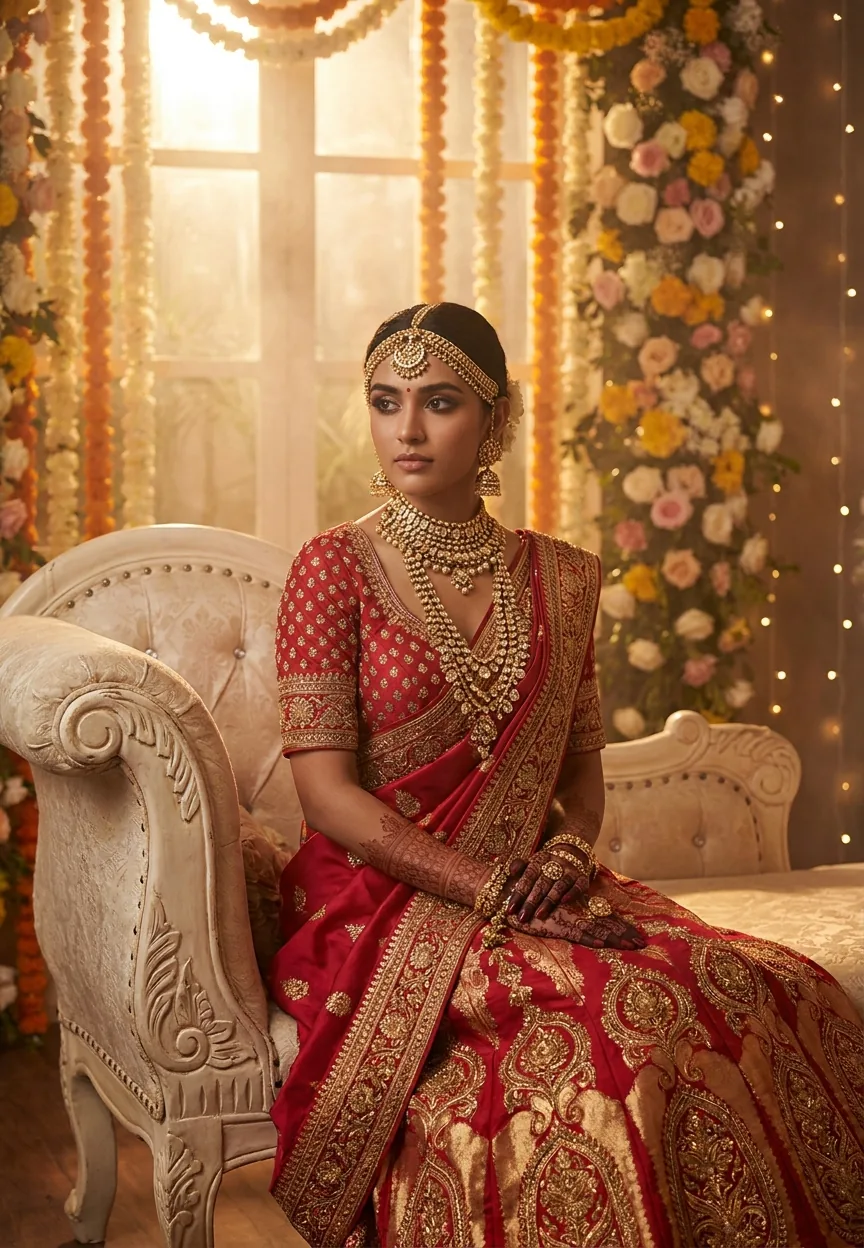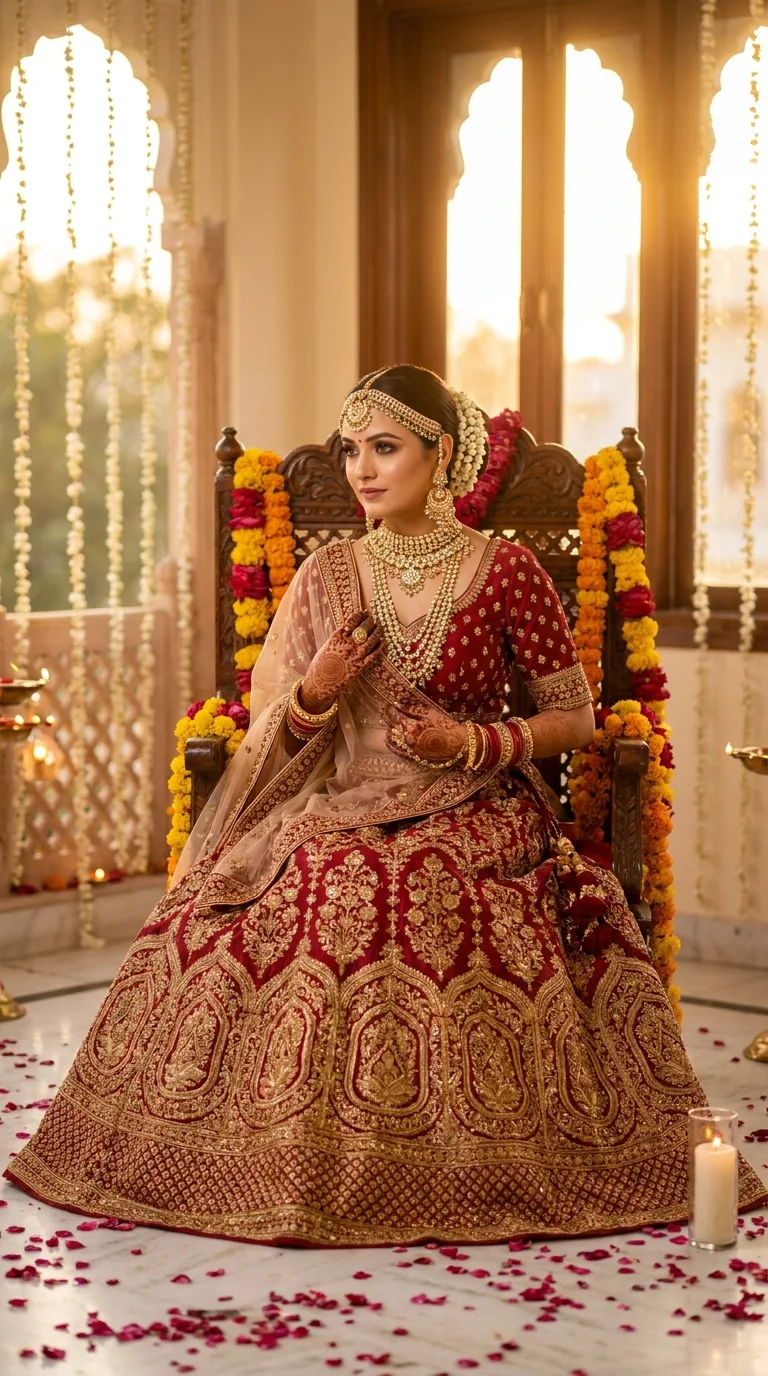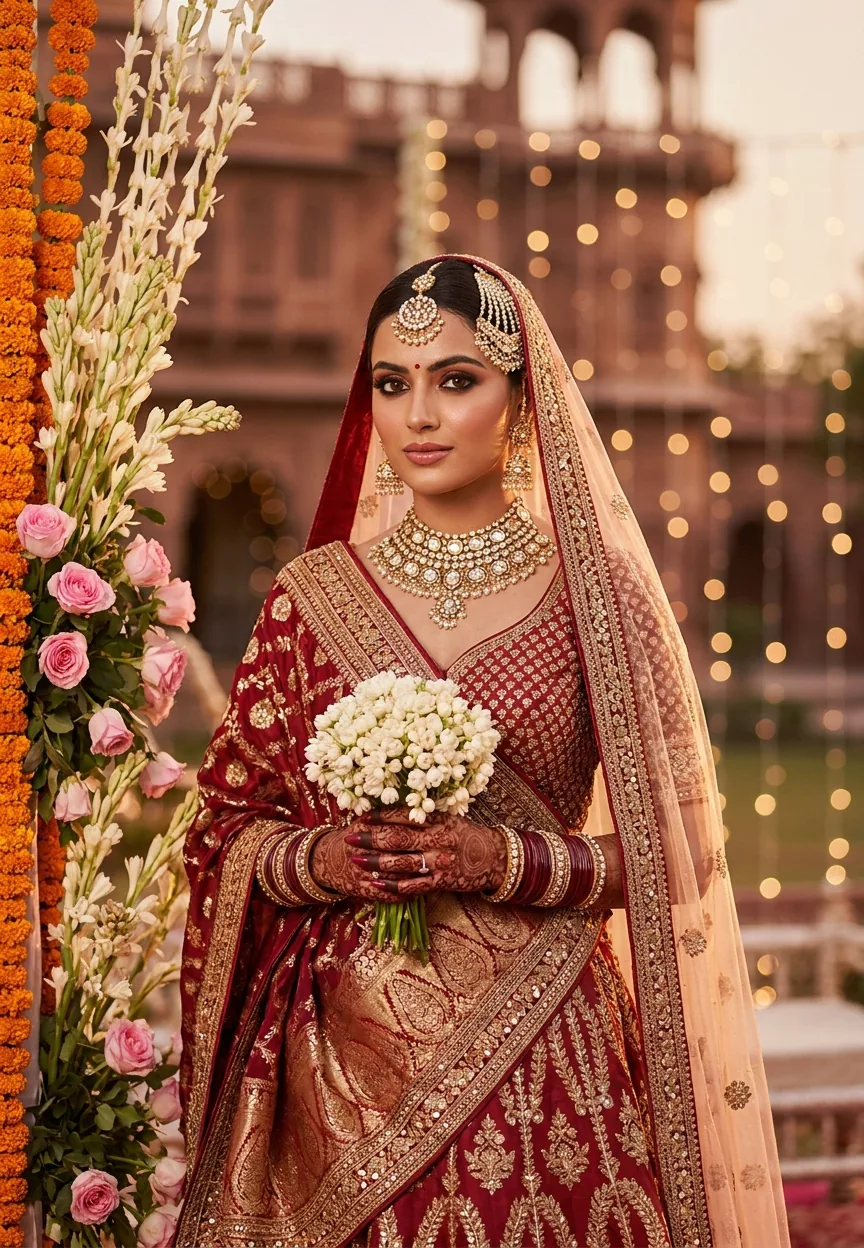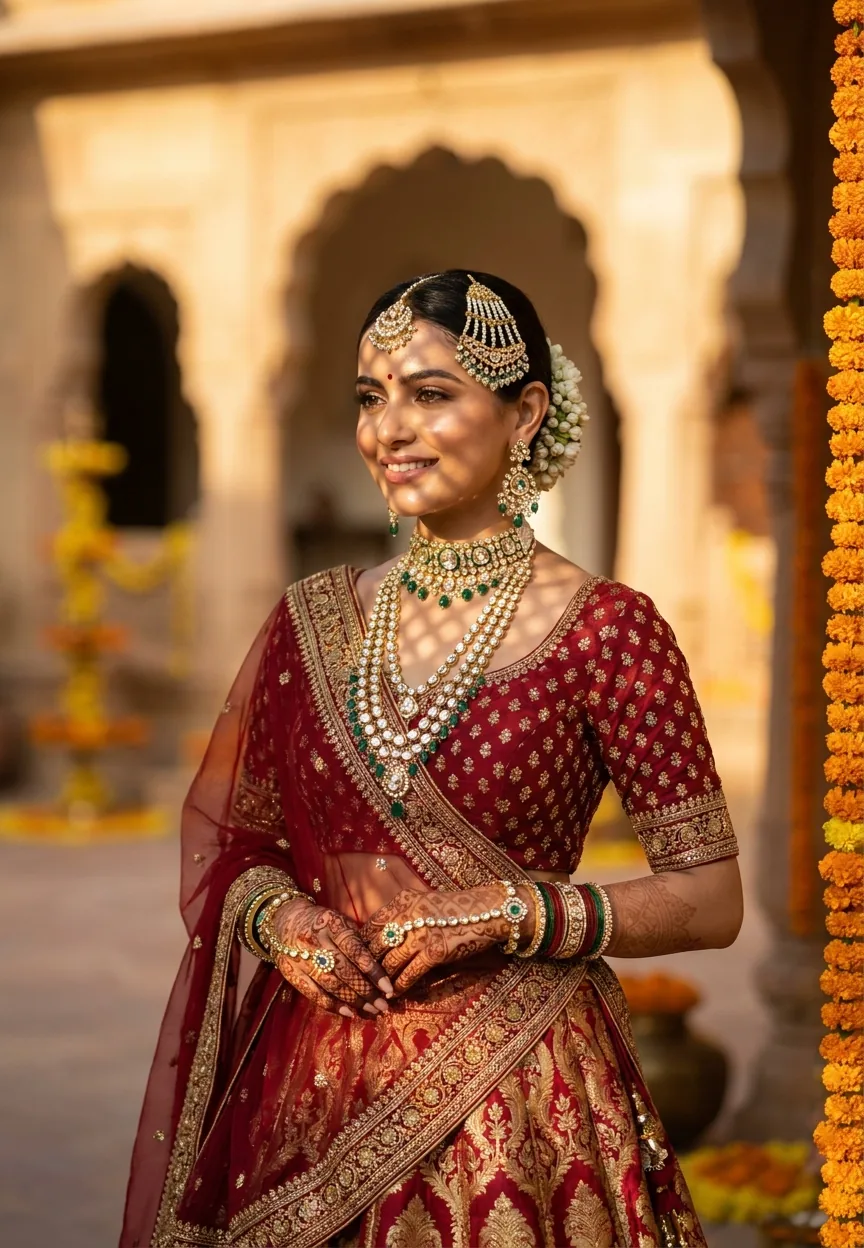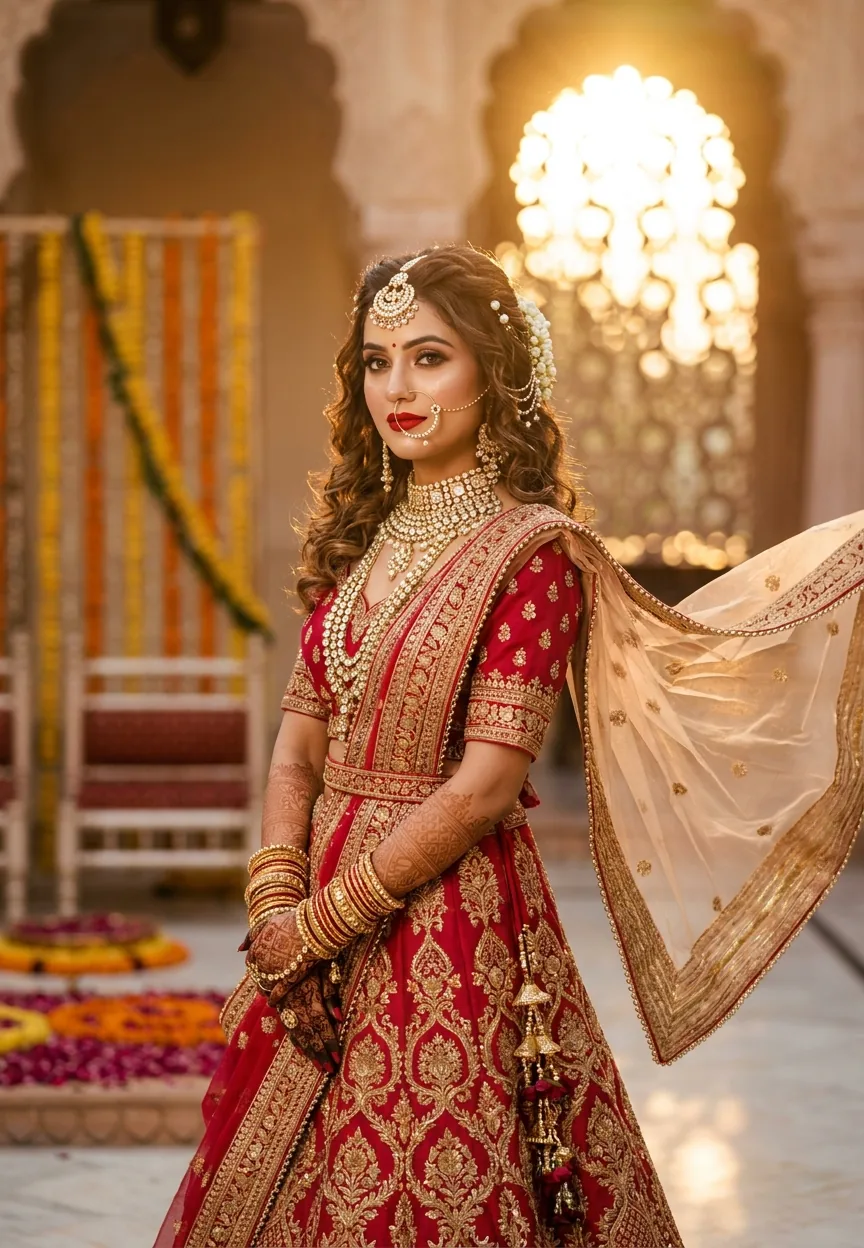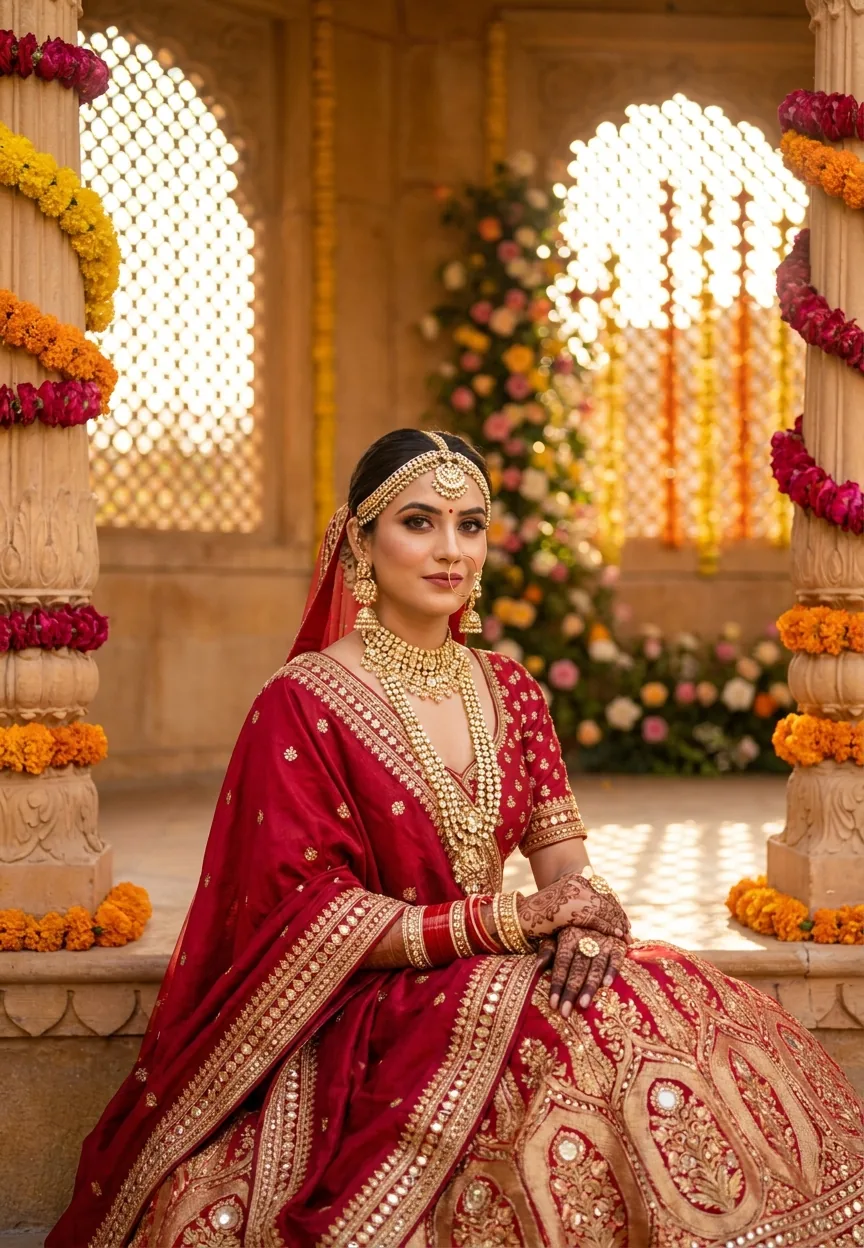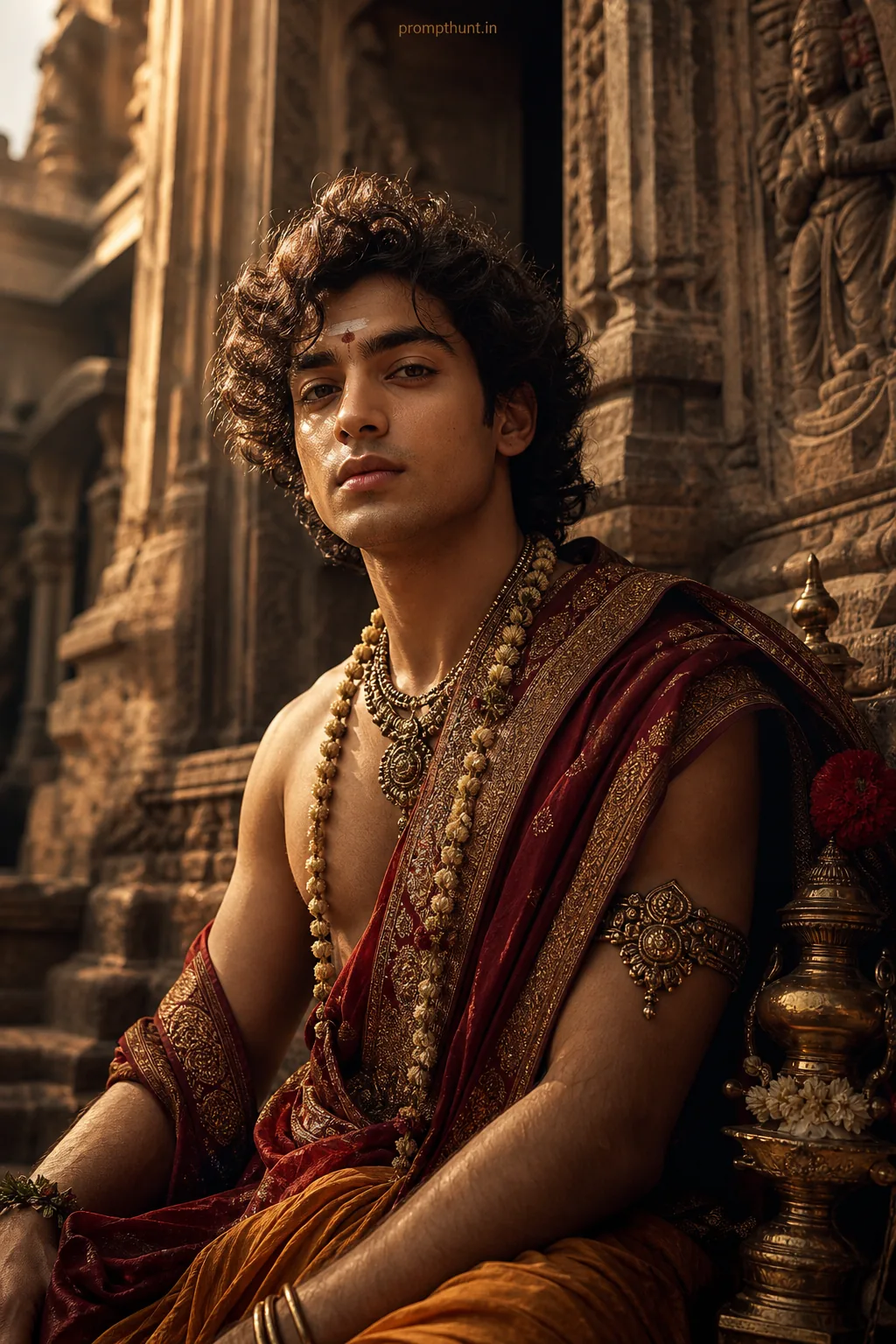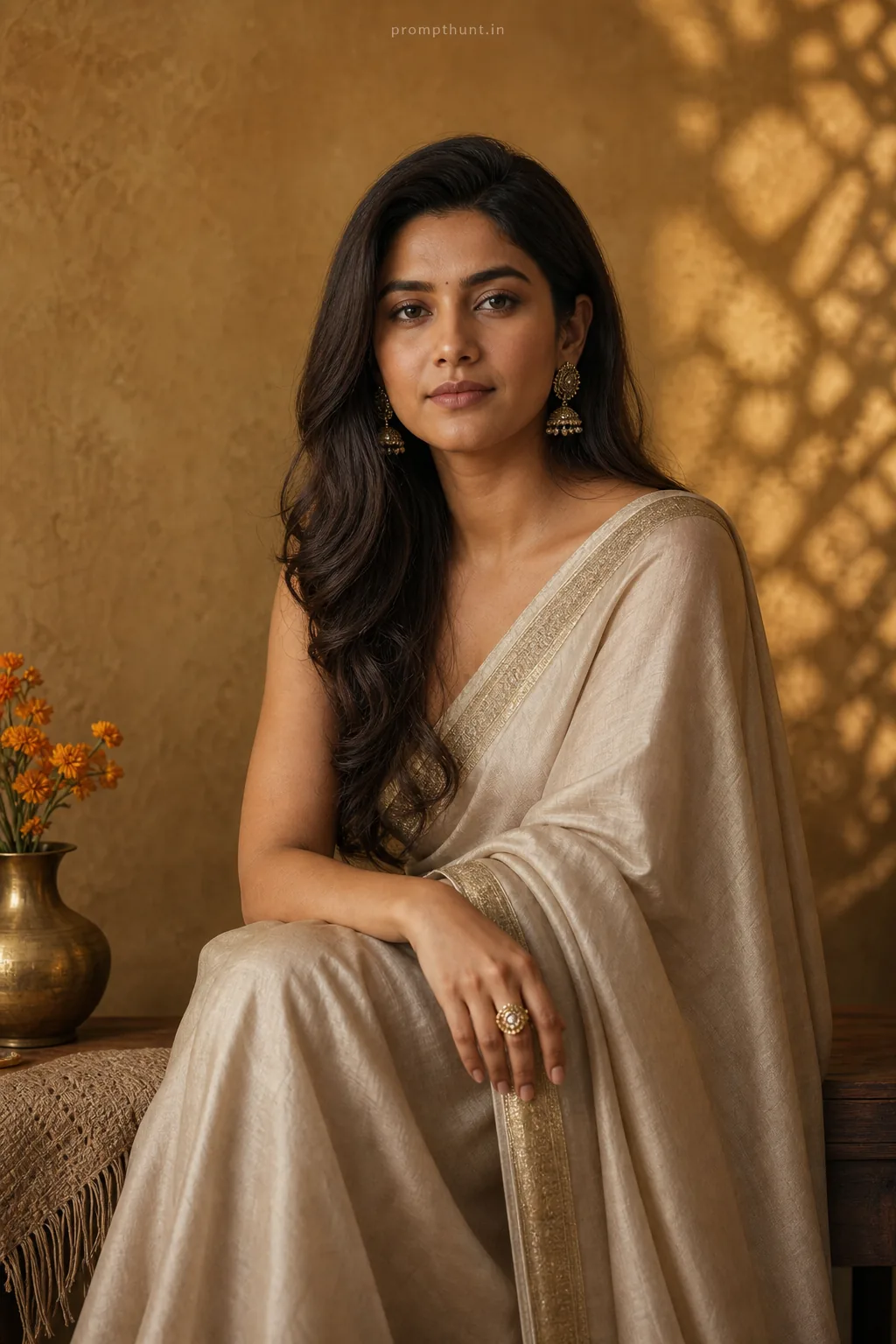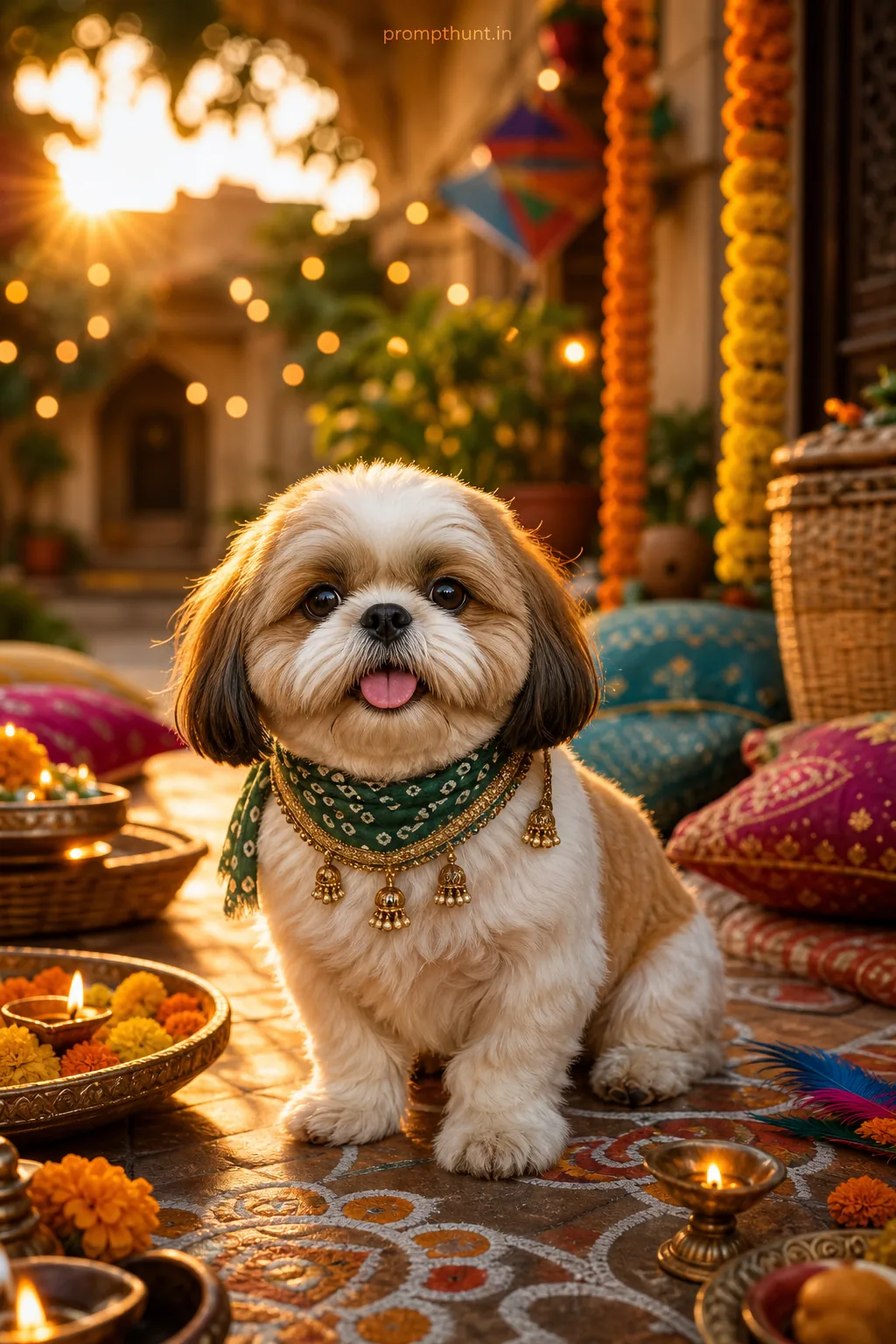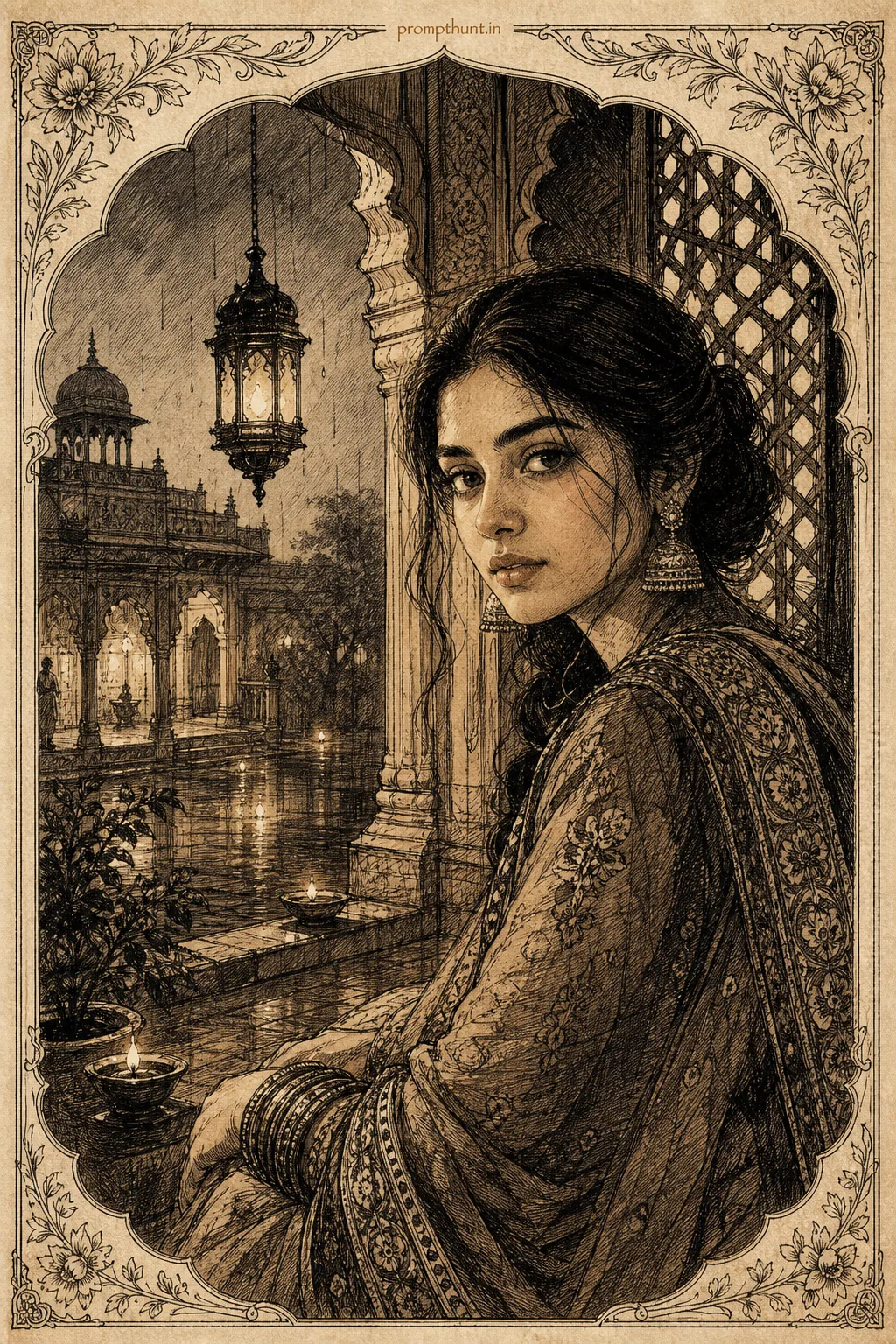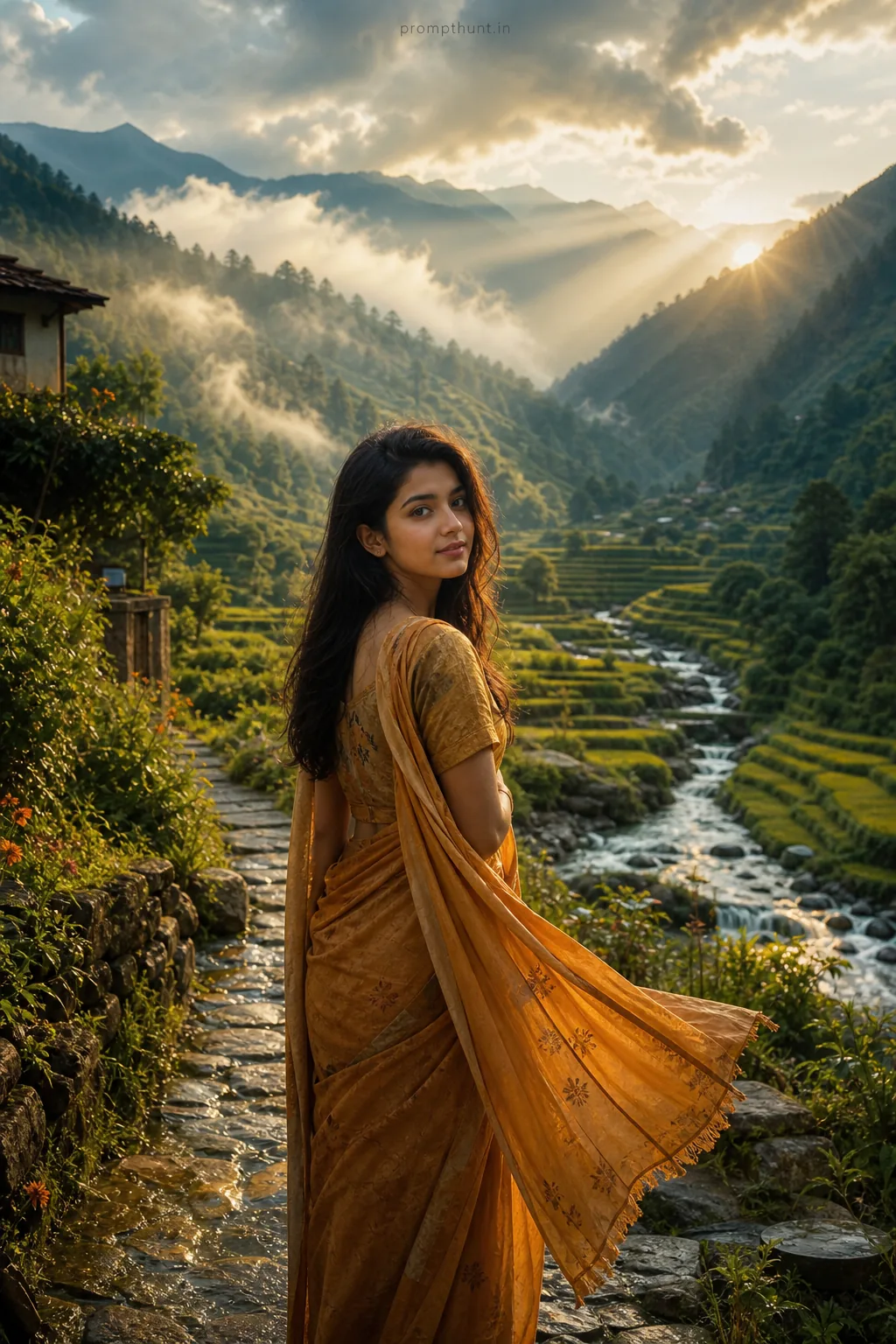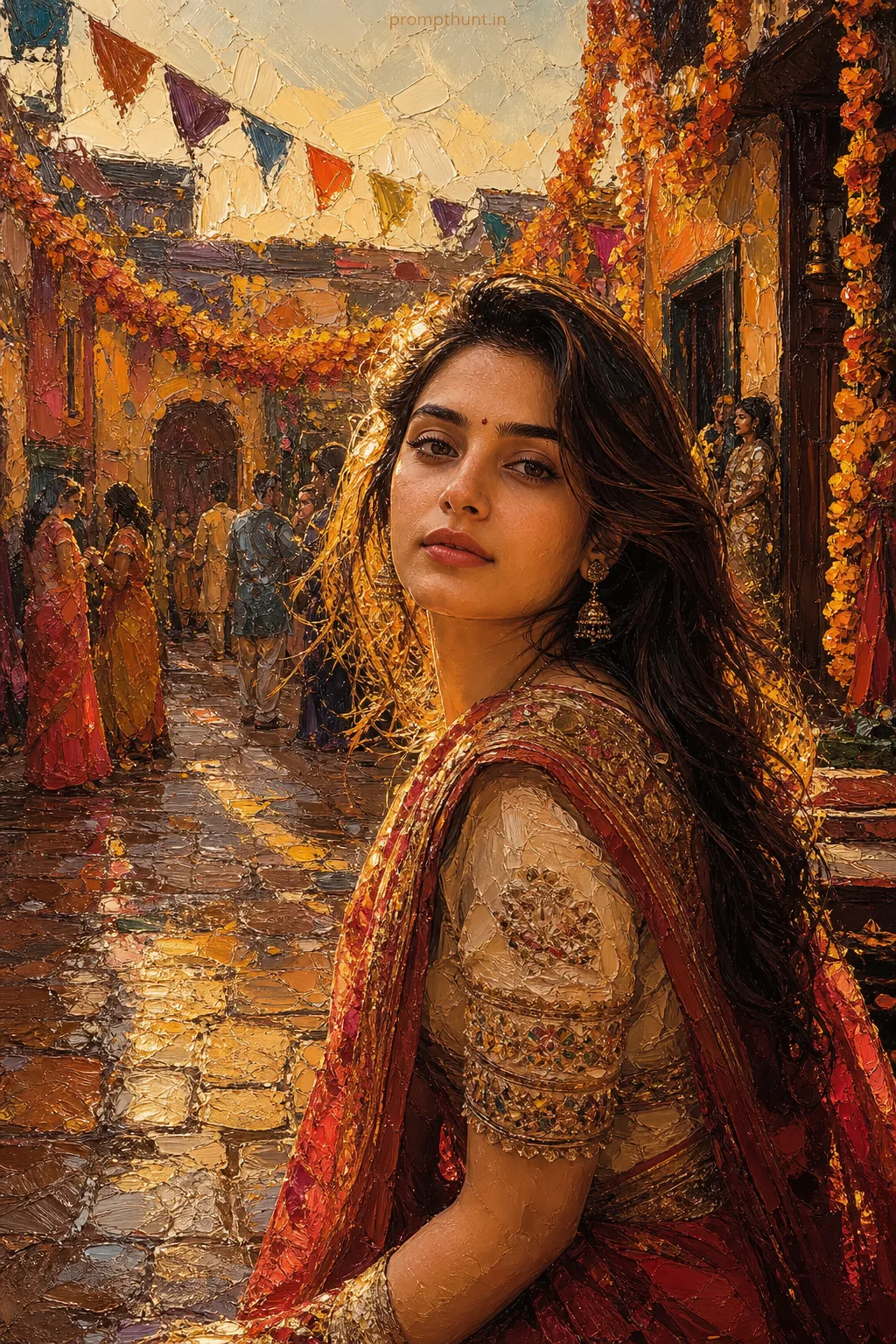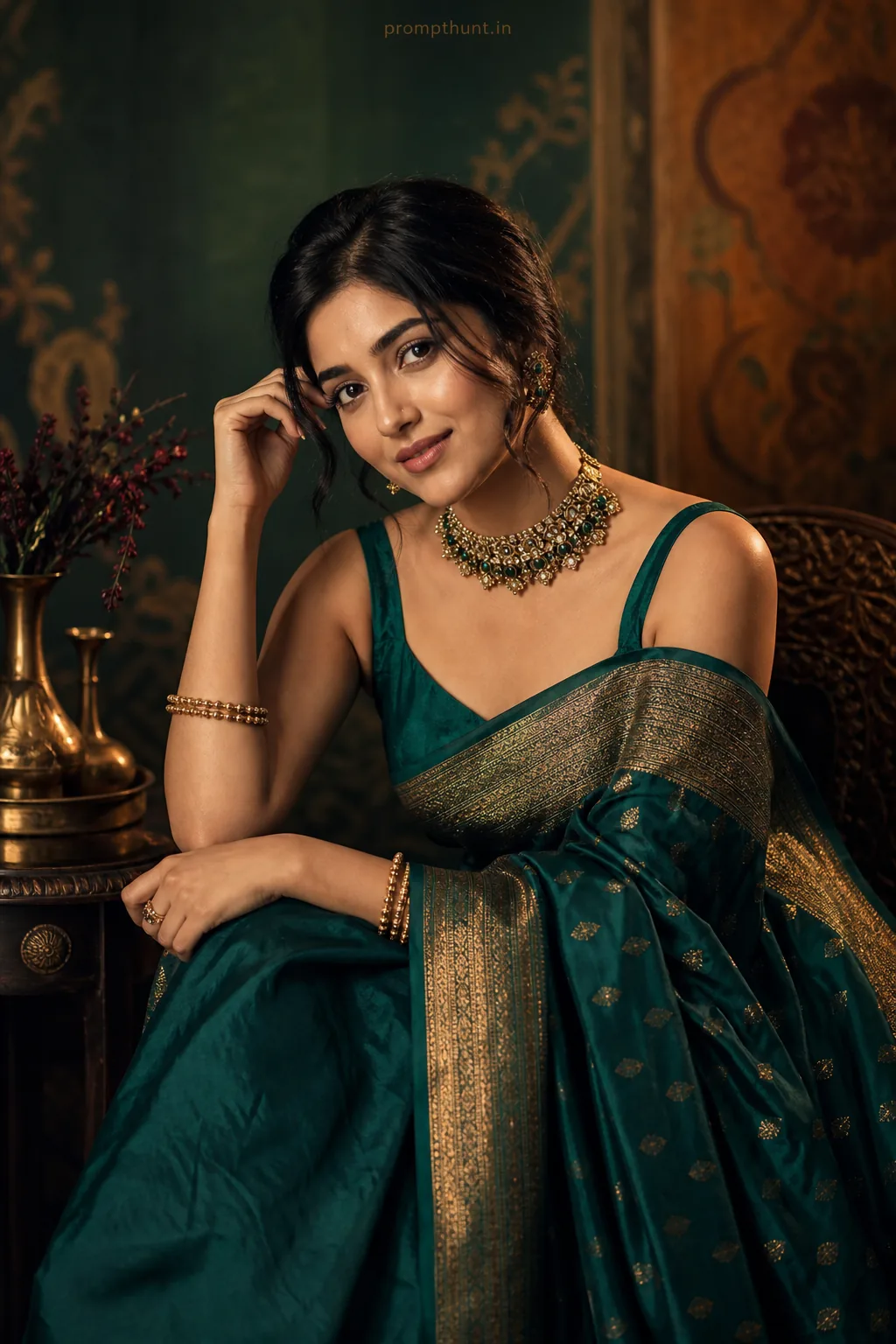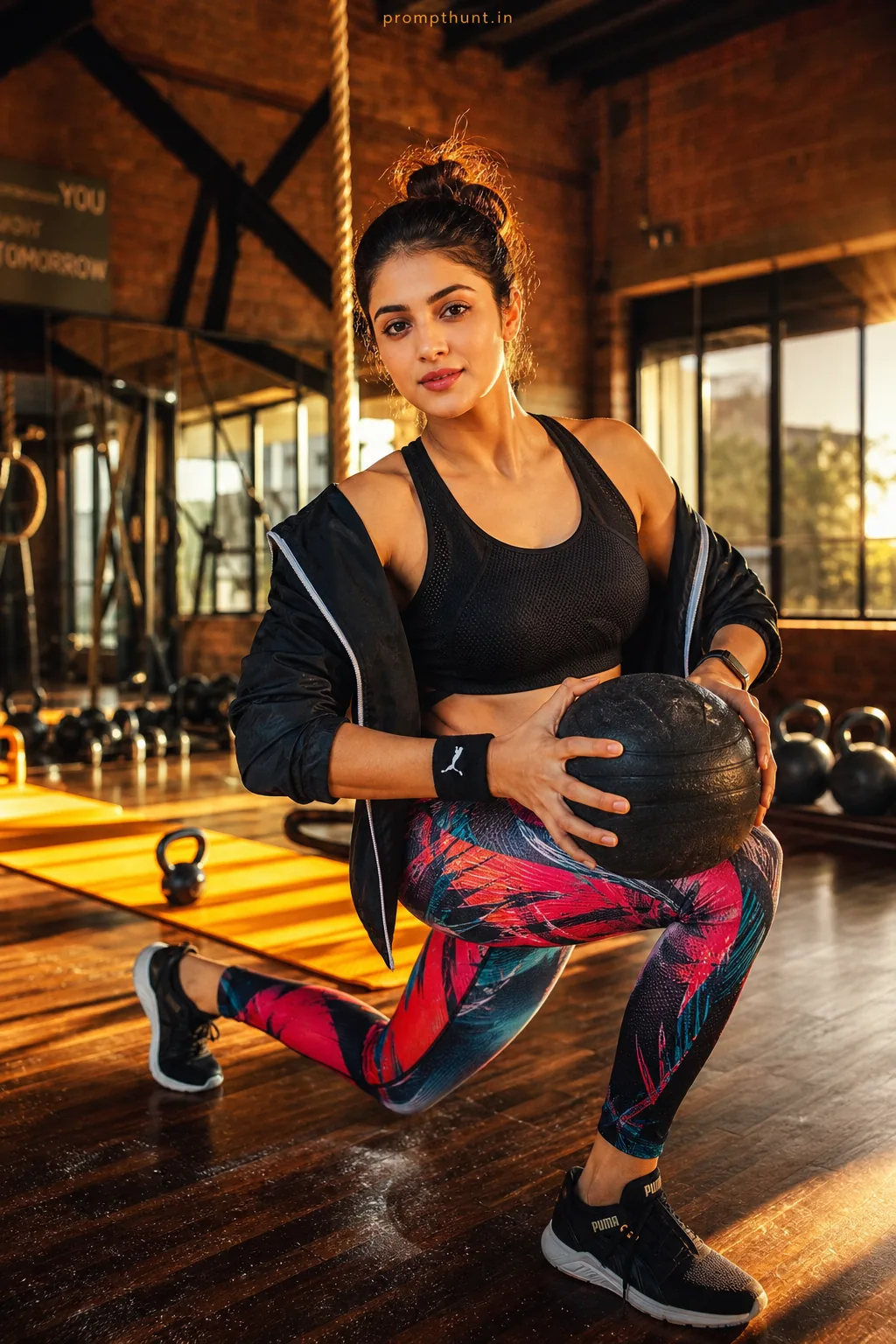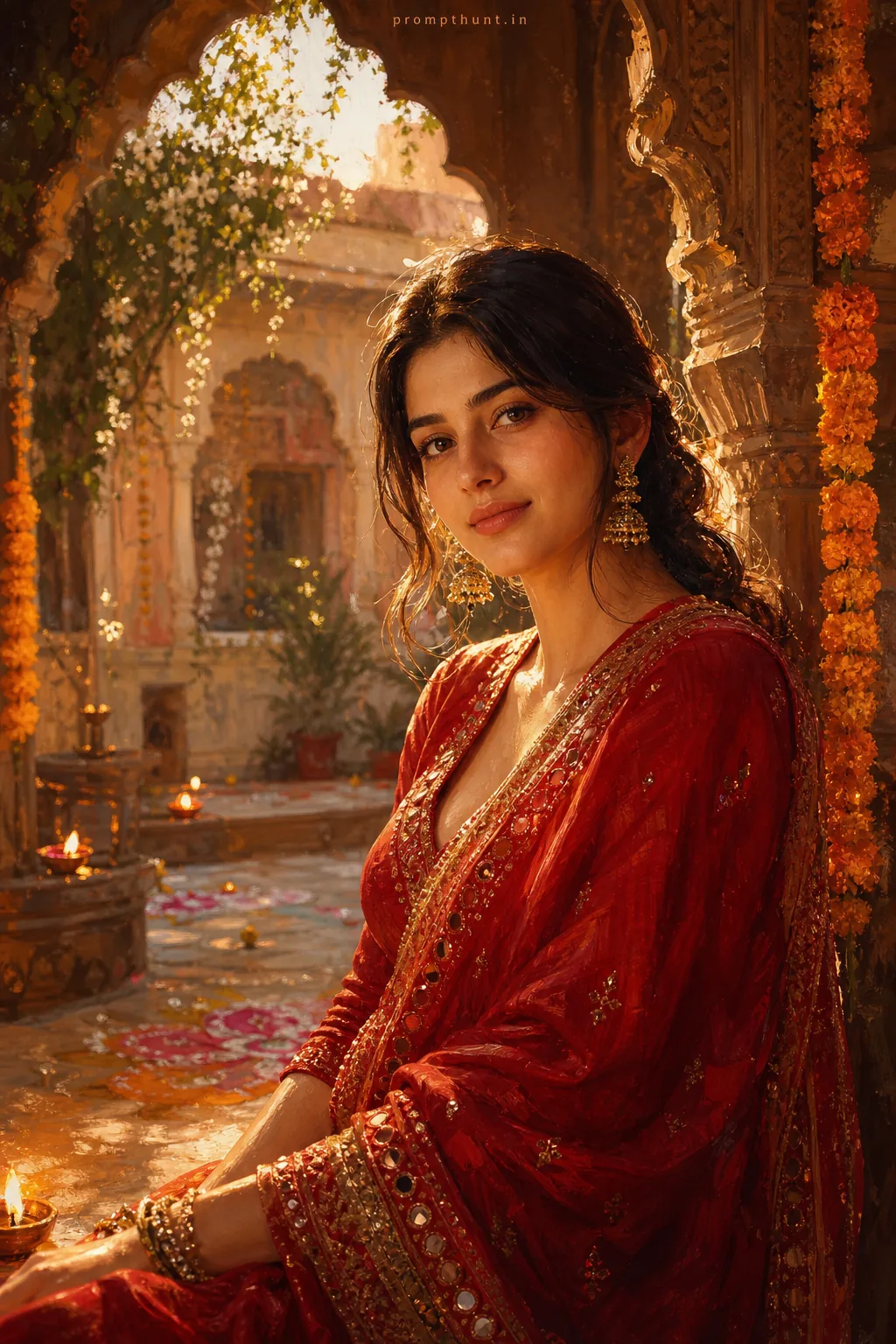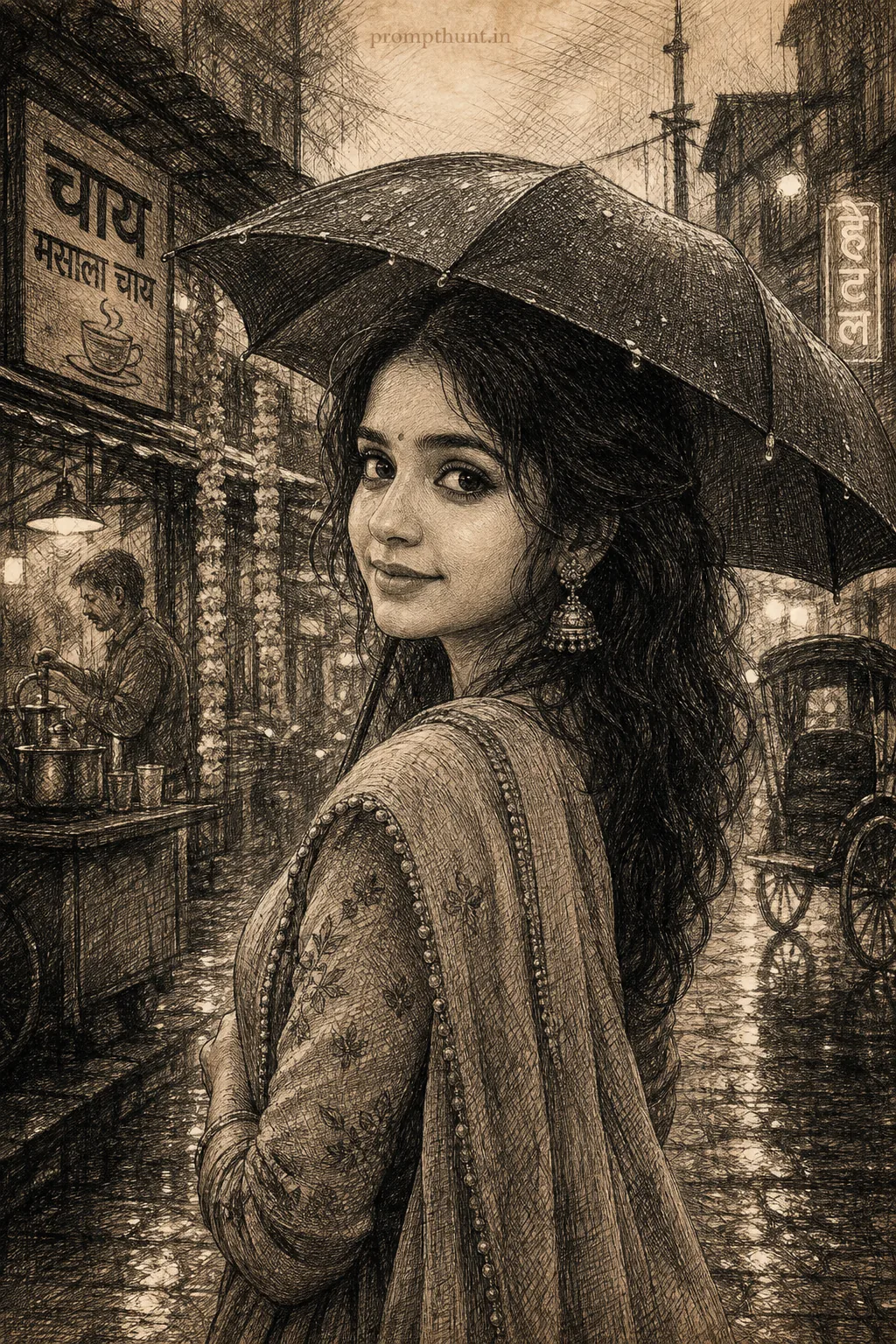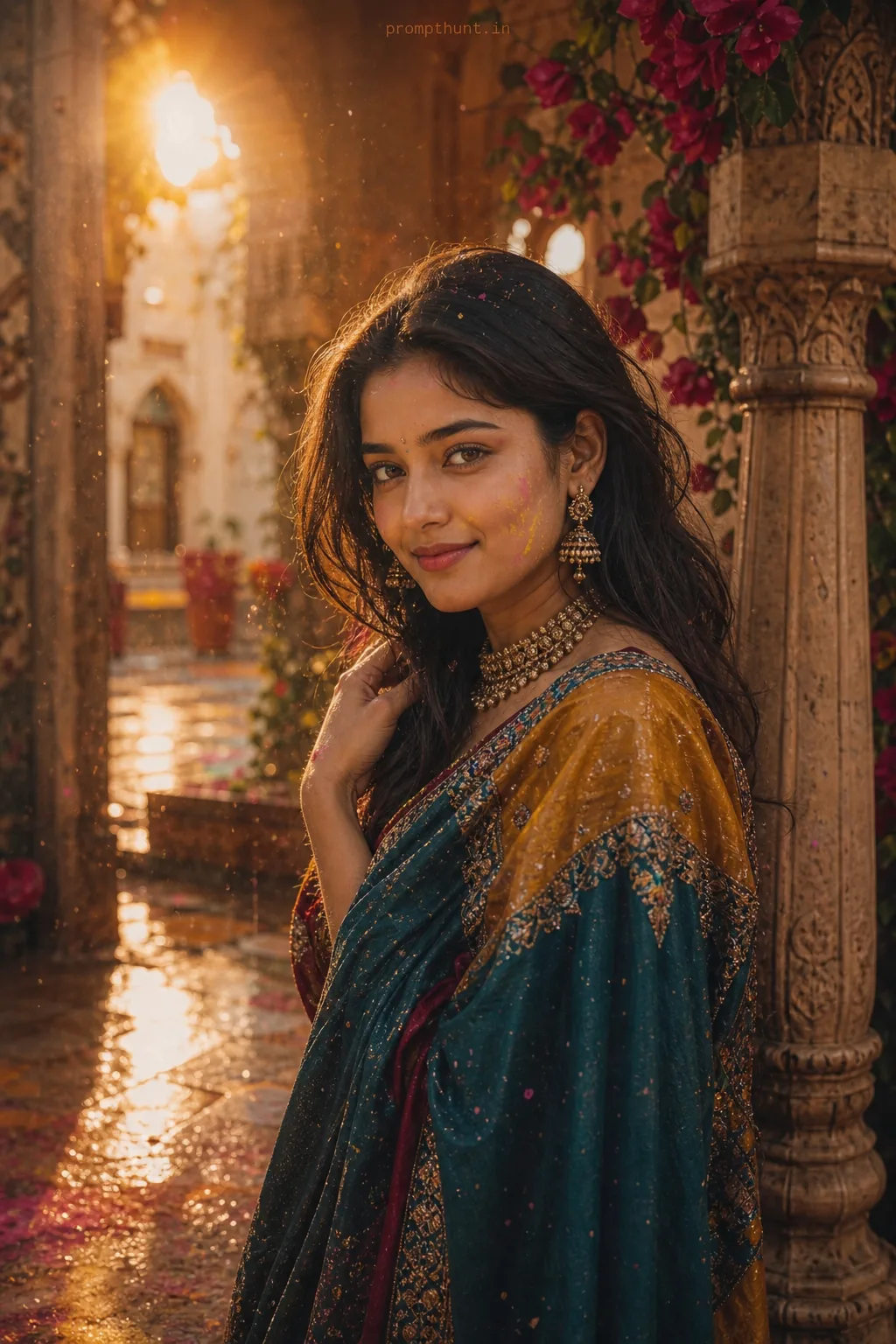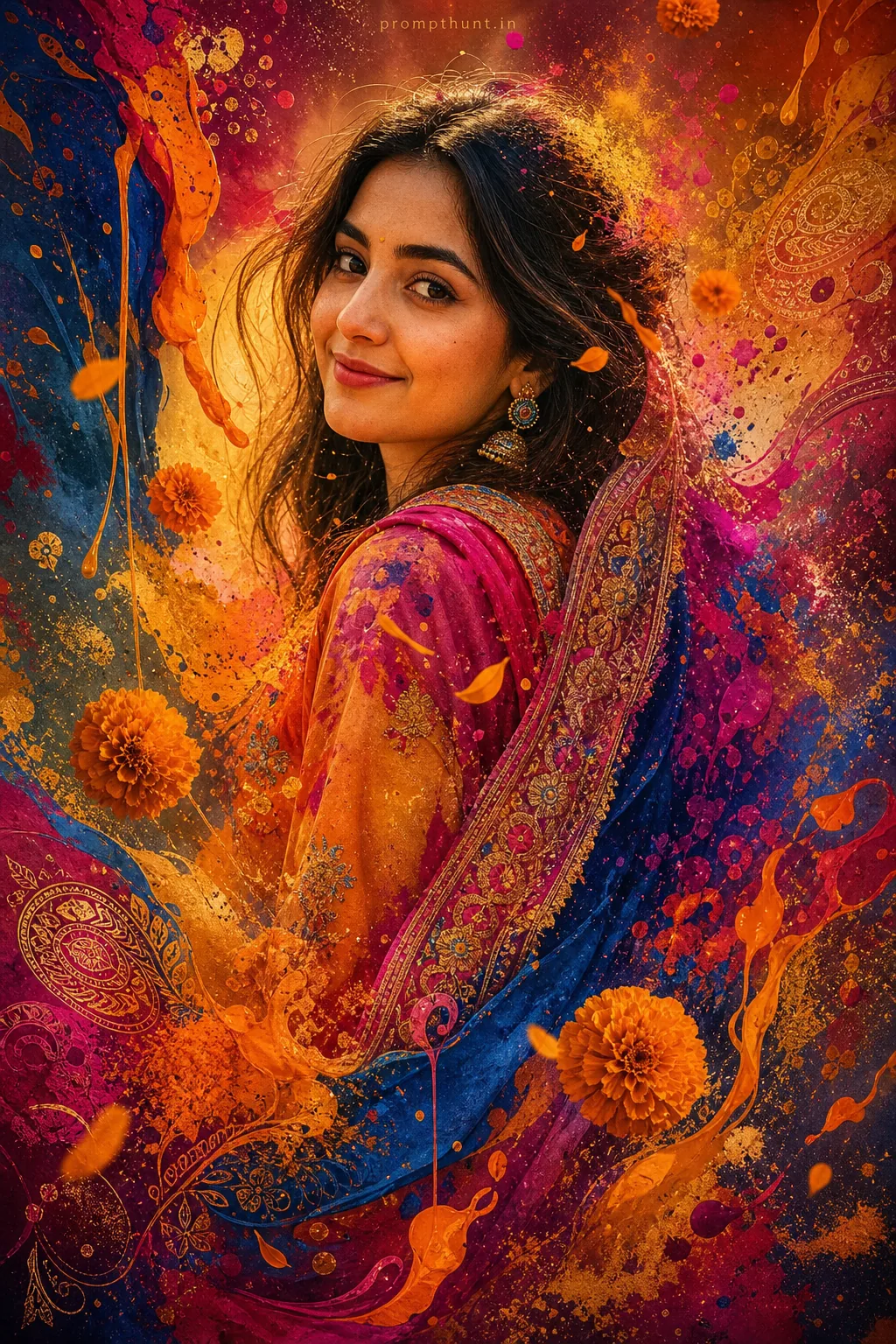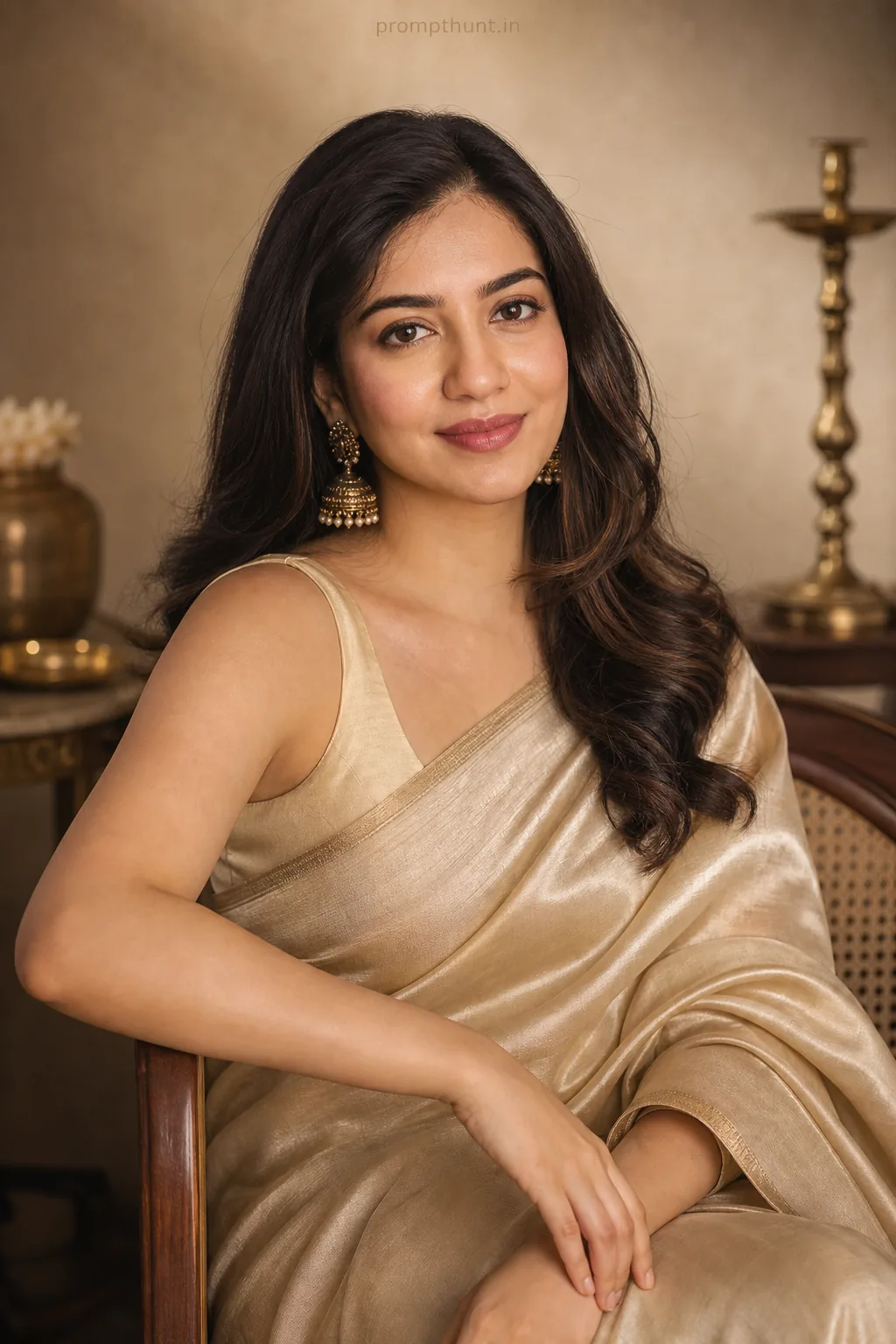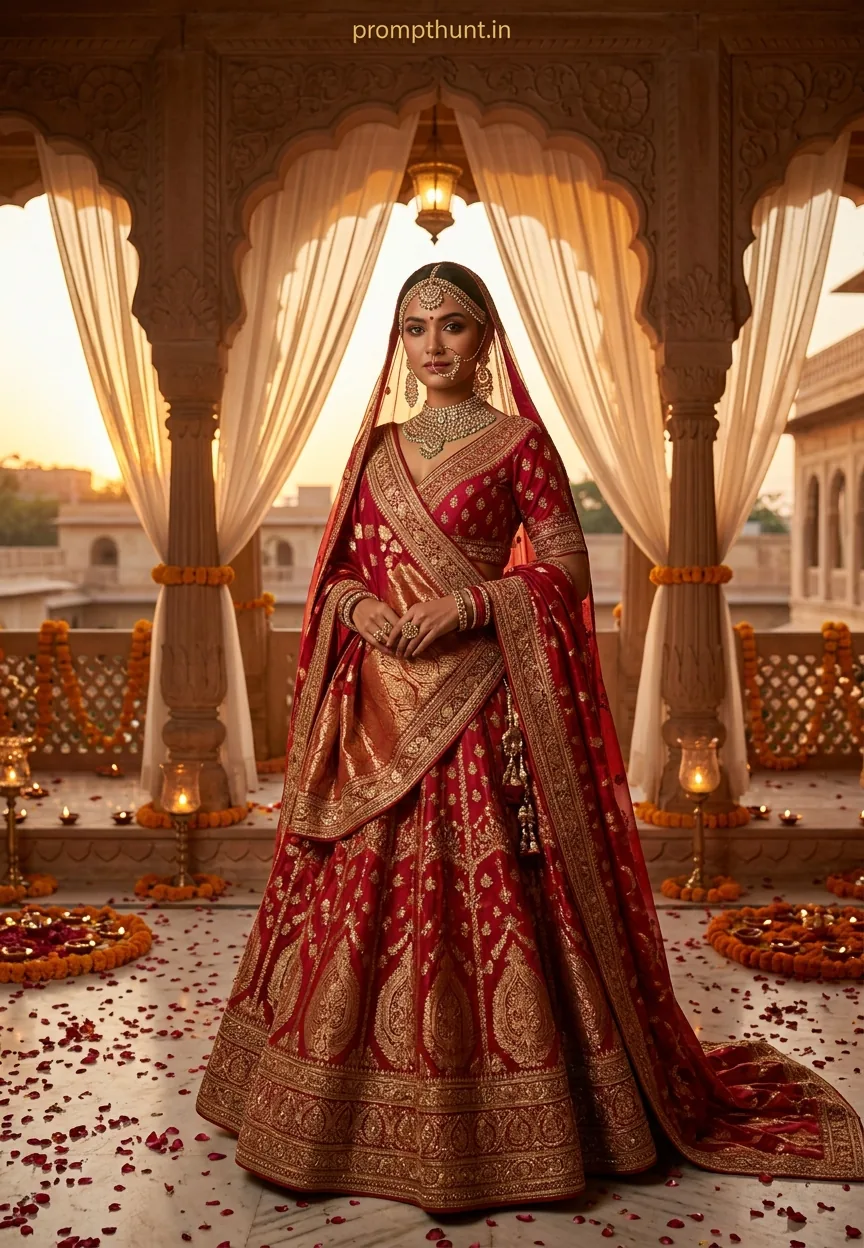
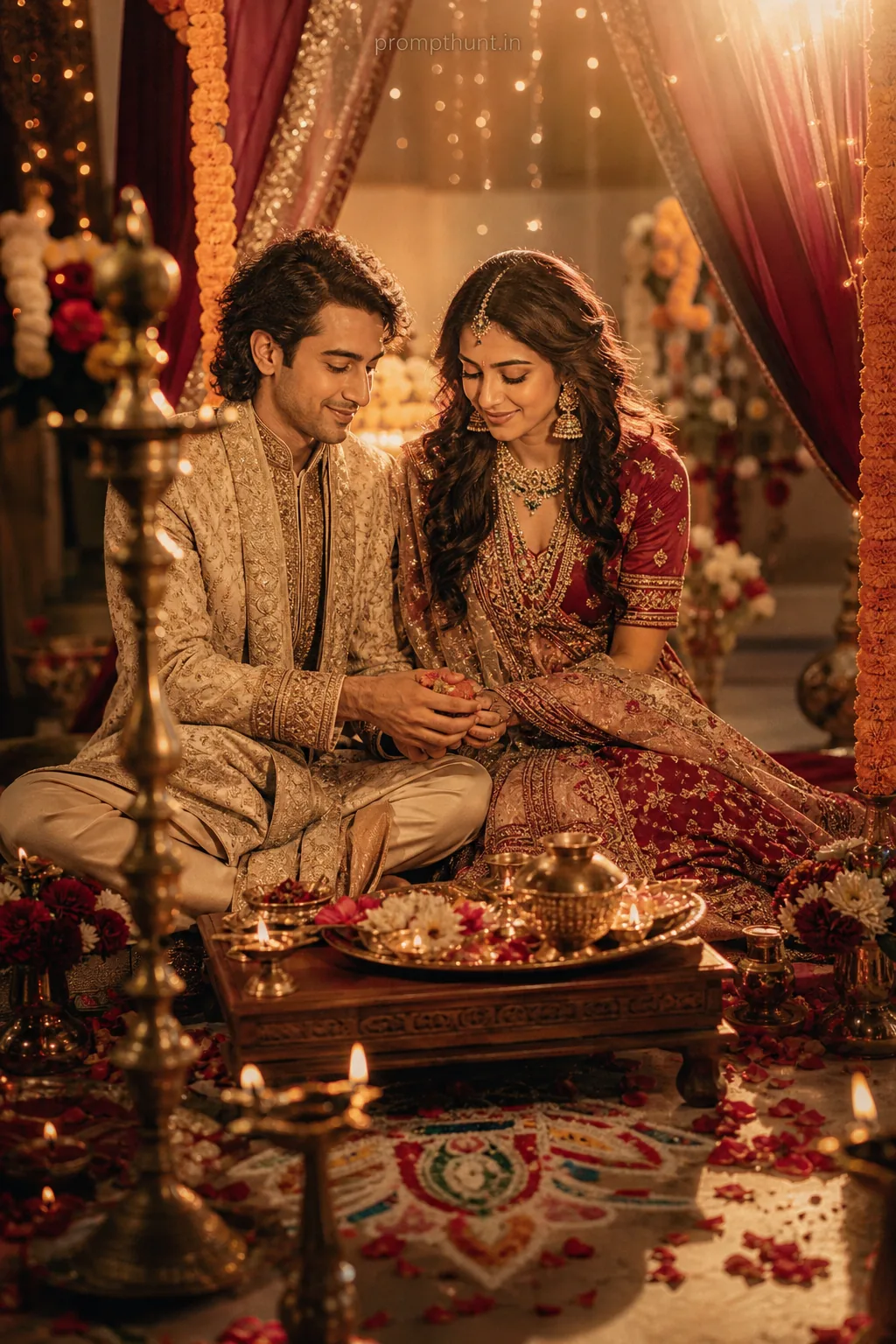
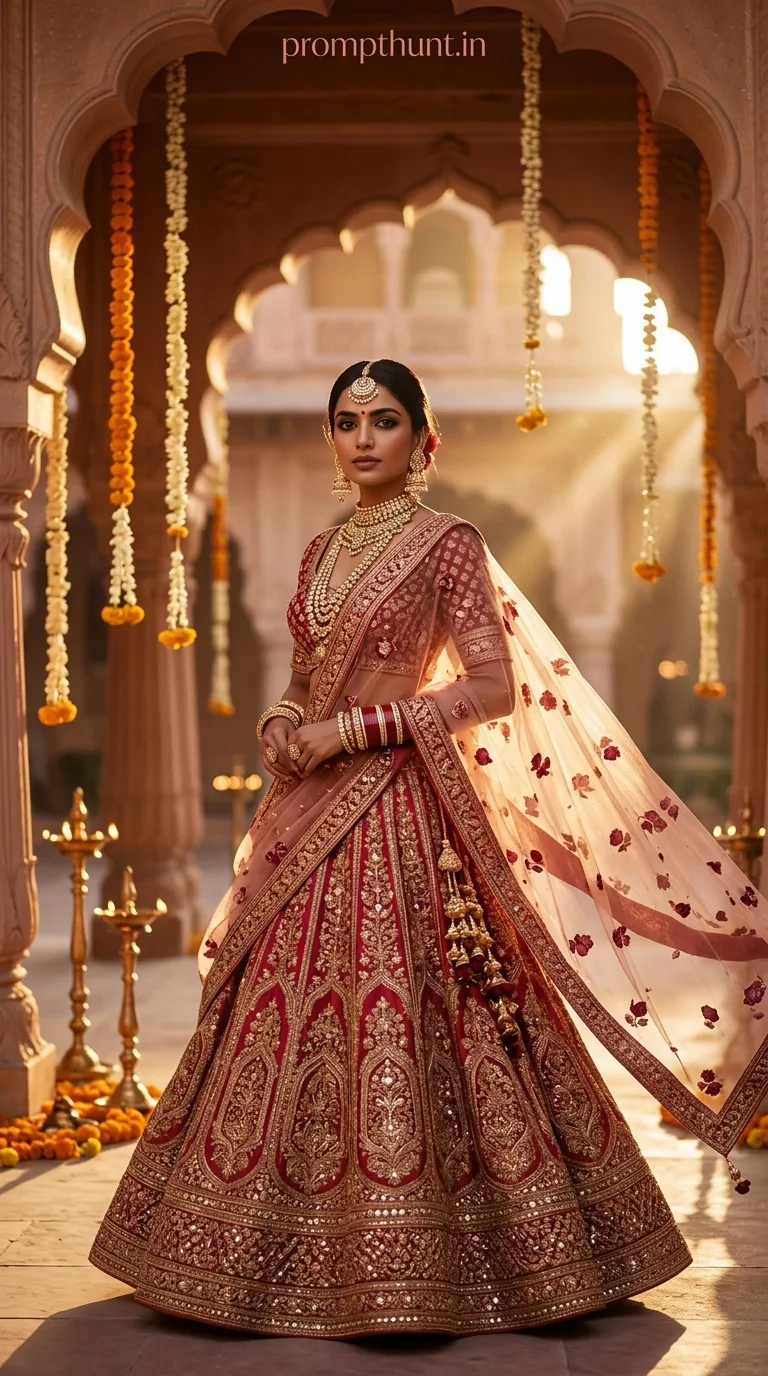
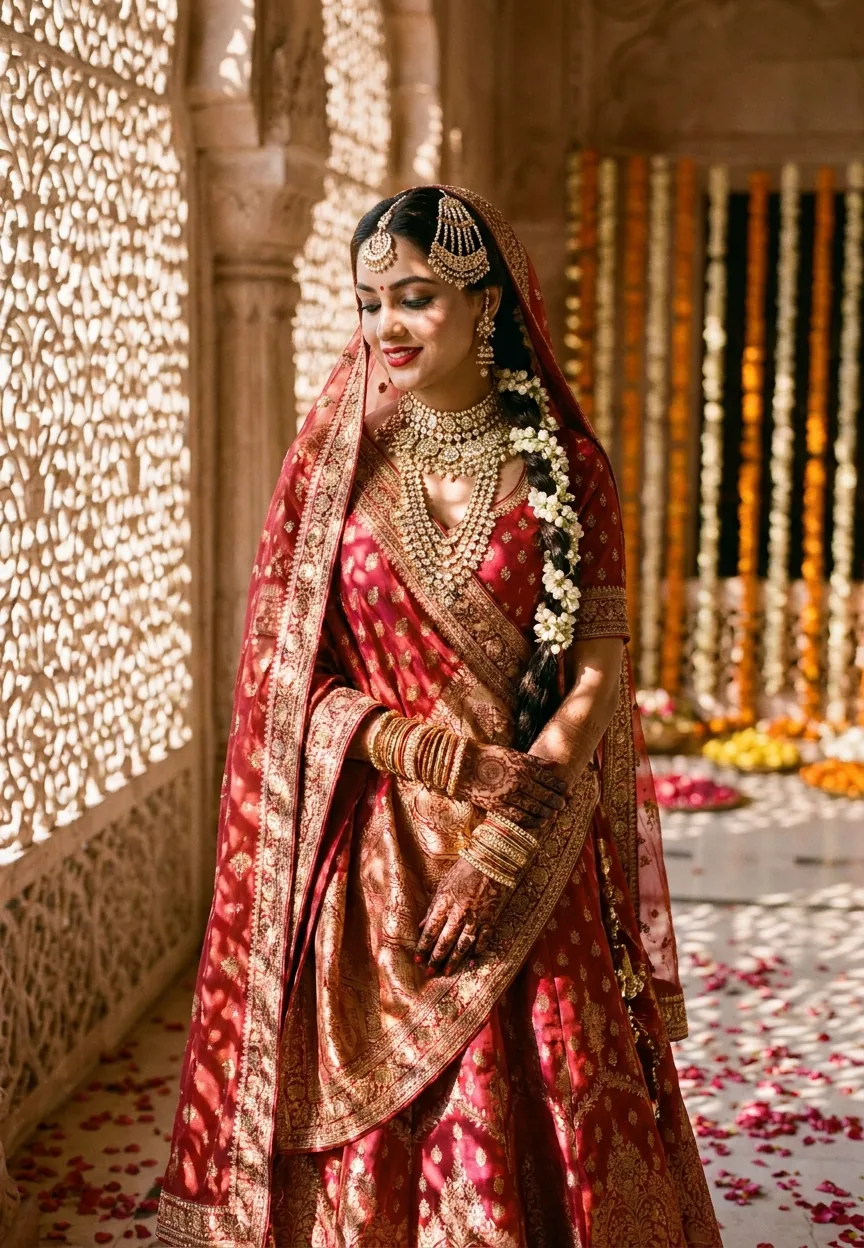
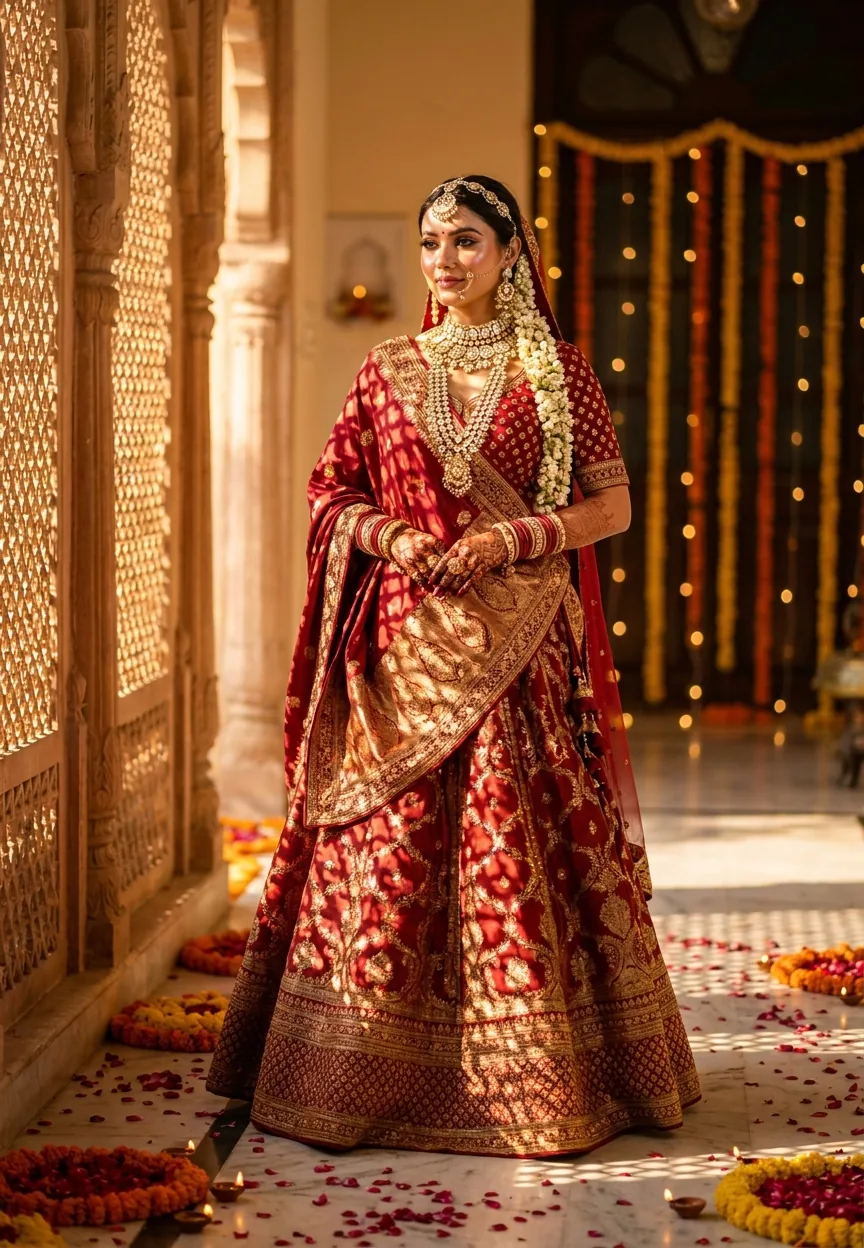
The Royal Indian Bridal Glow prompt transforms your photo into a cinematic Rajasthani bridal portrait — crimson Banarasi lehenga, jadau jewellery, marigold-draped haveli, warm diya glow and all. Upload your face into Gemini, paste the prompt, and the AI does the styling. Your face stays yours. Everything else becomes royalty.
Every bride deserves to look like she just stepped out of a Sanjay Leela Bhansali film. The problem is Bhansali's budget runs to about forty crore rupees and six months of production. This prompt costs nothing and takes forty seconds. You upload your photo into Gemini, paste the text, and out comes a portrait so rich in crimson and gold it practically smells like marigolds. Fair enough if that sounds too good to be true — but stick around, because the results are genuinely stunning, and the Wedding & Engagement AI photo editing space has never had anything quite like this.
Upload your photo to Gemini, paste this prompt, and your face appears in a grand Rajasthani haveli wearing a full crimson bridal lehenga with jadau jewellery — no photoshoot, no stylist, no forty-crore budget required.
What the Royal Indian Bridal Glow Style Actually Is
It is high-fashion Indian bridal editorial photography — the kind you see in Vogue India or on Pinterest boards that brides screenshot at 2am.
The visual language pulls from three specific sources. First, old Rajasthani haveli architecture — carved stone arches, jharokha windows, marble courtyards. Second, traditional bridal styling — Banarasi silk, zari embroidery, heavy jadau jewellery, maang tikka, layered nath, chandelier earrings. Third, cinematic lighting — the warm blend of golden hour sun and brass oil lamps that photographers spend entire careers trying to recreate.
The AI fuses all three into a single portrait with painterly skin luminosity, rich textile texture, and a soft filmic grain that stops it looking like a video game render. The colour palette is deep crimson, antique gold, ivory, and blush rose. It is, in a word, regal. (It is also, in two words, completely free.)
The Prompt — Copy It Exactly
The uploaded photo is the master reference for this character. Preserve the exact facial features, face shape, skin tone, and identity from the uploaded image exactly. A breathtaking royal Indian bridal scene captured in a 9:13 vertical portrait. The subject is draped in a rich crimson and gold Banarasi silk lehenga with intricate zari embroidery, heavy jadau jewelry including a maang tikka, layered nath, and chandelier earrings catching warm golden light. The setting is a grand Rajasthani haveli courtyard adorned with cascading marigold and rose garlands, soft diyas flickering along carved stone arches, and sheer ivory drapes billowing gently in the breeze. Lighting is warm and cinematic — a blend of soft golden hour sunlight filtering through ornate jharokha windows and the glow of brass oil lamps creating a luminous, dreamy ambiance. Rose petals scattered across a marble floor reflect a soft pink hue. The overall mood is ethereal, regal, and deeply romantic — evoking old-world Indian royalty fused with modern editorial elegance. Color palette: deep crimson, antique gold, ivory, and blush rose. Artistic style: high-fashion Indian bridal editorial photography with painterly skin luminosity, rich texture detail, and a soft filmic grain finish. Add a small, thin, professional 'prompthunt.in' text watermark at the top center of the image. The watermark should be subtle, use a color that matches the image's color palette, and appear lightweight and elegant — not distracting.
How to Use It — Four Steps, No Guesswork
This prompt is built for Google Gemini. The first line — "The uploaded photo is the master reference for this character" — tells the AI to anchor your identity to the uploaded image before applying any styling. That one line is the whole trick. Without the upload, you get a generic face. With it, you get you, dressed as royalty.
Step 1. Open Gemini at gemini.google.com and start a new conversation. Before you type anything, upload your photo using the image attachment button. Use a clear, well-lit frontal or slight three-quarter photo. No sunglasses. No heavy filters already applied. The AI needs a clean read of your face.
Step 2. Copy the entire prompt above — every word of it. Do not paraphrase, trim, or "tidy it up." The detail is load-bearing. Zari embroidery and jadau jewellery are not decorative writing, they are instructions.
Step 3. Paste the full prompt into the Gemini chat and hit send. Let it run. Gemini typically takes fifteen to thirty seconds to generate.
Step 4. Download the result. If the first generation is not quite right — face too altered, jewellery missing, lighting off — regenerate once or twice. Gemini improves on retries without you needing to change a thing.
Tips for Best Results — The Bit Most People Skip
Nine times out of ten, a bad result comes from a bad source photo. The AI cannot invent bone structure it cannot see. Here is the short list of what actually matters.
Face size matters. Your face should fill at least forty percent of the frame in the source image. Passport photo proportions are ideal. A group shot where your face is the size of a thumbnail will confuse the model.
Neutral expression helps. Smiling is fine. Pulling a face that would concern your mother is not. The AI preserves expression as well as features — a relaxed face gives it cleaner data to work with.
Consistent lighting in the source helps. Harsh direct flash flattens features and makes identity preservation harder. A well-lit selfie by a window beats a nightclub photo every time.
Do not crop before uploading. Give the AI the full image. It is smarter than you think about extracting the relevant information, and cropping removes context it finds useful.
Try portrait mode photos. The 9:13 vertical output format the prompt requests maps cleanly onto portrait-mode phone shots. The proportions stay natural and nothing gets awkwardly stretched.
Why This Is Trending Across Indian Wedding Season
Indian weddings are, statistically, the most photographed events on the planet. The pre-wedding ritual of creating bridal content — mood boards, trial looks, editorial portraits — has become its own industry. The problem is that a professional bridal photoshoot with a decent photographer, location, makeup artist, and stylist runs anywhere from twenty to eighty thousand rupees before you have even hired a venue.
This prompt collapses that cost to zero. A bride-to-be can generate twenty different looks, share them with her family on a Tuesday afternoon, get opinions on jewellery styles, and settle on a direction before spending a single rupee on production. That is not a gimmick — that is a genuinely useful planning tool dressed up in very attractive clothing.
It is also hitting at exactly the right cultural moment. The Rajasthani haveli aesthetic has dominated Indian wedding photography for five years running. Marigolds, diyas, carved stone, golden light — every major wedding photographer in the country is selling this visual language. This prompt delivers that exact look on demand. You could say it is all about that golden hour. (You could say that. I just did. Moving on.)
Honest Opinion — When to Use This and When to Put It Down
Let me be straight with you, because this is where a lot of AI photo articles go wrong.
This prompt is genuinely brilliant for a specific set of uses: inspiration and planning, social media content, shaadi profile photos, pre-wedding mood boards, and fun. If you are a bride trying to visualise how a Banarasi lehenga reads on your colouring before committing to a trial, this is probably the most useful tool you will touch this year.
It is not a replacement for actual bridal photography. A wedding photographer captures a real moment — the nervous laugh before the pheras, the grandmother wiping her eye, the exact shade of afternoon light on a specific day. No AI prompt touches that. The emotional document of a real wedding is irreplaceable, and anyone who tells you otherwise is selling something.
There is also an identity fidelity caveat. Gemini is very good at face preservation, but "very good" is not "perfect." On some faces — particularly with complex lighting or strong angles in the source photo — features can drift slightly. Darker skin tones, which the prompt specifically instructs the AI to preserve, are handled better than they were eighteen months ago, but worth checking carefully. If the result looks like your confident cousin rather than you, regenerate with a cleaner source image.
The jewellery detail is where this prompt genuinely earns its reputation. The maang tikka, the layered nath, the chandelier earrings — they render with a level of texture and material specificity that most AI image generators flatten entirely. The zari embroidery on the lehenga in particular comes out looking like someone spent three days on it. (Someone did. It just was not a human someone.)
One more honest note: the watermark is there. It is subtle and palette-matched, but it is there. If you are using this for personal inspiration, no problem. If you are printing it, just be aware.
The Short Version, For Those Who Scrolled Straight Here
Upload a clear photo of your face to