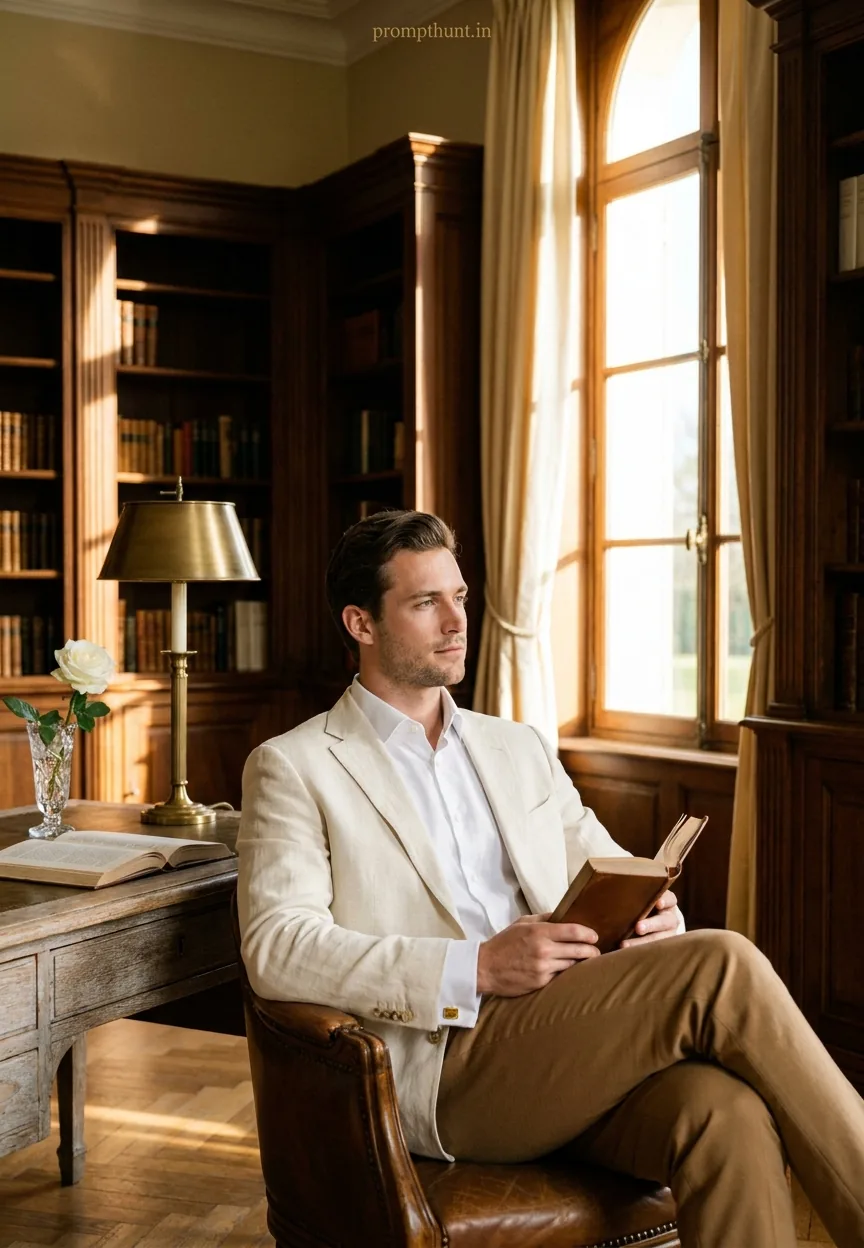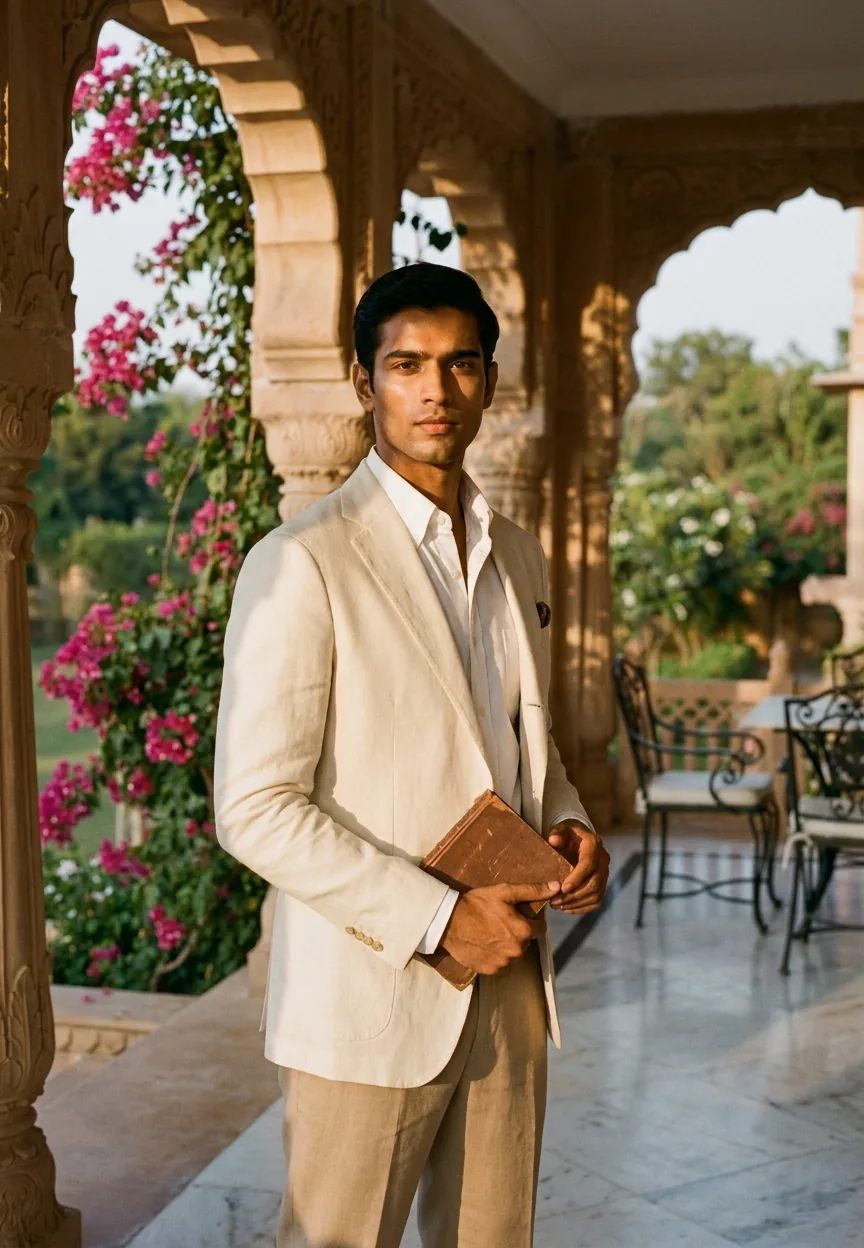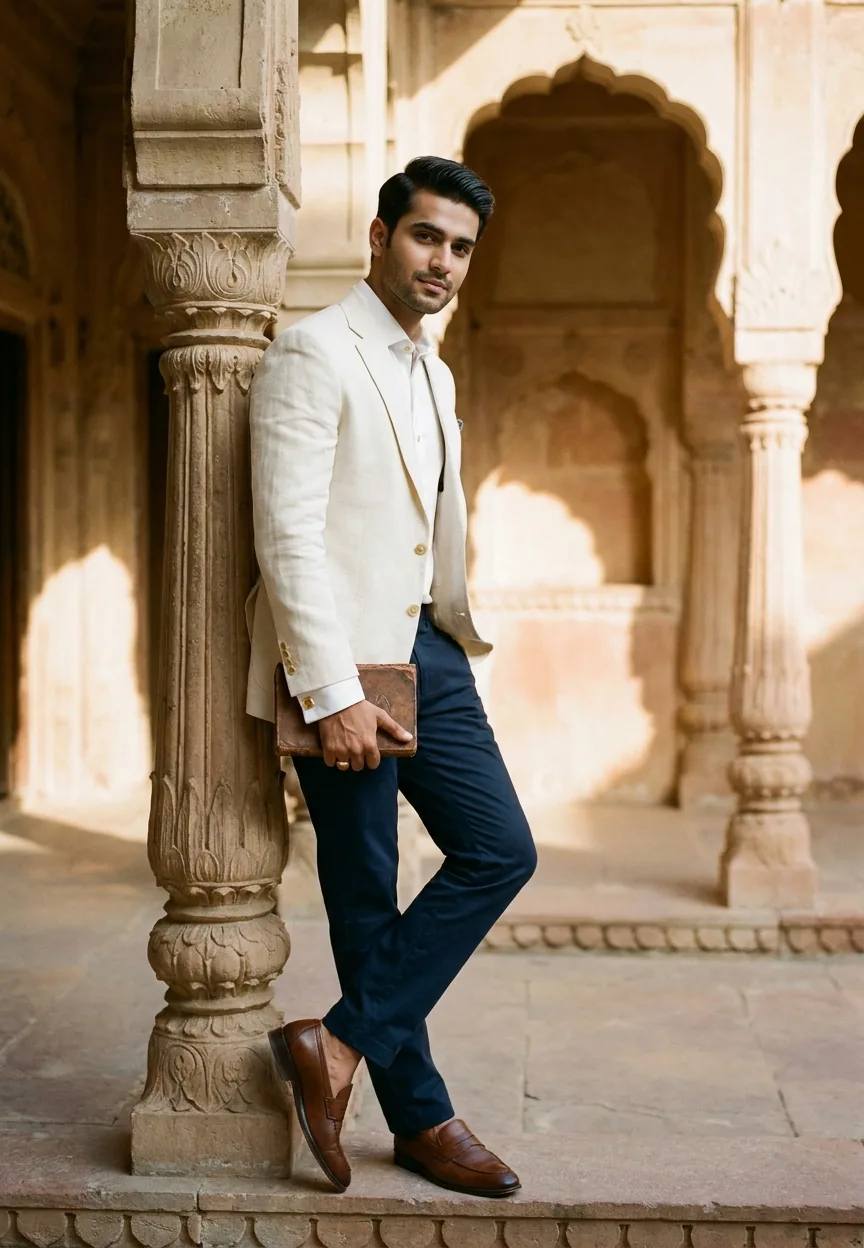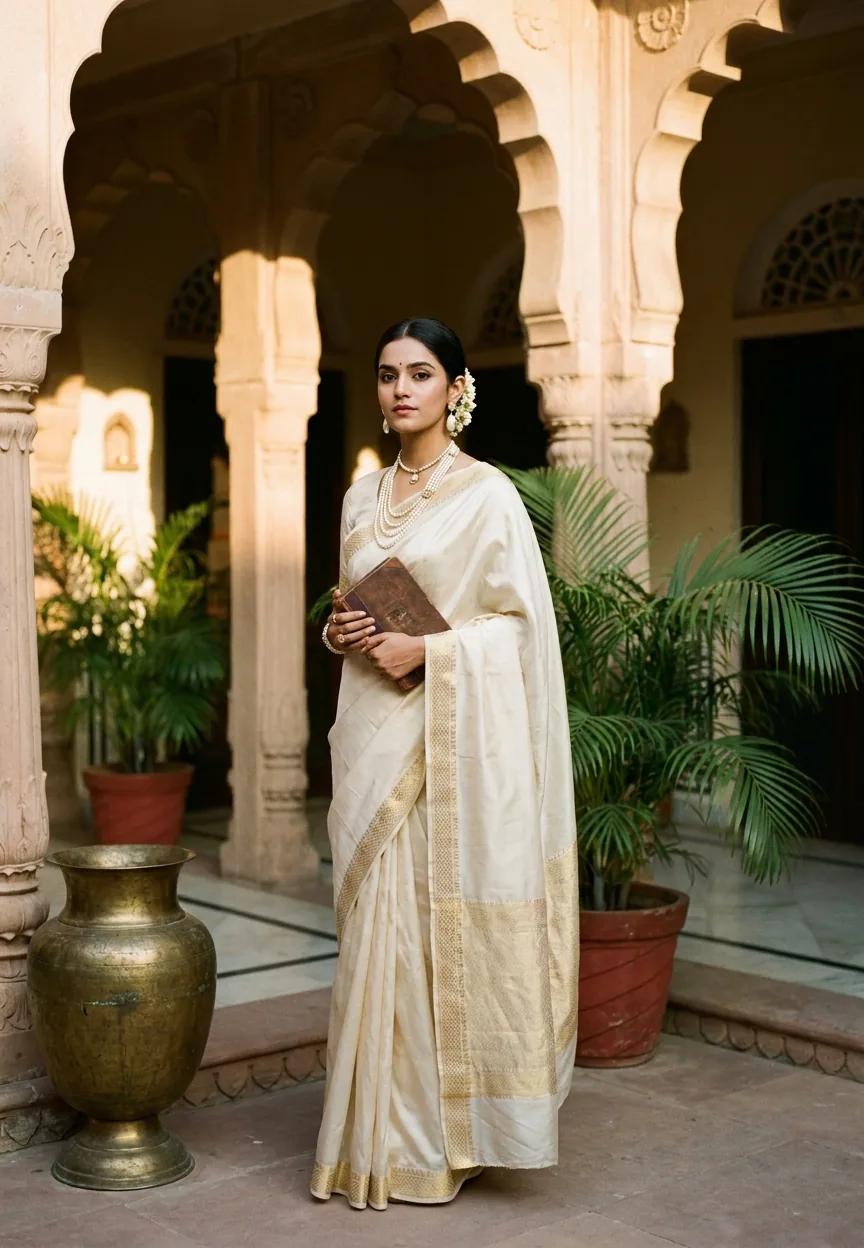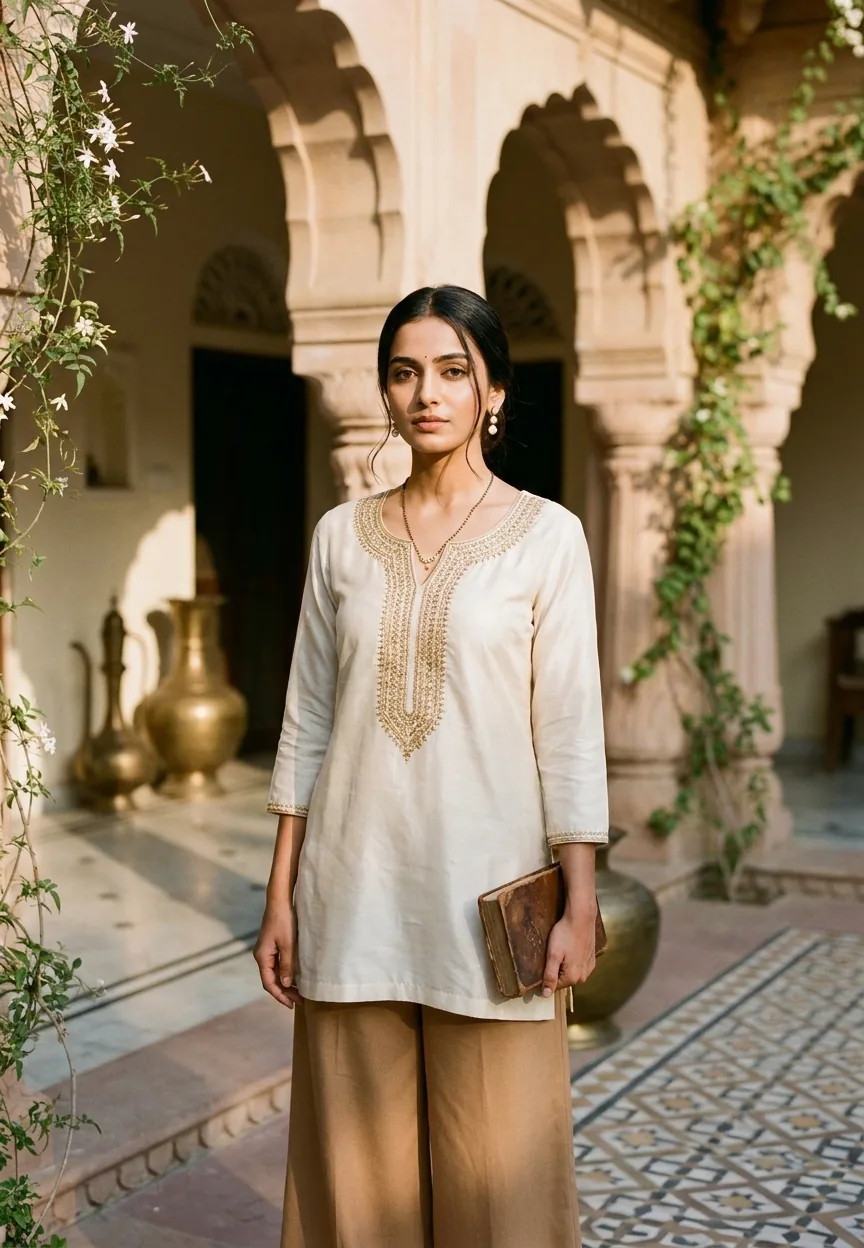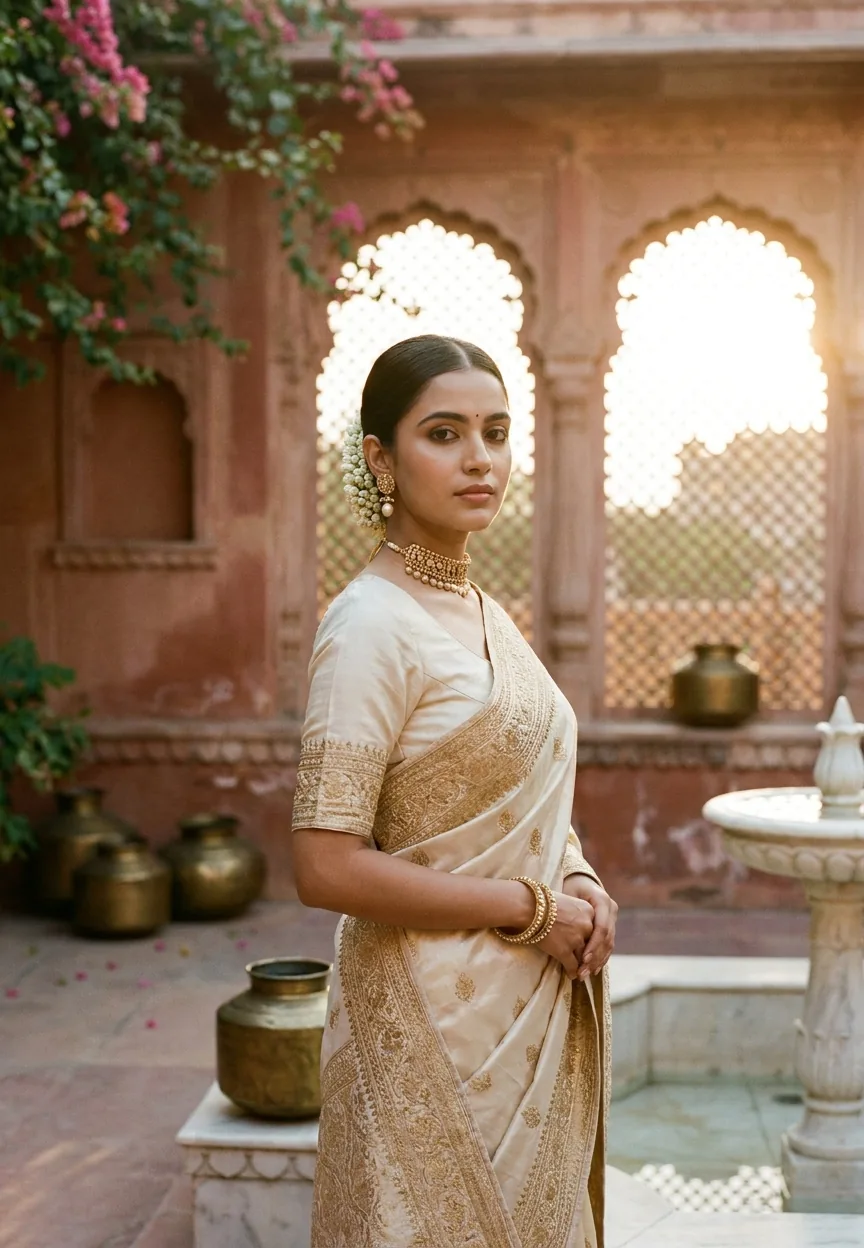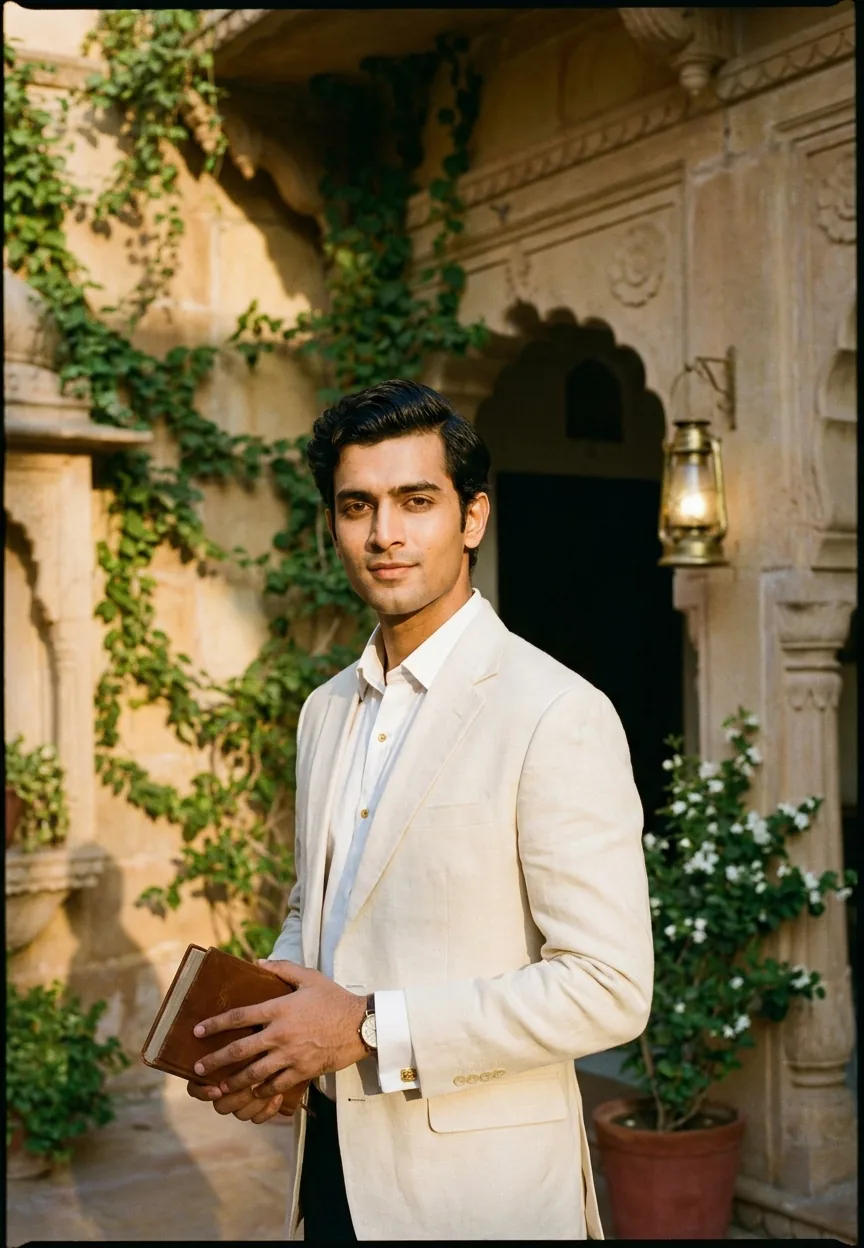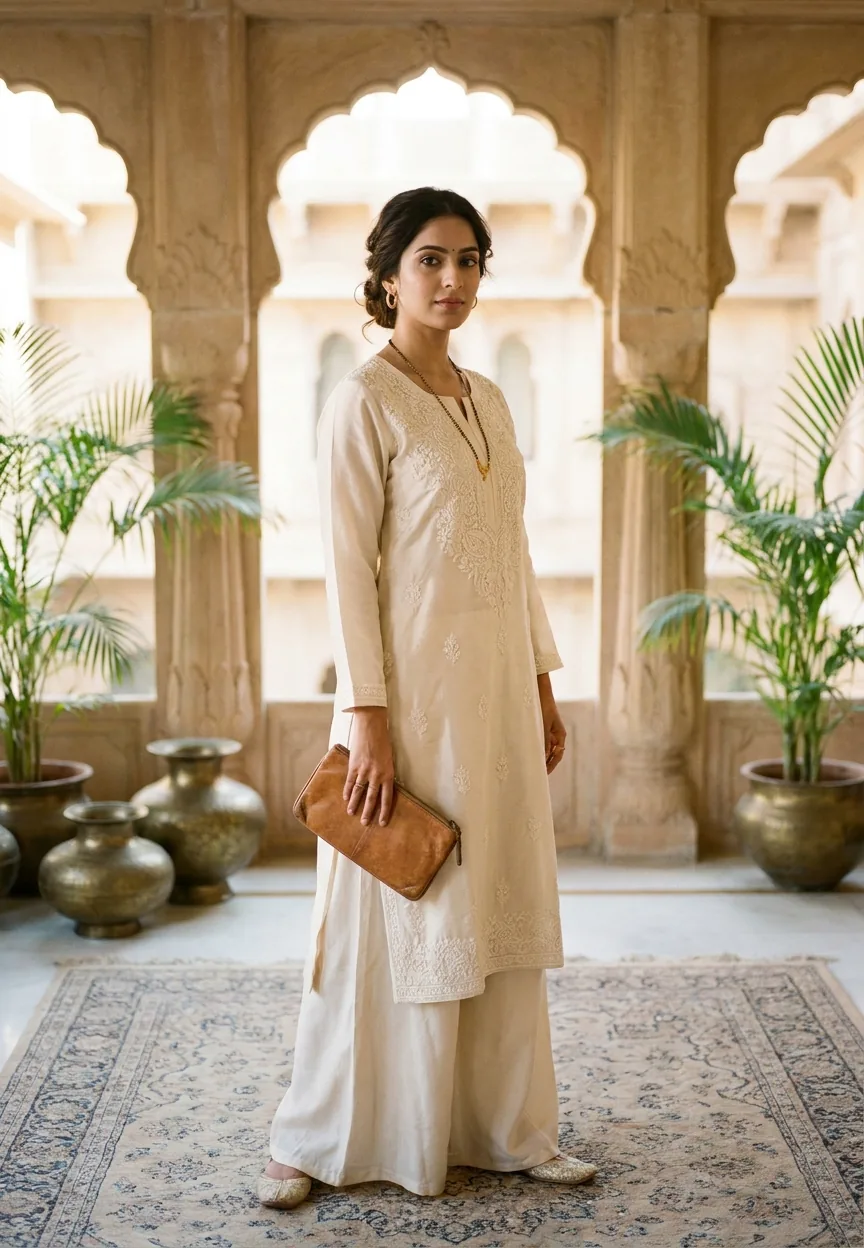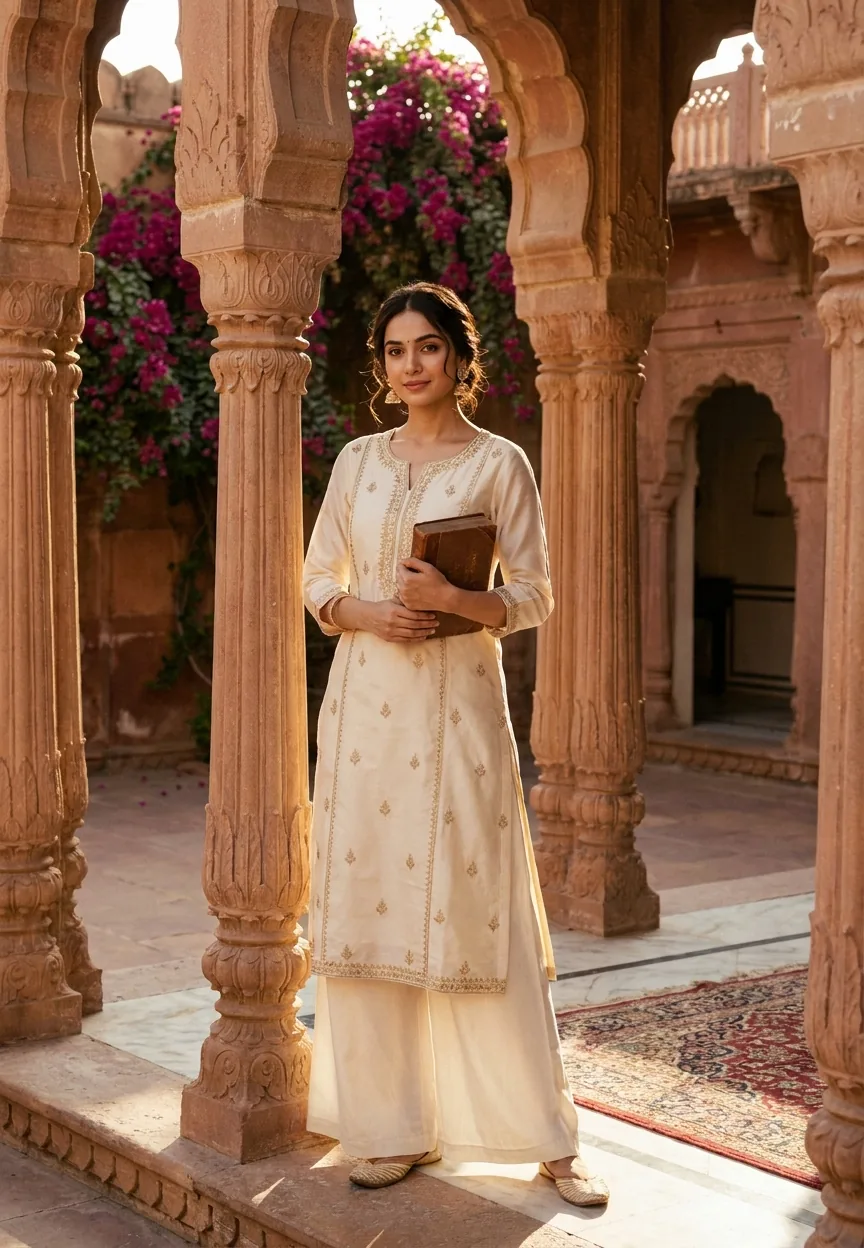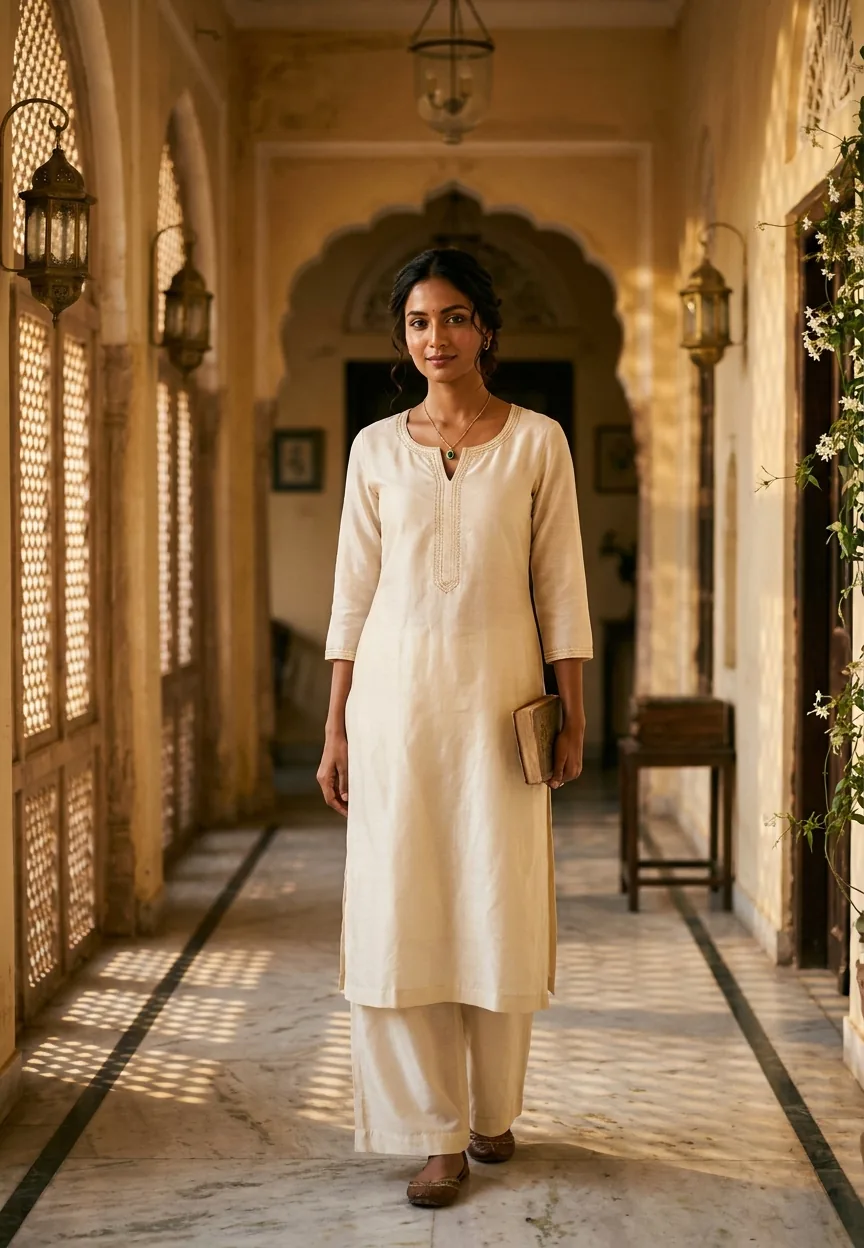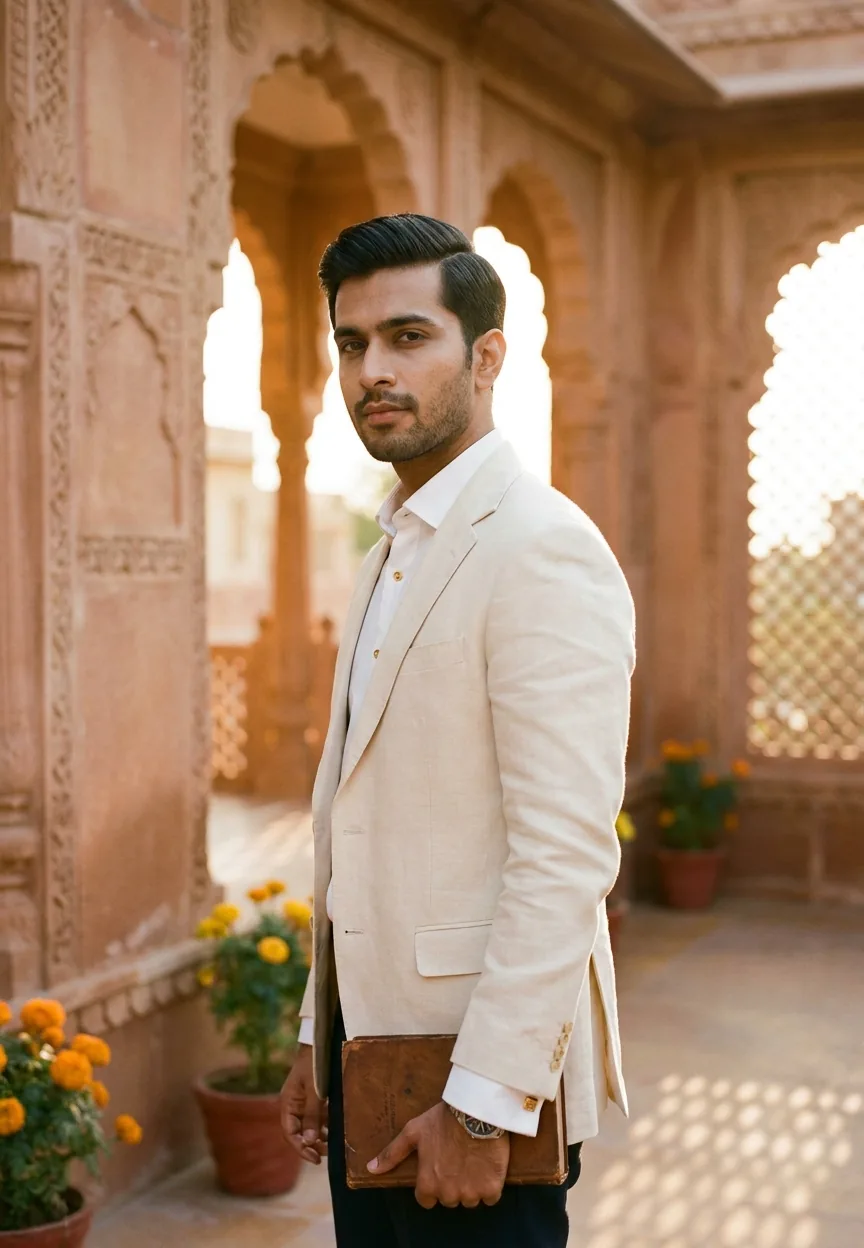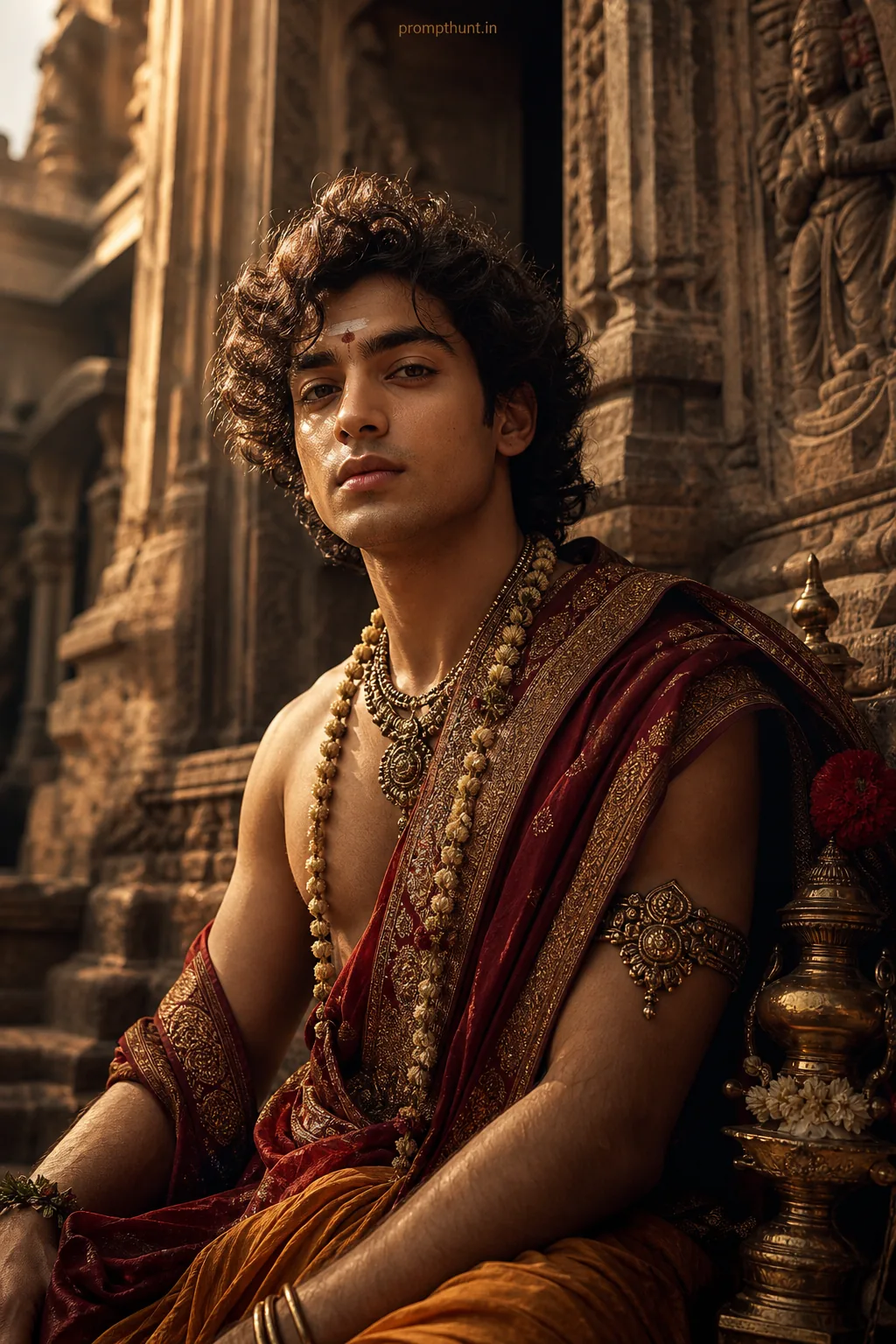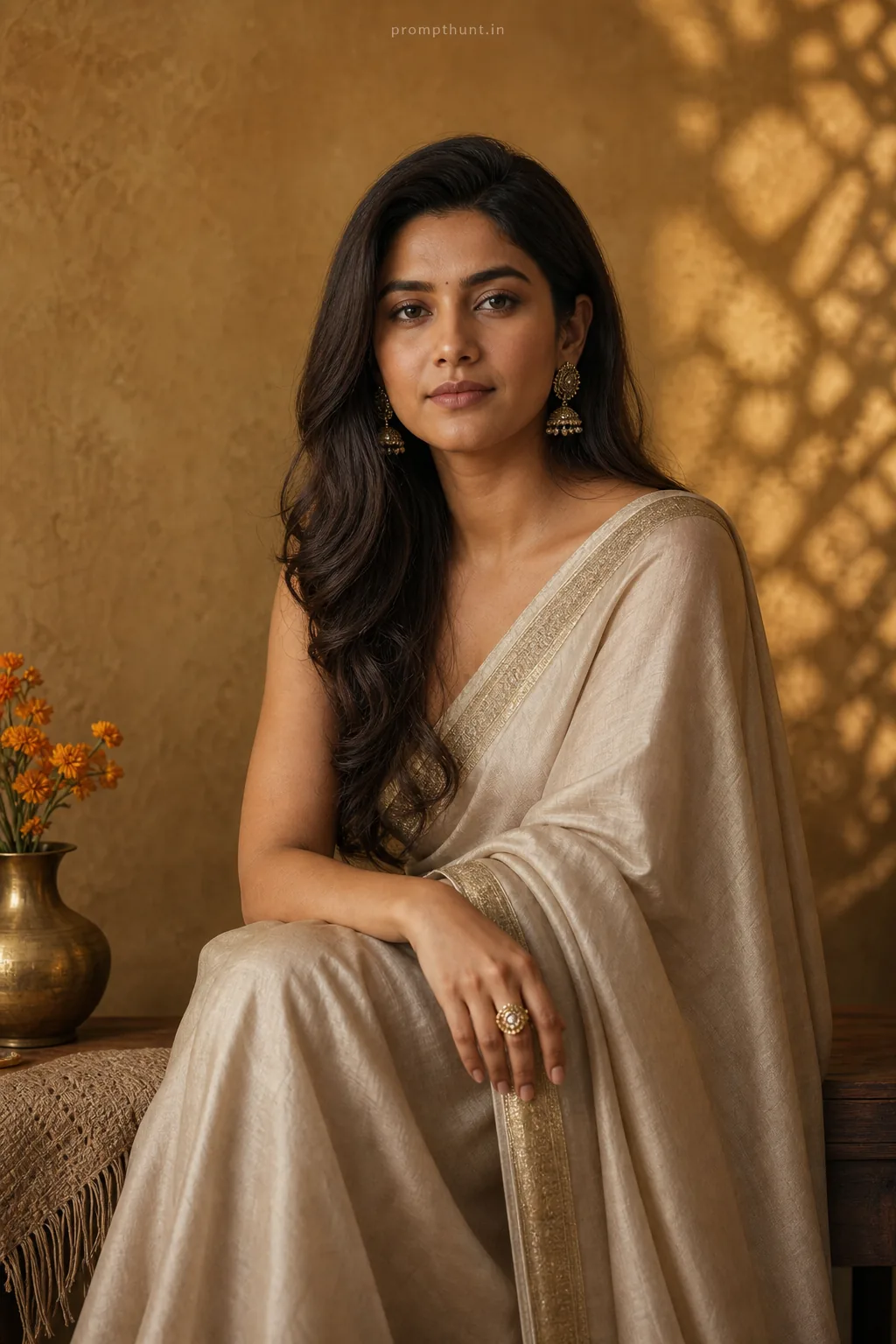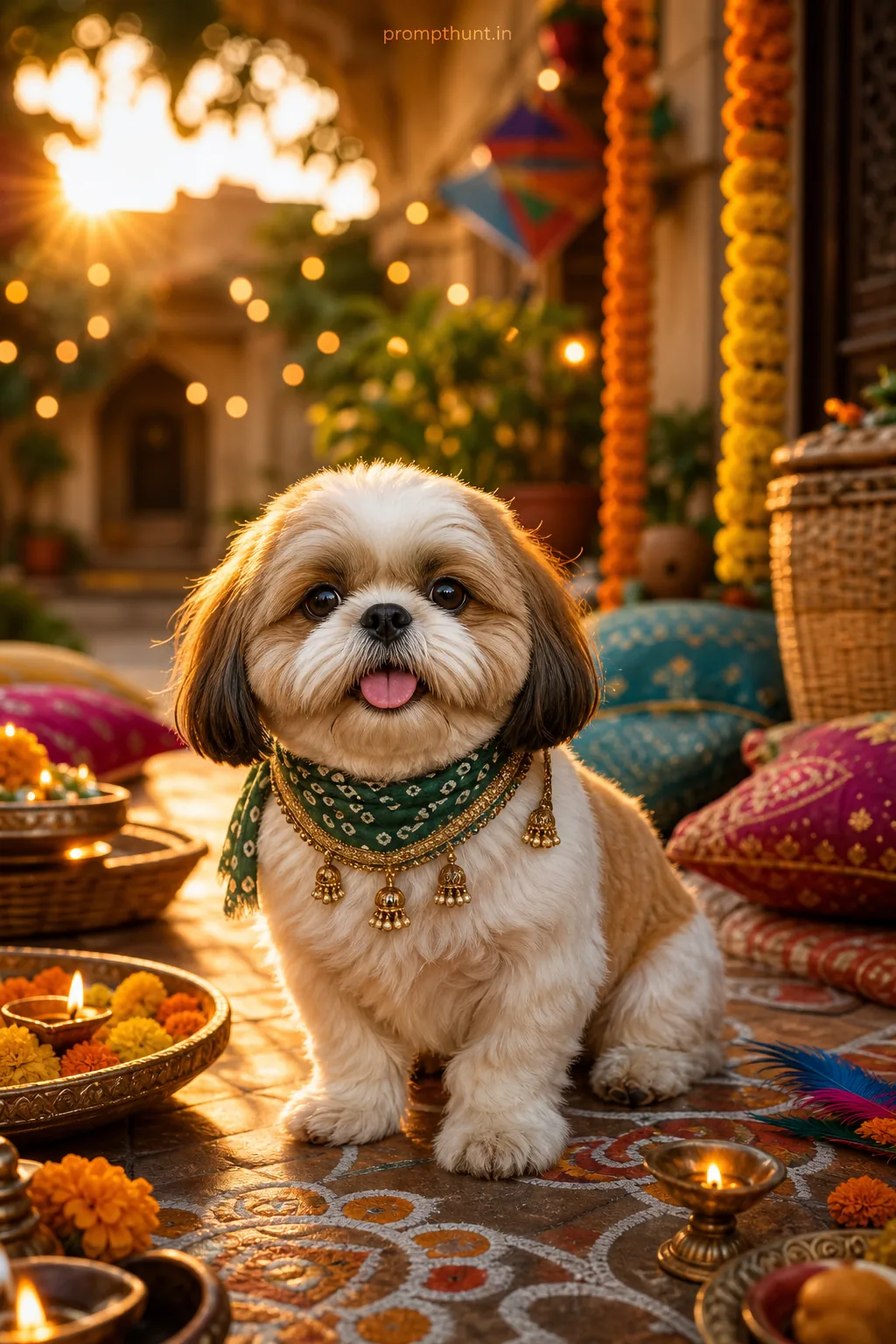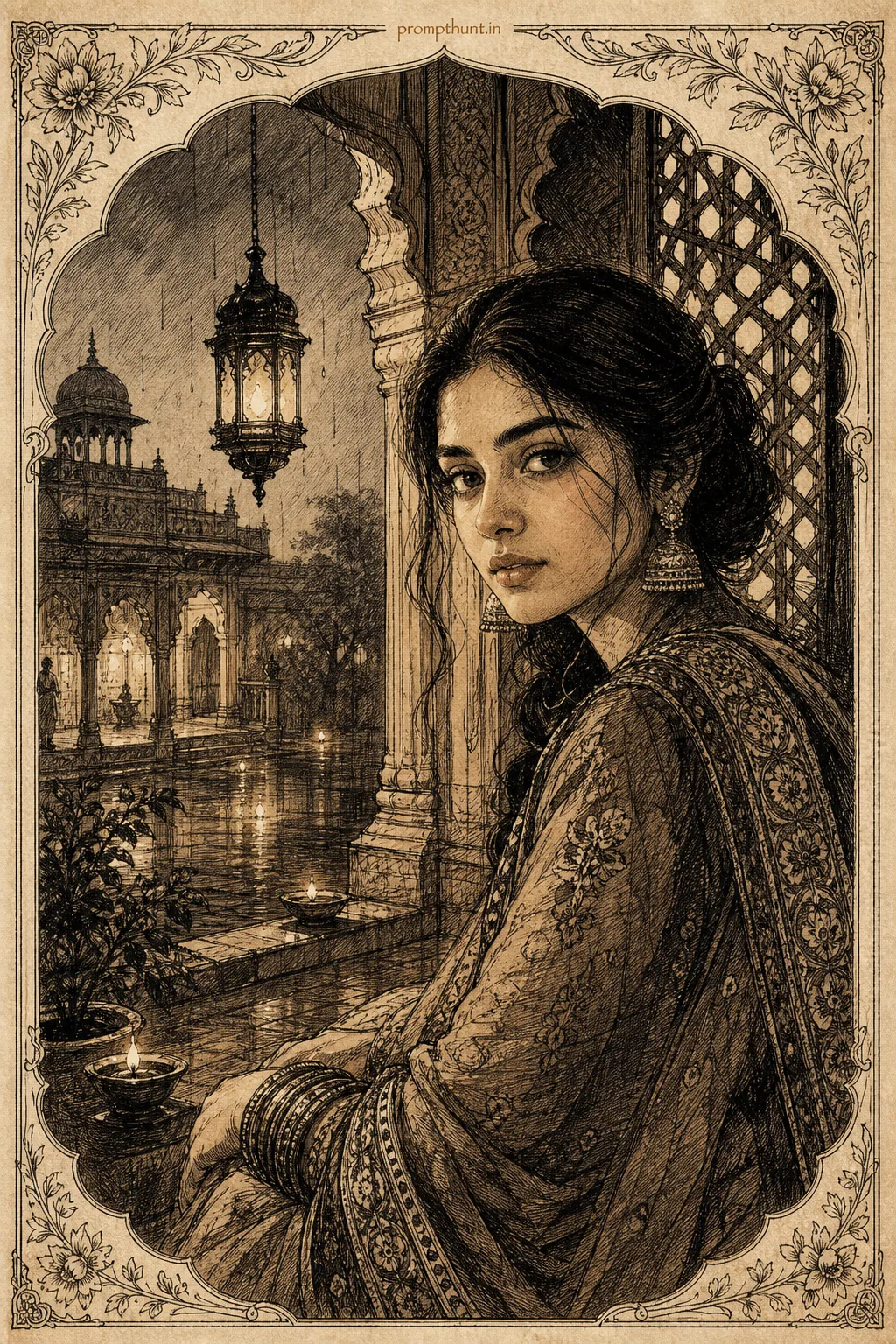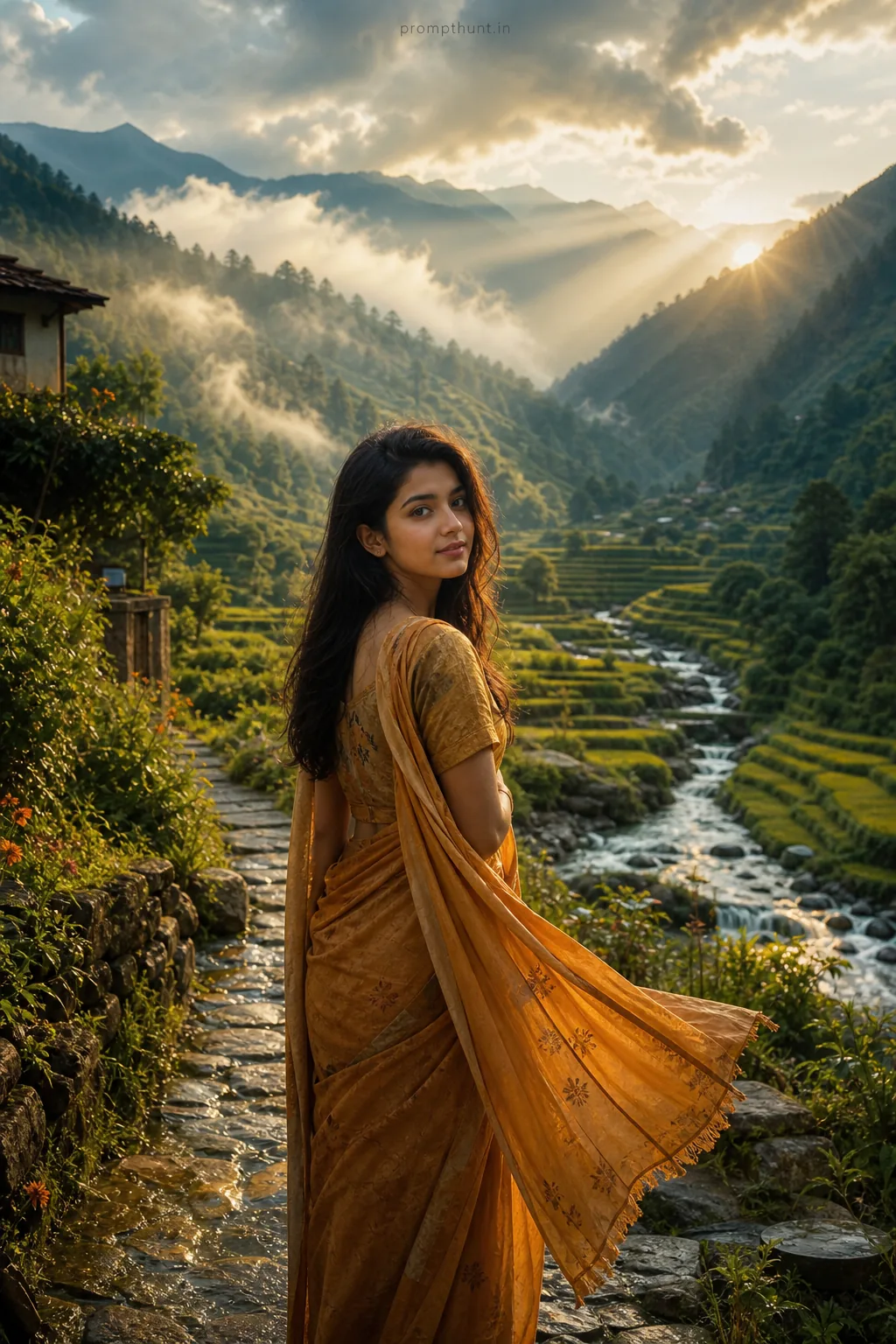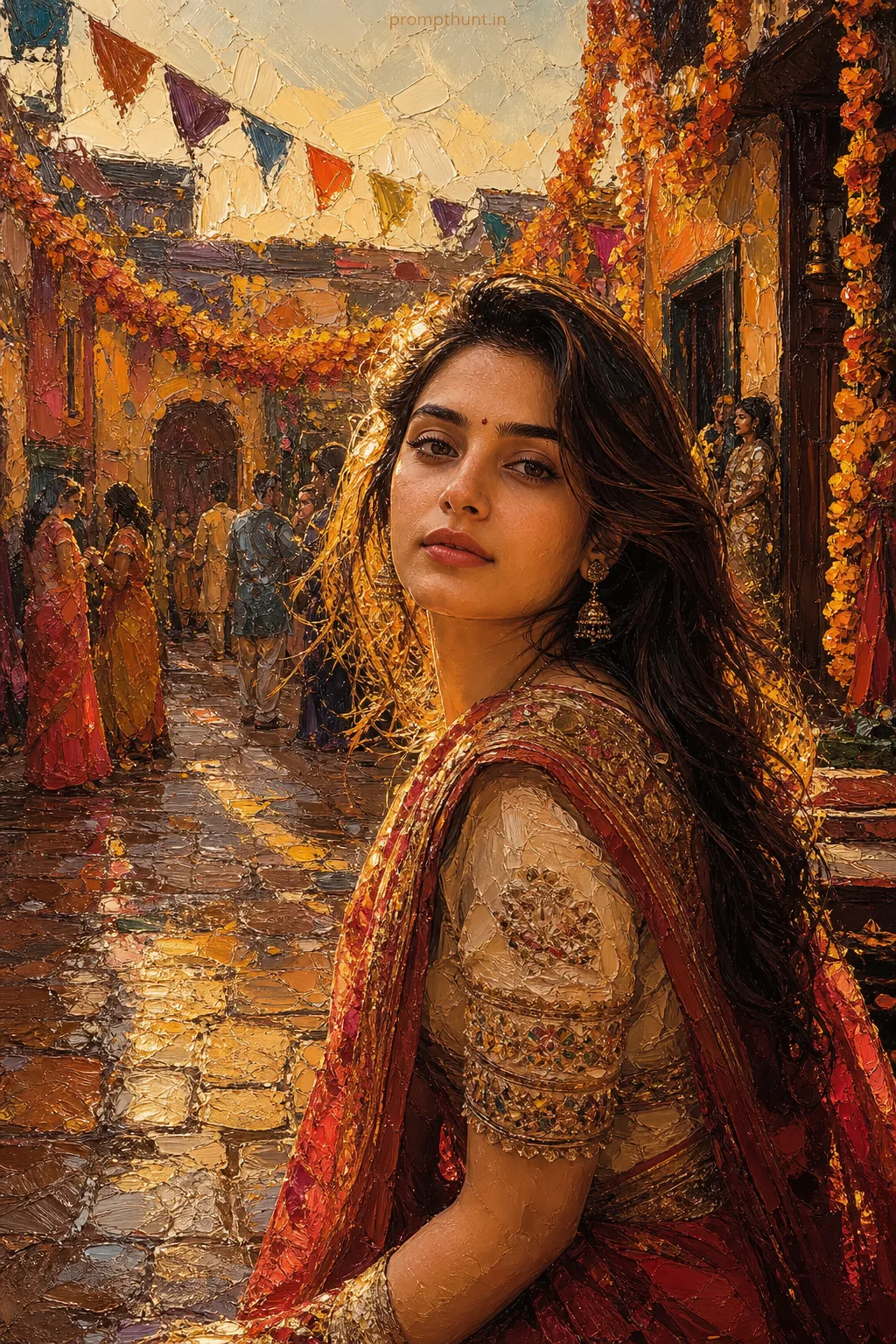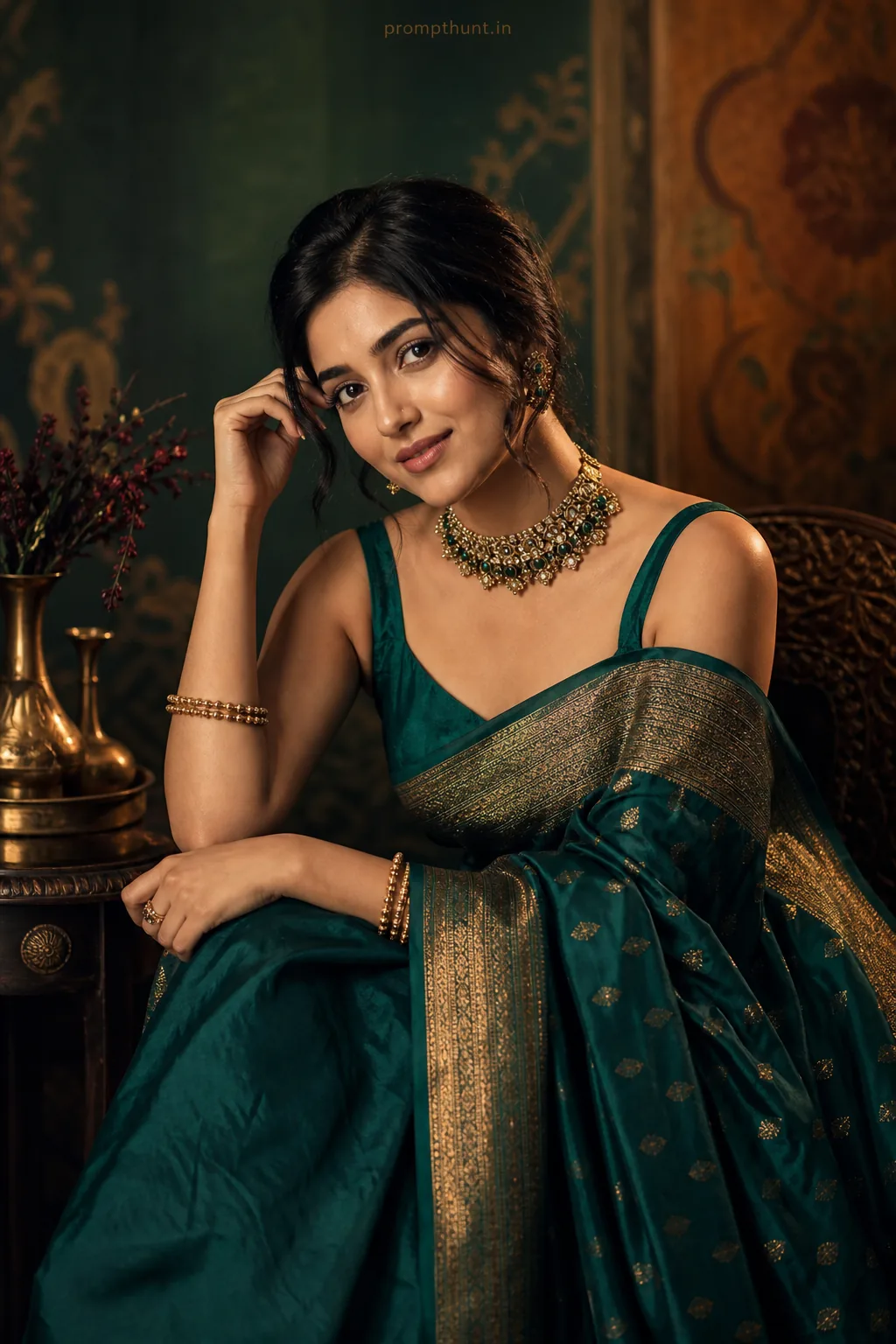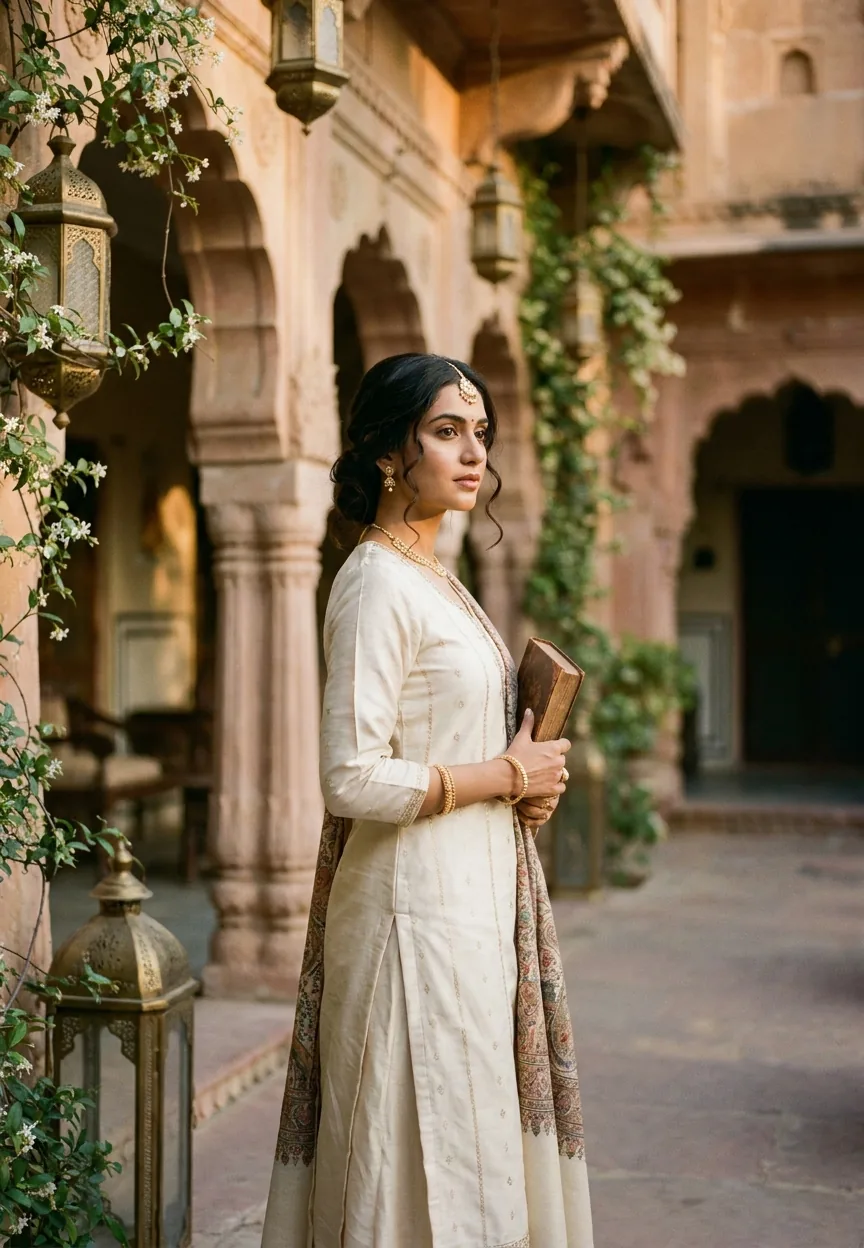
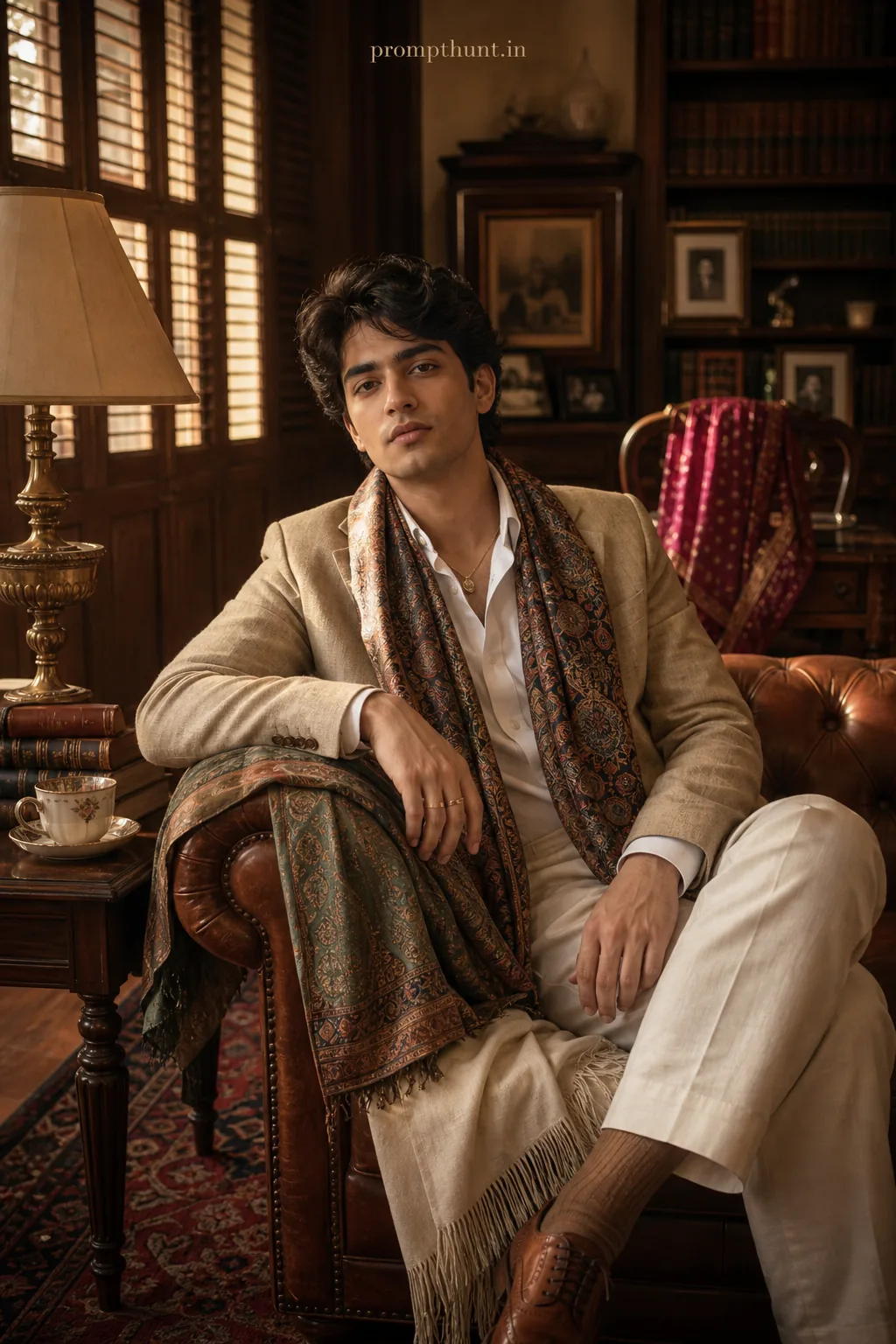
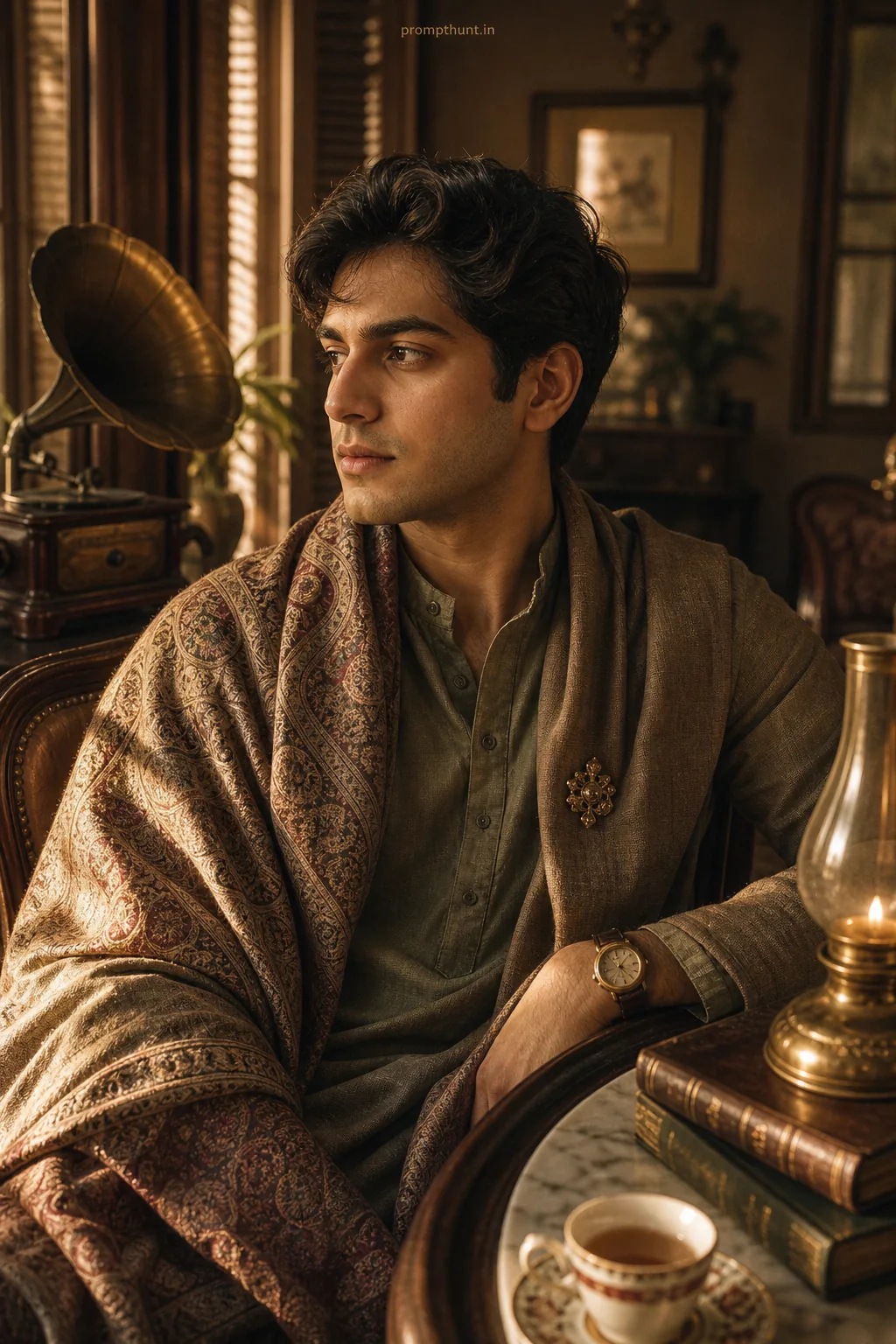
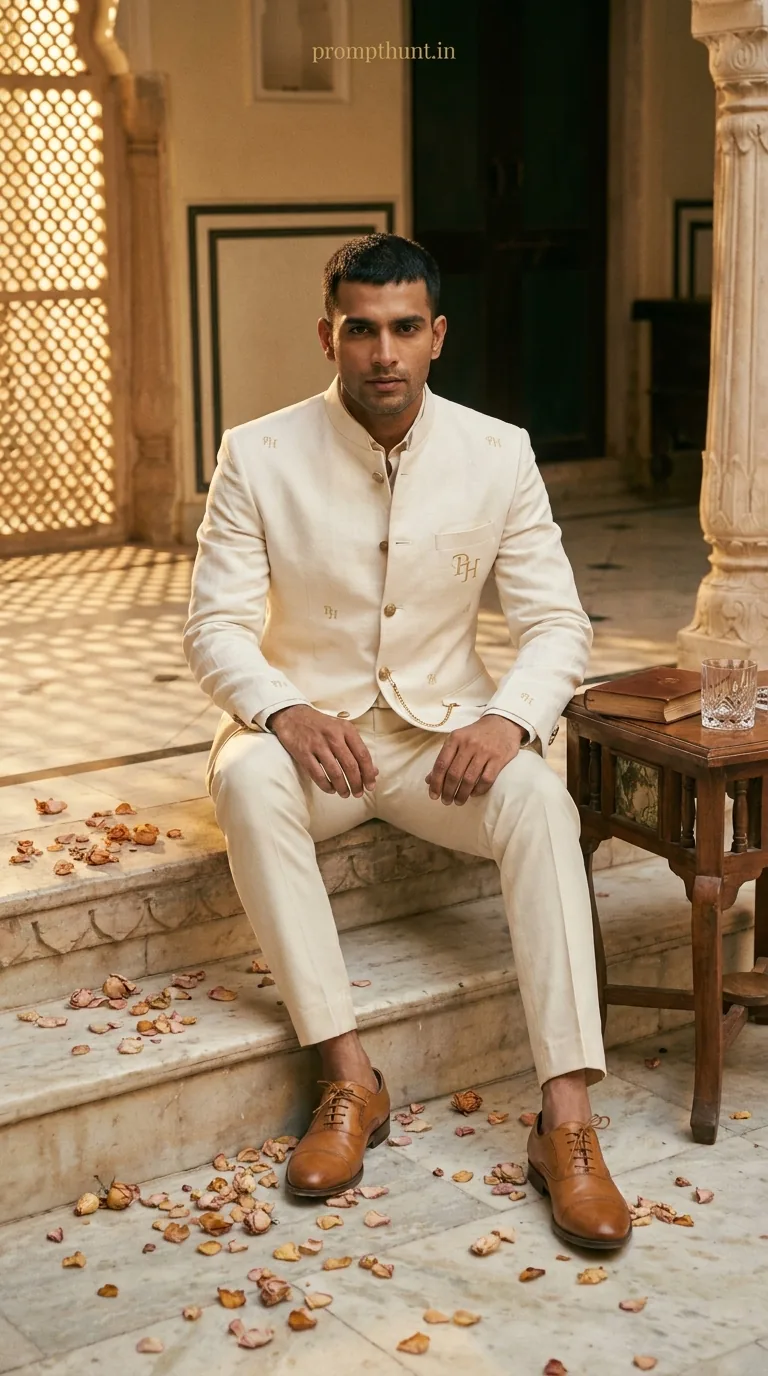
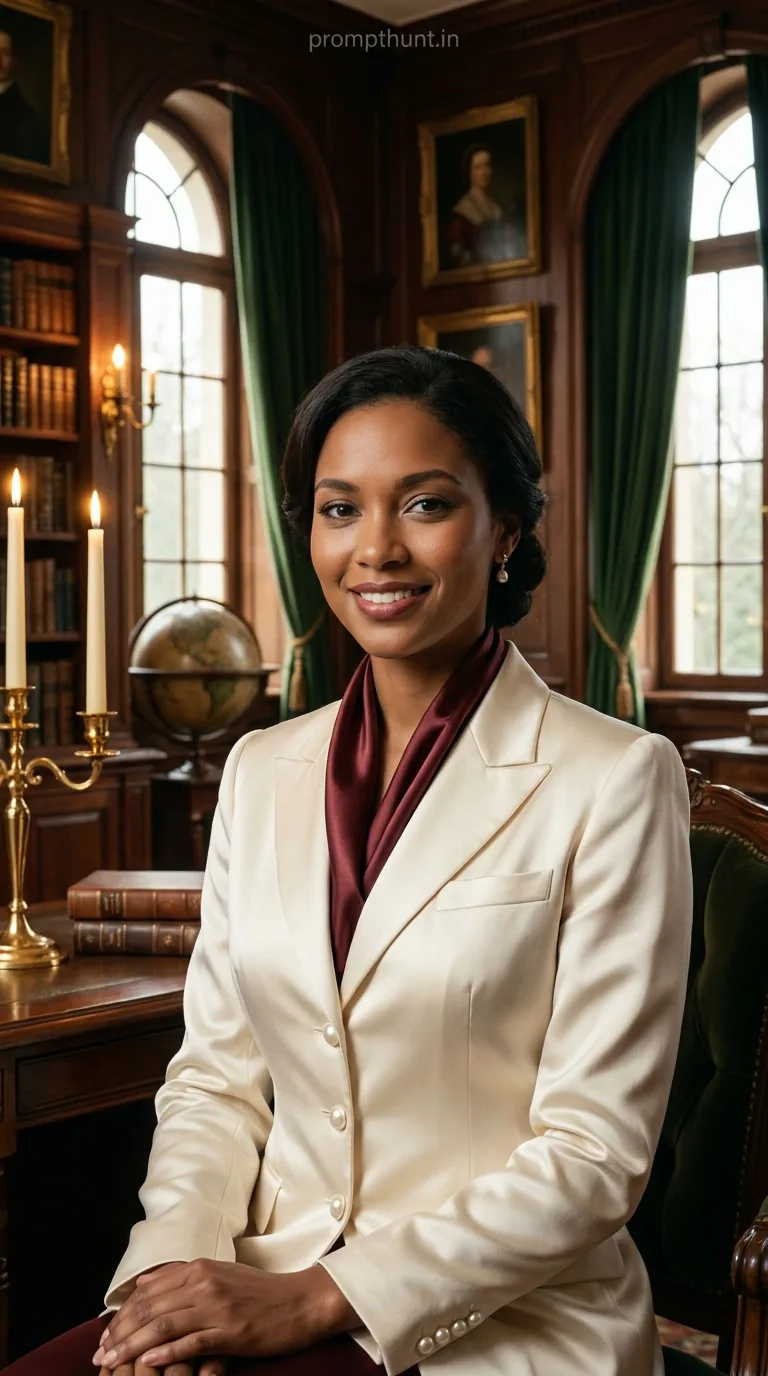
The Old Money Aesthetic AI photo prompt recreates the look of inherited wealth — understated elegance, heritage settings, and quiet confidence — without flexing a single logo. For Indian royalty-inspired portraits, pair ivory silk, polki gold, and Rajasthani haveli backdrops with Kodak Portra 400 film tones in Gemini or any major AI image tool. The result is cinematic, editorial, and genuinely stunning.
Old Money Aesthetic Indian Royalty Gemini AI Photo Editing Prompt
There is a particular kind of rich that does not need to announce itself. No visible logos. No blinding rhinestones. Just an ivory silk kurta, a low chignon, and the quiet certainty of someone whose grandmother owned the haveli. That is the Old Money Aesthetic in a nutshell — and right now, it is absolutely everywhere in AI-generated portrait photography. This article breaks down exactly how to recreate that look using the viral Gemini prompt that has Indian fashion lovers genuinely stopping mid-scroll.
Paste the prompt below into Gemini, Adobe Firefly, or Midjourney, tweak the details to match your subject, and you will get an editorial-grade portrait dripping in understated Indian royalty energy — no actual palace required.
What the Old Money Aesthetic Actually Is
Old Money Aesthetic is not about spending a lot. It is about looking like you never had to think about spending at all.
The style borrows from aristocratic visual language — heritage architecture, natural fabrics, heirloom jewellery, and muted colour palettes. No fast fashion. No neon. Nothing that would embarrass your great-aunt at the Udaipur polo club.
In Western contexts, it means cable-knit sweaters and rowing blazers. In the Indian version — which is frankly the better version — it means zari-embroidered silk, Pashmina shawls worn with zero effort, and sandstone courtyards that have been standing since before your country existed. The Indian Old Money look pulls from Mughal miniature paintings, Rajput royal portraiture, and the kind of editorial spreads that Vogue India runs when they actually mean it.
The key visual signals: warm neutrals, tactile fabrics, natural golden-hour light, and a subject who looks like they have somewhere important to be but absolutely no reason to rush.
The Prompt Itself — Copy This Exactly
This is the prompt making the rounds. It works in Gemini, Midjourney v6, Adobe Firefly, and DALL-E 3. Paste it in. Adjust the subject description to match whoever you are generating. Do not overthink it.
A strikingly elegant Indian woman in her late 20s standing in the grand courtyard of a heritage haveli in Rajasthan, golden hour sunlight casting a warm amber glow across the scene. She is dressed in a tailored ivory silk kurta with subtle gold zari embroidery, paired with wide-leg cream palazzo pants and a delicate Pashmina shawl draped effortlessly over one shoulder. She wears understated 22-karat gold jewelry — thin bangles, small polki drop earrings, and a delicate maang tikka. Her dark hair is pulled back into a low chignon with loose face-framing tendrils. She holds a vintage leather-bound book casually in one hand, gazing slightly off-camera with quiet confidence. The background features aged sandstone arches, climbing jasmine vines, and antique brass lanterns. Color palette: warm ivory, dusty gold, terracotta, and sage green. Film grain texture, soft bokeh background, Kodak Portra 400 film tone, muted but rich saturation. Vertical 9:13 portrait composition, editorial fashion photography style, ultra-realistic, cinematic lighting, high detail.
How to Use This Prompt — Three Steps, No Surprises
Step one: choose your tool. Gemini Image Generation handles the warm film tones particularly well. Midjourney gives you slightly more compositional control. Adobe Firefly is the safer bet if you need commercial usage rights without extra steps. Pick one and stick with it for this session — swapping mid-generation is a good way to waste an afternoon.
Step two: paste the prompt exactly as written, then make one targeted change. Swap in the age, skin tone, hair type, or jewellery style that fits your vision. Change one variable at a time. Nine times out of ten, people who get muddy results have changed four things at once and then blamed the AI. Fair enough — so do I, honestly.
Step three: run three to five generations before committing. The first result is rarely the best one. AI image tools are like buses in that regard — the second one is usually more useful and arrives with less drama.
Tips for Getting the Best Results
Keep the colour palette terms specific. "Warm ivory" and "dusty gold" do more work than "light colours." The more concrete the descriptor, the less the AI has to guess — and AI guessing is how you end up with a palazzo-pant disaster.
The Kodak Portra 400 film tone instruction is doing a lot of heavy lifting in this prompt. Do not remove it. It is what gives the image that slightly desaturated, warm-grain quality that separates editorial photography from a phone camera selfie with a filter slapped on.
Add "no text, no watermarks, no logos" at the end of your prompt if your tool has a habit of hallucinating branding onto clothing. It happens. Nobody ordered that.
Rule of thumb: if the result looks too sharp and too saturated, add "soft grain, muted tones, analog warmth" as a suffix. That usually pulls it back toward the film-photography feel the style demands.
For Gemini specifically, the 9:13 aspect ratio instruction in the prompt matters. Vertical portrait orientation gives the composition room to breathe — the haveli archways need that vertical space to frame the subject properly. If your tool defaults to square, manually set the ratio before generating.
Why This Is Trending in India Right Now
The Old Money Aesthetic hit globally a few years back through Pinterest boards full of Vineyard Vines and Connecticut lakeside cabins. Niche and beige and, let us be honest, fairly boring unless you own a golden retriever named Biscuit.
India took the concept, replaced the blazers with Benarasi silk, swapped the rowing club for a haveli courtyard, and produced something genuinely magnetic. It resonates because it connects to real cultural heritage — Rajput architecture, Mughal jewellery traditions, and a visual language of Indian aristocracy that has existed for centuries but rarely shows up in mainstream fashion content.
There is also a practical reason it is spreading fast on Instagram and Pinterest right now. AI-generated Old Money portraits look expensive without costing anything. You do not need a Jodhpur heritage hotel, a fashion photographer, and a zari kurta that requires a second mortgage. You need a prompt and five minutes. That is a fairly compelling offer. (You could say the whole thing is quite... cost-effective. I am here all week.)
Indian creators are also using these images as mood boards, wedding inspiration references, and visual briefs for actual photographers. The AI output becomes a planning tool, not just a finished product. That dual utility is a big part of why the format sticks.
Honest Opinion — When Not to Use This Style
Right. Let us be straight about this.
The Old Money Aesthetic Indian Royalty prompt is genuinely beautiful when it works. But there are real situations where you should leave it alone entirely.
If you are generating images for a brand campaign that will run as advertising, tread carefully. AI-generated portraits of people who do not exist, presented in heritage cultural contexts, can slide into uncomfortable territory around representation. The image looks real. A viewer might assume it is real. That is a communication problem your legal team will not thank you for.
The aesthetic can also tip into pastiche if you push it too hard. Add too many Old Money signals at once — the book, the maang tikka, the haveli, the bokeh, the film grain, the shawl draped just so — and the image stops feeling like quiet confidence and starts feeling like a costume. Real Old Money energy is specific and restrained. Piling on every heritage signifier simultaneously is the visual equivalent of someone telling you they went to Oxford within thirty seconds of meeting them.
And if you are using this for personal creative fun, photography mood-boarding, or exploring AI as a design tool? Go for it without reservation. This prompt produces genuinely cinematic results that hold up even at high zoom. It is one of the better examples of AI image generation doing something that feels considered rather than randomly assembled.
The style is also not especially flexible. Change the setting from a Rajasthani haveli to an urban rooftop and the whole feeling collapses. It needs the heritage architecture. It needs the sandstone and the jasmine and the antique brass. Strip those out and you have a woman in nice clothes, which is fine but considerably less interesting.
The Short Version
The Old Money Aesthetic Indian Royalty prompt works because it is specific, culturally grounded, and visually coherent. Ivory silk, polki gold, Kodak Portra tones, and a Rajasthani haveli courtyard are doing exactly the right amount of work together. Paste the prompt, adjust your subject details, run a few generations, and do not be surprised when the result looks like it belongs in a glossy editorial rather than an AI experiment. Now if you will excuse me, I need to go drape a Pashmina shawl over one shoulder effortlessly — emphasis on effortlessly, which apparently requires seventeen attempts and a tutorial video.