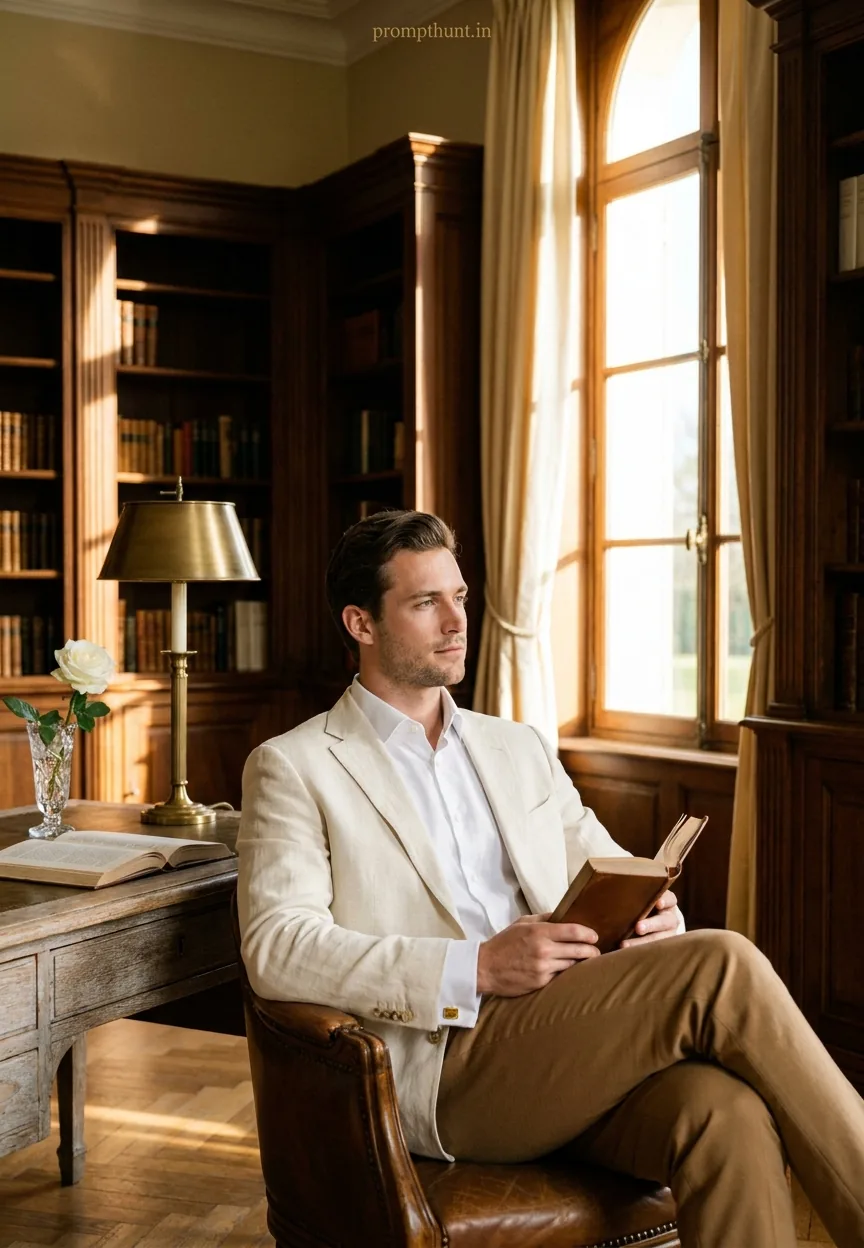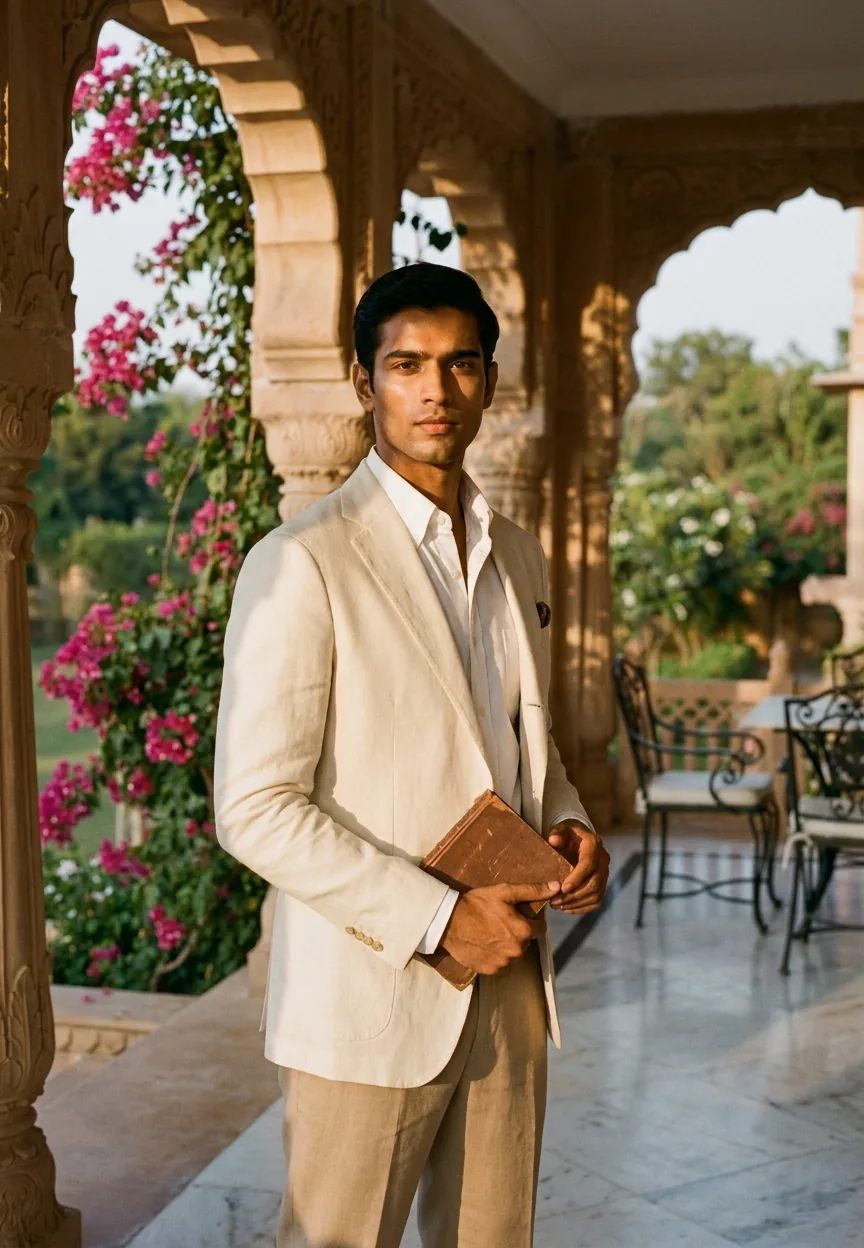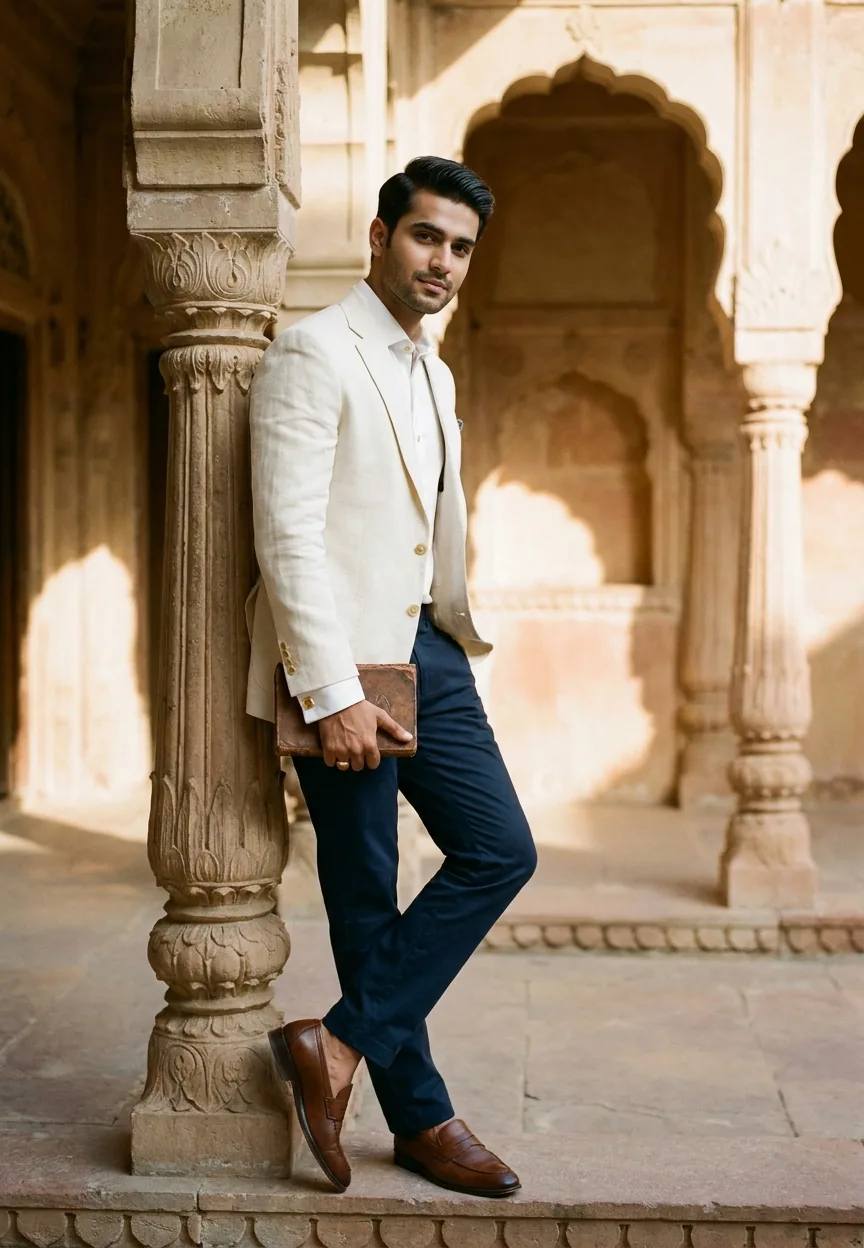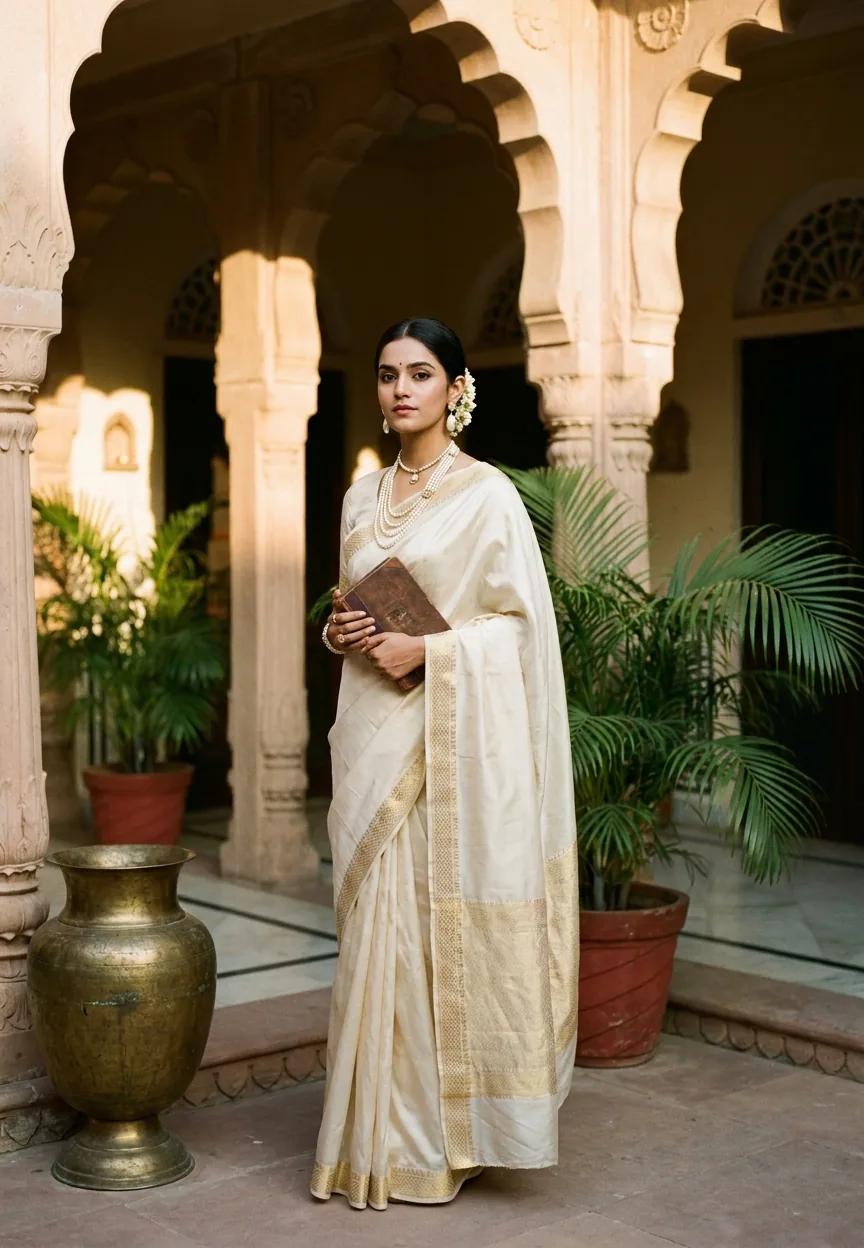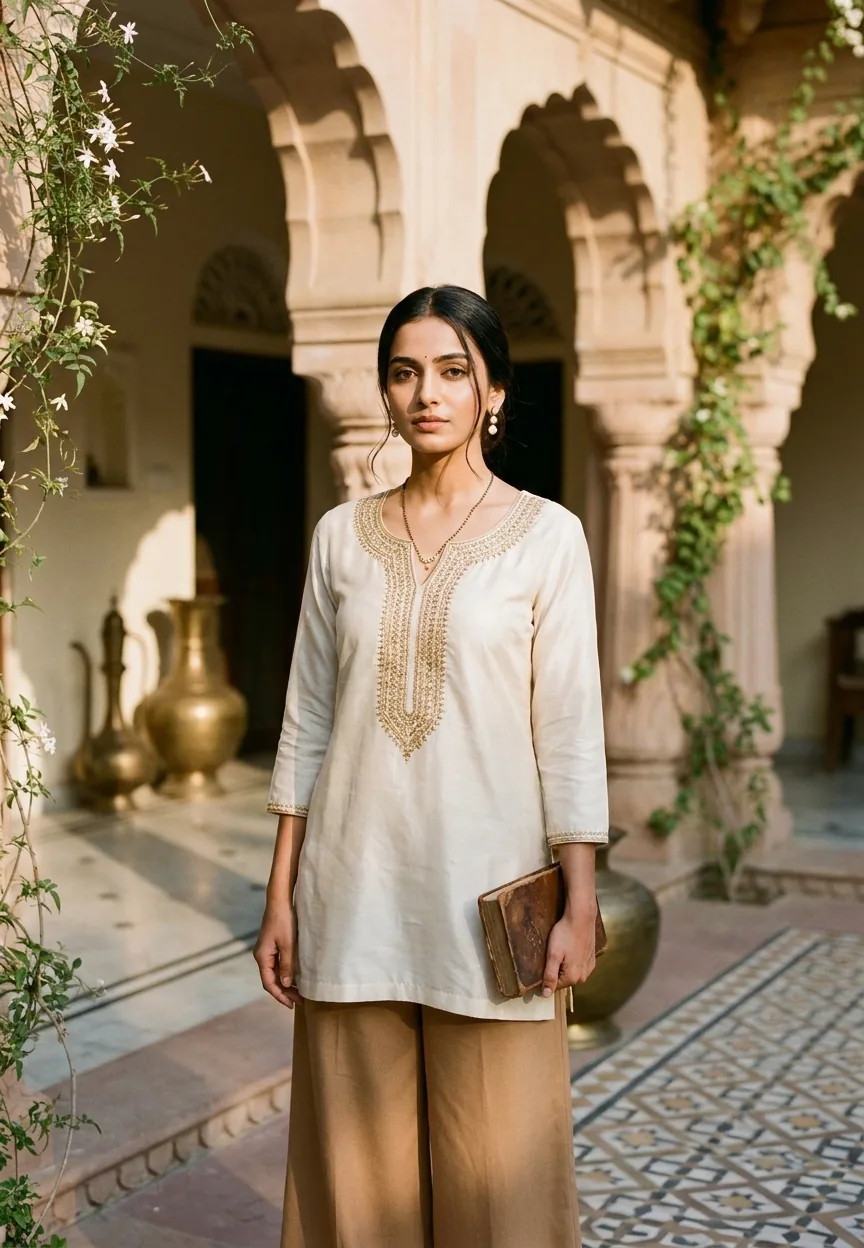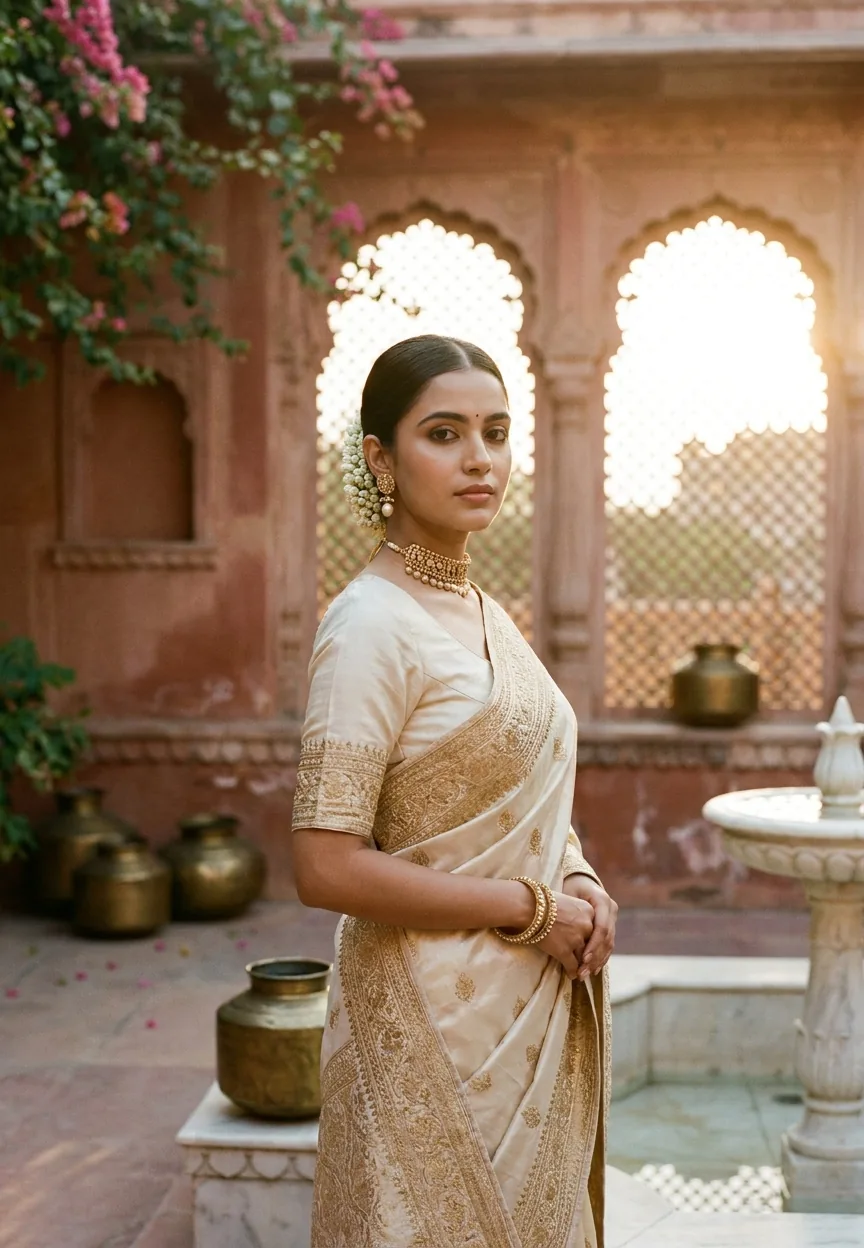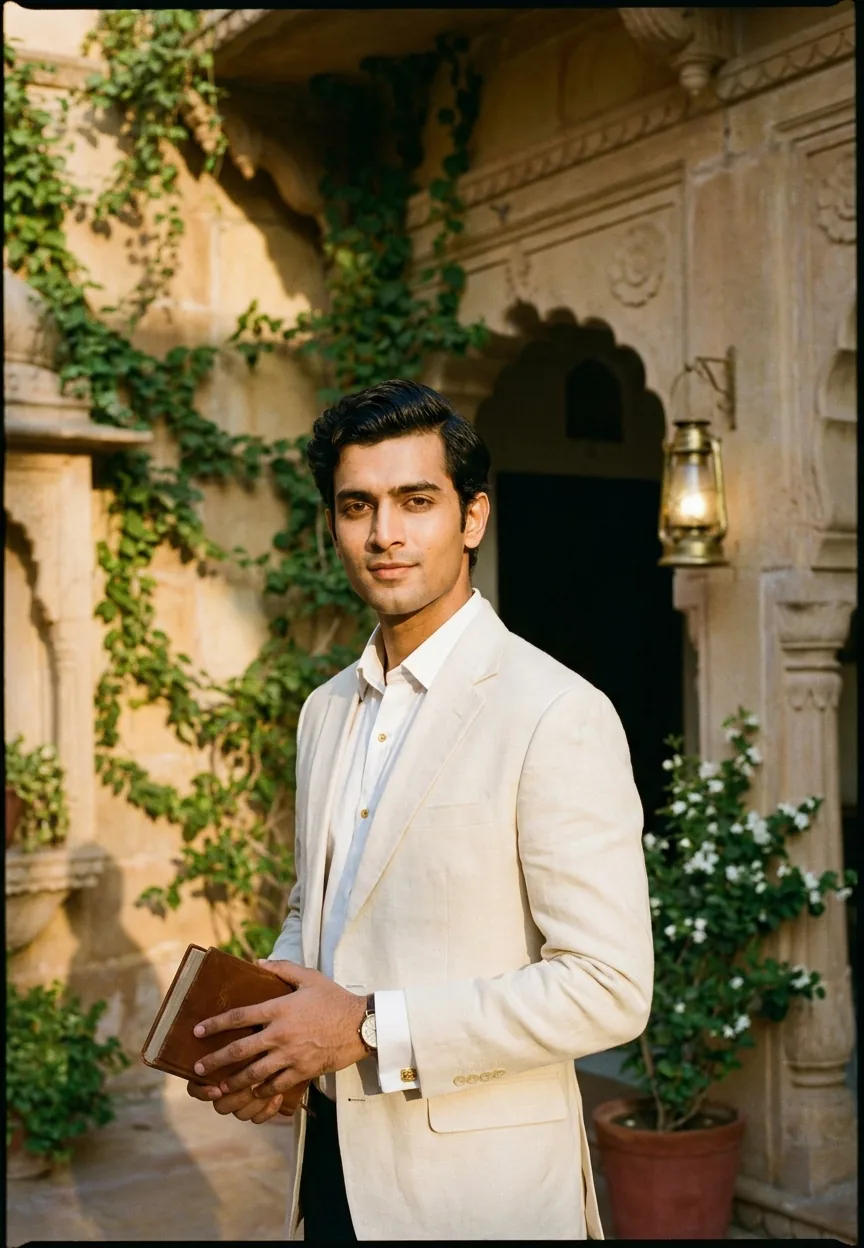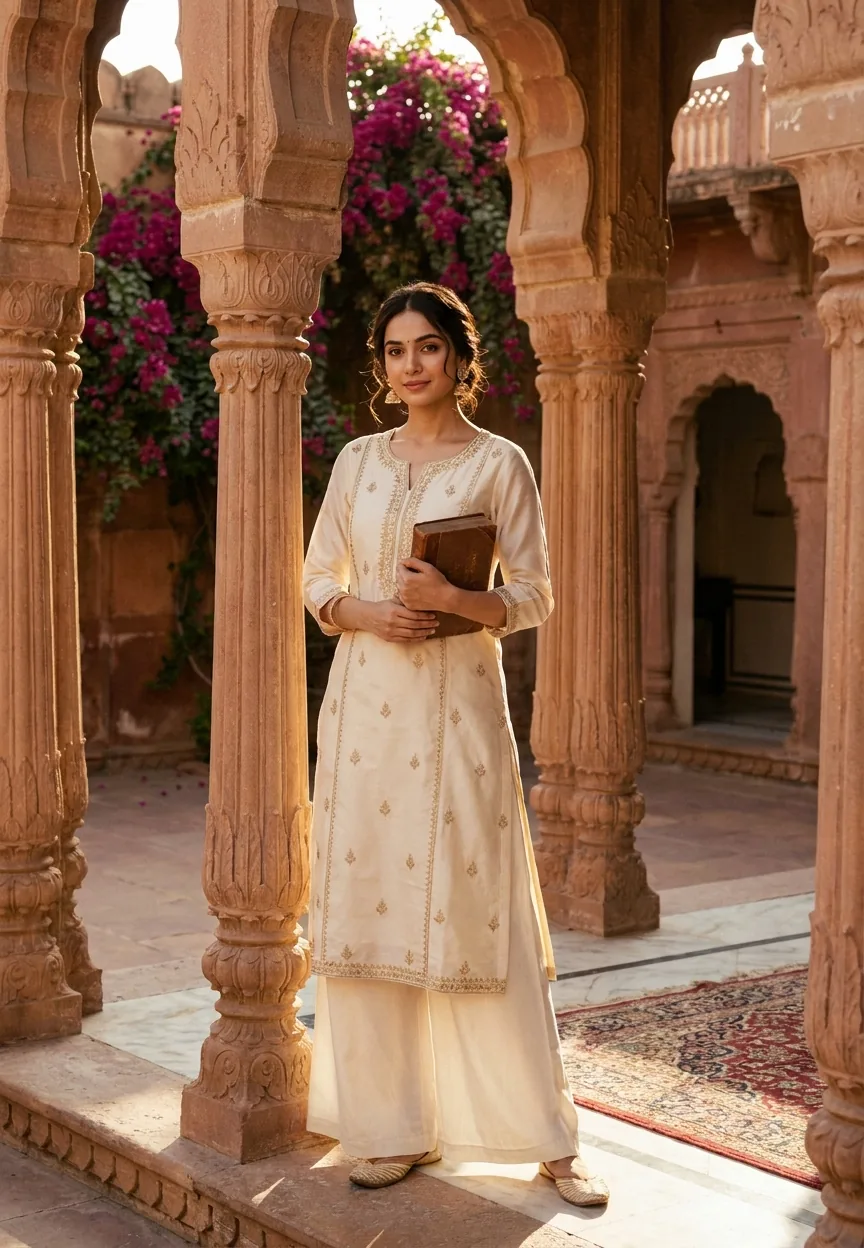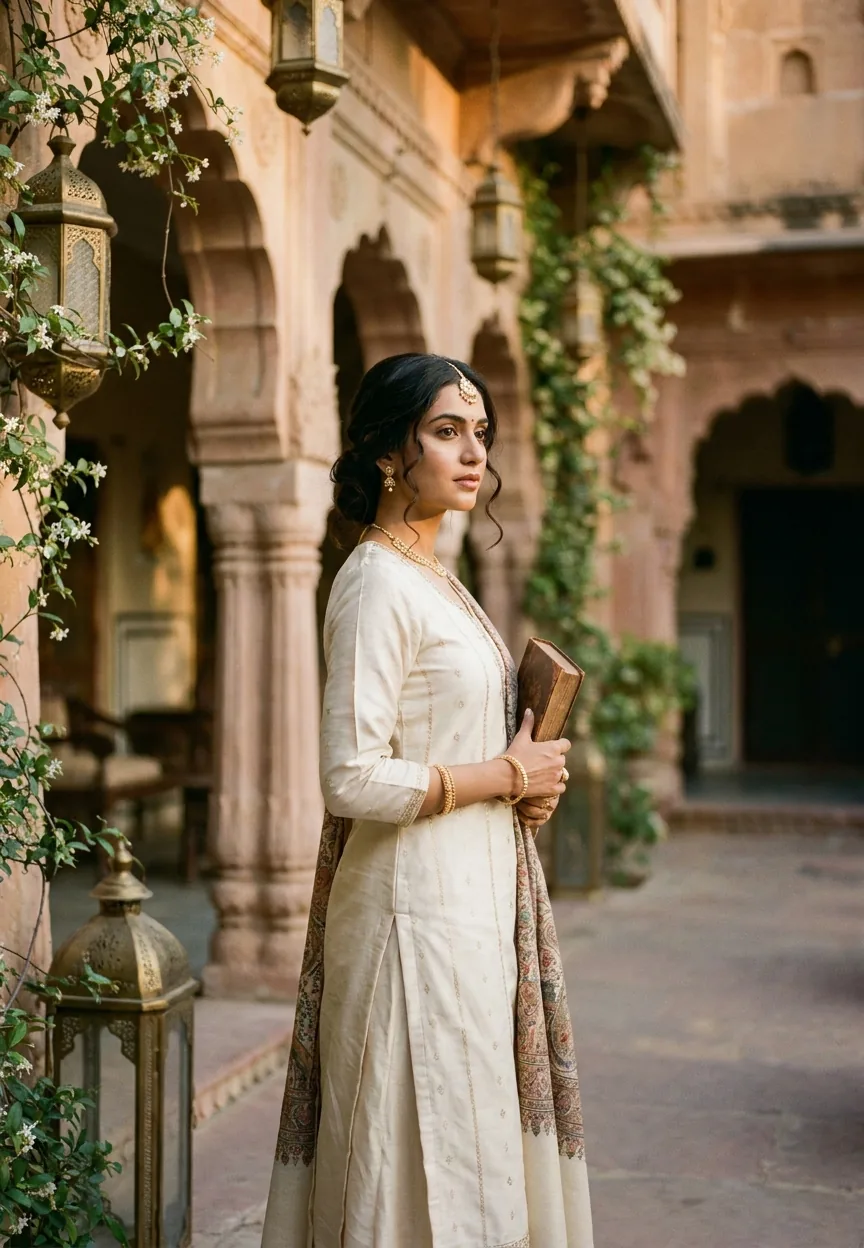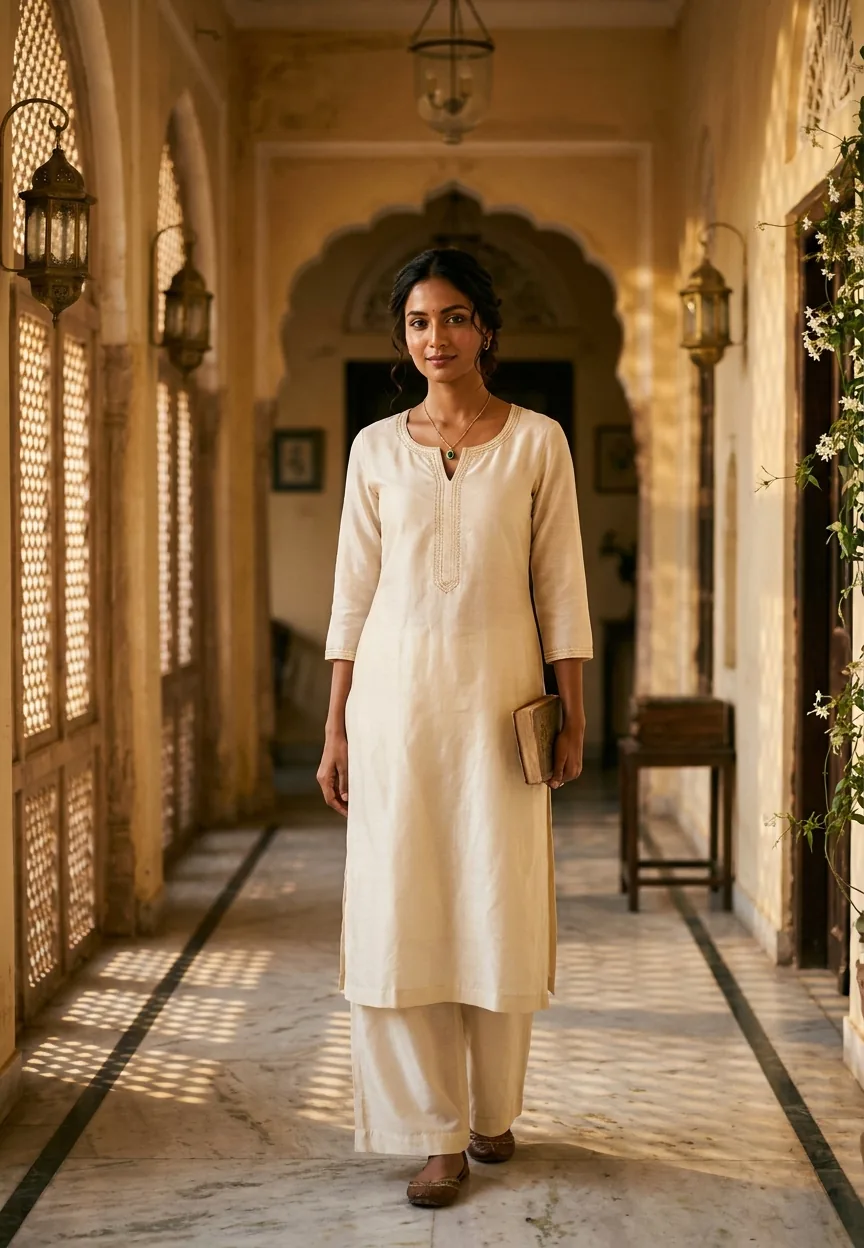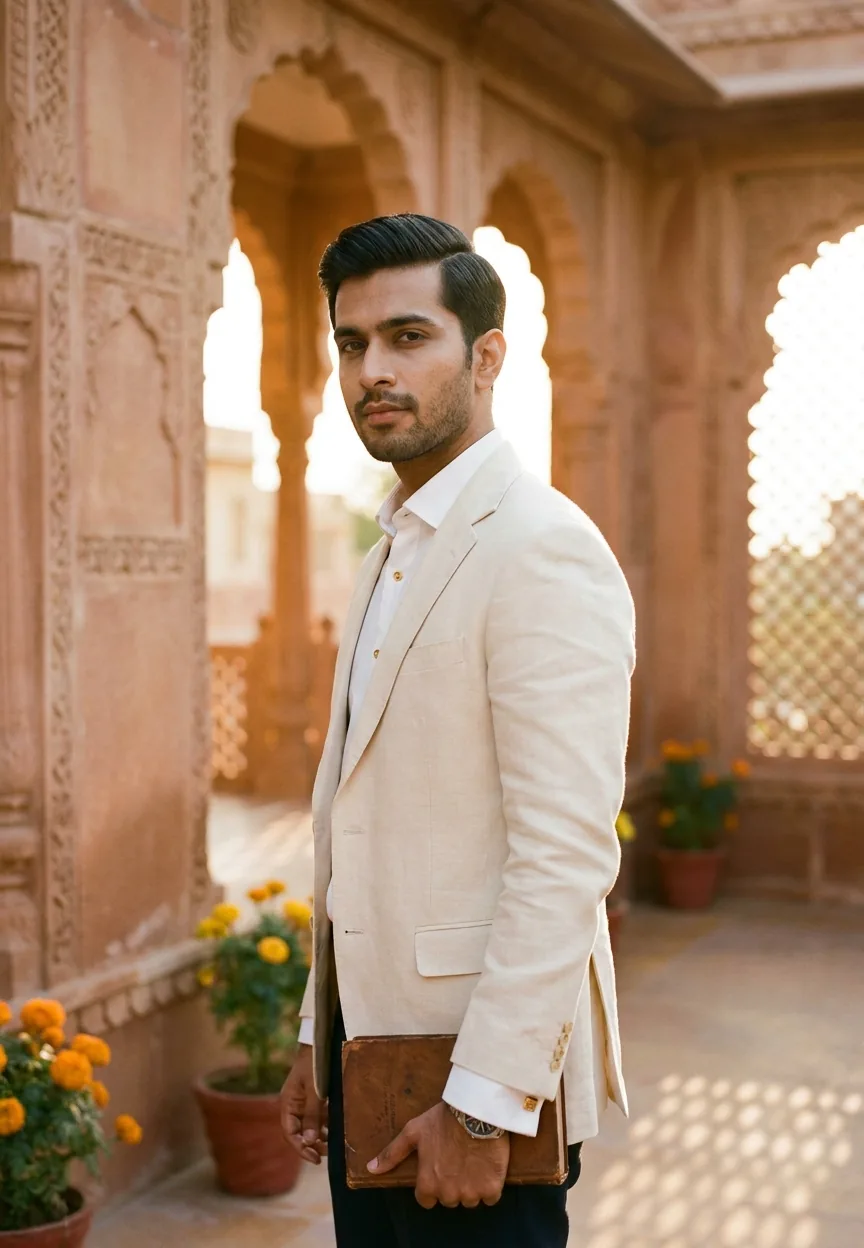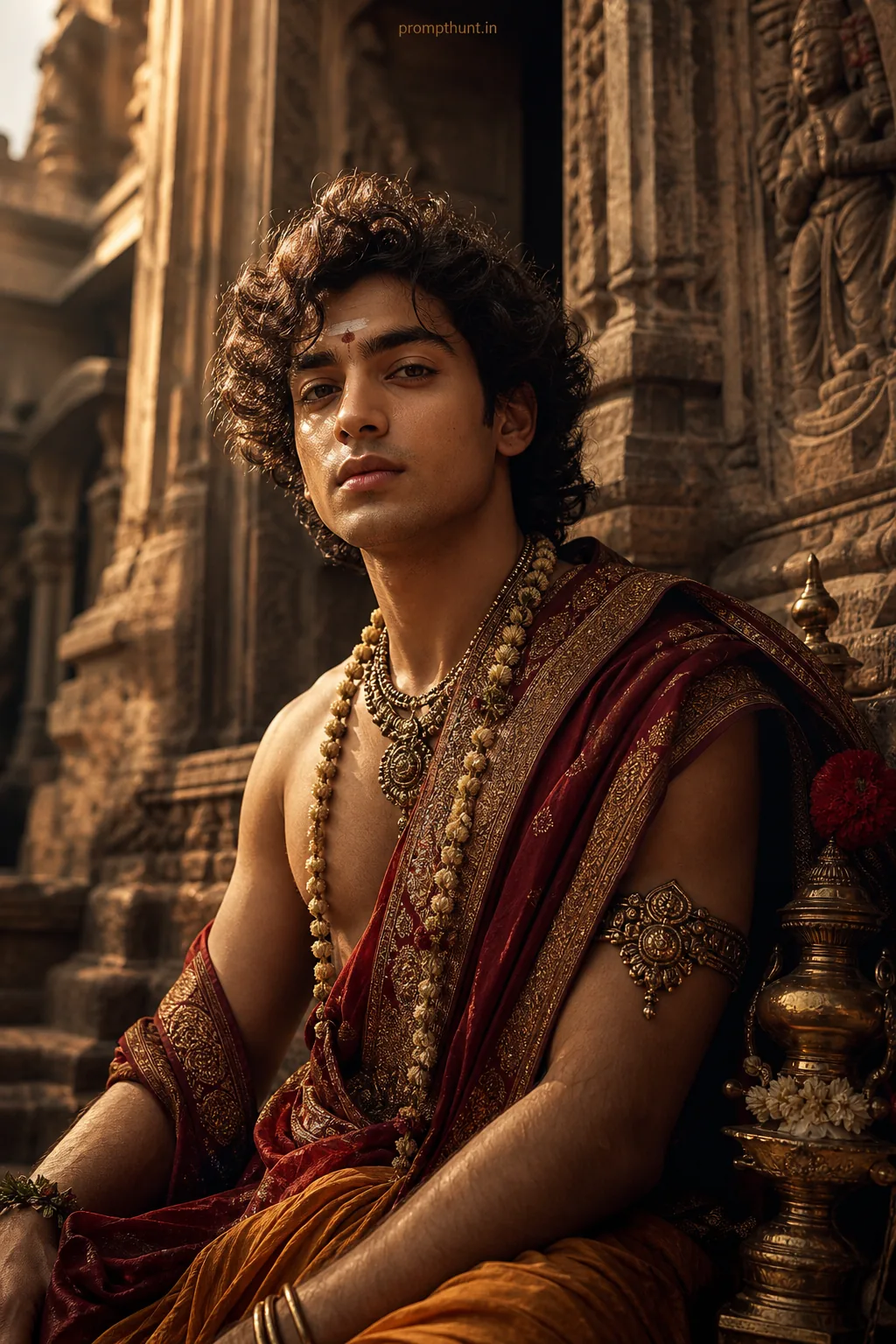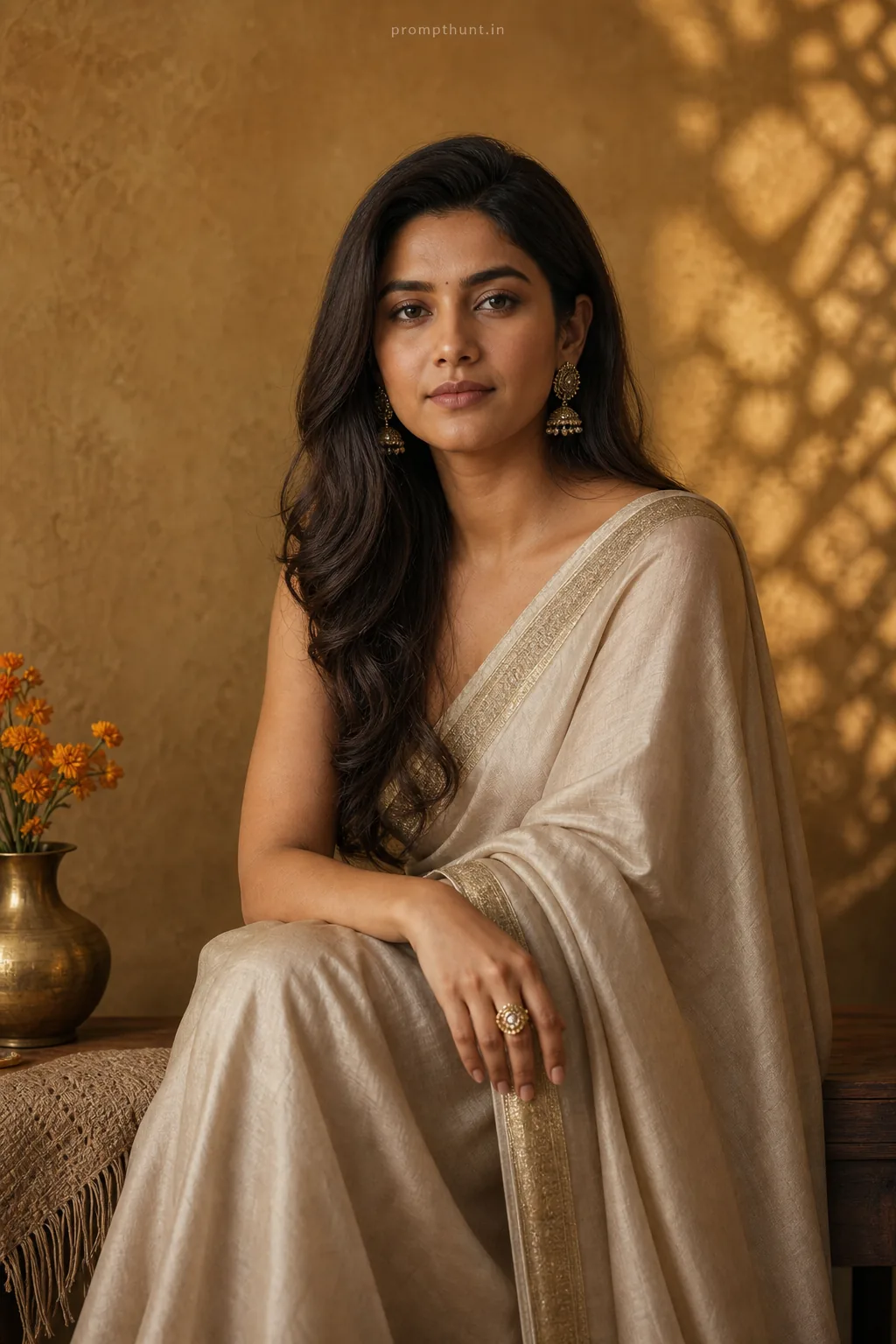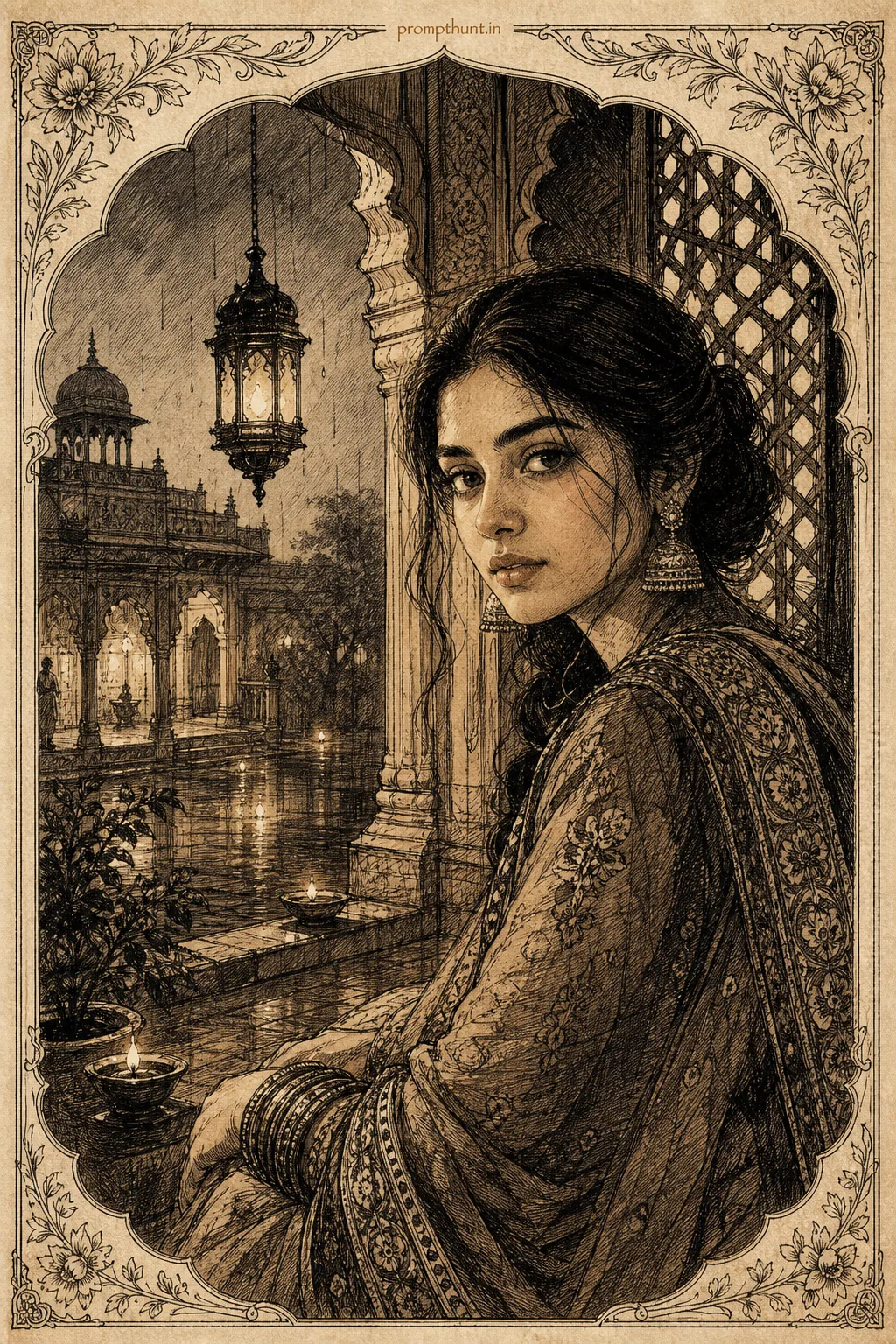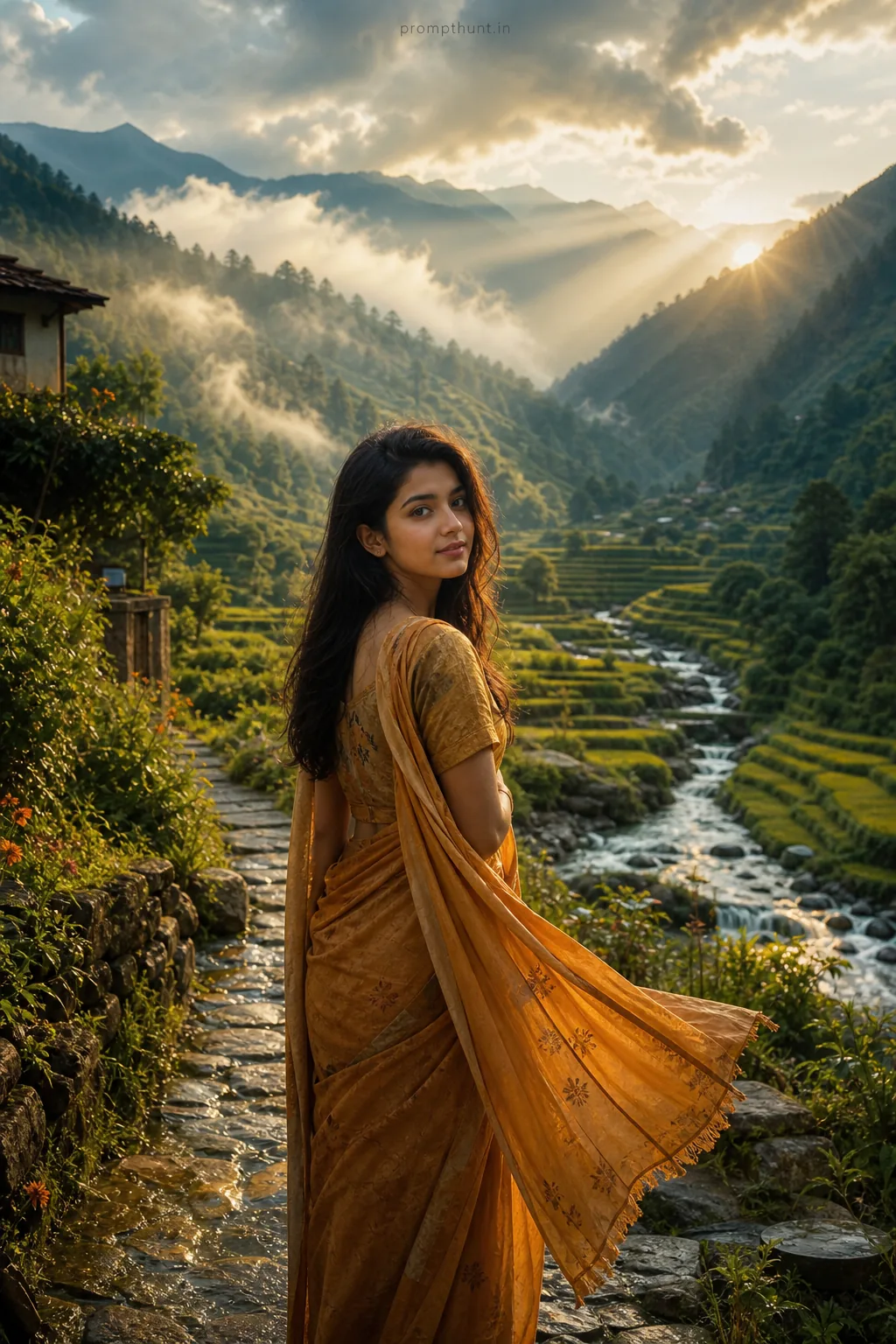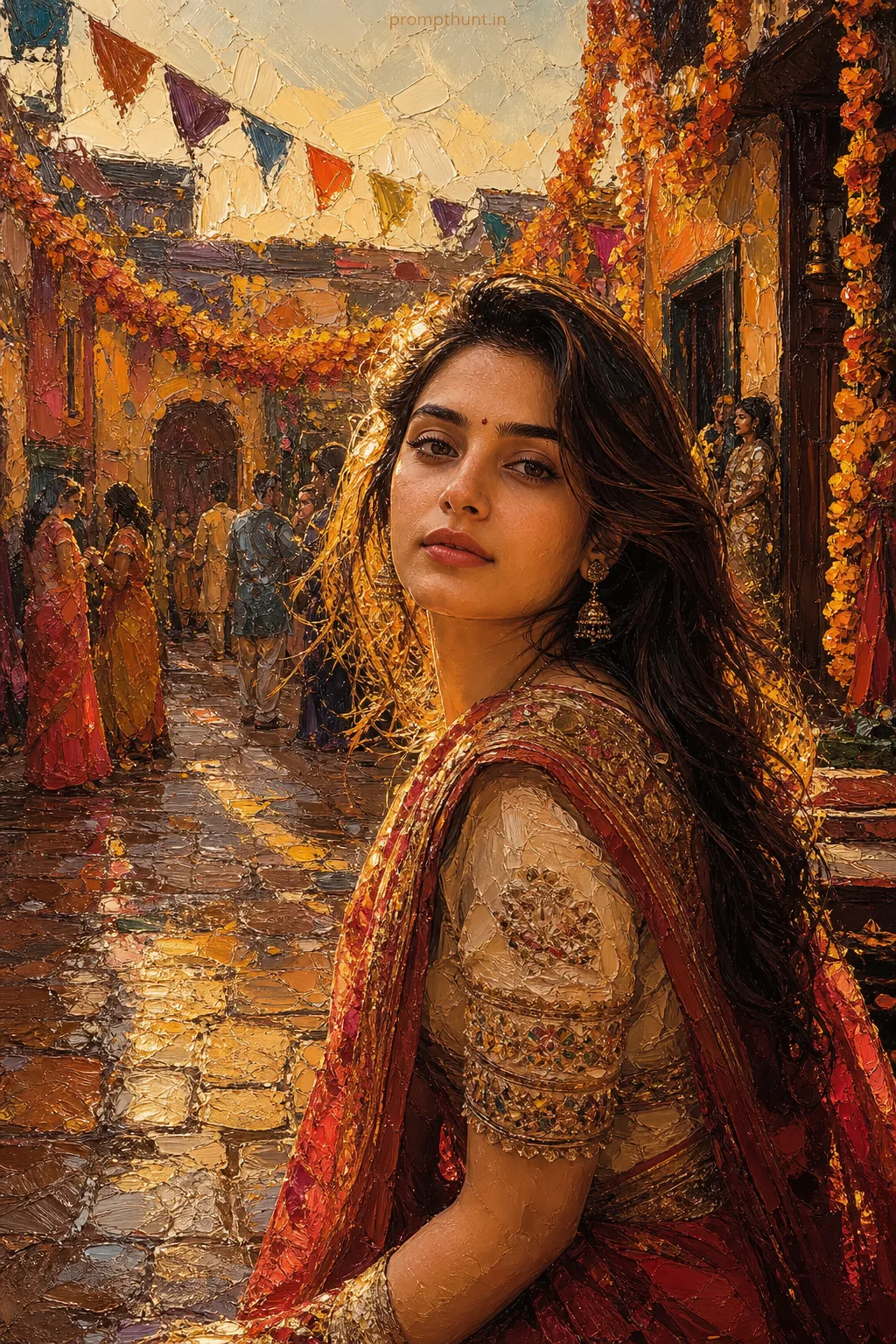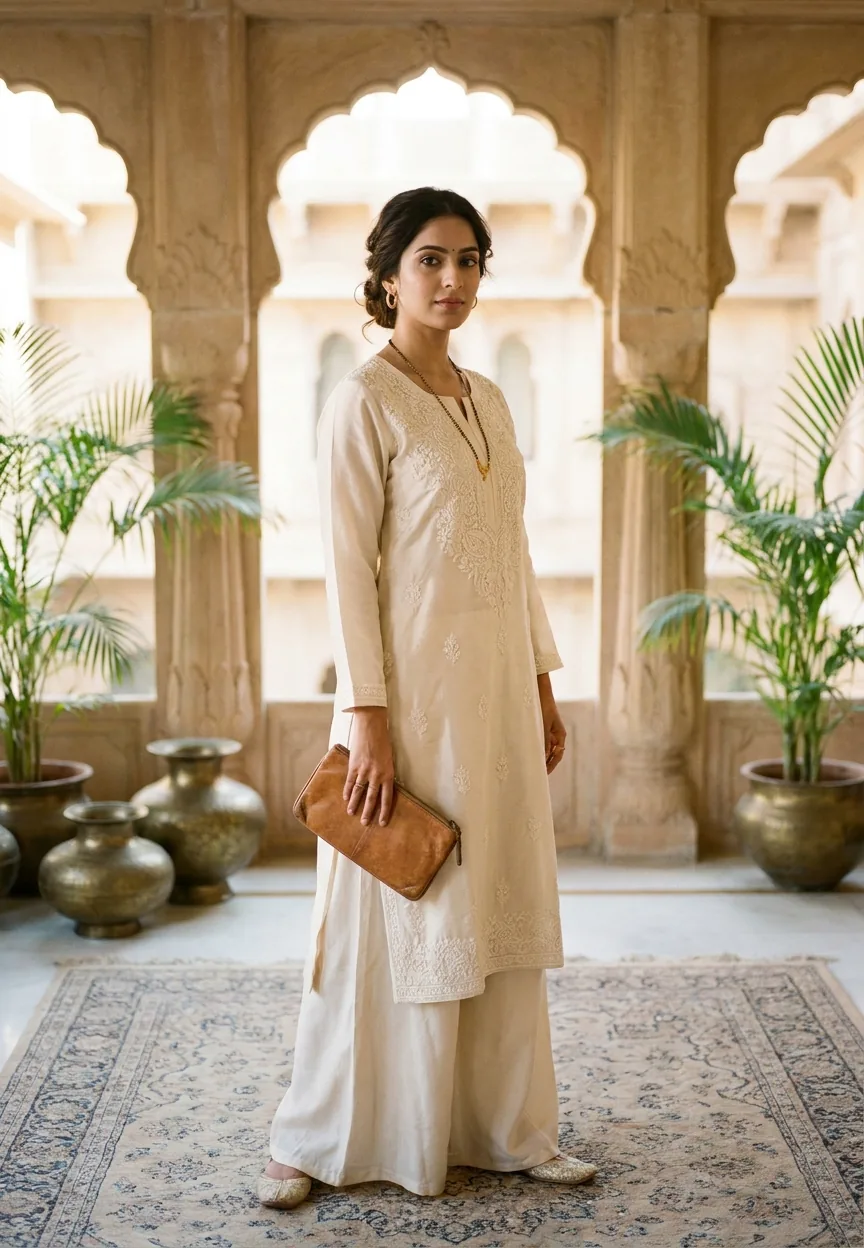
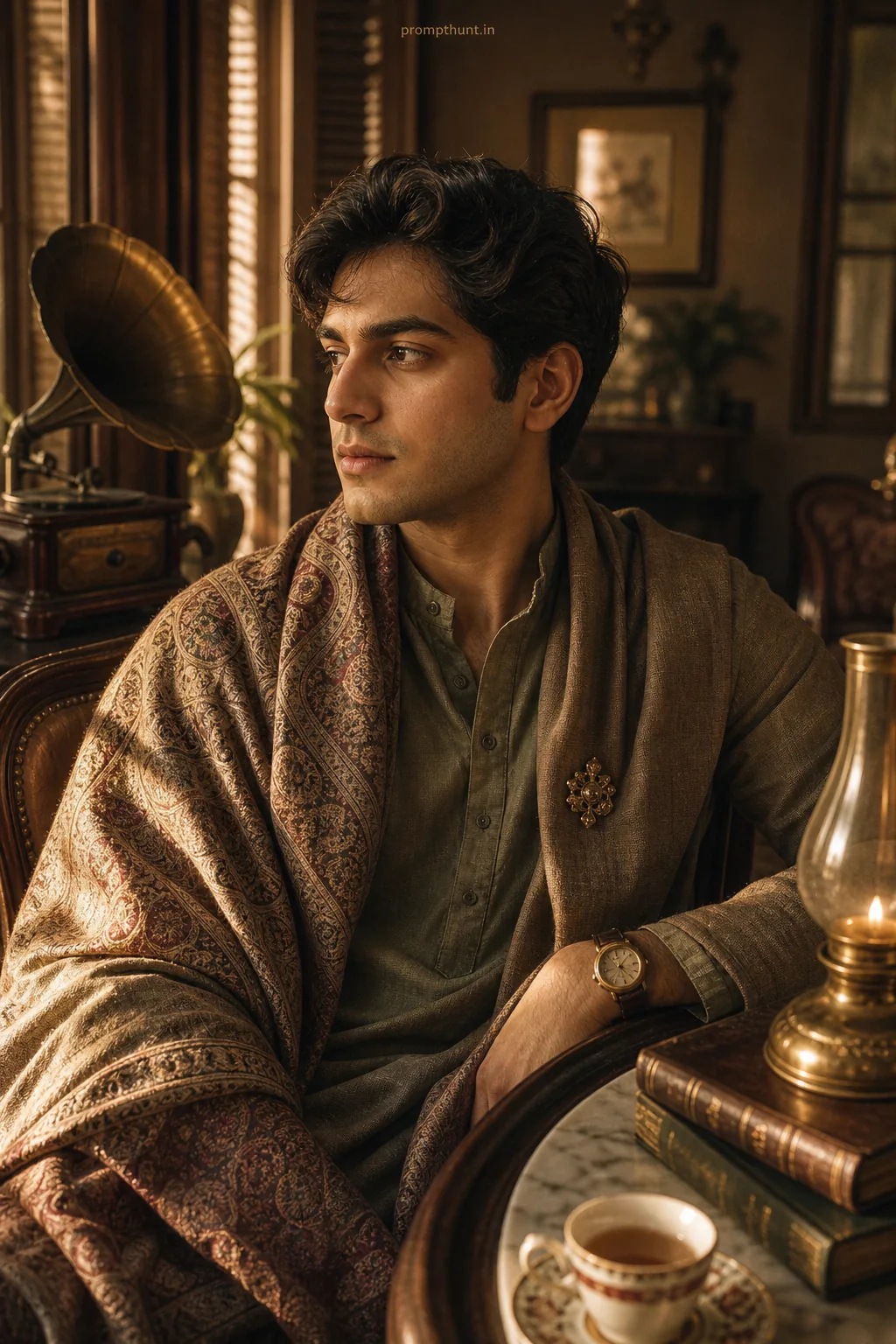
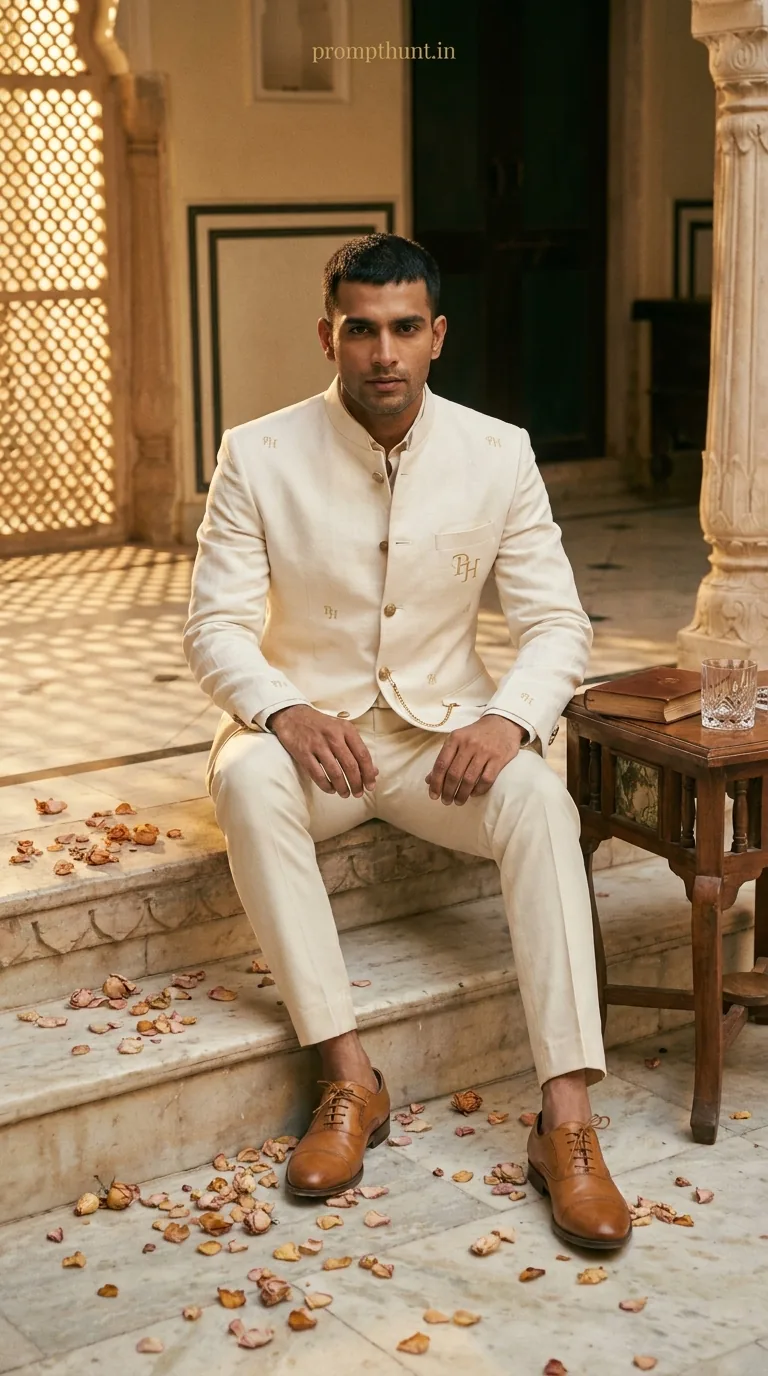
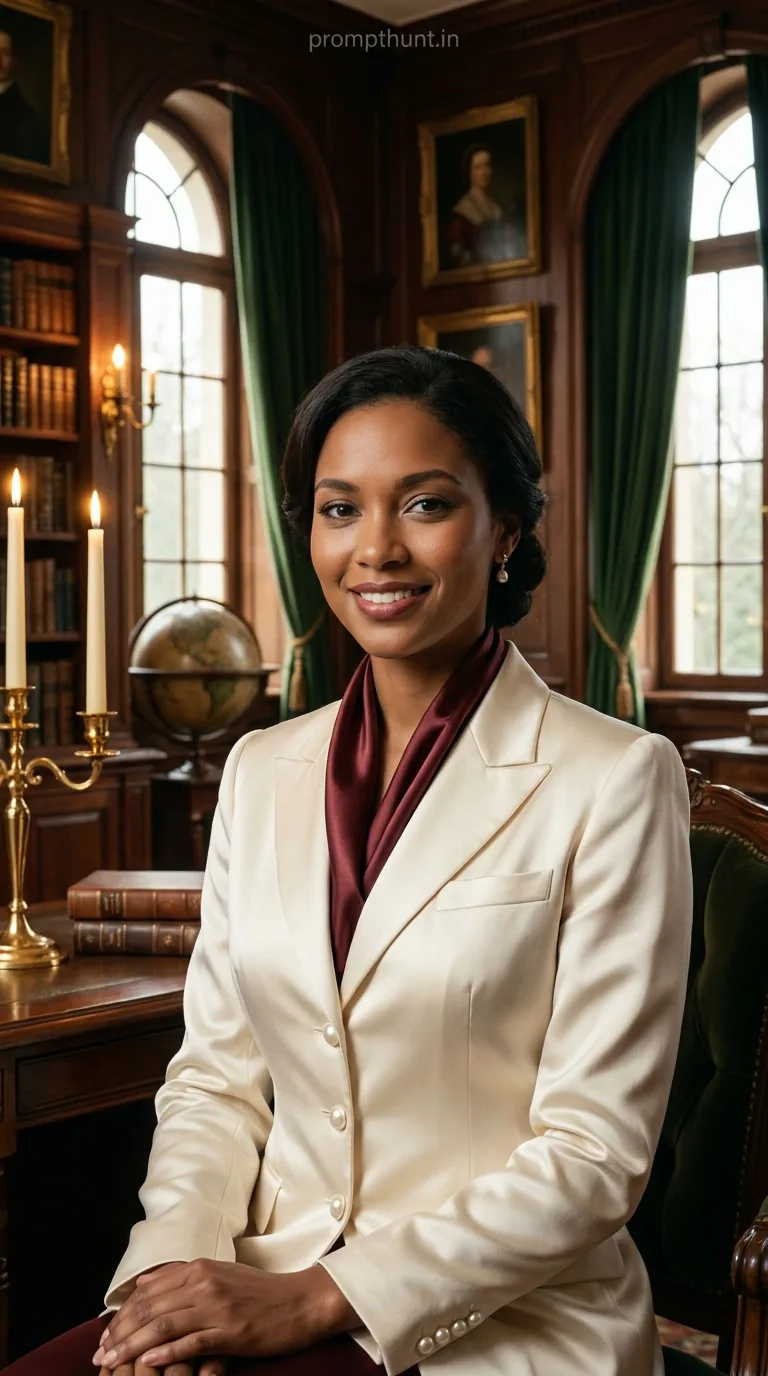
The Old Money Aesthetic prompt for Gemini AI generates editorial-quality portraits of elegantly dressed Indian women in heritage settings — think Rajasthani havelis, muted ivory palettes, and quietly confident expressions. Paste the prompt into Gemini, use a clear face photo as reference, and you get a Vogue India-worthy image in under 60 seconds. No stylist. No booking fee. No haveli required.
There's a certain kind of wealth that doesn't announce itself. It doesn't wear logos. It doesn't shout. It just stands in a marble foyer wearing cream silk, holds a tan leather clutch, and makes you feel slightly underdressed from three rooms away. That's the Old Money Aesthetic — and right now, it's absolutely taking over AI photo editing in India. The Old Money Aesthetic prompt for Gemini is one of the most-searched styles on PromptHunt this month, and honestly, fair enough. It looks extraordinary.
Copy the prompt below into Gemini, attach a clear portrait photo, and you'll get a cinematic editorial image in the Old Money Aesthetic — heritage setting, muted luxury palette, Vogue India vibes — in under a minute.
What the Old Money Aesthetic Actually Is (And What It Isn't)
Old money isn't about being rich. It's about looking like wealth was never something you had to think about.
The aesthetic pulls from European aristocracy, quiet luxury fashion movements, and — in the Indian context — the refined sensibility of royal families who wore handloom silk to breakfast and thought embellishment was vulgar. It's all restraint. Muted tones. Heritage architecture. Understated jewellery. The kind of wardrobe where everything fits perfectly and nothing has a visible brand name.
Think less Bollywood red carpet, more Maharani on a slow Tuesday morning.
In AI photo editing terms, the Old Money Aesthetic means: warm ivory and champagne palettes, grand interiors with architectural detail, medium format film camera texture, soft bokeh, and an expression that suggests the subject has genuinely never had to ask for the bill.
It is not maximalist. It is not festival fashion. And it is definitely not a ring light selfie with a gold filter dragged over the top.
The Prompt — Use It Exactly Like This
This is the prompt. Copy it whole. Do not paraphrase it. Every word is doing work.
A strikingly elegant Indian woman in her late 20s standing in the grand marble foyer of a heritage Rajasthani haveli, soft golden hour light streaming through ornate arched windows, wearing a tailored cream silk kurta with subtle ivory embroidery and wide-leg palazzo pants, minimal gold jewelry — a thin mangalsutra and small hoop earrings, hair loosely pinned in a sophisticated low chignon with a few face-framing strands, holding a vintage tan leather clutch, expression calm and quietly confident, warm muted color palette of ivory, champagne, caramel and antique gold tones, Persian-style rug beneath her feet, tall potted palms and vintage brass urns in background, shot on medium format film camera aesthetic, soft bokeh background, editorial Vogue India fashion photography style, 9:13 vertical portrait orientation, ultra-realistic cinematic quality, rich textures, timeless luxury mood
That's your prompt. It's specific on purpose. Vague prompts get vague results. Specific prompts get images that look like they cost someone a day rate.
How to Use It — Three Steps, No Surprises
Step one: Open Gemini. You want Gemini Advanced for the best image output quality. The free tier works, but Advanced handles texture and lighting detail significantly better.
Step two: Upload your reference photo. Use a clear, well-lit portrait — face forward, neutral background if possible. Gemini uses your face as the anchor and rebuilds everything else around it. If your reference photo is blurry or poorly lit, the output will be too. Garbage in, garbage out, even in a haveli.
Step three: Paste the prompt exactly as written, then send. Generation takes between 20 and 45 seconds. If the first result doesn't quite land — lighting feels off, the setting looks more hotel lobby than heritage — type "regenerate with warmer golden hour lighting and more ornate architectural detail" and run it again. Gemini responds well to targeted follow-up instructions.
That's genuinely it. Three steps to looking like old money. Which, ironically, is very old money energy — no fuss, no drama, just results.
Tips for Getting the Best Results
Nine times out of ten, the difference between a good result and a great one comes down to four things.
First, the reference photo quality. Good lighting, face clearly visible, minimal background clutter. A photo taken near a window in natural light will outperform a dark indoor shot every single time.
Second, keep the palette words in the prompt. "Ivory, champagne, caramel and antique gold" are specific instructions. If you strip them out to simplify the prompt, Gemini will choose its own palette and it will be wrong. The muted warmth is the whole point.
Third, ask for 9:13 vertical. Portrait orientation matters for this style — it gives the architectural setting room to breathe above and below the subject. Square crops make havelis look like passport photos.
Fourth, if Gemini drifts toward more saturated or modern-looking results, add "film grain, desaturated highlights, analog warmth" to your follow-up. That usually pulls it back into the right territory. Think of it as recalibrating the mood. (You're basically a digital art director now. Congratulations on the promotion.)
One more rule of thumb: do not add filters in post. The whole point of this aesthetic is that it looks unmanipulated. An Instagram warm filter slapped over the top is the AI photo equivalent of wearing a fake Rolex to a real polo match.
Why This Style Is Trending So Hard in India Right Now
The Old Money Aesthetic has been circulating globally for a couple of years — it rode in on the quiet luxury fashion wave, got a boost from shows like Succession, and never really left. But in India, it's found a particularly enthusiastic home in 2024 and 2025.
Part of it is cultural timing. Indian fashion has been moving steadily toward refined minimalism — less embellishment, more quality, heritage craftsmanship over mass production. The handloom revival, the return of natural fabrics, the mainstream embrace of traditional silhouettes in contemporary cuts. The Old Money Aesthetic fits neatly into all of that.
Part of it is the heritage setting angle. India has no shortage of architectural grandeur. Rajasthani havelis, colonial-era bungalows, Mughal-influenced courtyards — these settings exist, they photograph beautifully, and most people can't actually access them for a photoshoot. AI closes that gap entirely. The haveli is now available to anyone with a phone and a Gemini account.
And part of it, honestly, is that it just looks stunning. The warm palette works beautifully with South Asian skin tones. The setting feels culturally specific without being costume-y. The result reads as aspirational but also deeply rooted. It's not imitating a European aesthetic — it's finding the Indian version of it, which has been here all along.
My Honest Take — Including When Not to Use This
The Old Money Aesthetic prompt is genuinely excellent at what it does. The specificity of the prompt — the mangalsutra detail, the palazzo pants, the Persian rug — is what separates it from generic "luxury aesthetic" prompts that produce something vaguely beige and forgettable. This one has a clear visual identity and it delivers consistently.
That said, let me tell you when not to use it.
Don't use it if you want energy or movement. This style is defined by stillness. Calm confidence. If you're looking for something vibrant, celebratory, or dynamic — a mehndi look, a festival edit, anything that should feel joyful and kinetic — this prompt will flatten it. The Old Money Aesthetic rewards restraint, and some moments deserve the opposite of restraint.
Don't use it if your source photo has strong, saturated colours in the clothing or background. Gemini will struggle to reconcile a bright red kurta in the reference photo with the prompt's ivory and champagne palette. You'll get an odd compromise that satisfies neither. For this prompt, neutral or light-coloured clothing in the source photo gives dramatically better results.
And don't use it expecting it to flatter every face shape or styling the same way. The low chignon and face-framing strands look extraordinary on some face shapes and slightly severe on others. If the first result feels off, try adding "soft curled tendrils framing face, slightly relaxed chignon" to your follow-up. Gemini is adjustable — it just needs the instruction.
At the core, this is one of the stronger AI photo prompts circulating right now because it has genuine aesthetic coherence. It knows what it is. It's not trying to be everything. And in AI photo editing — as in old money itself — knowing exactly what you are and committing to it fully is most of the battle.
The Wrap-Up
The Old Money Aesthetic prompt for Gemini is specific, refined, and consistently produces results that look like they belong in a magazine. Use a good reference photo, paste the prompt whole, lean into the follow-up instructions if the first output needs adjustment, and resist the urge to slap a filter over the finished result. The muted warmth of an ivory-and-gold Rajasth