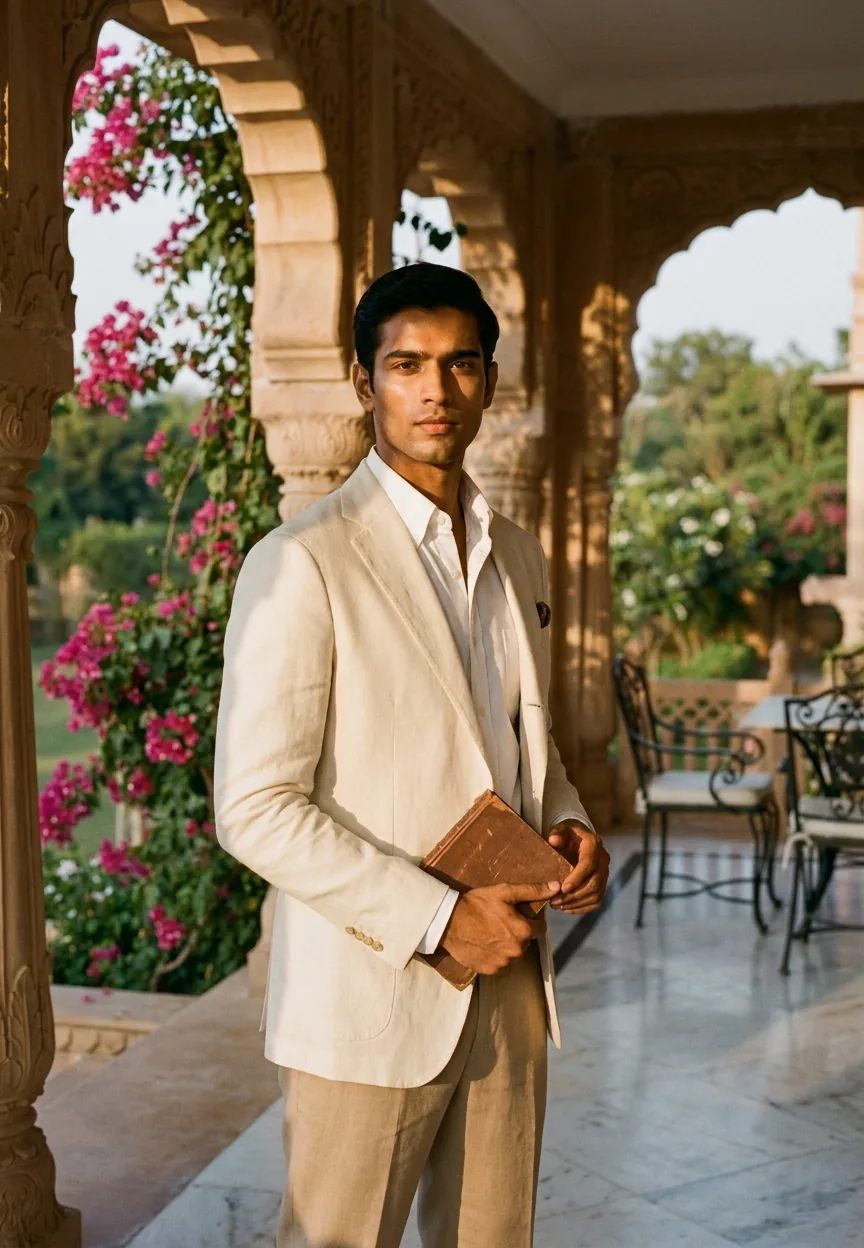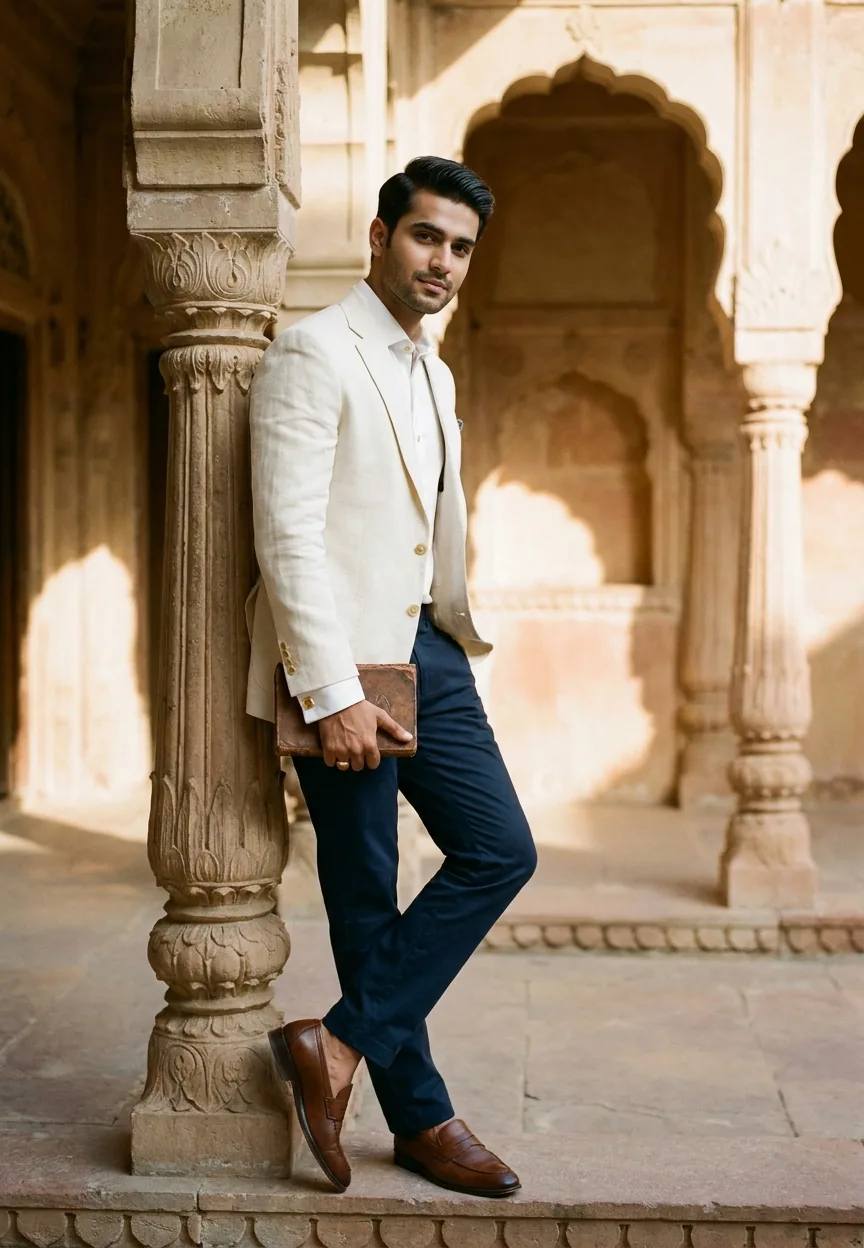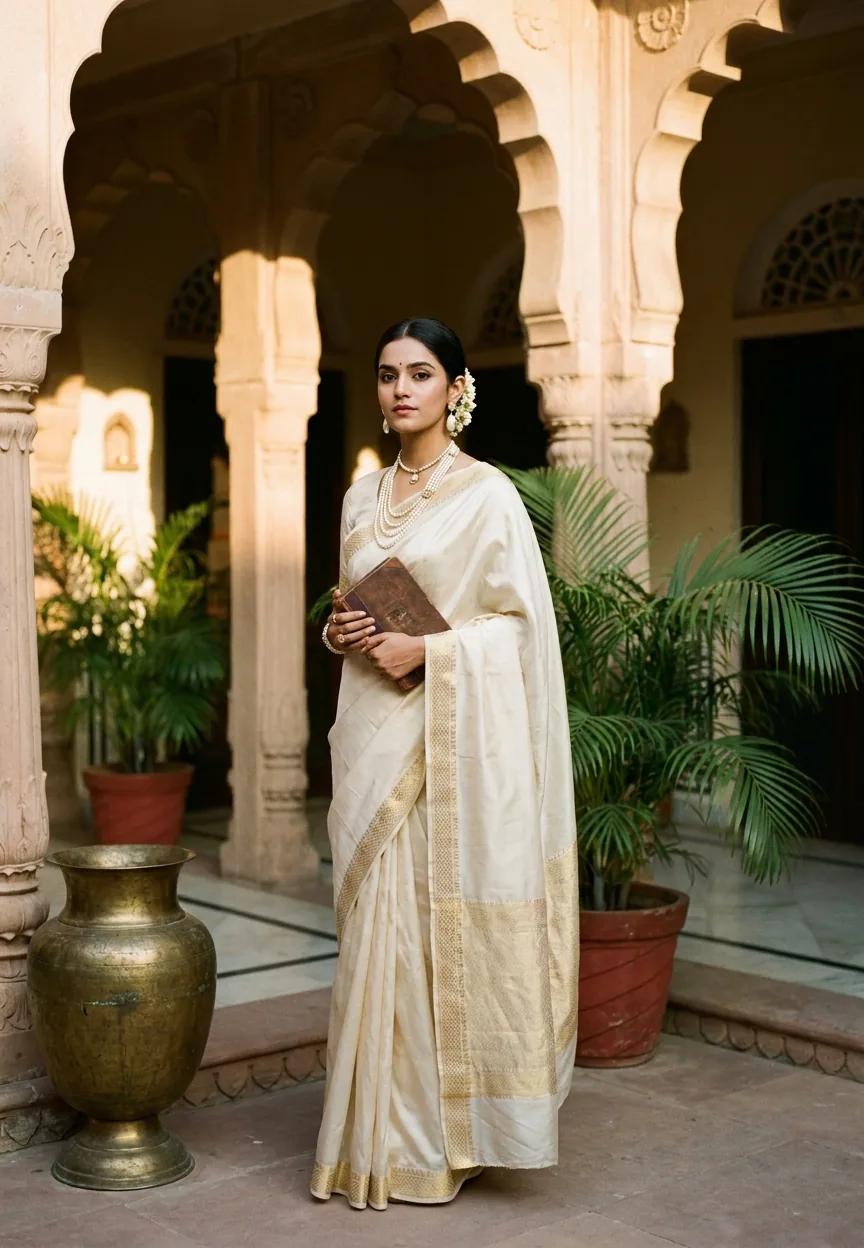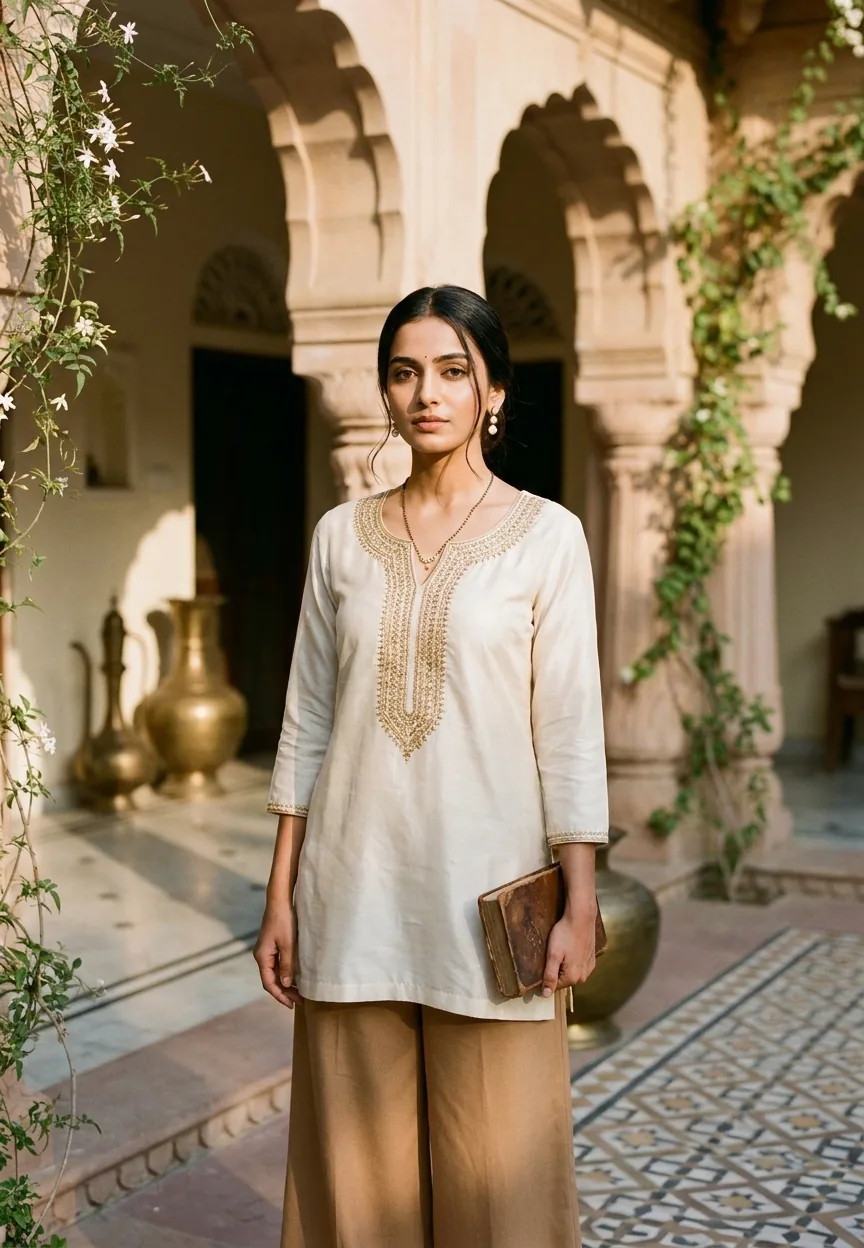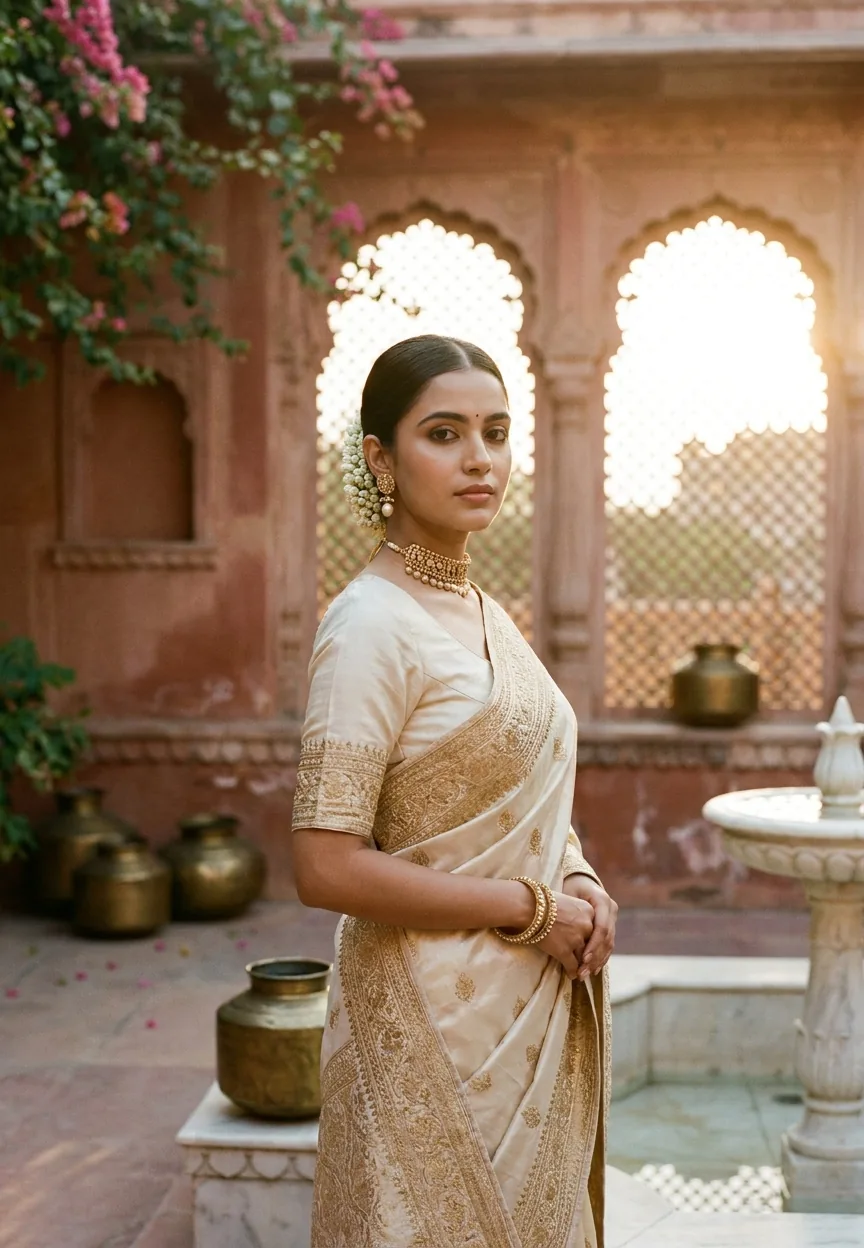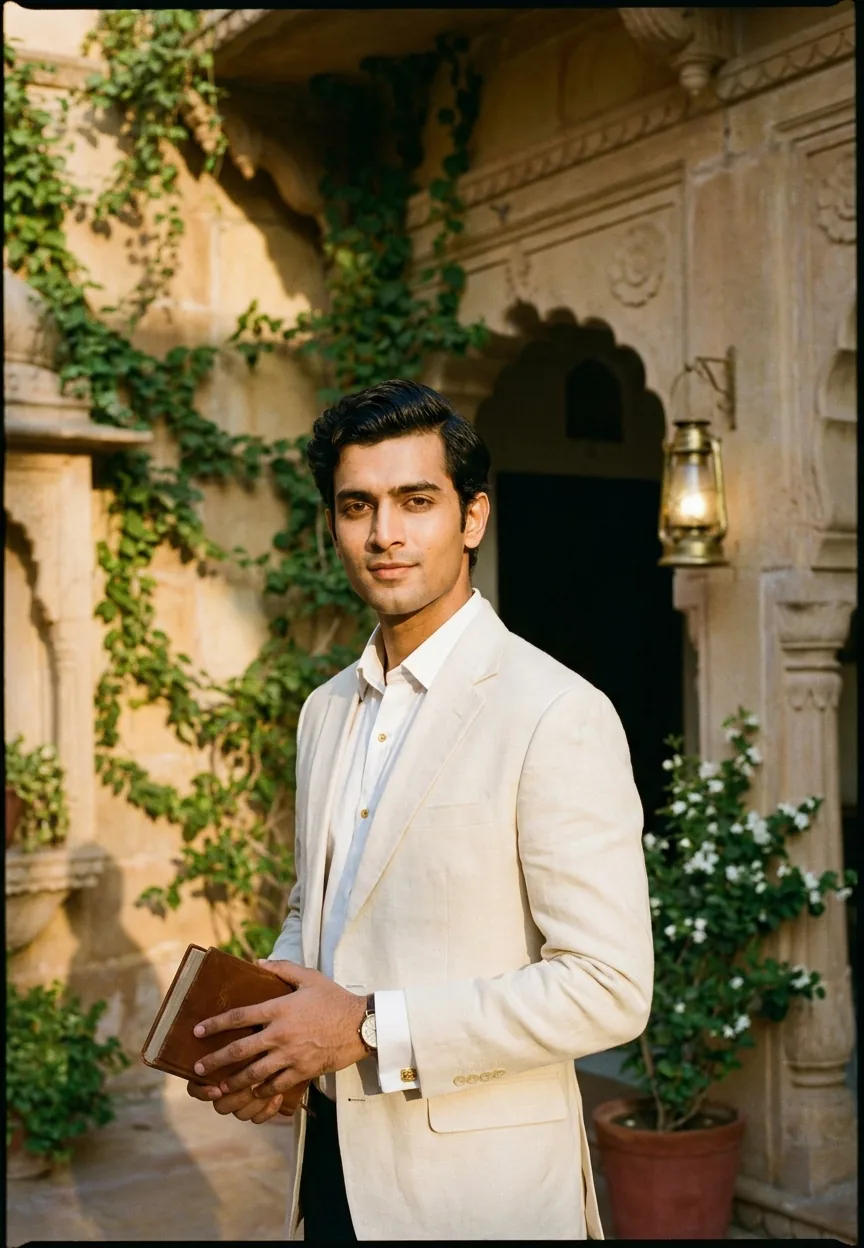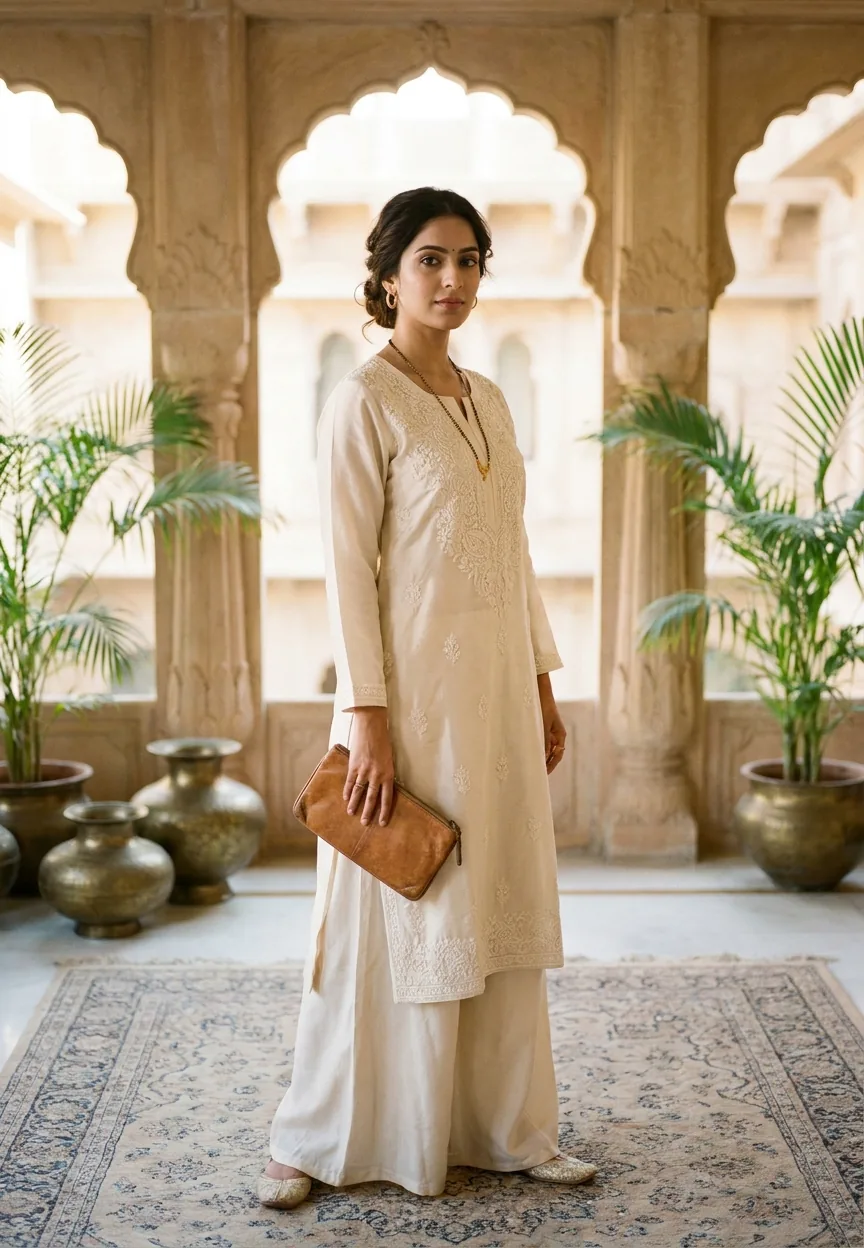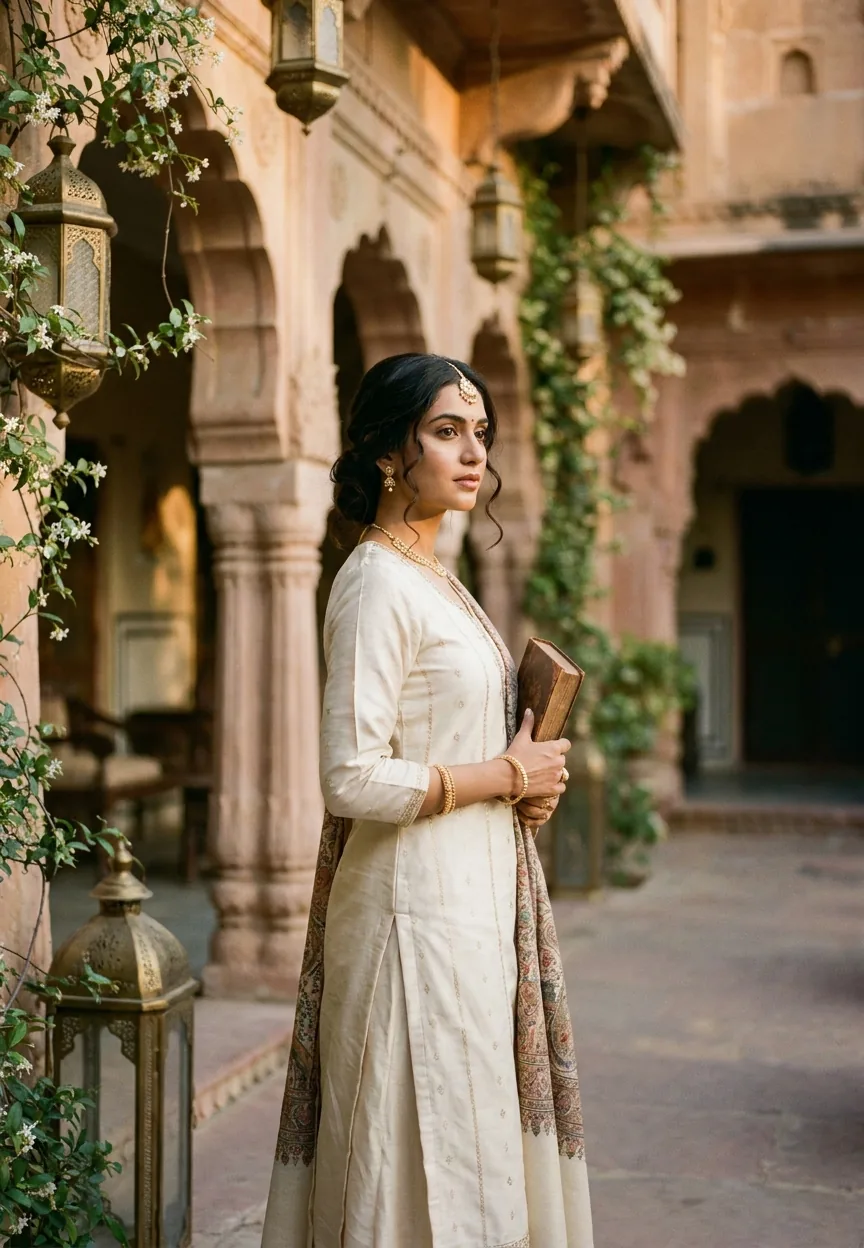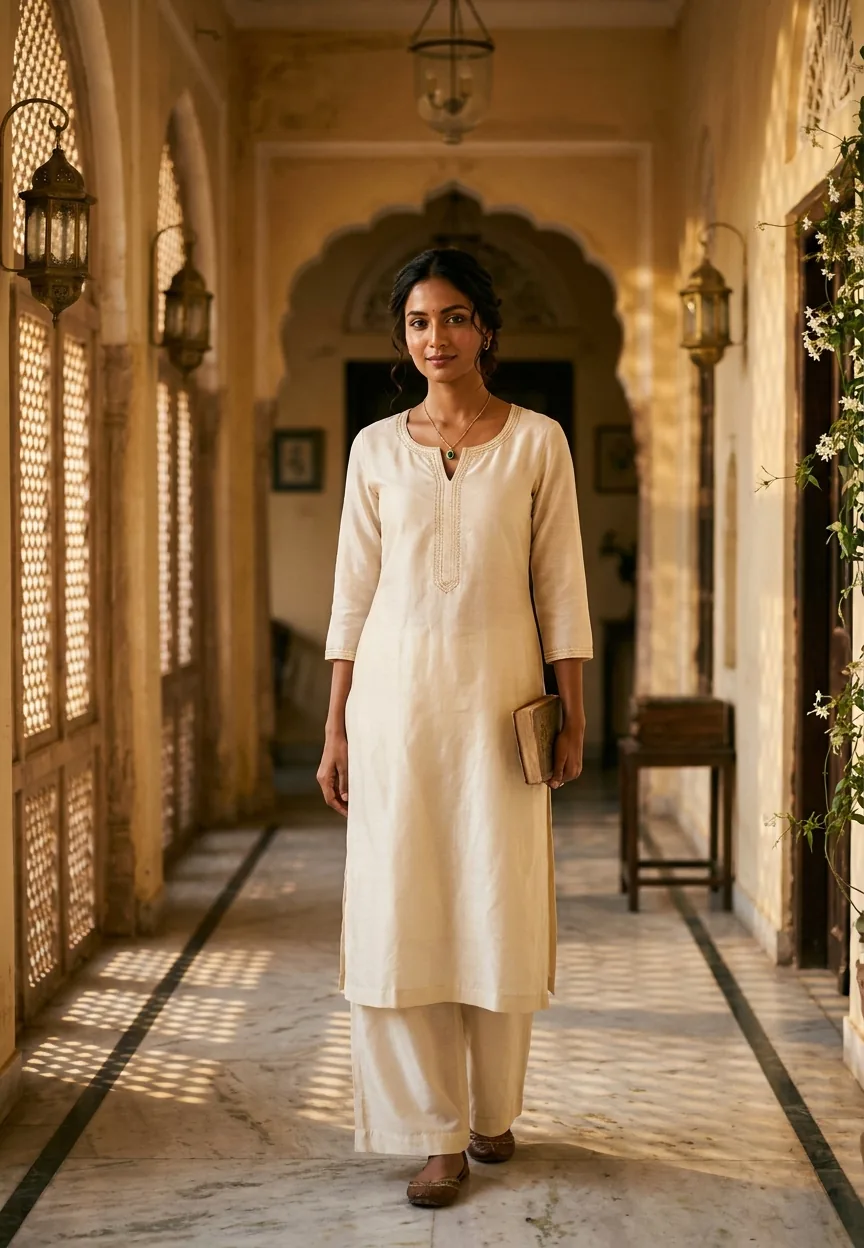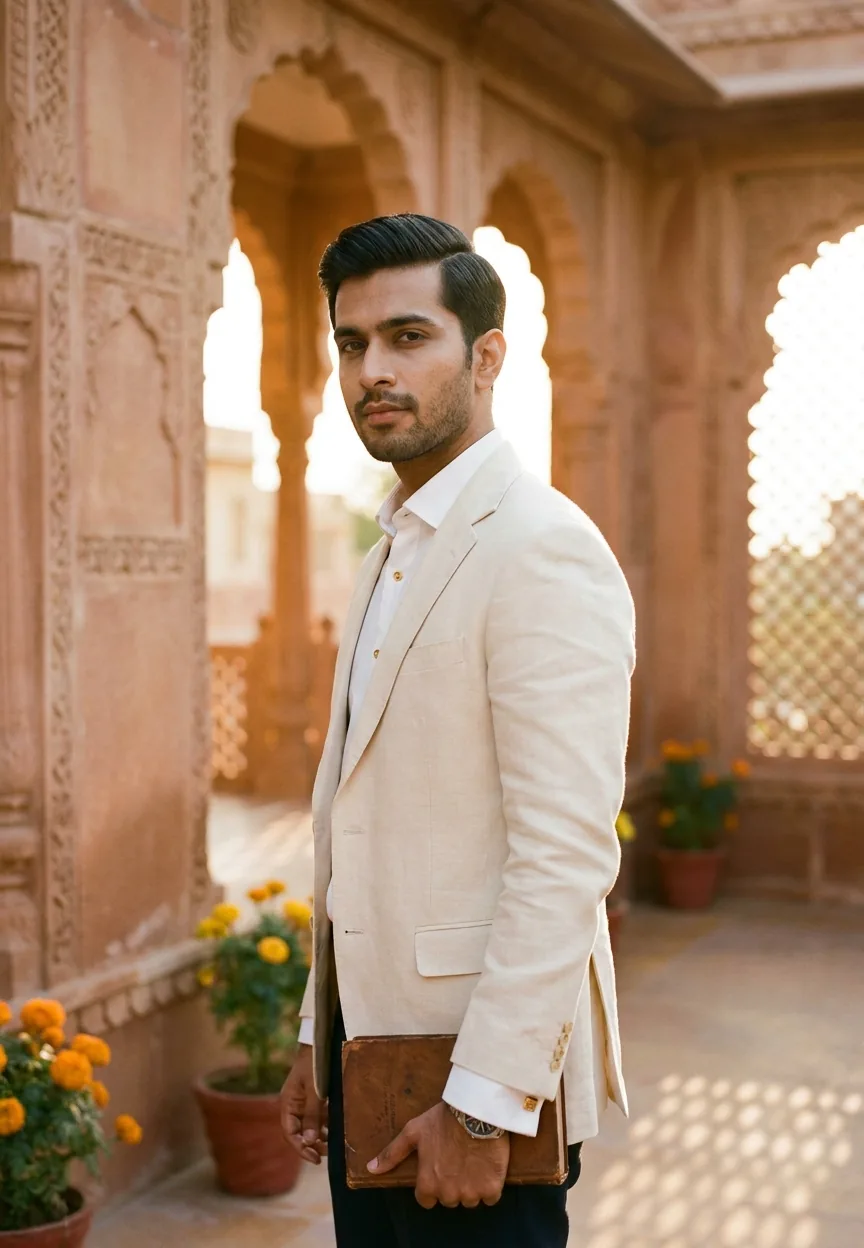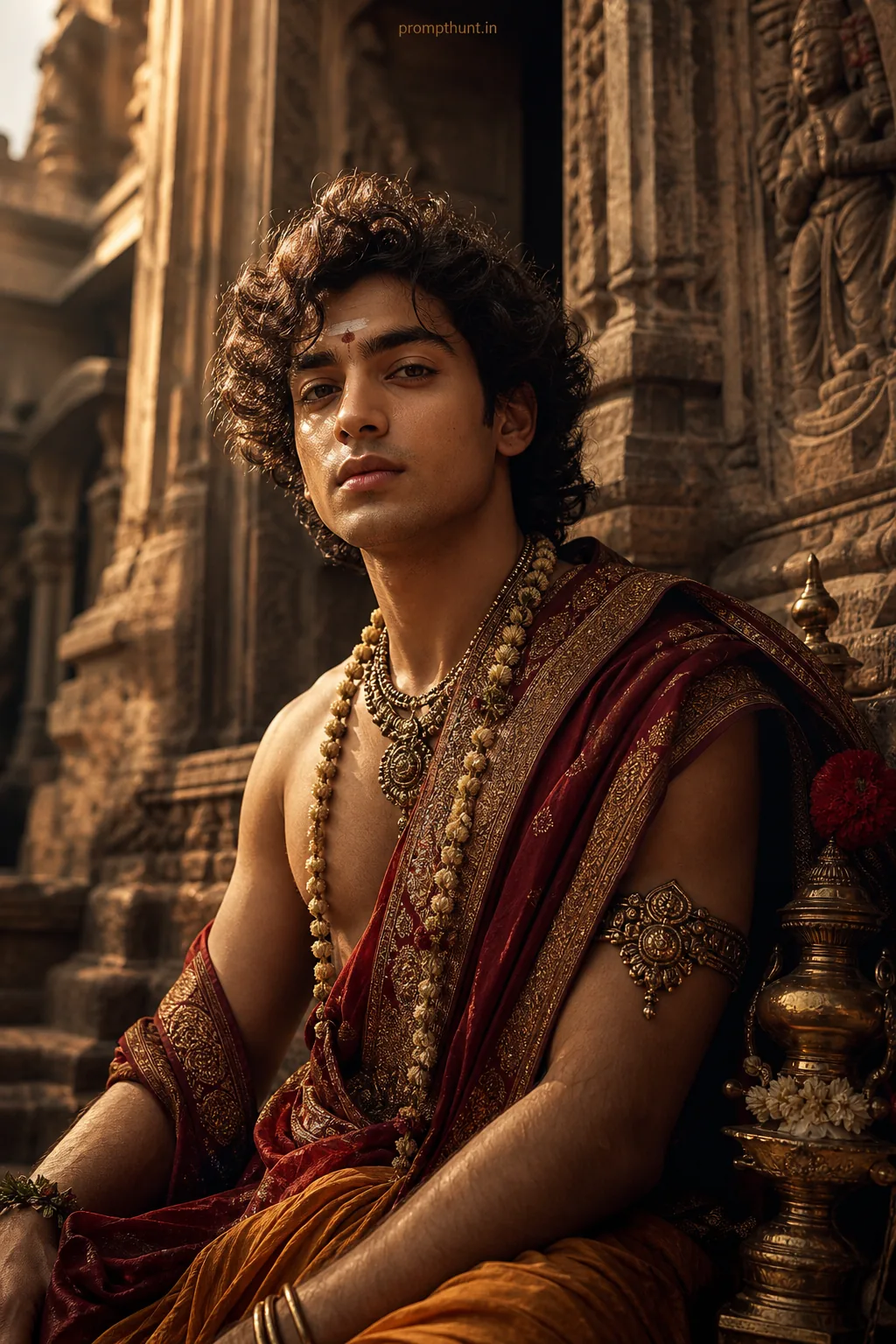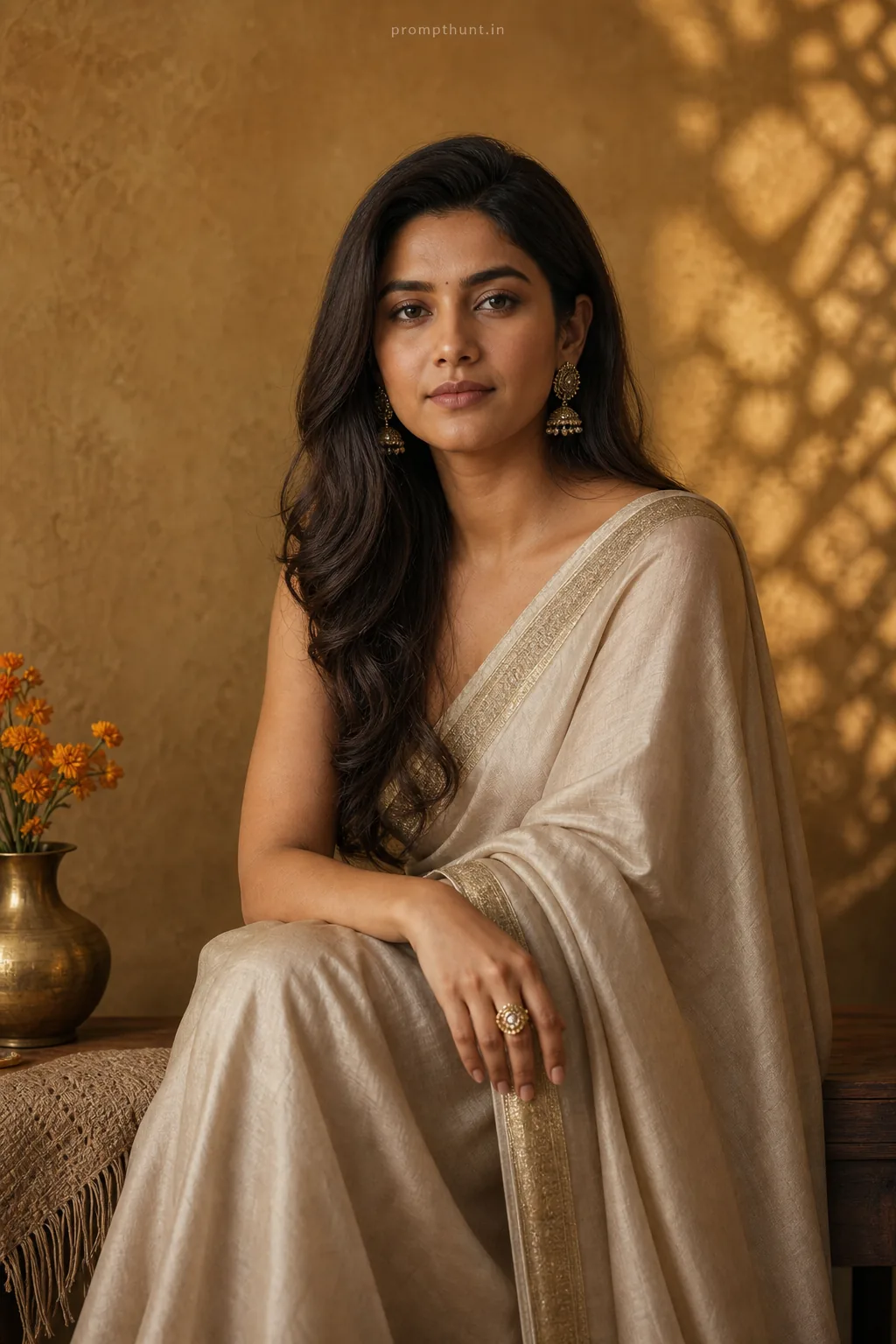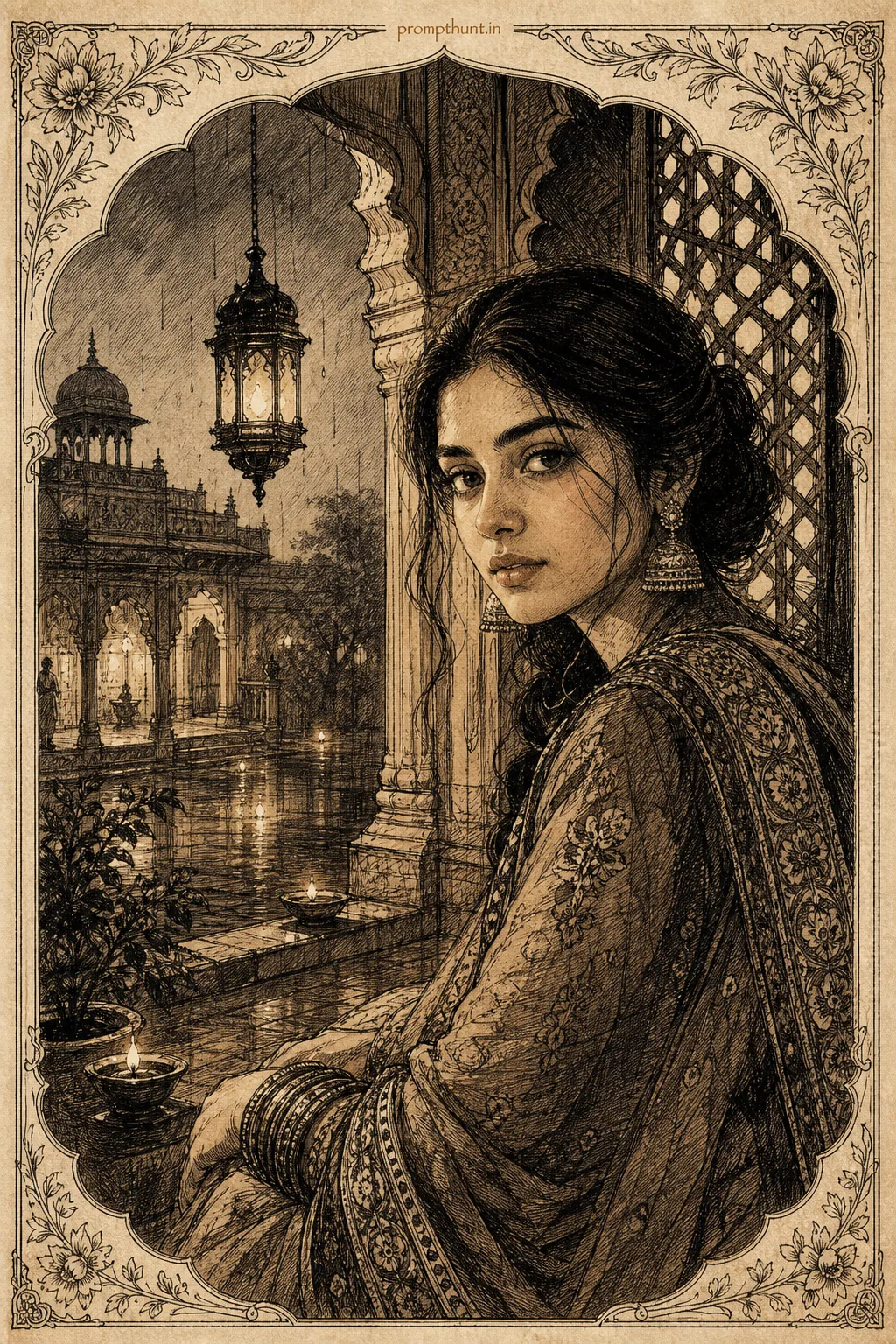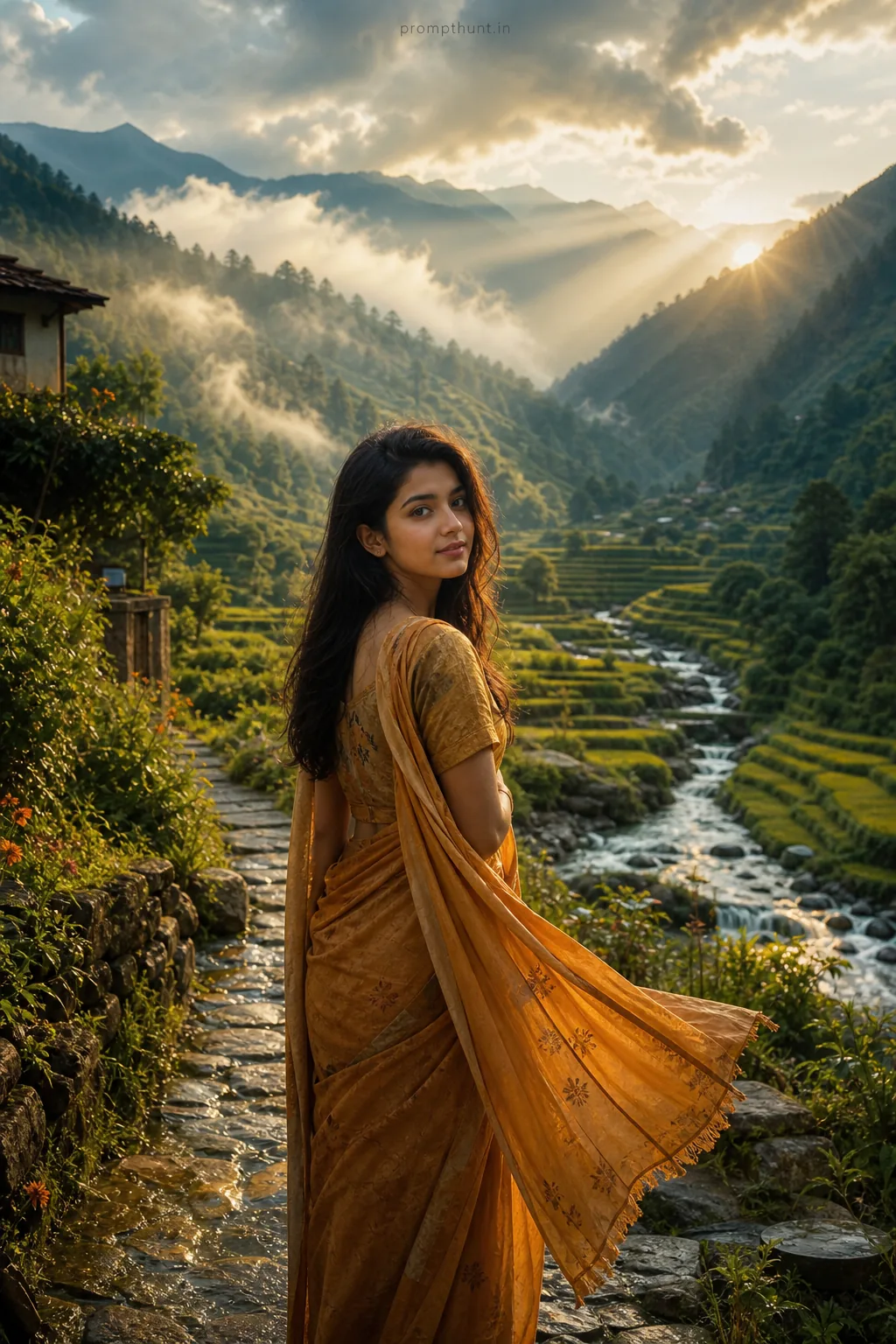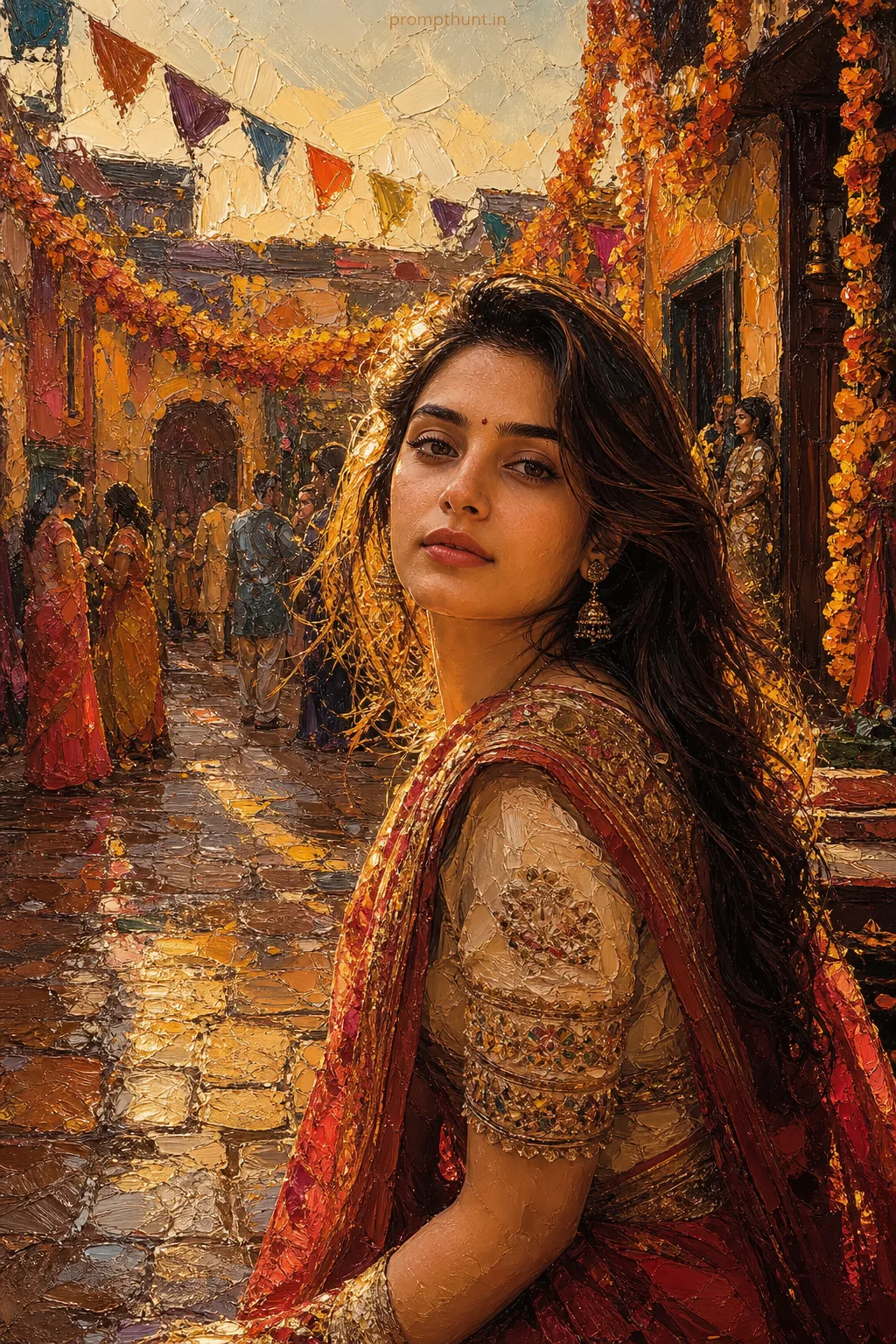


The Old Money Aesthetic prompt for Gemini AI generates ultra-realistic editorial portraits set in heritage Indian architecture — think Rajasthani havelis, golden hour light, silk kurtas, and 22-karat gold jewelry. Paste the prompt into Gemini, upload your photo, and the AI renders a quietly luxurious lifestyle image that looks like it belongs in a Condé Nast Traveller spread. No filters. No fuss.
Indian Old Money Aesthetic Royal Look — Gemini AI Photo Editing Prompt
There's rich, and then there's old money. Old money doesn't shout. It wears cream silk, stands in a 400-year-old haveli courtyard, and looks mildly bored in the most expensive way possible. That's the Old Money Aesthetic — and right now, Gemini AI is helping everyday people step into that frame with one well-crafted prompt. No wardrobe budget required. No trip to Jaipur. Just a decent photo of yourself and the right words in the right order.
Paste this prompt into Gemini AI with your photo and you'll get a cinematic, editorial-style portrait that makes you look like you inherited a haveli and a philosophy degree simultaneously.
What Exactly Is the Old Money Aesthetic — and Why Does It Hit Different in India
Old Money Aesthetic is the visual language of generational wealth. Not the flashy kind — no logos, no neon, no obvious price tags. The quiet kind. The "we don't need to prove anything because the architecture does it for us" kind.
In the Indian context, it maps beautifully onto a specific visual vocabulary: Rajasthani havelis with their hand-carved sandstone jalis, silk fabrics worn with restraint, minimal gold jewelry that's clearly real, and the kind of expression that suggests you've read actual books. Not airport thrillers. Leather-bound ones.
Think the Jodhpur royal family portraits. Think vintage Vogue India spreads. Think what would happen if Wes Anderson directed a Sabyasachi campaign. That's the energy.
This aesthetic has been building on Instagram and Pinterest for a couple of years. But it exploded in India specifically because it reframes Indian heritage — not as "traditional" in the dusty sense, but as quietly, confidently luxurious. It's heritage without apology. And that's resonating hard.
The Prompt — Copy This Exactly
Don't paraphrase it. Don't "improve" it. Use it as written. (I say this as someone who spent three hours paraphrasing prompts and getting results that looked like stock photo rejects. Learn from my suffering.)
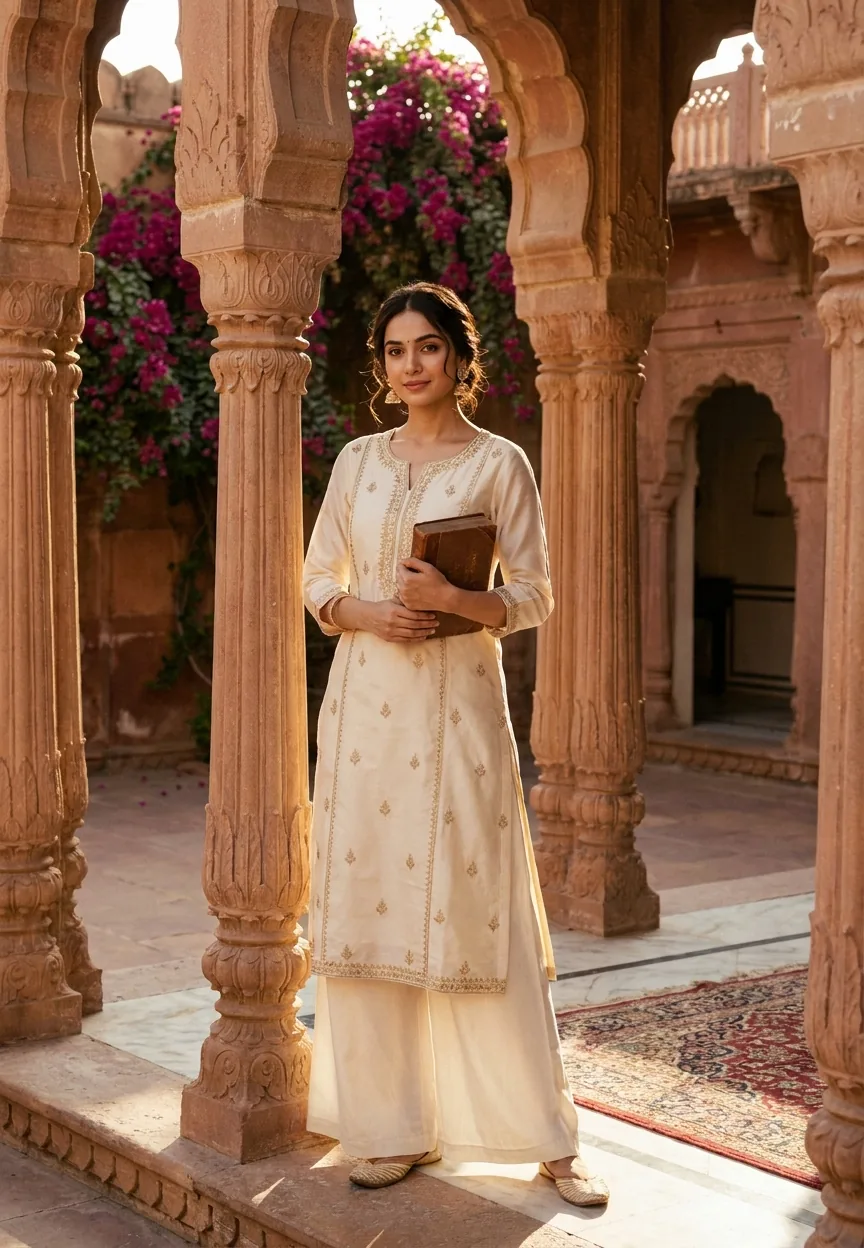
A strikingly elegant Indian woman in her late 20s standing in the grand courtyard of a heritage Rajasthani haveli, golden hour sunlight casting warm amber tones across carved sandstone pillars, wearing a tailored cream silk kurta with subtle gold zari embroidery, paired with wide-leg ivory palazzo pants, minimal 22-karat gold jewelry including delicate jhumkas and a thin bangle, hair swept into a loose low bun with a few soft strands framing her face, expression serene and quietly confident, holding a vintage leather-bound book, background featuring weathered terracotta walls draped with cascading bougainvillea in deep magenta, a Persian-style silk rug visible on the marble floor, soft bokeh on background architecture, shot with a medium format camera feel, muted warm color grading with champagne highlights and deep shadow tones, ultra-realistic editorial photography style, 9:13 vertical aspect ratio, cinematic depth of field, luxury lifestyle aesthetic, no text, no watermark
How to Use This Prompt — Three Steps, No Surprises
Step one: grab a clean photo of yourself. Ideally front-facing, good natural light, relatively plain background. The AI isn't magic — it needs something decent to work with. A blurry selfie from a dimly lit bathroom will not produce Condé Nast results. Fair call.
Step two: open Gemini AI (gemini.google.com), start a new conversation, and upload your photo. Then paste the prompt in exactly as shown above. Hit send and give it a moment. It's doing a lot of heavy lifting in there.
Step three: review the output. Nine times out of ten you'll want to run it once or twice more to get the facial likeness sharper and the lighting just right. Gemini sometimes gets a bit interpretive with faces on the first pass. Regenerate freely — it's not metered like a parking ticket.
Want to adjust for yourself? Change "Indian woman in her late 20s" to match your own description. Swap "jhumkas" for studs if that's more your style. The haveli setting and the color grading are the load-bearing elements — keep those intact and the aesthetic holds.
Tips That Actually Make a Difference
Lighting in your source photo matters more than anything else. Golden hour or soft window light will make the AI's job significantly easier and your result dramatically better. Harsh overhead light creates shadows the model struggles to reinterpret gracefully.
Face the camera directly. Three-quarter angles work, but straight-on gives the AI the clearest facial reference. The "serene and quietly confident" expression instruction in the prompt does some work here — the AI tends to smooth and soften the expression toward that description regardless, but starting with a relaxed face helps.
Don't crop your source photo too tightly. Give the AI some neck and shoulder room. It's generating a full editorial frame — if it can't see your shoulders, it guesses, and sometimes it guesses wrong in ways that are historically inaccurate to your actual body.
The 9:13 aspect ratio is specified in the prompt for a reason. That's a tall vertical frame — perfect for Instagram Stories and Reels covers, and it's the format that makes this look most like a genuine editorial shoot. If you're posting to a square grid, crop from the center after generation rather than changing the ratio in the prompt.
Run at least three generations. Pick the best one. This is photography, not a lottery — but it has a lottery element. Embrace the variance.
Why This Is Trending Hard Right Now in India
A few things aligned at once, as these things tend to.
Gemini's image generation got genuinely good in 2024 and 2025. Not "impressive for AI" good — actually good. The gap between AI-generated portraits and real editorial photography closed enough that people started using it for real content rather than novelty screenshots.
Simultaneously, the Old Money Aesthetic hit a specific nerve in India. There's a generation of urban Indians who are proud of their heritage but tired of it being framed as either temple-tour tourism or Bollywood sparkle. The haveli aesthetic — refined, weathered, intellectual — offers a third frame. And that frame is landing.
Add the fact that Rajasthani architecture is one of the most photographed and instantly recognizable luxury backdrops in the world, and you've got a trend with actual legs. This isn't going away when the next filter drops. The visual language is too deep-rooted. (Pun entirely intended. The bougainvillea is practically structural at this point.)
Honest Opinion — When to Use This and When to Skip It
This prompt is excellent. It's one of the more complete and thoughtful prompts in the haveli/heritage editorial genre, and the specificity — 22-karat gold, champagne highlights, medium format camera feel — is exactly what separates a cinematic result from a generic "Indian background" output. Whoever wrote this knew what they were doing.
That said, let me be straight about when you should not bother.
If you're using a low-resolution source photo — anything under roughly 800 pixels on the short side — the facial reconstruction will be soft and slightly uncanny. The background will be gorgeous. Your face will look like it was rendered by someone who saw a description of you but never actually met you. That's not the vibe.
If you need to look exactly like yourself — for a professional headshot, a verified social profile, anything where people need to recognise you immediately — this isn't the right tool. The AI interprets and idealises. That's not deception; it's just what generative image models do. Know what you're using it for.
And if you're planning to represent this as an actual photograph rather than an AI-generated image, that's a choice with consequences. Label your AI edits. The aesthetic community generally respects transparency, and the ones who don't probably shouldn't be your audience anyway.
For what it's actually built for — creative portraits, social content, artistic exploration of a visual style you love — this prompt is about as good as it gets in this genre right now. The Old Money Aesthetic suits Indian heritage architecture better than almost any other visual trend I've seen applied to AI photo editing. It doesn't feel borrowed or imposed. It feels like it belongs there. Because, architecturally speaking, it does.
The Short Version
Old money doesn't announce itself. It stands in a sandstone courtyard with good posture and a leather-bound book and lets the bougainvillea do the talking. This Gemini prompt nails that energy — use a clean, well-lit source photo, paste the prompt exactly, run a few generations, and pick the one where the golden hour light hits your face like you've spent centuries being interesting. Your ancestors built havelis. The least you can do is look the part.